Freeze frame from new ISIS video. Image credit: Dhaka Tribune
ISIS publication Dabiq says base in Bangladesh will launch guerilla attacks in India to "avenge the persecution on Muslims."
Hailing the July 1 Gulshan terror attack, international terrorist group Islamic State has now released a video calling for jihad in Bangladesh and threatening more attacks on “crusaders” and “crusader nations.”
The video message believed to be issued from Raqqa in Bangla was first found in an IS-affiliate website and then released on YouTube early Wednesday.
It comes as a follow-up to the dreadful attack on a Gulshan eatery in Dhaka last Friday that killed at least 22 people including 17 foreigners. The five others include two police officers. Police say six of the attackers were killed in “Operation Thunderbolt” carried out the next morning to end a 12-hour hostage crisis at O' Kitchen.
IS' Amaq news agency released the photos of five of their members several hours after the attack broke claiming responsibilities. Police, however, claim that most of the attackers were linked to local outlawed militant groups.
In the video, three of the speakers are of Bangladesh origin, but they could not be identified immediately.
One of them said they would not stop until establishing Shariah law all over the world. “The Jihad that has come to Bangladesh now has been promised by Prophet Mohammed,” he said.
“We will not stop killing the crusaders till then; we will win or die for our religion as martyrs and achieve shahadaat [martyrdom] … we don't have anything to lose.”
He termed the current form of democracy a shirk [deification or worship of anyone or anything other than Allah] or unforgivable crime.
“I want to ask you a question: how do you support this 'Shirk' notion of democracy? Don’t you know that it gives power to people to enforce law and have power whereas the power belongs to Alllah only? [according to the Qur'an]”
The second speaker labelled the government as kafir [non-believer].
“Since the govt has changed Allah’s law and has implied man-made law they are all 'kafirs' now. It is our religious duty to fight against it. Crusaders are killing innocents Muslims globally with planes and bomb attacks.
“So the Holey Artisan incident is our revenge to the lost blood of the hundreds and hundreds of Muslims who were killed,” he said.
The other speaker urged Muslim brothers and sisters to join the jihad saying it was what they had been dreaming of. “InshaAllah, Allah will accept our jihad.”
They all want Islamic rule
In its 14th edition of Dabiq magazine published on April 13, IS claimed that they have organisational base in Bangladesh (they term it Bengal), from where they have plans to attack on India and Myanmar to "avenge the persecution on Muslims."
“We believe the Shariah in Bengal won’t be achieved until the local Hindus are targeted in mass numbers,” said Sheikh Abu Ibrahim al-Hanif, the man leading the operations in Bangladesh, in an interview.
Bangladesh is referred to as “Bengal” throughout the interview and its members as “Soldiers of the Khalifah in Bengal.”
Abu Ibrahim said Bangladesh was important for global jihad because of its geographic position and proximity to India.
“Having a strong jihad base in Bengal will facilitate guerilla attacks inside India simultaneously from both sides [east and west],” he said in the interview.
Since September last year, IS has claimed responsibilities for at least 25 attacks killing foreigners, non-Muslim and non-Sunni preachers and police. They also launched bomb and gun attacks on Shia and Ahmadiyya mosques.
Meanwhile, Ansar Al Islam (believed to be outlawed group Ansarullah Bangla Team) which is representing al-Qaeda in the Indian Subcontinent (AQIS) in Bangladesh has claimed credit for 13 attacks since 2013 killing a dozen of war crimes trial campaigners, secular bloggers, writers, publishers and LGBT rights activists.
Police say another banned group Jama'atul Mujahideen Bangladesh or JMB is also responsible for some recent murders and bomb attacks across the country. The outfit has been working in concert with other banned groups and IS with a view to establishing Islamic rule in the country by 2020 incorporating some parts of Myanmar and India, according to detectives. JMB joined the international jihadist platform in 2012.
On the other hand, two intelligence reports recently mentioned the name of banned international group Hizb ut-Tahrir for their involvement in the series of targeted killings, saying over 450 of its leaders and activists have remaind absconding after getting bail.
One of its members Ghulam Faizullah Fahim was caught by the locals last month while fleeing after hacking a Hindu college teacher in Madaripur. He was later killed in an alleged gunfight between his cohorts and the police.
The group, banned in 2009 for anti-state activities, called for the army to take over power and put them at the helm to establish Caliphate from an online political conference on September 4 last year.
In a video message on June 17, only two weeks before the Gulshan terror attack, Hizb ut-Tahrir urged the Muslims to join their Islamic revolution by uprooting the government terming it tyrant, corrupt and anti-Islam.
Today, in France – as in most democratic countries – there’s a general consensus that a critical view of“Mein Kampf” is needed and by the end of the year the publishing house will set the record straight: it will take pains to explain and contextualize much of the “Nazi Bible’s” racist, anti-Semitic ideology – and its devastating consequences.
The history of its English version is relatively well-known, thanks to historians James and Patience Barnes. Its history in French is not. While French journalist Antoine Vitkine wrote a 2009 global history of “Mein Kampf” and two French lawyers and a historian recently shed light on the French-language editions of “Mein Kampf,” neither book has been translated into English.
Beginning in 1934 – and into the 21st century – a tug-of-war over the French version of the text took place among an eccentric, right-wing publisher named Fernand Sorlot, Hitler’s lawyers, German censors, and the International League Against Racism and Anti-Semitism.
With a much-anticipated critical edition of Hitler’s hateful screed in the pipeline, it’s worth revisiting how the French translation endured decades of dubious sales, editing and censorship.
From ‘My Struggle’ to ‘My Doctrine’
When Adolf Hitler became chancellor of Germany in 1933, people around the world were fascinated with the Nazi leader known for his fiery rhetoric. Many were curious to learn more about the man’s life and his true beliefs.
An obvious entry point into Hitler’s mind and political agenda was “Mein Kampf,” first published in Germany in two editions, the first in 1925 and the second in 1926. Referred to as the “Nazi bible,” international publishing houses started translating it into different languages.
The Nouvelles Éditions Latines edition of ‘Mon Combat.’ Amazon.com
The first French edition of “Mein Kampf” – entitled “Mein Kampf: Mon Combat” (Mon Combat simply means “My Struggle” in French) – was published in 1934 by the Nouvelles Éditions Latines (New Latin Editions), a publishing house founded a few years earlier by Sorlot. Though Sorlot was sympathetic to anti-Semitism and fascism, he seemed motivated more by turning a profit than advancing any political agenda. Sorlot was also publishing the book illegally: He hadn’t even secured the rights to publish a French edition of Hitler’s tome.
When Adolf Hitler caught wind of the French version, he and his publisher brought Sorlot to court, demanding that he cease publication. Hitler knew that Germany was not ready for war, and, on the international stage, he was doing his best to conceal his plans. In “Mein Kampf,” Hitler had called for the destruction of France, a country referred to, at various points, as the “irreconcilable mortal enemy,” “the most terrible enemy,” and “the mortal enemy of our nation.” The last thing he wanted was to tip his hand by having a translated copy circulating among the French.
During his trial, Sorlot claimed that he was acting out of patriotism, that he wanted to warn the French public of the looming German threat. Even before the rise of Nazism, France was highly suspicious of its Eastern neighbor. In the late-19th century, following the Franco-Prussian war of 1870-71, Germany had annexed the French Alsace and Moselle, two border regions disputed by the two countries for centuries. World War I, of course, did nothing to ease the tensions between France and Germany.
But, in 1934, Hitler had the law on his side, and Sorlot lost the trial, forcing him to withdraw the unauthorized French translation from the market. Whether it was out of patriotism or to earn a quick buck, Sorlot continued to covertly sell the translated version.
The Fayard edition of ‘Ma Doctrine.’
In 1938, Adolf Hitler authorized Fayard, a leading French publishing house, to print a French translation of “Mein Kampf.”
When the first translation into English was published in the United States by Houghton Mifflin in 1933, it softened Hitler’s rhetoric and visions of expansion. Similarly, Hitler ensured that the French version was also significantly edited. The numerous anti-French passages that the original edition contained were toned down or cut altogether.
Sorlot’s 1934 unabridged translation was 687 pages. Fayard’s 1938 edition, published under the much gentler title “Ma Doctrine” (“My Doctrine”), would only be 347 pages.
Blacklisted
In 1940, Hitler invaded Denmark, Norway, the Netherlands, Belgium, Luxembourg and France.
In the wake of the invasion, the German authorities wanted to exploit the countries' natural and industrial resources while also being able to devote as many troops to the front lines. The best way to do both was a mollified public, so they sought to blacklist any texts – “Mein Kampf” included – that could fuel existing anti-German feelings. In all occupied countries, the German authorities created “indexes” of prohibited books or authors.
In France, since Sorlot’s original translation, two additional unauthorized translations of “Mein Kampf” had been published, as well as a few other book-length commentaries that quoted extensive excerpts from Hitler’s book. All were placed on the list of “books withdrawn from sale by the publishers or forbidden by the Germans,” often referred to as “Otto’s List” after Otto Abetz, the German ambassador to France during the war.
The portion of ‘Otto’s List’ featuring ‘Mon Combat.’ Bibliothèque Nationale de France
Postwar angst over racism and anti-Semitism
After the war, Sorlot resumed publishing, which included printing and selling “Mein Kampf.” He initially did so discreetly, but with time, encouraged by the absence of backlash from the French authorities and the public, he started selling Hitler’s book more openly.
For obvious reasons, “Mein Kampf” didn’t comply. The fact that Hitler’s book was still being sold by Sorlot’s Nouvelles Éditions Latines – by then considered a right-wing publishing house – garnered the attention of the Ligue Internationale Contre le Racisme et l’Antisémitisme (International League Against Racism and Anti-Semitism). By the late 1970s, Sorlot could hardly argue that he was selling a translation of “Mein Kampf” out of patriotism. This time, he played the “historical document” card. It didn’t work, and Sorlot was given a hefty fine of 80,000 francs (the equivalent of approximately US$250,000 today).
Surprisingly, he was allowed to continue publishing “Mein Kampf” as long as it contained a reminder of the 1972 French anti-racism law, as well as a summary of Nazi atrocities and the Nuremberg trials. After much legal wrangling between the two sides, an eight-page text was finally written by a historian and included in all subsequent editions of “Mein Kampf: Mon Combat.”
Today, in France – as in most democratic countries – there’s a general consensus that “Mein Kampf” should be republished because it’s an important historical document and to demystify it. It’s also already widely available on the web, often on dubious sites that don’t offer context.
A critical edition in French is in the works and will almost certainly be published by the end of the year by Fayard, the original publisher of the radically edited “My Doctrine.” This time, the publishing house will set the record straight: rather than massage the language and condense the text, it will take pains to explain and contextualize much of the “Nazi Bible’s” racist, anti-Semitic ideology – and its devastating consequences.
Rafia Afsar , an alumna of the American International School of Dhaka (AISD) writes in the aftermath of her schoolmate Tarishi Jain ’s death:
Dear World,
Several horrible atrocities are taking place in our time, one of which occurred in our loving city of Dhaka, Bangladesh. Many people unfortunately died and many fingers were pointed but this letter isn’t about the killings.
This letter is to celebrate the lives of three of our beloved friends who we will never see again – this is to celebrate love.
Our community, the Tigers of AISD share a deep connection full of passion, love, devotion and loyalty. We aren’t just a collection of batch mates of years past from a school, we are a family that comes together to celebrate our school’s events, its students and their success, the victories of our sports teams, the graduation of each batch that passes out and so much more. But for the first time we came together, that too in stronger numbers than we’ve ever gathered, for something other than celebrating. We came together to mourn.
Abinta Kabir, Tarishi Jain and Faraaz Hossain are names that you heard for the first time on Saturday morning. For us, they are the names of our basketball star athlete, our designated choreographer and our executive council’s president. Our entire school only consisted of a little over 700 tightly-knitted students, hence everyone knew everyone.
Abinta was someone who always made us laugh with her stories and left us in awe with how effortlessly she shot hoops while playing for our basketball team.
Tarishi was someone who inspired us with her ideas, work ethic and flawlessness and always came to the rescue whenever any of us would be lost at ideas for cultural events. She brought us joy in being Tigers.
Faraaz was someone we all looked up to. He showed us what a good leader is with everything he did, and was modest. He taught us to care about the world around us and made us believe that we can make a difference.
All three of them were great friends to each other and this was evident in their last moments. We feel so fortunate to have had them as a part of our family. We can only hope that we carry out lives that will make them smile in pride of what their fellow Tigers have achieved. They will always be there in the memories and hearts of us all.
We can only hope that you never have to experience the loss that we have felt, and will continue to feel so. We encourage everyone to face the outcomes of incidents like these with love, the way we Tigers have been doing. Let’s hope that we, the world, are able to celebrate life and celebrate love.
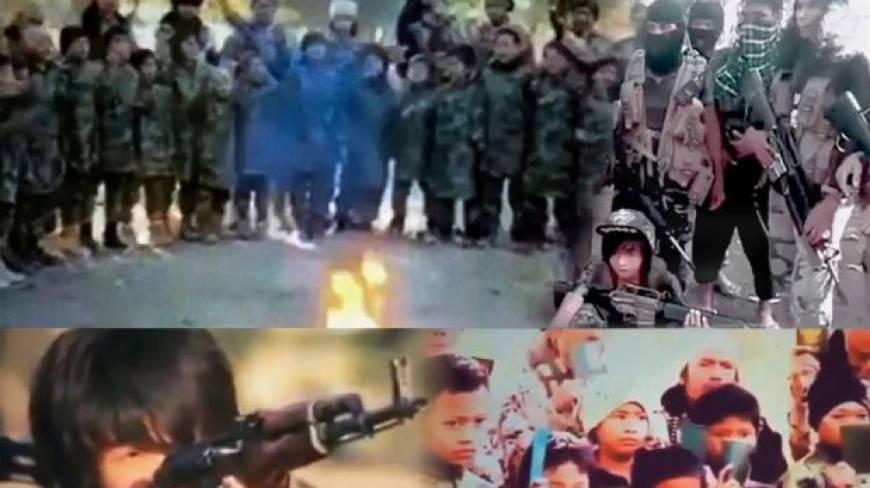
A freeze frame from the ISIS video clip. Image credit: The Star
Yes, it has, reports the Malaysian daily, The Star, citing a video released by ISIS. The purported video has not been embedded on the newspapers website, nor has any link been provided. Perhaps for the understandable reason that it might provide the wrong inspiration to misguided youth. However, a report graphically describes the video content and is reproduced below.
Meanwhile, another report published online by the same daily says the Malaysian police have vowed to hunt down ISIS militants who issue threats over social media to deliberately frighten the people.
Bukit Aman special branch director Datuk Seri Mohamad Fuzi Harun said though the video clips could be a mere “drama” to intimidate the people in the country, the police took the matter seriously. He added the police would monitor every social media platforms available in the country.
He said though the video clips could be a mere “drama” to intimidate the people in the country, the police took the matter seriously and would closely monitor the social media.
"They use the social media as a platform to threaten attacks against the country, and we must strengthen the laws to check these undesirable events," he added.
The ISIS video clip’s message as described by The Star:
A gun-toting adult is surrounded by children, and a teen standing away from the group is seen cradling an AK-47 assault rifle.
The man is wagging his right index finger back and forth, and talks in a mix of Bahasa Malaysia and what sounded like Arabic.
He expresses gratitude to Allah for “easing our journey and jihad” and for appointing them as “soldiers of
Tawhid (The Oneness of God)”.
He called out to the authorities of the
nusantara (archipelago) – especially in Malaysia and Indonesia.
“Know this … we are no longer your citizens, and have liberated ourselves from you,” he said as the camera panned to show a goateed man nearby holding another Malaysian passport.
“With His permission and His assistance, we will come to you with a military force that you cannot overcome.
“This is Allah’s promise to us,” he said.
These footages are seen in one of the video clips released by the IS.
The man also referred to the toppling of governments and leaders who did not follow Islamic principles to make way for the supremacy of Islam.
Shortly later, he threw his passport into the middle of the circle, and the children followed suit.
A young boy stepped forward with a silver lighter and uttered Bismillah before lighting up a folded piece of white paper.
He then placed it among the pile of documents to set the heap ablaze, a sight which is greeted by raucous cheers and singing from the other children as their fists punched the air.
The scene then moves to a classroom setting, depicting children wearing songkok chanting during religious lessons supervised by an adult, and undergoing combat training under the watchful eyes of another.
They also go through outdoor learning sessions, where a man in a red headwrap conducted quizzes for his young charges.
In another clip of a sandy clearing surrounded by coniferous trees, children stood in line as they fired rounds from semi-automatic pistols.
In a testament to their tender years, their small bodies jerked back from the recoil, with the hems of their oversized camouflage fatigues falling past their knees.
An adult nearby, clad in camel khakis, long-sleeved shirt and a vest, raised his right fist, shouting takbir as the children followed suit with a chorus of
Rare aerial footage shows unprecedented levels of suffering in Iraq and Syria
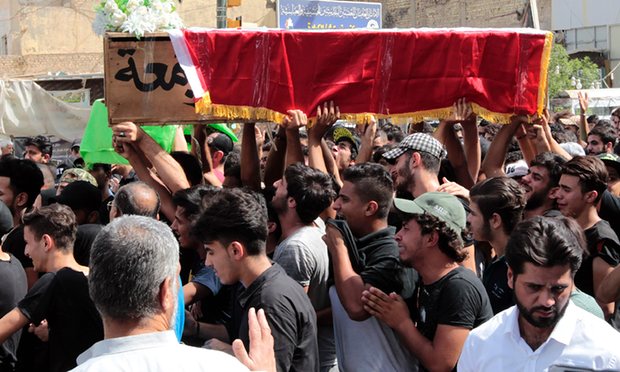
Mourners carry the coffin of a 22-year-old victim of the suicide bombing that ripped through Karada. Photograph Sabah Arar AFP Getty Images
More bodies have been recovered from the site of a massive Islamic State suicide bombing in central Baghdad, bringing the death toll to 175, The Guardian reported officials to have said.
The staggering figure – one of the worst bombings in 13 years of war in Iraq – has cast a pall on the Muslim holiday of Eid al-Fitr, which marks the end of the holy month. Eid is likely to be on Wednesday, July 6.
An ISIS suicide bomber struck Baghdad’s bustling commercial area of Karada late, a predominantly Shia locality, on Saturday, when many residents were spending the night out before the start of their dawn fast. Despite battlefield losses in the country, this new face of ISIS has struck terror around the globe. Police and health officials, who spoke on condition of anonymity as they were not authorised to release the information, warned that there are still people missing and that the death toll could rise further.
On Tuesday morning, the residents of Karada held a funeral procession for a young man at the scene of the blast. An Iraqi flag draped over her shoulder, his mother led the mourners carrying his wooden casket and pounding their chests in grief. Others were seen throwing flowers on the casket, also wrapped in the Iraqi flag.
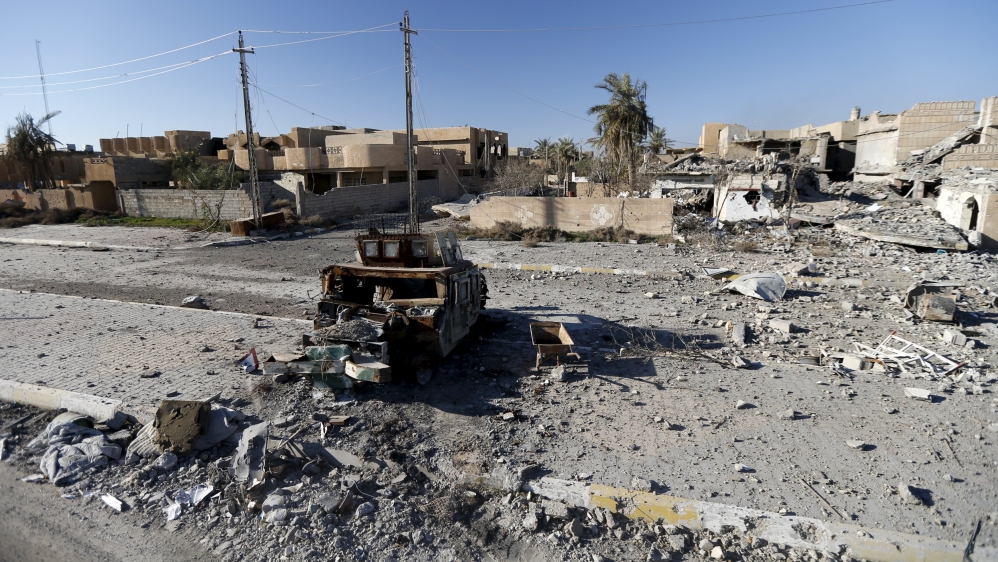
Meawnhile in a sensational end of Ramzan disclosure, the International Committee of the Red Cross (ICRC) released a video on July 1, that shows homes, schools and hospitals crumbled to rubble shown in dramatic scenes captured by an ICRC drone camera-Chilling aerial footage of Ramadi, a once bustling city in central Iraq, has captured the extent of destruction caused by war.
In late December, Iraqi forces, backed by US air strikes, announced the recapturing of Ramadi, which had been lost to the Islamic State of Iraq and the Levant (ISIL, also known as ISIS) group in May 2015. The US-led coalition carried out more than 600 air strikes in the area from July to December last year.
A new six-minute clip, released by the International Red Committee of The Red Cross (ICRC) shows homes in Ramadi turned to rubble, along with flattened school, destroyed hospitals and damaged ambulances.
Click on the link for video: http://imedia8uk.http.internapcdn.net/imedia8uk/icrc/AV506N_Drone_Iraq_President_466.mp4
Ramadi, the Anbar provincial capital, was once home to half a million people [Thaier Al-Sudani/Reuters]
The president of the International Committee of the Red Cross (ICRC), Peter Maurer, has said in the video that levels of suffering in Syria and Iraq have reached unprecedented levels. “Hundreds of thousands killed; millions on the move; families torn apart,” states Maurer. “Even as Ramadan comes to an end, many, many ordinary people are living in abject fear and terrifying uncertainty. A humanitarian catastrophe is unfolding.”
Rare aerial footage gathered by ICRC shows the once prosperous Ramadi in central Iraq now in tatters – a ghost town. Explosive remnants of war are scattered across the city and most people are too afraid to return to homes. It will take months, if not years, to make the city safe again and to rebuild homes and damaged water and electric systems.
In both Syria and Iraq, an estimated 10 million are internally displaced and hundreds of thousands of people have been killed. As the holy month of Ramadan comes to an end, president Maurer, called on those people with influence over the conflict to show vision and courage and a respect for the fundamental value of human dignity.
Maurer says: “The people need leaders who believe in humanity; who protect, homes, schools and hospitals; who protect civilians and treat people they capture with respect. And we stand ready to talk to anyone – or to act as an intermediary so that more help, more assistance, can be delivered. And more people protected from violence.”
The Red Cross and Red Crescent Societies have been providing aid to people on all sides of the conflicts. The ICRC has helped provide clean drinking water and improved sanitation for more than 6 million Syrians. In Iraq, food, drinking water and medical assistance has been delivered to more than a million people.
RSS/BJP ने फ़िलहाल अपने अव्वल नंबर के देशभक्त 'वीर' सावरकर की स्तुति काफ़ी हद तक कम करदी है। इस की सब से बड़ी वजह यह है की इस 'वीर' की असली कहानी दुनिया के सामने आगई है ।[i] हिंदुत्व के इस 'वीर' ने अंग्रेज़ हुक्मरानों से एक बार नहीं बल्कि पांच बार (1911, 1913, 1914, 1918 और 1 920 में) रिहाई पाने के लिए माफ़ी-नामे लिखे जिन में अपने क्रांतिकारी इतिहास के लिए माफ़ी मांगी और आगे अंग्रेज़ी राज का वफ़ादार बने रहने का आश्वासन दिया। अंग्रेज़ हकूमत ने इस 'वीर' के माफ़ी-नामों को स्वीकारते हुवे 50 साल की क़ैद में से 37 साल की कटौती कर दी।
हिंदुत्व टोली के नए 'देश-भक्त' डॉ श्यामा प्रसाद मुखर्जी (1901-1953) हैं। वे स्वतंत्रता-पूर्व हिन्दू-महासभा में सावरकर के बाद सब से अहम नेता थे और यह मानते थे की हिन्दुस्तान केवल हिन्दुओं के लिए है। वे 1944 में हिन्दू-महासभा के मुखिया भी रहे। आज़ादी के बादवे देश के पहले अंतरिम मंत्री मंडल, जिस के मुखिया जवाहरलाल नेहरू थे, में उद्योग और रसद मंत्री थे। उन्हों ने अप्रैल 1950 में नेहरू से पाकिस्तान से किस तरह के सम्बन्ध हूँ पर विरोध होने की वजह से इस्तीफ़ा दे दिया था। इस्तीफ़े के बाद उनहूँ ने आरएसअस का हाथ थाम लिया और उस के आदेश पर आरएसअस के एक राजनैतिक अंग, भारतीय जन संघ की स्थापना की और इस के पहले अधियक्ष भी बने। उनकी मृत्यु 23 जून 1953 को श्रीनगर, जम्मू व कश्मीर के एक जेल में हुई जहां उन्हें उस क्षेत्र में प्रवेश निषेध आदेश के बावजूद दाख़िल होने के लिए गिरफ़्तार करके रख्खा गया था।
2015 तक इन की मृत्यु के दिन को 'दधारा 370 समाप्त करो दिवस' और 'कश्मीर बचाओ दिवस'.के रूप में मनाया जाता था लेकिन इस साल (2016 में) इन का दर्जा बढ़ा कर इन्हें देश का 'एक निस्स्वार्थ देशभक्त' (A Selfless Patriot of India) घोषित करदिया गया। डॉ श्यामा प्रसाद मुखर्जी कितने महान 'निस्स्वार्थ देशभक्त' थे इसे पर्खने के लिए हमें निम्नलिखित सच्चाइयों पर ग़ौर करना होगा।
(1) डॉ श्यामा प्रसाद मुखर्जी के स्वतंत्रता-संग्राम में हिस्सेदारी का कोई प्रमाण नहीं है। अगर देश-भक्त होने का मतलब है की किसी ने अंग्रेज़ी राज के ख़िलाफ़ लड़ाई में हिस्सा लिया हो, दमन सहा हो और किसी भी तरह का त्याग किया हो तो यह जानकर ताजुब्ब नहीं होना चाहिए कि मुखर्जी ने आज़ादी की लड़ाई में कभी भी और किसी भी तरह से भाग नहीं लिया। ना ही तो स्वयं मुखर्जी की लेखनी में ना ही उस समय के सरकारी या ग़ैर-सरकारी दस्तावेज़ों और ना ही हिन्दुत्वादी संगठनों के समकालीन अभिलेखागार में उन की आज़ादी की लड़ाई में हिस्सेदारी का कोई ज़िक्र मिलता है। इस के विपरीत आज़ादी की लड़ाई के विरुद्ध किए गए उन के अनगिनित कारनामों का वर्णन ज़रूर मिलता है। आज़ादी से पहले के दस्तावेज़ इस सच्चाई को बार-बार रेखांकित करते हैं कि कैसे इस 'निस्स्वार्थ देशभक्त' ने अंग्रेज़ों की सेवा की और सांझी आज़ादी की लड़ाई को धार्मिक आधार पर विभाजित करने में कोई कोर-कसर नहीं छोड़ी। वे जीवन भर सावरकर के मुरीद रहे जो मुस्लिम लीग की तरह हिन्दुओं और मुसलमानों को दो अलग राष्ट्र मानते थे।
(2 )भारत छोड़ो आंदोलन 1942 में मुखर्जी बंगाल की मुस्लिम लीग और हिन्दू महासभा की मिली-जुली सरकार में उप-मुख्य मंत्री थे। जब जुलाई 1942 में गांधीजी के नेतृत्व में कांग्रेस ने अगस्त 8 से अंग्रेज़ों भारत छोड़ो आंदोलन का आह्वान किया तब मुखर्जी बंगाल की मुस्लिम लीग के नेतृत्व वाली सरकार , जिस में हिन्दू महासभा भी शामिल थी , के वित्त मंत्री थे और साथ में उप-मुख्य मंत्री भी। इस आंदोलन की घोषणा के साथ ही कांग्रेस पर प्रतिबंध लगा दिया गया, कांग्रेस के तमाम बड़े नेता जिन में गांधीजी, नेहरू, मौलाना आज़ाद, सरदार पटेल शामिल थे बन्दी बना लिए गए, पूरा देश एक जेल में बदल गया और हज़ारों लोग इस जुर्म में पुलिस और सेना की गोलिओं से भून दिए गए की वे तिरंगे झंडे को लहराते हुवे सार्वजनिक स्थानों से गुज़रना चाह रहे थे। हिन्दू राष्ट्रवादी संगठनों जैसे की हिन्दू महासभा व आरएसएस और मुस्लिम राष्ट्रवादी संगठन, मुस्लिम लीग कांग्रेस दुवारा छेड़े गए भारत छोड़ो आंदोलन का विरोध नहीं किया बल्कि इस को कुचलने के लिए अंग्रेज़ शासकों को हर प्रकार से मदद करने का फैसला लिया। जब देश में किसी भी प्रकार की राजनीतिक गतविधि पर पाबंदी थी उस समय हिन्दू महासभा और मुस्लिम लीग को एक साथ मिलकर बंगाल, सिँध और NWFP में साझा सरकारें चलाने की अनुमति दी गई। अंग्रेज़ों के दमनकारी विदेशी राज को बनाए रखने में सहायता हेतु इस शर्मनाक गठबंधन को महामंडित करते हुवे हिन्दू महासभा के अध्यक्ष सावरकर ने 1942 के हिन्दू महासभा के कानपुर अधिवेशन को सम्बोधित करते हुवे बताया: "वेवहारिक राजनीति में भी हिन्दू महासभा जानती है कि हमें बुद्धिसम्मत समझौतों के ज़रिये आगे बढ़ना चाहिए। हाल ही में सिंध की सच्चाई को देखें, यहां सिंध हिन्दू महासभा ने निमंतरण के बाद मुस्लिम लीग के साथ मिली-जुली सरकार चलने की जिम्मेदारी ली। बंगाल का उद्धारण भी सब को पता है। उदंड लीगी (अर्थात मुस्लिम लीग) जिन्हें कांग्रेस अपनी तमाम आत्मसमर्पणशीलता के बावजूद रख सकी, हिन्दू महासभा के साथ संपर्क में आने पर तर्क संगत समझौतों और सामाजिक सम्बन्धों के लिए तैयार हो गए और वहां की मिली-जुली मिस्टर फजलुल हक़ के प्रधानमंत्रित्व और महासभा के क़ाबिल और मान्य नेता श्यामाप्रसाद मुकर्जी के नेतृत्व में दोनों समुदायों के फ़ायदे के लिए एक साल तक सफलतापूर्वक चली।"[ii]
(3) बंगाल के उप-मुख्यमंत्री रहते हुवे मुखर्जी ने अंग्रेज़ गवर्नर को चिट्ठी दुवारा भारत छोड़ो आंदोलन को कुचलने के लिए हर संभव मदद का आश्वासन दिया। मुखर्जी ने एक शर्मनाक काम करते हुवे बंगाल के अंग्रेज़ गवर्नर को जुलाई 26, 1 942 में एक सरकारी पत्र के दुवारा इस देश भर में चल रहे आंदोलन को शुरू होने से पहले ही कुचलने का आह्वान करते हुवे लिखा: "अब मुझे उस स्तिथि के बारे में बात करनी है जो कांग्रेस दुवारा छेड़े गए व्यापक आंदोलन के मद्देनज़र पैदा होगी।युद्ध [दूसरा विश्व युद्ध] के दिनों में जो भी आम लोगों की भावनाएं भड़काने की कोशिश करेगाजिस से बड़े पैमाने पर दंगे या असुरक्षा फैले उसका हर हाल में सत्ताधारी सरकार दुवारा प्रतिरोध करना ही होगा।"[iii]
(4) मुखर्जी ने भारत छोड़ो आंदोलन के कुचलने को सही ठहरया और अंग्रेज़ शासकों को देश का मुक्तिदाता बताया। मुखर्जी ने बंगाल की मुस्लिम लीग-हिन्दू महासभा साझी सरकार की ओर से बंगाल के अंग्रेज़ गवर्नर को लिखी चिट्ठी में अंग्रेज़ हकूमत को प्रांत का मुक्तिदाता बताते हुवे उसे भारत छोड़ो आंदोलन को कुचलने के लिए कई क़दम भी सुझाए: "प्रशन यह है की बंगाल में भारतछोड़ोआंदोलन से कैसे निपटा जाए? राज्य का शासन इस तरह चलाया जाए की कोंग्रेस की तमाम कोशिशों के बावजूद यह आंदोलन बंगाल में क़दम जमाने में कामयाब न हो सके। हमारे लिए विशेषकर उत्तरदायी मंत्रिओं के लिए जनता को यह समझाना संभव होना चाहिए की आज़ादी जिस के लिए कांग्रेस ने आंदोलन शुरू किया है वह पहले से ही जन-प्रतिनिधिओं को प्राप्त है। कुछ मामलों में आपातकालीन हालात की वजह से यह सीमित हो सकती है। भारतीयों को अंग्रेज़ों पर भरोसा करना चाहिए, ब्रिटेन के वास्ते नहीं, इस लिए नहीं के इस से ब्रिटेन को कुछ फायदा होग, बल्कि प्रांत की आज़ादी और सुरक्षा को बनाए रखने के लिए।"[iv]
(5) हिन्दू महासभा के प्रमुख नेता के तौर पर मुखर्जी ने उस समय अंग्रेज़ी सेना के लिए देश भर में 'भर्ती कैंप' लगाए जब सुभाष चन्दर बोस 'आज़ाद हिंद सेना' दुवारा देश को आज़ाद कराना चाहते थे। एक और शर्मनाक घटनाक्रम में 'वीर' सावरकर और मुखर्जी के नेतृत्व वाली हिन्दू महासभा ने दूसरे विश्व युद्ध के दौरान अंग्रेज़ सरकार को पूर्ण समर्थन देने का फ़ैसला किया। याद रहे की कांग्रेस ने इस युद्ध को साम्राजयवादी युद्ध की संज्ञा दी थी और यही समय था जब नेताजी 'आज़ाद हिंद सेना' खड़ी करके एक सैनिक अभियान दुवारा देश को अंग्रेज़ी चुंगल से मुक्त कारण चाहते थे। हिन्दू महासभा लुटेरे अंग्रेज़ शासकों की किस हद तक मदद करना चाहती थी इस का अंदाज़ा 'वीर' सावरकर के निम्नलिखित आदेश से लगाया जा सकता है जो उनहूँ ने देश के हिन्दुओं के लिए जारी किया था: "जहां भारत की सुरक्षा का सवाल है, हिन्दू समाज को भारत सरकार [अंग्रेज़ सरकार] के युद्ध सम्बन्धी प्रयासों में सहानभूतिपूर्ण सहयोग की भावना से बेहिचक जुड़ जाना चाहिए जब तक यह हिन्दू हित के फायदे में हो। हिन्दुओं को बड़ी संखिया में थल सेना, नौ सेना और वायु सेना में शामिल होना चाहिए और सभी आयुध, गोला-बारूद और जंग का सामान बनाने वाले कारखानों वग़ैरा में प्रवेश करना चाहिए…ग़ौरतलब है की युद्ध में जापान के कूदने के कारण हम ब्रिटेन के शत्रुओं के सीधे निशाने पर आ गये हैं। इस लिए हम चाहें या ना चाहें, हमें युद्ध के क़हर से अपने परिवार और घर को बचना है, और यह भारत की सुरक्षा के सरकारी युद्ध प्रयासों को ताक़त पहुंचाकर ही किया जा सकता है। इस लिए हिन्दू महासभायों को खास कर बंगाल और असम के प्रांतों में, जितना असरदार तरीक़े से संभव हो, हिन्दुओं को अविलम्ब सेनाओं में भर्ती होने के लिए प्रेरित करना चाहिए।"[v]
(6) मुखर्जी ने जम्मू और कश्मीर के लिए विशेष दर्जे की वकालत की थी। हिंदुत्व टोली के दावों के बरक्स मुखर्जी ने जम्मू और कश्मीर की विशेष हैसियत को स्वीकारा था। इस सिलसिले में प्रधान मंत्री नेहरू और उनके बीच चिट्ठी-पत्री का एक लम्बा दौर चला था। उन्हों ने नेहरू को 17 फ़रवरी 1953 के दिन लिखे ख़त में निम्नलिखित मांग की थी: "दोनों पक्ष इस पर सहमत हों कि राज्य की एकता बनी रहेगी औरa स्वयत्तता का सिद्धांत जम्मू] लद्दाख़ और कश्मीर पर लागू होगा।"[vi]
[i]This 'Veer' submitted five mercy petitions (1911, 1913, 1914, 1918 and 1920). He was awarded two life sentences (for 50 years) but got remission of 37 years from the colonial masters.
[ii]VD Savarkar, Samagar Savarkar Wangmaya (Collected Works of Savarkar), Hindu Mahasabha, Poona, 1963, p. 479-480. Later this coalition arrangement was extended to NWFP also.
[iii]Mookherjee, Shyama Prasad, Leaves from a Dairy. Oxford University Press.p. 179.
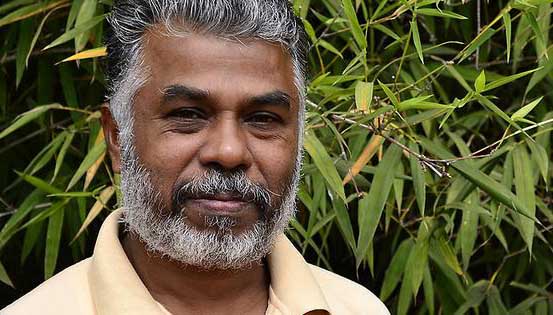
The Madras High Court on Tuesday ruled in favour of Perumal Murugan, author of the novel 'Madhorubhagan', granting him relief from all the controversies that shrouded the work of fiction that compelled him to announce that he would withdraw his entire body of work from publication and never write again.
At the end of a year-long legal battle, First Bench of Chief Justice S. K. Kaul and Justice Puspha Sathyanarayana held that the settlement arrived in the peace-keeping meet held by the district administration would not be binding on the author. The bench also dismissed the plea moved by the residents to initiate criminal proceedings against him and consequently quashed an FIR filed against Mr. Murugan. The settlement arrived in the peace-keeping meet held by the Namakkal district administration would not be binding on the author, rules court.
The court further directed the State government to circulate a series of guidelines framed by the court to handle such situations among the State police and to form an expert committee to handle such issues.
The Tamil Nadu Progressive Writers and Artists Association president, S.Tamilselvan, had challenged the decision of a peace committee meeting held at Namakkal on January 12 organised by the district administration and expressed solidarity with the writer. The decision was that Mr. Murugan had agreed to issue an unconditional apology, delete the controversial portions from his book, and withdraw unsold copies from the market. Meanwhile, a group of people claiming to be residents of Tiruchengode approached the High Court to initiate criminal charges against the author.
On February 13, 2016, Sabrangindia had featured this video interview with Peerumal Murugan’s publisher completely standing by him and his work
“I have always stood with all my writers”, says Kannan Sundaram, publisher, Kalachuvadu. Kalachuvadu was first begun as a magazine by his father, the Tamil writer, Sundara Ramaswamy. Kannan Sundaram wasthen in Delhi to receive the Samanvay Bhasha Samman 2015 on behalf of Perumal Murugan when he spoke to Souradeep Roy.
The controversy over Madhurobhagan (One Part Woman), Murugan's book, is not the first Kalachuvadu has faced. There was significant opposition to Kalachuvadu’s publishing Tamil feminist literature in the 1990s.
At a time when publishers are increasingly reluctant to stand by their own writers, Sundaram maintains that he supports complete freedom of expression for all his writers.
Forests officials in India's hinterlands are a law unto themselves. Hand in glove with poachers and timber mafia, they are accused of implicating forest dwellers in fake cases, barbarically torturing villagers in secret chambers, which some times result in custodial deaths. There are allegations of fake encounters too. In the first of an investigative series, Nidheesh J Villatt takes a close look at the alleged criminal activities of forest officials in UP's Dudhwa National Park
The Scheduled Tribes and Other Traditional Forest Dwellers Act, commonly known as Forest Rights Act (FRA) passed in 2006 sought to “correct historical injustice” meted out to the most marginalised sections. The law, captured the imagination of social activists world over as it intended to give land rights and other resources to traditional forest dwellers.
Coming as it did at a time when almost the entire policies of the government was focused to facilitate the smooth movement of capital, this legislation along with some others like Right to Information(RTI), was welcomed with great enthusiasm by those committed to social justice.
The law was intended to make the conservation of forest more transparent without impinging on the rights of the traditional forest dwellers.
Despite its progressive and democracy deepening clauses the FRA was criticised on two fronts.
First by the ‘developmentalists’ who view forest as an area which must be exploited to enhance the GDP. The other, the more sophisticated ones argued that giving rights to traditional forest dwellers would mean felling of trees!
Ten years down, is the FRA working? What are the changes it has brought on the ground?
Our special correspondent Nidheesh J Villat wanted to begin his piece with Dudhwa National Park in Uttar Pradesh.
What started off as a routine story threw up startling facts. The forest officials are a law unto themselves. They hold sway over the 490 square kms park on the Indo-Nepal border.
Forest officials find the FRA as an affront to their supremacy. They seem to have a finger in every pie. They are accused of conniving with lumber jacks and poachers in plundering the natural resources. The slightest act of assertion by forest dwellers are dealt with intimidation and torture.
All vested interests are aligned against the Scheduled Tribes, Dalits and lower caste Muslims who constitute a majority of traditional dwellers. Those who try to question are often illegally taken into custody, and in some cases subjected to extreme forms of torture.
To divide those fighting for their rights, forest officials have even formed vigilante groups under the garb of protecting forests.
During his investigations, Nidheesh was told that fake encounters were staged to snuff out resistance from locals. No inquiries are done. The deaths of the poorest of poor are said to be passed off as ‘unnatural’ deaths.
NaradaNews exposes the macabre activities of forest officials in the badlands of Lakhimpur Keri that skirt the country’s border with Nepal.
We hope this report, being published in four parts, will put a spotlight on the barbaric acts in Dudhwa National Park. We believe this would be the first step in ending such savagery.
Editor
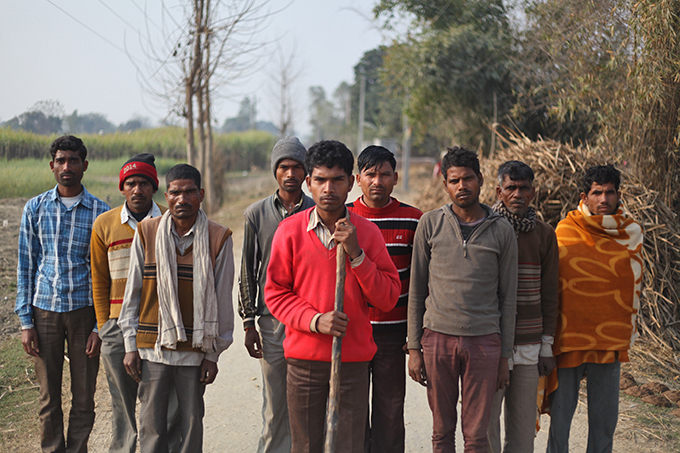
“After removing our pyjamas they cut the elastic of the underwear with a country knife and threw it away. We were forced to lie down. They filled a veterinary syringe with petrol from the forest department bike. After this they forcefully parted our legs and injected petrol into our anus. Some had cotton soaked in petrol pushed it into their anus, ” Tulsi Ram, a frail young man told me.
Sounds barbaric?
“All of us started crying in deep pain. Petrol had started working. Because of pain I thought my stomach would burst. I pleaded for some water. Instead of giving water, they started beating us with a big wooden pole till it broke. We fell unconscious. After some time, some of us regained consciousness. Then officers came and poked us with big laathi and asked us…’you Chamar (a Dalit subcaste) bastards came here to sleep? After Chamar Mayawati came to power you guys are arrogant,” Tulsi recalled.
I was speaking to a group of Dalits and other lower caste traditional forest dwellers in Rampur Bandhiya village in Dudhwa National Park.
I went thereafter hearing about the unconstitutional methods used by the forest department to evict the traditional forest dwellers — Adivasis (predominantly Tharus), Dalits and lower caste Muslims — from the villages situated inside and in the buffer zone of the National Park. (See Video)
Jungle Raj | Photo: Vijay Pandey
Braving the morning chill, Tulsi and his friends recalled with horror the day (22 September 2011), they were picked by a team of forest officers, while they were grazing cattle.
Their crime? They refused to pay the parallel tax–locally known as galla orhafta collected illegally by the forest officers to permit grazing of cattle.
The monthly hafta is Rs 500 here. In some other villages, a family have to pay an yearlygalla consisting of one quintal of rice, 20 kgs of wheat, 25 kgs of mustard and several litres of honey.
“None of us were having money that day. So we couldn’t pay. We were picked and were beaten throughout the journey from village to Belarayan Forest Range Office. This continued in the ‘torture room’ of the Range Office,” Dorei, an elderly man recalled.
I spoke to Steven Miles, professor of medicine and Bioethics at Center for Bioethics, University of Minnesotta, US, about the torture methods of the forest officers in Dudhwa. Miles is an expert on internal medicine and specialises in medical consequences of the torture. His book, Oath Betrayed:America’s Torture Doctors, “examines military medicine in the War on Terror prisons”.
He says that injecting petrol into the anus or rectum will have serious medical consequences.
“Torture is an impulsive and largely improvised practice. The painful introduction of material or air into the rectum dates at least back to the middle ages. It was used in the ‘War on Terror’ by the US as rectal feeding. Pepper being put in the rectum has been sporadically practiced around the world and the use of other caustic substances including gasoline (petrol) is not surprising,” Miles pointed out.
“Torture techniques are a craft. Rectal and sexual traumas are very common in the torture of men. It would be unusual if rectal gasoline was the only method used. I would not be surprised if brutal and painful rectal rape with a stick or baton or even fluorescent light bulb was done first to open the rectal sphincter. At that point, gasoline (petrol) could be instilled. Gasoline is enormously and instantly painful on rectal tissue and the inflammation alone could cause rectal fissures and fistula connecting the rectal cavity to the bladder, intestines or freely into the abdomen allowing stool to pass into the abdomen and causing septicemias. The risk of perforations and fistulae would be greatly increased by preceding trauma and rectal tears caused by a baton or from the trauma of a tube inserted into the rectum to administer the gas.
Gasoline is toxic when it gets in the blood, usually by inhaling and occasionally by oral ingestion. That toxicity includes convulsions, kidney failure, heart failure and shock. I think it is unlikely that significant gas would be absorbed through the rectal wall,” says Miles.
Suhaeli river is used to torture forest dwellers by ‘ducking’. | Photo: Vijay Pandey
When I told him about ‘ducking’ (forcibly immersing the head in the river) of Dudhwa victims, before they were subjected to anal torture, he commented that “all torture are multi-modal”. Threatening, beating and denial of drinking water would be common in almost all cases of torture, he says. “15% of the torture victims are subjected to asphyxia” (a condition which is the resultant of the denial of oxygen to the body).
“It is highly probable that victims were tightly bound in a way to stretch or compress ligaments. It may be that when the petrol was inserted, that they were threatened with ignition”, he adds.
Arun Ferreira, noted human rights activist, who was arrested by the Maharashtra police (after branding him as Maoist) details about petrol torture in his prison memoir Colours of the Cage. He says that there was a police officer whose “expertise” was injecting petrol in anus/rectum. Ghulam Hassan Lone, a Kashmiri Muslim youth was allegedly subjected to similar torture in mid 1990s. He was accused of being a militant who was waging war against India.
“Begar (unpaid forced labour) is common here. After monsoon, forest officers force villagers to clean roads and do other related work. Funds earmarked for such work would be siphoned off by them. The reluctance of some villagers to do begar has made forest officers furious”, village head Yashpal Singh alleged.
Victims of fake cases | Photo: Vijay Pandey
“This is early 2016. Why is this kind of a brutal torture not yet news?” I asked Singh.
“Journalists from Delhi and Lucknow need wildlife safaris. Local journalists are completely dependent on the economy controlled by forest department,” a rights lawyer who accompanied me pointed out.
Interestingly in another village, a Tharu Adivasi elder gave a vivid picture of journalism in India’s hinterlands where class and caste inequalities unfold crudely.
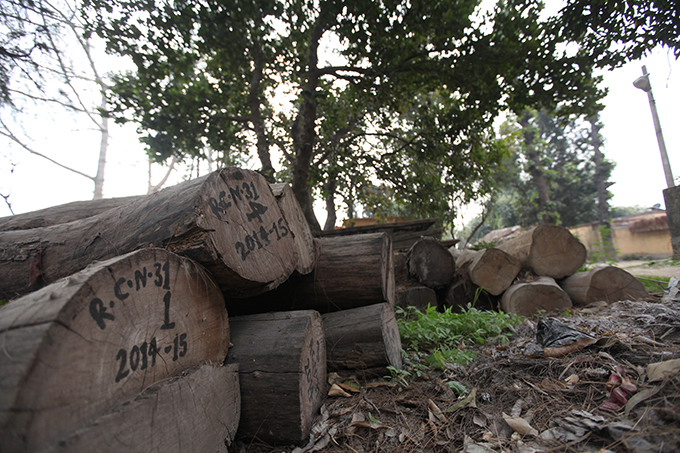
“If we go and collect firewood, which is a constitutional right under FRA, journalists report this as massive wood theft. On a few occasions villagers have blocked vehicles smuggling huge quantity of timber to Nepal which occur with the connivance of forest officers. But next day’s newspapers would report that the huge logs smuggled as mere waste wood.”
Key Facts of Forest Rights Act (FRA) Act: Scheduled Tribes and Other Traditional Forest Dwellers (Recognition of Forest Rights) Act, popularly known as FRA Parliament Nod: 2006 Replaced: Indian Forests Act Important Features 1. Land Rights The Act grants people title deeds to forest land that they have been cultivating prior to December 13, 2005. Those cultivating land but don’t have documentary proof can claim upto 4 hectares, as long as they are cultivating the land themselves for a livelihood. Those who have a prior title or a government lease, but whose land has been illegally taken by the forest department, or whose land is the subject of a dispute between forest and revenue departments, can claim title to those lands. The land cannot be sold or transferred to anyone except by inheritance. 2. Use Rights The law provides for rights to use and/or collect the following minor forest produce such as tendu leaves, herbs, medicinal plants etc. 3. Grazing areas and water bodies 4. Right to Protect and Conserve forests 5. Right against Arbitrary Relocation
Source : Shankar Gopalakrishnan’s chapter in the upcoming book ” Elgar Handbook on Environmental Law”
Delving into the tale of Dalits who were brutally tortured by injecting petrol into the anus (peeche lagana in local parlance) and accompanying caste abuse hints that forest bureaucracy in the hinterlands are steadfastly following the colonial era of forest governance.
FRA was a direct threat to the clout of the department, veteran trade unionist Ashok Choudhary points out.
“During the last Mayawati government, there were some serious efforts to democratise forest governance by implementing FRA. Forest bureaucracy, eco-tourism mafia and local elites opposed it violently. State violence against Adivasis and Dalits should be seen in this larger context.”
My travel to the interiors of Lakhmipur Kheri gave me an idea about the atrocities of forest department.
“They run a parallel government. They indulge in fake encounters and custodial rape. They also loot natural resources by collaborating with the mafia. They also develop indigenous methods of torture,” a senior IAS officer with several year administrative experience in the district told me.
Kinjal Singh IAS, the former collector of Lakhimpur Kheri was transferred to Faizabad district for challenging the powerful forest bureaucracy.
Kinjal Singh, the collector of the district till recently, had incurred the wrath of the powerful forest mafia for questioning this parallel system of governance.
Acting on several complaints received from Adivasis and other traditional forest dwellers about the alleged criminal activities happening inside the Dudhwa park as well as in the buffer zone, the young officer ordered surprise checks by police and revenue department.
During some surprise checks she conducted, Kinjal had found massive uprooting of rare species of trees (which fetches huge money in the market) in villages like Pachpeda Richhaya, Kundanpur, Khairigargh (all falling in core area of Dudhwa) as well as in several villages situated in the buffer zone.
During these visits, she also stumbled upon several spots inside the park which were notorious for brewing illicit liquor. All these illegal activities were done in active collaboration of forest officers. Kinjal also started inquiring about several cases of encounter killings, custodial deaths and sexual assaults allegedly carried out by the forest bureaucracy.
This made the bureaucracy vindictive and they started a hate campaign against the collector with the active help of local media persons who were allegedly receiving a share of the spoils.
In an unusual development, forest employees in the Dudhwa Tiger reserve had even boycotted work for several days demanding transfer of Kinjal. The UP government transferred the collector to Faizabad, another district citing huge revenue loss caused by the strike of the forest staff.
“The move by Kinjal to implement FRA made the department furious. Forest officers are a part of mafia associated with timber smuggling and wildlife poaching. Once Adivasis and other traditional forest dwellers enter forest, mafia operations would be affected. So they wanted to ensure that FRA is not implemented,” Rajnish, a trade unionist active in this area, pointed out.