Today, June 30, 1855, one hundred and sixty one years ago, the Santhal rebellion broke out under the dynamic leadership of tribal leaders like Sidhi Kano.
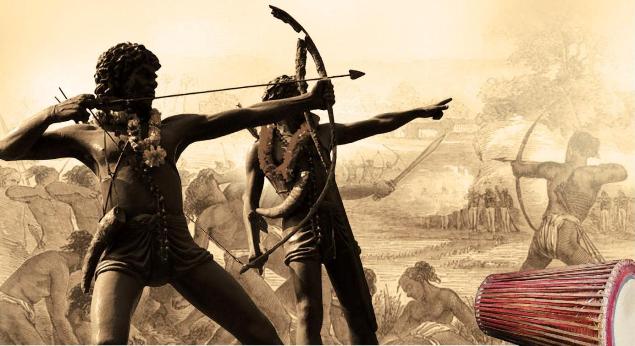
Santhals take universal pride in the Santhal rebellion of 1855 have 1000 of Santhal and leading of Sidho and Kanho Murmu stood against oppression; fought against the mighty East India Company. Hundreds of Santhals sacrificed their live & thousands were displaced from their homes as rebellion was crushed with inhuman-brutality. To this day, Santhals commemorate June 30 with great reverence; pay homage to iconic leaders.
The Santhal rebellion (sometimes referred to as the Sonthal rebellion), commonly known as Santal Hool, was a rebellion in present day Jharkhand, in eastern India against both the British colonial authority and upper caste zamindari system by the Santhal people.
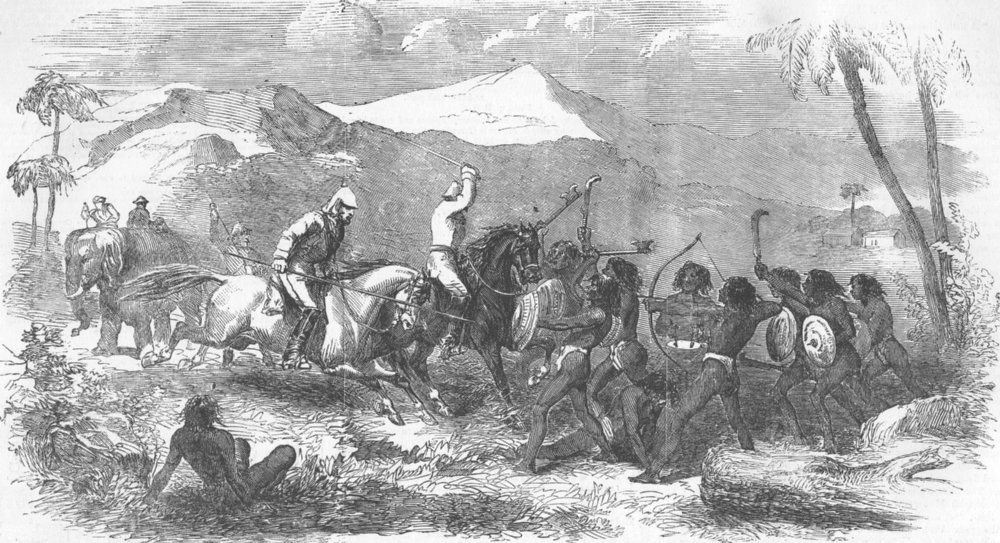
Brutally crushed by the British who use rifles with an 1800 metre range over the Santhali people’s arrows that had an average range of 60-70 metres, the uprising for which the Santhal tribals paid a heavy cost eventually got them the district of Santhal Parganas.
Elephants were used to crush villages and fertile lands successfully cultivated by the hardworking Santhals who had settled in the Daman-i-Koh at the foothills of the Rajmahal Hills following a permamnent settlement in 1793 abandoning their traditional homelands in Dalbhum, Manbhum, Chhotanagpur, Palamau, Hazaribagh, Midnapur, Bankura, Birbhum.
.jpg)
Formally the Damin-i-koh area surrounding the Rajmahal hills was created in 1832, 22 years before the Santhal rebellion. It began with British efforts to separate the territories of the local zaminadrs and paharias (hill people). Sandwiched between the two, a skirt of Rajmahal hills, a patta of afforested land was eyed by the East India Company to milk revenue from forest; Santhals, at the time scattered all around –Cuttack, Singhbhoom, Dhulbhum, Midnapre, Bankura, Manbhum, Barabhoom, Panchete, Chota Nagpur, Palamov, Pangarh, Birbhum and parts of Bhagalpore, were invited to occupy the Daman-i-koh. Soon with their industry and creativity the region flourished. The population and villages of the Santhals grew and the revenue collection expanded.
Seeing the prosperity of the Santhals, moneylenders and zamindars were quick to cheat Santhals for profits, offering short credits, manipulating record books they were able to increase dues exponentially, and bonded labour, slavery, and confiscation of lands and cattles became a means of oppressing the Santhal tribals.
Testimony
Recorded statements of Sir William Le Fleming Robinson (later appointed as Deputy Commissioner of Santhal Parganas)– he actually stamped out the bonded labour system doing a fair bit of justice with Santhals explains the situation: “I have had a bond brought to me in which Rs. 25 was originally borrowed by a man who worked in his lifetime; his son did ditto and I released his grandson from any further necessity; it had been running on for over 30 years of I remember rightly.”
Finally, in a bid to overthrow this systemic oppression, on June 30, 1855, 10,000 Santhal men declared war their against oppressors. On basis of these announcements, letter were drafted by Kirta, Bhadoo and Sunno Manjhee by Saeedo’s order to the Commissioner, Collector & Magistrate of Bhagalpore, the Collector and Magistrate of Birbhum, to several Darogas and Zamindars from whom reply was called within 15 days
Demands Behind the Santhals Rebellion:
1) Revenue collection would be done exclusively by Santhals and remitted to the state;
2) Rate of revenue should be set at for Rs. 2/- for every buffalo plough, 1 Anna on each bullock plough a half anna for each cow plough, per annum
3) Rate of interest upon money learned will be 1 paise for each rupee yearly
4) Banishment of all moneylenders and zamindars from Damin-i-koh
The battle was unequal. The Santhals had their traditional arrows, with an average of 60-70 yards and a maximum range of 200 yards. The British, were armed with 1853 Pattern Enfield Rifles that had and other rifles used by railway engineers. But especially, the elephants used by the British widely spread terror in the minds of Santhals and spread destruction in Santhal villages but the rebellion still spread. By the end of July 1855 more troops were mobilsed by the British and eventually Santhals were surrounded from all sides couldn’t break cardon of 10-12,000! By November 10 1855 British proclaimed martial law and the rebellion was finally quelled in January 1856.
Inhuman brutality was inflicted on the Santhals by the British; women children-evicted from homes leaders hanged in open mostly on trees to show power of company officials company troops shamelessly fired on enemy who only fought with arrows.
Major Jarvis’ statement spoke of the iniquitousness of the battle,
“It was not war; they (Santhals) did not understand yielding. As long as their national drum beat, the whole party would stand and allow themselves to be shot down. Their arrows after killed our men, and so we had to fire on them as long as they stood. When their drums ceased, they would move off a quarter of a mile; then their drums beat again, and they calmly stood till we came up and poured a few volleys into them. There was not a sepoy in the war who did not feel ashamed of himself.”
Kanhu Murmu was arrested on November 30, 1855 along with other comrades while fleeing to Hazaribagh. He was executed by hanging on February 23, 1856 at 2 pm in his own vllage Saeedo Murmu was captured by betrayal; his trial was conducted by William Bell, Session Judge of Bhagalpore, case referred to the Nizamat Adalat for final verdict. On December 11, 1855 he & other accused were presented before the Adalat & on the same day the death sentence was awarded to Saeedo.
Two leaders, Saeedo and Moocheea Santhal were hanged at Baboopore. Following the Santhal rebellion, an enquiry ordered by the East India Company sound that the grievances of the Santhals were genuine.
An Act, XXXVII of 1855 was passed, a special district, Santhal parganas comprising of Damin-i-koh, Sub districts of Dumka, Deoghar, Godda & Rajmahal (including Pakur) was formed. Collectively inhabited by Santhals.
The struggle of Santhals did not go in vain. Its echo was to be heard at the time of the Indigo Movement of 1857-62, the Pabna and Bogra uprising of 1872, and the Deccan uprising of 1875.The uprising started on June 30, 1855 and continued until November 10, 1855.
A detailed account of the uprising can be found in An Advanced History of Modern India, authpored by Sailendra Nath Sen.
In 2010 the Sidho Kanho Birsha University, a state university was established in Purulia, West Bengal, India.
References:
1. 2014 SPECIAL ISSUE ON SANTHAL HUL
http://livelystories.com/special-editions/2014-special-edition-santhal-hul/
2. Birsa Munda is Indian Tribal Freedom Fighter – Yodha | 10tv
https://www.youtube.com/watch?v=SC-d_5BhZbM
.jpg)

(1).jpg)
.jpg)