The Faizabad police yesterday arrested Mahesh Mishra, convenor of the outfit’s Faizabad and Ayodhya units on charges of hurting religious sentiments of Muslims and spreading communal hatred.
On May 24, Sabrang India had published a detailed report on the sangh parivar’s sinister drive to raise the communal temperature in UP through arms training of Hindus in the build-up to the 2017 Assembly polls.
On May 14, the Bajrang Dal had organised a “self-defense camp” at Ayodhya. A video of the camp went viral leading to public outrage and the lodging of an FIR under section 153-A of IPC (promoting enmity between different groups on grounds of religion and doing acts prejudicial to maintenance of harmony).
Giving details of the case to the Indian Express, the station house officer, Ayodhya police station, Rajeev Singh said: “As per the FIR, some volunteers in the training camp were depicted as Muslim terrorists while others were presented as Hindu youths of Bharti Sena. The investigating officer would approach media houses to obtain the video. We would start the process of identifying people at the event once we receive the video.”
The VHP, whose militant offspring the Bajrang Dal is, has sought to explain away the arms training camp as a "mock drill" which is an "annual affair". What the VHP will have difficulty explain the meaning of skull-caps and false beards at the mock drill.
Bajrang Dal, the fire-breathing youth wing of the VHP had planned similar weapons training camps at other places in UP – Sultanpur, Gorakhpur, Pilibhit, Noida and Fatehpur in the coming days.
As detailed in the May 24 report published by Sabrang India, weapons and arms training of Hindu youth constitutes part of the sangh parivar’s ongoing agenda of creating vigilante groups virulently hostile to the country’s religious minorities.
Two-thirds of central government ministries have not implemented more than 50% of “assurances” given to Parliament, even as the government completes two years in office today, according to data from the Lok Sabha (lower house of Parliament).
IndiaSpend had previously reported that 80% assurances given to the 16th Lok Sabha were pending; that is now down to 58% in 2016.
Assurances–promises made by government to Parliament–do not expire
The government replies to 250 questions every day from Members of Parliament (MPs) during a Parliamentary session.
While replying to questions in the house or during discussions on bills, resolutions etc., ministers give assurances, undertakings or promises to consider an issue, take action or provide information later.
These assurances, compiled by the Ministry of Parliamentary Affairs and the Lok Sabha Secretariat, are sent to the Parliamentary Committee on Government Assurances.
The committee must ensure assurances are implemented within three months. Secretaries of ministries are supposed to review assurances to Parliament every week or fortnight.
When the Lok Sabha is dissolved, assurances pass on to the next government.
PMO made one assurance in 2014 and has not yet kept it
Eight ministries have not acted on 80% of assurances to the Parliament; three ministries have implemented more than 75% of assurances given to the Parliament.
The Prime Minister’s Office gave one assurance that it would release reports of performance and evaluation system of ministries for 2013-14 to the 16th Lok Sabha, and has not fulfilled it since 2014.
Despite assurances from the PMO that the system has been approved and evaluation reports of ministries would be released, that has not happened for 2013-14.
Not far behind are the Ministries of Social Justice and Empowerment, Minority Affairs, and Road Transport and Highways with 83%, 82% and 75%, respectively, assurances pending.
As many as 58% of assurances made to Parliament by the home ministry–which requested two assurances dropped–are pending.
One of the dropped assurance concerns the establishment Coastal Police Stations, a fallout of the 26/11 terror attacks on Mumbai. In August 2014, the home ministry said it was implementing phase 2 of the coastal-security scheme. In November 2015, it requested deletion of the assurance.
A pending home ministry assurance since 2014 concerns the creation of criteria to select a language for “official” status in the Eight Schedule of the Constitution. As many as 38 languages are awaiting the home ministry’s clearance to join the list of 22 official languages.
Here are some other assurances pending/dropped by the ministries:
* India has emerged as a favourable destination for surrogacy, and Assisted Reproductive Technology (ART) industry has evolved into a Rs 2,500-crore ($365 million) business annually. The health ministry acknowledged that there could be surrogate pregnancies, including in rural and tribal areas, that result from exploitation of women. The government’s assurance of a law to regulate surrogacy in India is pending since 2014.
* India’s tardy implementation of power projects has led to frequent cost escalations. When asked by a Member of Parliament if nuclear projects were getting enough money to be finished on time, the government said (on December 10, 2014) said that “all efforts are being made to complete and commission the projects within the approved time frame”. However, this assurance was dropped in February 2016, according to the Lok Sabha website.
Law ministry makes most assurances, fulfils 27%
The Ministry of Law and Justice tops the charts with 146 assurances during the 16th Lok Sabha, fulfilling 27% by May 12, 2016.
The Ministry of Communication and Information Technology gave 129 assurances and implemented 40%; the Ministry of Finance 121, implementing 57.9%; the Ministry of Human Resource Development 113 assurances, implementing 35%; the Ministry of Railways 107, implementing 44%.
The committee on government assurances has reprimanded the government in its reports for several assurances being pending for years, some for almost a decade. “17 assurances from the Ministry of Human Resource Development are pending for implementation, in fact, first two assurances are pending for nearly a decade,” the report said.
(Agarwal and Sibal were fellows 2015-16 at PRS Legislative Research. They have worked with Members of Parliament on legislative and policy matters.)
'गुजरात फाइल्सः एनाटोमी ऑफ अ कवर अप' नामक किताब गुजरात में नरेंद्र मोदी के मुख्यमंत्रित्व काल में लीपापोती को दर्ज करने वाला एक जीवंत और रोचक संस्मरण है। 'तहलका' के पत्रकार रहे राना अयूब ने अमेरिका में जन्मी एक फिल्म निर्देशक 'मैथिली त्यागी' के रूप में वरिष्ठ पुलिस अफसरों समेत महत्त्वपूर्ण हस्तियों का इंटरव्यू लिया।
राना को इसके लिए धमकियों और अवसाद का सामना करना पड़ा। इस किताब का लोकार्पण दिल्ली में 27 मई को है। इसी किताब में 2002 में गुजरात दंगों के दौरान गुजरात के गृह सचिव रहे अशोक नारायण के साथ बातचीत है। इस बातचीत में नारायण ने दंगों से निपटने के नरेंद्र मोदी के तौर-तरीकों के बारे में बताया है। बातचीत के संक्षिप्त अंशः
प्र- आप सन्न रह गए होंगे जब मुख्यमंत्री ने आपको दंगों को नियंत्रित करने के मामले में 'धीमे चलने' को कहा होगा। उ- उन्होंने ऐसा कभी नहीं किया और न कभी कुछ लिखित में दिया। उनके पास 'अपने लोग' थे, उनके जरिए संदेश विहिप तक पहुंचता था, और उसके बाद अनौपचारिक माध्यमों के जरिए पुलिस के निचले अधिकारियों तक।
प्र- और तब आपने खुद को असहाय महसूस किया होगा? उ- बिल्कुल, तब हम कहते कि ऐसा क्यों हो रहा! लेकिन तब तक कोई घटना हो चुकी होती। प्र- और विभिन्न जांच समितियों के लिए कोई साक्ष्य भी नहीं है..! उत्तर- कई बार सरकार के मंत्री सड़कों पर खड़े होकर भीड़ को उकसा रहे होते थे। ऐसा एक वाकया हुआ जब मैं भी मुख्यमंत्री के कमरे में बैठा था और हमें एक घटना की सूचना मिली। मैंने उन्हें बताया कि यह एक मंत्री की हरकत है। उन्होंने उस मंत्री को वापस बुलवाया। कम से कम उस वक्त उन्होंने किसी को वापस तो बुलवाया?
प्र- क्या वह मंत्री भाजपा का था? उ- हां, निश्चित रूप से। वह उनका अपना मंत्री था।
प्र- वहां एक माया कोडनानी भी थी। मैंने सुना है कि वह सरकार विरोधी हो गई। उत्तर- हां, वह भी वहां रही होंगी। प्र- यह उन्माद था? उ- मैं आपको एक बात पहली बार बता रहा हूं। मैं एक मुसलिम प्रशासनिक अधिकारी को जानता हूं। उनका मुझे फोन आया। उन्होंने कहा कि सर मुझे बचा लीजिए। मेरे घर को घेरा जा रहा है। मैंने पुलिस कमिश्नर को फोन मिलाया। उन्होंने इसे रेकॉर्ड किया या नहीं, मुझे नहीं पता। लेकिन वह आदमी बच गया। अगले दिन उस अधिकारी का फिर फोन आया। उसने बताया कि सर, कल तो मैं किसी तरह बच गया, लेकिन लगता है कि आज नहीं बच पाऊंगा। लिहाजा, मैंने पुलिस कमिश्नर को फिर फोन किया और उसे बचाने को कहा। पंद्रह दिन बाद उस अधिकारी ने मेरे केबिन में आकर बताया कि रोजाना एक ही कहानी दोहराई जाती थी। कॉलोनी में हिंदुओं का वर्चस्व था और मुसलमान मारे जा रहे थे। उसने बताया कि 'जब आपने फोन किया, पुलिस आई। और उस दौरान एक मंत्री बाहर खड़ा भीड़ का नेतृत्व कर रहा था। पुलिस अफसर ने उसे सलाम किया। उसने पुलिस अफसर को देखते ही कहा कि यहां सब ठीक है। एक पुलिस अधिकारी ने मुझे पहचाना और बचाया।'
प्र- किसी में हिम्मत नहीं थी कुछ करने की? उ- नहीं, किसी में नहीं। प्र- मंत्रियों के खिलाफ कारर्वाई कौन करेगा? उ- मैं आपको बताता हूं। गृह सचिव के पद से हटने के बाद मैं विजिलेंस कमिश्नर था। आपको मालूम होगा कि हर राज्य में मंत्रियों और राजनीतिकों पर निगरानी रखने के लिए एक लोकायुक्त होते हैं। लेकिन मंत्रियों के खिलाफ शिकायत करने कोई नहीं पहुंचा। और जब घूसखोरी और भ्रष्टाचार में मामले में मंत्रियों के खिलाफ कोई शिकायत नहीं करने आता तो दंगों में शामिल मंत्रियों के खिलाफ हिम्मत कहां से आएगी। किसकी शामत आई है। इस किस्म के मंत्री बहुत सयाने होते हैं। बहुत चतुराई से बात करते हैं और अफसरों को फोन करते हैं और कहते हैं कि अच्छा… उस इलाके को देख लेना। वे खुद कुछ नहीं करते। उनके एजेंट होते हैं। आपने भीड़ के खिलाफ एफआईआर देखे होंगे। लेकिन आप भीड़ को कैसे गिरफ्तार करेंगे!
प्र- लेकिन दंगों की जांच के लिए कई कमीशन भी बने। उन सबका कोई फायदा नहीं हुआ? उ- एक नानावटी कमीशन बना था। उसमें से तो अभी तक कुछ नहीं निकला। अभी तक किसी मसले पर कोई रिपोर्ट तक नहीं आ पाई। जब मैं गृह सचिव था, मैंने एक आदेश दिया था कि बगैर लिखित आदेश के कोई कार्रवाई न की जाए। जब बंद का आह्वान किया गया, तब तत्कालीन मुख्य सचिव सुब्बा राव ने मुझसे कहा कि विहिप नेता प्रवीण तोगड़िया रैली निकालना चाहते हैं। क्या सोचते हैं, क्या किया जाए। मैंने कहा कि सर, इस किस्म की अनुमति नहीं दी जा सकती, क्योंकि इससे हालात बेकाबू हो जाएंगे। मुख्यमंत्री को जब इसका पता चला तो उन्होंने मुझसे कहा कि आप ऐसा कैसे कहते हैं। हमें उन्हें अनुमति देनी होगी। मैंने कहा कि ठीक है सर, कृपया मुझे लिखित आदेश दे दीजिए। मोदी मेरा चेहरा देखते रहे!
प्र- तो क्या आप उस विवादास्पद मीटिंग में नहीं थे, जिसमें मुख्यमंत्री ने अफसरों और नौकरशाहों को (दंगों पर नियंत्रण के मामले में) 'धीरे चलने' को कहा था? उ- हां-हां, मैं उस मीटिंग में था।
प्र- मुख्यमंत्री क्या ऐसा इसलिए कर रहे थे कि वे भाजपा के साथ थे? उ- नहीं, दरअसल, दंगों के दौरान उन्होंने वीएचपी का समर्थन किया था। उन्होंने ऐसा हिंदू वोटों के लिए किया, जो उन्हें मिला भी। वे जो चाहते थे, उन्होंने वह किया और वही हुआ। प्र- बाहर के लोगों को इस मीटिंग के बारे में कैसे पता चला? उ- तब वहां एक मंत्री हरेन पंड्या थे। वे पहले शख्स थे, जिन्होंने मीडिया को यह बताया। प्र- मोदी की छवि कैसी है? क्या उनकी भूमिका पक्षपातपूर्ण नहीं थी? उ- वे गोधरा की घटना के लिए खेद जाहिर कर सकते थे, वे दंगों के लिए माफी मांग सकते थे।
प्र- मुझे बताया गया था कि मोदी ने पक्षपातपूर्ण भूमिका निभाई थी, मसलन, गोधरा से शवों को लाने देने और फैसले करने में टालमटोल। उत्तर- मैंने बयान दिया था कि शवों को अहमदाबाद लाने देने के जिस फैसले से ही सब कुछ भड़क उठा, उसे तय करने वालों में वे भी थे।
इस बातचीत से कोई भी साधारण आदमी यह समझ सकता है कि गुजरात दंगों के दौरान राज्य प्रशासन की क्या भूमिका थी। अशोक नारायण ने जो मुझे बताया, हममें ज्यादातर लोग उसे पहले से जानते थे, लेकिन यह बात किसी आधिकारिक चेहरे ने अब तक नहीं कही थी।
Special Judge PB Desai will pronounce judgement in the famed Gulberg Society Trial on June 2, 2016. The trial that began in September 2009 was stayed for a few months after Special PP, RK Shah quit in February 2010 making serious allegations against both the sitting judge and officers of the Special Investigation Team (SIT).
Hearings had resumed thereafter before a new judge but the verdict had been stayed by the Supreme Court. In its last order dated February 22, 2016 the apex court had directed completion of the trial within three months.
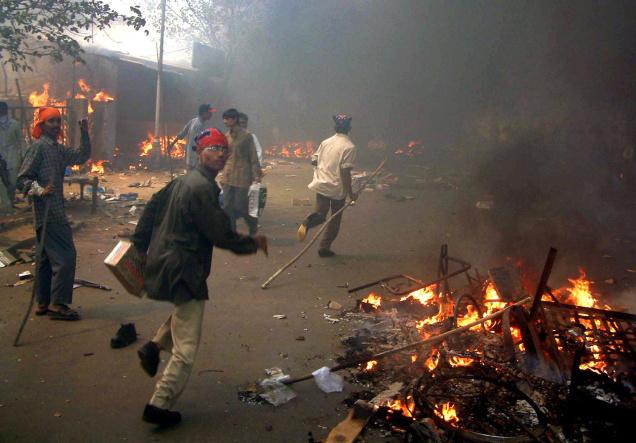
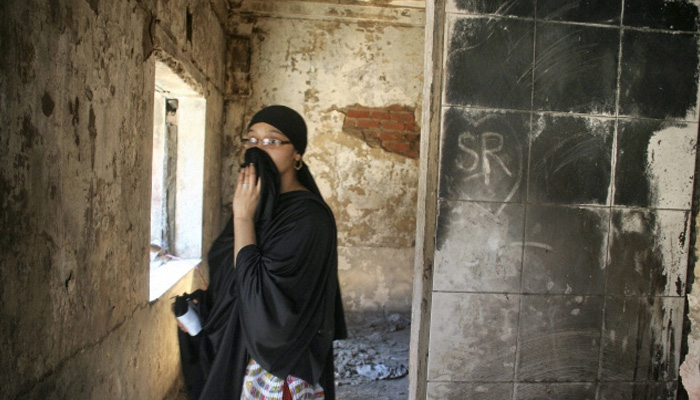
Sixty-nine persons including former parliamentarian Ahsan Jafri had been brutally killed in an eight-hour-long, daylight massacre that took place on February 28, 2002. Survivor eyewitnesses had deposed about the repeated attempts by Ahsan Jafri to call for help from top policemen and political leaders.
Survivor, Rupabehn Modi, a victim-survivor of the Gulberg Society massacre and Prosecution Witness (PW Nos. 107) had filed repeated applications against the delays in the ongoing trial (Sessions Case Nos 152/2002).
The trial had stood suspended since July 2012 ever since the SIT has challenged two orders of the trial court passed in May and June 2012 in favour of the eye-witnesses. Strangely, though the SIT had been appointed because survivor witnesses had approached the Supreme Court for transfer of investigation, survivors had repeatedly complained of hostility from SIT officers.
In 2009, survivors backed by the Citizens for Justice and Peace (CJP) had approached the Supreme Court for a re-constitution of the SIT when it was found that key documentary evidence was being deliberately kept away from the investigations. In September 2009 itself SM Vohra advocate for the survivors had obtained an order of the trial court to ensure that all documentary evidence would come on record. This included phone call records and other crucial evidence.
In the major Gujarat 2002 communal carnage cases in which the trials have been completed — Best Bakery, Bilkees Rasool, Sardarpura, Ode (1&2), Dipda Darwaza, Naroda Patiya — over 126 of those held guilty have been given life sentences. The convicted include former BJP minister, Dr Maya Kodnani and Bajrang Dal leader, Babu Bajrangi.
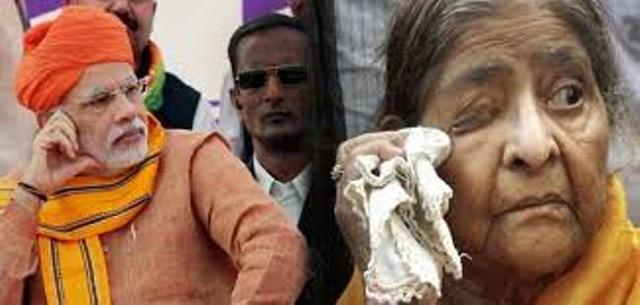
Narendra Modi (then CM/Home Minister, Guajrat) and Zakia Jafri, survivor of the massacre at Gulberg Society
Arguments in the Zakia Jafri Protest Petition (2013) now to be pressed during the hearing of the appeal in the High Court in July 2016
Former Home Secretary, Gujarat, Ashok Narayan had in his statement before the SIT dated 13.12.2009 (attached) clearly stated that chief minister and accused 1 was non committal about any action on the perpetrators of hate speech during the pogrom of 2002 or again action against Ministers of his government indulging in extortion from the minorities. The statement can be read here.
This was argued by counsel for Zakia Ahsan Jafri in her protest petition before the local Magistrate in July 2013. The matter is now pending in appeal before the Gujarat High Court.
The statement was given by Ashok Narayan to the Special Investigation Team (SIT) headed by former CBI director RK Raghavan. The statement had been recorded by AK Malhotra on December 13, 2009. The SIT appointed by the Supreme Court in 2008 to investigate 10 Major Trials relate to the Gujarat Carnage was also asked to investigate Zakia Ahsan Jaffri's Complaint that sought to build a Chain of Command Responsibility to the statewide violence.
Que. Please see a copy of the D.O. letter dated 22-4-2002 addressed to you by Shri P.C. Pande, the then CP, Ahmedabad to you with a copy of DGP and ADG (Int.). What action was taken by you on the said letter? Ans.(Ashok Narayan) I have gone through the D.O. letter and I recollect having discussed the issues raised by Shri. P.C. Pande, the then CP in his letter with the DGP as well as the CM. I emphasized upon the CM to prevail upon or use his good offices on the Sangh Parivar activists including VHP and Bajrang Dal to restrain them from indulging in such activities. However, the CM was non-committal and used to make public statements in a general manner that the State Govt. was committed to the safety and security of all the citizens living in Gujarat. I don’t recollect having put up these references in file
Que. Please see a letter dated 16-4-2002 addressed to the DGP with a copy to you regarding the two pamphlets in circulations in large number in Gujarat for which action was proposed u/s 153-A & 153-B IPC after taking legal opinion from the Law Department. What action was taken on this communication? Ans.(Ashok Narayan) The issues raised by ADG (Int.) in this letter were discussed with the DGP. However, I don’t recollect any action taken, thereon. However, it may be added here that several such pamphlets were brought to the notice of DGP, myself and Chief Secretary but in such cases the name of the printer/publisher had not been mentioned. Accordingly, we had impressed upon the police to trace out the culprits responsible for these pamphlets but unfortunately no material could be collected in this regard, with the result no action would be taken in this regard.
Que. Please see a copy of the D.O. letter dated 24-4-2002 sent by Shri R.B. Sreekumar, the then Addl. DG (Int.) to you with a copy to DGP regarding the current communal scenario in Ahmedabad city. What action was taken by you on the said letter? Ans. (Ashok Narayan) This letter contained general observations and concrete details were missing. However, the matter was discussed with the DGP in the light of the intelligence inputs received from ADG (Int.) DGP was requested by me to take action at his level as far as possible. I don’t recollect having shown or put this letter to the CM. however, the subject matter in general was discussed with the CM a number of times and he agreed to do whatever was possible at his level.
Q.41 (Malhotra for SIT). Please see a copy of the DO letter dated 22.04.2002 addressed by Shri P. C. Pande, the then CP Ahmedabad City with a copy to DGP and Addl. DG (Intelligence) about the undesirable activities of Sang Parivar activists. Was this letter brought to your notice? If so, what was the action taken by you in the matter? Ans (Narendra Modi). In this connection, it is stated that I do not remember now, whether this issue was brought to my notice or not. But, it has been my and my Government's approach right from the first day, that a culprit is a culprit irrespective of his caste, creed, religion or socio political background, as nobody is above law.
The Director General of Police (DGP) Chakravarti who was the senior most police official at the time of the pogrom was examined six times by SIT, on March 24, 2010, May 7, 2010, October 5, 2010, November 23, 2010, March 23, 2011, and finally on January 14, 2012. Not once did the SIT feel it important to quiz him on the actions taken by the executive (home minister) on the vicious hate speech and bartering of hatred indulged in by the VHP and allowed by the state police and administration, despite consistent recommendations to the contrary from its own Head of Intelligence, ADGP Intelligence (April 2002-September 2002) RB Sreekumar. Even Home Secretary Ashok Narayan said that he had reminded the state’s home minister Modi on this issue but the latter had simply ignored him.
These points were made by Zakia Jafri’s legal team, before the Magistrate on July 26, 2013. http://www.indianexpress.com/news/sit-a-conspirator-didn-t-probe-seriously-zakia/1147457/
On December 26, 2013 the magistrate Ganatara dismissed Zakia Jafri’s Protest Petition. The Criminal Revision Appeal is pending hearing before the Gujarat High Court and the next date of hearing is on July 6, 2016.
Former Chief Minister, Gujarat Narendra Modi's Statement before the Special Investigation Team (SIT) on March 27-28, 2010
This is the Statement given by Ashok Narayan to the Special Investigation Team (SIT) headed by former CBI director RK Raghavan. The statement had been recorded by AK Malhotra on December 13, 2009. The SIT appointed by the Supreme Court in 2008 to investigate 10 Major Trials relate to the Gujarat Carnage was also asked to investigate Zakia Ahsan Jaffri's Complaint that sought to build a Chain of Command Responsibility to the statewide violence that shook the state of Gujarat for several months in 2002. Presently the Criminal Revision Application Nos 205/2014 is pending in the Gujarat High Court.
Former ACS (Home), that is Home Secretary, Ashok Narayan, Gujarat, 2002. The State Government was Headed by Narendra Modi in Gujarat in 2002.
This is the Statement given by Ashok Narayan to the Special Investigation Team (SIT) headed by former CBI director RK Raghavan. The statement had been recorded by AK Malhotra on December 13, 2009. The SIT appointed by the Supreme Court in 2008 to investigate 10 Major Trials relate to the Gujarat Carnage was also asked to investigate Zakia Ahsan Jaffri's Complaint that sought to build a Chain of Command Responsibility to the statewide violence.
Presently the Criminal Revision Application Nos 205/2014 is pending in the Gujarat High Court.
Among Muslim majority countries, Morocco can rightly claim to have brought about the most progressive, pro-women reforms in family laws. Yet violence against women and domestic violence remain a serious issue. Partnering with a comedienne and taking to social media, Human Rights Watch is getting creative to gain traction on women’s rights in Morocco.
To get anyone’s attention in this world of information overload and 24-hour news cycles, sometimes you need to get a little dramatic. Indeed, human rights organizations are finding that highly visual (and often shocking) campaigns are more likely to get the public’s attention than more conventional efforts. And this is exactly what Human Rights Watch recently did to shine a spotlight on the issue of violence against women—and specifically domestic violence—in Morocco.
In this HRW video, Moroccan comedian and feminist activist Mounia Magueri plays the role of a domestic violence survivor, an abusive husband, a police officer, and a prosecutor and highlights the problem of domestic violence from different angles.
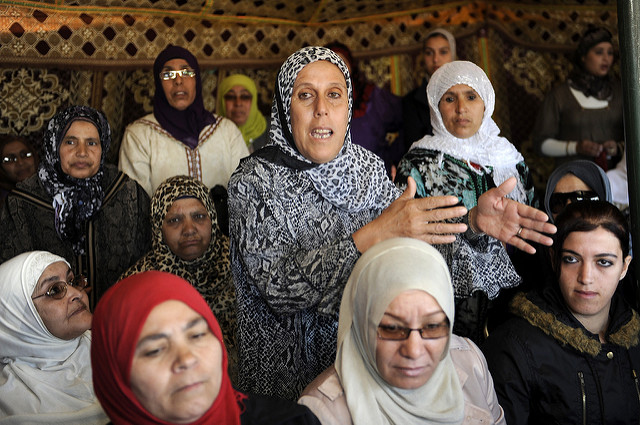
In 2009-10 a national survey found that 62.8% of women aged 18 to 65 had experienced some form of physical, psychological, sexual or economic violence. Because Morocco is a highly devout country, the debate amongst human rights elites on women’s rights has often been highly polarized, pitting religious against secular, even though polls suggest that among ordinary people the issue is far more nuanced. This is a promising sign, because as many rights activists know, getting public buy-in on a controversial issue is often all about the framing.
While Morocco has a massive civil society sector with lots of women’s rights organizations, the laws in Morocco do not provide enough guidance for justice and law enforcement officials to adequately protect women. As a result, women have become increasingly frustrated with attempts to seek protection and support, much less justice.
Women have become increasingly frustrated with attempts to seek protection and support, much less justice. To give credit, the Moroccan government has taken some steps on the issue, like setting up committees to raise awareness and reestablishing a national observatory on violence against women. On the other hand, the government has been debating several new bills on violence against women for three years now, with frustratingly little progress. While Morocco has a massive civil society sector with lots of women’s rights organizations, the laws in Morocco do not provide enough guidance for justice and law enforcement officials to adequately protect women. As a result, women have become increasingly frustrated with attempts to seek protection and support, much less justice. In addition, many women and girls can’t even access their own identification papers in order to seek divorce or custody of their children.
Compounding the problem is the fact that the Moroccan government has become increasingly hostile to CSOs and especially to major human rights organizations, both domestic and international. In fact, according to Rothna Begum, the author of Human Rights Watch’s most recent report on violence against women in Morocco, the government has recently stated that they do not want her organization to conduct research in the country at all. She states that the government’s recent responses indicate an overall strategy of cutting off anyone who is critical of their actions or policies, citing the government’s recent suspension of contact with the European Union over the disputed territory of Western Sahara as just one recent example.
Begum notes that the new draft law—accepted on March 17 and now going to parliament—is still highly problematic as, among other issues, it lacks a definition of domestic violence and has made it very difficult for women to get emergency protection orders (e.g., restraining orders) unless they pursue a criminal prosecution, or their abuser is convicted. Women often choose to drop criminal cases for a whole host of reasons, including pressure from families, and a conviction on domestic violence is rare. International standards state that emergency protection orders should not be linked to pursuing a criminal prosecution or a divorce.
Indeed, domestic violence in particular is full of cultural complexities and debates around the public and private realms. This has necessitated creative approaches to spark dialogue and encourage change. One such approach is a recent collaboration with activist and comedienne, Mounia Magueri, who created a video on violence against women in Morocco after HRW approached her on the issue.
Flickr/UN women: A 2009-10 national survey found that 62.8% of Moroccan women aged 18 to 65 had experienced some form of physical, psychological, sexual or economic violence.
“We saw her videos … and she had kind of a feminist monologue. She had over a million views, and she spoke very true of what was happening in Morocco… so we approached her to do a sketch on domestic violence,” Begum says. The result? Over 30,000 views (combining the Arabic, French and English versions) and 12 separate articles in the Moroccan press. In the three weeks leading up to International Women’s Day, the Arabic hashtag الحقاوي_عطيني_حقي# (“Hakkaoui: Give me my rights”) was directed at the Moroccan Minister of Women and Family, Bassima Hakkaoui, and attached to different cases released by Human Rights Watch. “It’s not [just] an issue of why domestic violence is bad,” Begum noted. “But actually how the authorities are failing to address the problem.”
Keeping pressure on the government with letters, tweets, videos and witness stories, the Moroccan media began to consistently cover their efforts. Because HRW was writing about (and to) the ministers, the media was going directly to those ministers to get their reactions. This helped reveal comments and attitudes of the ministers responsible for drafting the violence against women law. One of the revelations was that the justice minister, Mustafa Ramid, said he sees domestic violence—and marital rape in particular—as too private to be adjudicated in a public setting. However, at least in part due to the heightened social media pressure, the government announced that they would discuss the draft law on March 17, where it was then adopted.
“We don’t think it’s as good as it could be,” says Begum. “There are major gaps: it doesn’t set out the responsibilities [for police, prosecutors and judges] such as requiring the police to take reports of domestic violence, conduct follow-up investigation, and even enter homes. Often the police send women away when they report to them and they do not feel like they have authority to go into homes. That’s a serious issue.”
Nonetheless, the creative use of social media does seems to have had an impact, and Begum points to work being done in Lebanon as further evidence of film, photography and social media to get government attention on rights. In particular, a recent video featuring a 12-year-old bride with a man old enough to be her grandfather went viral, inspiring international outrage and garnering much needed attention on this particular issue. You can see in the video that passersby get quite upset at what they are seeing, and it is these types of campaigns that bring issues to life and make people literally “see” the problem. The trick, of course, is keeping this attention sustained in order to put enough pressure on governments to enact real change.
“There is still lots to be done in terms of creative usage,” Begum says hopefully. “The revised law as it currently stands won’t do a huge amount for women…. What we want is real change, and that means a strong domestic violence law.”