In the last week of April 2016, Team Arnab [Times Now news channel] staged another show, attacking academicians and historians at large at JNU. This time it was Bipan Chandra, and his book India’s Struggle for Independence (1987). The crime: calling Bhagat Singh and other revolutionaries “revolutionary terrorists” and “intentionally maligning the patriots” of the Indian freedom struggle. Bipan and his co-authors were accused of being court-historians of the Congress and being pro-Nehru and Gandhi to intentionally call Bhagat Singh a “terrorist”. Next day, Anurag Thakur, the BJP MP raised the issue in the Parliament and another “row” was manufactured, with JNU once again at the centre of it.
This is not the first time Bipan has been under attack by the right-wing regime. This has been happening to him and various other left-leaning historians from the late 1970s; 1977 to be specific, when the right-wing shared power for the first time in the centre. This article brings back those moments, taking help from the articles published in the Times of India (henceforth TOI) archives[1], from late 1970s to 2006. It presents a chronology of all such attacks and debates on Bipan, along with Romila Thapar, Irfan Habib, RS Sharma, and various such historians who have used Marxist interpretation as their tool of analysing past and the Indian history. It briefly expresses concern over the rising trend of attacking “non-Bhakts” by calling them anti-nationals, and dangers of (mis)appropriating the national icons as the icons of the Hindu right.
Cartoon credit: The Times of India
Freedom Struggle, the book written by Bipan, Amales Tripathi and Barun de, published by National Book Trust (NBT) faced ban and withdrawal during the Janata government regime in 1977. Several such books were under threat of banning and withdrawal. An article dated 21 September 1977 talks about a memorandum submitted by teachers and journalists, which says,
The books should be judged on merit and on purely academic considerations, and not on spurious grounds fabricated by politicians who have no academic credentials. The reported move by the Prime Minister’s secretariat to ban the books is in favour of those who want to throttle academic freedom and impose communalist regimentation.
[2] Books written by Bipan, Romila, Harbans Mukhia, etc. were banned by the Morarji Desai government as the regime blamed that they were written in a Marxist style. The report of 28 September 1977 quotes Bipan asking, “Why do Indians get so upset if someone makes critical references to their past? Why do we like to worship our past?”[3] “The purpose of studying the past is to study it critically and precisely so that we can find out what is wrong with our present and how we can improve it, he said.”[4]
In the same year, amidst the text book controversy, Bipan answered few important questions in an interview given to Narendra Panjwani. Bipan told Panjwani, “One of our main objectives [of writing these text books] was to write the books in such a way as to get students to take history seriously…. We wanted to write history so as to show that it can be logical and scientific and capable of throwing useful light on the present.”[5]Comparing the content of Modern India with other books written so far, he said,
We have attempted for the first time to conceive and restructure the whole account in a nationalist spirit – where the people of India, their lives, their struggles and achievement occupy the centre of the historical stage. I would even claim that my textbook is the only one which tries to bring out the nature, the origins and mechanisms of colonialism at the school level.[6]Answering why the communalists have got so angered by his books, Bipan gives an analytical answer, in simple language and giving examples:
…in this ideological struggle, the crucial role has been that of history. Why? Because the whole rationale of communalism (as an ideology) derives from a certain interpretation of history. The heart of this interpretation is that Hindus were the greatest of nations and cultures in ancient times. The Muslim rule, meant decline and decadence. And the task now – according to this school – is to go back to the greatness of that Golden Past….no historical period can be scientifically explained merely as the march of a single religion which is allegedly inherently aggressive. Now this does not suit the communalists because they would like people to believe that Ghazni’s sole motive was religion – which would imply that there is something in Islam which leads its followers to plunder and destroy. Permit me, finally, to pose a question to you in this context. What if the writers of these five textbooks by chance happened to be Muslims? It is just an accident that all of us are Hindus by birth – can you imagine what an ugly furore there would have been had a Muslim written what we have, about Ghazni, Aurangzeb, Shivaji etc.?… This should give you an idea of the extent of communalism underlying the whole controversy.[7]
I want to make a special reference to a passage Bipan wrote in a letter to editor responding to journalist N. Ram’s attacks on Bipan. In this passage, Bipan gives some advises to Ram and says,
It does not help anyone, least of all a young man, to brand and smear people through literary flourishes. It may produce the psychologically exhilarating feeling that one is joining the ranks of revolutionaries at one jump and thus making up for concrete and sustained political or intellectual work. In the long run, however, it neither develops the person concerned nor advances whatever intellectual or political cause one wants to see grow.[8]
Are the current batch of TV anchors listening?
Bipan strongly believed that the government’s concessions do create communal fever. Giving the example of the Punjab crisis in 1986, he cited how the concessions given to the Akalis first and then to the Hindus “resulted in creating a feeling of hatred and distrust between the two communities.”[9] During the lecture he delivered in Lucknow on ‘Communalism – the Way Out’, he also said that “the teaching of history had been one of the major instruments for spreading communal ideology. Certain largely circulated language magazines were also responsible for infusing communalism.”[10] Recently, we had come across a statement by the Rajashtan state minister for education on how major changes are being made in the school curriculum so that “no one like Kanhaiya Kumar is born.”[11]
The year 1988-89 is regarded as the times of Mandal and Kamandal, referring to the caste and religious resurgence in India. Govind Nihalani adapted Bhisham Sahni’s Hindi novel, Tamas as a lengthy feature film to be serialized on Doordarshan. The Hindu right wing strongly objected to it and multiple court cases were filed and a debate ensued on artistes’ freedom and hurt-sentiments. Bipan Chandra was consulted by Doordarshan before the serial was approved for telecast. In an article published in January 1988, on the eve of the Republic Day, Bipan is quoted to observe, “If Tamas had been stopped, it would have become impossible to criticise even sati on television”.[12]
Bipan told the TOI news service that the serial does not open old wounds, rather it might help prevent future wounds as it shows how communal riots break out. He is reported to have said that the serial supports the fact that the ideology of communal organisations was not based on the “profoundly humanist” Indian culture but was rather borrowed from Nazism.[13] Deriving two lessons from Tamas, Bipan said that it is very important to act fast and diffuse the tension once communal tension is in the air, and Tamas also shows that the basic Indian culture has been anti-communalism, as is shown by people who tried to save the victims, irrespective of their religion.[14]
Image: India Today
In March 1989, while visiting Bombay, he spoke with TOI on issues like casteism, democracy, and regional chauvinism.[15]Talking on the connections between textbooks, education and the rise of communalism and racism, he said,
Education in several parts of the country is intellectually backward for there are few books in regional languages which do not portray regional chauvinism. Our peasants were far more secular for they were illiterate. Our students are fed on wrong history and are less secular. West Germany, a country with the highest number of PhDs and a high overall level of education, was also the country which put forward the racial theory of Nazism.[16] Emphasising the need for responsible mass writing by academicians, he said it is important because through a study of history “not just the statesman but also the citizen learns what we have become and how. It enables individuals to make a choice, whether the individual is the Prime Minister or average citizen.”
[17]Bipan strongly encouraged, almost forced, historians like Romila Thapar, to write textbooks as he believed that “writing textbooks is a national duty of academics”.
[18]In March 1992, Bipan wrote a comment in support of the Indian history Congress (hereafter IHC), after the controversies over the Ujjain session in December 1991 when the Hindu right-wing tried to capture the history congress by using money power to enrol wholesale or in bulk life members. Answering the critics for whom Indian IHC is a pleasure trip to its participants, he wrote, “Most of the delegates travel at their own expense by second class. They stay in student hostels, bring their own beddings, stand in long queues before the latrines, often bathe without hot water, and eat meals which are Gandhian in their simplicity.”[19]He also highlighted the point that IHC had to take steps “to ensure that history teaching, writing and historical research remain the business of historians while political groups and parties confine themselves to making history, good or bad.”[20]
During NDA-I regime, Murli Manohar Joshi, the then Union minister of human resource and development had called such historians and academicians “intellectual terrorists”. Most of the NCERT textbooks written by left-leaning historians, like Romila and Bipan, were taken back from the shelf and major changes, suiting the needs of the fascist regime were made in the school textbooks, particularly history.
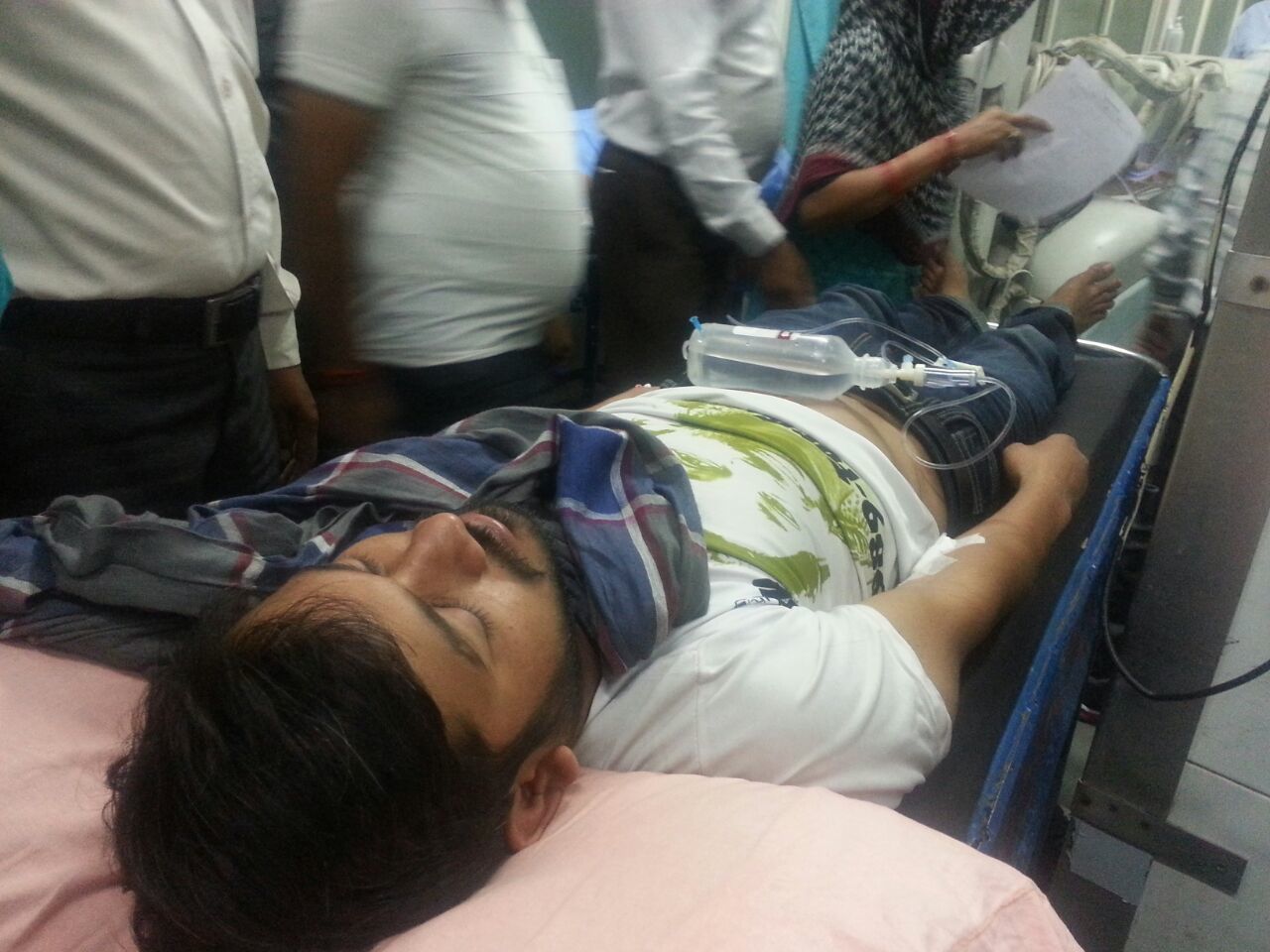
In 2002, the saffron brigade crossed all the limits when they handed over a 7-year-old boy to the police for being an “intellectual terrorist”. The event occurred at the Bhopal session of the IHC in January 2002.[21]The crime of this 7-year old “terrorist” was that he was trying to sell an “objectionable” booklet titled Communalisation of Education: The History Textbook Controversy. The book contains articles by Romila, Bipan, Irfan Habib, RS Sharma, Satish Chandra, and Arjun Dev. Reprints of newspaper articles by Vir Sanghvi, Dileep Padgaonkar, and others, and the text of deletions made from NCERT’s history textbooks were included in this booklet.
Srikanth, the 7-year old “terrorist”, son of Prof. Sucheta Mahajan, and nephew of Profs. Mridula and Aditya Mukherjee, all at JNU, students and colleagues of Bipan, and co-authors of India’s Struggle for Independence, had accompanied his parents to the congress. While selling copies of the booklet to IHC delegates, a man accosted him and threatened to hand him over to the police.[22] Srikanth was actually taken to the police posted at the venue.
The saffron brigade has always used intimidating tactics to “expose” the Marxists and people/organisations who they consider as threats to their existence in India. The tactic continues, this time the difference is that Bipan is not alive to put forth his defence and launch scathing attack on the saffron brigade playing with historical facts and history writing in particular.
We have a Destroy-History Inc. ruling the country. We must assert ourselves and tell them that you do not teach us who Bhagat Singh is; as historians, we must tell them that history writing is a serious business and you keep your “melodramatic” TV anchors and MPs away from this very serious discipline. You do not possess that critical qualification needed to produce an unbiased, objective history, because your only qualification is enacting a “high-voltage drama” in TV rooms and the Parliament, you don’t even know the difference between a TV studio and Parliament. We will resist the attempts of communal forces to replace historians like Bipan, Romila, and Irfan with a PN Oak, we will not let you scrap Mughal history, and we will not let you teach us that Taj Mahal is a Shiva Temple.
Let’s wage a fight against this fascist regime, which is not only trying to appropriate our great icons like Ambedkar, Bhagat Singh, and Bose, but, as Kanhaiya Kumar said, they are actually “encroaching” upon these icons.
Let’s stand in defence of history and historians.
(Sudha Tiwari is a PhD research scholar at the Centre for Historical Studies, JNU, New Delhi.)
[1] These articles have been accessed through the Proquest Times of India archive available on the JNU library website. [2] A Staff Reporter, “Teachers, journalists assail move on history books”, The Times of India, 21 September 1977, p. 4. [3]A Staff Reporter, “Author denies Marxist style of interpreting history”, The Times of India, 28 September 1977, p. 3. [5]“Historians Under Attack: Narendra Panjwani talks to controversial …”,The Times of India, 27 November 1977, p. SM2. [7] Ibid. I was reminded of a similar question asked by Umar Khalid in his comeback speech in JNU, what if he was a Namazi, a believer, a practicing Muslim, what if he was from Azamgarh and not a student at JNU? How would the judiciary and police and intelligence agencies have dealt with him then? [8]Chandra, Bipan, “Crucial Test”,The Times of India, 29 January 1978, p. 4. [9]“Govt. sops feed communal fever”, The Times of India, 28 April 1986, p. 16. [12]Historian defends “Tamas” telecast”, The Times of India; 25 January 1988, p. 4. [15]Sen, Manjula,“Historian decries regional chauvinism”, The Times of India, 22 March 1989, p. 9. [19]Chandra, Bipan,“Of those who write history”, The Times of India, 1 Mar 1992, p. 15. [21] Sakina Yusuf Khan, “7 -year- old targeted at history congress”, The Times of India, 13 January 2002, p. 7. 
 SabrangIndia has accessed a document which clearly indicates that the VCs soul lies with the Sangh (RSS). The document in question is an article written by HV Sheshadri, former all-India general secretary of the RSS on the 'Relevance of the RSS in our National Life'. Kumar was sufficiently inspired by this RSS self-eulogy to forward it to others for inspiration. Here is the text he circulated.

.jpg)

 In the same year, amidst the text book controversy, Bipan answered few important questions in an interview given to Narendra Panjwani. Bipan told Panjwani, “One of our main objectives [of writing these text books] was to write the books in such a way as to get students to take history seriously…. We wanted to write history so as to show that it can be logical and scientific and capable of throwing useful light on the present.”



.jpg)
.jpg)