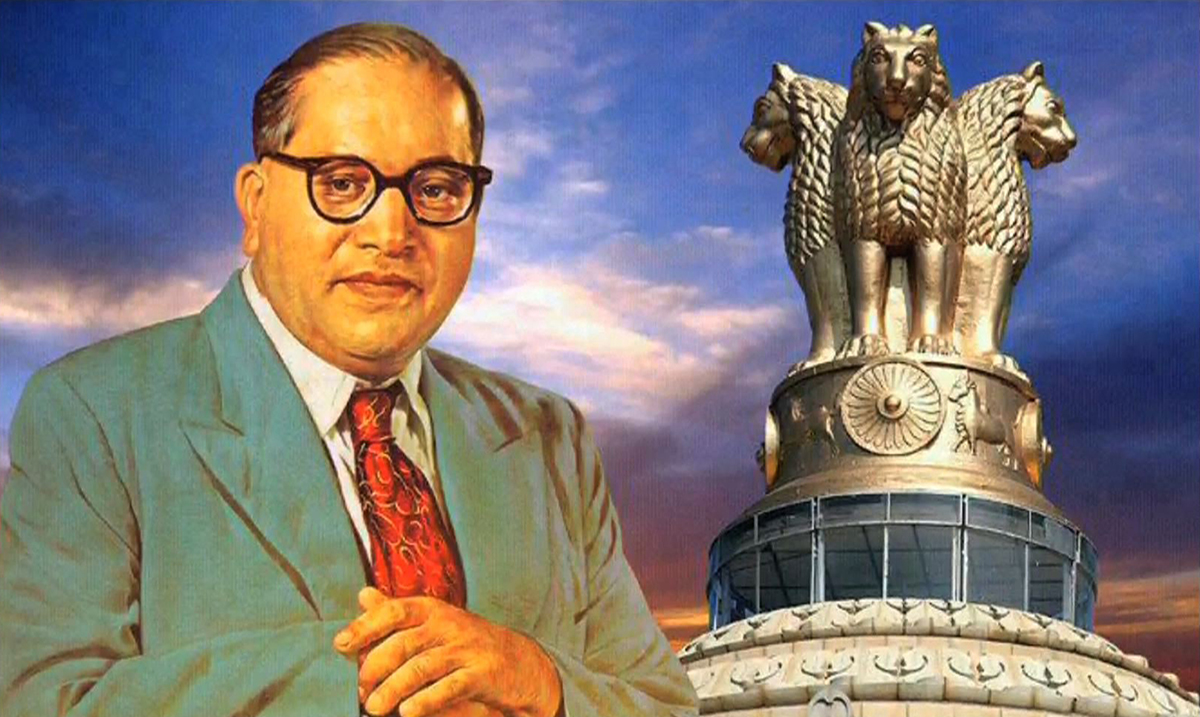
Until 1992, December 6 was remembered as ‘Parinirvan Divas’ of Dr BR Ambedkar, legendary son of the oppressed who had clearly recognised the true meaning of Hindutva and warned his followers about the dangers of Hindu Rashtra. Post 1992, December 6 has an added meaning and it relates to the demolition of Babri Mosque undertaken by the very forces hastily trying to appropriate him.
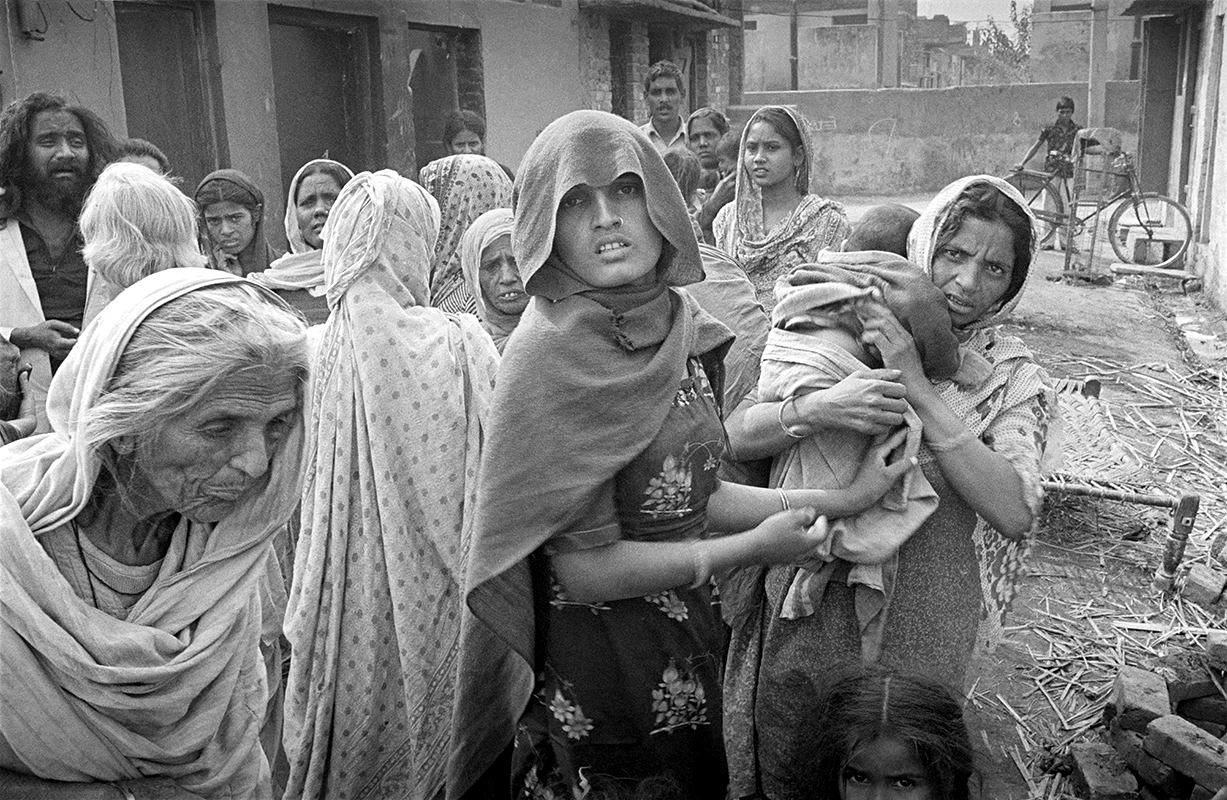
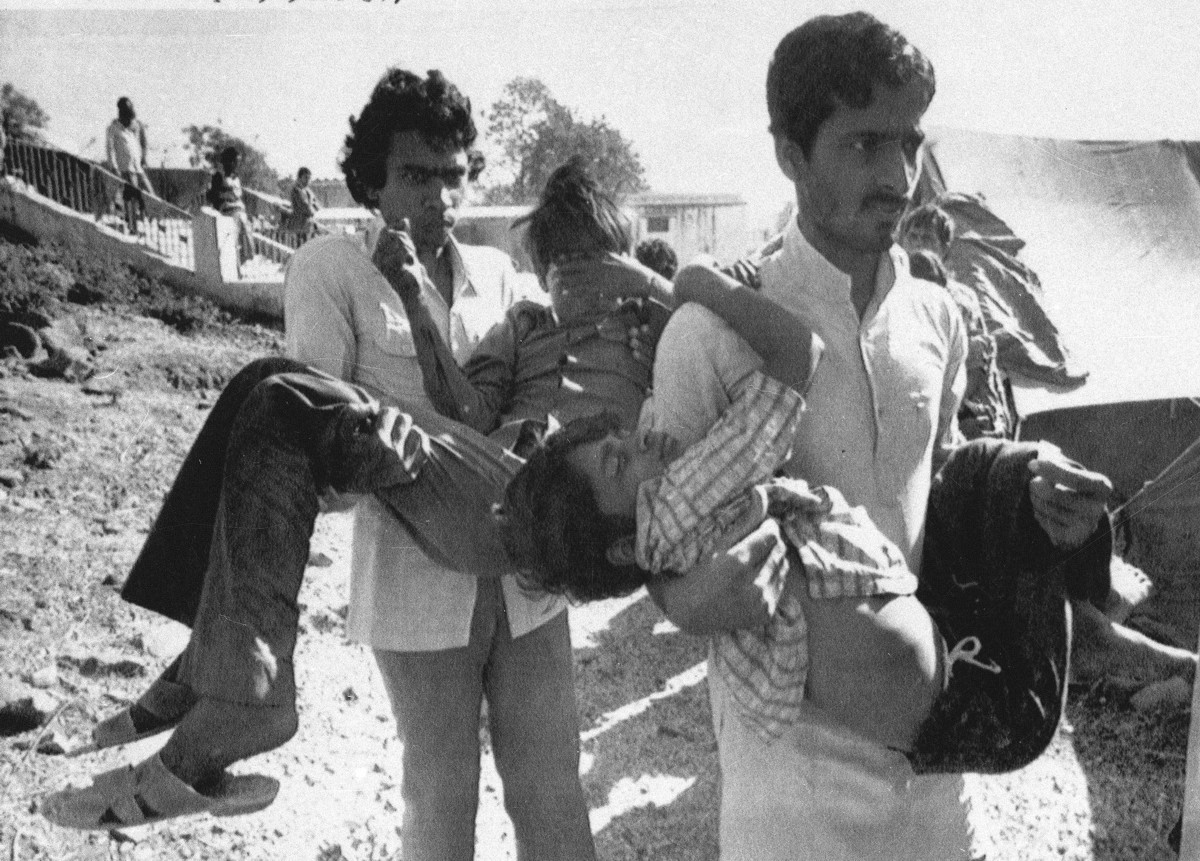
Apart from the fact that this event led to the biggest communal conflagration at the national level post-independence, repercussions of which are still being felt and whose perpetrators are still roaming free, we should not forget that it was the first attack of this scale on the principles of secularism and democracy, which has been a core value of the Constitution drafted under the chairmanship of Dr Ambedkar.
“If Hindu Raj does become a fact, it will no doubt, be the greatest calamity for this country. No matter what the Hindus say, Hinduism is a menace to liberty, equality and fraternity. On that account it is incompatible with democracy. Hindu Raj must be prevented at any cost.”
– Ambedkar, Pakistan or Partition of India, p.358
“Indians today are governed by two ideologies. Their political ideal set in the preamble of the constitution affirms a life of liberty, equality and fraternity whereas their social ideal embedded in their religion denies it to them.”
– Ambedkar
This is the first Ambedkar memorial lecture which is being organised, as the invite tells us, saluting ‘the contribution of the great visionary leader who not only fought for political revolution but also argued for social revolution’.
You have made this beginning at an opportune moment in our country’s history when we are witnessing a concerted attempt from the powers that be to water down Ambedkar’s legacy, project him as someone who sanctioned the illiberal times we live in today, communicate to the masses that he was friends with the leading bigots of his time and finally appropriate his name to peddle an agenda which essentially hinges around political and social reaction.
Wishing you the best for starting this conversation among students, who yearn to become a vehicle for social change in the days to come. I would like to share some of my ideas around the theme.
Yes, we definitely need to understand Ambedkar’s role as a chairman of the drafting committee of independent India’s Constitution and the skilful manner in which he ‘piloted the draft’ in the Constituent Assembly. But that is not enough. We also know how during his more than three-decade long political career he put forward a “variety of political and social ideas that fertilised Indian thinking” as in the words of the late Indian president KR Narayanan, which contributed to the rulers of the newly independent nation, India’s decision to adopt the parliamentary form of democracy. Perhaps more important for the ensuing discussion would be his differentiation between what he called ‘political democracy’ – which he defined as ‘one man one vote’ and ‘social democracy’ – which according to him was ‘one man with one value’ – and his caution that political democracy built on the divisions, asymmetries, inequalities and exclusions of traditional Indian society would be akin to ‘a palace built on cow dung’.
We also need to take a look at the unfolding scenario in the country today and also see for oneself whether there is a growing dissonance or resonance between how Dr Ambedkar envisaged democracy and the actual situation on the ground. Through this prism we should assess our role in confronting the challenges that lie before us.
While we remember and take stock as it were, this great colossal that Ambedkar was, not for a moment can we forget the mammoth task undertaken by other ‘founding fathers’ – which included leading stalwarts of the Independence movement – of the nascent republic. It was this collective that together introduced the right to vote to every adult citizen to a country reeling under abject poverty and mass illiteracy. This right to vote came to many countries of the West through struggles decades later. But our Constitution and fundamental rights were born overshadowed by the bloody partition riots.
Does the image and memory of Ambedkar, brought to us through textbooks and popularised by the ever expanding media match his actual contributions as a leader, scholar and renaissance thinker?
Try to imagine what sort of image(s) comes to mind when somebody mentions his name. I can mention a few: leader of the Dalits, chairman of the Drafting Committee of the Constitution’, a man who ‘fought for the rights of scheduled castes’, ‘embraced Buddhism with lakhs of followers’. With some exceptions, the image of Ambedkar in the public mind does not transcend this.
The imagery excludes, somehow, the historic Mahad Satyagrah which was organised under his leadership way back in 1927. In Marathi this revolutionary moment has been captured euphemistically thus, ‘when water caught fire’, when it took place at the Chawdar Talab (lake). Nor does this public imagery stretch to include the burning of the Manusmriti in its second phase, which was compared to the French revolution by Ambedkar in his own speeches. The imagery cleverly excludes any details of the first political party formed under his leadership called the Independent Labour Party, the role of many non-Dalits or even upper castes in the movement led by him or the historic march to Bombay assembly against the ‘Khot pratha’ where communists had participated in equal strength. His historic speech to the railway workers in Manmad when Ambedkar asked them to fight the twin enemies of ‘brahmnanism’ and ‘capitalism’ (late thirties) or his struggle to ensure enactment of the Hindu Code Bill, which ultimately became the reason for his resignation from the Nehru cabinet. All these vivid and critical parts of his stormy life and varied contributions escape popular imagery. There are many others that do not fit in with the overpowering one of a ‘Dalit messiah’.
Is it really surprising that most Indians know so little of him, not the case with other great leaders who emerged during the anti-colonial movement?
This selective amnesia about Ambedkar is in large measure due to the way in which the more privileged sections, dominated by the upper caste elite, shaped a limiting image, albeit in a very surreptitious manner. Others involved in the work of a broader social transformation, which also included organisations claiming to be his legatees, also cannot escape blame for the critical silences around his image. These organisations and movements either remained oblivious to the designs of the varna (caste) elite or were not conscious/careful enough to comprehend their game-plan.
Any student of politics of the oppressed would know and vouch for the fact that this is the fate of most leaders of the exploited and oppressed, the world over. When they cannot any more be ignored completely, the image that is shaped needs careful scrutiny.
A similar process which unfolded itself in the United States where a very sanitised image of Martin Luther King, has been popularised. Instead of the MLK who opposed the Vietnam war, looked at capitalism as the source of all evil, who equally struggled for workers’ rights as black rights, we have before us an image of a uni-dimensional King.
As we celebrate Ambedkar’s life, and further discuss his ideas on democracy and their relevance today, this historic task beckons us: we need to fight with all our strength against the ‘reduction’ of his image and what a scholar describes as a deliberate process of ‘mythologising the man and marginalising his meaning’.
Ambedkar’s idea of democracy
The future of Indian democracy depends to a great deal upon revival of Ambedkar’s visionary conception of democracy with modern modifications.
But it would be opportune to know from Ambedkar himself how he looked at the idea of democracy. His speech on the ‘Voice of America’ radio (May 20, 1956) which he gave few months before his death could best summarise his ideas,
‘The roots of democracy lie not in the form of Government, Parliamentary or otherwise. A democracy is more than a form of Government. It is primarily a mode of associated living. The roots of democracy are to be searched in the social relationship, in the terms of associated life between the people who form a society.’
Next he comes to define the word ‘society’ itself. For him a society is conceived ‘as one by its very nature’ and ‘[T]he qualities which accompany this unity are praiseworthy community of purpose and desire for welfare, loyalty to public ends and mutuality of sympathy and co-operation.’
Interrogating Indian society further he questions whether ‘these ideals are found in Indian society?’ And elaborating on the Indian society which is nothing but ‘an innumerable collection of castes which are exclusive in their life and have no common experience to share and have no bond of sympathy’ he concludes that
‘The existence of the Caste System is a standing denial of the existence of those ideals of society and therefore of democracy.’
Then he further discusses how ‘Indian Society is so embedded in the caste system that everything is organized on the basis of caste’ and shares examples from daily life of individuals revolving around the twin concepts of purity and pollution and moves to socio-political arena and wryly concludes that ‘[t]here is no room for the downtrodden and the outcastes in politics, in industry, in commerce, and in education.’
During his more than three-decade long political career he put forward a “variety of political and social ideas that fertilised Indian thinking” in the words of the late Indian president KR Narayanan, which contributed to the rulers of the newly independent nation, India’s decision to adopt the parliamentary form of democracy.
Further he discusses other special features of the caste system which ‘[h]ave their evil effects and which militate against democracy’ and he focuses on what is called ‘graded inequality’ where ‘castes is not equal in their status’ but rather ‘[a]re standing one above another’ and form ‘an ascending scale of hatred and descending scale of contempt’ which has the most pernicious consequences as ‘[i]t destroys willing and helpful co-operation.’
Then discussing the difference between caste and class, he takes up the second evil effect in the caste system accompanied by inequality which is ‘complete isolation’ which manifests itself in the difference between stimulus and response between two castes which is only ‘one-sided’ and which ‘educates some into masters, educate others into slaves’ and this separation thus ‘prevents social endosmosis’.
Later taking up the manner in which one caste is bound to one occupation which ‘cuts at the very roots of democracy’ he tells how this arrangement which denies the right to ‘open a way to use all the capacities of the individual’ leads to stratification which is ‘is stunting of the growth of the individual and deliberate stunting is a deliberate denial of democracy.’
In the concluding part of his speech he discusses obstacles in the way to end the caste system and he points out the ‘system of graded inequality which is the soul of the caste system’ and also how ‘Indian society is disabled by unity in action by not being able to know what is its common good’ where ‘the mind of the Indians is distracted and misled by false valuations and false perspectives’ and ends his speech by emphasising that mere education cannot destroy caste system rather education to those ‘[w]ho want to keep up the caste system is not to improve the prospect of democracy in India but to put our democracy in India in greater jeopardy.’
One can also further add that as opposed to the conservative notion which promotes it as an idea which is an instrument to stop bad people from seizing power Ambedkar’s conception is geared to social transformation and human progress and he defines it as ‘a form and a method of government whereby revolutionary changes in the economic and social life of the people are brought about without bloodshed.’
Elucidating the conditions to make it possible it can be inferred that
“(1) there should not be glaring inequalities in society, that is, privilege for one class; (2) the existence of an opposition; (3) equality in law and administration; (4) observance of constitutional morality; (5) no tyranny of the majority; (6) moral order of society: and (7)public conscience.” [1]
In his speech to the Constituent Assembly on November 25, 1949 he also expressed three cautions and believed that paying heed to them was critical to ensure our democratic institutions did not get subverted : (i) constitutional methods: (ii) not to lay liberties at the feet of a great man: (iii) make a political democracy a social democracy.”
Looking at the fact that India happens to be a multi-denominational society where the common denominator could be secularism which is understood as one of the pillars on which the superstructure of our democracy rests and is a unifying force of our associated life, he emphasised:
“The conception of a secular state is derived from the liberal democratic tradition of the West. No institution which is maintained wholly out of state funds shall be used for the purpose of religious instruction irrespective of the question whether the religious instruction is given by the state or by any other body.”
In a debate in Parliament, he also underlined:
“It (secular state) does not mean that we shall not take into consideration the religious sentiments of the people. All that a secular state means that this Parliament shall not be competent to impose any particular religion upon the rest of the people. That is the only limitation that the Constitution recognises.”
Taking into consideration the possibility that a minority can become a victim of the tyranny of majority, he suggested enough safeguards for their protection:
“The State should guarantee to its citizens the liberty of conscience and the free exercise of his religion including the right to profess, to preach and to convert within limits compatible with public order and morality.”
Prof Jean Dreze[2] brings forth an important point in his article wherein he underlines how ‘Ambedkar’s passion for democracy was closely related to his commitment to rationality and the scientific outlook.’ In this connection he quotes one of his last speeches “Buddha or Karl Marx”, wherein summarising the essential teachings of Buddha he elaborates:
“Everyone has a right to learn. Learning is as necessary for man to live as food is… Nothing is infallible. Nothing is binding forever. Everything is subject to inquiry and examination.”
This selective amnesia about Ambedkar is in large measure due to the way in which the more privileged sections, dominated by the upper caste elite, shaped a limiting image, albeit in a very surreptitious manner.
According to him it was important to bring this up looking at the ‘[r]ecent threats to Indian democracy (which) often involve a concerted attack on rationality and the scientific spirit.’ Perhaps one can go on elaborating further on the nuances of Ambedkar’s understanding of democracy but that is not the only aim of this intervention. As promised in the beginning we also need to take a look at the unfolding situation.
What is a sine qua non of democracy?
It is the understanding that minority voices will be allowed to flourish and they will not be bulldozed.
At the apparent level majoritarianism (rule by majority) sounds very similar to democracy but it essentially stands democracy on its head. For real democracy to thrive, it is essential that ideas and principles of secularism are at its core. The idea that there will be a clear separation between state and religion and there won’t be any discrimination on the basis of religion has to be its guiding principle.
Majoritarianism thus clearly defeats democracy in idea as well as practice.
While democracy’s metamorphosis into majoritarianism is a real danger, under rule of capital – especially its present phase of neo-liberalism – another lurking danger is its evolution into what can be called as plutocracy – government by the rich.
Recently two interesting books have come out discussing 21st century capitalism. The one by Thomas Picketty ‘Capitalism in the 21st Century’ , which demonstrates convincingly that the twentieth century exhibited a secular tendency toward continuous and widening inequality, has been received well in India too. It discusses increasingly disproportionate concentration of income at the top, and the widening inequality that goes along with it, is integral to the system and a consequence of “the central contradiction of capitalism,” (Capital, 571). Piketty’s core theoretical concept is expressed in the formula ‘r>g’, where ‘r’ represents the return on capital/INVESTMENT, and ‘g’ the rate of growth of the economy.
Much like Piketty’s contribution, a major study of democracy in America has also received almost as much attention in the West. It confirms our suspicions that oligarchy has replaced democracy.
The authors found that “policies supported by economic elites and business interest groups were far more likely to become law than those they opposed…. [T]he preferences of the middle class made essentially no difference to a bill’s fate”. The study “Testing Theories of American Politics: Elites, Interest Groups, and Average Citizens” by Martin Gilens (Princeton) and Benjamin Page (Northwestern) – which entirely undermine the notion that America is a democracy – and carries wider significance has not received attention here[3]. “Majority rule” accounts, construed numerically or by any “median voter” criterion, are found to be a “nearly total failure.” Controlling for the preferences of economic elites and business-oriented interest groups, the preferences of the average citizen have a “near-zero, statistically non-significant impact upon public policy.”
The preferences of economic elites have “far more independent impact upon policy change than the preferences of average citizens do.” This does not mean that ordinary citizens never get what they want by way of policy. Sometimes they do, but only when their preferences are the same as those of the economic elite…
“[M]ajorities of the American public actually have little influence over the policies our government adopts… [I]f policymaking is dominated by powerful business organizations and a small number of affluent Americans, then America’s claims to being a democratic society are seriously threatened.”[4]
According to the authors their results are ‘troubling news for advocates of “populistic” democracy.’ “When a majority of citizens disagree with economic elites and/or with organized interests, they generally lose… even when fairly large majorities of Americans favour policy change, they generally do not get it.”
In such an unfolding situation, where we are faced with the dangers of democracy metamorphosing into majoritarianism and democracy becoming oligarchy with the highly undemocratic, violent Indian society – which glorifies violence against the oppressed and legitimises, sanctifies inequality in many ways acting as a backdrop, the question of what needs to be done arises?
Jean Dreze, in the same article suggests a course of action which merits attention
“[t]he best course of action may be to revive the Directive Principles of the Constitution, and to reassert that these principles are “fundamental in the governance of the country” (Article 37)
Indeed, in spite of much official hostility to these principles today, there are unprecedented opportunities for asserting the economic and social rights discussed in the Constitution – the right to education, the right to information, the right to food, the right to work, and the right to equality, among others. Dr. Ambedkar’s advice to ‘educate, organise and agitate’ is more relevant than ever.
(This is an edited version of the presentation made by the author at the Department of Social Work, Delhi University, during their programme centred around the first Ambedkar Memorial Lecture, in April 2015)