Home Blog Page 2627

Dangers of deletion

0

The Ambedkar cartoon has been misread. And this could be just the beginning

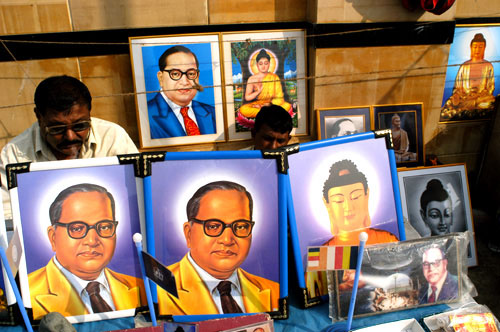
Ever since the Ambedkar cartoon controversy erupted, I have not stopped wondering about the irony of the situation. The attempt, perhaps the first one in national textbooks, to accord Babasaheb Ambedkar his due place as one of the founders of our republic, was being attacked for insulting him. Professor Suhas Palshikar, who has taught me to read Ambedkar more carefully, has been attacked in Ambedkar’s name. To be honest, we did expect an attack on these books at some point from some quarters. But little did we imagine that it would come from proponents of social justice.

Over the last two days we have tried explaining this to anyone who cares to listen. Palshikar tried explaining this to his attackers too. The cartoon in the spotlight is actually one of the more innocuous of the hundreds used in the political science textbooks of the National Council of Educational Research and Training (NCERT). It has been made to look offensive by a series of misreadings. One, the content of the cartoon has been mischievously presented by overlooking the positive symbolism (that Ambedkar holds the reins to the Constitution and holds a whip) and overplaying a possible negative symbolism (Nehru holding a whip behind Ambedkar has been presented as Nehru whipping Ambedkar). Two, the art form of a cartoon is negated by a crass literal reading of the symbol of a whip. Three, the cartoon is detached from the text accompanying it on the same page that celebrates the deliberations that led to the delay in the making of the Constitution. Four, the cartoon is isolated from other cartoons involving Nehru, Indira Gandhi and other leaders that appear in this and other textbooks. Finally, Ambedkar’s depiction in this cartoon is torn out of the context of how Ambedkar and his ideas are treated in this and other textbooks.

Having gone over this a few dozen times, it became clear to me that this debate was no longer about Ambedkar or the cartoon. The real danger is not what you can see and identify clearly. The danger lies lurking just beyond your vision.

For starters, the danger is not that one or a few controversial cartoons may be removed from the textbooks without good reasons. That would be sad but not a cause for alarm. The danger is that this is just the beginning. The minister’s reply in Parliament mentioned a review of other "objectionable" cartoons and content in the textbooks. A group of parliamentarians has been demanding the deletion of several cartoons that showed politicians in a poor light. Many MPs are uncomfortable with the truthful account of post-independence history in these books. Ambedkar’s name may have been used to shield much else. This may be the beginning of a slow and imperceptible rollback of a historical transition in the writing of textbooks in this country that took place between 2005 and 2008, following the adoption of the National Curriculum Framework.

This is linked to the issue of autonomy of institutions like the NCERT. Again, the danger is not that of a sudden loss of autonomy vis-à-vis the government. It is hardly a secret that the autonomy of such institutions vis-à-vis the babus in the ministry is at best highly circumscribed and often non-existent. The rights of the authors and advisers vis-à-vis the NCERT and that of the NCERT vis-à-vis the ministry are admittedly in a grey zone. The parliamentarians obviously did not see anything grey here. They wanted to settle on the floor of the House an issue concerning the content of a textbook that had gone through a due internal process. The minister obliged. The real danger is that this would begin to appear normal to us, that we would forget that institutional autonomy is an issue.

Again, the danger is not that this issue would compromise our freedom of expression in a general sense. The media’s intense scrutiny of the political class on this question has demonstrated, if it needed any demonstration, that the Indian media enjoys ample freedom to take on the government. Besides, the textbook is not the site for an unbridled exercise of freedom of expression. Textbook writing is an exercise in caution and balance. The danger here is that we would miss an opportunity to define what freedom of expression should mean in the context of a textbook. In the course of a TV debate, a fairly well-read MP complained that this cartoon sowed doubt in the minds of young students. The danger is that we might begin to think that textbooks must not create doubts, must not leave any questions.

The attack on Palshikar’s office has momentarily shifted attention to the physical danger to which scholars involved in such an exercise may be exposed. He handled the attack with the equanimity, dignity and courage that I have come to associate with him. If and when my turn comes, I would try and emulate him. But that is not the real long-term issue. The danger is psychological. Just think of the message such an incident sends to any future textbook writers. You cannot blame them for looking at every passage, every image, every drawing, to ensure they have eliminated the possibility of giving rise to any offence to any group that may exist then or in the future. The worst form of censorship is the one that lies in the mind of the author. In any case, a text pruned of the possibility of misreading is a text devoid of any interest and substance.

Finally, the danger is not that loud voices of identity politics will triumph through brute parliamentary majority. The real danger is that any such "triumph" may be counterproductive. This incident might end up damaging Dalit politics in more ways than one. It is not just that the Dalit-bahujan leaders have lived up to their worst stereotypes in the mainstream media and reinforced the prejudices of the chattering classes. Unfortunately, the shrill pitch of the parliamentary debate and its echoes in the media may have already created an insult for Babasaheb that was never inflicted, let alone intended. The censorship that the Dalit leadership and its loyal intellectuals demand today could end up deifying Ambedkar into an empty symbol, worse than any caricature.

 This article was published in The Indian Express on May 14, 2012.; www.indianexpress.com

Archived from Communalism Combat, June 2012.Year 18,No.166 – Controversy

Destroyed records resurface

0

Excerpt from CJP’s letter to SIT investigating officer AK Malhotra, April 20, 2011

“Now, after nearly two years of the SIT saying that these records, as per the government of Gujarat’s version, are destroyed, you mentioned when I (Teesta Setalvad) brought this to your attention to be recorded in my 161 statement, that then commissioner of police PC Pande has, after the hon’ble court directed the SIT to go into the report filed by the amicus curiae, thereafter produced the entire documentary record that he had scanned and kept aside before they were ‘destroyed’! You also mentioned that there was 3,500 pages of such evidence which the SIT is now, after nearly two years of the inquiry, examining.

We wish to express, as co-petitioners and co-complainants, our distress and consternation at what we believe is a belated attempt by Shri Pande to save his skin or those of his political bosses, as all this while – including in the report submitted by yourself and Shri Raghavan to the hon’ble Supreme Court – you have maintained that these records have been destroyed. Shri Pande has, we have been given to understand, twice before been examined by the SIT in the Zakiya matter, between May 2009 and May 2010. Surely in the 12-month period he ought to have produced this record that he had so carefully scanned and preserved?

It may be assumed that if the inquiry had not reached this stage i.e. if the hon’ble Supreme Court had not impelled or compelled the SIT to go further, Shri Pande’s sudden and generous manoeuvre would have never happened, that is, the “destroyed” records would have remained buried!

Sir, We were particularly disturbed by your interpretation of the actions of Shri Pande, which seemed to be interpreted as his astute generosity (Shri Pande’s) in actually scanning and producing these records at this belated stage. The following questions arise that we wish to place specifically before you:

  1. The timing of the “destroyed” records “reappearing” in the action of Shri PC Pande suddenly handing over the scanned CD of all destroyed documents to you post-March 15, 2011 i.e. the last directions of the hon’ble Supreme Court.
  2. Since Shri Pande’s role of collusion in the conspiracy has been specifically alleged, we at least cannot see this either as a stray or innocent act and would therefore urge that a hard, objective inquiry into the previous evasion and suppression of evidence, and thereafter the sudden disclosure, takes place and offences against Shri PC Pande are also registered for the earlier suppression and subsequent disclosure.
  3. When a senior officer like Shri Pande states that records are destroyed, in the preliminary inquiry, and thereafter turns up with the vanished documents, what are we to make of this? Similarly, we believe that videos will turn up.
  4. Shri Pande’s role in the overall conspiracy and his subsequently being rewarded for his silence and suppression make him liable to be inquired into. His personal assets and accounts and those of his family members as also the assets and accounts of other IPS and IAS officials who have been favoured by the government of Gujarat need to be part of the inquiry.
  5. We thought it imperative that this matter be placed on record…

I would like to end by stating that the fresh revelations by Shri Pande amount to an effort by a highly placed officer of not merely attempting a cover-up of his suppression of crucial records for nine-plus years but subverting the inquiries into various cases by not making available these records in the individual trials and thereby committing grave contempt of the judicial process. We would like to state that though partial records in the Gulberg cases (police control room and fire brigade, etc) were made available, this happened only after applications under 173(8) were filed by witnesses and did not logically form part of the charge sheet as they should have done from the very beginning. Why were Shri Pande and other senior officials suppressing these records? Allegations of high-level involvement and complicity have been made by victim survivors since immediately after the incidents. Was this suppression related to protection of the mighty and powerful?”

The SIT in 2010

“The Gujarat government has reportedly destroyed the police wireless communication of the period pertaining to the riots… No records, documentations or minutes of the crucial law and order meetings held by the government during the riots had been kept” (p. 13 of the Preliminary Inquiry Report).

The SIT makes this observation but recommends no action for this criminal act.
 

Missing Records

Following a perusal of the documents given to the complainant Zakiya Ahsan Jaffri, she, assisted by CJP, has pointed out that the following documents are missing from the record. Since the SIT is contesting her right to have these documents, a full-fledged hearing on the question will take place before the magistrate on May 19, 2012.

Documents that are missing from the record presented to the magistrate’s court and given to the complainant are:

  1. Preliminary Inquiry Report by AK Malhotra of the SIT, dated May 12, 2010, submitted to the Supreme Court of India.
  2. Analysis/Comments by the chairman of the SIT, dated May 14, 2010, presented to the Supreme Court.
  3. Reports of further investigation under Section 173(8) of the CrPC conducted by the SIT.
  4. Further Investigation Reports by the SIT filed periodically in the Supreme Court of India along with accompanying documents.
  5. Any other reports of the SIT concerning this complaint dated June 8, 2006 that have been submitted to the Supreme Court.
  6. Note of the then additional chief secretary (home), Ashok Narayan, on the Godhra incident prepared, according to the SIT, on the basis of information provided by the then director general of police, K. Chakravarti, and then submitted to the chief minister for his approval (before the assembly).
  7. Statement on the Godhra incident read out in the assembly by the then minister of state for home, Gordhan Zadaphiya, according to the SIT, and prepared by the home department based on information available at that time.
  8. Circulars on police force deployment on February 27 and February 28, 2002, signed by the home minister and obtained from the general administration/home department.
  9. Statements of Central Reserve Police Force (CRPF) and Railway Protection Force (RPF) officials regarding the Godhra incident and its fallout, recorded by the SIT.
  10. Statement of Vipul Vijay, IPS, Gujarat.
  11. Details and analysis of the Police Exchange phone numbers that record details of internal calls made by police officers to each other.
  12. Fire brigade registers from Ahmedabad, Mehsana, Anand, Kheda, Ahmedabad rural, Vadodara, Panchmahal, Dahod, Banaskantha, Sabarkantha, Bharuch, Ankleshwar, Bhavnagar, Rajkot – the 14 worst affected districts as outlined in the complaint dated June 8, 2006.
  13. Gujarat home ministry notings transferring/promoting/sidelining police officers as mentioned in the complaint.
  14. Gujarat law ministry notings on the appointment of special public prosecutors with ideological leanings as detailed in the complaint.
  15. Affidavits of the mamlatdar[executive magistrate], Godhra, ML Nalvaya, filed before the Nanavati-Shah Commission, dated June 3, 2002 and September 5, 2009.
  16. Transcripts and CDs of all national television coverage of the violence of 2002, beginning with the Godhra incident, available on the records of the Nanavati-Shah Commission.
  17. Documents and telephone records, analysis and CDs provided by IPS officer Rahul Sharma to the SIT in the course of this inquiry and investigation.

In addition, the SIT has been directed to make those documents that are illegible available for inspection by the complainant and CJP on May 19, 2012.

 
Archived from Communalism Combat, April-May 2012. Year 18, No.165 – Introduction, Gujarat 2002