Home Blog Page 2645

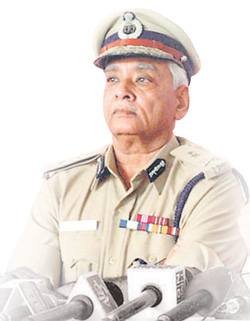
Badge of honour

0

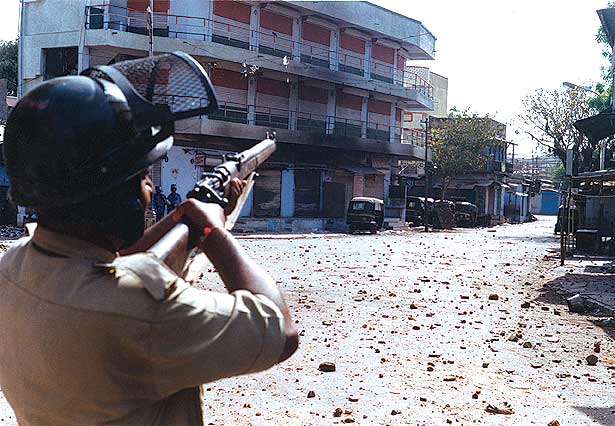
Courtesy: Getty Images

"If observance of Truth was a bed of roses, if Truth cost one nothing and was all happiness and ease, there would be no beauty about it."

– Mahatma Gandhi, Harijan, September 26, 1936.

In the weeks following the Godhra arson it became increasingly evident that the Gujarat genocide had been crafted in minute detail, meticulous orchestration and planning that resulted in the widespread bestiality witnessed during the carnage. Militias numbering several thousand persons, trained to disseminate rumour, barter on hate and fuel frenzy, erupted into countless streets across the state. Their venom spread through major cities like Ahmedabad, Vadodara and Bhavnagar, and swept through several districts, Kheda, Panchmahal, Dahod, Mehsana, Anand and elsewhere in Gujarat.

Newspaper reports as well as Communalism Combat’s special issue, "Genocide – Gujarat 2002" (March-April 2002), traced numerous efforts by individuals in the highest echelons of the state government and bureaucracy to prevent the functioning of the law and order machinery and administration. Officers who did their jobs sincerely were punished. Those who danced to the tunes of Narendra Modi’s Machiavellian flute all flourished.

Amidst this bloody landscape, a silent operation was afoot, conducted by some of the finest in the police force. The Nanavati-Shah Commission opened a window of opportunity for the honest officer to play his card. From mid-2002 onwards a handful of police officers have placed a wealth of scandalous material before the commission to document, in detail, the execution of the gory genocide.

On July 6, 2002, the then additional director general of police (ADGP)-intelligence, RB Sreekumar filed his first affidavit before the commission. The affidavit was deemed a privileged document until the commission released it two years later. (After the BJP and its allies were ousted from power at the Centre, the Modi government in Gujarat moved stealthily to expand the enquiry commission’s terms of reference to include investigation into the role of the chief minister and senior officers in the post-Godhra violence. The obvious intention was to pre-empt the newly formed UPA government at the Centre from appointing another commission of enquiry covering all aspects of the genocide.)

Thereafter, RB Sreekumar filed three more affidavits before the Nanavati-Shah Commission, on October 6, 2004, on April 9, 2005 and on October 27, 2005. His submissions before the commission reveal a startling pattern of state complicity and duplicity in the events related to the Gujarat genocide of 2002 and the government’s continuing efforts to subvert the process of law and justice. But his insistence on the truth in the face of such persistent and powerful adversity proved costly. In early 2005, barely a few months after he had filed his second affidavit before the commission in October 2004, Sreekumar was superseded for promotion to the post of director general of police (DGP), a post he richly deserved.

In his third affidavit dated April 9, 2005 filed before the commission, Sreekumar narrates the state government’s efforts to browbeat him into obscuring the truth. A tape recording and transcripts of a conversation that took place between Sreekumar and the undersecretary of the home department, Dinesh Kapadia, on August 21, 2004, form an annexure to this affidavit. With Sreekumar’s deposition before the commission due on August 31, 2004, Kapadia tried to persuade Sreekumar to depose in favour of the state government. Three days later, on August 24, 2004, GC Murmu, secretary (law & order), home department, and Arvind Pandya, government pleader before the Nanavati-Shah Commission, did their best to further browbeat Sreekumar regarding his deposition. This conversation was also taped and the tape recording and transcripts were submitted to the commission. These are crucial documents that record the pressure being exerted on Sreekumar by Murmu and other officials, including a lawyer appearing for the state government, to conceal the truth from the Nanavati-Shah Commission.

These were not the only attempts made to restrain an honest police officer. To his third affidavit, Sreekumar also annexes a copy of a personal register maintained by him between April 16 and September 19, 2002. Cross-signed by OP Mathur, the then inspector general of police (IGP) (administration & security), the 207-page register contains a telling narrative of repeated efforts by the chief minister and top bureaucrats to coerce an upright officer who was proving to be a serious thorn in the flesh for the state government.

On April 19, 2005, Sreekumar also moved the Central Administrative Tribunal (CAT) challenging his supersession for the post of DGP. In September 2005 (after he had filed three affidavits exposing the state’s complicity in the post-Godhra violence) the Gujarat government ordered a departmental enquiry against Sreekumar on the basis of a charge sheet issued by the state, which, in effect, questions the facts he has placed before the Nanavati-Shah Commission. After several hurdles the CAT finally delivered an order in Sreekumar’s favour on the day he retired from service i.e. February 28, 2007. The order is yet to be implemented. The state government has challenged the CAT order through an appeal filed in the Gujarat High Court. Sreekumar’s challenge to the charge sheet is a matter still pending before the tribunal.

Quoting statistics of heavy casualties among Muslims due to police firing, Sreekumar appealed to Modi to see reason and to acknowledge that it was Hindus who were on the offensive. The chief minister instructed him not to concentrate on the sangh parivar since they were not doing anything illegal

Analysis of the register

It is the duty of a competent officer in the intelligence department to collect data from various sources of which he then maintains a record. Sreekumar was issued what he interpreted as unconstitutional directives from the top man in the state. He not only resisted these verbal orders, which he clearly saw as illegal, he did more. He maintained a record of these orders for the future. Not directed by his superiors, this personal register is a contemporaneous document maintained by an officer who grasped the wider motives at work and decided to provide a detailed record of those moments.

Sreekumar’s register consisted of three columns. The first recorded the date and the time when each instruction was given, the second recorded the nature and source of the instructions that were issued and the third recorded the nature of action taken. The contents of this register provide invaluable information about the workings of the Modi regime.

Sreekumar makes his first entry on April 16, 2002. He notes that the chief minister, Narendra Modi called a meeting attended by his principal secretary, PK Mishra, the then DGP, K. Chakravarti, and Sreekumar himself. Modi claimed that some Congress leaders were responsible for the continuing communal incidents in Ahmedabad. As head of the State Intelligence Bureau (SIB), Sreekumar said that he did not have any information to this effect. Nevertheless, Modi asked him to immediately start tapping state Congress president, Shankarsinh Waghela’s telephone lines. The chief minister’s principal secretary also tried to persuade Sreekumar in this regard. Sreekumar replied that it was neither legal nor ethical to do this since they had received no information about Waghela’s involvement in any crime. A terse comment contained in the third column of Sreekumar’s register states: "The chief minister’s instruction, being illegal and immoral, not complied with."

At two separate meetings held on April 22, 2002 some officers, including Sreekumar and a few others, brought up the question of the Muslim community’s severe disenchantment with the police for its failure to register FIRs and conduct proper investigations into incidents of communal violence. At the first meeting, which was convened by the chief secretary, G. Subbarao, and where Ashok Narayan, additional chief secretary (home), and the Ahmedabad municipal commissioner were also present, Sreekumar brought up the issue of the Muslim community’s lack of faith in the state administration vis-à-vis arrests of perpetrators and recommended that action be taken. The chief secretary said such action (against Hindu perpetrators) was not immediately possible as it went against government policy. At the second meeting too, the chief secretary evaded the issue of arrests. Sreekumar’s register reads: "This response of the chief secretary was reflective of government policy of evading, delaying or soft-pedalling the issue of arrests of accused persons belonging to Hindu organisations."

On April 30, 2002, ADGP RB Sreekumar received another illegal instruction from the chief minister routed via DGP K. Chakravarti. The DGP informed Sreekumar that the chief minister had instructed him to book Congress leaders for their alleged involvement in instigating Muslims to boycott and obstruct the ongoing Class XII examinations and that he (the DGP) had told the chief minister that action could only be taken on the basis of specific complaints. The next day, on May 1, the DGP told Sreekumar that the chief secretary was being persuaded to create a policy that would allow the ‘elimination’ of ‘Muslim extremists’ disturbing communal peace in Ahmedabad. Sreekumar records his reply that this would be cold-blooded and premeditated murder with which the DGP concurred. The emergent picture exposes Modi’s plans to script yet another saga of unlawful state driven violence and the chief secretary and additional chief secretary’s willingness to go along with this. The DGP emerges as a man caught in the throes of a battle with his conscience, prompted by a little help from RB Sreekumar.

On May 2, 2002, former DGP, Punjab, KPS Gill took charge as special security adviser to Narendra Modi. Two days later i.e. on May 4, he called a meeting of senior officers for an informal briefing. DGP K. Chakravarti, the commissioner of police (CP), Ahmedabad city, PC Pande, the ADGP (law & order), Maniram, the joint commissioner of police (JCP), Ahmedabad, MK Tandon, the deputy inspector general of police (DIGP)-CRPF, Sharma, and ADGP Sreekumar were all present.

While PC Pande, the then CP, Ahmedabad (and currently DGP, Gujarat), tried to paint a positive picture about the situation, ADGP Maniram provided his frank assessment that the police force in Gujarat, and particularly in Ahmedabad city, was extremely demoralised and the situation demanded that there should be a change of (police) leadership at every level, from the CP, Ahmedabad, downward. Maniram also stated that police officers had become subservient to political leaders and in matters of law and order, crime, investigation, etc, they carried out the instructions of political masters because these individuals, local BJP legislators or sangh parivar leaders, had a lot of clout. Political leaders arranged police postings and ensured continuance in choice executive posts. Maniram pleaded for the restoration of sanity and professionalism in the police force.

Sreekumar endorsed Maniram’s assessment and informed Gill that for the past five or six years the BJP government had been pursuing a policy of (1) saffronisation/communalisation, (2) de-professionalisation and (3) subversion of the system. He explained the subtle methodology adopted by the BJP government to persuade, cajole and even intimidate police personnel at the ground level. Sreekumar gave Gill a copy of his report on the prevailing situation in Ahmedabad. He also told Gill of the Muslims’ loss of faith in the criminal justice system and suggested remedial measures. Gill, however, did not respond to these suggestions. In his register Sreekumar notes: "It is felt that Shri Gill has come with a brief from Shri LK Advani, union home minister. So he will carry out the agenda of Shri Narendra Modi, the chief minister."

On the afternoon of May 7, 2002, the chief minister, Narendra Modi summoned Sreekumar for a meeting where he asked the ADGP for his assessment of the continuing violence in Ahmedabad. Sreekumar promptly referred to his note on the prevailing communal situation whereupon Modi said that he had read the note but believed Sreekumar had drawn the wrong conclusions. The chief minister argued that the violence in Gujarat did not necessitate such elaborate analysis – it was a natural uncontrollable reaction to the incident in Godhra. He then asked Sreekumar to concentrate on Muslim militants. Sreekumar pointed out that it was not Muslims who were on the offensive. Moreover, he urged the chief minister to reach out and build confidence within the minority community. Modi was visibly annoyed at Sreekumar’s suggestions.

Quoting statistics of heavy casualties among Muslims due to police firing, Sreekumar appealed to Modi to see reason and to acknowledge that it was Hindus who were on the offensive. The chief minister instructed him not to concentrate on the sangh parivar since they were not doing anything illegal. Sreekumar replied that it was his duty to report accurately on every situation and "provide actionable, preventive, real time intelligence having a bearing on the order, unity and integrity of India".

The very next day, on May 8, 2002, the DGP informed Sreekumar that at a meeting with Gill the latter had told the DGP that (1) The police should not try to reform politicians (which meant that the BJP and the sangh parivar could continue to suppress, terrorise and attack Muslims even as the police took no action) (2) There was no need to take action against the vernacular press (who were publishing communally incendiary writing that fanned violence against the minorities) (3) The police should begin to play an active role in getting rid of the inmates of relief camps. Sreekumar told the DGP that the police should not be party to the forcible eviction of Muslim inmates of relief camps and the DGP agreed with him.

On June 7, 2002, the chief minister’s principal secretary, PK Mishra asked Sreekumar to find out which minister from the Modi cabinet had met a citizens’ enquiry tribunal (looking into the Godhra and post-Godhra violence) of which retired supreme court judge, VR Krishna Iyer, was a panel member. Mishra told Sreekumar that minister of state for revenue, Haren Pandya, was suspected to be the man concerned. He also gave Sreekumar the number of a mobile phone (No. 98240 30629) and asked him to trace details of this meeting through telephone records. On June 12, 2002, Mishra reiterated that Haren Pandya was believed to be the minister concerned. In his register, Sreekumar states that he had stressed that the matter was a sensitive one and outside the SIB’s charter of duties. Call details of the above mobile phone were however handed over to Mishra through IGP OP Mathur.

On June 25, 2002 the chief minister convened a meeting of senior officers to enforce the law according to their (Modi’s) reading of the situation. Sreekumar writes: "It is… unethical and illegal advice because the police department has to work as per law and not according to the political atmosphere prevailing in the state. He (Modi) also asked police not to be influenced by the Jawaharlal Nehru University (JNU) brand of secularism. The indirect thrust of the chief minister was that police officers should become committed to the policies of the ruling party so that law enforcement can be done smoothly."

Battle lines were further drawn on June 28, 2002 when at a meeting convened by the chief secretary, G. Subbarao, to discuss the chief minister’s proposed gaurav yatra (march of pride) in September, Sreekumar proposed that in light of the prevailing tension the annual Jagannath rath yatra in July 2002 should be cancelled. The CP, Ahmedabad, endorsed this view while a few others suggested a change in the parade route. The chief secretary then informed the group that there was no question of such a cancellation or even a change of route. After the meeting, the chief secretary took Sreekumar aside to tell him that anyone trying to disrupt the rath yatra should ‘be eliminated’, adding that this was ‘the well-considered decision of the chief minister’. Sreekumar told Subbarao that such an action would be totally illegal and unethical. The chief secretary maintained that it could be justified in terms of ‘situational logic’. Sreekumar replied that the police had to function in accordance with the law. The chief secretary then promptly watered down his request and asked Sreekumar to keep an eye on the plans of anti-social elements. 

On July 1, 2002 Narendra Modi himself convened a meeting to review the law and order situation in view of the proposed gaurav yatra in September and the annual Jagannath rath yatra scheduled to take place that month. At this meeting Sreekumar provided intelligence inputs of ‘high voltage threats’ from pan-Islamic elements who would use such occasions and elicit support from those damaged and scarred by the recent violence. He advised that the rath yatra should be cancelled. His personal register notes: "The chief minister said that the rath yatra will not, repeat, will not, be cancelled." Eight days later, describing a follow-up meeting organised by the chief secretary on July 9, 2002 where precautionary measures were discussed, Sreekumar’s register entry states that "The chief secretary informed (the meeting) that anybody trying to disturb the rath yatra should be shot dead."

On August 6, 2002 DGP Chakravarti informed Sreekumar that the additional chief secretary (home), Ashok Narayan was not too happy with the data on communal incidents that the ADGP’s office had provided to the home department. In his register, Sreekumar writes: "I responded that my office has been providing correct information and the ADGP (int.)’s office cannot do any manipulation of data for safeguarding the political interests of the Narendra Modi government."

Sreekumar’s register notes that on August 5, 2002 the additional chief secretary had expressed his annoyance and displeasure at the SIB’s presentation of data on the communal situation. Narayan noted that it did not conform to LK Advani’s reply in parliament on the Gujarat question! He felt that every incident that occurred was being labelled a communal one, thus presenting a misleading picture of the law and order situation in Gujarat, especially to the Chief Election Commission (CEC). (This was the period when the Gujarat government was trying to push ahead with early assembly elections claiming that ‘normalcy’ had returned to the state and the CEC was due to visit Gujarat for an independent assessment.) Sreekumar asked Narayan to define the yardstick for assessment of affected areas but received no satisfactory response. The same afternoon, the home secretary, K. Nityanandam instructed the ADGP’s office that they should not send any data on communal incidents whereupon Sreekumar informed him that the data could not be manipulated to serve the interests of the Modi government. By this time it was evident that with elections around the corner the higher bureaucracy was apprehensive about any information that could embarrass the government.

On August 8, 2002, Ashok Narayan informed Sreekumar and others present that the next day (i.e. August 9) the election commission, consisting of chief election commissioner (CEC), James Lyngdoh, and two other members, would be holding a meeting which Sreekumar should also attend. The additional chief secretary also told Sreekumar that he "should not make any comments or presentation which would go against the formal presentation prepared by (home secretary) Shri K. Nityanandam". Sreekumar replied that he would "present the truth and my assessment based on facts".

On August 5, 2002 the additional chief secretary had expressed his annoyance and displeasure at the SIB’s presentation of data on the communal situation. Narayan noted that it did not conform to LK Advani’s reply in parliament on the Gujarat question!

At the time, the Gujarat bureaucracy had planned two presentations to be made before the CEC, one by the home secretary and another by the relief commissioner, CK Koshy. In an informal chat with his officers on August 9, 2002, chief secretary, G. Subbarao said that his men should present a picture of normalcy so that the CEC would have no reason to postpone the Gujarat elections. The CEC met the higher bureaucracy the same day. James Lyngdoh intervened at the start to say that he was not interested in presentations. The chief secretary carried on regardless, saying that "total normalcy was restored in the entire state and no tension was prevailing anywhere". Sounding both annoyed and incredulous, Lyngdoh observed that the commission had just visited affected areas where victims had made numerous complaints. He cited reports of a recently constructed wall barring right of passage to minority members in a particular locality of Ahmedabad. Undeterred, the chief secretary replied that rehabilitation was virtually complete and that most riot victims had returned home. A visibly angry Lyngdoh then asked the chief secretary how he had the ‘temerity to claim normalcy’ given the quantum and scale of the complaints. Lyngdoh insisted that the Gujarat government provide data along standard lines about the number of FIRs filed, the number of perpetrators arrested, the number of accused released on bail, the number of displaced persons, the compensation paid, and so on.

DGP K. Chakravarti then abruptly steered the discussion to the need for extra paramilitary forces during the forthcoming gaurav yatra. Sreekumar reiterated this point. Here, the CEC intervened to point out the contradiction between the chief secretary’s claims of normalcy and officers’ demands for additional forces. Lyngdoh then asked Sreekumar to elaborate on his claim for more forces. Sreekumar made his presentation (which included data on the number of deaths, property losses, the districts and villages affected and the overall plight of victims), arguing that tension still prevailed in 993 villages and 151 towns that had witnessed riots between February 27 and July 31, 2002. The affected area, he said, covered 284 police stations and 154 out of 182 assembly constituencies. On being asked to estimate the number of additional forces required, the DGP said that they would need at least 202 extra companies.

After all the other officers had left, the chief secretary summoned Sreekumar and shouted, "You have let us down badly! What was the need for you to project all those statistics about displaced people?" Sreekumar told him that he had presented the facts. Later, as Sreekumar was waiting for another meeting, additional chief secretary, Ashok Narayan came into the room along with the DGP and asked Sreekumar why he had made a statement contrary to the government’s ‘perception’. Narayan also asked Sreekumar whether as a disciplined officer he accepted the DGP’s authority. Sreekumar told him that the question was best answered by the DGP himself. Refraining from comment, the DGP (perhaps to avoid a confrontation) said that there was no point in pursuing the discussion. DGP Chakravarti later told Sreekumar that his assessment, particularly of manpower requirements, was accurate.

This was not all. On September 10, 2002, the National Commission for Minorities (NCM) faxed a message to the Gujarat home department requesting a verbatim copy of the chief minister’s speech made at Becharaji, a temple town in Mehsana district, on September 9, 2002. Modi’s hate speech formed part of the overall message of his gaurav yatra. Keen to block such information, the home department got the DGP to endorse that Sreekumar’s department, the ADGP (int.)’s office, was not required to provide such a report. Sreekumar, however, felt duty bound to comply with the request. Risking the wrath of his superiors, Sreekumar obtained a copy of the speech and forwarded this to the commission. Sreekumar’s action, his sending a copy of Modi’s speech to the NCM, was the proverbial last straw on the official camel’s back. He was immediately transferred from the post of ADGP (intelligence) and made ADGP (police reforms), a position empty of content.

Following protocol, Sreekumar then called on the chief secretary, G. Subbarao. The chief secretary told him that he should not have spoken up in contravention of state policy. Sreekumar responded that as a government functionary his oath was to the Constitution and "If the chief minister’s policies are in contravention of the letter, spirit and ethos of the Constitution of India, no government officer is bound to follow such policies." Visibly annoyed, the chief secretary brought the meeting to an abrupt end. RB Sreekumar’s personal register ends with this episode.

Archived from Communalism Combat, July 2007 Year 13  No.124, Genocide's Aftermath Part II, State Complicity 1

Commission and omission

0

Questions abound about the functioning of the Nanavati-Shah Commission in light of the wealth of material placed before it. There appears to be a definite reluctance to probe this evidence further. Former ADGP, RB Sreekumar and former SP, Bhavnagar, Rahul Sharma deposed before the commission. However, several obvious questions were left unasked:
 

  • Why were no minutes prepared of the meetings held by the chief minister and other senior officers to review the situation from February 27, 2002 onwards? Why were such minutes not circulated to concerned officials?
  • If such minutes were prepared, why were no copies of such minutes submitted to the commission?
  • Why were the dead bodies of the Godhra arson victims paraded through the streets of Ahmedabad city, especially when many of the deceased belonged to places outside Ahmedabad city and a few had not even been identified at that juncture?
  • Did the CP, Ahmedabad, or the DGP, Gujarat, report in writing to the chief minister or their superiors in government and administration on the possible adverse repercussions on law and order by this parade of dead bodies?
  • If any such letters were sent to higher authorities, why were they not placed before the commission?
  • Why was no preventive action taken against communal elements on February 27/28, 2000 even though the call for a bandh (on February 28) by the sangh parivar and the BJP was issued on February 27, 2002 itself?
  • Why was the Communal Riot Scheme not put into operation in relevant areas from the evening of February 27, 2002 onwards?
  • Why was no prompt and effective action taken against the rioters by officers of the rank of DSP (deputy superintendent of police) and above (who had additional forces of armed policemen moving with them), particularly in Ahmedabad city which has about 40 such DSPs and Vadodara city, which has about 30?
  • Why was no action taken by the policemen in approximately 100 police mobile vans stationed in Ahmedabad city, as also in Vadodara city, against crowds that first began to congregate in small numbers on the morning of February 28, 2002 onwards?
  • Why was no action taken when enforcers of the bandh created traffic disturbances and indulged in petty crimes on the morning of February 28, 2002 so as to test the mood and strategy of the police?
  • Why was there a delay in the imposition of a curfew, particularly in Ahmedabad city? (In Ahmedabad, curfew was imposed as late as 1.00 p.m. on February 28, 2002.)
  • Why were no arrangements made for videography of the violent mobs despite regulations to this effect?
  • How or why did the police fail to videograph mobs even as the electronic media succeeded in doing so? Were there any orders to prevent this?
  • Why was no effective action taken against rioters by policemen at specific locations and in mobile patrolling groups, both in vehicles and on foot, from the evening of February 27, 2002 onwards?
  • Why was there such a delayed response to distress calls from prominent Muslim citizens such as former MP, Ahsan Jaffri, despite their having made frantic calls to the chief secretary, the DGP, the CP, Ahmedabad city, etc, and possibly even the chief minister?
  • Why were there higher casualties of rioting and police firing among Muslims?
  • Why were the instructions contained in the compilation of circulars entitled "Communal Peace", issued to all district magistrates and police officers of the rank of SP and above, not implemented?
  • Why were the "Instructions to deal with Communal Riots (Strategy and Approach)", originally issued by former DGP, KV Joseph, and prepared by former officer on special duty, ZS Saiyed, and forwarded to all executive police officers for strict implementation, not enforced?
  • Why was there no monitoring of the implementation of instructions issued by the chief secretary, the home department, the DGP and other higher officers from February 28, 2002 onwards?
  • Why was no action taken against the vernacular press publishing communally inflammatory news reports and articles despite clear reports from the SP, Bhavnagar (Rahul Sharma), the CP, Ahmedabad (PC Pande) and the ADGP (int.), RB Sreekumar, that such action should be initiated?
  • Why was no action taken or any enquiry instituted against police officers for their alleged failure to record FIRs and conduct proper investigations into complaints of riot victims, largely minorities, although this matter was emphasised by ADGP RB Sreekumar in his reports to the government dated April 24, 2002, June 15, 2002, August 20, 2002 and August 28, 2002?
  • Why was no action taken or any enquiry instituted against officers of the executive magistracy, particularly district magistrates, who failed to initiate prompt action against rioters, especially between February 27 and March 4, 2002? Similarly, why was no action taken or any enquiry instituted against district magistrates and their staff who recommended the appointment of pro-BJP/VHP advocates as public prosecutors in a bid to subvert the trials that would follow?
  • Why was no action taken against supervisory officers (i.e. DSPs, Range IGs/DIGs, CPs and the DGP) who violated Rules 24, 134, 135 and 240 of the Gujarat Police Manual-Vol. III by not properly supervising the investigation of serious riot related crimes and who were thereby guilty of culpable omission and grave misconduct?
  • Why was no action taken against supervisory officers (i.e. the Range IG, Vadodara Range, and the CP, Vadodara city) who were guilty of gross misconduct and negligent supervision in the Bilkees Bano and Best Bakery cases, trials of which had been transferred from Gujarat to Maharashtra by the Supreme Court?
  • Why was no investigation conducted into the deposition by Rahul Sharma, the then SP, Bhavnagar, before the commission on October 30, 2004, about the location of BJP leaders and senior officers in Bhavnagar while a madrassa was being attacked? (In November 2004, the English daily, The Indian Express, published a three-part investigative report that exposed revealing conversations between influential politicians and policemen.)
  • Why was no clarification provided on the government’s inadequate implementation of recommendations made by the National Human Rights Commission, the National Commission for Minorities and even the Supreme Court?

Godhra Train Burning, February 28, 2002, Gujarat 2002, Genocide, Pogrom, Narendra Modi, RB Sreekumar, ADGP Intelligence Gujarat, Nanavati-Shah Commission, Religious Intolerance, Violence, Discrimination, Rule of Law, Rights and Freedoms, Gender, Communal Organisations
 

Reward and punishment

0

The role of the Gujarat government in constructing the conspiracy theory behind the Godhra train arson and engineering the post-Godhra genocide has now been well documented. The report of the Concerned Citizens Tribunal also documented the names of officers and bureaucrats with a clear nexus to the sangh parivar (Crime Against Humanity – Volume II, Findings and Recommendations).

As far back as April 24, 2002, the then ADGP, RB Sreekumar recorded in a confidential report of the State Intelligence Bureau (which was also submitted to the Nanavati-Shah Commission) that "The inability of the Ahmedabad city police to contain and control violence unleashed by communally oriented mobs created an atmosphere of permissiveness and this eroded the image of the police as an effective law enforcing machinery in society, particularly among the lumpen and underworld segments… Many senior police officers spoke about officers at the decisive rung of the hierarchical ladder viz. inspectors in charge of city police stations ignoring specific instructions from the official hierarchy on account of their getting verbal instructions from senior political leaders of the ruling party."

Worse still was the consistent policy followed by the state government to punish those officers who performed their duties according to the law and to reward those who promoted killings, rape and arson by going along with the unlawful plans of the chief minister and his party during and after the 2002 genocide. For example:
 

RB Sreekumar: The former ADGP (intelligence) was transferred to the insignificant post of ADGP (police reforms) in September 2002. The transfer was ordered following Sreekumar’s determined efforts to uphold the law and expose the Modi administration’s nefarious activities during and after the 2002 violence. Between July 2002 and October 2005 Sreekumar filed four affidavits before the Nanavati-Shah Commission that provided startling evidence of the chief minister and his administration’s complicity in the genocide, their continuing anti-minority actions and their unrelenting efforts to obscure the truth. In early 2005 Sreekumar was superseded for promotion to the post of DGP, Gujarat, a decision that he challenged before the Central Administrative Tribunal. Although the tribunal ultimately ruled in his favour, the order was delivered on the day Sreekumar retired from service on February 28, 2007.

Rahul Sharma: The former SP, Bhavnagar, was transferred to the relatively unimportant post of DCP (control room) on March 24, 2002. Sharma’s strong actions to quell rioting mobs in Bhavnagar helped bring a volatile situation under control. On March 1, 2002, he prevented an attack on a madrassa that housed over 400 Muslim children by opening fire on the mob. Sharma refused to release the 21 persons/leaders belonging to the sangh parivar who were arrested for the attacks in Bhavnagar despite being under immense pressure to do so. In July 2002 Rahul Sharma was transferred to the post of SRPF commandant for opposing the anti-minority stance adopted by the Ahmedabad Crime Branch in the investigation of Ahmedabad city carnage cases. On July 1, 2002 Sharma filed an affidavit before the Nanavati-Shah Commission. In October 2004 during his deposition before the commission he produced extensive data in the form of mobile phone records that implicate both politicians and policemen in the rioting. Rahul Sharma is currently on deputation as SP, CBI.
 Vivek Srivastava: The former SP, Kutch, was transferred to the post of DCP (prohibition and excise) in March 2002. Srivastava had arrested a commandant of the Home Guard with known VHP links who was creating trouble in the border district. He carried out the arrest despite instructions to the contrary from the chief minister’s office.

Himanshu Bhatt: The former SP, Banaskantha, was transferred to the Intelligence Bureau at Gandhinagar in March 2002. Bhatt initiated action against a sub-inspector who had assisted a rioting mob. The sub-inspector concerned, who had important political connections, was reinstated from suspension and resumed his duties at the same police station.

MD Antani: The former SP, Bharuch, was transferred out of Bharuch to Narmada district in March 2002. Antani took action against some BJP/VHP supporters creating trouble in Bharuch.

Satishchandra Verma: The former Range DIGP, Bhuj, was transferred in March 2005 to the post of officer in-charge, SRP Training Chowky, Sorath, Junagadh, a post usually occupied by officers at the level of SP. The transfer was effected by upgrading the post from the level of SP to DIGP. Verma was transferred after he ordered the arrest of a BJP MLA from Banaskantha for his involvement in the murder of two Muslim boys during the 2002 violence. He carried out the arrest after fresh investigation entrusted to him as part of the review of about 2,000 riot related cases initiated under orders from the Supreme Court in August 2004.

 Jayanti Ravi: The former collector, Godhra, is now on deputation to the central government. Ravi maintained that the Godhra burning was an accident and firmly advised the chief minister against taking the bodies of Godhra train victims to Ahmedabad on February 27/28, 2002. It was these interventions that compelled the cavalcade to go by road, the initial plan being to take the burnt coach further. Following the outbreak of violence, there had also been large-scale arrests of BJP/VHP workers on rioting charges in areas within her jurisdiction.

Neerja Gotru: The SP (prohibition), Ahmedabad, was appointed special investigating officer assigned to reopen investigations in some riot related cases after the Supreme Court’s intervention in late 2003. Gotru reinvestigated riot related cases in Dahod and Panchmahal districts and managed to reopen some of them successfully. She was asked to wind up her probe in September 2004 soon after she ordered the arrest of a police sub-inspector who had burnt 13 bodies of the victims of the Ambika Society massacre at Kalol, all of them Muslim, in an attempt to destroy evidence. She was also instrumental in pursuing arrests in the Delol massacre case, which the same sub-inspector had closed "for want of evidence".
 

G. Subbarao: The former chief secretary was given a three-month extension in his post and also appointed chairman of the Gujarat Electricity Regulatory Commission for six years from May 2003. Occupying the senior-most position within the state bureaucracy in 2002, Subbarao coerced officials to support the unlawful policies of the Modi government and even instructed officers to ‘eliminate’ minorities.

Ashok Narayan: The former additional chief secretary (home) was given a two-year post-retirement position as Gujarat state vigilance commissioner. He was selected for this sensitive post despite the fact that his conduct and performance as former additional chief secretary is currently under scrutiny at the Nanavati-Shah Commission. Narayan helped the Modi government to carry out its anti-minority policies during and after the 2002 violence. He further demonstrated his allegiance to the chief minister by not revealing anything adverse in his affidavit before the commission and during his cross-examination before the commission in August 2004. Moreover, he did not file a second affidavit under the commission’s second term of reference (probing the chief minister’s role in the violence).

PK Mishra: The former principal secretary to the chief minister and chief executive officer, Gujarat State Disaster Management Authority (GSDMA), was later appointed to the important post of additional secretary, ministry of home affairs, Gujarat. He was also sent on several foreign jaunts in his capacity as chief of the GSDMA. Mishra was rewarded for his services to political masters as dedicated collaborator in the chief minister’s anti-minority drive. PK Mishra is currently principal secretary in the department of agriculture and cooperation of the union ministry of agriculture under the Nationalist Congress Party’s Sharad Pawar.

AK Bhargava: Appointed DGP, Gujarat, in February 2004, Bhargava was allowed to hold the additional charge of MD, Gujarat State Police Housing Corporation Ltd., controlling an annual budget of Rs 200 crore. As DGP, he readily cooperated with the government in protecting the BJP’s political interests in the matter of review of about 2,000 riot related cases, the Pandharwada mass graves case, the harassment of upright officers, compliance with the government’s illegal directives, and so on.     

PC Pande: The former CP, Ahmedabad city, was inducted into the central government by the NDA in March 2004, to the prestigious post of additional director, CBI. Pande’s appointment to the CBI was challenged by Citizens for Justice and Peace (CJP) in the Supreme Court and he was directed by the apex court not to have anything to do with the Gujarat cases. Pande was then transferred to the post of additional director-general of the Indo-Tibetan Border Security Force in October 2004. In April 2006 Pande was appointed to the post of DGP, Gujarat, after which a second approach to the Supreme Court by CJP has once again led the court to direct him not to be involved in the investigation of riot related cases. It is relevant to note that Pande’s appointments to these influential posts are rewards for his services in facilitating the massacre of nearly 1,000 persons in Ahmedabad city during the 2002 riots, 95 per cent of them Muslim, and for shielding the Hindu perpetrators from arrest during the investigation of riot cases.

Kuldeep Sharma: The former Range In-charge, IGP, Ahmedabad Range, was promoted to the post of ADGP (crime), Gandhinagar. Sharma was rewarded for facilitating riots in the rural areas of Ahmedabad Range (the districts of Ahmedabad Rural, Kheda and Anand). He has also not filed any affidavits before the Nanavati-Shah Commission.

Punishment: Interestingly, in July 2005 Sharma was shifted to the post of ADGP (training) for failing to book danseuse and social activist, Mallika Sarabhai, accused in a false case of cheating and other offences, and for failing to protect a minister in the Modi cabinet – Prabhatsinh Chauhan – involved in a case of criminal misappropriation.     

MK Tandon: The former Joint CP, Ahmedabad city, was transferred to the "lucrative" Surat Range post in May 2002 and later promoted to the post of ADGP, Gandhinagar. In July 2005 Tandon was appointed to the post of ADGP (law & order) at the state police headquarters, a position with statewide jurisdiction. Tandon was rewarded for his services in facilitating the carnages at Gulberg Society, Naroda Patiya and elsewhere in Ahmedabad city where hundreds of Muslims were killed during the riots in 2002.  

Deepak Swaroop: The former Range Officer, Vadodara Range (covering the districts of Vadodara Rural, Godhra, Dahod and Narmada), was appointed CP, Vadodara, in February 2005. In charge of an area that witnessed ghastly incidents of violence in 2002, Swaroop is noted for his sustained inaction in the face of marauding mobs. He also narrowly escaped reprimand for concealing facts vis-à-vis investigation into the Best Bakery case by sessions judge, Abhay Thipsay, during the retrial of the case in Mumbai.

K. Nityanandam: The former home secretary was promoted to the post of CP, Rajkot city, in February 2005, a promotion effected by upgrading the post by two levels, from DIG to ADGP. Nityanandam was rewarded for his services as home secretary from 2001 to 2005, in particular for manipulating statistics and fabricating and drafting pro-government reports that were submitted to the NHRC and the courts.

Rakesh Asthana: Although a junior IG, Asthana was appointed to the post of IGP of the important Vadodara Range in April 2003. He was rewarded for zealously pursuing the government’s conspiracy theory with regard to the Godhra incident in his capacity as head of the Special Investigation Team probing the Godhra train arson. 

AK Sharma: The former SP, Mehsana, was appointed to the post of IGP, Ahmedabad Range, an important jurisdiction, an appointment that was achieved by downgrading the post. In early December 2002, prior to the Gujarat assembly elections, AK Sharma was removed from the post of SP, Mehsana, under instructions from the election commission who believed his presence would not be conducive to the conduct of free and fair elections in the district. He was however reinstated as SP later that month. Sharma was rewarded for his services during the riots of 2002. It was under Sharma’s jurisdiction that Mehsana district witnessed gruesome incidents of mass carnage, including the massacre at Sardarpura.    

Shivanand Jha: The former Addl. CP, Ahmedabad city, was appointed home secretary in February 2005. As Addl. CP, Jha headed the team that assaulted representatives of the media and social activists – including Narmada Bachao Andolan leader, Medha Patkar – at a peace meeting in Ahmedabad in April 2002. He was then transferred to the post of DIG (armed units), Rajkot, an appointment achieved by downgrading the post. Jha was rewarded in view of his services during the 2002 riots and for making no adverse revelations about the government before the Nanavati-Shah Commission. As home secretary, Jha is currently handling the preparation of reports defending the government in all matters relating to the 2002 riots and subsequent developments, to be presented to the courts and other bodies.

Sudhir K. Sinha: The former CP, Vadodara city, from June 2003, was appointed CP, Surat city, in February 2005, a post that many consider the most "profitable" one in the Gujarat police. Sinha was rewarded for his services in turning the key prosecution witness in the Best Bakery case, Zahira Shaikh, hostile, an event that occurred during his tenure as CP, Vadodara city.  

DG Vanzara: Appointed DIG, Anti-Terrorism Squad, in July 2005, Vanzara’s appointment was effected by downgrading the post from the level of IGP to DIGP. He was rewarded for ‘eliminating’ several Muslims in so-called police encounters during his tenure as DCP, Ahmedabad Crime Branch, from May 2002 to July 2005. Vanzara is currently in jail for his involvement in the Sohrabuddin Sheikh encounter case.
 

Subservience of the IPS association 
  1. The terror instilled in the minds of the Gujarat bureaucracy is evident in the fact that the IPS association’s Gujarat unit did not dare to convene a meeting until about three years after the genocide. A meeting of the IPS association’s Gujarat unit was finally convened in August 2005 with an aim to install a pro-government group of officers as office bearers. A campaign was launched to install DG Vanzara as secretary (the main functionary in the association) without holding any elections at all. Fortunately, however, elections were held and DIGP Satish Verma defeated Vanzara by a margin of 13 votes (Verma won 31 votes while Vanzara won 18).   
     
  2. The Gujarat police force has about 8,000 vacancies at the constabulary level and about 950 vacancies at the level of police sub-inspector (PSI). These vacancies are in crucial functional posts. The inadequacy of trained and skilled human resources has had damaging effects on the efficiency, dedication and professionalism of the Gujarat police even as it undermines the quality of service delivered to the people. Overworked and under tremendous stress, the policemen at the constabulary and PSI level take the line of least resistance in matters of policing vis-à-vis the interests of the ruling BJP. Submitting to illegal directives from leaders of the ruling party is the only way they can survive.
     
  3. As part of a so-called economy measure, the state government has introduced a new cadre of "Lok Rakshaks" under which persons are hired for policing (eventually to replace the constabulary) at a meagre Rs 2,500 per month. A group of senior citizens headed by former DGP, PB Malia, has filed a petition in the Gujarat High Court asking that the scheme be declared illegal.

Archived from Communalism Combat, July 2007 Year 13    No.124, Genocide's Aftermath Part II, State Complicity 3

Truth and the Nanavati-Shah Commission

0


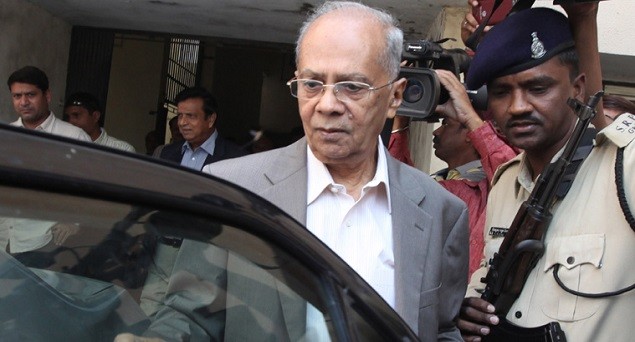
Courtesy: Javed Raja, Indian Express

In addition to about 3,500 affidavits relating to issues of loss of life and damage filed by victim survivors before the Nanavati-Shah Commission, senior police officers in Gujarat  have also filed their affidavits before the public commission of enquiry. An analysis of the latter tells its own two-pronged tale. On the one hand we see stoic courage in the face of adversity from a handful of officers who have laid bare the nitty-gritty of state connivance and planning not to mention several subsequent attempts at subverting the truth. In stark contrast are the testimonies by the majority of officers, many of whom assisted the government in whitewashing its dastardly role in and after the genocide of 2002.

The Gujarat government first announced the establishment of a commission of enquiry to probe the Godhra and post-Godhra carnage in March 2002. The initial announcement itself was seen as a partisan act. In its first official announcement on the matter, the state government declared that the commission would be headed by a single judge, Justice KG Shah, a man whose secular credentials were already somewhat suspect. The appointment of a single judge to investigate a volatile issue in a lawless state, one moreover who had been suspected of biased conduct in previous matters related to communal violence in Gujarat, led to nationwide protests that ultimately forced the government to modify its decision. Justice GT Nanavati’s inclusion on the enquiry panel was a corrective step.

The Modi government’s partisan approach was also reflected in the declaration of two distinct and discriminatory compensation packages for the families of victims who had died in the Godhra fire and those who had been massacred thereafter. Under the Gujarat government’s original plan, the families of victims of the Godhra train fire were to receive Rs two lakh each while the families of those who had died in the post-Godhra violence would receive Rs one lakh – half the amount. Protests finally corrected this blatant discrimination.

Cocooned in the warmth of political family – the parivar ruling at the Centre – the Modi government had announced the commission’s first terms of reference excluding the role of the chief minister, his cabinet, top bureaucrats and policemen from scrutiny. Two years later, the NDA’s unexpected rout in the national elections made the chief minister jittery. In July 2004, not long after the UPA government took charge, Modi hastily expanded the commission’s terms of reference. The step was a pre-emptive one in the event that the new government decided to institute a central government commission to probe the 2002 carnage or worse, lodge an FIR against Narendra Modi!

Thus the second terms of reference of the Nanavati-Shah Commission, issued under a government notification dated July 20, 2004, requested the commission to enquire into "the role and conduct of the then chief minister (Narendra Modi) or any other ministers in his council of ministers, police officers, other individuals and organisations" relating "to the facts, circumstances and course of events of the subsequent incidents in the aftermath of the Godhra incidents".

Even after the commission’s terms of reference were expanded and the enquiry necessitated a detailed scrutiny of their actions, Modi and his officials have done their best to subvert its proceedings. A majority of the key players in the planning and execution of the carnage and subsequent attempts to subvert the process of justice have not filed their second affidavits before the commission under its new terms of reference.

Specific directives by the then DGP, AK Bhargava, through his letters dated September 16 and 29, 2004, instructing all police officers who had filed their first affidavits under the commission’s initial terms of reference to also submit affidavits under the second terms of reference, were ignored. In fact, Bhargava’s orders even stated that it was the duty of the current incumbent in a post to ensure that his predecessor had filed the second affidavit.

The chief secretary is the bridge, the key link between the political echelons of government and the bureaucracy, including the police. He is thus a crucial player who could provide a critical account of events relating to that period of time. Strangely, however, the former chief secretary, G. Subbarao, has not filed any affidavits before the commission so far.

Evidence placed before the commission is unambiguous. And the absence of statements under oath, from key officials of the bureaucracy and the police, revealing. The affidavit and testimony of Rahul Sharma, SP, Bhavnagar, in 2002, is a telling account of the pressures faced by an upright officer of the law who beat down the efforts by fanatical elements to attack a boarding school that housed over 400 Muslim children and burn them alive. Data that Sharma subsequently revealed before the commission in 2004 included mobile phone records of incriminating calls made and received by policemen between February 28 and March 5, 2002.

The first affidavit, filed in July 2002, documents the assiduous attempts by the State Intelligence Bureau to warn of the consequences of the rabid communal mobilisation undertaken by cadres of the BJP, RSS, VHP and Bajrang Dal on their way to Ayodhya

Sreekumar’s four magnum affidavits represent the persistent efforts of a police officer to document the dark reality behind the violence of 2002 and its aftermath. They reveal the role of intelligence agencies in the build-up to the Godhra incident and the genocide of 2002, and the response of the political class, policemen and bureaucrats. If his personal register is a gripping narrative of the Gujarat administration’s barefaced acts of collusion and subversion, his affidavits are substantive revelations of official records of the time.

But Sreekumar’s tireless efforts to expose the truth, his courage, came at a price. His affidavits before the commission not only cost him an important promotion, he was and continues to be hounded and harassed by a vindictive administration. Even so, the Nanavati-Shah Commission has not intervened with any orders that could protect this officer from persistent onslaught. Sreekumar has only suffered for telling the truth before this public body, for upholding Section 6 of the Commissions of Inquiry Act. In light of this, the commission’s silence on the issue is particularly telling and raises serious doubts about the enquiry’s eventual outcome.

Role of state intelligence

The four affidavits filed by RB Sreekumar before the Nanavati-Shah Commission between 2002 and 2005 record startling details of sheer brazenness and collusion. The first affidavit, filed in July 2002, documents the assiduous attempts by the State Intelligence Bureau (SIB) to warn of the consequences of the rabid communal mobilisation undertaken by cadres of the BJP, RSS, VHP and Bajrang Dal on their way to Ayodhya. Sreekumar has stated that the SIB issued regular warnings about the likely threats to public peace that could be expected because of unruly mobilisation by communal outfits. It was the executive wing of the police – influenced no doubt by Modi, key cabinet colleagues and the top echelons of the Indian Administrative Service (IAS), including the chief secretary, G. Subbarao, and the principal secretary to the chief minister, PK Mishra – who simply did not translate these into strict directives for preventive action. The then DGP, K. Chakravarti issued no special instructions for the maintenance of law and order and no strict instructions on how mobs should be dealt with.

The affidavit also records a significant aspect of the post-Godhra genocidal violence in Ahmedabad, one of the areas worst affected by the violence. The attacks in Ahmedabad did not take place in communally sensitive areas and ghettos but in areas where minority communities live(d) in isolation surrounded by Hindus.

In para 17 of his first affidavit, Sreekumar states that as far back as February 13, 2002, in response to a message received from the inspector general (IG) (CI) of the UP intelligence department in Lucknow, the SIB in Gujarat requested the superintendents of police from all districts and commissioners of police from all cities and towns in Gujarat to: "inform the SP, Faizabad, about the movement of kar sevaks from their respective jurisdictions. Following this missive (the) SP, Western Railways, Baroda had informed (the) IGP (communal intelligence), UP, Lucknow, through his fax message…dated February 16, 2002 that Prahlad J. Patel, president of Bajrang Dal, Mehsana, would be leading a group of 150-200 Bajrang Dal activists of Mehsana for the Ayodhya Maha Yagna by 9165 DN Sabarmati Express on February 22, 2002. It was also mentioned in the said fax message that the Bajrang Dal activists travelling to Ayodhya would be carrying trishuls with them. Similarly, SP, Mehsana, also sent a…message to IGP (communal intelligence), intelligence department, Lucknow, UP…dated February 19, 2002, stating, among other things, that a group of 150 Ram bhakts armed with trishuls would be leaving Ahmedabad by train for Ayodhya on February 22, 2002 under the leadership of Prahlad Jayantibhai Patel, president, Bajrang Dal, Mehsana and would be arriving at Ayodhya on February 24, 2002."

It was some of these kar sevaks who, on their return journey from Ayodhya, became victims of the Godhra arson incident on February 27, 2002, and this has also been mentioned in the affidavit.

Failure of central intelligence

Sreekumar’s first affidavit also records the utter failure of both the UP state intelligence department and the central Intelligence Bureau (IB) to forewarn local authorities about the kar sevaks’ movements. In para 18, Sreekumar states that: "It is pertinent to note that there was no intimation from (the) intelligence branch of UP police or central Intelligence Bureau, which has an extensive nationwide network to collect intelligence on developments relevant to internal security, about the return journey of these ram sevaks who had gone to Ayodhya." (It is perhaps significant to note that during this period, while the BJP-led NDA coalition ruled at the Centre, in UP it was Rajnath Singh’s BJP government that was in power until March 8, 2002, following which president’s rule was imposed in the state.)

There was also no information from the central IB or any inputs from any other agency about the possible attack on Ram sevaks returning from Ayodhya by fundamentalist and militant elements among the minority community or other antisocial elements. Worse, in para 19, Sreekumar records that the UP police did not inform the Gujarat state intelligence department or the police about the unruly behaviour of Ram sevaks on their return journey even though there had been an altercation between some Ram sevaks and Muslims when the latter tried to board the train at Rudauli railway station in UP at around 9 a.m. on February 24, 2002. A note dated February 27, 2002, addressed to all DGPs of the country from the IG, intelligence department, UP, about the return journey of ram sevaks, was received a day later, post facto, at 8.15 a.m. on February 28 – that is, after the arson incident on the Sabarmati Express took place.


Courtesy: AP

In this connection, Sreekumar states that: "Though there were intelligence inputs pertaining to the movements of kar sevaks to Ayodhya from Gujarat state, there was no specific information about the return of kar sevaks from Ayodhya, from (the) UP police or central Intelligence Bureau, which has the onerous responsibility of timely forewarning the law enforcement officers in the state about nationwide or interstate emerging trends so that suitable precautionary countermeasures can be taken. The only message about the return of kar sevaks sent by the Uttar Pradesh police was received (by the) Gujarat police only on February 28 i.e. after the incident on February 27, 2002. No intelligence input either from the Government Railway Police (GRP), the Godhra district LIB or central intelligence was available about the possibility of any conspiracy or planning by Muslim militants or any antisocial elements to attack or cause harm to the Ram bhakts returning from Ayodhya. The only intelligence received from the GRP indicated that the Ram bhakts, led by Prahlad J. Patel, president of Bajrang Dal, Mehsana, (were) to start from Ayodhya on February 26, 2002 at night and return to Ahmedabad on February 28, 2002."

Maintenance of internal security is a fundamental if unwritten component of the central Intelligence Bureau’s charter of duties. And this is precisely what the central IB so singularly failed to do. In not providing advance preventive intelligence with regard to the Godhra incident and its aftermath, the bureau compromised internal security and put thousands of people in mortal danger.

Standard IB practice and procedure requires that whenever there are nationwide activities involving large numbers of organised groups, such as the communal mobilisation of kar sevaks, IB agents travel with these contingents. Through the detailed analysis provided in RB Sreekumar’s first affidavit it appears that this procedure was not followed in the case of kar sevaks travelling from Gujarat to Ayodhya in February 2002. If this procedure had been followed, the Gujarat police and intelligence network would have been alerted to the belligerent behaviour of the kar sevaks, their altercation with vendors and others at railway stations, their return to Gujarat a day earlier than scheduled and other related information. Sreekumar’s affidavit states that the central IB did not provide such intelligence to the local police. This ruled out any likelihood of the Gujarat police arranging effective police deployment at railway stations on the kar sevaks’ route.

However, given the communal mobilisation that had been under way from early February 2002, the absence of any deployment of army or paramilitary forces in Godhra, a communally sensitive spot, was conspicuous and even suspicious. This is a task that rests with the state’s home ministry. CC’s "Genocide – Gujarat 2002" issue carried interviews with former officers of the Indian army who have, in the past, been deployed at Godhra in far less tense situations and who expressed outrage that inadequate troops had been deployed there.

Sreekumar’s first affidavit also reveals that the SIB had alerted all police commissioners and SPs in all districts of Gujarat to take precautionary steps to prevent likely communal clashes in their jurisdictions. In effect, it was the perverse will of the chief minister, imposed through a supine bureaucracy and top police leadership, which disregarded systematic warnings from its own intelligence bureau. The SIB had sent out as many as three separate notes in this regard on February 27, 2002 itself. In addition to these messages, on February 27, specific information was also sent to the CP, Ahmedabad city, about the VHP’s call for a Gujarat bandh (on February 28) to protest against the Godhra train burning and a meeting being held by the organisation in that connection at 4 p.m. that afternoon.

The affidavit also records that these warnings continued, unheeded. Even after the initial outbreak of genocidal violence, the SIB periodically provided specific data to jurisdictional police, particularly to the CP, Ahmedabad city, where incidents of communal violence persisted. For instance, a written report dated April 15, 2002 was sent to the CP, Ahmedabad, by the ADGP (int.), informing him about the move by extremist and fundamentalist elements among Muslims to resist large-scale house-to-house search operations ("combing") conducted by the police. The same missive also warned of the plan by radical Hindu elements to organise a major assault in Juhapura, a predominantly Muslim colony. In another despatch to the CP, Ahmedabad city, dated April 26, 2002, the SIB provided information on (1) The plan by Bajrang Dal leaders to distribute lethal weapons (2) The migration of Muslim families from certain areas in Ahmedabad city (3) The plan by Islamic militants from within and outside the country to distribute sophisticated weapons to local Muslim militants.

The central IB unit in Gujarat is called the Subsidiary Intelligence Bureau, Ahmedabad. Strangely, it was Rajendra Kumar, the then joint director, central IB, (Subsidiary Intelligence Bureau, Ahmedabad), who, within hours of the train arson, came out with the theory of an ‘ISI conspiracy’ behind the Godhra incident. On the afternoon of February 27, 2002 itself, the then DGP, K. Chakravarti had informed Sreekumar that Rajendra Kumar had advised and even tried to persuade the DGP to pursue investigations into the Godhra incident along those lines.

During the course of that year, in personal conversations with Sreekumar too, Rajendra Kumar repeatedly stressed the urgent need for the Gujarat police to collect evidence that would prove the ISI conspiracy angle. When Sreekumar questioned the basis of the conspiracy theory, Kumar could not provide any sound and acceptable material to substantiate it. Curiously, Kumar did not send any formal reports, from the central IB to the state IB, containing inputs on the genesis, course and perpetration of the ISI conspiracy and the persons involved in it. Senior BJP leaders, supported by bureaucrats like the secretary (law & order), GC Murmu, and officers like Rajendra Kumar, were hell-bent on projecting an unsubstantiated ‘ISI conspiracy angle’ without furnishing details or proof.

It is significant to note that other senior officers of the SIB who met Gill on May 10, 2002 and presented their own assessments of the scenario concurred with ADGP Sreekumar’s assessment of the situation

Interestingly, on March 28, 2002, as significant political moves were afoot to project an ISI conspiracy behind the Godhra tragedy, a ‘secret’ fax message (signed by GK Naicker, section officer, home department) was received from the union home ministry, suggesting "counter-aggression by radical Muslim youth organised by the banned SIMI (Students Islamic Movement of India) in Juhapura" and that the administration was not dealing firmly with these developments.

It has been reliably deduced that the collusion between the central NDA and Modi’s government extended to hand-picking key officials for key postings before the carnage. Rajendra Kumar and Narendra Modi were old friends. The two men grew close when Rajendra Kumar, an officer from the Indian Police Service (IPS)’s Manipur Tripura cadre, was posted at the central IB in Chandigarh and Modi, as BJP secretary, was in charge of Punjab, Haryana, Himachal Pradesh and Jammu & Kashmir during the 1990s. Within the Gujarat administration it is widely believed that Rajendra Kumar also played a key role in guiding and even prompting former DCP of the Ahmedabad Crime Branch, DG Vanzara, to organise the ‘elimination’ of several Muslims from late 2002 onwards. Rajendra Kumar was also instrumental in having many Muslim youth arrested under POTA and instituting cases against them through the Ahmedabad Crime Branch. Some of these cases were discharged by the court for want of evidence before they reached trial.

Although it is the central IB that is responsible for reporting on internal security, Rajendra Kumar, as joint director, central IB, has not filed any affidavits before the Nanavati-Shah Commission. This amounts to a significant abdication of duty. It is especially significant given the fact that the IB has filed affidavits before other commissions investigating other catastrophes in the past, including the assassination of Indira Gandhi, the assassination of Rajiv Gandhi and so on. Not surprisingly, when on September 6, 2005 the Gujarat government served a charge sheet on RB Sreekumar, Rajendra Kumar, who is currently joint director, IB, at the IB headquarters in New Delhi, under the UPA’s home ministry, offered to be a witness on behalf of the state government!

RB Sreekumar filed his second affidavit before the commission in October 2004, after the commission’s terms of reference had been expanded. This document contains a minefield of information especially with regard to the internal discussions held with KPS Gill, former DGP, Punjab, who was brought in by the NDA regime to ‘bring normalcy to Gujarat’. The affidavit records the first meeting with the ‘supercop’ on May 4, 2002, at which, in keeping with their proclamations to the world, blatant attempts were made by the chief secretary and principal secretary to suggest that ‘normalcy’ had indeed returned to Gujarat. A few officers present at the meeting, including ADGP Maniram and Sreekumar himself, contradicted this by presenting the true picture. They also offered their suggestions on what could be done to improve the status quo. Among other things, Sreekumar gave Gill a copy of the report on Ahmedabad and other communally sensitive areas that he had prepared. His "Analysis of the Communal Situation" dated April 24, 2002, carried with it an unsigned note containing certain points of action that could be implemented to defuse the communally explosive situation.

The suggestions included: "(1) Restoration of the faith of the public, particularly the minorities, in the criminal justice system (2) Replacement of the present incumbents in executive posts at the cutting edge level from those places where the police did not act conscientiously during the riots (3) Effective action to unearth stock of arms and booking of criminal and communal elements of both majority and minority communities (4) Action through non-political spiritual and religious leaders to de-communalise those under the spell of fundamentalist/extremist sections (5) Action at the social level to bring together both communities by proliferating interaction at various facets (6) Action against radical groups (7) Measures to improve the security ambience in the riot affected areas for facilitating the refugees to go back to their pre-riot residential areas (8) Purposeful legal action against publication and distribution of pamphlets/ handbills, etc/reports in the vernacular press, etc fomenting animosity between different groups on grounds of religion."

The report also warned that alarming tendencies could grow and flourish (within the minorities) if such measures were not taken.

Unsurprisingly, Chief Minister Modi’s personal intervention after this report was recorded and circulated (on May 7, 2002; see accompanying article, "Badge of Honour") and ‘supercop’ Gill’s succumbing to political pressure (May 8, 2002) thwarted constructive suggestions from policemen like Maniram and Sreekumar. Gill, in fact, even ‘instructed’ policemen not to try and reform politicians.

Sreekumar’s second affidavit records that, at this time, the SIB had also issued detailed communications (through this report) on signs that the Gujarat police should watch out for: i) some information that about a dozen communal elements from the minority community were trying to instigate violence (May 2, 2002); similar attempts were being made by minority communal elements in the Panigate area of Vadodara (May 4, 2002); likelihood of violence in the Dhobhighat area of Ahmedabad (May 5, 2002); Thakor Hindus trying to foment violence in the Ranip area of Ahmedabad city (May 6, 2002); likelihood of communal violence in the Vadaj and Vasna areas of Ahmedabad city (May 7, 2002); certain tribal sections being violently instigated to oppose rehabilitation of Muslims in Panwad and Kanwat areas of Chhotaudaipur in Vadodara Rural district (May 7, 2002); plans by extremist Hindu elements to create disturbances in the Paldi Muslim colony and peripheral areas of Ahmedabad city such as Juhapura, Kagadiwad, etc (May 9, 2002); miscreants moving in specific vehicles with a view to cause explosions in Danilimbda and other areas of Ahmedabad city (May 11, 2002); communal elements trying to violently prevent the rehabilitation of Muslims in Tejgadh and Kadwal areas of Chhotaudaipur in rural Vadodara (May 13, 2002).

It is significant to note that other senior officers of the SIB who met Gill on May 10, 2002 and presented their own assessments of the scenario concurred with the ADGP (int.)’s assessment of the situation in his report of April 24. OP Mathur, IGP (administration & security), E. Radhakrishnaiah, DyIGP (communal branch), Sanjiv Bhatt, SP (security) and RB Sreekumar all attended the meeting. Interestingly, Rajendra Kumar, joint director (central IB), was also present.

The disgraceful saga continues. Through May and June 2002, as head of state intelligence, Sreekumar continued to alert his men to the potential dangers on hand. Following Sreekumar’s detailed missives, which included maintaining a strict watch on aggressive Hindu and Muslim communal elements, in June 2002, PS Shah, additional secretary, home department, asked for a report assessing the communal situation in Gujarat. In response to Shah’s request, an assessment of the prevailing situation was prepared (on June 15, 2002) in which it was emphasised that the measures suggested in the April 24 communication needed to be implemented so as to achieve total normalcy on the communal front.

Subsequently, following a further request by PS Shah, a review of the law and order situation dated August 20, 2002 was prepared. This report covered aspects regarding the rehabilitation of riot victims wherein it was observed that about 75,500 persons who had migrated from various districts in the state had not returned to their original habitats due to a feeling of insecurity. Not surprisingly, the additional chief secretary (home), Ashok Narayan, who was clearly a part of Modi’s core group, had responded to this report with a report of his own dated September 9, 2002, stating that he did not agree with most aspects of the assessment.


Sreekumar argued that the rule of law encompassed the activities of an elected chief minister. He added that personal whim or party ideology cannot be equated to law. He maintained that the official is not always true, nor always ethical or legal. So an officer who disobeyed a verbal order which covertly demanded illegal action could well be doing his duty

A clash of wills also ensued between Sreekumar and Modi’s willing coterie with regard to the implementation of directions by the NHRC as contained in its report of May-July 2002. In its report titled "Run up to the Assembly Poll – Emerging Law and Order Trends" dated August 28, 2002, the SIB, under Sreekumar’s jurisdiction, stated that the non-implementation of the NHRC’s recommendations was also a key factor responsible for the delay in normalisation of the communal situation. This assessment was based on feedback from riot affected parties. Not content with a mere assessment, Sreekumar’s report recommended certain administrative measures. Among these was the suggestion that senior policemen and bureaucrats should issue comprehensive instructions in tune with various police manuals and compilations prepared by former Gujarat policemen. He said that it was time that a brochure on step by step measures to be taken in specific situations was issued by the state of Gujarat and followed stringently. The brochure should, he said, be supported by a detailed drill on actions that needed to be taken.

RB Sreekumar’s second and third affidavits before the Nanavati-Shah Commission, filed in October 2004 and April 2005 respectively, contained several incriminating facts that exposed the criminal and immoral conduct of the chief minister, Narendra Modi, and some senior officers. However, the Nanavati-Shah Commission has not taken any action following this alarming evidence. The commission did not call Sreekumar for further enquiry, nor did it order/conduct an independent enquiry into the allegations made and the facts revealed in his affidavits. The commission is empowered to summon documents from state government files before it comes to its final conclusions. It can also order investigations. But the commission has been a silent one so far. It has made no demands of the Gujarat government, nor has it called for any important documents relevant to its proceedings.

The behaviour of government advocates is another aspect that warrants attention. The conduct of Arvind Pandya, government counsel before the commission, contravenes the fundamental process of law and far overreaches his duties as an advocate. Pandya’s conduct, both inside and outside the commission, raises serious ethical questions. Instead of assisting the commission to arrive at the truth, he has been an active agent in Modi’s machinations; he formed part of the trio who, in August 2004, openly tried to intimidate former ADGP, RB Sreekumar, ‘not to tell the truth before the commission’. His conduct, however, has not elicited even a mild reprimand from the commission’s learned judges.

It was Rahul Sharma and RB Sreekumar who, suo motu, guided by their own conscience, submitted crucial documents and data from state government records. Even the startling revelations contained in these have not moved the Nanavati-Shah Commission to take any action or order any enquiry.

With his third affidavit, Sreekumar encloses more stunning evidence. A tape recorded conversation with Dinesh Kapadia, undersecretary of the Gujarat government, and an equally revelatory set of conversations with GC Murmu (secretary, law & order), both of whom were trying to persuade and then intimidate an honest officer into perjuring himself before a commission of enquiry. These meetings, which took place on August 21 and August 24, 2004, constitute the most blatant attempts by officers of the Gujarat state and even its own lawyer, to subvert the commission by intimidating officers.

At the first meeting Kapadia observes that newspaper reports conveyed the impression that Sreekumar was pro-Muslim and anti-Hindu. Sreekumar replies that he stood for the Indian Constitution and the ideals of citizenship. Kapadia then changes track, accusing him of being biased against the government and the ruling party. Sreekumar replies that it was not a question of community, party, office or regime. As a police officer, he failed to see the difference between majoritarian or minoritarian communalism. The undersecretary listens to Sreekumar earnestly explaining his position about the hate filled mindset that has resulted in such violence. Kapadia then asks him to ‘moderate his position’, requesting that ‘some circumspection be shown’. He also suggests that Sreekumar be ‘totally objective’ by ‘withholding ideology’. Responding to this, Sreekumar draws a clever comparison between Bhavnagar and Jamnagar, where violence was controlled, and other parts of Gujarat, including Ahmedabad, where it was not.

Kapadia then tries to be more specific, saying that it was Modi, not the Gujarat police, who was the target of criticism everywhere. Kapadia says: "What if…Narendra Modi is removed? This Supreme Court, media, all elements making hue and cry, will become silent." He stresses, "You may place this on record. If Narendra Modi is removed, all these elements, self-proclaimed champions of secularism, will be totally silent. The main target is Modi." Kapadia then goes on to laud Sreekumar’s honesty and integrity but suggests that the commission is not the forum for interventions. He further adds that although many police officers were quite critical of the government, this had not appeared in public. He states that the then CP, Ahmedabad, PC Pande, was the model of officialdom. PC Pande, in fact, told the Nanavati-Shah Commission that he did "not recollect, remember and recall many relevant things" pertaining to the time he was commissioner.

After a while Sreekumar becomes quite blunt, stating that his loyalty is only to the Constitution. Kapadia replies that revealing the truth before the commission would be futile: "These commissions are paper tigers." Sreekumar retaliates, saying "Truth is truth". To this, Kapadia replies, "It is against the public interest." 

The subsequent meeting with Murmu was in response to a direct summons. Murmu is accompanied by state government pleader before the commission, Arvind Pandya, who begins the conversation. Pandya remarks that he is surprised by the attention that Sreekumar’s affidavits have attracted considering that when the first affidavit was filed in 2002, it was one of 5,000 documents and no one noticed it. Trivialities about Sreekumar’s early years in the service are then discussed. Pandya carries on talking, questioning Sreekumar as if he were before Justice Nanavati, cautioning him "not to be very quick or very hasty in answering questions" and instructing him to "stall, and say ‘I don’t understand the question’." 

Pandya tries to further the theory of a conspiracy behind the Godhra incident (which Sreekumar has already denied in his affidavits) and basically instructs him to toe the chief minister’s line.

As is obvious, Sreekumar does not succumb to these pressures.

He has placed tape recordings and transcripts of both these conversations before the Nanavati-Shah Commission but no action has been taken so far. During his testimony and subsequent cross-examination before the commission, crucial questions are not put to him by either the government advocates or those representing victims or NGOs. This was and is a glaring deficiency.

It is in his third affidavit before the commission that Sreekumar places these details on record. The state responds by filing, on September 6, 2005, a set of nine charges against Sreekumar, simultaneously initiating a departmental enquiry against him. The charges for misconduct relate mainly to his depositions before the Nanavati-Shah Commission. These include the fact that he maintained a private diary of official behaviour which he then claimed was an official diary, conduct that is unbecoming of an officer. Second, that he had not obtained permission to do this. Third, that the unofficial diary contained secret information that had been clandestinely released to the press. Finally, the charges allege that Sreekumar had failed to obtain permission to place certain documents before the commission. Sreekumar has challenged this action before the Central Administrative Tribunal and arguments by both parties have just concluded.

In his fourth affidavit, Sreekumar replied forcefully to these charges, contending that an officer’s loyalty was to the Constitution and not an elected government. He argued that the rule of law encompassed the activities of an elected chief minister. He added that personal whim or party ideology cannot be equated to law. He maintained that the official is not always true, nor always ethical or legal. So an officer who disobeyed a verbal order which covertly demanded illegal action could well be doing his duty. Sreekumar also held that as a professional, as head of the State Intelligence Bureau, he was only following the rules of his professional training in prudently and confidentially recording illegal orders for future reference. The message he sends out is a powerful one. Duty must follow the Constitution and basic ethics of equity and non-discrimination. In certain circumstances to dissent or disobey an illegal order may be the ultimate act of duty.

For his foresight and his insight, Sreekumar continues to be hounded even today. After his retirement and his decision to join Citizens for Justice and Peace (CJP), the state government has stepped up its offensive and an old case filed by the VHP has been resurrected for ammunition. As SP, Kutch, in 1986, Sreekumar had taken firm action against the VHP for instigating communal violence. This matter lay stagnant until it was recently revived by a vindictive administration. As we go to press, RB Sreekumar was served a non-bailable warrant by an acquiescent court in Kutch. Fortunately, however, he was granted bail by a local court on July 23. This courageous and upright officer from Gujarat now joins the list of human rights defenders who have faced arrest in a similar fashion. There appears no end to the lengths that Modi’s government will go. And courts in the state seem only too willing to oblige.

This saga is another litmus test for Indian institutions, the judiciary and the executive.

Archived from Communalism Combat, July 2007 Year 13    No.124, Genocide's Aftermath Part II, State Complicity 4

Salute to a serving officer

0

 
The extent of state complicity in planning and executing the genocide in Gujarat has been exposed by the courageous and persistent struggle by victim survivors backed by citizens’ legal rights groups and reinforced by the overwhelming official data that was placed in the public domain. Two policemen stand out for performing this invaluable service, RB Sreekumar and Rahul Sharma. The state has attempted to teach the first a lesson, unsuccessful so far due to the man’s forbearance, sense of humour and courage. CC salutes the second while recording in detail his significant contribution to the pursuit of truth.

Rahul Sharma

Showing rare courage, Rahul Sharma, then superintendent of police, Bhavnagar (currently with the CBI), led his men from the front to prevent an attack on a boarding school that housed more than 400 Muslim children on March 1, 2002. Needless to say, he was transferred out of Bhavnagar soon thereafter. Sharma filed an affidavit before the Nanavati-Shah Commission in July 2002 and testified before the commission in October 2004.

His affidavit narrates the tale of collusion between sections of the law and order machinery and communal elements from the ruling BJP, RSS, VHP and Bajrang Dal. He annexes a letter that he had written to the then state DGP, K. Chakravarti, on March 24, 2002. This relates to an incident that took place in Bhavnagar on March 23, 2002 when a local madrassa was under attack by a mob, following which 21 accused were arrested by the police.

"Following the arrest of the 21 accused in connection with the offence, about 200 women went to the police station that very evening along with the local leaders demanding that the accused be presented before the magistrate immediately and well before the 24 hours that the police could keep them in custody. The city DySP and the PI (police inspector) of ‘A’ division police station assured the leaders and the womenfolk that they would be presented before the magistrate on the same day."

Sharma remarks that there was something peculiar about the entire incident. A day before (i.e. on March 22, 2002) an unfounded rumour that some Hindu children had been kidnapped by a Muslim from the school had caused tension that led to all business establishments being closed down. The next day, on March 23, as things began to return to normal, a sudden incident disrupted the tenuous calm. Sharma says he was convinced the incident "was pre-planned and premeditated". He says in his letter that he also feared that these antisocial elements could be operating at the behest of some political masters who had assured them of all legal aid, including an early release from custody. Sharma felt "it was a well thought of plan to keep the communal issue alive till such time elections were to be announced". (On March 21, a BJP leader told Sharma that elections were now a "near certainty".)

In his letter to the DGP, Sharma goes on to firmly state that "a message should not be conveyed to the public in general that you can indulge in rioting, arson and stone pelting and can get away with it if you know someone well enough in the government, or, worse still, it you are acting at the behest of those persons. Such an impression about the police would be catastrophic for the district. In Bhavnagar, till date, there is no charge of a partisan role being played by the police."

Sharma put his foot down and insisted that the accused would have to spend a day in the lock-up. Again, he was approached by "some prominent political figures urging me (Sharma) to assist in securing an early bail for the accused". Sharma did not oblige.

The affidavit puts down in detail the repeated attempts made by politically powerful persons to attack and burn down the Akwada Madressa in Bhavnagar and also to attack other Muslim dominated areas of the city from March 1, 2002 onwards. Sharma states clearly that if necessary action had not been taken and adequate use of force not been deployed by him and his men, the number of deaths would have been enormous and "innocent people would have lost their lives".

Concerned with placing all the facts before the commission, Sharma has enclosed, with his affidavit, a list of persons who died during the communal incidents, a list of persons who died or were injured in police firing, detailed reports and records of police firings and records of messages received and sent by wireless. Put together these contain a minefield of information on the extent to which the political class and sections of the bureaucracy and the police went in their attempts to subvert the law and enact the genocide.

In his deposition before the commission, Sharma states (as he did earlier in his affidavit) that he had recommended action against the Sandesh newspaper for publication of inflammatory material on February 28, 2002. He also stated that he had ordered the arrest of Kishore Bhatt, Bhavnagar’s Shiv Sena chief, who was among those who made inflammatory speeches in Bhavnagar. For his courage and for being true to his professional calling, Sharma was transferred out of Bhavnagar to Ahmedabad city, as DCP (control room).

In his new post he was entrusted with the work of assisting in the investigations being conducted by the crime branch of the Ahmedabad police commissionerate. He was specifically asked by PC Pande, then police commissioner (CP) of Ahmedabad, to assist in the investigation of Naroda Patiya and Gulberg Society cases which were being handled by SS Chudasama, then assistant commissioner of police (ACP) in the Ahmedabad Crime Branch. (Chudasama, incidentally, is one of the policemen who have been implicated in the Sohrabuddin Sheikh and Kauserbi encounter cases.) Sharma states that in all these sensitive cases, "more and more political leaders were being involved". It was in the course of these investigations that the joint CP (JCP) (crime branch), PP Pandey, had ordered investigations into the telephone records.

Sharma then told the commission that on the night of May 27/28, 2002 some accused involved in the Naroda Patiya and Gulberg Society incidents were arrested. By now, KR Kaushik had been brought in as CP, Ahmedabad. Sharma was not kept informed of the arrests, to which he objected. Thereafter, Kaushik issued instructions to PP Pandey that Sharma should be kept informed. Neither Kaushik nor Sharma were happy with the first charge sheet that was filed in the Gulberg Society case on June 3, 2002 and the CP communicated this to Pandey immediately.

The very next day, on June 4, Pandey called Sharma for a meeting. He then called for the Naroda Patiya case papers. Sharma was shown all the investigation papers and the JCP asked him to assess whether the investigation was being conducted properly. Initially Sharma said he needed time to make an assessment but Pandey insisted he should do it right away. According to the charge sheet, the violence in Naroda took place "because one person ran over a person of another community by a truck, whole mob got provoked and thereafter serious incidents had happened". (The charge sheet filed in the Gulberg Society case claimed that the gruesome massacre was precipitated by Ahsan Jaffri’s firing on the mob that had collected outside.) This did not seem convincing to Rahul Sharma.

He stated on oath: "There was serious difference of opinion between me and Mr Pandey and other investigating officers i.e. Mr Vanzara and Mr Chudasama and the discussion had lasted for about two hours… I had told them that since they were the investigating officers and Mr Pandey was superior, it was for them to decide what to do. Whatever difference I had was put in writing by me and handed over to Mr Kaushik by way of a letter dated June 4, 2002." Sharma produced this letter before the commission.

Police Commissioner Kaushik, who was not satisfied with the charge sheet that had been filed, called Sharma about 10 or 15 days later. He told Sharma to scrutinise the case papers of both cases thoroughly and point out the discrepancies to him. Kaushik instructed Pandey to send the case papers of these two cases to his office. After Pandey had brought the case papers and produced them before Kaushik, photocopies were prepared and they were handed over to Sharma.

“A message should not be conveyed to the public in general that you can indulge in rioting, arson and stone pelting and can get away with it if you know someone well enough in the government, or, worse still, it you are acting at the behest of those persons” – Rahul Sharma

Sharma then makes some startling assessments about the case papers. He says he noticed that the FIR and the charge sheet were mutually inconsistent. This was true of both the Gulberg massacre case as well as the Naroda Patiya and Gaon carnage cases. Sharma states on oath that in his assessment the firing by (Ahsan) Jaffri was not the cause for the subsequent attack on residents of Gulberg Society. In his assessment of the Naroda Patiya case, the incident with the truck was not the reason for the violence that followed. Sharma says that his assessment was based on a close reading of the FIRs and the case papers that were supplied to him.

On July 5, 2002, Sharma was once again transferred because, no doubt, of his honesty and candour. He could not therefore communicate this assessment to the then CP, KR Kaushik.

Rahul Sharma’s tale is one of guarded honesty before the commission.

Dial M for murder

In October 2004, when Sharma appeared before the Nanavati-Shah Commission and submitted two CDs with more than five lakh entries of calls made to and from the mobile phones of Gujarat’s policemen, this blew the lid off one more facet of state complicity. Despite this staggering evidence, two-and-a-half-years later, neither the Nanavati-Shah Commission, nor the Gujarat High Court, nor the apex court has ordered any suo motu investigation into these revelations. Why is the Indian system so reluctant, or lackadaisical, to pinpoint the guilty?

The CDs contain records of all cellphone calls made in Ahmedabad over the first five days of the genocide when a city racked by violence, witnessed some of the worst massacres. Until October 2004, these telephone records lay with the Gujarat police.

Jaideep Patel, general secretary, Gujarat VHP

Jaideep Patel is a pathologist by profession. His name appeared in 14 FIRs filed immediately after the Naroda massacre. He was seen by eyewitnesses, leading and instructing mobs to attack, rape, kill and burn. When these FIRs were clubbed with dozens of others – an act carried out by Ahmedabad’s notorious crime branch, under officers Tarun Barot and DG Vanzara – Patel’s name, as also that of the BJP MLA and co-accused, Maya Kodnani, mysteriously disappeared.

The evidence contained in the CD could prove a nightmare for Jaideep Patel. They contain records of all cellphone calls made in Ahmedabad from February 25, 2002 to March 4. The records begin two days before the horrific attack on the Sabarmati Express and include the five dreadful days that saw the worst communal carnage in recent history.

Investigations carried out first by The Indian Express and recently by NGOs in Gujarat and outside show that Patel was in touch with the key riot accused, top police officers, including the police commissioner, top government officials, and even the chief minister’s office while Naroda burned. These CDs, obtained by the crime branch of the Ahmedabad police as far back as April 2004, now sit with the Nanavati-Shah Commission. Although these are records of calls made, not transcripts of actual conversations, they reveal:

  • How the riot accused were in constant touch with politicians, police officers and government officials. All at a time when the city and the state were burning, as the Narendra Modi government looked the other way and the opposition’s Congress party slumbered.
  • Using cellphone tower locations, the data also provides information on the physical locations of both the caller and the recipient.

Records show that Patel, a resident of Naroda, was in Naroda when the massacre began. He then left for Bapunagar, which also witnessed killings, to return to Naroda after a while. Patel was in touch with other riot accused, Babu Bajrangi, Ashok Govind Patel, Bipin Patel and local BJP MLA, Maya Kodnani.

Excerpts from the cellphone records of Jaideep Patel

February 27, 2002

Sabarmati Express attacked at 8.05 a.m. Bandh called by VHP that evening. BJP backs the bandh. Patel is in touch with senior police officials, his VHP colleagues in Delhi, state minister of state for home, Gordhan Zadaphiya, Gujarat BJP president, Rajendrasinh Rana.

• 11.09 a.m.: Patel leaves the city for Godhra.

• 12.48 p.m.: Patel is in Godhra. One of the first persons he speaks to is the Ahmedabad DCP (zone V), RJ Savani, who calls him at 1.05 p.m.

• 2.29 p.m.: Patel receives a call from a Delhi number and speaks for 215 seconds. The number is registered in the name of Bharatiya Sanskriti Pratishthan, Sector-6, RK Puram, New Delhi, the VHP headquarters.

• 3.30 p.m.: Patel calls state Gujarat BJP president, Rajendrasinh Rana, and speaks for 267 seconds. At 4 p.m. the VHP calls for a Gujarat bandh the next day. The BJP quickly declares its support.

• 5.00 p.m.: Patel receives a call from Bharatiya Sanskriti Pratishthan, New Delhi, and speaks for 357 seconds.

• 5.07 p.m.: Patel again receives a call from this Delhi institution.

• 5.14 p.m.: DCP Savani calls Patel and speaks for 117 seconds.

• 5.17 p.m.: DCP Savani again calls Patel.

• 8.03 p.m.: Patel receives a call from state minister of state for home, Gordhan Zadaphiya, and speaks for 159 seconds.

• 8.39 p.m.: Patel calls Zadaphiya.

• 9.13 p.m.: Patel calls Zadaphiya again, this time for just 3 seconds.

• 9.16 p.m.: DCP Savani calls Patel and speaks for 138 seconds.

• 9.20 p.m.: Patel again calls Zadaphiya and speaks for 186 seconds.

• After 11.58 p.m.: Patel leaves Godhra for Ahmedabad with the bodies of 58 persons who were killed in coach S-6 of the Sabarmati Express.

February 28, 2002

Ahmedabad erupts. Naroda Patiya is the scene of the worst massacre. Patel is in touch with the Naroda corporator minutes before the massacre begins.

• 2.34 a.m.: Patel enters Ahmedabad with 58 bodies of the Godhra victims, heads for Sola Civil Hospital.

• 9.17 a.m.: Patel calls the state health minister, Ashok Bhatt, and 10 minutes later, leaves for Naroda.

• 10.11 a.m.: Patel reaches Naroda and at 10.52 a.m. calls one Ashok Govind Patel of Naroda and speaks to him for 80 seconds.

(Ashok Govind Patel, who was in constant contact with Jaideep Patel through that period, is a BJP corporator from Naroda and an accused in the killing of eight persons in Naroda on February 28, 2002. He is also a co-accused in the case in which Jaideep Patel was named as an accused, one that was later closed by the crime branch.)

• 11.05 a.m.: Patel receives a call from a cellphone that was allegedly being used by the prime accused in the Naroda Patiya massacre, Babu Bajrangi.

(The phone is registered in the name of one Priyanka Mahendra Pandya, B/3 Pragat Ghanshyam Society, Ranip. Records reveal that the phone had been carried to Godhra the previous day and was located in the Naroda area from the morning of February 28, 2002 until 8.28 p.m. that night. When The Sunday Express, contacted Mahendra Pandya, father of Priyanka Pandya, he said: "I have been using this cell number for more than a year. Three years ago, it was with Babubhai (Babu Bajrangi)."

According to the police FIR, the attacks in Naroda Patiya began at 11 a.m. and went on until 8 p.m.

• 11.12 a.m.: Ashok Patel calls Patel again.

• 11.21 a.m.: Jaideep Patel leaves for Bapunagar area. This was one of the areas in the city that witnessed unprecedented violence. The maximum number of deaths in private firing was reported from this area. The area fell under DCP Savani’s jurisdiction.

• 11.32 a.m.: Patel reaches Bapunagar and calls Zadaphiya.

• 11.37 a.m.: Key accused in the Naroda Patiya massacre, Bipin Panchal alias Bipin Auto, calls Patel and speaks for 62 seconds.

• 11.40 a.m.: Patel calls DCP (zone IV) PB Gondia, under whose jurisdiction Naroda Patiya and Gulberg Society fall, and speaks for 85 seconds. Seventy persons, including ex-Congress MP Ahsan Jaffri, were killed in Gulberg.

• 11.52 a.m.: Patel again calls DCP Gondia and this time speaks for 106 seconds.

• 11.55 a.m.: Patel calls Ashok Patel and speaks for 63 seconds.

• 12.01 p.m.: Ashok Patel calls back.

• 12.07 p.m.: Patel calls Ashok Patel and speaks for 71 seconds.

• 12.10 p.m.: Patel calls Naroda BJP MLA, Maya Kodnani, and speaks for 79 seconds.

• 12.20 p.m.: Patel calls DCP Gondia and speaks for 42 seconds.

• 12.25 p.m.: Patel returns to Naroda.

• 12.39 p.m.: Patel returns to Bapunagar area.

• 12.57 p.m.: Patel receives call from the cellphone being used by Babu Bajrangi.

• 1.00 p.m.: Bipin Panchal calls Patel and speaks for 86 seconds.

• 1.17 p.m.: Bajrangi calls again.

• 1.19 p.m.: Bipin Panchal calls.

• 1.23 p.m.: Bipin Panchal calls again.

• 1.43 p.m.: Bipin Panchal calls again and speaks for 72 seconds.

• 3.25 p.m.: Patel receives a call from the chief minister’s office and speaks for 141 seconds.

• 7.20 p.m.: Patel receives a call from a cellphone registered in the name of Sanjay Bhavsar of the general administration department, government of Gujarat, and speaks for 102 seconds.

• 7.24 p.m.: Bhavsar calls again.

• 7.28 p.m.: Patel calls Bhavsar.

• 7.31 p.m.: For the first time in the day, Patel calls the CP, Ahmedabad, PC Pande, and speaks for 47 seconds.

• 8.29 p.m.: Patel returns to Naroda area.

• 9.11 p.m.: Patel receives a call from Tanmay Mehta, personal assistant (PA) to the chief minister. The conversation lasts 209 seconds.

• 11.32 p.m.: State BJP president, Rajendrasinh Rana, calls Patel and speaks for 13 seconds.

By midnight, senior police officers, including the JCP, MK Tandon, had reached Naroda Patiya. The massacre over, survivors were being moved to hospitals and relief camps hastily set up by the Muslim community at Shah Alam and Dariya Khan Gummat. Meanwhile, another massacre had also taken place in Gulberg Society. Union defence minister, George Fernandes, arrives in town. The death toll in Ahmedabad alone was 125 and counting.

Certain key questions arise:

  • Why was the home minister, Gordhan Zadaphiya, in touch with Jaideep Patel?
  • Why did the chief minister’s office contact Jaideep Patel?
  • Did the crime branch study the cellphone records before closing the case against Patel?
  • Will the review panel, set up at the behest of the Supreme Court, look into these records while scrutinising the 2,100 closed riot cases?

Maya Kodnani, BJP MLA, Naroda

Kodnani is a practising gynaecologist whose clinic is barely a kilometre from the site of the Naroda Patiya massacre. The BJP MLA from Naroda, Kodnani was also named in an FIR and her name was subsequently dropped as an accused when the FIRs were illegally clubbed. She was seen by eyewitnesses, leading and instructing mobs to attack, rape, kill and burn.

A study of Kodnani’s cellphone, which is still in use, reveals that like fellow accused and VHP leader Jaideep Patel, the BJP leader too had been camping in the Naroda area until the evening of February 28, 2002, and was in close contact with those accused in the massacre, police officers, top politicians and VHP leaders, including the brother of VHP international general secretary, Praveen Togadia, and other accused from the area.

The attacks in Naroda began at 11 a.m. and went on until 8 p.m.

Excerpts from the cellphone records of Maya Kodnani

February 28, 2002

• 7.53 a.m.: Kodnani leaves her residence for Gandhinagar.

• 9.57 a.m.: Kodnani returns from Gandhinagar and heads straight for Sola Civil Hospital.

• 10.37 a.m.: Kodnani calls the office of the ACP (G Division), MT Rana, under whose jurisdiction Naroda and Meghaninagar fall.

• 10.39 a.m.: Kodnani calls the official cellphone of the DCP (zone IV), PB Gondia, Rana’s immediate boss.

• 11.23 a.m.: Kodnani leaves Sola Civil Hospital.

• 11.55 a.m.: Kodnani is in Shahibaug area (where she lives) when she receives a call from Dinesh Togadia, brother of VHP leader, Praveen Togadia, and speaks for 128 seconds.

• 12.10 p.m.: VHP general secretary, Jaideep Patel calls Kodnani. Patel was also named as an accused in the Naroda massacre until the case was closed by the police.

• 12.21 p.m.: Kodnani receives a call from Nimesh Patel, a resident of Saijapur Bogha area, adjoining the Naroda Patiya locality. Patel is one of those accused in the killing of eight persons at Naroda village. After the call, Kodnani heads towards Naroda.

• 12.37 p.m.: Kodnani reaches Naroda.

• 12.40 p.m.: Nimesh Patel calls Kodnani.

• 2.10 p.m.: Kodnani receives a call from Sri Swami Vivekanand Karnavati Charitable Trust, Maninagar, and speaks for 134 seconds.

• 2.33 p.m.: Kodnani receives a call from the official residence of state education minister, Anandiben Patel, in Gandhinagar.

• 2.53 p.m.: Kodnani receives a call from the office of the chief whip of the BJP legislative party.

• 3.31 p.m.: Kodnani receives a call from Ashok Govind Patel of Naroda and speaks for 91 seconds. As mentioned earlier, the BJP corporator, Ashok Patel, was a co-accused in the same case as Jaideep Patel.

• 4.09 p.m.: Kodnani leaves Naroda area and heads for Shahibaug.

A study of Kodnani’s cellphone, which is still in use, reveals that like fellow accused and VHP leader Jaideep Patel, the BJP leader too had been camping in the Naroda area until the evening of February 28, 2002, and was in close contact with those accused in the massacre

• 4.52 p.m.: Kodnani calls the DCP (zone V), RJ Savani, under whose jurisdiction widespread violence was reported from Bapunagar, Odhav, Amraiwadi and Hatkeshwar areas.

• 4.53 p.m.: Kodnani calls DCP (zone VI), BS Jebalia, under whose jurisdiction riots were reported from Vatwa, Danilimda and Kagdapith areas.

• 4.55 p.m.: Kodnani calls the ACP (sector I), Shivanand Jha, whose jurisdiction encompasses the western areas of the city, the worst affected areas within his jurisdiction being Paldi, Vejalpur and Navrangpura.

• 5.01 p.m.: Kodnani receives a call from Delhi.

• 5.46 p.m.: State BJP president, Rajendrasinh Rana calls Kodnani.

• 7.03 p.m.: Nimesh Patel calls Kodnani.

According to the police FIR of the Naroda Patiya massacre and the Naroda killings, the attacks started at 11 a.m. and went on till 8 p.m.

Gulberg Society, Chamanpura, Meghaninagar, Ahmedabad

At about 7 a.m. on February 28, 2002, a mob started to attack the predominantly minority inhabited Gulberg Society, barely a few kilometres from the police commissionerate. The onslaught lasted over nine hours during which about 70 persons were massacred and 15 women were gang-raped. Former parliamentarian from the Congress party, Ahsan Jaffri, was among those killed. Jaffri made over 200 calls to top leaders, seeking help. No one responded. The then CP, Ahmedabad, PC Pande visited Jaffri at around 10.30 a.m. and convinced him not to seek refuge elsewhere along with the 70 other Muslims who had sought shelter in his home. The attack intensified after Pande had left.

As DCP (zone IV), PB Gondia was the DCP in charge of both areas – Meghaninagar and Naroda – which together marked the most horrific day in the post-Godhra violence. Gondia’s cellphone records show that he spent a lot of time in areas outside his jurisdiction which reported little violence. They also show that he was in constant touch with the riot accused, including Nimesh Patel, who is accused in the Naroda killings. He was also in touch with accused, Jaideep Patel, VHP’s Gujarat general secretary and local BJP MLA, Maya Kodnani, and state revenue minister, Haren Pandya.

Excerpts from the cellphone records of DCP PB Gondia

February 28, 2002

• 10.39 a.m.: Just as DCP PB Gondia, reaches Naroda area, he receives a call from Naroda BJP MLA, Maya Kodnani. The call lasts 57 seconds.

• 11.05 a.m.: Gondia calls the JCP, MK Tandon’s office.

• 11.40 a.m.: Gondia, who is in Thakkarnagar, near Naroda, receives a call from VHP general secretary, Jaideep Patel – who was accused of leading a mob in Naroda – and speaks for 86 seconds.

• 11.52 a.m.: Jaideep Patel calls again. They speak for 107 seconds.

• 11.56 a.m.: Gondia calls Tandon and immediately moves to Naroda area.

• 12.20 p.m.: Jaideep Patel calls Gondia and speaks to him for 42 seconds.

• 12.35 p.m.: Gondia is in Meghaninagar area (Gulberg Society) and returns to Naroda by 12.53 p.m.

• 12.59 p.m.: Gondia calls the city police control room.

• Gondia remains in Naroda area till 1.44 p.m. At 1.53 p.m. he is in Meghaninagar area but leaves immediately and returns to Naroda. On the way, at 1.57 p.m., he receives a call from Tandon.

• 2.13 p.m.: Gondia is again in Meghaninagar area from where he calls Nimesh Patel, an accused in the Naroda village killings. Fifteen minutes later Gondia is in Naroda.

• 2.46 p.m.: Gondia returns to Meghaninagar and calls ACP MT Rana. Within five minutes, he leaves for the police commissionerate and reaches there by 2.55 p.m.

• 3.01 p.m.: Nimesh Patel calls Gondia.

• 3.11 p.m.: Gondia has left the police commissionerate and heads for Revdi Bazaar, an area which does not fall under his jurisdiction, where little violence has been reported.

• 3.16 p.m.: Gondia receives calls from the CP, PC Pande.

• Gondia remains at Revdi Bazaar until 4.03 p.m. and at 4.12 reaches Meghaninagar area.

• 5.05 p.m.: Gondia receives a call from the residence of Naroda BJP MLA, Maya Kodnani. The call lasts 81 seconds. Gondia is in Meghaninagar area.

• 5.15 p.m.: ACP Rana calls Gondia and speaks to him for 101 seconds.

• 5.24 p.m. and 5.29 p.m.: Gondia receives calls from the official residence of the revenue minister, Haren Pandya.

• 6.55 p.m.: Nimesh Patel calls Gondia.

• 10.06 p.m.: Gondia goes to Naroda area.

• 10.10 p.m.: Nimesh Patel calls Gondia.

State role

Cellphone records fill in the missing blanks. They show that the Ahmedabad police commissioner, PC Pande received several calls from the chief minister’s office throughout the day and in the hours leading up to their meeting. Who kept calling? Narendra Modi’s PA, Tanmay Mehta, and Modi’s additional principal secretary, Anil Mukim.

Excerpts from the cellphone records of the CP, Ahmedabad, PC Pande

February 27, 2002

• 8.53 a.m. (within an hour of the Godhra train arson): Pande, who is at his residence, receives a call from the state minister of state for home, Gordhan Zadaphiya.

• 11.05 a.m.: Pande is at his office and receives a call from the DGP, K. Chakravarti.

• 11.38 a.m.: Chakravarti calls again.

• 12.48 p.m.: Chakravarti calls again.

• 1.08 p.m.: Pande calls the Ahmedabad district collector, K. Srinivas.

• 1.53 p.m.: Zadaphiya calls Pande and speaks for 109 seconds.

• 2.59 p.m.: Pande receives a call from Tanmay Mehta, Narendra Modi’s PA.

• 3.35 p.m.: Pande receives a call from the chief minister’s additional principal secretary, Anil Mukim.

• 3.36 p.m.: Pande receives a call from Mehta. Half a minute later, Mukim calls again.

• 3.40 p.m.: Zadaphiya calls Pande.

• 3.50 p.m.: Chakravarti calls Pande.

• 5.02 p.m.: Pande receives a call from Mukim. He returns the call after a minute.

• 5.28 p.m.: Chakravarti calls Pande and speaks for 107 seconds.

• 6.03 p.m.: Pande receives a call from Mumbai and speaks for 154 seconds.

• 7.09 p.m.: Pande calls Mukim and speaks for 83 seconds.

• At 7.48 p.m. and 8.14 p.m.: Pande receives two calls from K. Srinivas.

• 8.26 p.m.: Pande receives a call from Sanjay Bhavsar, officer on special duty (OSD) to the chief minister.

• 9.13. p.m.: Chakravarti calls Pande and speaks for 52 seconds.

• 9.18 p.m. and 9.19 p.m.: Pande receives calls from Zadaphiya.

• 9.42 p.m.: Pande has left the city for Gandhinagar and is half way there.

February 28, 2002

• 12.35 a.m.: Pande returns from Gandhinagar and heads straight for his office. He stays there until about one a.m.

• 8.12 a.m.: Pande is back in office and receives a call from Chakravarti.

• 8.50 a.m.: Pande calls Chakravarti.

• 9.30 a.m.: Chakravarti calls Pande and speaks for 126 seconds.

• 9.44 a.m.: Pande receives a call from the JCP (sector II), MK Tandon. Three minutes later, Pande is on his way to Sola Civil Hospital.

• 10.56 a.m.: Pande returns to the police commissionerate.

• 11.05 a.m.: Chakravarti calls Pande. By this time mobs have taken to the streets. According to police records, the attack on Gulberg Society began at 7 a.m. while in Naroda Patiya it began at 11 a.m.

• 11.31 a.m.: Pande receives a call from Zadaphiya’s office.

• 11.40 a.m.: Tanmay Mehta, Narendra Modi’s PA, calls Pande.

• 11.43 a.m.: Pande receives a call from Tandon, who has already reached Meghaninagar area (where Gulberg Society is located).

• 11.56 a.m.: Chakravarti calls Pande.

• 12.06 p.m.: Pande calls Tandon and speaks for 75 seconds. Three minutes after this call, Tandon leaves Meghaninagar.

• 12.37 p.m.: Tandon calls Pande. By this time curfew has been imposed in the city.

• 1.21 p.m.: Mehta calls Pande.

• 1.22 p.m.: Tandon calls Pande.

• 1.45 p.m.: Chakravarti calls Pande and speaks for 116 seconds.

• 1.56 p.m.: Pande receives a call from the office of state minister for water supply, Narottam Patel, and speaks for 125 seconds.

• 2.02 p.m.: Tandon calls Pande and speaks for 125 seconds.

• 2.12 p.m.: Chakravarti calls Pande.

• 2.25 p.m.: Tandon calls Pande.

• 2.53 p.m.: Zadaphiya calls Pande.

• 3.09 p.m.: Pande receives a call from city MLA and state health minister, Ashok Bhatt.

• 3.16 p.m.: Pande calls the DCP (zone IV), PB Gondia, under whose jurisdiction the Gulberg Society and Naroda Patiya localities fall.

• 3.22 p.m.: Pande receives a call from city MLA and state energy minister, Kaushik Patel, and speaks for 60 seconds.

• 3.38 p.m.: Mehta calls Pande.

• 3.54 p.m.: Pande calls Gondia.

• 3.57 p.m.: Mehta calls Pande.

• 3.59 p.m.: Chakravarti calls Pande. Minutes later, Chakravarti is at Pande’s office.

• 5.16 p.m.: Pande receives a call from Zadaphiya, who has just left the police commissionerate.

• 5.17 p.m.: Pande receives a call from a cellphone registered in the name of AP Patel, general administration department, government of Gujarat.

• 5.50 p.m.: Tandon calls Pande.

• 6.31 p.m.: Pande receives a call from the official residence of Ashok Bhatt and speaks for 232 seconds.

• 6.51 p.m.: Pande receives a call from Chakravarti, who is by then at Gandhinagar.

• 7.09 p.m.: Pande reaches Meghaninagar area.

• 7.11 p.m.: Zadaphiya calls Pande.

• 7.26 p.m.: Mehta calls Pande.

• 7.31 p.m.: Pande receives a call from VHP leader and riot accused, Jaideep Patel. Pande leaves Meghaninagar area and goes back to his office.

• 8.52 p.m.: Pande calls Chakravarti and speaks for 110 seconds.

• 9.03 p.m.: Pande calls Anil Mukim, the chief minister’s additional principal secretary, and speaks for 229 seconds.

• 9.14 p.m.: Mukim calls Pande.

• 9.18 p.m.: Pande calls Chakravarti and speaks for 334 seconds.

• 10.27 p.m.: Mehta calls Pande.

Pande’s memory loss before the commission

Deposing before the Nanavati-Shah Commission on August 18, 2004, former CP, Ahmedabad city, PC Pande said he only heard about the Naroda Patiya violence at 9.30 p.m. on February 28, 2002, when "I received information that some persons had been killed there". And it was only when he went there at around 10 or 11 p.m. that he realised the "gravity" of the situation.

However, by 9.30 p.m., the Naroda massacre was long over. Eighty-three persons had already been killed and Pande’s cellphone records show that right through the afternoon, from 2.30 to 9 p.m., he was, in fact, in regular touch with two police officers in charge of the areas under which both Naroda Patiya and Gulberg Society fall.

During the last half hour of the massacre at Naroda, Pande even received a call from VHP state general secretary and riot accused, Jaideep Patel. Nevertheless, in his deposition before the Nanavati-Shah Commission, Pande said that he had not been "receiving any information regarding the serious incidents which followed after 2.30 p.m.".

Another point on which Pande claimed memory loss was the meeting called by the chief minister, Narendra Modi, on the night of the Godhra arson, hours after the VHP and the BJP had declared a bandh for the next day.

Lies before the commission

Joint CP (sector II), Ahmedabad, MK Tandon, who was in charge of areas that saw the worst two massacres, told the Nanavati-Shah Commission that he only heard about the attack on Gulberg Society at 2 p.m. on February 28. This was a massacre in which 70 people were killed, many of them burnt alive, including former Congress MP, Ahsan Jaffri. "I was not present when the mob was being dispersed as I had gone near the Gulberg Society at about 10.45 a.m. and then had gone to Naroda. I was in Naroda at about 12 p.m.," he deposed.

However, records of Tandon’s official cellphone reveal that between 11.34 a.m. and 12.09 p.m., he was in the Meghaninagar area (where Gulberg Society is).

From Meghaninagar, records show, he called up the DCP in charge of the area and the CP, PC Pande. (The attacks on Gulberg Society began at about 7 a.m. on February 28. Top police officers maintain however that they began much later, at about 10.30 that morning.)

He also told the commission that he only heard about the Naroda Patiya massacre at 9.30 p.m. "I do not know when the mob entered this Muslim locality and I also do not know if the police officials present on the spot tried to contact me during this time. I think that during this time, the telephone lines were jammed. I first came to know about this incident (Naroda Patiya) at 9.30 p.m. when I was in the Gulberg Society and immediately rushed there," he said.

But his cellphone details reveal that he was constantly in touch with the police officers who were in direct charge of the riot hit areas, and the police control room called him at least four times between 1.24 p.m. and 3.01 p.m.

Excerpts from the cellphone records of JCP (sector II) MK Tandon

February 27, 2002

• 9.50 a.m.: Tandon receives a call from the police control room.

• 10.05 a.m.: Tandon calls the police control room.

• 10.08 a.m.: Tandon again calls the police control room.

• 10.09 a.m.: Tandon calls the DCP (zone IV), PB Gondia. Immediately, he receives a call from the DCP (zone V), RJ Savani.

• 10.11 a.m.: Tandon receives a call from the DCP (zone VI), BS Jebalia.

• 10.12 a.m.: Savani calls Tandon.

• 10.17 a.m.: ACP MT Rana calls Tandon.

• 11.31 a.m.: Tandon reaches the commissionerate and calls Savani and speaks for 70 seconds.

• 11.56 a.m.: Savani calls Tandon and speaks for 160 seconds.

• 12.16 p.m.: Savani calls Tandon again.

• 12.57 p.m.: Tandon calls Jebalia.

• 12.58 p.m.: Tandon calls Savani and speaks for 128 seconds.

• 2.59 p.m.: Savani calls Tandon.

• 3.18 p.m.: Tandon calls Jebalia.

• 3.49 p.m.: Tandon again calls Jebalia and speaks for 84 seconds. Minutes later, Tandon leaves the commissionerate and goes to Revdi Bazaar, a communally sensitive area.

• 4.02 p.m.: Jebalia calls Tandon.

• 4.22 p.m.: Jebalia calls Tandon.

• 4.25 p.m.: Tandon calls Savani. Tandon goes to the New Cloth Market where the office of the DCP (zone VI) (BS Jebalia) is also situated.

• 4.39 p.m.: Tandon calls Savani.

• 5.20 p.m.: Tandon calls the CP, PC Pande and speaks for 104 seconds. Tandon leaves and heads towards Bapunagar and Naroda areas.

• 5.49 p.m.: Tandon calls Savani.

• 5.57 p.m.: Tandon receives a call from the police control room.

• 6.05 p.m.: Rana calls Tandon. Tandon is in Rakhial area.

• 6.46 p.m.: Tandon reaches Bapunagar and receives a call from Rana.

• 6.59 p.m.: Tandon reaches the Naroda area and calls Gondia.

• 7.17 p.m.: Tandon returns to the commissionerate.

• 8.42 p.m.: Tandon calls Savani and speaks for 232 seconds.

• 8.55 p.m.: Savani calls Tandon.

• 9.34 p.m.: Savani calls Tandon and speaks for 481 seconds.

• 10.32 p.m.: Savani calls Tandon and speaks for 100 seconds.

February 28, 2002

• 12.00 a.m.: Savani calls Tandon. Tandon immediately calls up then state minister of state for home, Gordhan Zadaphiya, and speaks for 133 seconds.

• Three minutes later, Savani calls Tandon and speaks for 96 seconds.

• 6.49 a.m.: Tandon receives a call from Delhi and speaks for 126 seconds.

• An hour later, Tandon speaks to his three DCPs, Gondia, Savani and Jebalia, at length.

• Between 9.20 a.m. and 9.36 a.m. Tandon speaks at length with Savani and Jebalia and then speaks to the CP, PC Pande.

• 11.20 a.m.: Tandon calls ACP MT Rana of Meghaninagar and Naroda areas.

• 11.34 a.m.: Tandon reaches Meghaninagar (where Gulberg Society is) and calls Gondia, under whose jurisdiction both the areas fall. Ten minutes later, he calls the CP and then makes two successive calls to the city police control room.

• 12.06 p.m.: Pande calls Tandon. Three minutes later Tandon leaves Meghaninagar area.

• 12.11 p.m.: Tandon reaches Naroda area.

DCP PB Gondia was in charge of both areas – Meghaninagar and Naroda – which together marked the most horrific day in the post-Godhra violence. Gondia’s cellphone records show that he spent a lot of time in areas outside his jurisdiction which reported little violence. They also show that he was in constant touch with the riot accused

• Between 12.14 p.m. and 12.18 p.m. Tandon makes three calls to Pande. At 12.26 p.m. he makes one call to the police control room.

• 12.33 p.m.: Savani calls Tandon, after which Tandon leaves Naroda.

• 12.37 p.m.: Tandon calls Pande.

• 12.41 p.m.: Tandon calls Rana. Tandon is travelling through Bapunagar, Rakhial, and reaches Relief Road at 1.56 p.m. Tandon remains in the Relief Road and Revdi Bazaar areas until about 4 p.m.

• While Tandon is not in any of the riot hit areas within his jurisdiction, his cellphone details reveal he was constantly in touch with the DCPs, Gondia, Savani and Jebalia, the police control room, the CP, PC Pande and the city mayor, Himmatsinh Patel, during this time. The police control room called him at least four times between 1.24 p.m. and 3.01 p.m.

• 4.12 p.m.: Tandon reaches the police commissionerate.

• 4.28 p.m.: Tandon reaches Meghaninagar area (Gulberg Society).

• 10.14 p.m.: Tandon visits Naroda area and leaves by 11.03 p.m.

Meanwhile, what did the police do when Jaffri was desperate for help?

Excerpts of the cellphone records of officers Pande, Tandon and Gondia have been deliberately repeated below to demonstrate how the calls made and received by them dovetail with those of other officers during the specific period when Ahsan Jaffri was so desperately seeking police assistance.

DGP K. Chakravarti:

• 11.56 p.m.: Chakravarti calls the CP, PC Pande, and speaks for 56 seconds.

• 12.18 p.m.: Chakravarti is in Gandhinagar; receives a call from the Ahmedabad district collector, K. Srinivas, and speaks for 59 seconds.

• 1.06 p.m.: Srinivas calls Chakravarti.

• 1.43 p.m.: Chakravarti calls Pande and speaks for 116 seconds.

• 1.48 p.m.: Chakravarti receives a call from Badruddin Sheikh (Congress leader and then chairperson, standing committee, Ahmedabad Municipal Corporation) and speaks for 91 seconds.

• 2.01 p.m.: Sheikh calls Chakravarti again.

• 2.12 p.m.: Chakravarti calls Pande and speaks for 49 seconds.

• 3.50 p.m.: Chakravarti reaches the city and calls his office in Gandhinagar. (Jaffri is suspected to be dead by this time.)

• 3.51 p.m.: Chakravarti receives a call from the ADGP (law & order) and speaks for 132 seconds.

• 3.55 p.m.: Chakravarti reaches Shahibaug and calls Pande.

CP, PC Pande

• 11.56 p.m.: DGP Chakravarti calls Pande.

• 12.06 p.m.: Pande calls JCP MK Tandon and speaks for 75 seconds.

• 12.37 p.m.: Tandon calls Pande. By this time, curfew has been imposed in the city.

• 1.21 p.m.: Tanmay Mehta, Modi’s PA, calls Pande.

• 1.22 p.m.: Tandon calls Pande again.

• 1.45 p.m.: Chakravarti calls Pande again and speaks for 116 seconds.

• 2.02 p.m.: Tandon calls Pande for the third time and speaks for 125 seconds.

• 2.12 p.m.: Chakravarti calls Pande for the third time.

• 2.25 p.m.: Tandon calls Pande again.

• 2.53 p.m.: Pande receives a call from state minister of state for home, Gordhan Zadaphiya.

• 3.09 p.m.: Pande receives a call from the state health minister, Ashok Bhatt.

• 3.16 p.m.: Pande calls the DCP (zone IV), PB Gondia, under whose jurisdiction the Gulberg Society and Naroda Patiya localities fall.

• 3.38 p.m.: Mehta calls Pande.

• 3.54 p.m.: Pande calls Gondia.

• 3.57 p.m.: Mehta calls Pande again.

• 3.59 p.m.: Pande receives a fourth call from Chakravarti, who reaches Pande’s office minutes later.

Deposing before the Nanavati-Shah Commission, Pande said Jaffri was killed between 3 p.m. and 4 p.m.

Joint CP MK Tandon

• 11.58 a.m.: Tandon calls police control room and speaks for 68 seconds. Has reached Meghaninagar, where Gulberg Society is, at 11.34 a.m.

• 12.06 p.m.: Pande receives a call from the CP, PC Pande. Three minutes later, Tandon leaves Meghaninagar area.

• 12.11 p.m.: Tandon reaches Naroda area.

• 12.14-12.18 p.m.: Makes three calls to Pande and one to the police control room at 12.26 p.m.

• 12.33 p.m.: Tandon leaves Naroda.

• 12.37 p.m.: Tandon calls Pande.

• 12.41 p.m.: Tandon reaches Bapunagar and calls ACP MT Rana, under whose jurisdiction Meghaninagar and Naroda fall.

• 1.06 p.m.: Tandon calls DCP PB Gondia and speaks for 60 seconds. He is then in Rakhial.

• 1.11 p.m.: Tandon calls the city mayor, Himmatsinh Patel, and speaks for 78 seconds.

• 1.22 p.m.: Tandon calls Pande and speaks for 54 seconds.

• 1.24 p.m.: Tandon receives a call from the police control room.

• 1.51 p.m.: Tandon reaches Revdi Bazaar and Relief Road.

• 1.57 p.m.: Tandon calls Gondia and speaks for 98 seconds.

• 1.59 p.m.: Tandon receives another call from the police control room.

• 2.02 p.m.: Tandon calls Pande and speaks for 124 seconds.

• 2.25 p.m.: Tandon calls Pande and speaks for 51 seconds.

• 2.52 p.m.: Tandon calls Himmatsinh Patel and speaks for 145 seconds.

• 2.57 p.m.: Tandon receives a third call from the police control room.

• 3.01 p.m.: Tandon receives a fourth call from the police control room.

• 3.30 p.m.: Tandon calls Pande and speaks for 72 seconds.

• 3.39 p.m.: Tandon receives a fifth call from the police control room.

• 3.40 p.m.: Tandon calls his office number at the police commissionerate.

• 4.12 p.m.: Tandon reaches the commissionerate.

• 4.28 p.m.: Tandon reaches Meghaninagar area.

DCP PB Gondia

• 11.52 a.m.: Gondia receives a call from VHP general secretary and riot accused, Jaideep Patel, and speaks for 107 seconds.

• 11.56 a.m.: Gondia calls JCP MK Tandon, moves to Naroda area.

• 12.20 p.m.: Jaideep Patel calls again and speaks for 42 seconds.

• 12.35 p.m.: Gondia is in Meghaninagar area, returns to Naroda by 12.53 p.m.

• 12.59 p.m.: Gondia calls the police control room.

• Gondia remains in Naroda area till 1.44 p.m.

At 1.53 p.m. Gondia is in Meghaninagar but returns to Naroda almost immediately. On the way, at 1.57 p.m., he receives a call from Tandon.

• 2.13 p.m.: Gondia is back in Meghaninagar from where he calls Nimesh Patel, an accused in the Naroda killings. Fifteen minutes later, Gondia is in Naroda.

• 2.46 p.m.: Gondia returns to Meghaninagar, calls ACP Rana. Within five minutes, he leaves for the police commissionerate, reaches by 2.55 p.m.

• 3.01 p.m.: Nimesh Patel calls Gondia.

• 3.11 p.m.: Leaves the police commissionerate but heads for Revdi Bazaar from where little violence has been reported.

• 3.16 p.m.: Gondia receives a call from the CP, PC Pande.

• Gondia remains at Revdi Bazaar till 4.03 and at 4.12 p.m. reaches Meghaninagar area.

Archived from Communalism Combat, July 2007 Year 13    No.124, Genocide's Aftermath Part II, State Complicity 5

Reporting Gujarat

0


The aftermath of the genocide in Gujarat has had a tremendous impact on the role of media persons. The mainstream media, often accused of ignoring the fallout of tragedies, has in this more than in other cases, pursued the story, often at risk of isolation, intimidation and threat.

At what individual and organisational cost? Media groups, ever mindful of advertisement revenue, remain supinely dependent on the moolah rolling in. Hence Modi’s steamrolling efforts to promote a vision of normalcy – the aggressive advertisement of a ‘vibrant Gujarat’ campaign at the taxpayer’s cost – aided by the big guns of industry. But this has been resisted by resilient men and women in the media, reporting on state crimes.

Even the central government controlled Swagat magazine (January 2007) published by Indian Airlines and brought out by the Media Transasia group, carrying a message from a smiling civil aviation minister, Praful Patel, in its opening pages, gave ‘impressive Gujarat statistics’ a glowing certificate. It made no mention whatsoever of the growing suicides among the state’s urban business classes, the agricultural crisis, and other issues, let alone life for 10 per cent of Gujarat’s population, its Muslims, after the genocide.

But what of the individuals that make up the media’s larger whole? Reporters and correspondents, editors and subeditors, who have, sometimes at great risk, continued with free, fair and fearless coverage in Gujarat?

CC salutes the journalists who keep Indian democracy alive and breathing even when national human rights institutions and courts slip into arrogant slumber. We bring you their voices, their opinions, their life experiences. For obvious reasons, we protect their anonymity.

"There is never any scope for argument or debate in Gujarat"

The support I received both from my newspaper and also my colleagues, as a woman reporting on issues of the day, in 2002 and thereafter, has been rewarding. My family, too, has been very supportive, unusually so. So I did not have to face the struggles a woman has to within the home. During the worst period of 2002, my family let me move out of the house, and subtly, my colleagues protected me. A small thing, my identity card and purse were taken away from the very first day, and everywhere I went, a colleague accompanied me.

Now, there are two ways you can look at this, this removal of my identity and personal protection. I looked at it positively. This attempt to make me incognito in a small town like Vadodara where I had grown up, studied, etc, and where a lot of the people knew me. I received strange feelers, assurances from some local BJP leaders about my safety. It was bizarre…These same people who knew the circumstances under which my whole family was forced into a distress sale of our home of many years in a cosmopolitan area and our move to a Muslim locality in May 2002, were still inquiring after my personal safety.

An office jeep picked up my family and helped them move away. I couldn’t be with them. They knew I was safe. Fed up with living like that, living out of a knapsack for a week or more, I chopped off my long hair. During those days I wouldn’t give out my visiting card to anyone. Was hiding my identity cheating?

At that point it was survival. The anger and fear hit me about six months later. In the immediate aftermath, reporting under my byline or a shared byline, the nitty-gritty of being a journalist consumed me. A little later, my objectivity suddenly became a question, professionally, because of my religious identity. A couple of stories soured my ties with professional colleagues. One about a murder in Vadodara district which led to a boycott of the minority community. Suddenly the local media fraternity and the Vadodara collector were upset and even tried to tell me to stop doing such stories because of my ‘objectivity’! Now, that hurt.

In one sense I’ve lived with being a suspect since I was a kid, since college when cricket matches would be played or I would be picked upon during a college debate simply because I was a Muslim. I knew how to give it back. I, unfortunately, was not, am not, a shy person and picked fights. Having been a suspect for a large part of my 35 years, it is something that I, unfortunately, have to live with. But not in my profession – or so I thought.

Originally from Maharashtra, I did my postgraduation from Pune. But I was born and brought up in Vadodara. There is communal prejudice in both states but it is very different, the manner in which prejudice is handled, the manner in which issues are tackled. For example, in Maharashtra, a person with an RSS bent will have no pretences, like it or not, it will be up front. It prepares you to handle it. In college at Nashik I had a pracharak (RSS propagator) for a classmate, with whom I had loud disagreements and arguments. But once the argument was over we would walk together to the chai ki kitli (tea kettle) and canteen and eat and snack together. In Gujarat, the prejudice will never be spelt out. My neighbours in Ellora Park were very nice to us, we grew up there, but they didn’t stand up for us. We had to move out to Binanagar in the midst of the violence. There is never any scope for argument or debate in Gujarat.

One learns to live by these norms and realities. In retrospect, I did feel anger and fear but I felt I could handle it because no one came and threatened me. It was my city, the city where I was born, went to college, stood for student council elections and so on. In a sense I also confuse the locals a bit because I don’t fit into the stereotype of either the Gujarati Muslim or the migrant UP Muslim.

Personal relationships were sacrificed by the wayside in the flames of the genocide. Persons dear to you stop talking to you overnight. But then, I say, compared to what happened to others, this was too small a price.

One of my closest relationships died an abrupt death. A very precious relationship broke up when a person I loved, whom I had grown up with, suddenly couldn’t handle my being a Muslim, after 2002. This is what 2002 did and what 2002 brought. It wasn’t safe to be seen with a Muslim, and some just couldn’t handle the pressure. People were being killed, so there was no point in getting angry about this. So I gave up a relationship that had meant a lot to me ever since I was a child. My mother was also upset that I had to give it up. I had to pay a very heavy price for this break. I have no energy to try something like this again. I simply do not have it in me to take that emotional risk.

More than anything else, I feel scarred and unsure of myself as a woman. In Gujarat if you are a Muslim, people forget you are a woman. If I were to be raped it is not because I am a woman but because I am a Muslim. My femininity has been torn from me. I feel my feminine side broken from inside by the outside.

On the other hand, there is pressure from within the Muslim community. After 2002, marrying a non-Muslim was out of the question. Hell would have broken loose. I wouldn’t want to do something like that. It takes attention away from what the community needs, education, etc. I have younger siblings. So far my community admires me and supports me. My family and all of us need and feel this support. We are seen to be ‘decent Muslim girls’. If I were to take any step that would disturb that, my family and I would have to pay the price.

So at the moment I don’t have the energy for a personal relationship. I cannot trust a non-Muslim, or any man. And I’m not at all sure that a Muslim man will accept me as I am. He would not be comfortable with me as I am, a thinking woman whose profession means she has to fraternise with other men, who works odd hours, etc. So while the possibility of an intimate relationship with a non-Muslim man has been given up, with Muslim men there is this fundamental problem. I feel too tired to negotiate this politics of identity.

It is the innocence of your everyday life that has been taken away. Even today when I go to my old neighbourhood, post office, bank, laundrywala, I come back very upset, very disturbed. Then I tell myself, listen, you saw, first-hand, what had happened to women, children, men. The killings, the rapes… at least we are better off than that.

Now, five years after living in a rented house, we are building our home again, afresh. My brother is moving on… my family and I made it a point to see that while he was finishing his studies he spent three months with close non-Muslim friends. He is young so we didn’t want him to live in fear of the non-Muslim after what had happened, what he had seen in Vadodara.

In between, I visited the UK for a three-month period and had a chance to see how the Indian Muslim community in the UK lives. It was an eye-opener for me. I felt better and good in India, even in Vadodara.

Things are too conservative there… I had to face questions like, "How can a Muslim girl move around unescorted, without the hijab?" No one, not even my mother, asks me these questions here, nor does she herself live like that. Muslims there live in some other world; it is a bit frightening. In India I can fight back, I can cry. The system, or someone, will respond. But in the UK, you are being torn apart by two worlds. As a Muslim, this is still the best place for me.

"The stereotypes and prejudices run much deeper here"

What are the pressures and dangers of reporting on Gujarat?

Pressures and dangers are there only if you allow them to affect you and your work. From February 2002 till date, we at the TOI haven’t allowed our reporting to get blunted. Once those in power realise we can’t be browbeaten, and nor are we open to negotiation on reporting the truth, they start looking elsewhere for support.  

How easy or difficult is it to negotiate spaces in Gujarat given the kind of administration and government there is?

It is challenging, though easy at times. Given the autocratic nature of those at the top levels of the present government, you do find bureaucrats, businessmen, politicians and even competing journalists who are more than willing to share information which would embarrass the government. Our best sources remain the dissenters within the administration and there is a whole army of them despite the fear psychosis around otherwise preventing leaking information to the media.  

Could you give some examples?

Entry to even accredited journalists to the Sachivalaya has been restricted. Entry to the Police Bhavan was banned for many weeks. The daily bus service for journalists from Gandhinagar is now restricted. Ministers cannot speak to the press without permission from the chief minister! Bureaucrats give information but don’t want their names in newspapers. Earlier, chief ministers had weekly press meets. With Modi, these are very rare.

What are the pressures or dangers felt by a working journalist in a decision making position from both state and non-state actors?

Tolerance of criticism among high-ranking politicians is the lowest in the present regime in Gujarat. If you are seen as being even mildly critical of the government’s policies, your access can get curbed. But as a journalist, you can’t allow your decision making to get clouded by these concerns. 

How do you compare Gujarat with the rest of the country?

That Gujaratis are a "mild community" is a deception. The prejudices run much deeper here, at least as far as other communities are concerned. In other states/cities, it is still possible to find Hindus and Muslims living together in a neighbourhood, same buildings. Not in Gujarat. There is not much exchange between communities even on occasions like Diwali or Id. The younger generation is growing up in isolation, without any appreciation of the others’ culture, religion. This mixing is not there even in some schools. That does not augur well for the future. The only hope is that Gujaratis do not want anything to come in the way of economic prosperity. There is a realisation that communal violence does retard the progress of the state.

 Could you elaborate?

The stereotypes and prejudices run much deeper here. Atrocities under centuries of Muslim rule and invasions from the north-west have been selectively documented by historians. These are passed on to the next generation not only by word of mouth but also in the form of published literature. The deep divide comes not only because of different faiths but also because of eating habits, as Gujarat is the cradle for vegetarianism. It is therefore much easier for politicians to exploit these sentiments. While intolerance is all pervasive, authoritarianism is a trait peculiar to Narendra Modi because it helps him nurture that carefully cultivated he-man image. 

"They tire you psychologically and drain you professionally" 

Manifold pressures

 The Gujarat government is infamous for gagging the press. It particularly hates any and everyone with secular credentials. The pressure, to be a working journalist and also be secular, is even greater for vernacular journalists. To brand all of them as a loud vernacular voice would be an injustice because these journos do have a voice, an ideology and a conscience that sometimes gets killed because they work for small managements. The pressures are manifold.

Number one is there is no free flow of information. In the name of security, access to information and people is curtailed. It becomes difficult to get the truth. Once you get the truth and the truth is what the government does not like, there are sophisticated government methods to distort the truth. In the case of Sohrabuddin (Sheikh), the media took the initiative. However everyone knows of how media reports were denied.

Dangers? Ceaseless amounts of defamation and criminal cases. In the past there were cases but most of them were not criminal offences. Now the trend is, file a criminal offence. The journalist gets tired going to the lower courts. They make you stand with criminals. They treat you like shit. The level of judiciary and its competence in Gujarat is a known story (and scandal). For one story…there would be complaints, criminal offences filed from four different places. They tire you psychologically and drain you professionally. I have about half a dozen of them going on at various lower courts at this point of time against the stories I have written.

Dissemination of false information is an important portfolio of the Gujarat government. First the government never lied. Now they never tell you the truth. So as you chase the truth, the pressure is to "toe the government line".

Phone tapping, anonymous dirty calls, pressure to influence your bosses, your peer, mud-slinging (typical RSS style), character assassination… there is a constant insecurity, a fear. Freedom of the press is an alien term. Often, the reporter may expose the best story but the management or the boss is "bought over". Lured by government ads, by private SEZ projects…an endless list. In the end, the journo ends up frustrated.

Selling one’s soul

Negotiation simply means a deal. A deal where you sell your soul. There are cases of reporters being obliged with bungalows, dealerships for siblings or jobs in some public sector undertaking (PSU). The government simply wants to gag all critical voices. Editorial policies are to emanate from the chief minister’s office…

 Personal attacks

Attempts to influence? By invoking religion and the son of soil factor in the main… Are you a Hindu, a Gujarati? How can you be anti-Hindu? You are a coward (at a time when the Gujarat Samachar was totally Modi-ised… articles with names criticising convent educated Gujaratis who have been educated abroad and have now gone ‘astray’ and ‘are following western culture’, apart from being ‘pseudo secular’, abounded. By naming you, they tarnished your image and branded you. In Gujarat, unlike in Mumbai or in Delhi, which are larger and with a degree of professionalism, there is some anonymity… in Gujarat you cannot separate the personal from the professional. The "branding" affects you everywhere.
 
‘Managing’ journalists

I have worked in Mumbai, in London and the USA too. In all these other places, if you are right, the government is magnanimous enough to appreciate and acknowledge this. You feel a part of an overall system. There is a certain satisfaction of doing the right thing; here you know you are going to be in deep trouble. There will be attempts to gag you, starting from Arun Jaitley’s level to Surendra Patel’s level. "Managing journalists" is an art that the BJP has mastered. When they are not able to manage journos with integrity, these journalists become ‘pseudo secular’ who are not ‘well-wishers of Gujarat.’

Under constant threat

Gujarat’s communalism is more neopolitical in nature than social. At the moment, there is no ideology involved. Editorial courage and independence are under constant threat. Modi has this particular quality where he can convert criticism into a public movement. He would demean the journalist instead of his journalistic work and publicly pronounce the person or that particular media house or channel a villain.

For small and medium newspapers, withholding of ads is a regular feature. The new media policy of the Gujarat government is skewed. The Jansatta’s Rajkot edition has been closed down because of massive ad cuts that make it difficult for operations. Government advertisements are important for any normal, small or medium sized newspaper’s survival and revenue.

Efforts are made by those in power at times, sometimes via the journos and sometimes at management level, for a complete news blackout. For instance, how many people have read about corruption charges against Modi (though this is now expected to blow up in the next two weeks), home minister Amit Shah’s murky deals, Surendra Patel’s obsession with a builder lobby? These are all examples of news blackout. 

At the moment there is a temporary unintentional pause in the government’s relentless campaign to muzzle the press but that is because the government is too busy sorting out its own rebels. Soon we will see several media houses and journos ganging up with the government. These self-proclaimed saviours from the media will, in the months to come, stoke up hatred against all whom Modi dubs ‘pseudo secular.’

(As told to Communalism Combat.)

Archived from Communalism Combat, July 2007 Year 13    No.124, Genocide's Aftermath Part II, Voices 1