
Home Blog Page 2653

The Sangh’s bloody trail

0

Hindu communal organisations have always maintained that it is always the Muslims who start riots, forcing "justifiable retaliatory acts by Hindus in self-defence". But virtually every single officially appointed judicial commission to probe into the cause of riots in different parts of the country has found the RSS and other majoritarian communal outfits guilty. We reproduce some excerpts below:

Report of the Justice Jagmohan Reddy Commission of Inquiry investigating the Ahmedabad riots of 1969:

"There was not only a failure of intelligence and culpable failure to suppress the outbreak of violence but (also) deliberate attempts to suppress the truth from the Commission, especially the active participation in the riots of some RSS and Jana Sangh leaders."


Report of the Justice DP Madon Commission of Inquiry into the Communal Disturbances at Bhiwandi, Jalgaon and Mahad of 1970:

"If the events surrounding the Shiv Jayanti procession in Bhiwandi, Jalgaon and Mahad are looked at more closely, the start of the riot was not with the simplistic reaction of the procession being attacked by a group of Muslims. Tension did not begin with the Shiv Jayanti celebrations of that year but began in 1964, the first year that the practice of publicly celebrating Shiv Jayanti had been started and had seen an annual build up in tensions since.

This practice did not only introduce the poison of communalism in Bhiwandi indirectly, but through the years, the organisers did not make any attempt to disguise the real motive and anti-Muslim slogans and provocative floats were part of the celebrations from the very beginning, the first year. In spite of police opposition, the organisers made every attempt to incite rioting by insisting on taking their procession through Muslim-dominated areas, throwing gulal (coloured powder) at mosques and shouting incendiary slogans like "we will grind any one who opposes us into dust".

In his report to his superiors, the SP, Thane district has stated, "I found that a section of Hindu elements, particularly the RSS and some PSP men, were bent upon creating mischief. Their idea in accompanying the procession was not so much to pay respects to the Great Shivaji but to establish their right and, if possible, to provoke and humiliate Muslims."

It was in 1970 that for the first time propaganda was carried on in villages exhorting villagers to participate in the Shiv Jayanti procession in Bhiwandi and this was the first year when villagers were mobilised to participate by the Rashtriya Utsav Mandal, an offshoot of the Jana Sangh, and the SS and the object of these organisations in bringing villagers to participate was ‘to intimidate the Muslims’, the participants carried lathis to which bhagwa (saffron) flags were tied, banners of the three organisations, the Jana Sangh, the RUM and the SS, were displayed by processionists.

The villagers shouted provocative, anti-Muslim slogans, behaved aggressively, threw gulal on the Moti Masjid at Bangad Galli and Hyderi mosque situated at the junction of Dargah Road and Sutar Galli aided by a passive police."

Report of the Commission of Inquiry, Tellicherry Disturbance, 1971, Justice Joseph Vithyathil:

"In Tellicherry the Hindus and Muslims were living as brothers for centuries. The ‘Mopla riots’ did not affect the cordial relationship that existed between the two communities in Tellicherry. It was only after the RSS and the Jana Sangh set up their units and began activities in Tellicherry that there came a change in the situation. Their anti-Muslim propaganda, its reaction on the Muslims who rallied round their communal organisation, the Muslim League, which championed their cause, and the communal tension that followed prepared the background for their disturbances.

According to the RSS, until the Muslims give up their separatist attitude and join the mainstream of Indian National Life there will be no communal harmony in this country. Guruji Golwalkar is said to have a very simple remedy for communal riots in India. He said: "Let Muslims look upon Rama as their hero and the communal problems will be over" (Organiser, June 20, 1971). That is what the rioters who attacked the house of Kunhammad asked him to do. "If you want to save your life you should go round the house three times repeating the words ‘Rama, Rama’. Kunhammad did that. But you cannot expect the 70 million Muslims of India to do that as a condition for maintaining communal harmony in the country. This attitude of the RSS can only help to compel the Muslims to take shelter under their own communal organisation."

Report of the Commission of Inquiry into the Communal Disturbances at Jamshedpur, April 1979:

"The evidence of government officials shows that after the communal riots of 1964, the Ram Navmi Festival, like other festivals, became the occasion for greater vigilance and alertness for the law and order authorities; simultaneously, the number of Ram Navmi processions kept on increasing till it had risen to 79 in the year 1979.

In the run up to the communal build up before the elections prepared by the Intelligence Branch, Jamshedpur (dated March 23, 1979) there was special mention made to the Divisional Conference of the RSS scheduled to be held on March 31 and April 1 in which, among others, the RSS sarsanghchalak was to participate.

The dispute on the route of the procession (the administration after consideration had denied permission for the route to pass through Muslim areas) became sharp and agitated reactions from a group of persons calling themselves the "Sanyukt Bajrang Bali Akhara Samiti" who systematically distributed pamphlets to heighten communal feelings and had organisational links with the RSS. A call for the defiance of the authority and the administration when it refused permission for one of the routes led to a violent mob protesting and raising anti-Muslim slogans and thereafter an incendiary leaflet doing the rounds of Jamshedpur (issued on behalf of the "Sri Ramnavmi Kendriya Akhara Samity") that is nothing short of an attempt to rouse the sentiments of Hindus to a high pitch and to distort events and show some actions as attacks on Hindus that appear to be part of a design.

A survey had already established that all policemen, havaldars, home guards etc. were at heart ready to give support to them (Hindu communalist organisations). This not only shows the extent of the planning that had been going on, but also how the people in general were being assured of protection from punitive action by the police due to the alleged attitude of its subordinate formations."

Justice Venugopal Commission of Inquiry into the Kanyakumari riots of 1982 (prolonged confrontation between Hindus and Christians):

"The RSS adopts a militant and aggressive attitude and sets itself up as the champion of what it considers to be the rights of Hindus against minorities. It has taken upon itself to teach the minorities their place and if they are not willing to learn their place to teach them a lesson. The RSS methodology for provoking communal violence is:

a) rousing communal feelings in the majority community by the propaganda that Christians are not loyal citizens of this country;

b) deepening the fear in the majority community by clever propaganda that the population of the minorities is increasing and that of the Hindus is decreasing;

c) infiltrating into the administration and inducing the members of the civil and police services by adopting and developing communal attitudes;

d) training young people of the majority community in the use of weapons like daggers, swords and spears;

e) spreading rumours to widen the communal cleavage and deepen communal feelings by giving a communal colour to any trivial incident."

(‘Who is to blame?’, Communalism Combat, March 1998).

Archived from Communalism Combat, August 2004, Anniversary Issue (11th), Year 11    No.100, Cover Story 12


Blood for blood: An extract from Tamas

0

A young man’s chilling initiation into the world of hate politics and violence. Extract from Tamas by Hindi writer Bhisham Sahni

Ranvir, the son of the president of the committee, followed Master Devbrat, the instructor of the gymnasium-cum-wrestling pit, the sound of Devbrat’s boots echoing in the cobbled lane. The fifteen-year-old Ranvir was bursting with excitement. Today he would undergo the test and if he made it, he would be taken into the fold.

No lane of the city ran straight. A lane would run straight for a few yards and would then be joined by another tortuous lane. The houses flanking the lanes almost seemed to topple over one another so packed together were they. The sound of Devbrat’s heavy boots was a familiar one in the lanes of the town.

Ranvir was still very young and his eyes had not lost their child-like curiosity. They even lacked that earnestness, so necessary when undergoing a supreme test. But in place of earnestness he had a sense of bravado, a blind determination to do or die at the behest of his mentor.

When Ranvir was very young, Master Devbrat would entertain him with stories of heroes of Indian history. There was an episode from Rana Pratap’s life, for instance, when the cat had stolen his food, leaving him famished and making him acutely aware of his total helplessness. Ranvir would have visions of Chetak, Rana Pratap’s favourite horse, as it went tramping over the hills overlooking the city. He would even see in his mind Shivaji watching a horde of approaching Muslims from the top of some hill. He also recalled the dramatic episode in Shivaji’s life when he had caught a Muslim ruler in a fatal embrace. Masterji had taught Ranvir the basic principles of knot tying and wall climbing. He had explained the characteristics of the ‘fire’ and the ‘rain’ producing arrows depicted in the ancient Hindu epics.

Ranvir was told by Masterji that the Vedas were the repository of all knowledge and held the secret of making the bomb and flying machines. Masterji talks of the marvels of yogic power had held Ranvir spellbound. ‘One having yogic power can achieve the impossible,’ Masterji would repeatedly impress upon Ranvir.

‘You know the story of that yogi, don’t you?’ he would ask his pupil, and then repeat a story he had often narrated. ‘A yogi had gone into a trance at the foot of the Himalayas. He achieved great occult powers. One day, when he had gone into meditation, a Muslim, an unclean man, came there with the mischievous intention of disrupting his meditation. You know these unclean people. They don’t bathe, nor do they wash their hands after shitting. They have no compunction in sharing each other’s spittled food. This ‘unclean’ person stood there glaring at the sadhu. As his polluted shadow fell over the sadhu, he opened his eyes. A gleam shot out of his eyes and singed the polluted man to death.’

These ‘unclean’ people would often revolve before Ranvir’s eyes. In his neighbourhood, the cobbler who sat by the roadside, mending shoes, was said to be an ‘unclean’ man. So was the tonga driver who lived in front of their house. Hamid, who studied with him at school in the same class, was also ‘unclean’. All the members of the family living next door were also considered to be ‘unclean’ and polluted. It must be some such person who had gone to the foot of the Himalayas to disrupt the sadhu’s meditation. Today, out of the eight boys he instructed, Master Devbrat had singled out Ranvir for the test. The boys were scared of Masterji. He wore khaki shorts and heavy black boots and spoke in a voice like thunder. His wrath was unpredictable and could fall on anybody without warning. The test which Ranvir was to undergo was secret and esoteric, only the initiates knew what it was.

The lanes looked desolate. At one place Ranvir felt as if they were walking along a thick web of darkness. As they drew nearer they discovered that the wall of a house had crumbled down and the darkness was seeping out of its debris.

Suddenly Devbrat stopped in his tracks. Although the desolate look of the lane had given Ranvir an eerie feeling, it had not been able to curb his exuberance. There was a narrow door framed against a long wall. Devbrat pushed it open. They stepped into a big courtyard at the end of which they saw the door of a narrow room across which hung a tarpaulin curtain. In the left corner of the courtyard lay two big heaps of rubble. The place looked deserted.

Walking across the courtyard, Master Devbrat pounded on the door. Ranvir heard the sound of coughing, followed by the shuffling of feet.

‘It’s I, Devbrat.’

The door was flung open. The old Gorkha chowkidar of the school stood in the door, peering at the visitors. He folded his hands in salutation and bowed his head.

It was dark inside the room. To one side lay a charpoy covered with a dirty bedsheet. A lathi stood against the right wall and by its side a chelum lay upside down. Over a wooden peg hung the chowkidar’s woollen overcoat and a long sword sheathed in a black scabbard.

Ranvir heard the crackling of hens and turned to look. About half-a-dozen white hens lay tied in a big basket in a corner of the room.

Holding Ranvir by the arm Master Devbrat led him into another courtyard, much smaller than the first and abruptly ending against the high wall of a neighbouring house. The Gorkha chowkidar followed them holding a hen in one hand and a knife in the other.

‘Ranvir, kill the hen,’ Master Devbrat said. The chowkidar handed Devbrat the knife. ‘Before you’re initiated into our fold you must prove that you possess a stout heart.’

Devbrat pushed Ranvir forward. ‘An Aryan youth must be strong in faith, resolute at heart, and determined in action. Take the knife and go and sit there!’ He gave Ranvir another shove forward.

Ranvir felt the place had suddenly turned sinister. He saw feathers of hens lying scattered all over. Near some rubble rested a slab of stone turned black with blood.

‘Sit down and put one leg of the hen under your right foot.’ Devbrat pressed the hen’s wings and twisted one wing under the other.

The hen cackled furiously. But its wings having been firmly tied together it could only struggle futilely. It did this for a while then lay still.

‘Hold it!’ Master Devbrat sat down by Ranvir’s side. ‘Go ahead. Let the knife do its job!’

Sweat broke out on Ranvir’s forehead and his face turned pale. Master Devbrat knew that the boy was feeling queasy.

‘Ranvir!’ he cried and slapped him hard on his cheek. Ranvir fell down in a heap on the ground. He felt like crying. The Gorkha standing behind him, watched him, a glitter of excitement in his eyes. Ranvir was still feeling unequal to the task but the slap seemed to have driven away his nausea.

‘Get up, Ranvir!’ Master Devbrat cried.

Ranvir slowly rose to his feet and looked at his mentor with heavy, dazed eyes.

‘There’s nothing difficult about it,’ Master Devbrat said. ‘Watch, I’ll show you how.’

He pressed one of the hen’s feet under his boot. The bird’s eyes became glazed and then slowly closed. He held the hen’s neck in his right hand and slit it. Blood spurted from the neck, some drops falling on Devbrat’s hand. But he did not let the hen go even though its head had been cut off. He firmly held the windpipe down till it turned white. The hen’s headless body kept quivering and then became still and its wings drenched with blood became limp. All that Ranvir saw was a handful of white feathers spattered with blood lying before him. Master Devbrat flung the remains of the dead bird to one side and got up.

‘Bring another hen!’ he told the Gorkha.

As he turned towards Ranvir, he saw that he had vomited on the ground and was sitting there, holding his head between his hands, and breathing heavily. Master Devbrat felt like slapping him again but he controlled himself and just stood there watching him in disgust.

‘I’m going to give you one more chance,’ he said at last. ‘A youth who can’t kill a hen – how can one expect him to deal with an enemy?’

Soon Ranvir’s breathing became normal and his stomach, which had knotted gradually, loosened up.

I’ll give you five more minutes,’ Devbrat said. ‘If you fail to kill the hen this time it’s all over with you. No initiation, no nothing.’ He turned on his heel and walked out of the courtyard.

When he returned after five minutes, he saw a hen writhing under the wall, drops of blood flying from it in all directions, Ranvir was sitting by the side of the bird, his right arm held between his knees. Devbrat guessed how things must have gone. While Ranvir was struggling with the hen, it must have pecked at his hand and he had only succeeded in wounding the bird instead of killing it outright.

Writhing in agony the bird kept jumping in the air and falling heavily on the ground, leaving more and more blood stains on the ground. Blood fountained from its neck.

‘Get up, Ranvir!’ Master Devbrat patted him on his back. Ranvir slowly rose to his feet. He had succeeded in the test.

Shabash!’ Master Devbrat said. ‘You’ve determination, you have will power. Though your arm still lacks strength, you’ve made the grade and won your reward.’ He bent to the ground and dipping his finger in the blood spattered on the stone slab, made a blood mark on Ranvir’s forehead.

(Extract from Tamas (Darkness) by Bhisham Sahni, translated from the Hindi by Jai Ratan, Penguin Books (India) Limited).

Archived from Communalism Combat, August 2004, Anniversary Issue (11th), Year 11    No.100, Cover Story 14
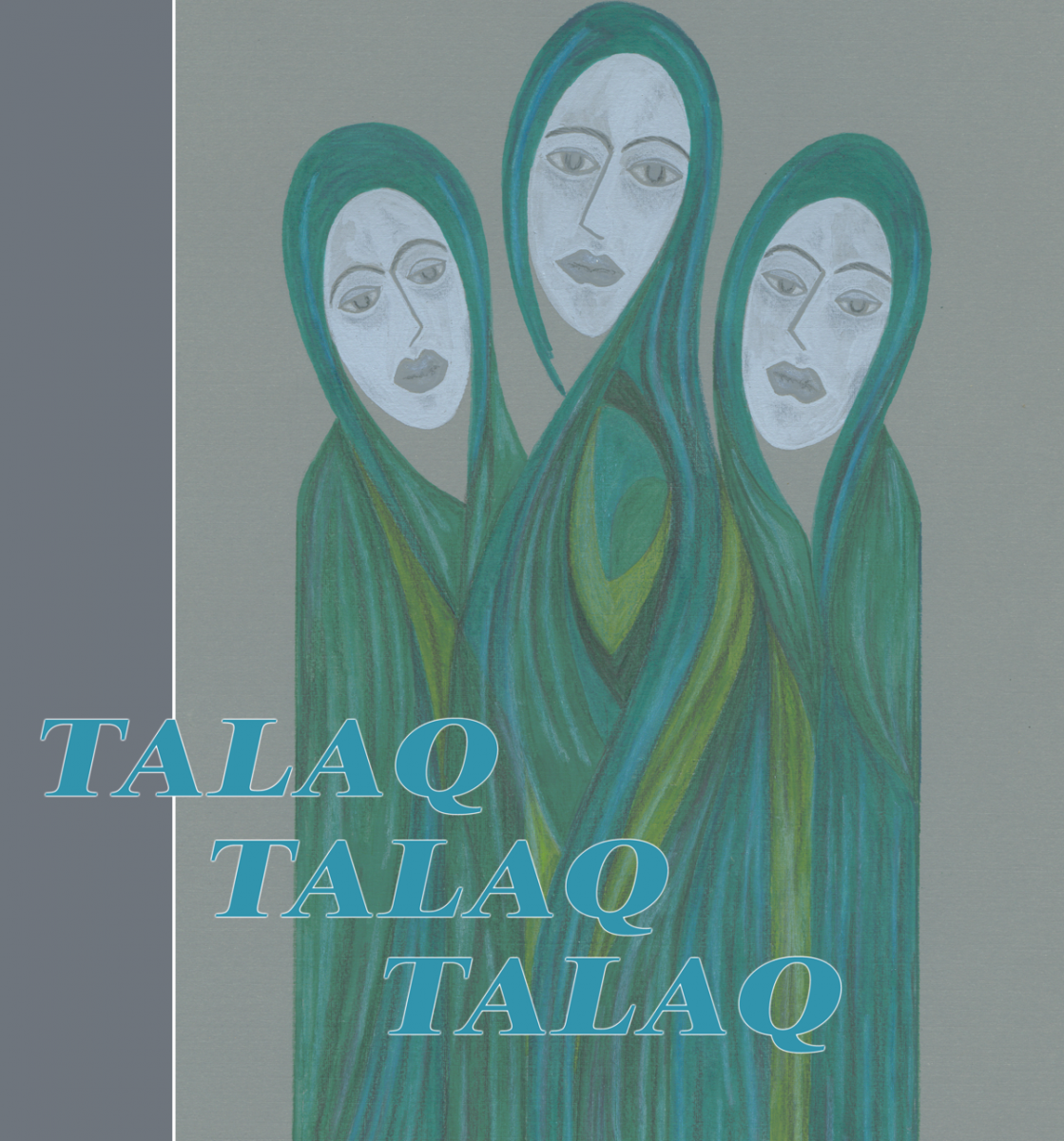
Reform! reform! reform!

0


Nazma Bibi, Orissa

 
Nazma Bibi is a 26-year-old Muslim woman from Bhadrak, Orissa. On July 3, 2003, under the influence of alcohol and as several members of the community looked on, Nazma’s husband, Mohammed Seru beat her and pronounced talaq, talaq, talaq. However, soon after his drunken declaration of triple talaq, Seru repented, and the couple wanted to get together again and re-settle at Nazma’s parents’ home since she is their only daughter.

The couple then approached the maulvi, the religious priest of Dhamra, to get his holy interpretation/judgement on the incident. After hearing both Nazma and her husband’s versions of the case, the maulvi decreed that the talaq was invalid since the husband had uttered the words ‘talaq, talaq, talaq’ in a drunken state.
 

But the community refused to accept the maulvi’s judgement declaring that the maulvi was ‘not qualified to give such a judgement’. By then the issue had been commandeered by a powerful local leader, Bari, who clearly did not appreciate ‘outside’ (i.e. the court or women’s organisations) interference. Bari claimed that his ‘NGO’ had settled 100 cases (all of which went against the women).
 

Mohammed Seru’s family then approached another maulvi, of Bhadrak, for further consultation and advice. He said that the talaq was valid and if at all Nazma wanted to stay with Seru, she had to first go through halala (i.e. marry another man, consummate that marriage and then go through a divorce) before returning to her first husband.
 

However, Nazma rejected the idea of halala and was forced to abandon her home, taking shelter at a short stay home, Ashiyana, in the town itself. Nazma’s husband then proceeded to a family court at Cuttack where he prayed for restoration of his conjugal rights. In a verdict given on December 13, 2003, the family court dismissed the talaq as illegal and ordered for restoration of the marriage as well as Nazma and Seru’s conjugal life as a couple.
 

But the local Muslim community to which Nazma belonged refused to accept the court order and was adamant in their opposition. The couple then cut all ties with immediate relatives and found a place outside the community where they stayed together for three months. Three months later, when the couple visited Nazma’s mother at Kantabania, a village some miles away from Bhadrak, some persons from the Muslim community physically assaulted and manhandled Seru.
 

In their continuing quest for justice, the couple ultimately approached the National Commission for Women (NCW). Two members of the NCW went to Bhadrak on May 21, 2004, and instructed both the collector and SP of Bhadrak to ensure that the victim couple could live together. Nafisa Hassan, a minority member of the commission, declared that since what the couple had undergone was not talaq, they should be allowed to stay in the woman’s parental house and police protection be provided to them. But after this measure of relief had been provided to the couple, an altercation between members of the NCW and local leader, Bari, further aggravated the situation. Members of the NCW stated that it was the people’s fundamental right to live wherever they wanted; the police could get an outside mufti to decide the case if necessary. Bari threatened the NCW, saying that they had no right to interfere in matters of the community whose members would conduct themselves as they saw fit. Bari stipulated that the couple could not continue to stay in Nazma’s parental home. As a result, community members adopted a more rigid stance and in spite of a few sincere efforts by the police and local administration the couple could not stay together for a while.
 

The community blatantly used compulsion and force to separate the couple. Nazma then had to face social boycott by being denied water and fire for everyday use. Water connections were cut off, her child was not allowed to go to school, and her father was prevented from earning his livelihood – he was a rickshaw-puller in Bhadrak.
 

It was at this stage that persons from the Centre for Women’s Studies of Utkal University as well as the All India Democratic Women’s Association (AIDWA) intervened. It was their members, Muslim and other women who offered solidarity to Nazma and her family, who carried out negotiations locally. This solidarity at the grassroots compelled the local administration to provide Nazma with water and ensure that her child was no longer prevented from attending school.
 

On July 25, 2004, AIDWA and Centre for Women’s Studies took the issue further by organising a widely attended seminar on ‘Dialogue on Talaq’ at the Utkal University campus. The seminar passed a unanimous resolution to a) receive a delegation of prominent (and locally chosen) dignitaries to visit Bhadrak and dialogue with the local community by August 3, 2004; b) demand that the state government provide Nazma with financial support. In response to the second demand, Rs. 20,000 has already been released for Nazma’s use.
 

(Report from AIDWA, an all India women’s organisation).

Archived from Communalism Combat, July 2004 Year 10   No. 99, Cover Story 3