In 2002, Communalism Combat was the first to publish a comprehensive account of the genocide in Gujarat, recounting the savagery and bestiality of the premeditated violence in 16 of Gujarat’s 24 districts and involving mobs running into several thousands. But it was never our contention that all of Gujarat, or all Gujaratis, had turned satanic. Then, as now, there were islands of sanity, individual acts of extraordinary courage that defied the tide. There were people who braved the raging storm at great risk to themselves to save lives and helped retain a glimmer of faith. Faith in the neighbour, faith in life, faith in the future.
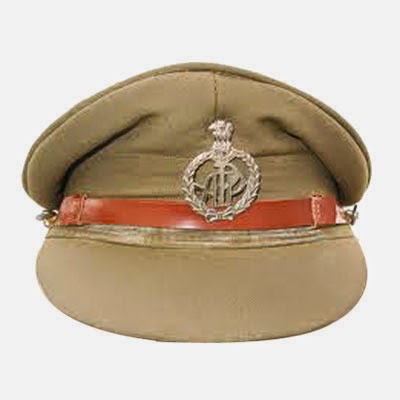
The policeman who stayed true to his uniform incurred the wrath of his political master, the teacher who served her conscience was ostracised and ridiculed, the social worker who wanted to step into the breach was told to ‘beware’, the businessman who wished to proffer economic assistance was threatened and abused. Parts of Gujarat’s fractured cities that remained peaceful, despite repeated taunts about their ‘cowardice’ and ‘lack of manhood’, were labelled ‘locality of traitors’ or ‘mini-Pakistan’.
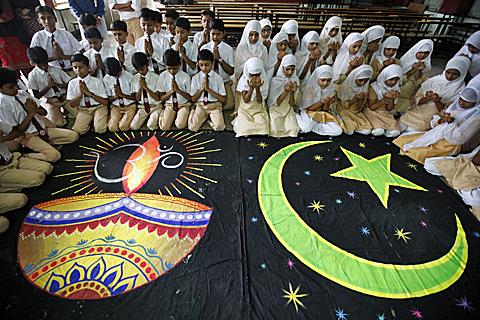
Despite such heavy odds, individual expressions of human compassion that recognise no barriers, brave acts of defiance have not ceased; they carry on heedless of obstacles. The issue is not, never was, the ordinary Gujarati, whether ordinary citizen or public servant. The problem was and continues to be a political dispensation with a worldview that perceives peaceful co-existence between diverse religious communities as a threat to its own existence. It is this political dispensation that has not allowed justice to be done and the wounds of 2002 to heal. So they fester unhealthily.
Even today Gujarat continues to reel under a harsh, cynical and uncaring government. Violence, especially between communities, erupts at the smallest provocation. Minorities cringe when policemen enter their localities, as memories of harsh treatment at their hands are still fresh. In turn, there are acts of defiance and even insensitivity from sections of the minorities. For example, during Bakri Id, calves (of cows) as much as goats are slaughtered with the connivance of the administration, contributing to the continuing cycle of mistrust, suspicion and violence. One of the most disturbing developments of late has been the increasing acts of violence, often sexual, against women in Gujarat.
Apart from the victims of the Godhra tragedy and post-Godhra carnage, numerous other sections of Gujarat’s citizenry – the agricultural labourer, the rickshaw puller, even the businessman – today stand abandoned by an unconcerned administration. In the midst of this abandonment, individual and collective acts of humanity and courage stand out as beacons. They tell us how, despite the fear and the threat, men and women carve out spaces and develop strategies for resistance so that that they can live at peace with their neighbours and at ease with themselves. How long can any individual or community live with bitter schism and hatred and not get on with the business of living?
Apart from the ghastly killing of children, women and men, many of whom were killed after being subjected to bitter humiliation and indignity, and the destruction of homes, agricultural lands and businesses, there was a systematic defiling of cultural and religious shrines that typified the Gujarat genocide of 2002. Of the 270 religious and cultural places that were razed to the ground within the first five days of the violence, more than 60 were Dargahs, typical of south Asia’s unique syncretism of faiths. The few that have been re-created, have been re-built only because of the initiative of the local minority community, not through any effort of the State.
In 2002, Sarwar Khan was slain by a murderous mob at Memdavad in Kheda district. He was an artisan revered for sculpting the most delicate deols (indoor shrines) and made his living thus. The sant of the Jagannath Mandir at Jamalpur, Ahmedabad even today recognises the contribution of the Muslim artisans who for centuries live and work the beautiful idols and other materials vital for the July rath yatra each year. This procession and the politics construed systematically around its route etc. have led to tensions each year and brutal violence in 1969 when over 1,000 lives were lost and then erupted in violence and deaths again in 1991.
Opposite the commissioner of police’s office at Ahmedabad once lay the mazhar of Wali Gujarati, recognised widely as the founder of the modern Urdu poem. Born in Aurangabad in 1667, he was known during his relatively brief life as Wali Aurangabadi or Wali Dakkhani. During his extensive travels, he visited Gujarat frequently and wrote fondly of its urban centres, especially Surat. He died in Ahmedabad in 1707 during one such visit. The people of a more enlightened Gujarat, then, built a tomb for him in Ahmedabad and claimed him as their own. Hence, the name, Wali Gujarati. On the night of Thursday, February 28, 2002, in what may be termed as an efficient sting operation, not only was his tomb ruthlessly broken down by mobs, but wonder of wonders, civic authorities allowed a paved road to come up over the area overnight. Today traffic speeds unknowingly over the spot.
Gujarat’s famous poet and social historian Narmadashankar Lalshankar (who died in 1886) is remembered for his great poem "Jay Jay Garvi Gujarat", in which he celebrated all the cultural icons that provided a sense of identity to all who lived in Gujarat. Asking "Who does Gujarat belong to?" he lists all castes, communities, religions, sects; then says, not just these, because Gujarat does not belong to any particular group; he continues, that Gujarat belongs to all those who speak Gujarati; and then, not satisfied, goes on to say that Gujarat also belongs to non-Hindus, the Parsis, Muslims and the non "sa-varna" communities. Narmad passionately believed that around such a cultural imagination – truly secular in spirit – a sense of belonging could be forged for the Gujarati people. Narmad followed a great Jain tradition of compassion and tolerance; and Gandhi followed Narmad, convincing a whole nation to espouse the idea of "ahimsa."
Though memories of Mahmud Ghazni’s greedy raids over the Somanatha temple in 1016 AD have been vociferously revived since the late nineteenth century and captured in KM Munshi’s Jai Somnath, path-breaking historical research by historian Romila Thapar has recently shown us how no ‘Hindu trauma’ over Ghazni’s greed really existed in lived, public, Gujarati sentiment. This sense of ‘Hindu trauma’ was revived and created under colonial rule aided by the British and then grabbed by ‘Hindu nationalists’ thereafter. Incontrovertible historical proof of this is visible in the Sanskrit inscriptions outside the temple, where a unique event has been recorded. The panchkula (five wise men of the temple town including the priest) gave a spot within the temple precincts of the Somanatha temple property to one Nooruddin Firoj 400 years after the Ghazni raids, to build a mosque for his worship. Firoj was a wealthy merchant from Arabia who had made this town part home.
Gujarat was once, for a period that spanned centuries, one of India’s windows to the world. It was from this historic western coast that a myriad fascinating exchanges and interactions both gave and took back, through trade, thoughts/ideas, technology, cookery, musicology, clothing and handicraft. Ironically, this exchange was often with west Asia, which after the seventh century AD, was hugely influenced by Islam. For the inhabitants of this land, Gujaratis, who prided themselves on travel and entrepreneurship, to accept exclusion and violence as the enforced credo in itself seems anathema. It cannot be long before tradition and history begins to reassert itself.
The individual heroines and heroes from different parts of the state who feature here are only part of a far richer, more complex tale. There are many more stories waiting to be told once residents can breathe more freely. Today fear still holds many accounts back.
In the belief that there are these and many more accounts that need to be shared, the Centre for Dialogue and Reconciliation is publishing this volume, Good News from Gujarat. Communalism Combat is privileged to excerpt some of the major stories contained therein and we would like to thank CDR, Delhi for allowing us to publish them.The accounts in this volume have been documented by Rashmi Gera, Trupti Shah and myself. As always, our vast network in Gujarat and the tireless efforts of Rais Khan Pathan were a big help.
Archived from Communalism Combat, June 2004 Year 10 No. 98, Cover Story

.png)