Home Blog Page 2658

Polls 2004: A welcome breather

0

THE REsults of elections 2004 provided a welcome breather for the country when the NDA alliance, dominated by a hard-line BJP was swept out of power,and despite the scepticism displayed by large sections of the media, a Congress led United Progressive Alliance (UPA) stepped into government. No mi-nor role in this unbelievable drama was played by the president of the Indian National Congress, Sonia Gandhi, who had single-handedly driven her beleaguered party back to power after being the silent architect of clever alliances and the astute allocation of tickets. The mass hysteria sought to be whipped up by a Sushma Swaraj or a Uma Bharati in accepting the popular mandate, through the clever rhetoric of ‘not being able to bear a foreigner in the Prime Minister’s chair’ were silenced by her single act of strategic renunciation.

Having savoured this drama, however, some reflection on the mandate and the task ahead may be in order. India voted, and voted decisively against the cynical, ‘feel good’ campaign of an NDA that sought to ignore the common man. It was deprivation, hunger, starvation even, farmer suicides and unemployment that made a decisive difference in this year’s election results. But the populace that identified the NDA as architect of a Marie Antoinette-like cold distance from it’s own people nationally and simultaneously dealt a blow to BJP faithful, Chandrababu Naidu in Andhra Pradesh, were equally unsparing of Congress’ version of Naidu in neighbouring Karnataka – SM Krishna. In this state, the BJP has not only broken new ground but also cornered 29 per cent of the vote share in the assembly polls and 18 of the 26 parliamentary seats with 36.7 per cent of the vote share in the parliamentary elections.

So, though the BJP is definitely and deservedly down, it is by no means out. The clear message from the mandate is that the majority of Indians have given the marching orders to parties and politicians for whom people didn’t seem to matter. The NDA’s misery was compounded by the firm rejection of its politics by the socially ostracised and oppressed, be it the religious minorities or the Dalits. The BJP’s rhetoric in ‘wooing Muslims’— remember the Najmas, the Arifs and the oh-so-many ‘Atal Himaayat Committees’ — fell flat. The drama that hogged headlines obviously did not impact on the numbers game. Analysis of poll results 2004 show that a huge 47 per cent of Muslims voted for the Congress while only 11 per cent (two per cent down from 1999) cast their lot with their baiters, the BJP! Among Dalits, at a national level, the Congress still commands 35 per cent of the vote; the Bahujan Samaj Party is a major competitor with 30 per cent of the Dalit vote share while the NDA got only 23 per cent.

While we breathe more freely now, analysis of the poll results should awaken us to the reality that the BJP and its allies remain serious players and contenders for power in Indian politics. The Congress plus its allies won 35.82 per cent of the votes, 26.59 per cent of this being the Congress’ own tally. This is 1.6 per cent down from 1999, but since the Congress contested only 417 seats its vote share in these seats is up by two per cent. The NDA polled 35.91 per cent of the vote with the BJP’s share in this being 22.16 per cent. Of the 361 seats that the BJP contested, its vote share is down by five per cent.

However, the NDA still commands 55 per cent of the caste Hindu vote and 40-50 per cent of the OBC vote. Besides, the traditional adivasi voter base of the Congress stands reduced to 9 per cent with the BJP making serious inroads here and gaining 5 per cent of the tribal vote. Rajasthan and Madhya Pradesh continue to ride a BJP wave with 21 of the 25 Lok Sabha seats in Rajasthan going to the BJP (49.0 per cent of the vote share) and 25 seats in Madhya Pradesh being retained by the BJP with 47.1 per cent of the vote share.

The task ahead for all Indians concerned with issues of social justice and deepening of democracy lies in keeping the spotlights focussed on the dark spots of our polity. India can remain one and whole, body and soul, only if it remains a secular democracy. But fresh life and meaning need to be given to these terms. Issues of gender disparity and deprivation cut across class, community and caste. So, while the Dalit and/or the Muslim woman remains thrice oppressed bearing the burden of both her community, gender and class label, feticide is rampant among upper caste Hindus.

While Dalits continue to suffer rank indignities as urban yuppies cringe in horror at the very mention of the word ‘caste’, Muslim plight is worse than ever before in socio-economic terms. Not enough schools for secular education, mushrooming madrassas, less jobs, gross under-representation in the police force are part of the problem. With violence against religious minorities increasingly assuming the form of full-blown pogroms, with Gujarat 2002 being a case of state sponsored genocide there is an urgent need for a special legislation on mass crimes. (See Crimes Against Humanity, CC November 2002). For the Muslim woman, its worse. The abhorrent practice of triple talaq continues unchecked because of the stranglehold of an insensitive male-oriented community leadership. We hope that some of these real issues that impinge on, give life and meaning to the word secularism and democracy figure in mainstream political discourse over the next five years.

Gujarat, however, was for us the real story, and victory of polls 2004. Voters from 12 parliamentary seats out of 26 rejected the BJP under chief minister, Narendra Modi, a politician who shows no remorse for the brutalisation of Gujarat and the carnage of 2002. The tribal belts of Gujarat that, unfortunately, had succumbed to sectarian violence in 2002 – Sabarkantha, Mehsana, Panchmahals, south Gujarat –rejected the BJP and voted for Congress candidates. Acute farmer discontent translated into the Patels’ (who account for 29 per cent of the vote share) disenchantment with the ruling party. All things combined the writ of Modi and the BJP in Gujarat stands seriously challenged today. In several seats, the BJP’s margin of victory has also reduced. For example, the vote share of Kashiram Rana, who was elected from Surat for the sixth consecutive time, has fallen. In Baroda and Dahod, the BJP won by small margins. Top BJP leaders like LK Advani and Haren Pathak managed to increase their vote share in their traditional stronghold Gandhinagar and Ahmedabad but this was due to multiple opponents.

This verdict then is a vindication of the people of Gujarat who, with nearly half the electorate rejecting the BJP’s cynical politics even in the December 2002 Assembly polls. In 2002, 49 per cent of Gujaratis expressed displeasure with the ruling party and 51 per cent cast their lot behind the BJP. This time, 47.2 per cent of the votes polled in Gujarat went to the BJP and 45.1 per cent to the Congress.

This turnaround is only one of the reasons behind our cover story of the month. Gujarat, ravaged as it has been by suspicion and violence, has always thrown up accounts of individual and collective acts of bravery and conviction. These we have documented in past years. The cover story this time documents more such examples that give hope for a new dawn in the state. The people of Gujarat in their small and myriad ways are striving to break out of the clutches of an administration and government that does not believe in the credo of peaceful co-existence and non-discrimination.

We thank the Centre for Dialogue and Reconciliation for permission to publish some of the stories that are part of a special volume to be released by them soon.

— Editors

Archived from Communalism Combat, June 2004 Year 10   No. 98, Editorial

Judgement — Best Bakery case

0

Archived from Communalism Combat, April-May 2004 Year 10   No. 97, Judgement 2


Judgement — Expunging orders

0

Archived from Communalism Combat, April-May 2004 Year 10   No. 97, Judgement 3

Best Bakery Case: Factfile

0


March 1, 2002:
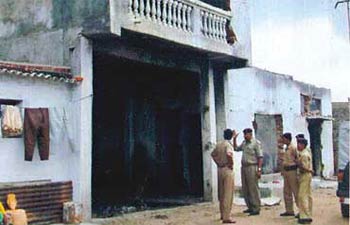
Two days after the Godhra carnage, a mob attacked Best Bakery in the Hanuman Tekri area of Vadodara. Hanuman Tekri is a poor, lower middle-class neighbourhood. Predominantly Hindu, very few Muslim families live here. The mob looted and burnt the bakery, killing 14 people in a period of 12 hours. The mob targeted the Muslims inside including the Sheikh family which ran the bakery. Three Hindu workers who worked at the bakery were also killed.
 

Fifty-year-old Sehrunissa Sheikh, wife of the bakery owner Nafitullah Habibullah Sheikh, eldest son of bakery owner Habibullah Sheikh and 18-year-old Zahira Sheikh, her daughter, were the key witnesses. When the occupants of the building called the police for help a police van arrived about an hour and half later. But it drove past the bakery and did nothing to stop the mob. A policeman got off the van and even incited the mob. The attack intensified after the police van left. Zahira’s sister Shabira, her mama, and 12 others including four small children of the neighbours who had taken shelter there, were burnt alive by the mob. Two of her brothers were burnt alive. Two of her other brothers were tied up and torched but survived the attack. Her chacha’s entire family was killed. Two bodies could not be found. The stomachs of the three Hindu workers were slit.
 

March 2, 2002: Zahira recorded a statement at the site of the incident and thereafter continued at the hospital where the injured had been admitted. She filed an FIR before the police on March 2, 2003 naming the accused. She also made a full statement before the chairperson of the NHRC when they visited Gujarat after the riots on March 22-21, 2003.
 

May 7, 2003: Brother of Zahira, Nafitullah, and sister Saira retract their statements in court.
 

May 17, 2003: Zahira turned hostile under pressure. The same day her mother Sherunissa and younger brother Naseebullah also depose and also deny facts. She allegedly received threats from various sources including a local scrap dealer, Lal Mohammed, who was also a witness in the case and later retracted his statement. On the day of Zahira’s court appearance the local BJP MLA Madhu Shrivastava was present; he accompanied her to court. This is perceived as a tactic of intimidation.
 

June 27, 2003: Additional sessions judge HU Mahida of the Vadodara fast track court acquitted all the 21 accused in the case who were named by key witness Zahira Sheikh in her statements before the police, the NHRC and the Concerned Citizens Tribunal (Crimes Against Humanity, 2002).
 

July 7, 2003: CJP holds a press conference for Zahira in Mumbai. About a month-and-a-half after she turned hostile in court, Zahira and her family approached the Citizen’s for Justice and Peace, a citizens’ group committed to the legal battle for justice for victims of mass crimes.
 

July 11, 2003: Zahira gave a statement on oath before a full bench of the NHRC in the presence of Teesta Setalvad, secretary, CJP, about how she was forced to retract her statements in court. She named those who had threatened her and her family to pressure her to retract her statement.
 

August 1, 2003: The National Human Rights Commission filed a Special Leave Petition (SLP) under Article 136 of the Constitution of India in the Supreme Court. The NHRC requested the SC to set aside the judgement of the trial court and for further investigation of the case by an independent agency. Also a re-trial of the case in a court located outside the state of Gujarat.
 

August 7, 2003: A day before the Supreme Court was to hear the NHRC’S petition, the Gujarat state government (prodded by the Supreme Court), filed an appeal before the Gujarat high court challenging the acquittal of the accused. The appeal did not ask for re-trial.
 

August 8, 2003: Zahira Sheikh and the Citizens for Justice and Peace also file an SLP accompanied by affidavits of key witnesses recording the facts that are listed along with the NHRC’s SLP.
 

October 9, 2003: During the hearing on October 9, the SC appointed senior counsel and former solicitor general of India, Harish Salve, as amicus curae to assist the court on the points that had arisen in the case.
 

October 17, 2003: Two affidavits were filed by Teesta Setalvad of Citizens for Justice and Peace before the Supreme Court. These pointed out the need for re-trial and for shifting the trial outside the state. Senior counsel Shanti Bhushan appeared on behalf of the CJP. The astounding facts about riot-stricken Gujarat contained in the affidavits made Harish Salve point these out to the Court.
 

November 21, 2003: Supreme Court stays all pending major trials including Godhra.
 

December 26, 2003: The appeal by the Gujarat government challenging the acquittal of the accused by the trial court was dismissed by the Gujarat high court.
 

January 12, 2004: The detailed reasoning of the judges was contained in a 90-page judgement justifying the acquittal. The bench comprising of Justice BJ Sethna and Justice JR Vora observed that a re-trial could not be ordered because the prosecution had failed to produce proper evidence. It pointed out that deputy commissioner of police and investigating officers had failed to discharge their duties since they did not record key witness Zahira’s FIR at the place of incident. Referring to the submission by advocate general SN Sehlat that most witnesses turned hostile under threat, the bench observed that "there may be more than one reason for the witnesses resiling from their so-called statements made before the police and that there is nothing to show that the witnesses ever made the so-called statements."
 

Moreover, the judges also passed specific remarks against Teesta Setalvad for carrying out a parallel investigation.
 

March 23-24, 2004: Arguments on Special Leave Petition in an appeal against the high court order filed by witness and Citizens for Justice and Peace.
 

April 12, 2004: Supreme Court Division bench, comprising of Justice Doraiswamy Raju & Justice Arijit Pasayat, orders re-trial of the Best Bakery case outside Gujarat, in Maharashtra. Remarks against Teesta Setalvad passed by Gujarat high court are directed to be expunged.

Archived from Communalism Combat, April-May 2004  Year 10   No. 97, Judgement 4

CBI chargesheet: Bilkis Rasool case

0

Archived from Communalism Combat, April-May 2004 Year 10   No. 97, CBI Chargesheet
 

Judgement: Praveen Togadia (Hate speech) case

0

Archived from Communalism Combat, April-May 2004  Year 10   No. 97, Judgement, Pravind Togadia