Punjab farmer Jaswinder Singh was torn between continuing protests against the three farm Acts in Delhi and returning to his field in Baras village of Fatehgarh Sahib district. His worries were finally allayed when a member of the Punjab’s Water Supply and Sanitation Contract Workers’ Union (WSSCWU) said that the organisation would look after his fields during his absence.
Jaswinder told SabrangIndia in Punjabi, “This is the first time in my life that I have witnessed such support for farmers. Nowadays I and other farmers can call Union members and instruct them to water or fertilize the field. This is going to strengthen protests further.”
Thousands of farmers over the last fortnight or so have left their fields untended to demand their rights from the central government. Local reports have shown that while many protesters have resolved to stay in Delhi until demands are met, concerns about their home and failing crops still weigh on their mind.
WSSCWU President Varinder Singh told SabrangIndia that during support rallies, many Union members learnt villagers were reluctant to leave their land unsupervised.
“We decided to support farmers in any way we can. Our members look after the fields as per instructions, replace gas cylinders at home and try to lessen the burden on farmers. We want to head towards Delhi as well. The people in Delhi said they’ll call us soon,” he said.
The Union sent out a call to over 2,500 volunteers asking them to look after fields, provide medicines, fodder to animals and help out in every possible manner until the farmers returned. Varinder said members have started flag and mashaal (torch) marches to inform villagers across the state that they can proceed to Delhi without worrying about domestic matters.
At the same time, they have also made preparations to march to Delhi at a moment’s notice.
“We are ready with food and milk for protesters in Delhi. The government has to listen to our demands. No one will survive if these laws are enforced,” said Varinder.
After inconclusive meetings with the central government, farmers continue to oppose the Farmers’ Produce Trade and Commerce (Promotion and Facilitation) Act, the Farmers Empowerment and Protection) Agreement on Price Assurance and Farm Services Act and the Essential Commodities (Amendment) Act. Agitators fear that these laws will destroy the pre-existing Minimum Support Price (MSP) system and turn farmers into slaves of corporates.
To support their cause, Jaswinder’s wife has set out for Delhi while her son and mother-in-law wait at home until school examinations are over. Similarly, many other people have set out from Punjab for the next nationwide agitation on December 14.
“Even my son has told me ‘Dad, return victorious!’ Farmers will not back down. The people’s support encourages us to continue forward,” said Jaswinder.
Jammu and Kashmir’s most famous produce, the Apple, is also one of its most crucial cash crops, sustaining thousands of farmer families who work in the orchards. Each tree needs to be nurtured for at least 10 years or more before its first crop can be harvested and sold. However, it took the Union Territory administrators less than a day to chop down thousands of trees in In Kashmir’s Budgam district!
According to an Article-14 report from Kashmir, the move “to evict Muslim tribals from land they have used for generations” has “held back a protective forest law and a Supreme Court stay.” Crucially important to note that The Forest Rights Act, 2006, which grants rights to such tribal communities over their forests, is yet to be implemented in the union territory, reported the Gaon Connection. The report details how families including that of Farooq Ahmad Hajam (42), Shakeel Hajam, Maqbool Hajam and Abdul Hameed Hajam, and others all traditional forest dwellers from Sekiloo village in Pulwama district, bordering Budgam, were all served eviction notices by the Jammu and Kashmir (J&K) forest department. These families have been cultivating small patches of land in the surrounding forests for generations, it added.
In the third week of November, the department sent men who then felled hundreds of decade-old apple trees raised by these families over 30 kanals (1.51 hectares) of forest land in Kanidajan forest area of central Kashmir’s Budgam district, about 500 metres from Sekiloo. According to the report in Gaon Connection, these trees had borne fruit this season too, and the families had harvested up to 10 boxes (that sell for between Rs 700 and Rs 1,000 each in the mandis). The report added that the total number of trees felled “runs into thousands in Kanidajan in Budgam district and Sekiloo in Pulwama district.”
Article-14 reported that the men from the forest department were accompanied by the police and the personnel from the Central Reserve Police Force (CRPF). For the Apple growing families, these trees were the only source of income, added the report.
Around 50 officials and workers of the Jammu and Kashmir forest department cut about 10,000 apple trees on November 10, Mohammed Ahsan, the village head, was quoted in the report stating that the villagers were “threatened with police cases” against them if they tried to intervene. The reporter noted that, now over two weeks after the trees were massacred, the apple orchards “were strewn with chopped trees” and the farmers who visited the site were disconsolate. Others have not had the courage to visit the scene of destruction.
The administration has maintained that the apple orchards were on forest land, and alleged that the area had been “encroached by the villagers”, who belong to the nomadic Gujjar and Bakarwal communities recognised since 1991 as scheduled tribes and “forest dwellers”, under the Forest Rights Act (FRA), 2006.
However, the Act has not been implemented in J&K, as explained in the report this is because a slew of central laws did not apply to the former state. However, when article 370 of the Constitution was revoked on August 5 2019, 155 central laws had automatically became applicable to the new union territory, and the J&K government promised the FRA would as well, stated the report quoting a November 2019, statement by a spokesperson of Chief Secretary B V R Subrahmanyam who had said, “The FRA will be in place in J&K by March 2021, after the initial survey is completed by 15 January 2021”.
The Jammu and Kashmir Administration had announced that it was all set to implement the Forest Rights Act, 2006 (FRA) by March 1, 2021. The J&K administration had stated, “It may be pointed out that the Forest Rights Act of 2006 provides for granting of rights to forest dwellers across the country. This Central Act was, however, not applicable or implemented in Jammu and Kashmir in the last 14 years. It became applicable to J&K only after October 31, 2019, hence, recognising the rights of forest dwelling communities for the first time in the Union Territory.” It was also decided that the survey of claimants would be completed by January 15, 2021, followed by the sub committee’s scrutiny into the claims and preparation of the record of forest rights by or before January 31.
According to Gaon Connection, the J&K administration has been evicting people since early November. Most of those evicted are nomads and other traditional forest dwellers, belonging to the Gujjar and Bakarwal communities. They live in temporary sheds or mud houses in forests and mountains. However, traditional forest dwellers live on private land, locally known as milkiyat land, but have been cultivating patches of forest lands for generations.
Mehbooba Mufti, the former Chief Minister of J&K had also flagged the issue in november. She asked that J&K Governor Manoj Sinha intervene and ensure the evictions “on discriminatory grounds” and the ensuing harassment of the “rightful inhabitants” be stopped.
Disconcerting to see nomads across J&K being harassed & displaced. They’ve been the rightful inhabitants & are now being evicted on discriminatory grounds. Kindly intervene @manojsinha_ & ensure that this stops
Meanwhile, over the years, several eviction drives have been carried out against Tribals in parts of the State on ground of illegal encroachment. Greater Kashmir reported that the eviction and reported demolition of Kothas (kuchha houses) in some Muslim- dominated areas of Jammu including Kalakote, Shidhra, Bathandi was done following an order by the General Administration Department.
The nomadic tribes of Gujjar and Bakarwal in Jammu and Kashmir have been dragged into the line of fire by the Union Territory (UT) administration as their unoccupied shelters were demolished in Pahalgam under the guise of clearing illegal encroachments. Both communities combined form 11.9% of the UT’s population and are spread over largely on Srinagar, Anantnag, Kulgam, Baramulla, Pulwama, Ganderbal, Shopian, Bandipora, especially on the higher reaches in the Kashmir valley. The government maintained that this is part of a drive to retrieve forestlands, which have been encroached upon.
However, as per Gujjar activists, the shelters or dogas as they are called, were unoccupied by the tribal communities as they had migrated to Jammu for the winter. They live in these shelters during summers to return to their pastures. This demolition drive in November was soon after the J&K high Court declaring the Roshni Act or the Jammu and Kashmir State Land (Vesting of Ownership to the Occupants) Act, 2001, as unconstitutional. Through the Roshni Act, the state government had granted ownership rights to occupants of a state owned land for a fee. The proceeds were to be used for funding power projects in the erstwhile state. The High Court in its judgment directed all state land under unauthorized occupation to be retrieved.
It is noteworthy that on February 13, 2019, the Supreme Court had directed state governments to evict forest-dwelling scheduled tribes and other traditional forest dwellers, whose claims over forest land were rejected under the FRA. But on February 28, 2019, the Supreme Court stayed its own order, after it was called out widely, including by United Nations special rapporteur for human rights, Victoria Tauli-Corpuz. “Indigenous peoples and local communities are treated as squatters when in fact the land is theirs, and they have protected and stewarded their holdings for generations and play an important role for conservation,” the UN special rapporteurs stated onJuly 4 2019. SabrangIndia’s sister organisation CJP has been working closely with Adivasis and Forest dwellers and backed an intervention application to defend rights of forest dwelling communities in the Supreme Court by forest rights activists Sokalo Gond and Nivada Rana along with the All India Union of Forest Working People (AIUFWP). The IA was admitted by the SC.
An investigation by EU Disinfo Lab has made some startling revelations about how multiple media outlets, think tanks and non-government organisations (NGO) are surreptitiously pushing a pro-India agenda at various international fora including the United Nations (UN) as well as in the European Union (EU). Much of the content created and spread via the elaborate set-up unearthed by the investigators aimed at discrediting Pakistan, in a bid to further Indian interests.
EU Disinfo Labs has now released a report titled Indian Chronicles that showcases the findings of an investigation conducted by Gary Machado, Alexandre Alaphilippe, Roman Adamczyk and Antoine Grégoire.
Background
This new investigation is a follow up to EU Disinfo Lab’s 2019 investigation where they uncovered a network of 265 fake media in 65 countries reproducing negative content about Pakistan online. This network was created allegedly by malicious actors who were behind ‘EP Today’, a fake European Parliament magazine active in Brussels since 2006. The self-proclaimed “magazine for the European Parliament in Brussels” was allegedly serving as a “honeypot” for Members of the European Parliament (MEPs) and other politicians who could use it to publish their views – particularly those views that would serve Indian interests and undermine Pakistan.
They also found “another fake media, the ‘Times of Geneva’ – along with an equally fake, allegedly Geneva-based press agency called 4 News Agency – would then produce written and video content. This content was reused online by NGOs and disseminated via the global fake media network and/or via an Indian press agency (ANI). This operation was attributed to the New-Delhi based Srivastava Group.” The new investigation probes the alleged role of the Srivastava group further.
Key findings
The new report finds that EP Today has been replaced by EU Chronicle, which the report calls “an opaque, self-proclaimed Brussels-based independent media.” The investigation was a deep-dive into the last 15 years and discovered that “the UN Human Rights Council has been abused by a network of coordinated NGOs serving Indian interests.”
The report says, “The actors behind this operation hijacked the names of others and tried to impersonate regular media and press agencies such as the EU Observer, The Economist and Voice of America. They used the letterhead of the European Parliament; registered websites under avatars with fake phone numbers; and provided fake addresses to the United Nations.”
The investigators took a close look at Commission to Study the Organization of Peace (CSOP). The report says, “We soon realised that this US-based NGO – accredited to the United Nations Economic and Social Council (ECOSOC) – had become inactive in the late 1970s before being resurrected in 2005. Its identity had been hijacked by the same actors depicted in our first investigation.”
But things only got murkier from thereon. Indian Chronicles discovered a large-scale resurrection of not only defunct NGOs, but also dead people! “Shockingly, we discovered that the organisation had not only been revived. Its former Chairman and “grandfather of international law in the US”, Louis B. Sohn, who passed away in 2006, seemingly attended a UN Human Rights Council meeting in 2007 and participated in an event organised by “Friends of Gilgit-Baltistan” in Washington D.C. in 2011.”
The report also alleges that Asian News International (ANI) often repackaged fake news from these dubious sources. The report says, “The only valuable coverage these op-eds receive, comes from an immediate repackaging by an Indian press agency named ANI (Asian News International), often quoting these op-eds as genuine articles from ‘independent media EU Chronicle’.” The report adds, “Without Times of Geneva and 4 News Agency which stopped their activities following our previous investigation, ANI – which is considered as one of the biggest news agencies in India and the largest television agency of India – remains the only press agency to extensively cover the activities of dubious NGOs in Geneva.”
It further explains, “The coverage – and often distortion – by ANI of the content produced in Brussels and Geneva led us to the Big News Network and the World News Network – an entire network of 500+ fake local media in 95 countries that have helped reproduce negative iterations about Pakistan (or China). We also realised that the content produced was primarily targeted at Indian nationals, with an extensive coverage of these barely known “media”, MEPs and “NGOs” in Europe.”
The Srivastava Group
The investigators built on their previous probe into the Srivastava Group and claim to have found “an entire network of coordinated UN-accredited NGOs promoting Indian interests and criticizing Pakistan repeatedly. We could tie at least 10 of them directly to the Srivastava family, with several other dubious NGOs pushing the same messages. These UN-accredited NGOs work in coordination with non-accredited think-tanks and minority-rights NGOs in Brussels and Geneva. Several of them – like the European Organization for Pakistani Minorities (EOPM), Baluchistan House and the South Asia Democratic Forum (SADF) – were directly but opaquely created by the Srivastava group. In Geneva, these think-tanks and NGOs are in charge of lobbying, organising demonstrations and speaking during press conferences and UN side-events. They were repeatedly given the floor at the UN on behalf of the accredited organisations.”
The report says, “The organisations created by the Srivastava Group in Brussels organised trips for Members of the European Parliament (MEPs) to Kashmir, Bangladesh and the Maldives. Some of these trips led to much institutional controversy, as the delegations of MEPs were often presented as official EU delegations when they were in fact not travelling on behalf of the Parliament.”
Investigators look into the creation of three informal groups in the European Parliament, namely the “South Asia Peace Forum”, the “Baloch Forum” and “Friends of Gilgit-Baltistan” all allegedly tied to the Srivastava Group. The report further explains, “Organisations like WESTT – the Women Economic and Social Think-Tank – have drafted and suggested parliamentary questions to the European Commission, along with articles for fake EU magazines such as EP Today. These served as a honeypot to attract a growing number of MEPs into a pro-India and anti-Pakistan discourse, often using causes such as minorities rights and women’s rights as an entry point.”
This is how investigators chanced upon EU Chronicle – the new ‘EP Today’. The report calls EU Chronicle “A new fake media with fake journalists supposedly covering European affairs, yet essentially providing a platform for MEPs to sign pro-Indian articles. In less than 6 months of existence, already 11 MEPs have written or endorsed op-eds at a remarkably high pace for EU Chronicle.”
What does the pro-India operation hope to achieve, and how?
According to the report, the operation’s long-term objectives are:
• In India, to reinforce pro-Indian and anti-Pakistan (and anti-Chinese) feelings.
• Internationally, to consolidate the power and improve the perception of India, to damage the reputation of other countries and ultimately benefit from more support from international institutions such as the EU and the UN.
The modus operandi allegedly requires:
• The support to minority and human rights NGOs and think-tanks.
• The use of Members of the European Parliament to create a mirage of institutional support from European institutions to these minority groups, in favour of Indian interests and against Pakistan (and China).
• An active presence in Geneva and the United Nations’ Human Rights Council through: ̓ side-events and demonstrations in support of minority rights; ̓ impersonation of extinguished UN-accredited NGOs or use of speaking slots reserved to various NGOs whose original missions seem totally unrelated.
• The creation of fake media in Brussels, Geneva and across the world, as well as the repackaging and dissemination of content via ANI and obscure local media networks – at least in 97 countries – to multiply the repetition of online negative content about countries in conflict with India, in particular Pakistan.
An executive summary of the Indian Chronicles investigation may be read here:
The full report and a broader background may be viewed here.
On December 10, observed as International Human Rights Day, international organisations including Hindus for Human Rights (HfHR), Indian American Muslim Council (IAMC), and Amnesty International USA (AIUSA) in a webinar called on the Indian government to “immediately and unconditionally release Gandhian peacemaker Faisal Khan from prison in Mathura, Uttar Pradesh, India.”
The organisations reminded the authorities that Faisal Khan is the National Convener of Khudai Kidmatgar (Servants of God), an organization and movement devoted to interfaith harmony and peace. This movement was launched by freedom fighter Khan Abdul Ghaffar Khan (also known as Frontier Gandhi and Badshah Khan) in 1929, and revived by Faisal Khan in 2011.
According to Sunita Viswanath of Hindus for Human Rights the facts remains that, “Faisal Khan is a Muslim Gandhian peace activist. He was arrested because he did namaz, which means Muslim prayer, in the courtyard of a Hindu temple. The truth is that the priest invited him to pray there, but four days later the same priest filed a police complaint against Faisal Khan and he was arrested.”
World renowned scholar and author Rajmohan Gandhi, who is also the grandson of Mahatma Gandhi, appealed for the release of Faisal Khan, and also recalled the secular heritage of Khudai Kidmatgar and how Faisal Khan revived the movement for interfaith peace and harmony.
Gandhi’s statement may be viewed here
Gandhi also called for a unified voice, to seek justice for Indian Muslims, who continue to face greater alienation and said, “There are around 200 million Muslims living in India. Making 200 million Indians feel uncertain about safety or equal rights in their country is not the recipe for a harmonious future. Most Hindus would like their Muslim brothers and sisters to enjoy dignity and equality. I urge them to speak out and demand justice for Faisal Khan, and for all who are being denied their rights.”
It has been well over a month since Faizal Khan was arrested for allegedly offering namaz “without permission” in the compound of Nand Baba temple in Barsana on October 29. An FIR was registered on November 1 with the Barsana police station in Mathura, against Faisal Khan, Chand Mohammad, Aalok Ratan and Nilesh Gupta. The next day, Uttar Pradesh police arrested Khan from his residence in Delhi, and charged him under section 153A (promoting enmity between different groups on grounds of religion), 295 (defiling place of worship with intent to insult the religion of any class) and 505 (public mischief) of the Indian Penal Code. Khan was then sent to 14-day judicial custody by a Mathura court. Khan had tested positive for Covid-19 and was sent to institutional quarantine. He remains behind bars.
Senior Advocate of the Supreme Court of India, Founder of Human Rights Law Network, Colin Gonsalves, who is Faisal Khan’s lawyer, said, “Even though evidence in the form of videos, and photographs were made available to the court proving that Faisal Khan asked to go outside to offer namaz, and that it was the temple priest who instead asked him to pray on the temple premises, the judge refused to view the video and later wrote in his ruling that no evidence was offered by defense.”
Advocate Gonsalves said that Khan’s background “inspiring work, and the awards he has won, establish his credibility and the improbability that he would do anything to encourage a division between communities.” He added that Khan visited “mandir after mandir speaking beautifully to the Pujaries, who received him warmly…The Court says that there was no video or photographs showing him reciting couplets [from Ram Charita Manas]…but the court did not bother to look at all the links we had provided. The video recording provided by Anand Patwardhan is so spectacular that it is clear that there was no crime.”
On the Namaz issue Gonsalves shared that the pleading is that “Khan told the temple pujari – ‘It is Namaz time and I want to go outside the Mandir and we will do our Namaz and come back for lunch.’ And the Pujari says, ‘Not necessary. We have a place at the back of the Mandir please do it there. It will save you some time’… The delay in the filing of the FIR (First Information Report) for three days shows that certain developments took place, conversations took place, certain people intervened. As a result of which a complaint which would normally be filled within 1 hour of the incident is filled 3 days later.”
According to Gonsalves, the way Faisal Khan was arrested “shows the weakness of our legal system in Uttar Pradesh and the ability of political people linked to CM Yogi of course. Naturally, to influence or pressure the complainant – the Pujari, but also to bring pressure on the Judges…The photos are very clear, the recordings are very clear, the couplets are crystal clear,” he said while he did think there was a “pretty good chance of getting Faisal out,” there was need for caution, “keep your fingers crossed. You never know, nowadays with the judiciary; but the people who’ve got all the information together have done a spectacular job in giving us information for the Court case.”
Documentary filmmaker and human rights defender Anand Patwardhan emphasised the critical importance of global attention on human rights in India. He said India was “in a very peculiar situation, an unprecedented one,” and even in cases like Faisal Khan one could not be “completely sure that having a strong case means that we will win”. He added that international focus on such situations was important, “the world is watching, and this is something that will make the Indians stay in some check.”
He also raised the issue of the many others jailed for their activism, saying he was “worried about the others who are in jail, like Umar Khalid for example. On the 23rd of this month, it will be his 100th day in prison.” Patwardhan stated that “Umar has not received the public attention that he needs to get his release. He has been victimised because he is a Muslim just as Faisal has been victimised because he is a Muslim. Umar Khalid never talked about violence. He spoke about using nonviolence to fight against the Citizenship Amendment Act.”
He explained the ongoing “formula” that is bein used to target dissenters, “If you are a Muslim, you are a Muslim terrorist. If you are a Hindu, you are an urban naxalite. And if you are a Dalit, you are a pure naxalite, neither urban nor rural.” Patwardhan stated that these terms are being popularised through “fake news agencies which are running the show today. It is very hard for us to counter this media assault. We do our little bit. A 5 minute film that gets seen by a few hundred or a few thousand people on the internet. But they have all the media in their hands. They control the media because they control the people who own the media.”
Veteran social activist, Medha Patkar, spoke at the webinar while she was at the farmer protests on the Delhi border, “It is unfortunate that today we should be talking about ‘Hindus’ for human rights and ‘Muslims’ for human rights, etc. Such is the scale of human rights violations by the Indian government in every facet of our society and in every aspect of our lives.” She appealed to include all human rights defenders who are in jail for the crime of defending Indian democracy, in the call for justice.
According to the statement issued after the conference Minhaj Khan, Indian American Muslim Council, spoke of Faisal Khan’s arrest in the context of the targeting and arrests of Muslims across India, especially in Uttar Pradesh. He said, “The arrest of Faisal Khan by the Uttar Pradesh Government is a vindictive act of Chief Minister Yogi Adityanath, whose hatred for Muslims has long been well known. Even among the Hindu rightwing fascists belonging to the RSS parivar, Adityanath is the most vile example…Justice also demands that he spend not another night in a prison cell on these bogus charges against him. Equally important to point out now is that the blasphemy laws under which he has been accused are the laws that India should outlaw…”
Adding an international perspective Sunita Viswanath, of Hindus for Human Rights, spoke of the importance of Hindus voices of resistance against Hindutva, “Hindus for Human Rights has a special voice in calling for his release as progressive and inclusive Hindus who live by the spirit of ‘vasudhaiva kutumbakam’ which means that all the universe is one family, and that we are one.”
Shaffaq Mohammed, Member of the European Parliament since 2019, spoke from the United Kingdom, and stressed that there was need in the world today for interfaith unity in the face of right-wing intolerance not just in India, but in Europe and the world. He said, “ Its obvious who I am from my surname that I’m a Muslim. But I want to work with Hindus for Human Rights and I want to reach across the divide.”
Amnesty International-USA’s Govind Acharya, said Khan’s arrest was a part of a pattern. He linked it to “the spate of other arrests” in India and to “the shutdown of Amnesty International-India. We in Amnesty International got a taste of this as well. On September 30, we officially heard that Amnesty International India was forced to close because of a series of actions aimed at hindering our work. We got a lot of media attention worldwide. Our organisation being forced to close is part of a pattern and we have to ask what does the Indian government have to fear? But our work will not stop.” He said action and solidarity from “organisations like the Indian American Muslim Council and Hindus for Human Rights are critical to seek justice in India.”
Rev. Dr. Chloe Breyer, Executive Director, Interfaith Center of New York; Associate Minister, St. Mary’s Episcopal Church referred to Article 25 in the Indian Constitution, which proclaims equality of all religions, saying, “The concept of the state practicing equal distance from all religions was a model for the rest of the world. It is a pity that we should be gathered here to ask India to follow its own Constitution.”
Jewish Voice for Peace and JVP-Action, Deputy Director, Rabbi Alissa Wise, stated, “It is no secret that the greatest threat to the forces of domination and control is the threat posed by stretching arms of solidarity across faith, religion, race, gender, ethnicity…There is great power in interfaith solidarity. One of the tools [governments] wield so readily in response is to divide our solidarity by propagating the idea that we must fear each other. What they cannot do is to bend our will, so they…jail and incarcerate powerful cries for political freedom.” Ani Zonneveld, Founder and President of Muslims for Progressive Values (MPV), said, “For all those out there, regardless of race, religion or what your political affiliation is, your rights don’t matter if you don’t speak up for the rights of others. Please stand in solidarity with Faisal Khan.”
Vedantic Scholar and Professor of Religion, Dr. Anantanand Rambachan in his concluding remarks at the international conference stated, “Today, this vision of inclusivism and hospitality, grounded in divine and human unity, is threatened by the rise of a version of Hindu nationalism which marginalises minority religious traditions, and brands their followers as alien and anti-national. It is a nationalism that sees diverse religions as fortresses to be defended and not as inviting well-springs where human beings can meet in friendship to share and to learn from each other. Blinded by ignorance, mistrust and hate, it cannot celebrate in joy the bonds of interreligious friendship. It is nationalism that is threatened by human beings offering prayer in each other’s sacred space. It is nationalism that imprisons a Faisal Khan.”
Parwardhan put it all in perspective with a stark reminder that the times we live in are “much worse than 1975 when it was a declared Emergency and we knew what we were up against. Today this is an undeclared Emergency: The people who run the country are not only the people in Parliament. They are the people who have the big money in our country, They control every institution.”
Successive farmers protests took the country by storm after a nationwide call in September 2020. Following the Delhi Chalo programme on November 26, protests in separate districts rose to a crescendo. Farmers formed a united front against the central government and their three agriculture laws. Indian farmers received accolades from across the country and also internationally.
Foreign media houses like the BBC News, the Al Jazeera and the Washington Post focused on farmers as the driving force of nationwide protests. In India, this was mirrored by local and regional-language news rather than national media houses. English and regional language dailies, online news websites and independent journalists covered agitations from Kashmir to Tamil Nadu.
In northern India, the Punjab and Chandigarh Journalists Union (PCJU) expressed solidarity with farmers’ agitation against the three anti-farmer-dubbed Acts of the central government On December 7. The PCJU and its Chandigarh Chapter answered the call given by the Tribune Employees Union and participated in the December 8 protests.
YouTube and Facebook news channel the Lallantop, extensively covered farmers’ issues at the ground level. A Hindi news channel based in Delhi, its reporters interviewed Tamil protesting farmers at the Singhu border on December 10, addressing the myth that protests are restricted to Punjab and Haryana. Earlier, they also interviewed other forms of misinterpretation regarding farmers’ protest.
Another online media website Bharat 9 based in Haryana also covered farmers protest in Delhi against the three agriculture laws – the Farmers’ Produce Trade and Commerce (Promotion and Facilitation) Act, the Farmers Empowerment and Protection) Agreement on Price Assurance and Farm Services Act and the Essential Commodities (Amendment) Act.
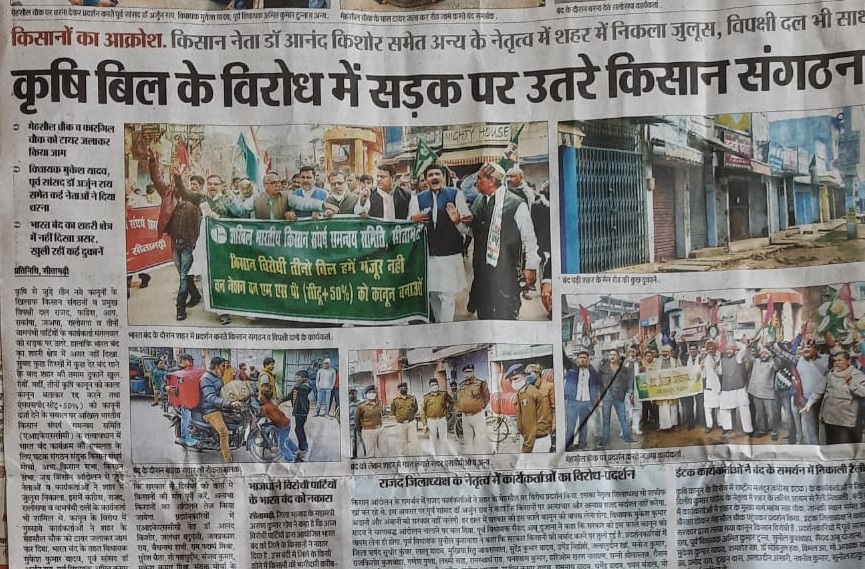
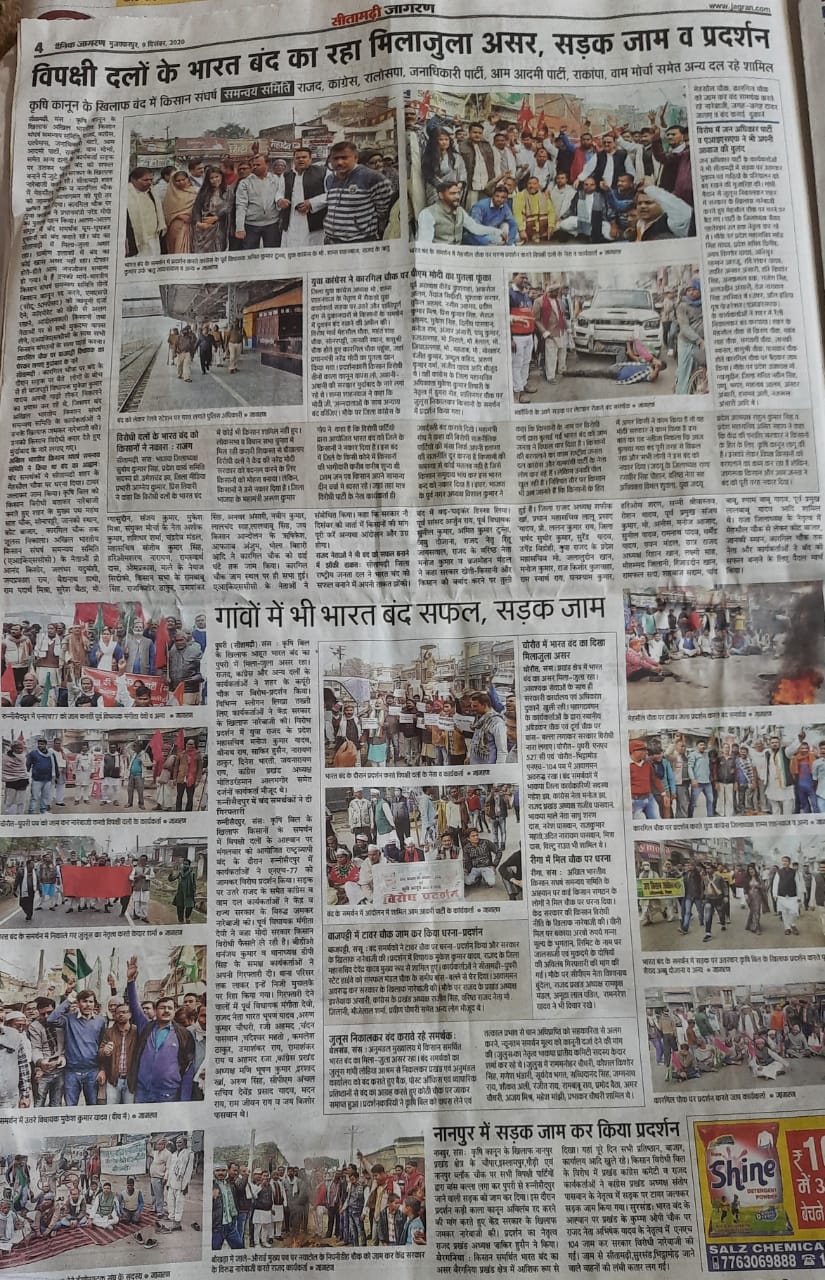
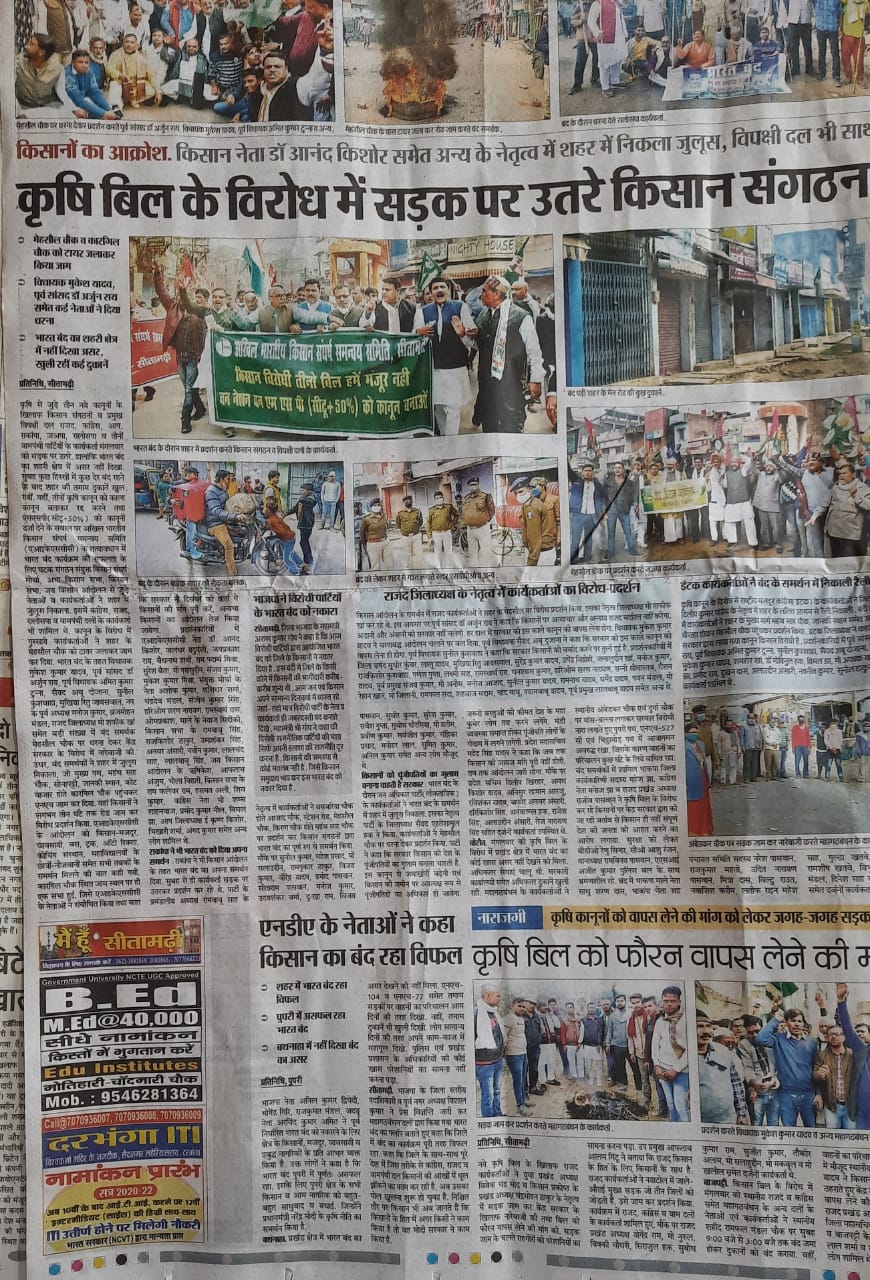
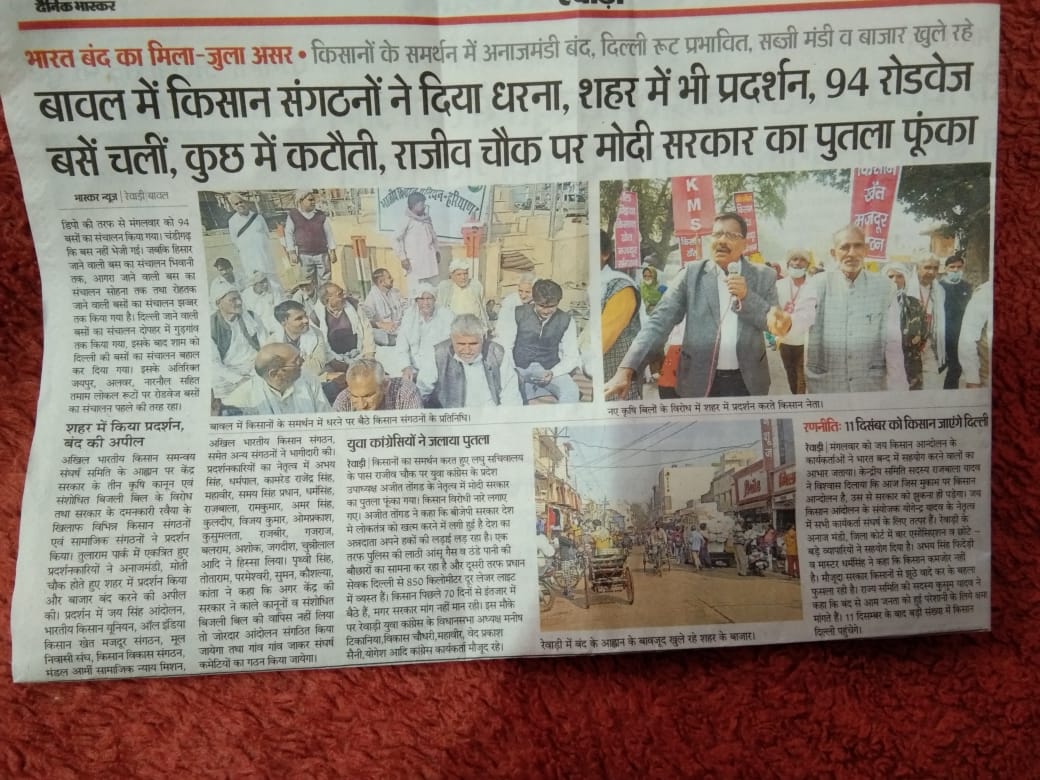
Bihar’s local Hindi newspaper Sitamarhi Jagran and Madhya Pradesh’s Hindi daily newspaper Dainik Bhaskar dedicated entire page-spreads to farmers’ protest. Dainik Bhaskar’s Marathi counterpart Dainik Divya Marathi covered local protests in Jalgaon and Dhule districts of Maharashtra.
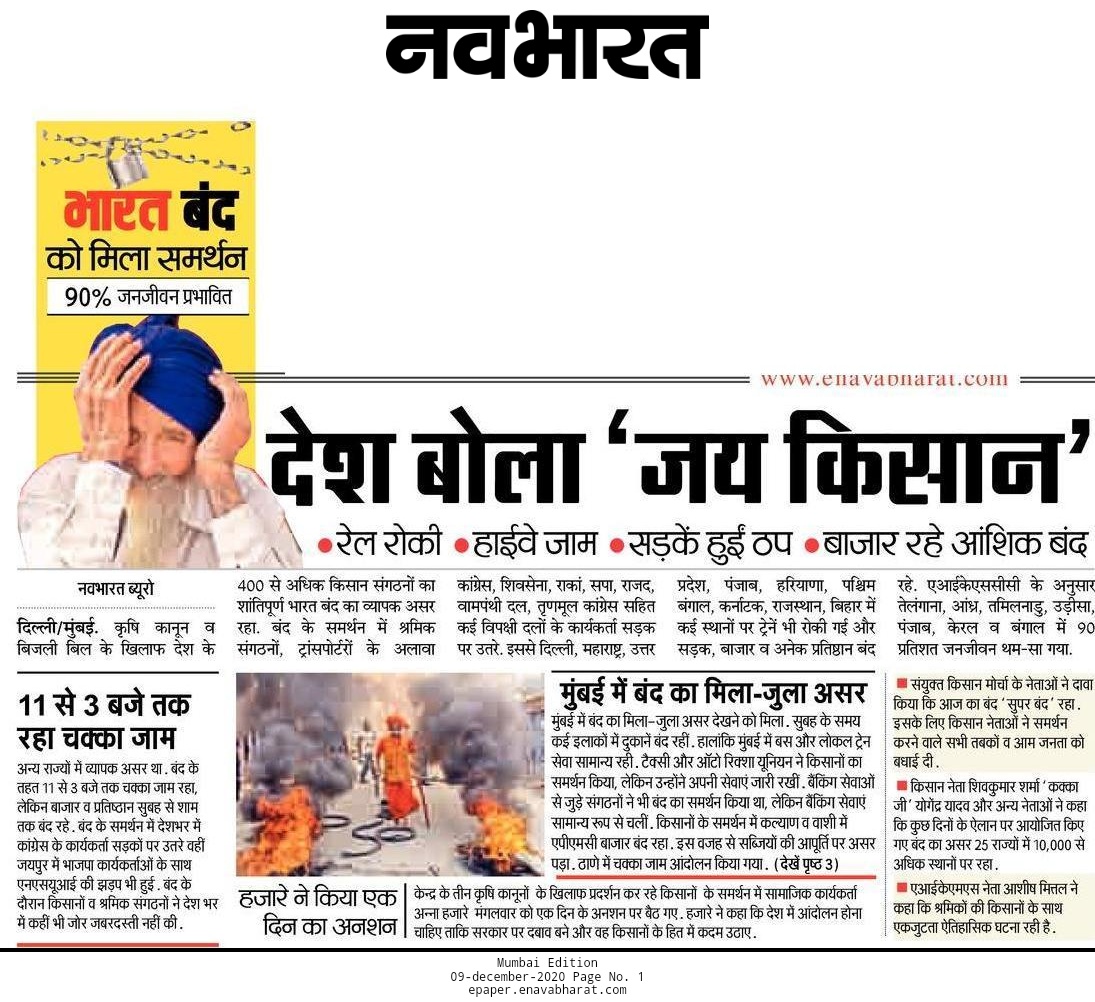
Similarly, the Lokmat newspaper covered farmers’ protest in the first four pages of its December 9 edition. Focusing primarily on Mumbai, the daily talked about city-wide protests that made their point without hindering daily life of citizens. Similarly, another Marathi daily Navbharat covered Bharat bandh as the front-page story under the title “Country said ‘Jai Kisan.’”
Towards north-eastern India, a Bengali YouTube channel called Swaraj Barta sent its reporters to walk alongside protesters during nationwide protests. Local Bangla newspaper Anandabazar Patrika talked about the impact of the Bharat bandh in Howrah, Murshidabad, Jhargram, West Midnapore and other districts of West Bengal.
Greater Kashmir covered pro-farmers’ protest in Kashmir on their YouTube Channel during Tuesday protests.
Assam’s English daily newspaper The Sentinel also covered Bharat bandh in Sarupathar city of Assam adding that locals supported farmers’ demands for withdrawal of the three laws.
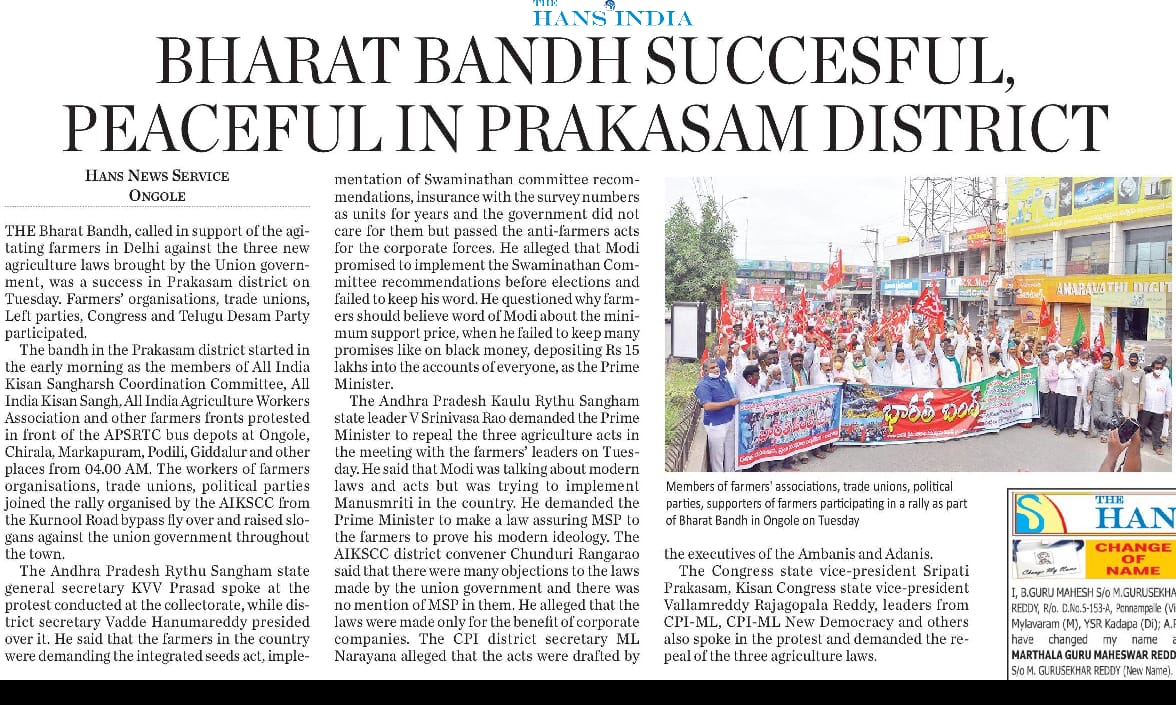
Meanwhile in southern India, The Hands India, an English daily newspaper circulated in Telangana and Andhra Pradesh, talked about peaceful farmers’ protests in Telangana that were backed by government support.
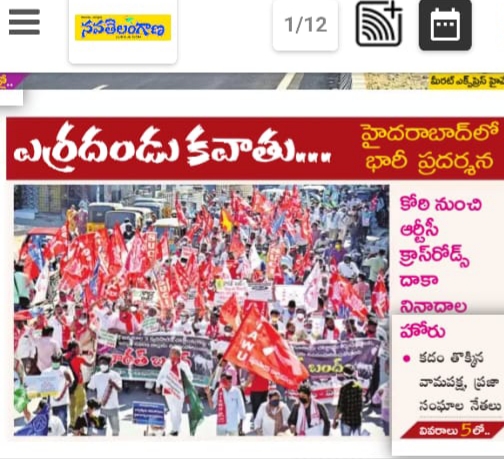
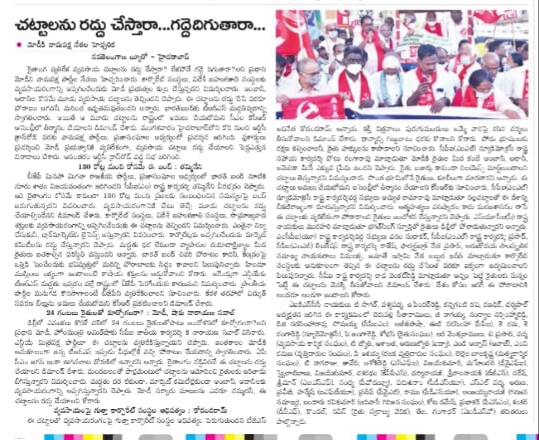
A Telugu newspaper Nava Telangana also covered agitations observed by Trade Unions in support of farmers.
Even English news website The News Minute based in Bangalore talked about persevering farmers’ protest in cities like Bangalore and Hyderabad following the Bharat bandh.
Meanwhile, news website The Logical Indian took a different approach focusing on debunking all the fake news and myths that were propagated by right-wing media during protests. Another website the Webdunia that reports in eight different languages has made a separate section called ‘Krishi Andolan’ in its Hindi version.
This barely exhaustive list of media coverage becomes even lengthier when independent journalists covering farmers’ issues are considered.
Satirist Akash Banerjee has published multiple videos on his YouTube Channel analysing farmers’ protest and farmers’ demands. One of his recent videos talks about the government claim that farmers are being ‘misled.’
Similarly, renowned journalist Faye D’Souza who recently started her own YouTube channel interviewed farmers’ leader Avik Saha and popular journalist P. Sainath much before protests began. Earlier she talked to a reporter from Gaon Connection news website who disclosed that while the majority of farmers opposed the laws, some of them were ignorant of the policies the Acts entailed.
Incidentally, Gaon Connection was among the first news media houses to cover farmers’ protest on-ground.
Further, photojournalist Vijay Pandey travelled to the Singhu border to document the everyday life of protesting farmers living in and around their trucks.
On the other hand, national news channels like Times Now and Republic TV claimed that Bharat Bandh had had virtually no impact. The latter, launched by BJP Rajya Sabha members Rajiv Chandrasekhar and Arnab Goswami in 2017, has often been accused of pro-government and right-wing news coverage.
While NDTV channel covered farmers’ protest, their primetime slot focused on talks between farmers’ leaders and Union Home Minister Amit Shah. The Indian Express also focused on the protests in terms of politics. India Today and The Hindu did a comparatively better job of reaching out to farmers and voicing their grievances.
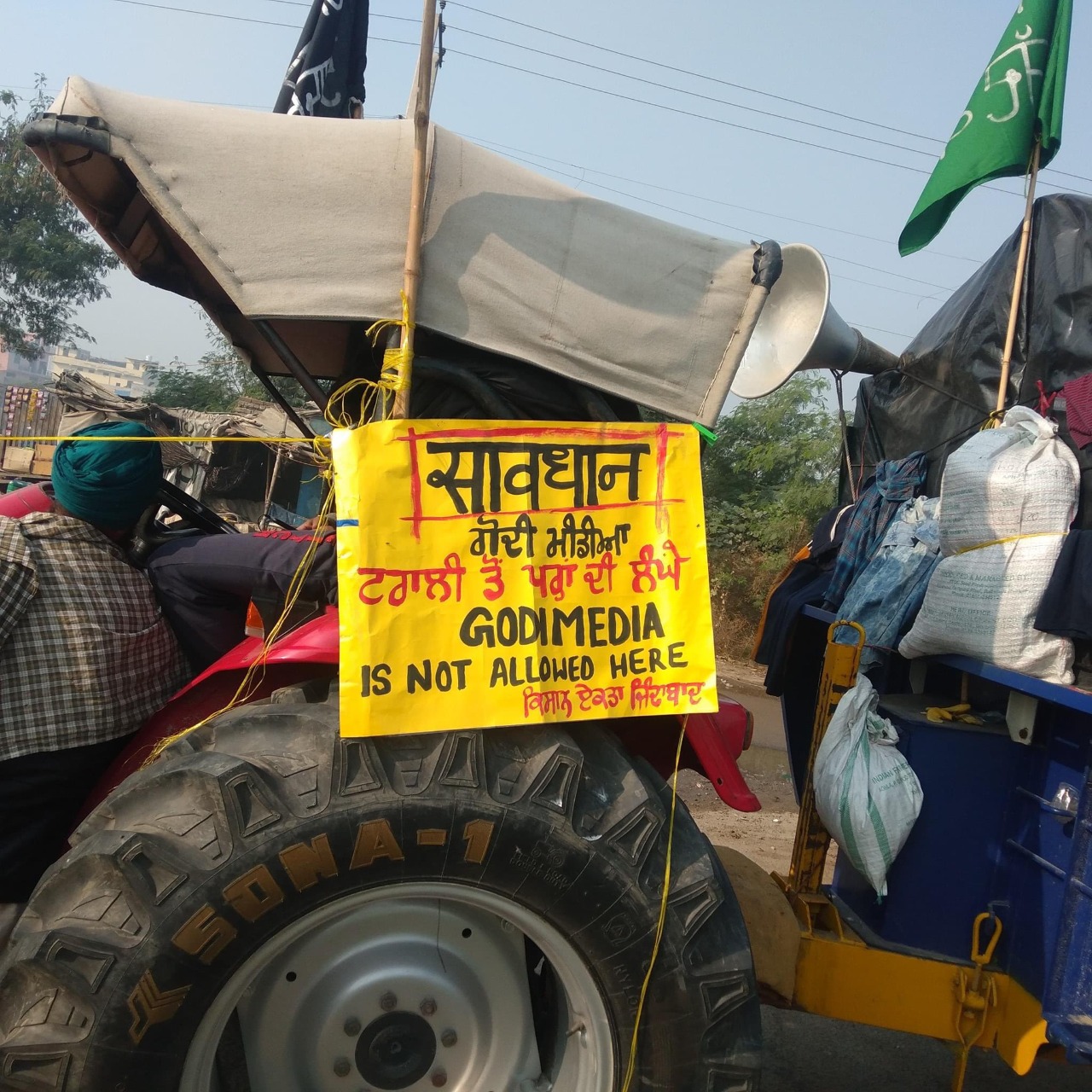
However, in terms of understanding the essence of these protests, local media has done a commendable job. Farmers are cognisant of this fact as many have tied placards barring ‘Godi-media’ from entering their protest areas.
During the last press conference at Singhu border, farmers’ leaders thanked local media for voicing farmers’ issues and encouraged them to uncover the unethical manners of ‘Godi-media.’
Regardless of the consequences of the farmers’ unrest, local news houses have proved their mettle by living up to the standards expected from the ‘Fourth Estate’.
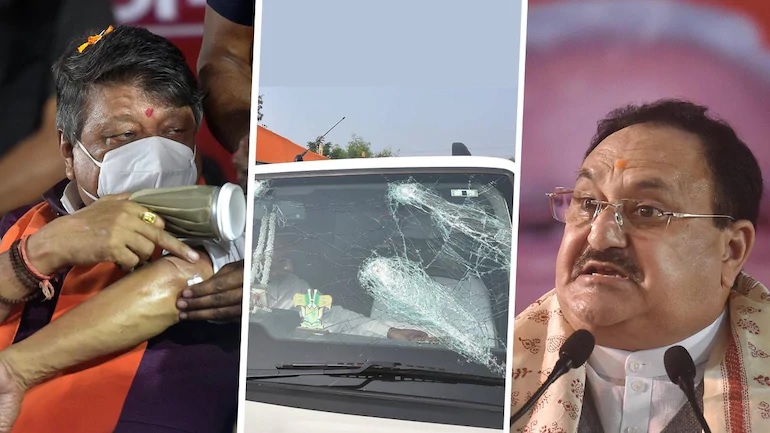
On Thursday, even as West Bengal Chief Minister Mamata Banerjee participated in a sit-in next to the Gandhi statue in Kolkata, to support the nationwide farmers’ agitation, Bharatiya Janata Party (BJP) president JP Nadda’s convoy was allegedly attacked en route to Diamond Harbour.
The BJP claims that their convoy came under attack and stones were pelted upon them. The incident reportedly took place at the Shirakol crossing located approximately 30 kilometers from Kolkata. Senior BJP leaders Kailash Vijayvargiya and Mukul Roy were reportedly injured in the attack. Mukul Roy tweeted pictures of his hand with a blood stain on his shirt’s cuff and the large stones reportedly pelted at his vehicle.
We are living in a Jungle Raaj run by the anarchic TMC. We were attacked en route the organizational event in Diamond Harbour, West Bengal.
If blood is what I need to give for restoring democracy in WB, I would do it. Throw blood-thirsty TMC out of Nabanna. #AarNoiAnnaypic.twitter.com/Li1QKOos8P
The Telegraph reported that the BJP claimed that at least 17 cars and 127 bikes were damaged and 35 bikes could not be found.
Meanwhile, the West Bengal Police issued a statement saying, “Shri JP Nadda, National President, BJP reached safely at the venue, Diamond Harbour, South 24 Pgs. Nothing happened to his convoy. Few bystanders at Debipur, Falta PS, Diamond Harbour PD, sporadically and suddenly threw stones towards vehicles trailing long behind his convoy.”
West Bengal Chief Minister Mamata Banerjee meanwhile chalked up the entire incident to “nautanki”. Speaking at the sit-in protest, Mamata said, “They are not serving people. They have nothing better to do. One day a Chief Minister comes to visit, another day the Home Minister arrives.” She added, “When they arrive, they think nobody else will hold any event. And when nobody comes for their program, they resort to ‘nautanki’ and play the victim for coverage in national news.”
Meanwhile Bengal BJP chief Dilip Ghose reportedly promised revenge for the attacks in a Facebook post saying, “Bodol hobey, bodlao hobey (There will be change, there will also be revenge).” This is a play on Mamata Banerjee’s own words from 2011, “Bodla noy, bodol chai (We don’t want revenge, we want change).” Ghosh also promised to “return everything with interest”.
It is noteworthy that Mamata Banerjee has been a vocal supporter of the nationwide movement by farmers who are seeking the repeal of recent anti-farmer agricultural laws passed by the center. In fact, when the alleged attack took place on the BJP convoy, Banerjee was at a sit-in protest that had been going on for three days to express solidarity with the farmers’ agitation. Yet, none of the BJP leaders visiting West Bengal addressed this. Even Nadda himself, after reaching the venue of the event he was attending in Diamond Harbour, stuck to criticising the Mamata Banerjee government of corruption and administrative failure, without any mention of farmers or agriculture.
Amidst all of this, it is important to note that Diamond Harbour is the constituency of All India Trinamool Congress (AITC) leader Abhishek Banerjee, who is also Mamata Banerjee’s nephew. BJP has already upped their ante against Banerjee’s nepotism by referring to her as “pishi” or aunt, instead of “didi” or sister as she is usually known. Assembly elections are due in Bengal next year and it is no secret that this is the one state BJP wants the most.
Interestingly, on December 7, a BJP rally in Siliguri had turned violent when BJP workers reportedly tried to break past barricades set up by the police and even pelted stones on them. Police resorted to using water cannons and tear gas to control the situation. One BJP worker Ullen Roy was killed in the violence. However, after the post mortem was conducted, it was discovered that his injuries were due to pellets fired from a shotgun. The West Bengal Police issued the following statement on Twitter:
As per the PM report “death was due to the effects of shotgun injuries.” Police do not use shotguns. It’s obvious that during yesterday’s protest in Siliguri, armed persons were brought and they fired from firearms. (1/3)
There was a malafide intention to create violence by the use of firearms. CID West Bengal has been asked to investigate. Truth will come out and strong action will be taken against all those who planned and executed the heinous crime. (3/3) pic.twitter.com/8UNdfDoVDH
Now, there is no denying that Trinamool Congress workers also have a history of violence, and have been accused of violently attacking and even murdering Left party cadres in the past. However, the BJP has now accused them of killing over 100 BJP workers ever since Mamata Banerjee came to power. All of this could be used to give the recent attack on the BJP convoy a particularly potent spin, designed to score political brownie points among the BJP’s target audience.
JP Nadda did not miss the opportunity when he addressed media persons later in the day and said, “Today’s events show how Mamata Banerjee is frustrated. She has sensed that the ground has shifted.” He revealed his cards when he added, “BJP will form a government in Bengal.”
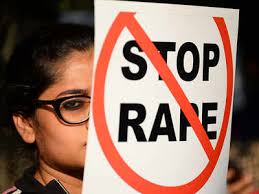
The National Commission for Women (NCW) has taken cognisance of the incident where a woman aged 35 years, was allegedly gangraped in Dumka, Jharkhand. “Chairperson Rekha Sharma has written to Director General of Police, Jharkhand seeking adherence to guidelines of Ministry of Home Affairs of completing probes in two months in cases of sexual assault,” said NCW in its statement.
Reports suggest that the woman was allegedly gangraped while she and her husband were on their way back from the market. The complaint registered at Maffasil Police Station states that the husband was held hostage during the incident. The police have nabbed one person and the hunt for other accused is currently underway, as confirmed by DIG Santhal Pargana. He has however, refuted reports that 17 men were involved in the crime, as reported by Indian Express.
In a reckless comment, Rashtriya Janata Dal (RJD) leader Shivanand Tiwari has blamed “consumerist culture” for such incidents in tribal areas where crimes like rape were unheard of. “No one could’ve ever imagined that a girl/woman would ever be raped in a tribal area. There was no rape in the tribal culture but the consumerist culture that began to bring in modernism, presented women as articles for consumption,” Tiwari was quoted as saying by ANI.
He further said, “Item dance in films, ads, pornographic content on phones prepare the mindset for rape. Just making stringent laws won’t end it. As long as the situation that incites people for rape persists, you won’t be able to stop it”.
#WATCH : No one could’ve imagined there would be rape in tribal area. Item dance, ads, pornographic content on phones prepare mindset of rape. Just making stringent laws won’t end it. As long as situation that incites for rape persists, you won’t be able to stop it: S Tiwari, RJD pic.twitter.com/xVg6jvDp3G
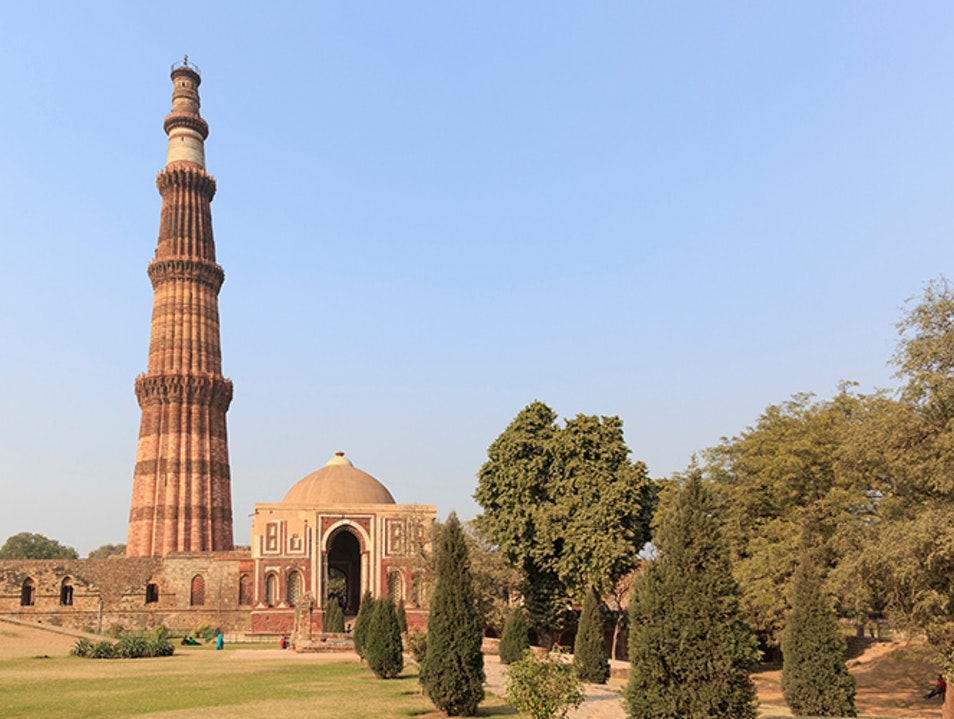
Historians have spoken up against the suit filed in Delhi’s Saket court for restoration of 27 temples in the Qutub Minar Complex. The plaintiffs, which includes Lord Vishnu and Tirthankar Rishabh Dev, apart from humans (their devotees), claim that these temples were dismantled, desecrated and damaged under the command and orders of Qutub-Din-Aibak, a commander of invader Mohammad Gauri, who established “slave dynasty” and to show the ‘Might of Islam’, raised some construction at the same very place of temples naming it as, ‘Quwwat-Ul-Islam Mosque’.
Professor and historian Harbans Mukhia said, “History is not a matter of public opinion. Historical events take place in their context. You can’t isolate a 12th century fact from its context and present it in 21st century and claim victimhood. Where does logic find a place in all this?”
Another Historian Dr Swapna Liddle told TOI, “Nobody denies the fact that temples were destroyed in a moment of war. But this was not because they were symbols of a rival faith but because they were symbols of power of the regime that was supplanted. That context is important.”
Explaining the Hindu motifs, Professor Catherine Asher stated that Ghazanavids and Ghurids employed Hindu artisans for a long time before their armies entered Delhi. So, there was a familiarity with Hindu imagery.
Liddle spoke to TOI, “You will find the lotus and kalash at Muslim monuments. Look at maulana Jamali’s tomb (Jamali-Kamalil mosque). Right above the mihrab, there is a kalash with Allah written on top of it. Look at Gandhara art, for example. Today, we only see specimens of it in museums. But these Turkic people came from those same lands where Gandhara art was practiced. Islam is a religion accepted by so many different cultures. But architecture was cultural. They grew up in that culture, so they were familiar with it. Why is it so difficult for us today to understand that?”


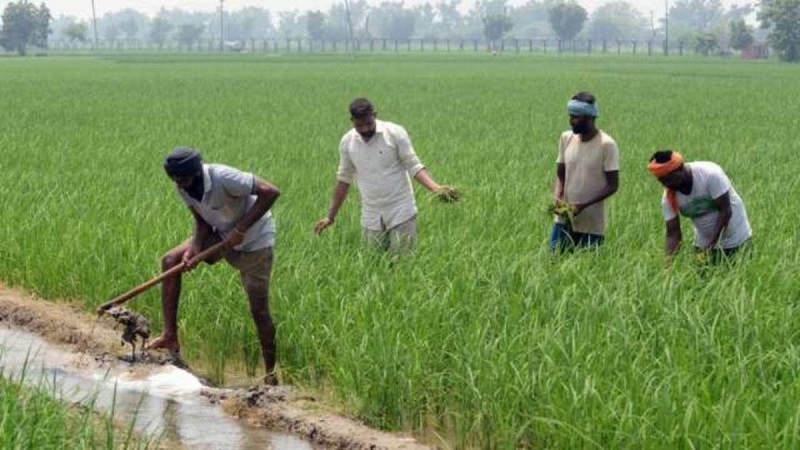 Image Courtesy:thedailyguardian.com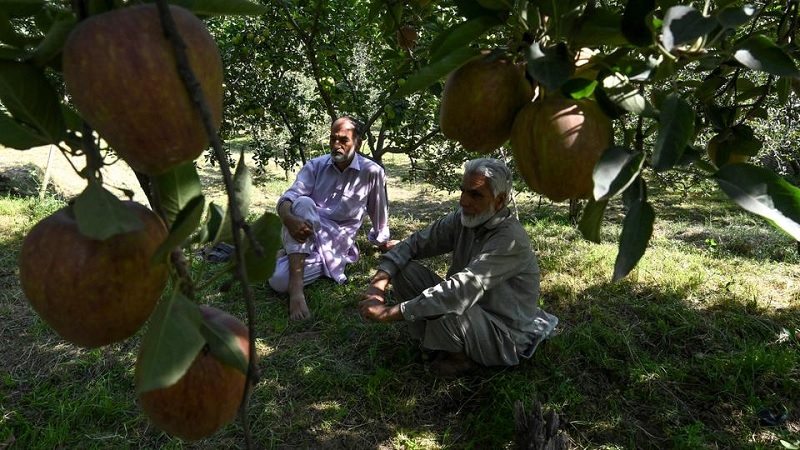

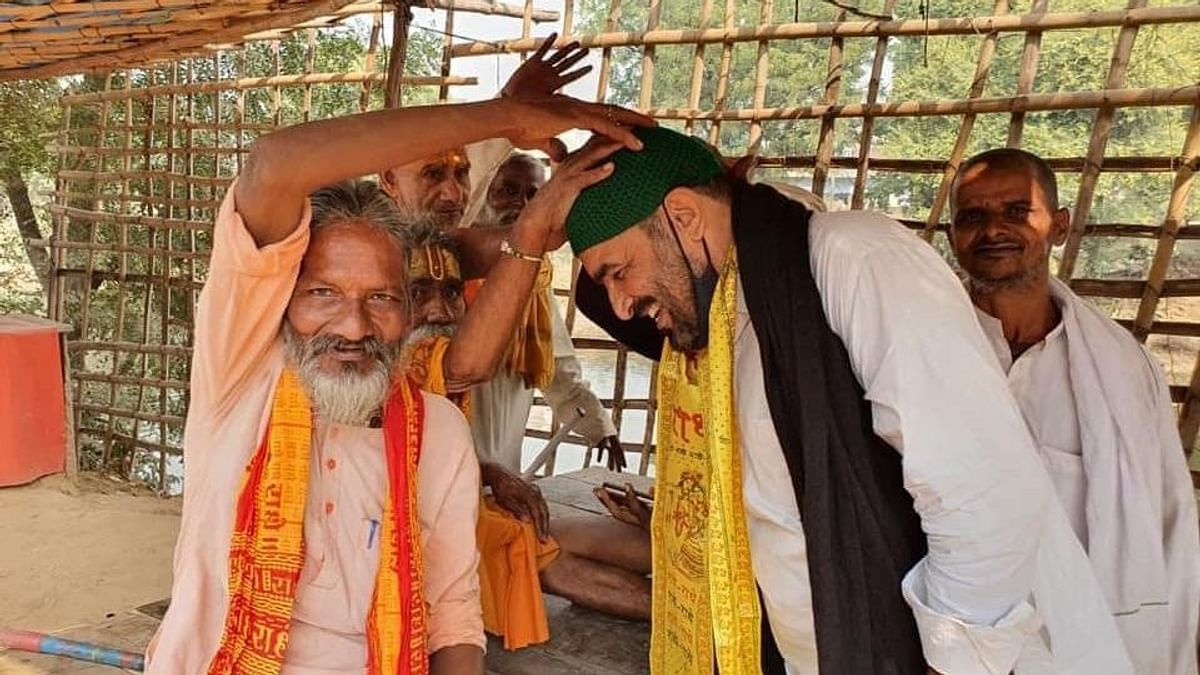 Image Courtesy: Facebook/Khudai Khidmatgar