According to a news report, the Ministry of Home Affairs (MHA) has instructed the intelligence agencies to make a list of organisations and individuals who are aiding the Rohingya refugees in India.
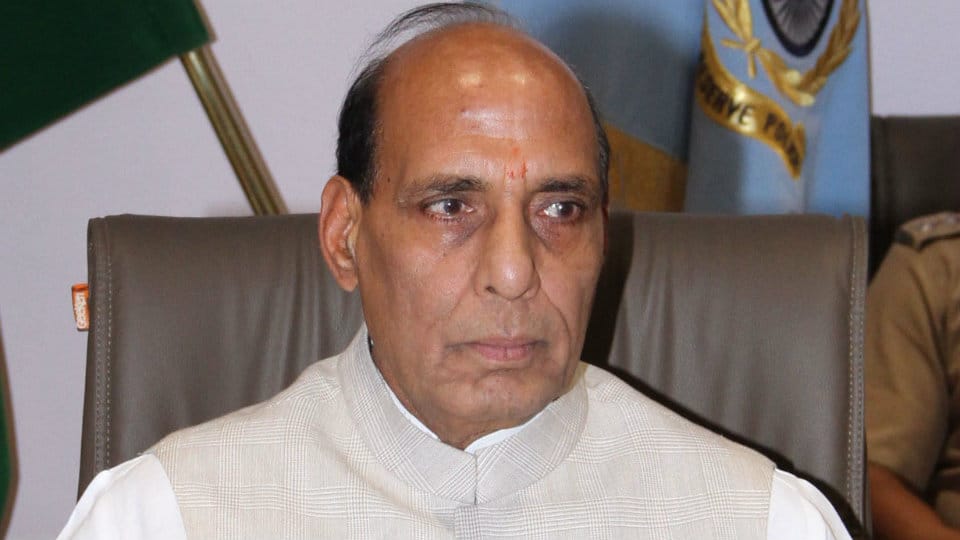
A group of individuals from across the country have come together to write an open letter to Home Minister Rajnath Singh in the light of the recent news that the Ministry of Home Affairs (MHA) has instructed the intelligence agencies to make a list of organisations and individuals who are aiding the Rohingya refugees in India.
“According to the news story published in the Pioneer (Nov. 19), the list includes the names of a former Ambassador, top lawyers, civil society members and a professor of a renowned university, as well as organisations like the Delhi based Working Group on Alternative Strategies, Bondi Mukti Committee, Kolkata, Kerala Muslim Culture Centre and Amnesty International, India and several others,” they wrote.
“Though, the Rohingya do not live in refugee camps. The Indian state, unlike a much poorer country Bangladesh, has never bothered to provide the Rohingya refugees with any economic assistance. The Rohingyas living in India, work for their living, thus adding to our gross national income,” they said in the letter.
They also wrote to Singh and said that instead of protecting the Rohingya refugees, he was allowing anti-Rohingya sentiment to grow. They said that in 2017, in Jammu, where about 5,500 Rohingya were living, leaders of several Hindu groups aligned to his party, the BJP began a campaign to expel Rohingya from the region. They said that several BJP leaders have been saying that “Rohingya Muslims should not live here and nor should those who sympathize with them”.
Identifying themselves as sympathizers of the persecuted Rohingya people, they wrote that, “We wonder what will be the next step of your Ministry. Will you prepare a case against the sympathizers of Rohingya like that in which several academics, poets, writers, lawyers and human rights defenders are being persecuted for alleged links with the Maoists in the Bhima- Koregaon case?”
“We have never turned people back to where they would be tortured, raped and killed. That is the essence of our ethos,” they wrote talking about the country’s response to refugees in the past.
Full Text of the letter:
Open letter to Mr. Rajnath Singh, Home Minister of India
Sub: MHA prepares a state-wise list of Rohingya sympathizers.
Hon’ble Home Minister,
We understand from news reports that under instructions from your ministry, the intelligence agencies have prepared a state-wise list of several organisations and individuals, who are sympathetic to the Rohingya refugees in India and are providing assistance to them.
According to the news story published in the Pioneer (Nov. 19), the list includes the names of a former Ambassador, top lawyers, civil society members and a professor of a renowned university as well as organisations like the Delhi based Working Group on Alternative Strategies, Bondi Mukti Committee, Kolkata, Kerala Muslim Culture Centre and Amnesty International, India and several others.
Hon’ble Home Minister, we are sympathizers of the Rohingyas. They are the most persecuted community in the world. Thousands of people around the world express sympathy with the Rohingya community as they been subjected to massacres, rape, torture, confinement in concentration camps and denial of health care, education and employment by the military junta of Myanmar and the current government under Aung San Suu Kyi.
Several governments around the world, Nobel laureates like Mairead Maguari of Northern Ireland, Tawakkol Karman of Yemen, Amartya Sen and Iran’s Shirin Ebadi, civil society organisation and the UN Fact Finding Mission have concluded that the Rohingya are the victims of an ongoing genocide. In 2016, twelve Nobel laureates in an open letter to the UN Security Council in December of 2016 requested intervention to end the humanitarian crisis in the Rakhine state of Myanmar. I may add that earlier, UN SG’s Special Adviser for Myanmar Vijay Nambiar had also called for an impartial investigation into the violence in Arakan/Rakhine state.
While a few thousands of Rohingyas are in India, there are more than a million are in Bangladesh. In addition, hundreds of thousands of the members of this persecuted community are scattered all over the region of South-East Asia and South Asia. The systematic persecution of Rohingya ethnic community has been going on since the 1970s. In 1977 the military junta began Operation Nagamin or Dragon King. In the name of “screening the population for foreigners” and relocation of Muslim villagers, the army carried out widespread looting, rape, arson and the desecration of mosques.
As a result of continued assaults by the Buddhist vigilante groups and Myanmar army, which has been described as “slow-burning genocide”, more than half a million Rohingyas were already out of their country by 2017 when Myanmar’s military, on the pretext of retaliating the attack by Arakan Rohingya Salvation Army launched a massive reign of terror which led to one of the most catastrophically fast refugee exoduses in modern times. More than 780,000 Rohingya Muslims had to flee Myanmar for Bangladesh.
The widespread, systematic, pre-planned burning of tens of thousands of Rohingya homes and other structures in Buthidaung, Maungdaw, and Rathedaung Townships of Rakhine State by the military, Border Guard Police and vigilantes across northern Rakhine State from 25 August until at least October 2017 has been documented and analyzed by many independent civilian groups, governments including the USA and the UN. The UN Independent Fact-Finding Mission in its report to the UN Security Council has called for the investigation and prosecution of Myanmar’s Commander-in-Chief, Senior General Min Aung Hlaing, and his top military leaders for genocide, crimes against humanity and war crimes.
You are aware that Myanmar’s military dictatorship had stripped the Rohingya of their citizenship by enacting a new citizenship/nationality law in 1982. This law violates the long-established globally accepted norms of nationality and a series of international legal instruments, including the Universal Declaration of Human Rights. There is abundant evidence that the Rohingyas were living in Arakan even before the arrival of Buddhists in Rakhine. However, moving away from history, let me point out that there is no getting away from the fact that no state can render stateless, as a matter of policy, people born in its territory under the UN Charter. If a person is born on the territory of a country and has no other legal citizenship, then they must be given citizenship by that country. The Rohingyas are Burmese by birth and according to international law, it does not matter where their distant ancestors might have come from. And no amount of history, factual or fabricated, can change that basic fact. No amount of history can then justify any attempt at ethnic cleansing.
Hon’ble Home Minister, the entire world knows that Rohingyas are victims of an ongoing genocide. Yet, your Junior Minister Kiren Rijiju claimed that since the Rohingyas were illegal migrants they could be deported. “Raj Dharma”, which you claim to be following, dictates that you must protect the oppressed and the vulnerable. Yet a letter issued a letter issued by your ministry said, “Illegal migrants are more vulnerable to getting recruited by terrorist organisations. … Infiltration from [Myanmar’s] Rakhine state … into Indian territory, especially in recent years, besides being [a] burden on the limited resources of the country, also aggravates the security challenges posed.” Is it not the duty of the state to guard the “vulnerable” against the unscrupulous and are we such a small country that we cannot help 40,000 refugees. Though, the Rohingya do not live in refugee camps. The Indian state, unlike a much poorer country Bangladesh, has never bothered to provide the Rohingya refugees with any economic assistance. The Rohingyas living in India, work for their living, thus adding to our gross national income.
Instead of protecting the Rohingya refugees, it appears that you are allowing anti-Rohingya sentiment to grow. In 2017, in Jammu, where about 5,500 Rohingya were living, leaders of several Hindu groups aligned to your party, the BJP began a campaign to expel Rohingya from the region. Like the Buddhist extremists of Myanmar, they put up posters naming Rohingyas as Bangladesh Muslim migrants, connecting up with long-standing prejudice against Bangladeshi migrants, in Assam and the Northeastern states. They threatened a campaign to “identify and kill” Rohingya if the government did not deport them. [Also] in September 2017, Rohingya refugees living in Rajasthan were asked to leave.
Since the publication of the report in The Pioneer, there have been several calls on social media for action against the sympathizers of the Rohingya. The Rohingya sympathizers are being called “pseudo seculars and liberals”, and have been falsely blamed for demanding that the government provide the Rohingya with a home and other necessities. Already there are calls for arresting and prosecuting the Rohingya sympathizers for supporting “terrorists” and “killers of Hindus and Buddhists”. Several BJP leaders have been saying that “Rohingya Muslims should not live here and nor should those who sympathize with them”.
We wonder what will be the next step of your Ministry. Will you prepare a case against the sympathizers of Rohingya like that in which several academics, poets, writers, lawyers and human rights defenders are being persecuted for alleged links with the Maoists in the Bhima- Koregaon case?
Last year in August (2017), when human rights groups condemned the government for seeking to deport the Rohingya, Minister Rijiju had claimed, “India is the most humane nation in the world. Millions of refugees live in India. There is no other country in the world which hosts so many refugees.” Yes, Hon’ble Home Minister, that is the glorious tradition of our country. We have never turned people back to where they would be tortured, raped and killed. That is the essence of our ethos.
Yours sincerely,
Tapan Bose, Filmmaker, Delhi
Anand Patwardhan, Filmmaker, Mumbai
Rita Manchanda, Researcher, Author, Delhi
Sumanta Banerjee, Author, Cultural Historian, Hyderabad
Bharat Bhusan, Editor, Columnist, Delhi
Sahana Basavapatna, Lawyer, Bangaluru
Nandini Sundar, Academic, Author, Delhi
Farah Naqvi, Author, Journalist, Delhi
Arundhati Dhuru, Feminist, Social Activist, Lucknow
Sandeep Pandey, Social Activist, Writer, Lucknow
Jawed Naqvi, Writer, Journalist, Delhi
A.K. (Dunu) Roy, Social Activist, Writer, Delhi
Dinesh Mohan, Academic, Author, Delhi
Alok Rai, Academic, Allahabad
Om Prakash Mishra, Academic, Kolkata
Sushil Khanna, Academic, Kolkata
Ranabir Samaddar, Academic, Kolkata
Pradip Bose, Academic, Kolkata
Gautam Mody, General Secretary, New Trade Union Initiative, New Delhi
Ravi Himadri, Director, Development and Justice Initiative, Delhi
(The letter has been slightly edited for narrative flow.)