'Yeah, I'm a nasty woman – a loud, vulgar, proud woman.'
In October 2015, towards the end of the final presidential debate, Donald Trump leaned into his microphone and called his political rival Hilary Clinton, a “nasty woman”, as millions watched. One of the people watching was nineteen-year-old Nina Donavan and she quickly composed a response to it, an angry ode to being a “nasty woman”.
“The second [Trump] called Hillary [Clinton] a nasty woman, I said, ‘Oh man, I’ve got to write a nasty woman piece,’” Donovan toldThe Tenessan. “I reclaimed it.” Only 20,000 people saw it on YouTube, but it resonated with many. One member of the audience during her original performance was actor Ashley Judd, who is known as much for her acting prowess as for her political activism. Judd, who is from Franklin, Tennessee, the same city as Donovan, sought the teenage poet’s permission to perform it.
And on Saturday, January 21, Donovan got to see the “physical form” of her poem as Judd gave an impassioned performances (above) of Nasty Woman, a beat-poem-cum-political-rap at a march in Washington.
“I am a nasty woman,” begins the poem. “I’m as nasty as a man who looks like he bathes in Cheetos dust. A man whose words are a distract to America. Electoral college-sanctioned, hate-speech contaminating this national anthem. I’m not as nasty as Confederate flags being tattooed across my city.
Judd gets angrier as the performance goes on.”I am not as nasty as racism, fraud, conflict of interest, homophobia, sexual assault, transphobia, white supremacy, misogyny, ignorance, white privilege,” she yells listing out all of Trump’s failings. “…your daughter being your favourite sex symbol, like your wet dreams infused with your own genes. Yeah, I’m a nasty woman – a loud, vulgar, proud woman.”
The video below is of Donavan’s original performance.
नई दिल्ली। अखिल भारतीय प्रचार प्रमुख डॉ. मनमोहन वैद्य द्वारा आरक्षण के खिलाफ दिए गए बयान के बाद मची खलबली से संघ के भीतर भी हलचल मची हुई है। विदित हो कि पिछले दिनों अखिल भारतीय प्रचार प्रमुख डॉ. मनमोहन वैद्य ने जयपुर लिटरेचर फेस्टिवल में आरक्षण के खिलाफ बयान दिय़ा था। वैद्य के इस बयान की ना केवल देशभर में भर्त्सना हुई बल्कि संघ के अंदर भी भूचाल आ गया।
असल में बिहार विधानसभा चुनाव में हार की एक बड़ी वजह संघ प्रमुख मोहन भागवत के उस बयान को बताया जाता है जिसमें उन्होंने आरक्षण के समीक्षा की बात की थी। राष्ट्रीय स्वंय सेवक संघ ने अपने ऑफिसयल फेसबुक पेज पर एक वीडियो शेयर किया है जिसमें संघ प्रमुख भागवत आरक्षण पर बैकफुट पर आते हुए सफाई दे रहें हैं। सफाई देते हुए भागवत भावावेश में संघ के आरक्षण को लेकर मूल एजेंडे की बात कर जाते हैं।
'जबतक देश में जातिगत भेदभाव है, तबतक जातिगत आरक्षण रहना चाहिेए' यह कहते हुए भागवत यह भी कह जाते है कि सवर्णों को दिल पर पत्थर रखतक आरक्षण बर्दाश्त करना चाहिए। भागवत इस वीडियो में हिन्दू धर्म शास्त्रों की चर्चा करते हुए समतामूलक समाज के निर्माण की बात करते हैं।
सवर्णों को दिल पर पत्थर रखकर आरक्षण बर्दाश्त करने की बात करते हुए संघ प्रमुख मोहन भागवत देश के उन सवर्ण सामंती आरक्षण विरोधी ताकतों की भी तुष्टिकरण करते दिखते है। वहीं, भागवत समतामूलक समाज के निर्माण में धर्म की भूमिका की बात करते हुए यह बताना भूल जाते है कि वर्ण व्यवस्था इसी हिन्दू धर्म की देन है।
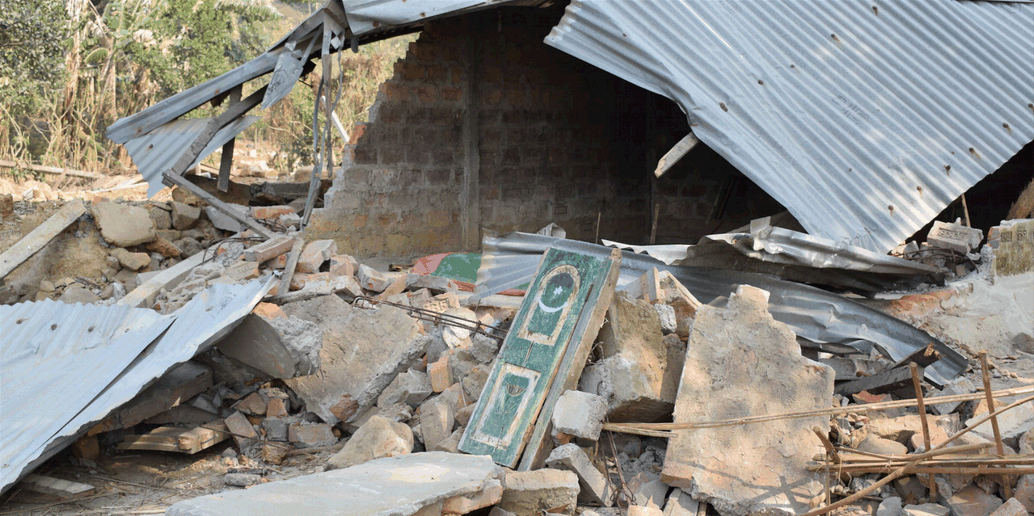
Ashraful Hussain and Parvin Sultana report on the eviction at Dhubri’s Chandordinga in #Assam
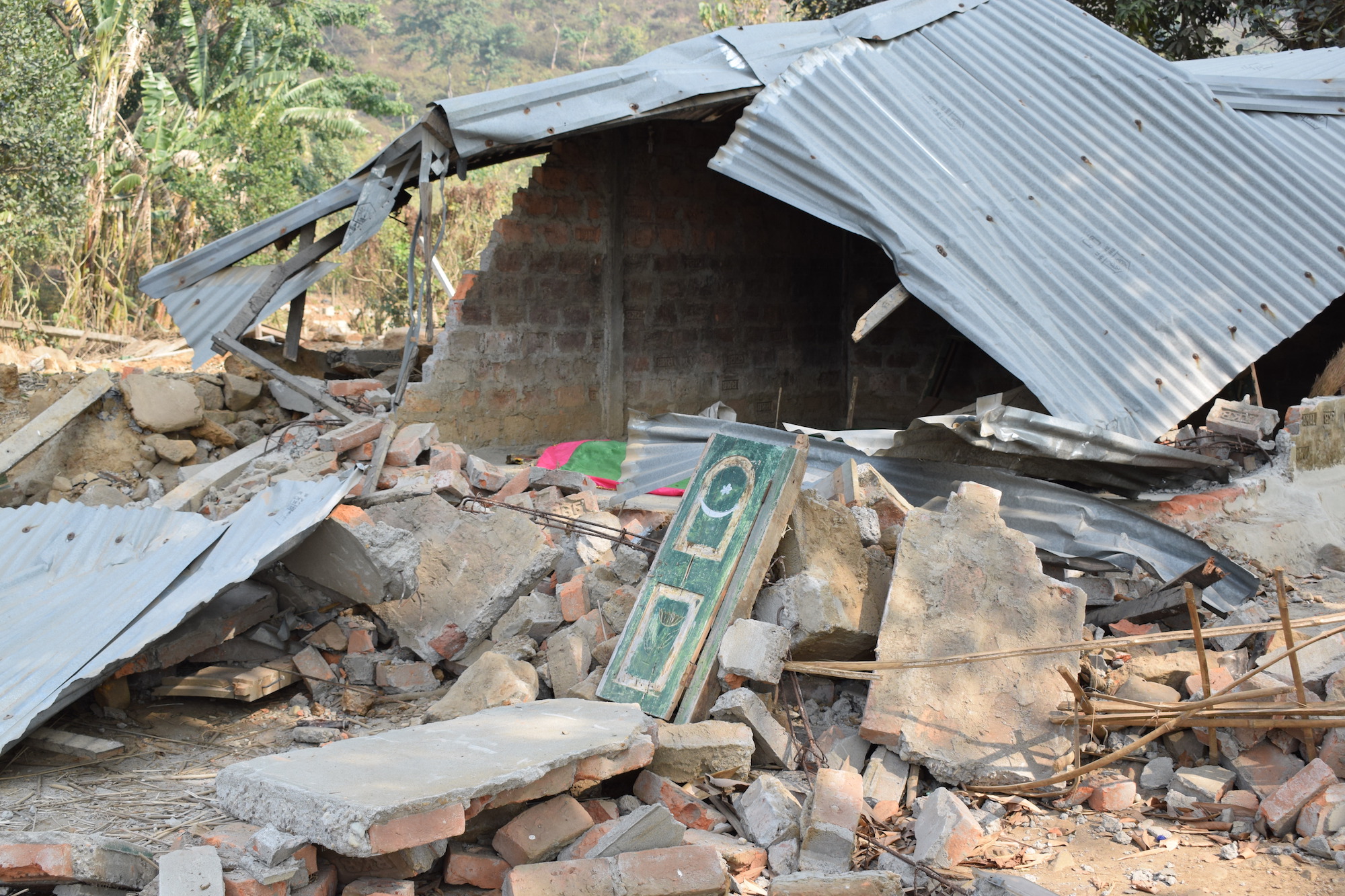
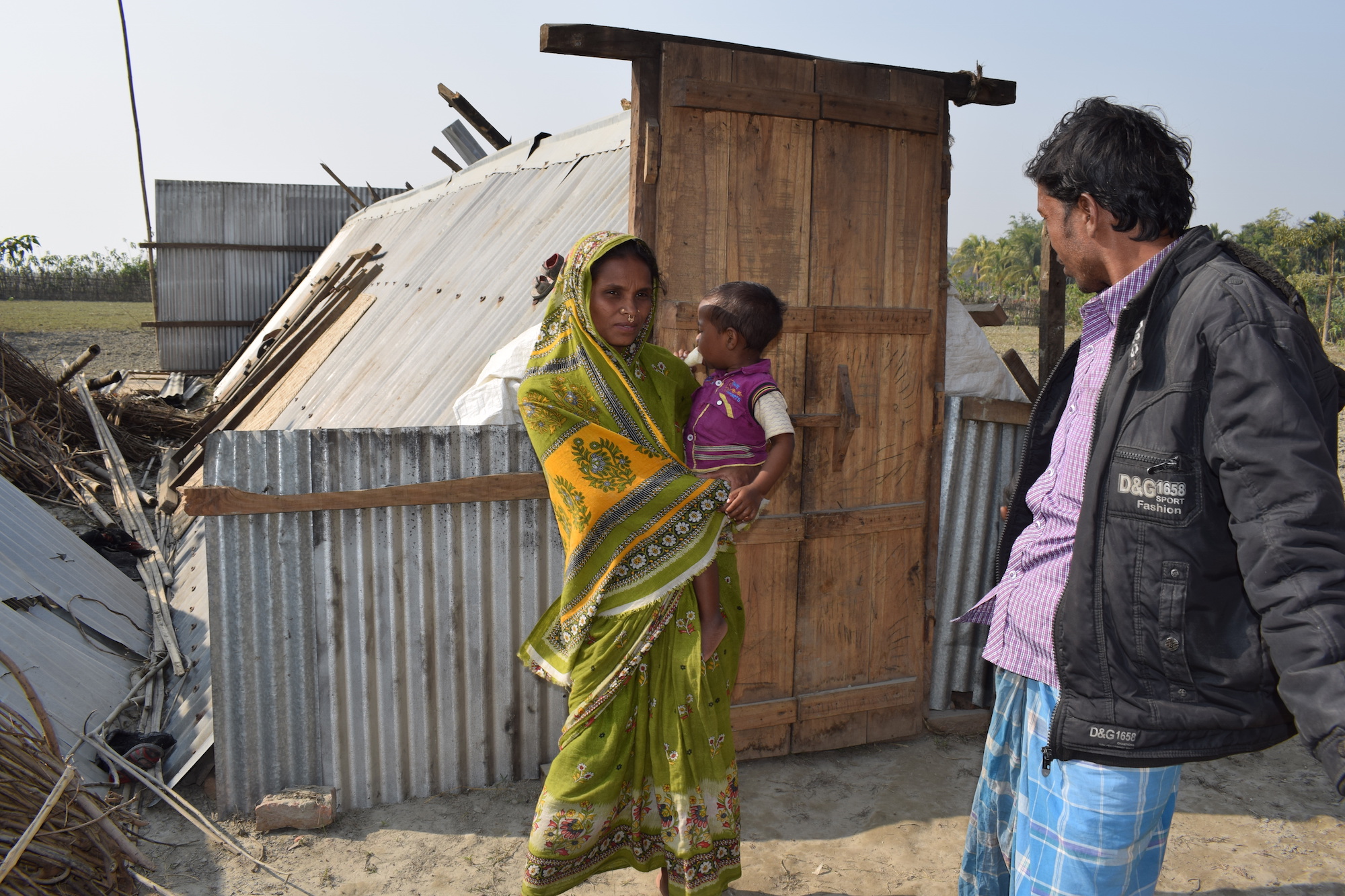
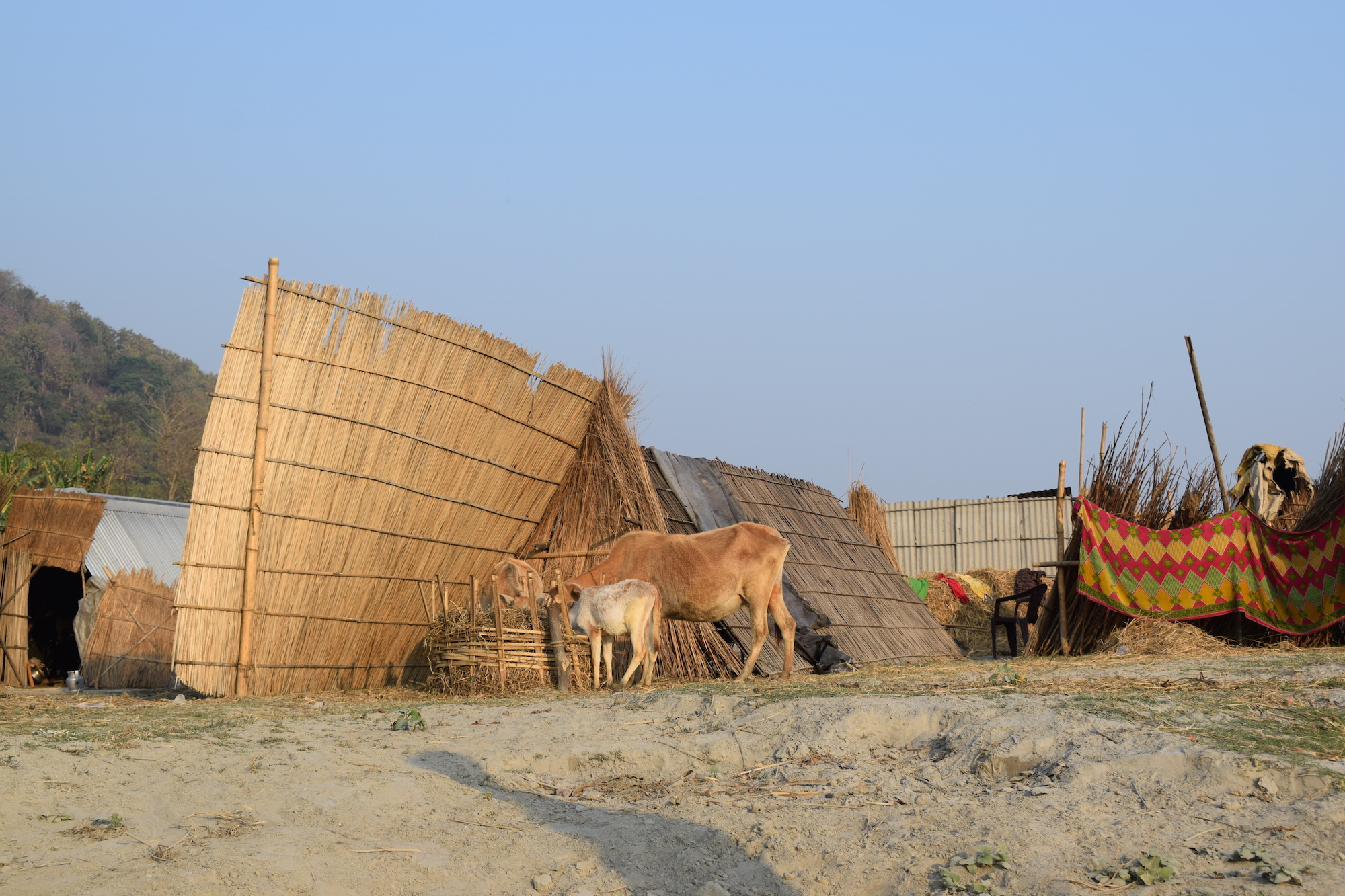
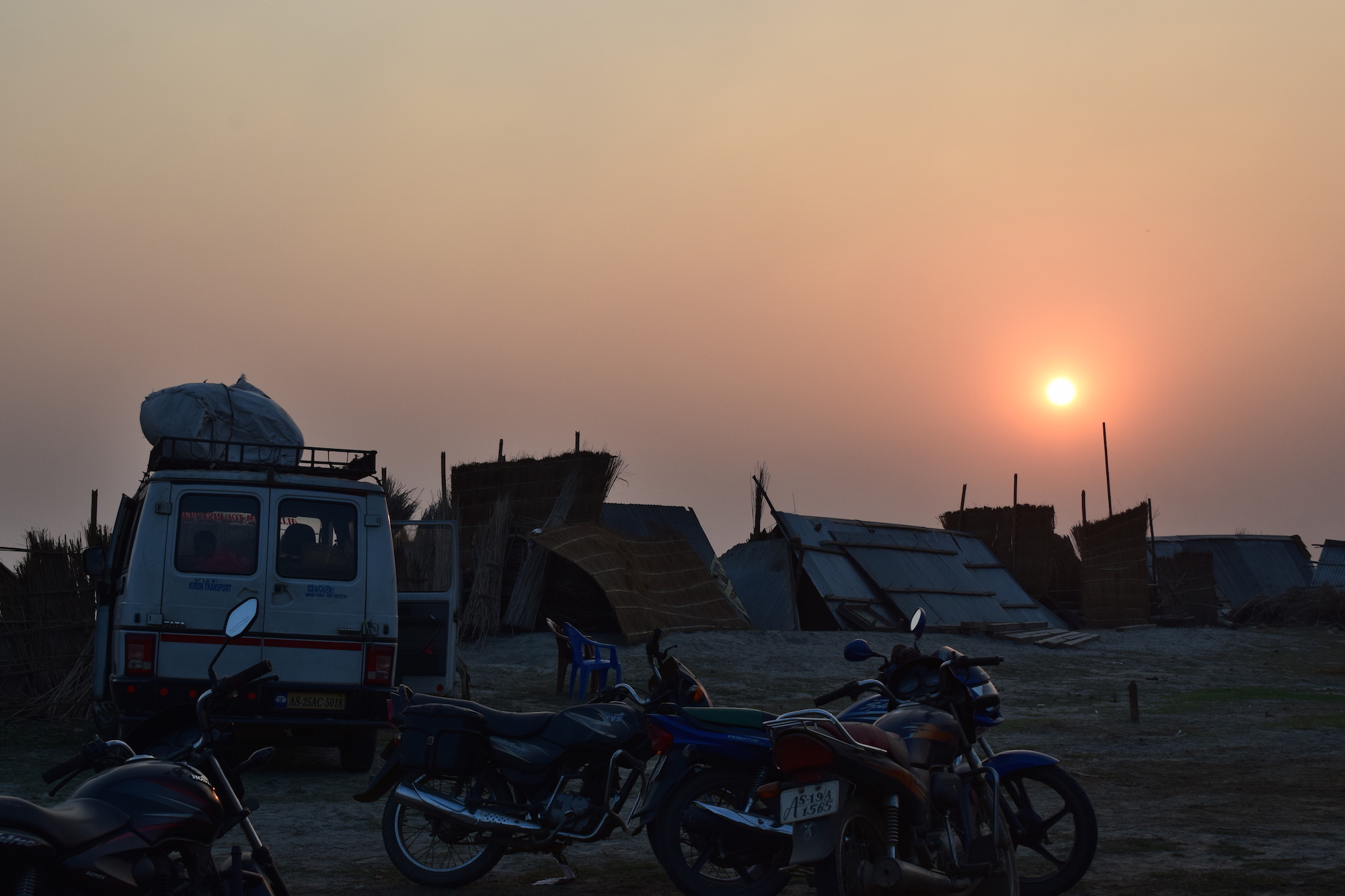
Chileshwari Devi laments that they could not salvage even a single thing from their house which was ravaged to ground. Despite repeated requests, the forest officials and guards did not give them any time to shift their furniture and other things. A same story is shared by Ludhia Malla’s family whose children were made to leave their ready food as they witnessed their house being bulldozed. Around 56 families had to undergo such an ordeal in Chandordingha. Situated at a distance of around 240 km from the capital of Assam, Chandordinga Pahar (hill) is a part of the border District Dhubri. It is situated in Ward No 5 of Hatipota village of Chapor. On 28th December, 2016 the District Administration and Forest Department carried out an eviction on forest land and 56 families were evicted while 117 homes were destroyed.
Living just two kilometers away from the river Brahmaputra, these people were mostly Rajbongshis or Assamese Muslims of East Bengal origin. The ethnic tribal people lived in nearby areas and scarcity of land and food pushed them to this hill where they have been living for the last fifty years. The Assamese Muslims of East Bengal origin were inhabitants of nearby Krishtimoni Char and Cholakura Char of Goalpara district. Land erosion rendered these people homeless and they moved to Chandordinga hill which is at most 4 to 5 km away from these two river islands. These river islands were submerged in the Brahmaputra during the floods of 1978-80. A similar eviction drive was carried out in 1997 and around 30-35 families were displaced. However the people had no other place to go and they resettled again in the same place.
Forest Minister Pramila Rani Brahma visited this place twice and hinted on an impending eviction. Such declarations also saw the local people come together and start a movement against such forced eviction without any proper rehabilitation. While political parties fell short of rising to the occasion and stand by these homeless displaced people, the Krishak Mukti Sangram Samiti raised a voice for the rights of these people. A mass movement grew up under the leadership of KMSS. The local people raised demands against forced eviction and no eviction without proper rehabilitation of these landless people. However the government and administration evicted these people without providing them any alternative.
Every evicted family of Chandordinga is landless. Lack of land forced them to move away from their ancestral activity of agriculture. Most of these people are fishermen and work as daily labourers in neighbouring areas of Dhubri and Chapor. Apart from these, many of them work in brick kilns and as carpenters in different parts of Assam. Left with no land, these families don’t have the option of going back to agriculture.
There was a primary school by the name of Poschim Chanderdinga Prathamik Bidyalay. Around 120 students were enrolled in the school. The school was not yet provincialised because of land related issues. On 28th December, 2016 the school was razed to ground and despite repeated requests from the local people, the school was not spared. 120 students are left with a bleak possibility of continuing their education. The people requested the administration to give them 24 hours to shift the school, however in the end it met the same fate like other bulldozed homes. Many students who go to nearby schools in Tilapara are also in a daze. Kodorbhan who will write her tenth board exams has no place to study and is living in a makeshift tent.
According to some news papers, there was a confrontation between the local people and the forest guards during eviction. 8 people were left wounded and the forest guards had to open fire. The immediate cause for this confrontation was a specific incident.
According to local people, a family wanted some time to shift their house. While they were discussing this, the forest guards started lathicharging and they hit two women. This led to the violent outburst and army was deployed to control the situation. A local resident, Zakir Hussain was also arrested in connection with the incident.
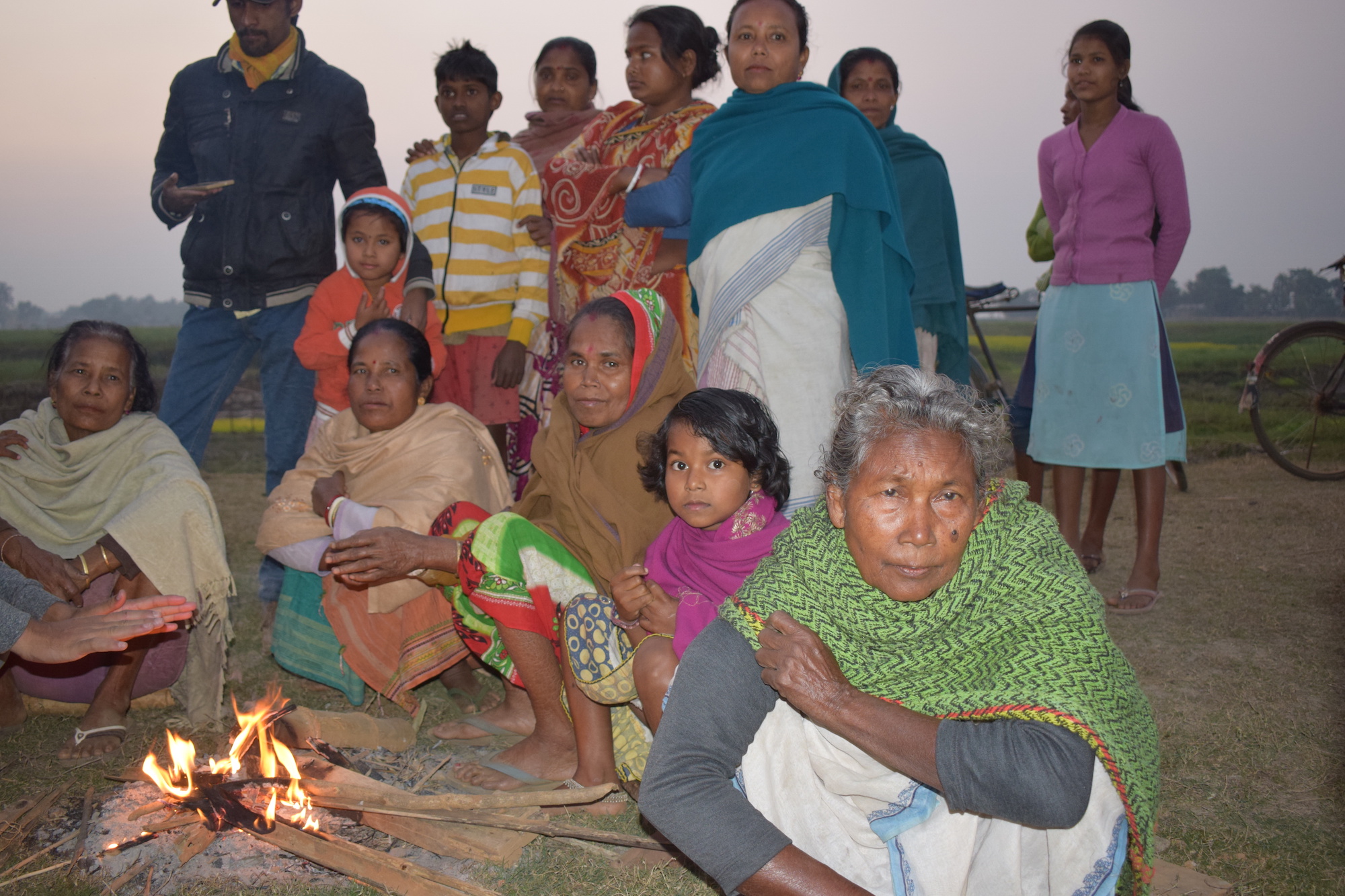
Almost all the families living in Chandordinga Pahar have moved there after losing everything to the mighty Brahmaputra. Left with no option they tried to rebuild their lives amidst utmost hardship. While politicians and many news outlets have already expressed doubts about the citizenship of these people, the fact that aborigines like Koch Rajbongshis have also faced similar fate needs to be brought forth. The evicted families are living in makeshift tents in this extreme weather. The Rajbongshi families have put up temporary houses in an extremely low flood prone area. Access to clean drinking water is difficult. Use of river water and lack of sanitation facilities have created diseases and health hazards to the people. Their pleas continue to fall on deaf ears of Administration. Banes Ali who has a land patta and claims to have one katha eighteen lasas of land laments that going to court to challenge the eviction will be a costly affair for these poverty stricken people. Chileshwari Devi who also claims to have land patta says that the response of the local BJP MLA to solve the pathetic condition of these people have been lukewarm.
KMSS has been raising the issue that in the name of evicting illegal encroachers, forest department has been harassing common people for quite sometime. The eviction notice issued on 11 November, 2016 by the Salkocha Forest Department giving a maximum of 15 days to the people to leave their homes gave a momentum to the movement started by KMSS. A memorandum was submitted to the Chief Minister of the State demanding an end to the forced eviction and a demand for resettlement. The local people have been approaching the officials for quite sometime with requests to not carry out the eviction. On 28th November, 2016 a heavily attended public meeting with Joydev Barua as the President was held and a memorandum was submitted to the Deputy Commissioner’s office. However the displaced landless people were evicted without any rehabilitation.
नई दिल्ली। जवाहलाल लाल नेहरू यूनिवर्सिटी में अनशन पर बैठे छात्र दिलीप की हालत रात से काफी ज्यादा खराब हो चली है। डॉक्टर ने उनको बात करने से और जल्द से जल्द भूख हड़ताल खत्म करने को कहा है। डॉक्टर के अनुसार अगर दिलीप ने भूख हड़ताल खत्म नहीं की तो उनकी किडनी को खतरा हो सकता है। लेकिन डॉक्टर की बात को ना मानते हुए दिलीप ने अपना अनशन जारी रखा हुआ है।
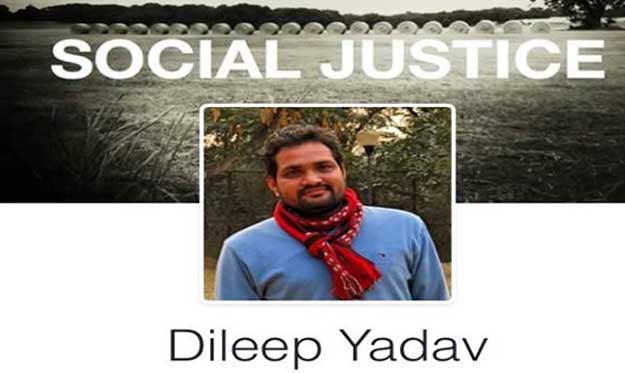
दिलीप मंडल ने लिखा कि वाइवा के मार्क्स को 100 नम्बर से घटा कर 15 नम्बर करने की मांग के साथ Dileep Yadav पिछले तीन दिनों से भूख-हड़ताल पर हैं। उनका ब्लेड प्रेशर घट कर 96 हो गया है। पेशाब में खून आना शुरू हो गया है। उल्टी जारी है। डॉक्टर ने कहा है कि अब भी अनशन जारी रहा तो किडनी पर खतरा है। प्रशासन ने एंबुलेंस सामने खड़ा कर रखा है। लेकिन दिलीप अडिग हैं। उन्होंने कहा कि मैं अपनी आने वाली पीढ़ी के लिए जेएनयू आने का दरवाजा बंद नहीं होने दूंगा। जब तक प्रशासन मेरी बात नहीं मान लेती मैं अन्न जल ग्रहण नहीं करूंगा।
दिलीप को मनाने पहुंचे डीन और रजिस्ट्रार ने कोई ठोस आश्वासन तो नहीं दिया लेकिन पानी पीने का आग्रह बार-बार किया। उन्होंने शालीनता से मना किया और कहा कि सर हमलोगों को सदियों से भूखे-प्यासे रहने की आदत है। जान की दुहाई दिये जाने पर भी दिलीप अपनी बात पर कायम रहे कहा मुद्दा महत्वपूर्ण है जान नहीं। उड़ती खबर यहां तक थी कि प्रशासन पुलिस की मदद से दिलीप को अस्पताल ले जा सकती है। देर रात तक छात्रों का हुजूम दिलीप के समर्थन में अलाव जलाकर डटा था। अब कल वीसी से बातचीत का इंतजार है। सोशल मीडिया पर पूरे देश से दिलीप को समर्थन मिल रहा है। जेएनयू एकजुट है। देश को दूसरा रोहित बेमुला नहीं चाहिए।
आंबेडकर फुला मंच के राष्ट्रीय अध्यक्ष डॉ. ओम सुधा ने जेएनयू में अनशन पर बैठे छात्र दिलीप यादव की तस्वीर शेयर करते हुए लिखा है कि…
ये अकेला क्यों बैठा है ? मैं आपको खोज रहा हूँ । इस देश की 85 फीसदी बहुजन आबादी को । आपको यहाँ होना चाहिए क्योंकि दिलीप कुमार की लड़ाई देश के 85 फीसदी बहुजन की लड़ाई है । अपने शहर, अपने कसबे अपने मोहल्ले, यूनिवर्सिटी, कॉलेज , होस्टल जहाँ कहीं भी हैं वही दिलीप यादव के समर्थन में प्रदर्शन करिये, लिखिए, बोलिये, सोचिये । आपको सोचना चाहिए, लिखना चाहिए, बोलना चाहिए ! मुर्दे ये सब नहीं कर सकते।
न्याय मंच से जुड़े डॉ. मुकेश कुमार लिखते है कि छात्र नेताओं ने कहा कि अब नजीब और दिलीप यादव की लड़ाई को बिहार के धरती से इंसाफ़ मिलेगा। सामाजिक न्याय संघर्ष मंच के संयोजक प्रभात यादव ने कहा कि बीजेपी के विरोध में यूपी के चुनाव में कैम्पेन किया जाएगा और संघ के चरित्र का उजागर किया जाएगा। वहीं अलीगढ़ मुस्लिम विश्वविद्यालय से आये छात्र अब्दुल फ़रह शाजकी JNU के छात्र नजीब अहमद और दिलीप यादव के समर्थन में एक दिवसीय धरना को संबोधित करते हुए जेएनयूएसयू के पूर्व अध्यक्ष कन्हैया कुमार पर तंज़ कसते हुए कहा कि जेएनयू में सामाजिक न्याय की लड़ाई से उन्होंने भी किनारा कर लिया है। छात्र नेताओं ने कहा कि देश की राजधानी के केंद्रीय विश्वविद्यालय में सामाजिक आधार पर भेदभाव जारी है और जब दलित-वंचित तबके के छात्र इसे रोकने की मांग कर रहे हैं तो उसे दबाया जा रहा है
छात्रा अंजलि ने जेएनयू के कथित क्रांतिकारियों पर कटाक्ष करते हुए लिखा है कि साथी आपकी प्रगतिशीलता की नाप-जोख; निर्णायक लड़ाइयों में आपका पक्ष क्या है इससे तय होगी… देख लीजिये कहाँ खड़े है आप! जहाँ पिछली बार खड़े थे वहीं है मुर्दों की तरह या जिंदगी और मानवता के बीज अंकुरित होने की सम्भावना है इस बार…
झूठ-मूठ के सामाजिक न्याय का करो बहिष्कार! अब चाहिए सचमुच का सामाजिक न्याय!
आपको बता दें कि बहुजन छात्र दिलीप ने विश्वविदयालय में छात्र नजीब के गुमशुदगी के 100 दिन पूरे होने, एमफिल और पीएचडी में साक्षात्कार के अंक कम करने तथा निलंबन पूरी तरह से वापस लेने की मांग की है।
As Americans gather across the country in a mixture of celebration and protest following the inauguration of U.S. President Donald Trump, Palestinians in the occupied territory are expressing their own concerns of what a Trump presidency will mean for them.
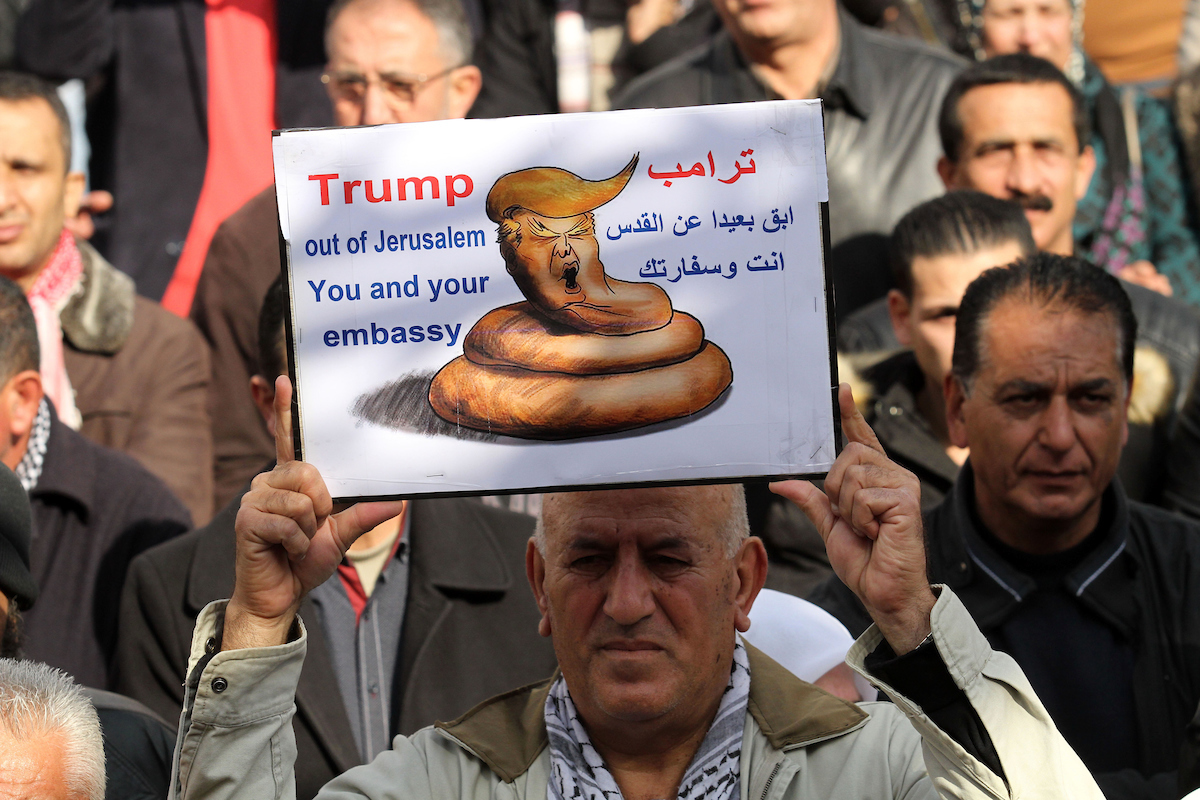
As Trump made his inaugural speech in Washington, a handful of youth leaders gathered by the separation wall in the occupied West Bank district of Bethlehem lighting images of Trump on fire and posting up banners with messages such as “Move your embassy to your own country, not ours” and “Stop Trump … Jerusalem is the capital of Palestine.”
Naji Owdeh, director of Palestinian Youth Action Center for community Development (LAYLAC), was in attendance, and told Mondoweiss that while he does not think Trump will be good for Palestinian politics, he does not see a Trump administration as being drastically better or worse for Palestine than the Obama administration had been, or what the Hillary Clinton administration could have been.
“I think they are all very similar,” Owdeh said. “Trump’s stance will be in the same political direction, he can’t completely change everything the way he says he can, he says the things he says for the media. Yes, Trump will certainly support Israel, but Obama did too.”
One point Owdeh is concerned with is Trump’s promise to move the U.S. Embassy from Tel Aviv to Jerusalem. Both Palestinians and Israelis strive to make Jerusalem their own capital, and because of the contentious nature of the city’s status, many states, as well as the United Nations, support Jerusalem having an international status and do not recognize the city as the capital of either communities.
In 1995, the Jerusalem Embassy Act was passed by the 104th U.S. Congress. The act stated that by 1998, the U.S. Embassy in Israel would be moved to Jerusalem and that the city should be declared the undivided capital of Israel, however U.S. Presidents Clinton, Bush and Obama opposed the act as an infringement on the presidential office’s authority over foreign policy, consistently overriding the bill.
Owdeh said he feels confident that Trump will go through on his promise to transfer the embassy to Jerusalem, though he is not sure on the timeframe such a move would take place.
“I think he will succeed in moving the embassy, because really, who can say no to him when it comes to that — even the Palestinian Authority (PA) will eventually accept the move,” he said. “It’s so easy for the American president to move an embassy, the PA doesn’t need to agree with it, and in the end, the PA receive orders, they don’t react. Now the international community won’t support them, but they will say it is an American issue and escape from responsibility.”
“If he does move the embassy there will be outrage, but the action will come from the people, not governments, and not just in Palestine,” he added.
On Thursday, Trump reportedly reiterated his stance on the embassy move to the Israel Hayom Hebrew-language daily, telling a reporter that “You know that I am not a person who breaks promises.”
Mustafa Barghouti, a member of the Palestinian Parliament and Secretary General of the Palestinian National Initiative, agreed that in general, the United State’s stance on the Palestinian-Israeli conflict does not change much regardless of who is president, but he is concerned by some of Trump’s statements regarding the American embassy being moved to Jerusalem, as well as his appointment of David Friedman, an Orthodox Jewish bankruptcy lawyer who has voiced his support for the annexation and Israeli settlement of the West Bank.
“There have certainly been signals that have come from the Trump camp that are very alarming, including the threat to move the American embassy to Jerusalem and the talks that came out of his administration about Israel’s illegal settlements not being an obstacle to peace, as well as statements about annexing parts of the West Bank to Israel,” Barghouti said. “And there were certain statements made by Mr. Friedman that are alarming — his appointment itself is alarming.”
“What we hope is that the strong reactions of the international community concerning the embassy move will be enough to convince Mr. Trump not to commit such a major mistake,” he said.
When asked if he thought some of the statements made by Trump’s administration could cause a popular Palestinian uprising on the ground, Barghouti said there is already a threat of another Palestinian uprising without the contention brought to the table by Trump.
“Israel is fueling sparks for a new Intifada through its crimes everyday,” Barghouti said. “The main instigator in a new intifada would certainly be Israel and its behavior, but moving the embassy to Jerusalem will absolutely spark flames, not only here but worldwide. A move like this is not something small that would be forgotten in a week or so. It is a major political move and it would mean the U.S. is nullifying its position of being a partner in the Peace Process.”
George Abu Eid, 25 and a history and science teacher from the West Bank with a degree in political science, called Trump a “racist, bigot, xenophobic narcissist,” but told Mondoweiss that in a way, he is happy a person with Trump’s personality has taken control of the American presidency.
“For Palestinians, like myself, who have been following up and observing the U.S. elections, certainly we were not looking for any hope in our situation out of either outcome — both Hilary and Trump are actually not that different as far as a greater evil in regards to Palestine and the world goes,” he said. “However, from my humble perspective, I believe that Trump as a U.S. President is much better than Hillary, because, somehow Trump reflects the true colors of the American society: a white-supremacist racist society that has been living in denial and ignorance for so long.”
“To be honest, we Palestinians have plenty of experience dealing with a man like Trump over someone like Hillary,” he added. “Since we have been doing so with Mr. Netanyahu for the past decade. In other words, we now can look at reality and expect the worse, instead of deluding ourselves with hopes for a bright future.”
Laura Hamdan, a Palestinian-American student from St. Louis who just returned to the U.S. from winter break in the occupied West Bank, said that if Trump keeps his promises regarding the embassy — essentially recognizing Jerusalem as the capital of Israel — it will signal a loss of hope.
“Recognizing Jerusalem as only the capital of Israel is sort of telling the Palestinian side that you really have no future in deciding your own autonomy,” she said.
While Hamdan is concerned about the implication of what a Trump presidency will mean for Palestine, she also has more immediate concerns about the safety of her Muslim family in America.
“It’s no surprise what Trump’s stance on Israel is, considering most presidents before him have the same point of view. So my family saw it coming,” Hamdan said. “But what my family is mainly concerned about is what might happen domestically. They all said Trump supporters are more dangerous than Trump himself. My mom wears the hijab (head scarf) and notices more people look at her critically now. My brother — who never concerns himself with politics really — told me ‘I’m afraid for mom, for you, for anybody that looks anyway foreign or different now.’”
A 59-year-old man was allegedly assaulted in a movie theatre here for not standing up when the National Anthem tune was played on screen in a scene of a film, police said today.
janta ka reporter
The incident took place at a theatre in suburban Goregaon on Wednesday evening, they said.
The victim, Amalraj Dasan, was allegedly hit on his face by a person for not standing up while the National Anthem was being played in a scene during the screening of film “Dangal”.
The particular scene pertained to depiction of winning of a gold medal by daughter of Mahavir Phogat (enacted by Aamir Khan).
The accused, identified as Shirish Madhukar, has been booked under IPC section 323 (voluntarily causing hurt) and 504 (intentional insult with intent to broke peace), police said adding that a probe into the matter is on.
Hundreds of thousands of people were forced to follow US President Donald Trump on Twitter after a technical glitch, prompting the social networking site to apologise to users.
The new President was handed control of the @POTUS account when he took the oath of office at Friday’s inauguration.
Some users parted ways with @POTUS on the social network once it changed hands from former president Barack Obama to Trump. However, for reasons unexplained, they automatically re-followed the presidential account without their permission.
Users who noticed the glitch were quick to bring it to the attention of Twitter CEO Jack Dorsey who acknowledged “mistakes” in the process that caused users who unfollowed the POTUS account to follow it without opting to do so.
He explained in a series of tweets that users who followed President Obama’s new handle — @POTUS44 — after noon on Friday were automatically set to follow the Trump-run @POTUS handle.
In addition, “some people who unfollowed @POTUS in the past were mistakenly marked to now follow @POTUS,” Dorsey said via Twitter. “This also affected other official Administration accounts like @VP, @WhiteHouse, and @PressSec.” “We believe this affected about 560,000 people. This was a mistake, it wasn’t right, we own it, and we apologise. No excuses,” he tweeted.
Dorsey said the issue has been corrected, CNN reported.
In 1974, the World Food Conference declared that: “Every man, woman and child has the inalienable right to be free from hunger and malnutrition in order to develop their physical and mental faculties.” The conference set as its goal the eradication of hunger, food insecurity and malnutrition within a decade.
Image: Vlad Karavaev
Two decades later, in 1996, the World Food Summit was assembled in an explicit admission that this goal had not been met. More than 10,000 participants from 195 countries gathered in Rome and, over five days of intense discussion, set a target of reducing by half the number of undernourished people by no later than 2015. Food security was defined in the following declaration:
Food security exists when all people, at all times, have physical and economic access to sufficient, safe and nutritious food that meets their dietary needs and food preferences for an active and healthy life.
The summit set out a seven-point plan of action, including managing population growth and migration, reducing poverty and promoting peace and stability. Ambitious goals which, so far, have failed with most future predictions showing things are going to get worse.
Four years ago, I started to work directly in the world of food security research and if there is one thing that I have learned in the intervening period it is that it is complicated. Here are some of the factors that have made it so difficult to fulfil those ambitious goals.
Population growth The current global population is 7.4 billion and it is growing rapidly. We are expected to reach 8.5 billion by 2030, 9.7 billion in 2050 and 11.2 billion in 2100. At the same time income levels are expected to increase. In order to feed this larger and richer population food demand is therefore expected to increase by 70% by 2050. However, neither the growth nor the increase in wealth is expected to be evenly distributed. India, China and Africa are predicted to make up an increasing share of the world population and India and China expected to make up 50% of the global middle class consumption by 2050. This means that the demands for food will obviously be greater in those areas with larger populations, but in countries where there is also an increase in wealth there is likely to be an increase in demand for less healthy and less environmentally friendly Western-style diets.
How population growth varies globally. United Nations, Author provided
Climate change: Our ability to provide food for this growing population will be seriously affected by the changing climate. Current predictions for global warming are for an increase in temperature ranging from 0.6℃ to 4℃ use sy by 2099. The Paris climate agreement sets out a global action plan to limit global warming this century to 2℃. This will be a difficult target to achieve both in the light of Donald Trump’s (at least pre-election) declaration that he would cancel the agreement, but also given the expected increase in food demand with agri-food accounting for about 30% of all greenhouse gas emissions.
However, the impact of these predicted changes will not be evenly distributed. The Met office has produced a tool which allows us to investigate the impact of climate change on food insecurity and which shows that under all scenarios Africa is the most vulnerable to food insecurities. But even within Africa some countries are more vulnerable than others, with Niger, Somalia and Mauritania the most vulnerable and South Africa and Algeria the least.
Using the same tool, we can see that in Asia there are currently medium levels of vulnerability to food insecurity with Mongolia and the Philippines the most vulnerable. Under many climate change scenarios this vulnerability increases across Asia but countries such as Burma and Papua New Guinea show the largest increases. These results mean that the spatial scale at which we consider food security is very important and mitigation plans which might be put into place to deal with these vulnerabilities need to take these geographical differences into account.
Life at a feeding centre run by Medecins Sans Frontieres in Niger. EPA/Marcel Mettelsiefen
Malnutrition: Today the world faces a double burden of malnutrition that includes both under-nutrition and obesity. In 2015, more than 1.9 billion adults worldwide were overweight while 462m were underweight. This divide is not simply between the developed and developing world, low and middle-income countries are now seeing a rise in childhood obesity and this is increasing at a faster rate than in richer nations. This is related to the increase in wealth and changes in diet discussed earlier.
Solutions
Given these issues, different countries will need different solutions. Africa is going to have to deal with the double burden of increasing populations and more drought risk. Solutions in Africa need to focus on sustainable intensification with better solutions in increased yield and reducing waste through pests, diseases and storage. One technological solution is to develop drought-resistant crops, although the efficacy of this is debated. The issue here is not the technology but how to distribute it.
According to the Global Plant Council, while some farmers are using these drought-resistant varieties successfully (5m smallholder farmers in 2014), the adoption of these seeds varies from country to country. Some farmers are unaware of the availability of the seeds and others are unable to either access or afford them.
In the developed world, experts are more concerned by the health risks associated with obesity and our focus needs to be on sustainable nutrition. There is a lot of evidence that diets which are healthier for us as individuals are also better for the environment. No one has yet identified an “ideal diet” but according to a Food and Climate Research Network report in 2014, the lower the meat, fish and dairy content of a diet, the lower the environmental impact. However, nutritionally, that will mean that reduced meat intakes need to be compensated for with increases in the quantity and diversity of whole grains, fruits and vegetables, and legumes.
We also have to be careful that demands we make on the food system in this country do not increase problems in other countries and we do not shift the burden of production. This can be done through the use of, for example, Life cycle Assessment (LCA). LCA aims to address the environmental aspects and potential environmental impacts (for example, the use of resources and the environmental consequences of releases pollutants) throughout a product’s lifecycle from the acquisition of raw material, through the production, use, end-of-life treatment, recycling and final disposal. However, LCA is a general approach which can be applied to any product and, because of the complexities of the food system, needs to be tailored in order to be used more effectively.
The “simple” solution to the issue of food security is that we all demand less, eat more sustainably and be more careful with our resources. That is clearly much easier said than done. If there is plenty of food in the supermarket it is difficult to believe it matters if we buy that extra packet of biscuits – and we are up in arms that the price of Marmite might increase.
Even the future leaders of some countries do not believe in climate change. However, alarming though the potential lack of Marmite is, we should bear in mind that other countries are already suffering the burden of food insecurity and focusing our resources towards finding solutions in those countries will benefit us on many levels.
Author is Chair in Food Security and Sustainab, University of Stirling