Muftis and lawyers come together to run a Muslim Personal Law training course in order “to combat uncalled for interference in purely Muslim law matters”
(Below is the English translation of a front page lead story published by the Urdu daily, Inquilab on Monday):
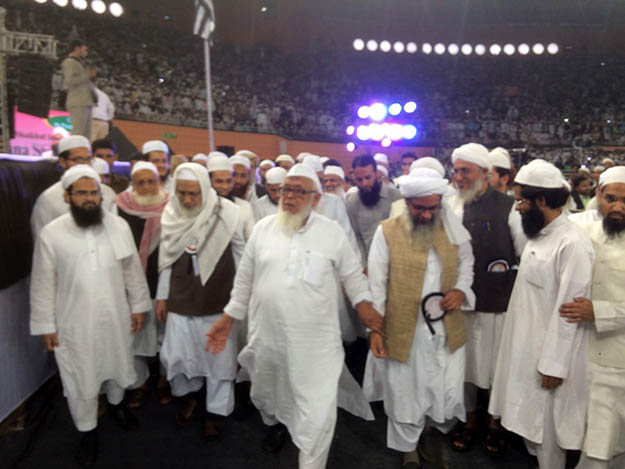
In order to strongly combat the targeting of Islam and Muslims with uncalled for interference in purely Muslim Personal Law matters, by raking up the issues of triple talaq, bigamy and uniform civil code, the Jamiat Ulema-e-Hind has set-up a ‘Jamiat Law Institute’ where for the first time muftis and Muslim lawyers will come together on the same platform to run a Muslim Personal Law training course. With the Jamiat’s general secretary, Maulana Mehmood Madni as president, the new institute was inaugurated by former chief justice of the Supreme Court, AM Ahmadi.
The inaugural meeting, organised at the Jamiat’s Madni Hall in Delhi by advocate Shakeel Ahmed Syed, director, Jamiat Law Institute and a board member Maulana Niaz Ahmed Farooqui, was chaired by the president of the Jamiat, Maulana Syed Qari Usman Mansoorpuri.
Prominent muftis and lawyers from UP, Bihar, Delhi, Haryana, Punjab and Rajasthan participated in the conference. The inaugural session was addressed by justice Ahmadi, professor Mohammed Afzal Wani (dean, Faculty of Law, IP University), Zafaryab Jilani (additional advocate general, UP), Mufti Abul Qasim Nomani (chief executive, Darul Uloom Deoband), Maulana Khalid Saifullah Rahmani (general secretary, Islamic Fiqh Academy), professor Akhtarul Wasey (vice-chancellor, Maulana Azad University), Mufti Salman Mansoorpuri (Jamia Qasmiya Shahi, Moradabad), Kamal Farooqui (member, All India Muslim Personal Law Board) and advocate Anoop George Chowdhary.
Announcing the launch of the training course on Muslim Personal Law, justice Ahmadi said that when faced with constitutional issues, instead of getting agitated Muslims should respond calmly and with legal acumen. He said that certain forces use the demand for a uniform civil code as a whip lash merely to incite Muslims and we get all excited. The fact is that a uniform civil code poses a greater threat to the majority community than to us, he added. That is the real reason why no draft exists till date. He said if Muslims were to demand that a draft for a uniform civil code be placed before the public such forces will automatically come to their senses.
'Provision for triple talaq in law is as necessary as a toilet is for any home. A toilet is not a good place to be in but no house is complete without it'
On the issue of triple talaq, justice Ahmadi advised that Muslims should come together and apply their minds collectively to evolve a solution to this problem.
While admitting that “triple talaq is undoubtedly being misused”, Zafaryab Jilani maintained that it cannot be abolished because that would lead to a lot of harm. Those who talk of gender justice must tell us whether there is gender parity and women have equal participation in the Supreme Court, Parliament, state Assemblies, government, educational institutions and elsewhere, he demanded. He maintained that gender difference is a fact of life that cannot be wished away. He argued that Muslim Personal Law does not operate outside the Constitution but is an act passed by the Parliament.
Maulana Khalid Saifullah Rahmani said that the provision for triple talaq in law is as necessary as a toilet is for any home. A toilet is not a good place to be in but no house is complete without it, he said. There is a need to understand the necessity of triple talaq and explain the same to others, he added. The proposed training course will be very helpful in this regard, he opined.
Mufti Abul Qasim Nomani said that it was the need of the hour to explain the principles underlying Islamic laws to the satisfaction of the judiciary and others and it was the responsibility of muftis to rise to the challenge. Professor Afzal Wani asked why the need for making provision for divorce was felt necessary while amending the personal laws of Christians and Hindus if it is such a bad thing.
Professor Akhtarul Wasey stated that when even the Prophet of Islam had no authority to introduce changes in Islamic law how anyone else could claim the right to do so. He added that on coming to power after Emergency was ended, even those who were opposed to it did not remove the provision for emergency rule from the Indian constitution. This only means that though emergency is undesirable, such an option must exist for governments. Similarly, triple talaq is not a good thing but it remains an important part of family law, he added.
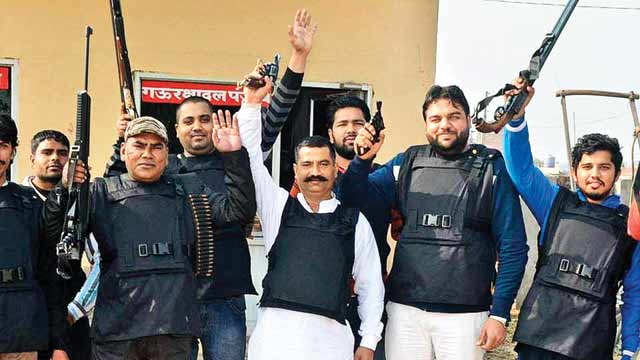
Members of Gau Rakshak Dal —pic courtesy: Facebook
अब ये स्पष्ट हो गया है कि प्रधानमंत्री ने जो गौरक्षकों के खिलाफ बयान दिया था, वह महज औपचारिकता था। गौरक्षा के नाम पर गुंडागर्दी आतंकवाद में बदल चुकी है और अब ये संगठित अपराध का रूप ले चुका है। इसमें शामिल होने वाले आरएसएस और सहयोगी संगठनों से ही जुड़े लोग हैं। अखिल भारतीय हिंदू महासभा के राष्ट्रीय महासचिव मुन्ना कुमार शर्मा ने तो यह तक ऐलान किया हुआ है कि अगर एक भी गौ रक्षक गिरफ्तार हुआ तो हम इसका कड़ा विरोध करेंगे।
हालाँकि, अब कथित गौरक्षक फिलहाल कुछ ऐहतियात बरतते हुए अपनी घटनाओं को अंजाम देने की रणनीति बना रहे हैं। विश्व हिंदू परिषद ने तो अपने गौरक्षकों की बैठक में बाकायदा संदेश दिया है कि गौतस्करी के नाम पर किसी की पिटाई करते समय इतना ध्यान रखें कि उसकी हड्डी न टूटे। ये सुझाव किसी भी कानूनी कार्रवाई से बचाव के लिए दिया गया है।
मेरठ में विश्व हिंदू परिषद के ब्रज क्षेत्र और उत्तराखंड के गौरक्षकों की बैठक में गौरक्षा की केंद्रीय समिति के सदस्य खेमचंद ने तो यहाँ तक कह दिया कि देश का विकास गौरक्षा से होगा, मेक इन इंडिया से नहीं। खेमचंद ने पिटाई के वीडियो बनाने से बचने की भी सलाह दी।
पिछले साल शामली में गौहत्या का आरोप लगाते हुए वीएचपी के सदस्य विवेक प्रेमी पर राष्ट्रीय सुरक्षा कानून (रासुका) के तहत कार्रवाई होने को देखते हुए परिषद अब अपने सदस्यों को ऐहतियात बरतते हुए काम करने की सलाह दे रही है। मंदसौर में भी रेलवे स्टेशन पर दो मुस्लिम महिलाओं का वीडियो वायरल हुआ था। पटियाला में भी गौरक्षक दल का प्रमुख सतीश कुमार ऐसे ही मामले में गिरफ्तार हुआ था जिस पर बाद में अप्राकृतिक यौन शोषण का भी मामला दर्ज हुआ।
दरअसल, विश्व हिंदू परिषद और आरएसएस को लगता है कि अपने युवा कार्यकर्ताओं का उत्साह बनाए रखने और उन्हें व्यस्त रखने में गौरक्षा का अभियान काफी सहायक हो सकता है। गौरक्षा के नाम पर दलितों-मुस्लिमों और पिछड़े वर्गों के लोगों को मारने-पीटने से इन कार्यकर्ताओं का इलाके में रौब बढ़ता है।
एक अन्य फायदा संगठनों को ये होता है कि गौरक्षा के नाम पर अपराध की दुनिया में कदम रखवाकर इन युवाओं को हमेशा के लिए अपने से जोड़कर रखा जा सकता है।
हालाँकि, विश्व हिंदू परिषद का मानना है कि मारपीट की इन घटनाओं के वीडियो बनाने से फिलहाल बचना चाहिए, और मारपीट भी ऐसे की जानी चाहिए कि पिटने वालों की हड्डी न टूटे ताकि पुलिस की जाँच में कोई ऐसा सबूत न मिले जिससे कि गौरक्षकों के गिरफ्तार होने की नौबत आए।
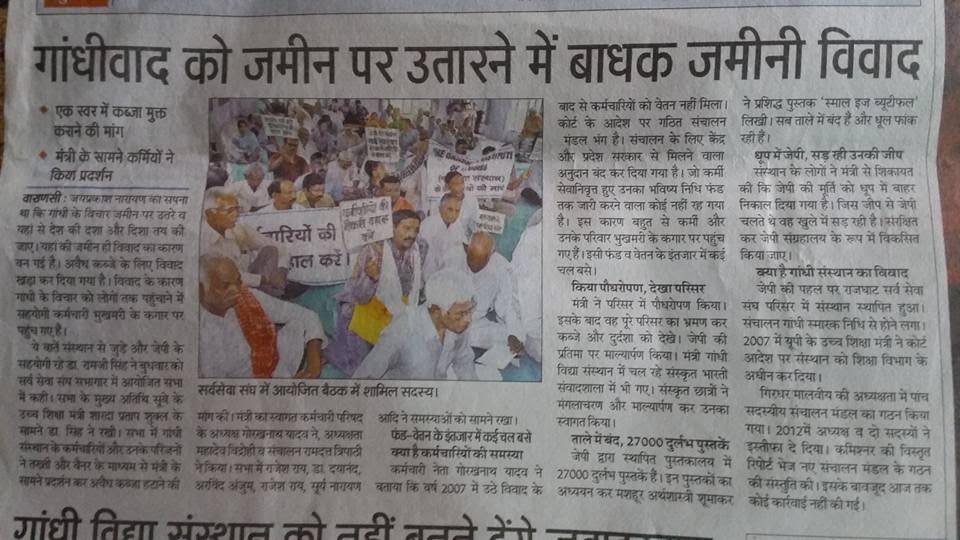
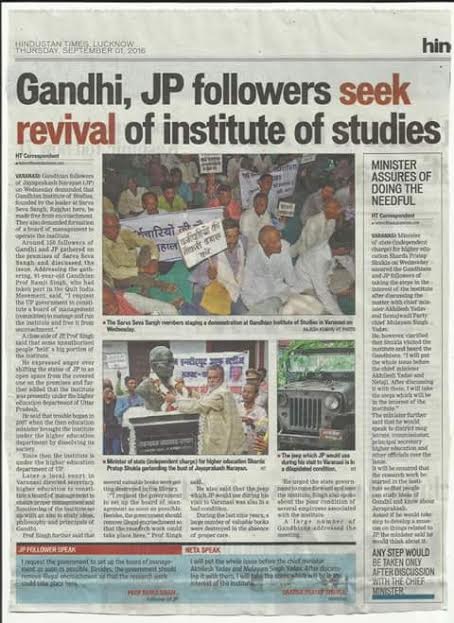
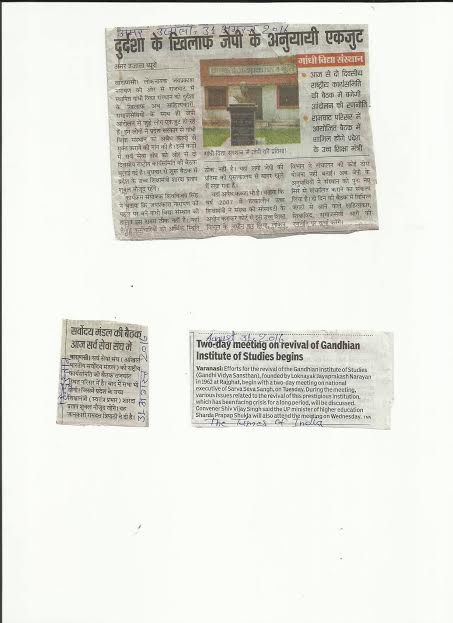
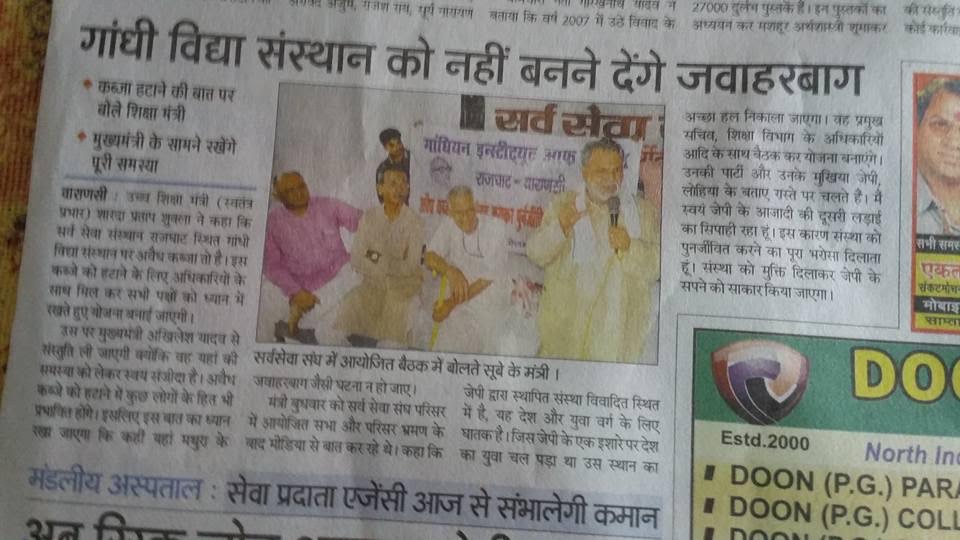
Even as sustained agitations to revive the Gandhi Institute of Studies(GIS), a prestigious institute in Varanasi have been taking place, a late night, brazen threat to the acting registrar of the institute, Dr Muniza Rafiq Khan have raised eyebrows and much concern. Activists, activists and senior politicians from all over India have written to chief minister, Akhilesh Yadav to not simply ensure her security but also to also rid the institute by illegal occupation by anti-social elements. Among those who have written letters are senior journalists Qamar Naqvi and Teesta Setalvad.
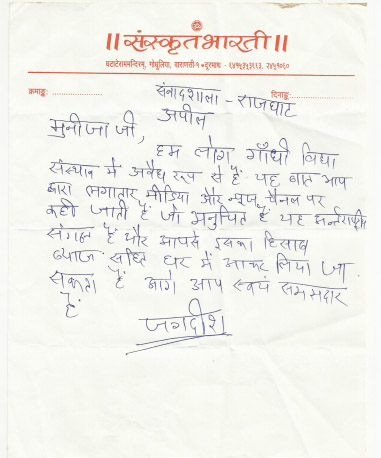
There have been certain worrisome and threatening developments since the dharna and protests have begun. Late on Saturday night (September 3) around 8.30-9 p.m. when the Acting Registrar, Dr Muniza Rafiq Khan returned to her residence, athreatening letter was pasted on the door of her residence ostensibly signed by one Jagdish who has been running allegedly some unauthorised classes on the premises. The SSP and local police have been very cooperative and given Dr Muniza Khan protection but we urge that stringent action is taken and steps to immediately resolve the entire issue. The threat letter may be read here.
There was a sustained dharna at Lucknow to save the Gandhian Institute of Studies in Varanasi had renewed interest in an institute that had been crippled by anti social elements since 2007.
The letter to the chief minister, says, “There have been certain worrisome and threatening developments since the dharna and protests have begun. Late last night around 8.30-9 p.m. when the Acting Registrar, Dr Muniza Rafiq Khan returned to her residence, a threatening letter was pasted on the door of her residence ostensibly signed by one Jagdish who has been running allegedly some unauthorised classes on the premises.The SSP and local police have been very cooperative and given Dr Muniza Khan protection but we urge that stringent action is taken and steps to immediately resolve the entire issue.”
Background This prestigious institute, an autonomous research Institute, was established by late Jayaprakash Narayan in 1960 as an “attempt to link Gandhian movement with Social Science.” Among the founding members were Naba Krishna Choudhary, Shankar Rao Dev, Dr. Sampurnanand, etc.
The previous presidents of the Institute have been Shri Shankarrao Deo (1960-63), Shri Nabakrushna Choudhury (1963-74), Dr. Balbhadra Prasad (1974-76), Shri Jayaprakash Narayan (1976-77), Dr. Manmohan Choudhury (1977-78), Shri S.M. Joshi (1978-84), Dr. Bimal Prasad (1984-2000), Dr. Usha Mehta (2000), Dr. Manmohan Choudhury (2000-02) and Acharya Ramamurti since 2002.
The Institute had earned the wrath of former HRD Minister, Mr. M.M. Joshi, when it resisted attempts to accommodate a representative of the Rashtriya Swayamsevak Sangh (RSS) Ms. Kusum Lata Kedia. She however managed to become a member of the Institute faculty.
There after she was even suspended for her questionable activities against the Institute and her colleagues. In August, 2002, Ms. K.L. Kedia was dismissed from her services from the Institute due to non-performance and misbehaviour, by the Board of Management of the Institute.
There have been previous efforts made to restore the institute to a functioning state. However, unfortunately, so far, the Uttar Pradesh government has still not released the 50% matching grant to the Institute nor sanctioned the arrears due for these past years. The staff of the Institute has passed through very difficult times for more than six years and they still receive only 50% of their salaries each month. Yet, due to the prestige it enjoys the Institute has, even now, been able to get major projects from ICSSR, Ministry of H.R.D., the Ministry of Panchayati Raj, Indian Council of Agricultural Research, World Literacy of Canada, etc.
Infuriated by the contents of the affidavit in support of triple talaq filed by the All India Muslim Personal Board (AIMPLB) in the Supreme Court a few days ago, the breakaway All India Muslim Women Personal Law Board (AIMWPLB) has decided to intervene in the petitions before the apex court asking for the declaration of triple talaq, halala as unconstitutional.
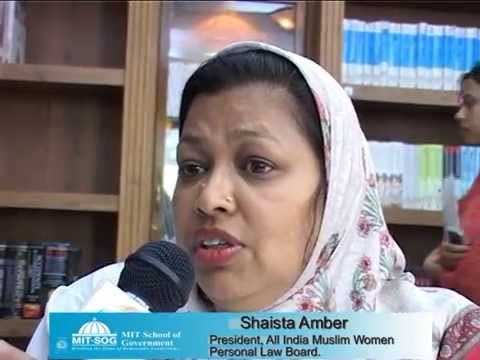
“The regressive and shameful attitude of the AIMPLB has compelled us to approach the court”, Shaista Amber, chairperson of the Muslim women’s board told Sabrang India. “We abide by the Shariah and will continue to do so till qayamat (day of final judgment). The AIMPLB claims to live by Allah’s law. But in reality it is acting contrary to the procedure for divorce enjoined by the Quran and following the teachings of the Rightly Guided Caliphs who all said and done were human beings”.
Amber is in particular outraged by the contention of the AIMPLB that but for the option of triple talaq (instant divorce), Muslim men might resort to murder in order to get rid of their wives. “What kind of Muslims are these? Islam is about justice, kindness, mercy and compassion, while these people are speaking the language of violence?”
Asked how soon her organisation proposed to approach the Supreme Court, Amber said the AIMWPLB is in the process of building a water-tight case before filing their petition. “Please remember that the AIMPLB is loaded with money, has access to a battery of lawyers. There are builders and others who are generous with their money when it comes to filling the coffers of the maulanas. On the other hand, we are starved of funds, entirely dependent on small donations from poor women. What is more, because of the clout of the maulanas, Muslim lawyers are either in the thrall of the maulanas or scared to stand up against them in court. Such is the shameful state of affairs”, she said.
What if they are unable to find a Muslim lawyer? “We are prepared to engage lawyers from other communities. But given our financial constraint we also have to think of their fees”, she said. Other Muslim women’s groups have also slammed the affidavit filed by the AIMPLB. The Bharatiya Muslim Mahila Andolan (BMMA) had demanded an apology from the Board for stating that “Male sex is stronger and female weaker.”
"Their stand that men have greater reasoning power compared to women smacks of a medieval mindset and prejudice against women. To presume that this would take care of murder of women and illicit relationships is a fallacy and the facts do not bear this out. Their justification of polygamy and triple talaq contravenes the Constitution," said BMMA’s co-convener Zakia Soman.
"We vehemently denounce the views of AIMPLB and expect that they withdraw their affidavit, apologise to all women and ensure that their statements in the future are not derogatory to women”, said a joint statement issued by Noorjehan Safia Niaz, co-convenor of BMMA and Sahba Farooqui and Maimoona Mollah from All India Democratic Women's Association (AIDWA).
Says advocate Saif Mahmood, “In my view, there is nothing in the Constitution that protects Muslim personal law. Personal law is not protected under Article 25, which protects the right to religion and which is subject to Articles 14 (equality), 19 (right to life) and 21 (personal liberty). In all such cases, equality, life and liberty will be privileged.”
ब्रिटेन के चैरिटी कमीशन ने एचएसएस को चेताया, आरएसएस से दूर रहने की दी हिदायत
ब्रिटेन के चैरिटी कमीशन ने वहां के एक हिंदू चैरिटी संगठन हिंदू स्वयंसेवक संघ (एचएसएस) को आरएसएस से दूरी रखने की हिदायत दी है। चैरिटी कमीशन के सामने एक स्टिंग ऑपरेशन से इस बात का खुलासा हुआ कि दक्षिणपंथी हिंदू संगठन आरएसएस से ताल्लुक रखने वाला एक वक्ता एचएसएस के एक कैंप में मुस्लिमों और इसाइयों के खिलाफ बोल रहा है। इस कैंप में युवा लोग भागीदारी कर रहे थे। इस बारे में ब्रिटेन के चैरिटी कमीश्नर की रिपोर्ट यहां पढ़ी जा सकती है।
रिपोर्ट 2 सितंबर को जारी की गई थी।
इस खोजी टीवी रिपोर्ट से यह खुलासा हुआ कि हिंदू स्वयंसेवक संघ (ब्रिटेन) के एक शिविर में आरएसएस से ताल्लुक रखने वाला वक्ता कुछ स्टूडेंट्स के सामने ईसाइयों और मुस्लिमों के खिलाफ बोल रहा है। इसके बाद चैरिटी कमीशन ने मामले की जांच की और फिर जब उसने इसे सही पाया तो हिंदू स्वयंसेवक संघ को चेतावनी दी गई। हिंदू स्वयंसेवक संघ यानी एचएसएस के इस शिविर में स्टूडेंट्स हिस्सा ले रहे थे।
चैरिटी कमीशन ने कहा कि हिंदू चैरिटी संगठन में प्रबंधन की खामियां साफ दिखी हैं। हिंदू स्वयंसेवक संघ टीवी प्रोग्राम में दिख रहे वक्ता पर निगरानी रखने में नाकाम रहा है। हालांकि इस बात के पर्याप्त सबूत नहीं है कि वक्ता की ओर से ईसाइयों और मुस्लिमों के खिलाफ व्यक्त किए जा रहे विचार क्या एचएसएस के अंदर सांस्थानिक और व्यवस्थित तौर पर फैलाए जा रहे हैं। फिर भी एचएसएस को आरएसएस से दूरी बनाने के लिए कहा गया है।
इनक्वायरी रिपोर्ट – हिंदू स्वयंसेवक संघ नाम से आई इस रिपोर्ट में कहा गया है कि पड़ताल में आरएसएस से संबंध रखने वाले वक्ता की ओर से की गई टिप्पणी के अलावा और कोई सबूत नहीं मिला है। लेकिन जांच के बाद हिंदू स्वयंसेवक संघ के ट्रस्टियों से कहा गया है कि वे इसे सुनिश्चत करने के लिए कदम उठाएं कि संगठन और इसके कामकाज पर आरएसएस का कोई प्रभाव या नियंत्रण न रहे। अगर किसी निजी संपर्क की वजह से आरएसएस से संबंध की बात आती है तो फिर चैरिटी (एचएसएस) से इसे अलग रखा जाए। इससे एचएसएस और इसकी प्रतिष्ठा को नुकसान नहीं पहुंचेगा।
रिपोर्ट में कहा गया है कि कमीशन ने आरएसएस और हिंदू स्वंयसेवक संघ के रिश्तों को लेकर कई सवाल किए हैं। इस पर ट्रस्टियों का कहना था कि एचएसएस न तो आरएसएस को फंड देता है और न उससे लेता है। दोनों संगठन पूरी तरह अलग हैं। दोनों एक दूसरे से पूरी तरह स्वतंत्र हैं और एक दूसरे पर किसी भी तरह निर्भर नहीं हैं।
इस साल 18 फरवरी को ब्रिटेन के आईटीवी नेटवर्क पर हार्डकैश प्रोडक्शन ने चैरिटीज विहेविंग बैडली नाम से एक डॉक्यूमेंट्री प्रसारित की थी। इसमें हियरफोर्डशायर में आयोजित एचएसएस के एक यूथ कैंप में आयोजित कार्यक्रम के सवाल-जवाब सेशन के दौरान एक वक्ता अन्य धर्मों के खिलाफ टिप्पणी करता हुआ दिख रहा है।
इस प्रसारण के बाद ही चैरिटी कमीशन ने एचएसएस के कार्यक्रम में आमंत्रित वक्ता की ओर से की गई टिप्पणी की जांच शुरू कर दी थी। 3 सितंबर को जांच के निष्कर्षों का ऐलान करते हुए कहा गया कि चैरिटी की प्रबंधन व्यवस्था में खामियां साफ दिखी है। इस मामले में प्रबंधन की अपनी नीतियों और निर्देशों का ही पालन नहीं हुआ। वक्ता के कार्यक्रमों में भाग लेने की प्रक्रिया का ठीक तरह से पालन नहीं हुआ। इस बात पर भी ध्यान नहीं दिया गया कि कार्यक्रम के दौरान लगाई कई कक्षा (शिविर या कार्यक्रम) में पर्याप्त रूप से वयस्कों की भागीदारी हो। पर्याप्त निगरानी और देखरेख भी नहीं हुई।
चैरिटी कमीशन की जांच, निगरानी और प्रवर्तन निदेशक मिशेल रसेल ने मीडिया से कहा- जो चैरिटी संगठन लगातार वक्ताओं को अपने कार्यक्रम में बुलाते हैं, उन्हें कार्यक्रमों और अतिथि वक्ताओं से जुड़े जोखिमों (जैसा कि आरएसएस के वक्ता के भाषण देने के कारण हुआ) से पर्याप्त सुरक्षा की व्यवस्था करनी होगी। खास कर वहां जहां श्रोताओं या दर्शकों की संख्या बहुत ज्यादा या कम हो।
रसेल ने कहा कि यह मामला यह आगाह करता है कि चैरिटी संगठन के पास न सिर्फ युवाओं को इस तरह की गतिविधियों (आरएसएस वक्ता की ओर से ईसाइयों और मुस्लिमों के खिलाफ भाषण देने जैसी घटना) से बचाने की पर्याप्त प्रक्रिया और नीतियां हों, बल्कि उन्हें व्यावहारिक तौर पर अमल में भी लाया जाए।
रसेल के मुताबिक चैरिटी के ट्रस्टियों को यह सुनिश्चित करना होगा कि संगठन के लिए काम करने वाले या इससे जुड़ाव से लाभ लेने वालों को इससे कोई नुकसान न पहुंचे। उनका यह कानूनी दायित्व होगा कि वे नियमों का पालन करते हुए काम करें और अपने अधिकारों के दायरे में यह सुनिश्चित करें कि ऐसी घटना दोबारा न हो। हालांकि एचएसएस ने इस मामले में अपनी प्रतिक्रिया देते हुए कहा कि डॉक्यूमेंटरी में जैसा दिखाया गया है, वैस बुरा आचरण संगठन का नहीं है।
एचएसएस के बयान में कहा गया है कि संगठन चैरिटी कमीशन की जांच रिपोर्ट को गंभीरता से लेता है। वह यह मानता है कि एक घटना के संबंध में इसे अपनी कुछ नीतियों को ठीक ढंग से लागू करने के लिए कहा गया। एचएसएस हमेशा उच्च मानदंडों को अपनाने के लिए प्रयासरत रहा है। सिर्फ एक घटना में ऐसा नहीं हो सका।
एचएसएस ने अपनी दलीलों के समर्थन में कहा- चैरिटी कमीशन का यह निष्कर्ष अहम है कि संगठन के बीच इस तरह के कट्टर विचारों को बढ़ावा देने की कोई सांस्थानिक या व्यवस्थित कोशिश नहीं होती। जबकि हार्डकैश प्रोडक्शन के प्रसारण में ऐसा दिखाने की कोशिश की गई। एचएसएस के कार्यक्रम में जो हुआ वह इस तरह की एक मात्र घटना थी। जांच में ऐसा कोई सबूत नहीं मिला( सिर्फ एक टिप्पणी के, जिसे अंडरकवर रिपोर्टर ने कवर किया था। टिप्पणी करने वाला वक्ता न तो एचएसएस का ट्रस्टी था न ही एचएसएस ,यूके का प्रतिनिधि), जिससे संगठन के साथ आरएसएस का कोई रिश्ता साबित हो सके। संगठन के साथ आरएसएस का कोई वित्तीय या गवर्नेंस संबंधी जुड़ाव नहीं निकला और न ही इस पर उसका कोई असर साबित हुआ।
एचएसएस की स्थापना 1966 में हुई थी और 1974 में यह ब्रिटेन में चैरिटी के तौर पर रजिस्टर्ड हो गया। ब्रिटेन में 10,000 हिंदुओं तक इसकी पहुंच है। संगठन ने इस साल अपना 50वां स्थापना दिवस मनाया था।
बैकग्राउंड वर्ष 2000 में चैरिटी कमीशन की ओर से शुरू की गई जांच में एचएसएस और सेवा इंटरनेशनल के कुछ प्रतिबंधित संगठनों से संबंधों की बात सामने आई थी। इसके बाद ही दोनों संगठनों की गतिविधियां जांच के दायरे में थीं। पिछले साल कमीशन के स्टाफ ने यह देखने के लिए वीजा मांगा था कि गुजरात के भूकंप पीड़ितों के लिए राहत कार्यों के नाम पर इकट्ठा चंदा का किस तरह इस्तेमाल हुआ है। लेकिन भारत सरकार ने उन्हें वीजा नहीं दिया।
चैरिटी कमीशन के एक प्रवक्ता ने मीडिया से कहा कि हमारी प्रमुख चिंता यह थी कि एचएसएसकी ओर से चैरिटी के तौर पर इकट्ठा किए गए फंड का समुचित उपयोग हो। हमने अंतरराष्ट्रीय संगठन आरएसएस के साथ संगठन के चैरिटी कनेक्शन की जांच की है। आरएसएस को भारत सरकार एक बार प्रतिबंधित कर चुकी है। हमें इसके कुछ दस्तावेजी सबूत मिले हैं। अब हम ट्रस्टियों से और जानकारी का इंतजार कर रहे हैं।
रिपोर्ट में दावा किया गया है कि यह फंड लिसेस्टर स्थित रजिस्टर्ड चैरिटी संगठन एचएसएस और इसकी ओर से फंड इकट्ठा करने वाई इकाई सेवा इंटरनेशनल की ओर से जुटाया गया है। रिपोर्ट में साफ कहा गया है कि एचएसएस और सेवा इंटरनेशनल आरएसएस की ब्रिटेन स्थित शाखाएं हैं। इसका मुख्य उद्देश्य भारत में आरएसएस के विभिन्न संगठनों तक पैसा पहुंचाना है। भले ही ये संगठन को खुद को गैर सांप्रदायिक, गैर धार्मिक, राजनीतिक और पूरी तरह मानवतावादी क्यों न करार दें।
2nd September, 2016. The day India's workers went on a nationwide strike.
This reporter's first destination was Jawahar Bhawan in Lucknow. A large group of women in bright parrot green Saris called out to me in the midst of their sloganeering. They had seen my camera. Clearly and as stated by them later no reporter, channel or camera unit had spoken to them till then.
Green sari is the uniform of anganwaadi workers. They had come from all across the state of Uttar Pradesh. There are four and a half lakh anganwaadi workers and two and a half lakh assistants in the anganwaadi of Uttar Pradesh. Their slogans of "Azadi" , an age old slogan by women's movement was echoing in the entire premise of Jawahar Bhawan. The other slogan could have pierced your heart – Roti Do Ya Maut Do. Give us bread or Give us death.
Their demands are- The Anganwadi workers must be paid 10,000 Rs and their Assistants 5000 Rs. They should be observed as state government employees.Anganwadi centers should be closed for summer holidays. Both Anganwadi workers and their assistants should be entitled to post retirement Pension. There are many vacancies for angwanwadi workers. The people in service should be immediately promoted to these posts. Cooking Gas connection in every anganwaadi center. An insurance policy of 5 lakh for all anganwadi workers and their assistants. 25% yearly increment for both Anganwadi workers and their assistants.
Some of the Angan waadi workers and their assistants screamed at this reporter- "3,000 Rs mey tumhara ghar chal sakta hai?". Can I run my house in Rs 3000?
The Anganwadi women mentioned Prime Minister Modi and Chief Minister Akhilesh Yadav's claims that women empowerment was their priority. The Anganwaadi workers are mostly women, the women added, but no one has cared to ask why were they protesting on the streets. They had their jobs, families and small kids to attend to. However, they had all traveled to Lucknow (Capital of Uttar Pradesh. The biggest province in India) so that their basic demands were addressed. When the women workers march on the street, history tells us, Governments and Leaders fall- they screamed and asserted!
At another venue near the General post Office workers, employees, weavers, craftsmen had gathered to raise questions of land rights.
– Some of their demands are- Land rights and worker rights of Famers and workers respectively must be protected. -Land Rights of the poor should be the focus of government and not land acquisition. – Social Security of all workers, weavers, craftsmen must be ensured. – The constitutional Right of workers to express their views, form unions and protest against Government anti-people policies must be restored and not played around with. -All power plants, dams and highways like Kachri Power Plant or Kanhar Dam must be made in consultation with the local people of the state. All illegal land acquisition must stop. – Dalits, Adivasis/tribals and other minorities must not be branded Maoists and Terrorists the moment they protest or don’t want to comply with the powerful people. False cases and false encounters to silence the underprivileged must stop. – A safe environment must be created for women. – All the rights given to communities under Forest Act must be ensured strongly. – Forest Officers and Forest offices when working against the Forest Act must be investigated. Tendu Leaves, Honey and small fish cultivation under Forest Act are with some Forest communities. Their rights must be protected. – The violence against the poor in the name of Gau Raksha across the country must be immediately stopped and the perpetrators must be severely punished. – Communal Violence Bill must be passed immediately. – The State must encourage hospitals like AIIMS to be established in the country. Privatisation of education must be stopped and public education system must be strengthened.
Just as I stopped listening and listing the demands of this group I heard a huge uproar by a crowd that was rushing towards the same venue where the workers unions were protesting. Some of these people with garlands on their neck and Tika ( A colourful mark Hindus put on their forehead after their prayers) on were neatly dressed and clearly more privileged than the working class people who were protesting so far. This group had the confidence and assertion to take over the street. Not just the park assigned to protest. The waiting Police rushed towards them. The workers in the park got up and came closer to each other. They were watchful and concerned. Someone in the crowd said “opposition waaley aagaye” suggesting BJP workers may have come on the streets to silence the workers protest.
This reporter moved closer to the other group now. Some people were fainting in the summer heat. Some were shouting at the Police Force that was refusing to let them go further. The loud but unclear slogans gradually became audible. These people were sloganeering against the Police, then the Chief Minister, then the Prime Minister. They were also on the strike!
On asking who were they I was told they were from the Teachers’ Union and like the Anganwadi workers, craftsmen, nurses, weavers and all other workers they had come out to protest. Some of them were parched and dehydrated but all of them looked determined, feisty and fearless.
The Strike in Lucknow, this 2nd of September 2016, moved from parks and government offices to the streets! Healthcare, Pension, Holidays, permanent posts and Salary increment talks are clearly back in vogue!
The legitimacy of basic demands sounded irrefutable with the slogans of "Hamari Maangey Poori Karo" rising high!
South Kahmir is today lost to us, it is a liberated zone: Sanjay Tikoo
On the evening of the first day of the All Party Delegation to Kashmir a forty minute conversation with Sanjay Tikoo of the Kashmiri Pandit Sangharsh Samiti has been sobering. Living in Srinagar, a vocal and sane voice for the minority pandits whose number has shrunk to less than 4,000 in the valley, here is what Sanjay Tikoo had to say.
“Nothing. I expect nothing to come out of this visit or this delegation. For two long months, the anger in the youth has been allowed to simmer. Somewhere it all began on July 8 when Burhan’s body and funeral were so badly mishandled. The agencies knew, the media knew, and the government knew what the social media depicted–that he had become a poster boy an icon for the youth; they had his photo and videos on their moboile phones! Now if you know he is a poster boy at the age of 20 – how can the establishment, agencies and the think tanks not know this? How do you deal with the funeral and mass presence? Either you do not allow it, use an iron hand or leave it and let it happen; you do not deal with it the way it was dealt with.
We have had this problem for 26 years now, it is not new. This afternoon news of the under construction district collectorate building was burnt down in Shopian, came in. I spoke to our people there, the pandits: what was the rationale behind the attack? Built with Indian tax payers money, Hindustan ka nishaam nahin rahega; ham mita denge: that was the message. What the media is not showing — neither Indian nor Kashmiri — what the government is not admitting is this: South Kashmir is a liberated zone today; the writ of the security forces does not run there. Pakistan has not lost a single soldier and the way India is handling things we are handing over South Kashmir on a platter. Even today on all or most buildings in South Kashmir it is the Pakistani flag that flies aloft buildings: are we blind, do we not want to see it?
We are very worried, as minorities. I am especially worried about the 400 Kashmiri Pandit families in South Kashmir; they are vulnerable today as the mind of the mob rules. In the midst of the night anything can happen; our people live under threat. The irresponsibility of sections of the Indian media is shocking. Times Now etc will be responsible for starting a war on Kashmir..Srinagar is okay, north Kashmir is okay…but South Kashmir is gone.
The slide and rot started when even the previous government lost two windows and golden opportunities. NDA II under Modi was seen to be disastrous, is disastrous. But Chidambaram’s role was not much better. We lost 144 youth in 2010; historic opportunities to recover lost ground were lost in both 2008 and then in 2010.
The scary part today in 2016 is that the so-called movement for Azaadi is under no one’s control. Each village has its own leader; its own mobiliser and organizer. No one is following a calendar of protests. None of the separatist leaders have any followers or say. They did earlier in 2008 and 2010. The youth is not listening to their own parents, how do you expect them to listen to Mehboobaji, Modi or Geelani? India is living in a fool’s paradise today, in 2016. Already we have news that Geelani has turned down Sitaram Yechury’s invitation to talk, so what can we expect from this visit?
South Kashmir is lost to us, to the security forces: districts of Shopian, Phulwama, Anantnag. The way the mob mentality works, the Kashmiri Pandit families are in real danger. Does India understand that for the last 60 days the national highways cannot be operated? What are the state and central government doing? Fifteen to twenty days back a bus was stopped at night on the highway and a mob asked if non-Muslims were on it. There is palpable fear even as ISIS videos are being widely circulated and a new kind of mentality holds sway.
There are strong rumours that October 25, the day of the Darbar Move – when the government shifts from the Valley to Jammu — will be used to test the authority of the government. Will the highways be open and free to run? Hundreds of vehicles, cavalcades go through every year. What if they are not allowed to pass? I don’t expect any respite for two months until winter sets in; I hope there are no repercussions or blood spills before that because these will impact India too.
It was the historic opportunity between 2004-2008 when the separatist sentiment had died down that India lost it’s big chance. Today even the National Conference and the bureaucracy that does not want Mehboobaji, a woman to be successful, are playing a cynical role. All in all, we remain worried in Srinagar. Not expecting much at all from the All Party delegation visit.
Background:
Sanjay Tikoo, president of Kashmiri Pandit Sangaresh Smiti, a valley-based group of Pandits who preferred to stay back in Kashmir when the insurgency broke out in early nineties, told Firstpost in 2015 that instead of creating a separate township the Centre should build smart cities which will help in the larger process of reconciliation between the people of the two communities. “I want Habba Kadal back where there used to be 60:40 population of Hindus and Muslims respectively, not separate ghettos. Where the azaan and the temple bells would ring out at the same time. At least Pandits who lived in villages still own their properties but in cities, there is congestion and these smart cities could provide space to people belonging to all religions,” Tikoo said.
"Those who stayed back for these 25 years are already living in a composite culture and sharing their life with their Muslim brethren, but building confidence among those who migrated and convince them to return is an uphill task. We don’t want another Palestine here,” he said.
The Supreme Court verdict on Singur land acquisition that eventually signaled the beginning of the end of CPI(M)-led Left Front’s 34 year long rule in West Bengal, has come as a breath of fresh air. It is especially so, because the advent of the Modi government at the Centre had succeeded in reinstating the logic of corporate development, brushing aside all concerns regarding environmental clearances to land acquisition, despite its attempts to undo the provisions of the Land Acquisition Act 2013 (LARR 2013), being effectively rebuffed. The implications of the Singur judgement go far beyond West Bengal, for the argument made by Justices V. Gopala Gowda and Arun Mishra underlines one thing starkly: the “brunt of development” should not be borne by the “weakest sections of the society, more so, poor agricultural workers who have no means of raising a voice against the action of the mighty State government.” While the 204 page still waits to be read more closely, it is clear that the break that the Singur-Nandigram moment had already initiated in the neoliberal consensus among the political and state elite in 2006-7, continues to acquire legitimacy. Even the 2013 Act was a consequence of that break. The SC verdict recognizes that ‘growth’ and industrialization’ do not come without costs and who pays for those costs remains a key question at the end of the day.
At a very basic level, this is a recognition of the the fact that there is no such thing as a ‘trickle down’ effect – at least in the short run. Indeed, as every common person has always known, ‘trickle down’ only means access to crumbs thrown towards them by the partying elites. ‘Trickle down’ theory very simply evades the justice question by reifying the ‘economy’ and its ‘laws’ to the status of a theology that trumps everything else – including ethical questions. While it is understandable that commentators like the Indian Express editorial writer, find that “(T)he Left Front’s diagnosis that West Bengal needed an industrial revolution to overcome social and economic stagnation was apt”, or that economists would still continue to harp on the virtues of ‘industrialization’, what is truly appalling are the reactions from the CPI(M).
The CPI(M) reaction ranged from its West Bengal state secretary, Suryakanta Misra adamantly reiterating there is no question of apologizing (implying that there is nothing to rethink – after all just the other day his party’s Singur candidate Rabin Deb, had thought it fit to campaign in Singur, riding on his Nano) – to the party’s politburo blaming it all on the 1894 Land Acquisition Act! The utter dishonesty of the assertion that the land had to be acquired “under the 1894 Act as that was the only instrument available at that time” is only matched by the continuing arrogance of a party that has got used to believing that it can make people believe whatever non-sense it dishes out. That nobody is any longer buying their stories has not sunk in despite continuous erosion of the party’s support and credibility. Very simply, no law can prevent you from giving the farmers a better deal – it is your decision that you want to go by the worst features of the law. In any case, the judgement makes it clear that the state government had not even adhered to “the proper procedure as laid down in the Land Acquisition Act”, so it is nothing less than comic to suggest that the party’s and government’s hands were tied by an archaic law. Indeed, as we have often argued on Kafila and elsewhere, and as the this article by TK Arun shows, there have been, since, more creative ways of dealing with the question of land acquisition in places like NOIDA and Haryana. Since the CPI(M) leaders have made it a virtue to not think or read, they may have missed the news that even the IMF now seems to be having second thoughts about the neoliberal dogma.
The results, the IMF researchers concede, have been terrible. Neoliberalism hasn’t delivered economic growth – it has only made a few people a lot better off. It causes epic crashes that leave behind human wreckage and cost billions to clean up, a finding with which most residents of food bank Britain would agree. And while George Osborne might justify austerity as “fixing the roof while the sun is shining”, the fund team defines it as “curbing the size of the state … another aspect of the neoliberal agenda”. And, they say, its costs “could be large – much larger than the benefit”.
And this is by no means the only report to have emerged from within the citadels of the orthodoxy, which have begun the question the creed. But like a broken record, the CPMWB is stuck on its theme of selling industrialization as the panacea for all the ills in the state. This is not the place to get into the larger argument about industrialization – I have written about and against it on many occasions ealier – but it may be worthwhile recalling the Left’s own history in the state a bit in order to underline one of the key questions that cries out for rethinking today.
For those aware of the period of the late 1960s, the tumultuous period of the 1967 and 1969 United Front governments was one of intense struggle – for seizure of benami land on the one hand and militant labour struggles in the urban areas on the other. The word gherao was coined during those heady days and it does seem that much of the militancy of the party was related to the challenge from the Left that it had been facing in the form of the Naxalite revolt. Whatever be the case, it was largely a consequence of the militant workers’ struggles of those days that large-scale flight of capital from the state took place. Industry rapidly moved to greener pastures in North India, where there was general ‘industrial peace’ – what current CPM leaders would call a ‘healthy investment climate’. (That this statement is is not an exaggeration is adequately proven by the fact that one of its leaders, Bikash Ranjan Bhattacharya in fact spoke like a FICCI or CII spokesperson, when he said of the SC verdict, that “this will create panic among investors, no one would come to Bengal”!)
As industry moved out, leading to what has been referred to as the deindustrialization of West Bengal, the state reeled under a long spell of gloom and depression. Unemployment or bekari became the theme song of some of the most important literary and cinematic creations of the time. But while these literary or cinematic reflections maintained their critique of ‘the system’, the CPMWB, quietly learnt another lesson. It learnt that it was workers’ militancy that was responsible for the flight of capital and therefore, of unemployment. As a matter of fact, CPMWB never recovered from that sense of defeat. Thus when the Left Front came to power with the CPMWB alone holding absolute majority, it had no desire to repeat the militancy of the 1960s; rather its entire effort was geared towards the industrialization of the state – and, as a corollary, ensuring the right ‘investment climate’ for capital. S0me of the initial industrial projects like the Bakreshwar Thermal Power project or Haldia Petrochemicals became points of emotive mass mobilization by the Left organizations among the students and youth. Very soon, by 1985, Jyoti Basu in fact, virtually forced the party to fall in line with his plan to develop industry in the ‘joint sector’ – what would be called public-private partnership in today’s language. The story that began thus, was destined to end in Singur and Nandigram. ‘Industrialization’, the communists had already forgotten, was in fact a part of the problem, not the solution as far as unemployment was concerned. Once you start believing that corporate bourgeois property is the only legitimate form of property and ownership and all other forms must cede way to it, then there is no other way. That is the classic scenario outlined by Marx, where there are owners of capital on one side, and owners of nothing but their labour power on the other. What other way of dealing with unemployment can this yield but surrender to capital and its whims?
In a manner of speaking, this is not a specific problem of CPI(M) or even Indian communists in general but a more global one. In the 1990s, German trade unions had to virtually surrender to ‘their capital’, accept humiliating conditions for making it stay in the country and not relocate elsewhere. And yet, such is the power of ‘ideology’ that this is one tenet of Marxism that communists do not want to touch (most Indian communists of course do not want to touch any but let’s leave that for another day). Is it really not possible to think of different forms of ownership (from the commons to cooperatives) as possible alternative models, alongside other forms that base themselves on use rather than ownership? Is is necessary to first destroy all other forms of life and livelihoods (where property in its bourgeois form may not even be a separately identifiable entity) and let the problem of unemployment overtake you? Must the question of forms of property and ownership be deferred to an always-deferred, perhaps never-to-arrive future? These questions have now acquired a new urgency in the context of climate change when it is no longer possible to innocently talk of industrialization and pretend not to see that we are on the edge of a precipice, rapidly moving towards self-destruction.