Home Blog Page 2512

Repeal Draconian AFSPA Law: Justice Jeevan Reddy Committee, 2005

0


Why has Irom Sharmila, been on an indefinite hunger fast since 2001? She has been demanding the repeal of a law that has allowed unspeakable excesses on the local populations of states in the north-east of India, the Armed Forces Special Powers Act (AFSPA) even as it grants impunity to the armed forces from accountability or prosecutions.
 
In the wake of the intense agitation launched by various civil society groups in Manipur following the death of Kr. Th. Manorama Devi on July 7, 2004, while in the custody of the Assam Rifles, and the earlier indefinite fast undertaken by Ms. Irom Sharmila since 2001 demanding repeal of the AFSPA, 1958, the then Union Home Minister visited Manipur in September 2004 and reviewed the situation with the officers of the state government and the security/intelligence agencies.
 
In response, in late 2004, the UPA-1 government, under the Ministry of Home Affairs set up a Committee under a retired judge of the Supreme Court, BP Jeevan Reddy with four members, Dr SB Nakade,  former Vice Chancellor and Jurist, P Srivastav, a former special secretary with the MHA, VR Raghavan, former Lieutenant General with the Indian Army and Sanjoy Hazarika, senior journalist.

It is my view that the army must be deployed in the rarest of rare cases ­not as a knee-jerk reaction of governments at the Central and state levels. The army and security forces have, despite obvious shortcomings as are documented and well-known, tried to do their best and upheld their country's honour and integrity: Sanjoy Hazarika
 
The Committee that submitted its report in May-June 2005 recommended the repeal of the draconian law but replacement of certain provisions of the Unlawful Prevention of Atrocities Act (1967) Act with certain amendments. The UPA Act itself has been thereafter been amended in 2008 and 2012. The entire report can be read here. It is now eleven years since this recommendation, 58 years since its application to the states of the north-east, and the writ of the AFSPA continues, except in Tripura.
 
While recommending its removal from the statute books, the Committee said, “The Act is too sketchy, too bald and quite inadequate in several particulars. It is true that the Hon'ble Supreme Court has upheld its constitutional validity but that circumstance is not an endorsement of the desirability or advisability of the Act….besides.. the Act, for whatever reason, has become a symbol of oppression, an object of hate and an instrument of discrimination and high-handedness”. 

In March 2015, the Left Front Government of Tripura, after a thorough review of the law and order situation of the State came to the conclusion that peace has been restored and that the situation is under control and has repealed the act and its writ in the state. See https://sabrangindia.in/interview/tripura-our-cadre-are-living-contact-people-and-their-problems-manik-sarkar-chief-minister


Annexure IV to the report is a Note to the Jeevan Reddy Committee Report authored by senior journalist Sanjoy Hazarika. We reproduce this here
 
At the end of a long night, there is a dawn

Sanjoy Hazarika

When introducing the Armed Forces Special Powers Bill (1958) in the Lok Sabha, the then Home Minister Shri Govind Ballabh Pant declared that "certain misguided sections" of the Nagas were involved in "arson, murder, loot, dacoity etc." He added, "So it has become necessary to adopt effective measures for the protection of the people in those areas. In order to enable the armed forces to handle the situation effectively whenever such problem arises hereafter, it has been considered necessary to introduce this bill."

Some members of Parliament, especially from Manipur, and elsewhere opposed the Act; one of them, L. Achaw Singh of Manipur, described the proposal as "unnecessary … an anti-democratic measure … a lawless law."

AFSPA in the North-East has continued for 47 years. The Committee's essential recommendation, as laid out in both its conclusions and the proposed changes to the Unlawful Activities (Prevention) Act, 1967, (as amended in 2004), is that AFSPA must be repealed forthwith; the gains of the law are extremely moot, its negative impacts have been overwhelming.

Many of the security problems of the region can be tackled by local police and commando forces, with the assistance of the armed forces where essential. But the dependence of the states on the army must be reduced to the minimum and armed forces should be deployed only as a last resort.

Numerous representations from the public as well as from the army, paramilitary and police have informed the Committee that political problems must be addressed politically and not militarily. These must include the processes of development of participative planning, involving local traditional groups in the role of self-governance, instead of sheltering behind the army and other forces. As we have noted earlier, there has been a sustained and systematic failure of governance; without the restoration of governance and the faith of the public in the ability of governments to rule justly and provide security to their citizens, the problems may become more acute.

This is a long and difficult task and the pressures are enormous. The Committee does not underestimate the scale of the challenges. But there is no option for the Indian State or the states of the Union. Faltering and even failing, at times, the states of the Union, and especially the North-east, must strengthen their own systems of governance, restoring the confidence of the people and providing the basics of governance.

AFSPA in the North-East has continued for 47 years. The Committee's essential recommendation, as laid out in both its conclusions and the proposed changes to the Unlawful Activities (Prevention) Act, 1967, (as amended in 2004), is that AFSPA must be repealed forthwith

What started as a political demand and insurgency in the Naga Hills, now Nagaland, has developed into a number of militant armed uprisings in not less than five other states – Manipur, Tripura, Meghalaya, Assam and Arunachal Pradesh. These have international connections with various armed groups and forces inimical to India and democratic forces. In addition, there are the problems of illegal migration into the region, especially Assam. The intensity of the challenges are immense: these range from ethnic standoffs and struggles for land and space as well as political rights.

In the past half century, another major change has affected the violence: on both sides of the "barrier", the lethality of weapons and their easier availability has transformed the power and quality of the fighting. RDX, AK-56s, machine guns and sniper rifles are used extensively. The immediacy of communications has also effectively changed the profile of these organizations as well of fighting: people can see, hear and even communicate with them by email!

A consequence of such long-drawn out conflicts has been the collapse of governance in a number of the states; the security of the citizens is at extreme risk, from security forces and the militants. During this period, there have been some positive gains – awareness of human rights has increased in India and the world, the media is stronger as are non-government organizations and civil society groups. Violations of human rights by state forces and by non-state armed groups cannot, in these days of instant information, be hidden any longer.

The upsurge in Manipur after the death of Ms. Manorama Devi last June in the custody of the Assam Rifles is a demonstration of this awareness, although there are official views that the agitation was also orchestrated by the underground groups. The latter are not the concern of this Committee, which was appointed last November, as a democratic response by the Central Government to a democratic demand by the people of the state for the repeal of the Act. After a detailed process of hearings in Manipur, Nagaland, Assam, Meghalaya as well as New Delhi and interactions in Arunachal Pradesh and extensive internal deliberations, the Committee has reached a conclusion which is detailed in this report.

It is my view that the army must be deployed in the rarest of rare cases ­not as a knee-jerk reaction of governments at the Central and state levels. The army and security forces have, despite obvious shortcomings as are documented and well-known, tried to do their best and upheld their country's honour and integrity

We have been encouraged by the openness with which people approached the committee and spoke their views without fear or favour, despite many pressures. We also are encouraged by the fact that many of the armed groups in the North-east are in the process of negotiation or seeking conversations which can bring armed confrontations to an end and restore dignity to civil society and the rule of justice and law.
 
The United Nations Secretary General Kofi Annan said in March 2003 that "respect for human rights, fundamental freedoms and the rule of law are essential tools in the effort to combat terrorism – not privileges to be sacrificed at a time of tension."
 
We hope that the report of the Committee will help in the process of reconciliation and democratisation in the North-east, create a space for dialogue and discussion, reducing conflicts and helping the region write a new chapter of peace, change and happiness in its troubled history. We also hope that it strengthens the county's unity, integrity and security and creates an atmosphere for people to live in dignity, honour and peace.

At the end of every dark night, there is a dawn, however delayed. And for every day, there is a dawn, whether we see it or not.

(Sanjoy Hazarika, New Delhi, May 30, 2005)

Impunity of Armed Forces Must Go: SC On AFSPA

0


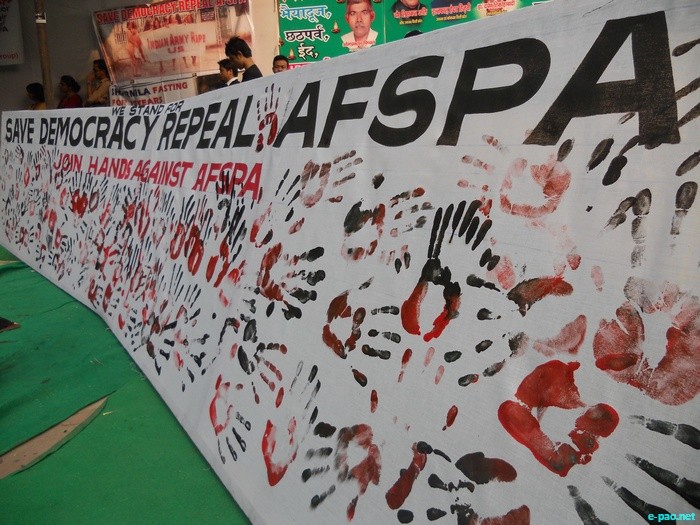
Image: E-pao.net

Every death caused by the armed forces in a disturbed area, whether the victim is a dreaded criminal or a militant or a terrorist or an insurgent, should be thoroughly enquired into, the Supreme Court held on Friday, July 8. This is to address any allegation of use of excessive or retaliatory force beyond the call of duty, the court said.

In a landmark judgment, the Supreme Court also said the largescale killings in Manipur in the guise of self defence while dealing with insurgency or militants was unacceptable. It said if members of the armed forces are deployed and employed to kill citizens of the country on the mere allegation or suspicion that they are the ‘enemy’, not only the rule of law but also democracy would be in grave danger.***

“It does not matter whether the victim was a common person or a militant or a terrorist, nor does it matter whether the aggressor was a common person or the state. The law is the same for both and is equally applicable to both… This is the requirement of a democracy and the requirement of preservation of the rule of law and the preservation of individual liberties,” a Bench of Justices Madan B. Lokur and U.U. Lalit said in an 85-page judgment. The entire text of the judgement can be read here.

The verdict pulls down the cloak of secrecy about unaccounted deaths involving security forces in disturbed areas and serves as a judicial precedent to uphold civilian and human rights in sensitive areas under military control.

Plea by Manipur families

The judgment came on a petition by Survivors, hundreds of families in the north-eastern State of Manipur for a probe by a Special Investigation Team into 1,528 cases of alleged fake encounters involving the Army and the police.  
Dealing a blow to the immunity enjoyed by security personnel under the Armed Forces (Special Powers) Act of 1958 (AFSPA) against criminal action for acts committed in disturbed areas, the apex court held that “there is no concept of absolute immunity from trial by a criminal court” if an Army man has committed an offence.

The court held that the army or Manipur police cannot use excessive force under the provisions of the Armed Forces (Special Powers) Act (AFSPA) or the Unlawful Activities Prevention Act to deal with militants or insurgency.

A bench of justices Madan B. Lokur and Uday Lalit gave this ruling on a petition filed by Extra Judicial Execution Victim Families Association alleging 1,528 fake encounter deaths in Manipur in the last decade and demanding a probe by a special investigation team. If any death was unjustified, there is no blanket immunity available to the perpetrator(s) of the offence. No one can act with impunity, particularly when there is a loss of an innocent life, the judges said.

Argument thrown out
Throwing out the government’s argument that lack of immunity from prosecution would have a demoralising impact on the security forces, the court asked the Centre to spare a thought for the “equally unsettling and demoralising” picture of a citizen living under the fear of the gun in a democracy. The court dismissed the government’s argument that every armed person breaking prohibitory orders in a disturbed area runs the risk of being considered an “enemy.”

“It would not be correct to say that merely because a person was carrying arms in a prohibited area, he or she becomes an enemy or an active member of a banned or unlawful organisation… Before a person can be branded as a militant or a terrorist or an insurgent, there must be the commission or some attempt or semblance of a violent overt act,” the judgment held.

A thorough enquiry should be conducted into “encounter” killings in disturbed areas because the “alleged enemy is a citizen of our country entitled to all fundamental rights including under Article 21 of the Constitution.”


Will a People’s Movement Restore Sustainability & Peace to Arunachal Pradesh?

0


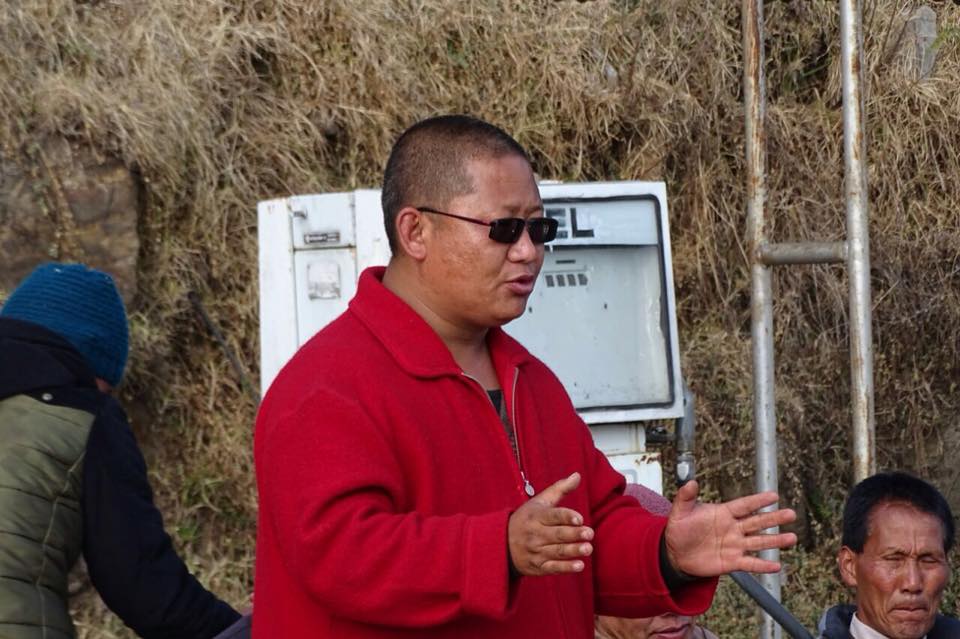
Lama Lobang Gyatso, Tawang                                                          

Lama Lobang Gyatso speaks and explains the extent of state repression in the state

More than 100 large and medium dams are planned in the North Eastern Indian state of Arunachal Pradesh. Lama Lobsang Gyatso from Tawang Valley talks about the large hydro-electric projects that threaten the very existence of his Monpa community. This powerful video conversation, with Lama Lobsang Gyatso (Newsclick.in) who was attached to the 17th century Tawang Monastery and is the leader of the Save Mon Region Federation (SMRF) explains the struggle of large sectiobns of Arunalachis against this self-defeating and environmentally defeatist course.

The Modi regime that had promised a re-look at the policy of dams in Arunachal (while on the election trail) has backtracked fast enough. On May 2, 2016, in an ugly turn of events, two people, namely Monk Nyima Wangdue and Tshering Tenpa, were killed and many injured, while protesting against the arrest of Lama Lobsang Gyatso in Tawang including a young Buddhist Lama. The Victims were protesting for the release of Lama Lobsang Gyatso, one of the most vocal opponents of hydropower projects in the Tawang region and secretary of the Save Mon Region Federation (SMRF), an organization of the Monpa Community in the Mon-Tawang region of Arunachal Pradesh.

Courtesy: Newsclick.in
.

Lama Lobsang Gyatso was attached to the 17th century Tawang Monastery and is the leader of the Save Mon Region Federation (SMRF). 


On May 02, 2016 in an ugly turn of event, two people, namely Monk Nyima Wangdue and Tshering Tenpa   

Background:
Even while the State government continues to remain apathetic to the whole situation, the Modi regime has in a surreptitious manner completely over-turned its electoral promises to stall hydel projects in the region that is seismic sensitive.
 As far back as September 24, 2014, six year and two rejections later, India’s largest hydro project was cleared. The project was rejected twice by the FAC, the original proposal in 2013 and a revised proposal in April.The 3000 MW Dibang Hydel project for which former prime minister, Manmohan Singh laid its foundation stone and which had twice been denied environmental clearance, the Forest Advisory Committee (FAC) of the Ministry of Environment and Forests (MoEF), gae it clearance subject to a reduction in the dam height by 20 m from the originally envisaged 288 m.
 
This clearance for India’s largest hydro project and the world’s tallest concrete gravity dam came after a September 3 letter from Nripendra Mishra, Principal Secretary to the Prime Minister, to the Environment Secretary to “clear the project expeditiously” as per the decision of the Cabinet Committee on investment. This was the person whom Modi had had a special ordinance passed to enable his appointment.
 
This clearance had raised eyebrows, since on August 28, 2014 the MoEF had written to the Arunachal Pradesh government rejecting the proposal for diverting more than 45 sq km of forest land to National Hydroelectric Power Corporation (NHPC) for the project. A day after Mishra’s letter, the Ministry revived the project by writing to the “project proponent that sensitivity analysis of reduction of dam height up to 40 m may please be submitted for further consideration”.
 
In 2013, in the run up to the general elections of 2014, as the National Democratic Alliance’s prime ministerial candidate in the 2014 Lok Sabha election, Narendra Modi had given hope to anti-dam activists in Assam when he spoke against the controversial large dams proposed in Arunachal Pradesh. But those hopes were dashed on February 20, when Modi visited Itanagar to attend Arunachal Pradesh's 29th Statehood Day. At an election rally on February 22, 2013 at an election rally at Pasighat in Arunachal Pradesh, Modi had said that he would prefer smaller hydro power projects in the region, honouring the sentiments of the region’s people. A year later and the prime minister had forgotten his promise. He pushed for hydropower projects in the state and said Arunachal Pradesh can light up the entire country.

Sabrangindia has been regularly tracking this critical human rights and environmental rights issue. Reportedly, 13 of the over 150 hydel projects planned by the state since 2005 are in the Tawang. To stall this spree of dam construction and upcoming ecological devastation, the people from the Monpa Community joined hands with local Buddhist monks in 2011 to form the Save Mon Region Federation (SMRF).

Under Lobsang Gyatso's leadership, SMRF has been advocating socio-culturally and ecologically sensitive development in the Mon-Tawang region. The group has protested against ecologically destructive hydropower projects, demanded accountability in the execution of government schemes and development projects, and exposed corruption.

Their work has been bearing fruit as on April 7, the SMRF saw its first significant achievement. In response to its petition filed in 2012, the National Green Tribunal (NGT) suspended the environment clearance granted by the Union environment ministry for the Rs. 6,400 crore Nyamjang Chhu hydropower project in Tawang’s Zemingthang area. The NGT noted that the project – promoted by the Noida-based steel conglomerate LNJ Bhilwara Group – did not consider its impact on the habitat of the endangered black-necked crane, which is endemic to the region. The bird is rated “vulnerable” in the International Union for Conservation of Nature’s list of endangered species and is listed in schedule 1 of the Wildlife (Prohibition) Act 1972 and also considered sacred to the Buddhist Monpa community, who consider it an embodiment of the 6th Dalai Lama, who was from Tawang and wrote about the bird in his poetry.

Lobsang Gyatso and SMRF have been supporting villagers in recording their objections against other destructive hydropower projects in Tawang too, including Tawang II HEP.However Lobsang Gyatso’s success seems to have made him a target for the local police authorities. Following the events, he was arrested twice last month on charges of disrupting peace in the Gongkhar Village and for alleged critical comments against Guru Rinpoche, the Abbot of Tawang Monastery, in reply of that the Abbot has appealed to find a peaceful solution to the volatile situation but the politicians exploited the issue and filed an FIR  against the leader Lobsang Gyatso after which the protests erupted in the region for his release.

The political motivation is also clear as the SMRF is preparing to file public interest litigation in the Supreme Court against the Mukto Shakangchu hydel project, report sections of the media. Even though over 90 crores rupees were officially spent by the state government on the project, most of what was constructed has been washed away by the river waters within three and a half months of completion of work due to use of sub-standard material.

May 2016 Protests in the National Capital

Around 60 monks from the Tawang valley in Arunachal Pradesh valley have travelled to Delhi to draw public and media attention to alleged police atrocity in their district and to demand justice. Representatives from Save Mon Region Federation (SMRF) and National Alliance of People’s Movement (NAPM) briefed the media yesterday about the developments in Tawang district.

According to them, 21-year-old Nyima Wangdi, a monk from the Tawang Monastery and 31-year-old Tsering Tempa from Jangda village were shot dead on May 2, 2016, while 19 others were seriously injured when police opened fire on a crowd of almost 2,000 people who had gathered peacefully at Tawang district collector’s office to demand immediate release of their community leader, Lama Lobsang Gyatso.

The issue started with the local community protesting the construction of 780 MW Nyamjang Chhu power project in the Tawang valley. The project is a threat to the wintering habitat of the black-necked crane, an endangered bird considered sacred by the Buddhist Monpa community. The bird is considered an embodiment of the 6th Dalai Lama who was from Tawang and wrote about the bird in his poetry.

The community of Tawang Valley had written several times to the local administration and the state government agencies but there was no response. Due to this, the tribal community of the valley had approached NGT which suspended the environment clearance of the project on the April 7, 2016. Ever since there was a coordinated reaction from the state administration, local MLA and zila parishad chairman (JPC), it is alleged.

On April 26, 2016, Lama Lobsang Gyatso was arrested but released the same day. On April 28, the zila parishad chairman called a public meeting ostensibly to discuss development of Tawang region but he singled out and attacked the Lama. Lama Lobsang Gyatso was rearrested on April 28. Due to these developments the community suspected that worse might happen to their leader and assembled peacefully on May 2 to demand his release from police custody.

Representatives of SMRF, an environmental civil society organisation working in the region along with representatives from NAPM and Delhi Solidarity Group (DSG) met with chairman, National Commission for Scheduled Tribes (NCST) on May 24 and with joint secretary, Ministry of Environment, Forest and Climate Change in New Delhi on May 25. The chairman assured that he will direct state authorities to register cases under Prevention of Atrocities (SC/ST) Act, and also ask for CID and judicial enquiry, not involving local police in investigation, and assured compensation to the injured and the families of people who were killed in police firing.

The joint secretary, Ministry of Environment, Forest and Climate Change, assured that they are not going to challenge the order dated April 7 of National Green Tribunal (NGT). He also gave assurances about conducting studies pertaining to the endangered bird through Wildlife Institute of India for the entire season as decided by the experts. Demand for the consultation with community and religious issues (linked to black-necked-crane bird) was also accepted.

The NHRC has also been approached and are looking into the matter. The demand for CBI enquiry and issue pertaining to the manner of project sanctioning / approval, are yet to be addressed.

Lobsang Chhodup, one of the monks who came from Tawang valley, said, “We want the government to pay heed to this. People in Arunachal should not feel as though they are being neglected”. 

Himanshu Thakkar, from South Asian Network for Rivers, Dams and People said, “The electricity generated from Tawang will not reach them even though the destruction will be entirely theirs.” 

Jampa Tsering who works with Humanity Foundation, Tawang, has said, “Tawang region needs micro-hydel power projects and not the mega projects.”  Vimal bhai from NAPM said that Arunachal Pradesh is not any Naxal affected region nor a conflict area nor a communally sensitive region. Instead, it is a peaceful place in the country which has a large population of Buddhist monks. There was no reason for the police to open fire on them without any warning. This incident forces us to think whether it was a pre-planned action.” 

The representatives from SMRF, NAPM and DSG condemned the high handedness of the administration in dealing with a peaceful protest and demanded that there should be an enquiry into the incident and the guilty punished. They also observed that the nexus between the state machinery and the private companies is working against the interest of the people in the region and that this cannot continue. They said that the directions of NGT and Ministry of Environment, Forest and Climate change must be complied with and adhered to.


Image Courtesy: Savetawang.org