
December 6, 2025
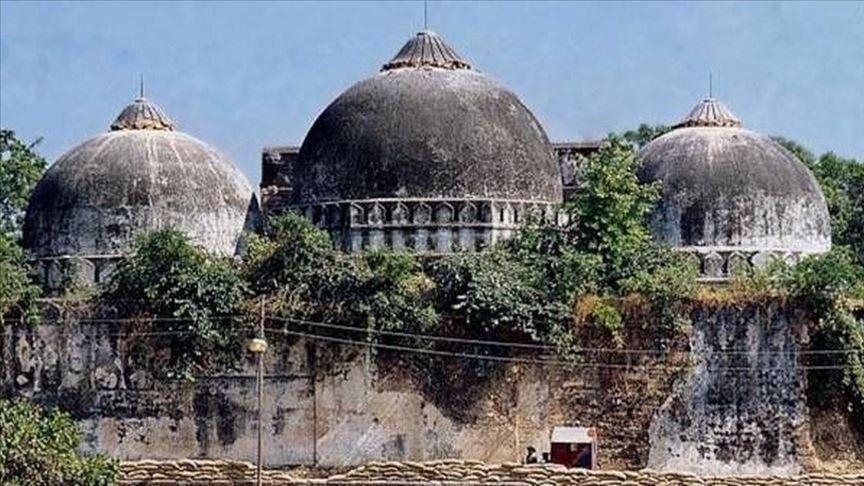
Friends in India and abroad wished to have a compilation of documentary evidence of how both the Indian State and Supreme Court succumbed to a majoritarian project of obliterating a historic mosque at Ayodhya on December 6, 1992. The following description and timeline examines the Hindutva propaganda falsehood with irrefutable facts which were conspicuously overlooked by the most crucial institutions of the Indian state.
Falsehood 1: Babri mosque built after destroying Ram birthplace temple
The supremacist Hindutva lot claimed that the new Ram temple was built on an ancient site of Hindu worship; the Ram birthplace temple which was destroyed in the early 16th century (1528-29) during the reign of the first Mughal emperor, Babar by one of his commanders, Mir Baqi. Archaeological evidence proves the mosque had no foundations of its own and was built upon a Hindu temple. They even identified the exact place of birth of Ram; under the central dome (approximately measuring 150 cm x 150 cm) of the Babri Mosque.
This falsehood has been repeated by none less than Narendra Modi several times since 2014 when he took over as Prime Minister of India, the latest pccasion being at Ayodhya on November 25, 2025, when he stated: “The wounds of centuries are healing, the pain of centuries is finding an end today, the resolution of centuries is achieving success today. Today marks the final offering of a yajna whose fire burned for 500 years.”[1]
Truth 1: This is a brazen falsehood propagated by the Rashtriya Swayamsevak Sangh (RSS) with no historical or legal proof, nor any corroboration even in the ‘Hindu’ narratives of history. There is no mention of the destruction of Ram Temple even in the writings of the most prominent Ram worshiper to date, Goswami Tulsidas (1511-1623), who penned the Epic Ramcharitmanas (Lake of the Deeds of Ram) in the Avadhi language in 1575-76. It was this work which made Ram the most popular God in Northern India. According to the Hindutva version, Ram’s birthplace temple was destroyed in the period 1528-1529. It would be surprising indeed if the Ramcharitmanas, written almost 48 years after the so-called destruction of Ram’s birthplace temple, did not mention such a momentous event. Does the Hindutva lot mean to argue that the revered Saint, Goswami Tulsidas was a coward?!
For the RSS, Aurobindo Ghosh, Swami Vivekananda, and Swami Dayanand Saraswati were the saints who contributed immensely to the cause of Vedic religion and the growth of the Hindu nation. None of these Vedic saints ever referred to this destruction of Ram Temple at Ayodhya by Mughal King Babar or his agents in any of their writings.
Today, Ayodhya is referred to as one of the oldest and holiest places for Hindus. It is interesting to note that Adi Shankaracharya (788-820), who toured India preaching Vedas and refuting Buddhism and Jainism for more than a decade, who established 5 Peetams [main centres of Sanatan Hinduism] at Badrinath in the North, Puri in the East, Dwarka in the West and Sringeri and Kanchi in the South for the revival of the Vedic religion but did not consider Ayodhya as one.
It is true that traditionally, Hindus believe that Ram was born in the city of Ayodhya, but the issue is whether he was born exactly under the central dome (approximately measuring 150 cm x 150 cm) of the Babri Mosque as is claimed now by Hindutva’s flag-bearers.
Moreover, the Indian Supreme Court, in its 1,045-page Ayodhya Judgment (November 9, 2019), has, nowhere in the Judgment agreed with the claim that the Babri Mosque was constructed after destroying any temple.
Indian Supreme Court, in the said judgment made two other observations demolishing the RSS claim on the Mosque. Firstly, the SC stated: “The exclusion of the Muslims from worship and possession took place on the intervening night between 22/23 December 1949 when the mosque was desecrated by the installation of Hindu idols. The ouster of the Muslims on that occasion was not through any lawful authority but through an act which was calculated to deprive them of their place of worship.” [Supreme Court Judgment dated November 9, 2019, pp. 921-22]
Secondly, at pages 913-14, the SC stated that “On 6 December 1992, the structure of the mosque was brought down and the mosque was destroyed. The destruction of the mosque took place in breach of the order of status quo and an assurance given to this Court. The destruction of the mosque and the obliteration of the Islamic structure was an egregious violation of the rule of law.”
However, Mother India ought to be aghast to find Indian Supreme Court, despite all the above findings in its own verdict handed over a historic building which was a protected monument under Article 49 of Indian Constitution to supremacists. Arguably, what a supremacist mob could not achieve on December 6, 1992, the Supreme Court of India handed them on November 9, 2019.
It is worth mentioning here that the RSS—which initiated the bloody, violent campaign to build the Ram Temple at the end of the decade of the 1980s, never advanced this demand during the period of its founding (1925) until India attained Independence. Even after Independence, it was only in 1989 that the political appendage of the RSS, the BJP, began to focus on this issue.
The views of two RSS luminaries who initiated the Ram Temple movement reveal the preposterousness of the claim that Ram himself was born under the dome.
Rama Vilas Vedanti, a prominent Hindu clergyman of the Ram Birthplace Trust (an RSS front), stated, “We will build a temple at Ramjanam Bhoomi even if Lord Rama says he was not born there” [Outlook, Delhi, 7 July 2003). Similarly, L. K. Advani, who rode a chariot (Rath Yatra) as part of an aggressive Ram Temple campaign in 1990 said, “It did not matter whether the historical Rama was actually born at the spot in Ayodhya. What mattered was that Hindus believed that he was born there. Faith took precedence over history” [The Hindustan Times, Delhi, 20 July 2003.]
Falsehood 2: Ram Temple at the site of the Babri Mosque was essential to seek ‘restorative justice’
According to RSS the Ram Mandir has great symbolic and emotional resonance for Hindus in contemporary times and that the trauma that this destruction brought has been passed down through generations and continues to impact the psyche of Hindus and contributed historically and continues to contribute to Hindu-Muslim tensions in India to this day.
Truth 2: According to this logic, the rule by rulers with Muslim names in India was the Islamic rule of idol-breakers. This narrative of Muslim history developed only at the beginning of the 19th century is in absolute contradiction with historical facts and even common sense. To understand the lies behind this fabricated Medieval past, one needs to examine the nature of this ‘Muslim’ rule.
Despite ‘Muslim’ rule of almost one thousand years, approximately 75% of Indians did not convert to Islam, as was made clear by the first Census held by the British in 1871-72 when even ceremonial ‘Muslim’ rule was over. Hindus and Sikhs constituted 73.5 percent of the population, and Muslims numbered 21.5 percent only. [Memorandum on the Census Of British India of 1871-72: Presented to both Houses of Parliament by Command of Her Majesty London, George Edward Eyre and William Spottiswoode, Her Majesty’s Stationary Office 1875, 16.]
In fact, this period of ‘Muslim rule’ was also the rule of the Hindu High Castes. According to contemporary ‘Hindu’ narratives, Aurangzeb never faced Shivaji in the battlefield; these were his two Rajput commanders, Jay Singh I and Jai Singh II, who fought against Shivaji on Aurangzeb’s behalf. Akbar personally never fought any battle against Rana Pratap of Mewar; Man Singh, brother-in-law of Akbar fought all battles against Rana. The Deewan Ala (prime minister) of both Shahjahan and Aurangzeb was Raghunath Bahadur, a Kayasth Hindu.[2]
It is nobody’s argument that Aurangzeb or many other ‘Muslim’ rulers were not religious bigots or tolerant. Aurangzeb did not spare his father, brothers, and many smaller ‘Muslim’ kingdoms of his times. There are also contemporary records that prove that Aurangzeb donated lands, money, and resources to many temples throughout India. Anybody who has visited Delhi’s Red Fort must have seen two temples; Jain Lal Mandir [Red Temple] and Gauri Shanker Temple, just across the Red Fort towards Chandni Chowk side. These temples were built before the rule of Aurangzeb and continued to function during his time and later.
Falsehood 3: According to RSS building of the Ram Temple was an important event for Hindus of all traditions
Truth 3: They did not explain to the Nation why 4 Shankaracharyas of the Peetams (out of 5) established by Adi Shankaracharya boycotted the inauguration of the Ram Temple at Ayodhya. The most revered living Hindu saints of the Sanatan Dharm declared Ayodhya’s inauguration to be in contravention of Vedic scriptures, calling it Hinduism done for petty electoral gains.
It was sad to see the RSS run roughshod over the diversity of Hinduism. In its attempt to prove the homogenous character of Hindus, it turned a debate on the nature of the Ayodhya inauguration into Hindus versus others. The founder of Arya Samaj, Swami Dayanand Saraswati (1824-83), is glorified by RSS as a pillar of the Hindu nation. But Swami was an ardent opponent of the Brahmanical rituals like Pran Pratishtha, putting life into a lifeless idol (in Ayodhya case by Prime Minister Modi) and did not mince words in decrying this very ritual. He stated (in Satyarth Prakash or Light of Truth, chapter 11), “The fact of the matter is that the All-pervading Spirit [God] can neither come into an idol, nor, leave it. If your mantras are efficacious that you can summon God, why can you not infuse life into your dead son by the force of the very same mantras? Again why can you not bide the soul depart from the body of your enemy? There is not a single verse in the Vedas to sanction the invocation of the Deity and vitalization of the idol, likewise, there is nothing to indicate that it is right to invoke idols, to bathe them, install them in temples, and apply sandal paste to them.”
Falsehood 4: According to the Hindutva narrative Ayodhya represents a five hundred years long war between Hindus and Muslims of India
Those who defend the demolition of Babri mosque argue that though sometimes presented as being a recent conflict, the fact is that this site has a long history of Hindus and Sikhs attempting to reclaim it, dating back to the early 19th century. Furthermore, the conflict has been ongoing regardless of the political party in power following India’s independence.
Truth 4: Ayodhya is presented as a place of perennial war between Hindus and Muslims, and the central dome of the Babri Mosque claimed to be the exact place where Ram was born, are modern ‘constructs’ as we will see in the following.
There cannot be a shoddier lie than this that Ayodhya was a place of perpetual war between Hindus against Muslims. During India’s War of Independence 1857, Ayodhya was the place where Maulvis and Mahants and ordinary Hindus and Muslims stood united in rebelling against the British rule and kissed the hangman’s noose together. Maulana Ameer Ali was a famous Maulvi of Ayodhya, and when Ayodhya’s well-known Hanuman Garhi’s (Hanuman Temple) priest, Baba Ramcharan Das, took the lead in organising the armed resistance to the British rule. Both of them were captured and hanged together on the same tree. In another instance of the glorious unity of Hindus and Muslims against the colonial rule at Ayodhya, Acchhan Khan and Shambhu Prasad Shukla led the army of Raja Devibaksh Singh in the area. Due to the treachery of Hindu and Muslim lackeys of the British, they were captured and killed together. The British rulers hated this unity and created narratives of perennial Hindu-Muslim conflict not only in Ayodhya but the whole of India.
Iqbal a renowned poet much maligned by the Hindutva ideologues whose poetry has been removed from textbooks wrote a peerless poem in praise of Ram in 1908 titled “Imam-e-Hind”. For Iqbal, Ram was not merely a Hindu God but “Imam-e-Hind” (spiritual leader of India). The first two lines of the poem read: Hai Raam ke wajood pe Hindustaan ko naaz/
Ahl-e-Nazar samajhte hain us ko Imam-e-Hind
(India is proud of the existence of Ram
Spiritual people consider him prelate of India).
The flag-bearers of Hindutva working overtime to undo a composite and all-inclusive India are using the Sikh factor as a bluff to legitimize its illegal project. Sikhs who do not believe in idol worship of Ram or any other Hindu God/Goddesses; we are told that on 28 November 1858, a Nihang Sikh [member of a warrior order within Sikhism] organized Pooja [worship] and havan [a Brahmanical ritual offering of grains, pure ghee and other such items to fire] in the Babri Mosque. It is unbelievable for a Sikh to perform Brahmanical rituals and would invite immediate ex-communication. Why Hindus at that time did not enter the Mosque is a mystery!
Aggrieved Muslims chose legal recourse and not community mobilisation, were they betrayed by the Judiciary?
Supremacist forces within Hindutva must understand that Ram was never the cause of perpetual conflict between Hindus and Muslims until RSS invented it as a convenient tool for religious polarization. Muslims of Ayodhya stopped going to Babri Mosque once the idol of Ram Lalla (child Ram) was smuggled into the Babri Mosque on the night of December 22/23 1949 with the connivance of local senior officials. Local Muslims did not try to break into the usurped Mosque, and there was no bloodshed engineered by Muslims of Ayodhya who were in substantial numbers in Faizabad, now rechristened as Ayodhya Dham despite the Indian Supreme Court declaring that “the mosque was desecrated by the installation of Hindu idols.”
The RSS and its affiliates instead of being ashamed of the carnage celebrate the demolition on December 6 as Shauriya Divas, day of bravery. These criminals have succeeded since 1990, RSS and its appendages had organized an aggressive campaign for demolishing the Babri Mosque, targeting Indian Muslims as Baber-zade/Haram-zade (children of Babar/illegitimate children). For more than two years, Hindus in India and abroad were asked to come to Ayodhya to tear down the mosque as kar-sevaks.
Babri mosque demolition was not a Hindu-Muslim battle but a seminal conflict between the RSS and the Secular Indian State
Did Muslims call for counter-mobilisation to save the mosque or reach the site on December 6 to confront the Hindutva mobs? Never! In fact, they trusted the RSS to honor the commitment made to the then-Indian Prime Minister, P. V. Narasimha Rao and the Indian Supreme Court that its appendages and cadres would not harm the mosque. RSS reneged on all commitments shamelessly. Indian State and judiciary remained silent spectators. How critically and fundamentally Indian Muslims were let down and even betrayed would be evident by the fact that Rao promised to rebuild Babri Mosque at its original place twice (once in Parliament and second time while addressing the nation from Red Fort on August 15, 1993), which were both promises that stand reneged on!
A detailed Video Narration of the sordid Ram Temple saga may be viewed here and here.
[1] PM’s speech during the Shri Ram Janmabhoomi Mandir Dhwajarohan Utsav, November 25, 2025, https://www.pmindia.gov.in/en/news_updates/pms-speech-during-the-shri-ram-janmabhoomi-mandir-dhwajarohan-utsav/
[2] ‘Fallacy of the Hindutva project’ May 4, 2022, Chennai, link: https://frontline.thehindu.com/cover-story/fallacy-of-the-hindutva-project-aurangzeb-mughals-islamophobia/article38484103.ece
Disclaimer: The views expressed here are the author’s personal views, and do not necessarily represent the views of Sabrangindia.
Related:
Babri demolition to Ram Temple: A trajectory of Indian politics
31 years after Babri Mosque demolition perpetrators in power