
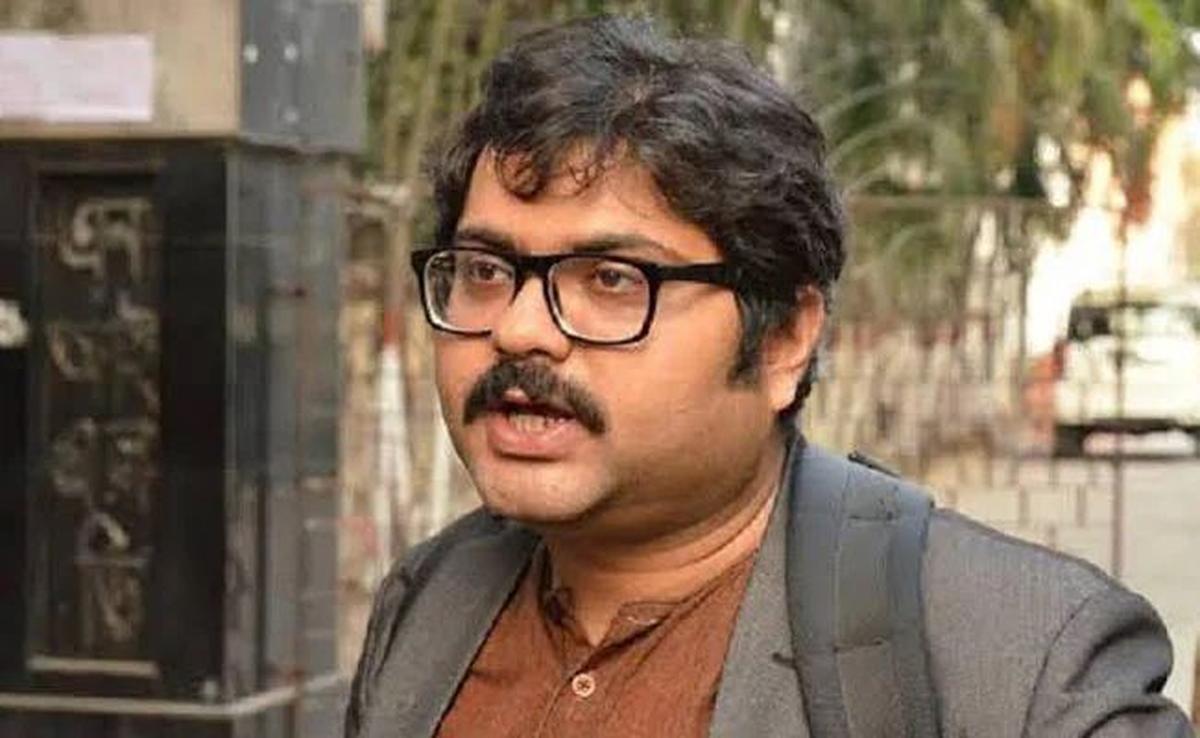
Garga Chatterjee, founder of the Bengali rights organisation Bangla Pokkho, was arrested by the cybercrime division of the Kolkata Police on May 12, 2026, in connection with alleged misinformation relating to Electronic Voting Machines (EVMs) and the electoral process during the recently concluded West Bengal Assembly elections, according to report by Telegraph.
According to Kolkata Police Commissioner Ajay Kumar Nand, the arrest followed a complaint lodged by the District Election Officer (DEO) of Kolkata North. Police stated that Chatterjee had been summoned twice during the inquiry but allegedly failed to appear before investigators, prompting the cyber cell to proceed with his arrest.
“The complaint against him was lodged by the District Election Officer of Kolkata North, following which the cyber cell initiated action. He was summoned twice in connection with the matter, but he did not appear, and that is the reason why he was arrested,” Commissioner Nand told reporters at Lalbazar police headquarters, as quoted by The Hindu.
Police officials said Chatterjee would be produced before a court on Wednesday.
Posts on EVMs and Election Commission under scanner
Investigators allege that Chatterjee circulated misleading claims regarding EVM functioning and attempted to create distrust around the electoral process through social media posts made during polling and counting phases of the election, according to The Indian Express.
Officials told The Indian Express that on April 23, during the first phase of polling, Chatterjee publicly questioned why certain EVMs reportedly malfunctioned in the morning despite undergoing checks the previous night. In another social media post on May 4, the day votes were counted, he allegedly accused the Election Commission of India of carrying out a “secret plan” during the counting process.
Police have described these statements as attempts to spread confusion and misinformation surrounding the conduct of elections and the functioning of EVMs, according to The Telegraph.
Chatterjee had also advised voters through social media posts to verify VVPAT slips carefully before leaving polling booths after casting their votes, The Indian Express reported.
Academic-turned-activist and Bengali identity politics
A Harvard-educated neuroscientist and faculty member at the Indian Statistical Institute, Chatterjee became widely known in recent years for his political activism centred on Bengali linguistic and cultural identity, as noted by The Indian Express.
Founded in 2017, Bangla Pokkho has consistently campaigned for prioritising Bengali language, culture and employment opportunities for local youth in West Bengal. The organisation has also opposed what it describes as the “imposition” of Hindi in the State, according to The Hindu.
During the 2026 Assembly elections, Chatterjee had publicly urged voters to support either the All India Trinamool Congress or Left Front candidates while opposing the Bharatiya Janata Party, which he characterised as a party of “outsiders”, The Hindu reported.
CLEAR calls arrest an “assault on democratic dissent”
In the wake of the arrest, the Campaign for Language Equality and Rights (CLEAR), a civil society platform advocating linguistic equality and mother tongue rights, issued a strongly worded statement condemning the police action and demanding the immediate and unconditional release of Garga Chatterjee. Describing Chatterjee as a “neuroscientist, cultural activist” and one of CLEAR’s founding members, the organisation argued that the arrest amounted to “a direct assault on freedom of speech, democratic dissent, and the constitutional rights of every citizen.”
Invoking Articles 19(1)(a) and 21 of the Constitution, CLEAR cited recent observations of the Supreme Court of India affirming the right of citizens to criticise state institutions and peacefully dissent against government decisions. The statement further argued that public scrutiny of EVMs and the electoral process had repeatedly been recognised as legitimate within constitutional democracy, including in cases such as Subramanian Swamy v. Election Commission of India and Association for Democratic Reforms v. Election Commission of India. “Questioning EVMs is not sedition. It is democracy,” the statement said.
CLEAR also expressed concern over the fact that the complaint against Chatterjee had reportedly originated from the Election Commission of India itself, arguing that this raised “serious concerns regarding conflict of interest and the use of state machinery to silence criticism.” The organisation further alleged that no specific social media posts had been publicly identified as forming the basis of the FIR, calling the arrest “arbitrary, disproportionate, and contrary to the principles of natural justice.” Alongside demanding withdrawal of the complaint and transparency regarding the FIR, CLEAR called upon civil society groups and democratic organisations across the country to stand in solidarity with Chatterjee.
Political parties liberation demands release
Reacting to the arrest, Dipankar Bhattacharya, general secretary of the Communist Party of India (Marxist-Leninist) Liberation, criticised the police action and demanded Chatterjee’s immediate release.
According to The Indian Express, Bhattacharya described Chatterjee as a “well-known campaigner for Bengali identity and electoral transparency” and objected to the arrest over posts concerning alleged EVM tampering.
Trinamool Congress MP Mahua Moitra took to social media to show her support.
I may not be a fan of Garga Chatterjee but arresting him & taking down his @GargaC X handle shows just how paranoid the new BJP Bengal government is. Banglar Bipokhhe Bangla Birodhi is the true face of this Parivartan. Make no mistake.
— Mahua Moitra (@MahuaMoitra) May 12, 2026
Previous arrests and controversies
This is not the first time Chatterjee has faced criminal proceedings over controversial remarks. In 2022, he was arrested following multiple FIRs filed in Assam accusing him of hurting Assamese sentiments and promoting enmity between communities after he allegedly referred to Sukaphaa, founder of the Ahom dynasty, as a “Chinese invader”, according to The Telegraph.
The controversy led to intervention by the Gauhati High Court, which issued directions concerning the execution of a non-bailable warrant against him. He was later granted transit bail subject to appearing before a court in Guwahati, as reported by The Telegraph. Separately, Bangla Pokkho members had also come under scrutiny in 2024 after two students from Bihar appearing for a Staff Selection Commission examination in Siliguri were allegedly assaulted. The Indian Express reported that a person linked to the organisation was detained in connection with the incident.
Related:
Bengal after the Ballot: Fear, retaliation and the politics of territorial power
Fractured Fault lines: Violence, governance gaps, and rising tensions across Odisha
Censorship and the Drumbeats of Hate: Mapping the state of free speech ahead of the 2026 polls