
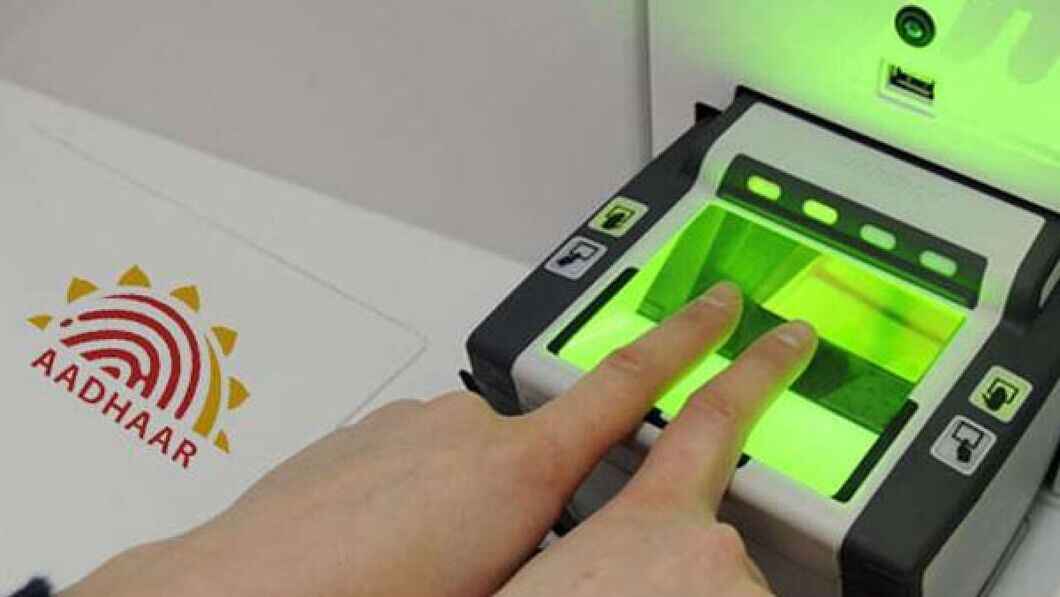
On the eve of Human Rights Day, 50+, Indian organisations and several individuals have issued a joint statement, “Beware of Aadhar.” For 15 years, India’s Aadhar biometric ID system has been projected globally as a “success story”, from the World Bank’s ID4D to pilots and proposals in countries like Kenya, Nigeria, Uganda and now in renewed debates on a national ID in the United Kingdom (UK). The signatories have however flagged the issue that Aadhaar is “not a model to emulate but it raises serious concerns about surveillance, exclusion and rights violations on the ground. This statement, “Beware of Aadhar” offers a concise critique of India’s digital ID experiment and why exporting it is dangerous.
The statement may be read here:
We, concerned Indian citizens and organisations, are alarmed to note that efforts are being made to promote biometric identity systems similar to Aadhaar in other countries.
Aadhaar is India’s unique identity number, linked with a person’s biometrics (fingerprints, iris and photograph as of now). The number was rolled out with fanfare from 2009 onwards. The use of this number, and of Aadhaar-based biometric authentication (ABBA), was promoted to the hilt by the Indian government in close collaboration with the IT industry. Aadhaar was supposed to be voluntary, but it quickly became clear that living without it would be very difficult for most. Today, it is as good as compulsory. Most social benefits are out of reach without Aadhaar.
Aadhaar was rolled out in an explicitly “evangelistic” mode from day one. In recent years, it has been projected as a grand success by its promoters. Their friends in high places (like Davos, the World Bank, and the B & M Gates Foundation) are on board. There is an attempt, partly successful already, to project Aadhaar as a model and “export” it to other countries.
For our part, we view Aadhaar as a failed and objectionable model that should not be replicated in other countries, certainly not in its Indian version.
Our main concerns are as follows:
- Aadhaar involves the creation a centralized database that includes biometrics as well as demographic information (e., name, gender, date of birth and address). This could turn into a dangerous tool of social control, especially but not only in the hands of an authoritarian government.
- The linkage of numerous databases with Aadhaar magnifies the danger of it becoming a tool for profiling, surveillance, exclusion and Centralised databases also pose data security risks by creating a single point of failure.
- While the “core biometrics” (biometrics minus photograph) in the Aadhaar database are supposed to be secure, the rest is freely shared with authorised users of Aadhaar authentication, with minimal This is a major infringement of privacy.
- The demographic details attached to Aadhaar numbers in the database are full of errors, partly due to hasty rollout. Yet severe restrictions have been placed on correcting this Meanwhile, people are expected to align other documents with this unreliable information. This is causing endless hassles to poor people. Many of them are excluded from some or all social benefits.
- Biometric failures are another major source of social exclusion, especially for the elderly. Aadhaar was rolled out without any transparency about the reliability of biometric authentication.
- A significant minority of people, mainly from marginalised groups (including disabled persons), do not have Aadhaar for some reason and no fault of their own. They are excluded from most social benefits.
- If an Aadhaar number is lost, it can be very difficult to Poor people have been forced to make long and expensive trips to regional assistance centres for this purpose. Some never managed to retrieve it, and are now deprived of all social benefits.
- The coercive “seeding” of Aadhaar with endless databases (ration cards, job cards, pension lists, bank accounts, voter lists, what not), associated with function creep, is a monumental waste of time for functionaries and Seeding sounds simple but it requires biometric or demographic verification. Both can be very cumbersome.
- The rush for correction or update of Aadhaar details has led to humongous queues at many assistance centres, where people often wait in line for hours with no guarantee of remedy. There are no facilities for tracking of grievance redressal, continuity of assistance, or other People’s time and money are wasted to no end.
- Far from rooting out corruption, Aadhaar’s centralised database has enhanced information asymmetries and reduced Integration of Aadhaar with the banking system has magnified exposure to new vulnerabilities such as identity fraud.
- At every step, the Aadhaar project has been a law unto It began without any legal backing. Later, the Aadhaar Act was passed by bypassing the Upper House of Parliament. The Unique Identification Authority of India (UIDAI) often violates orders of the Supreme Court of India (e.g., protections for children and against use by private entities). It has enormous power and regularly issues rules that make life difficult for millions, without any serious feedback from affected people. A critical provision for parliamentary oversight of UIDAI was dropped in the final version of the Aadhaar Act.
Articles and reports amplifying these concerns are available at rethinkaadhaar.in
The promoters of Aadhaar were never able to justify this particular identity model or to explain what ills it is supposed to remedy. Instead, they relied on propaganda to push for it. Many countries have functional identity systems that are less coercive, invasive, exclusionary and unreliable than Aadhaar.
We urge the greatest caution from countries that are considering a replication of the Aadhaar model. We would be happy to facilitate field visits for anyone interested in understanding these problems in more detail.
(Endorsed by more than 50 organisations, aside from individual signatories – see attached list.)
Signatory Organisations
- All India Democratic Women’s Association (AIDWA)
- All India Lawyers Association for Justice {AILAJ)
- All India Progressive Women’s Association (AIPWA)
- All India Students’ Association (AISA)
- Ambedkarijame Punadi (Andhra Pradesh)
- Bahutva Karnataka
- Campaign for Survival and Dignity (CSD)
- Dalit Bahujan Front
- Democratic Students’ Federation (DSF)
- Gig and Platform Services Workers Union
- Grakoos Union
- Hamal Panchayat (trade union)
- Human Rights Law Network (HRLN)
- Internet Freedom Foundation
- Jan Jagran Shakti Sangathan (JJSS)
- Jan Swasthya Abhiyan (JSA)
- Jharkhand Janadhikar Mahasabha (JJM)
- JNU Students Union
- Karwan e Mohabbat
- Khudai Khidmatgar India
- LibTech India
- Maadhyam (a civic engagement initiative)
- Maharashtra Shramik Ustod & Vahtuk Kamgar Sanghatana (trade union)
- Manjeera Dalitha Seva Samithi (Telangana)
- Mazdoor Kisan Shakti Sangathan (MKSS)
- Moneylife Foundation
- National Alliance of People’s Movements (NAPM)
- National Alliance for Justice, Accountability and Rights {NAJAR)
- National Campaign Committee for Central Legislation on Construction Workers
- National Campaign Committee for Unorganised Sector Workers (NCCUSW)
- National Campaign Committee on Eradication of Bonded Labour {NCCEBL)
- National Campaign for People’s Right to Information (NCPRI)
- National Confederation of Dalit Organisations (NACDOR)
- National Federation of Indian Women {NFIW)
- National Platform for the Rights of the Disabled {NPRD)
- New Trade Union Initiative (NTUI)
- NREGA Sansharsh Morcha
- NREGA Watch (Jharkhand)
- Paschim Banga Khet Majoor Samity (PBKMS)
- Pension Parishad
- People’s Union for Civil Liberties (PUCL)
- People’s Union for Democratic Rights {PUDR)
- RANG Foundation
- Rethink Aadhaar
- Right to Food Campaign
- Safai Karmachari Andolan (SKA)Safdar Hashmi Memorial Trust (SAHMAT)
- Samalochana Association (Andhra Pradesh)
- Sangatin Kisan Mazdoor Sangathan (SKMS) SO. Satark Nagrik Sangathan
- Social Accountability Forum for Action and Research (SAFAR)
- SR Sankaran Adivasi Sahaya Kendram (Andhra Pradesh)
- United Forum for RTI Campaign (Andhra Pradesh)
- United Milli Forum (Jharkhand)
Individual Signatories
- Aakar Patel, Writer
- Aban Raza, concerned citizen
- Abha Bhaiya, India coordinator, One Billion Rising campaign
- Aditi Mishra, Jawaharlal Nehru University
- Adv Albertina, National Alliance of People’s Movements
- Advocate Dr Shalu Nigam, Lawyer and researcher
- Advocate Vertika Mani, Secretary, People’s Union for Civil Liberties
- Akhila Phadnis, concerned citizen
- Akshay S Dinesh, Action for Equity
- Alok Laddha, Chennai Mathematical Institute
- Alphonse Raj, concerned citizen
- Amber Sinha, Tech Policy Press
- Ambika Tandon, University of Cambridge
- Anand Mazgaonkar, concerned citizen
- Anand Patwardhan, Filmmaker
- Anand Teltumbde, Committee for Protection of Democratic Rights, Mumbai
- Anantha, concerned citizen
- Anivar A Aravind, concerned citizen
- Ankita Aggarwal, concerned citizen
- Annie Raja, concerned citizen
- Anjor, Dialogues on Democracy and Development
- Anupam Pachauri, Indira Gandhi National Open University
- Anuradha Talwar, Paschim Banga Khet Majoor Samity
- Anurag Mehra, Retired IIT Faculty
- Arun Khote, National Movement for Land, Labour & Justice
- Arun Kumar, Retired Professor, Jawaharlal Nehru University
- Aruna Rodrigues, concerned citizen
- Aruna Roy, School for Democracy
- Arundhati Dhuru, NAPM Convenor
- Arundhati Roy, Writer
- Ashish Ranjan, National Alliance of People’s Movements
- Ashlesh Biradar, Brave New Web
- Ashok Bharti, National Confederation of Dalit Organisations
- Ashokan Nambiar, C MAHE, Manipal, Karnataka
- Avantika Tewari, Jawaharlal Nehru University
- Baghamabar Pattnaik, Anti-slavery India
- Bela Bhatia, Lawyer and writer
- Bezwada Wilson, National Convenor, Safai Karmchari Andolan
- Bhanuj KappaI, Independent journalist
- Bhanwar Meghwanshi, People’s Union for Civil Liberties
- Bhargav Oza, National Alliance for Justice, Accountability, and Rights
- Bhoomika Pandhare, concerned citizenBhupen Singh, University of Sussex
- Bittu KR, Women against Sexual Violence and State Repression
- Brinda Crishna, concerned citizen
- Budhaditya Bhattacharya, concerned citizen
- Chirashree Das Gupta, Jawaharlal Nehru University
- Clifton D’Rosario, advocate
- Colin Gonsalves, advocate
- Danish Ali, concerned citizen
- Dayamani Baria, concerned citizen
- Deep Chandra Joshi, concerned citizen
- Devi, All India Democratic Women’s Association
- Dorothy Vallado, concerned citizen
- Dr lndu Prakash Singh, Facilitator, CityMakers Mission International
- Dr Sudhir Vombatkere, concerned citizen
- Dr Sylvia Karpagam, Public health doctor
- Dwiji Guru, National Alliance of People’s Movements
- Edwin, OpenSpace
- Firoz Ahmad, school teacher
- Francis Bosco, National Federation of Unorganised and Migrant Workers
- Gangaram Paikra, concerned citizen
- Gautam Bhatia, Constitutional law scholar and Professor of Law
- Gouranga Mahapatra, Jana Swasthya Abhiyan Odisha
- Gowramma, Akila Bharath Janavadi Mahila Sangatane (Karnataka)
- H M Sunasara, concerned citizen
- Harish Dhawan, concerned citizen
- Harsh Mander, Karwan e Mohabbat
- Hemant Sareen, concerned citizen
- Himmat Singh Ratnoo, Former Secretary MDU Teachers’ Association (MDUTA) Rohtak
- Hindolee Datta, concerned citizen
- Indira C, Public health researcher
- Indira Unninayar, Advocate, Supreme Court and Delhi High Court
- Jagdish Patel, concerned citizen
- Jayati Ghosh, Economist
- James Herenj, NREGA Watch Jharkhand
- Jean Dreze, Development economist
- John Dayal, Writer
- John Simte, Lawyer
- Justice P. Shah, Retired Judge and former Chairman of the Law Commission of India
- JT D’souza, concerned citizen
- A. Verghese, Green Kerala
- Karen Gabriel, St Stephen’s College, Delhi
- Karuna M, NREGA Sangharsh Morcha
- Kalyani Menon Sen, Independent researcher
- Kelvin, concerned citizen
- Kiran Jonnalagadda, concerned citizen
- Koninika Ray, National Federation of Indian Women
- Krishnakant Chauhan, Activist
- Laavanya Tamang, Independent researcher
- Lawrence Liang, Legal academic
- Laxmi Murthy, Journalist and researcher
- Lubna Sarwath, Advocate
- M S Sriram, Indian Institute of Management Bangalore
- Balakrishnan, concerned citizen
- Maimoona Mollah, Women’s rights activist
- Martin Macwan, concerned citizen
- Marthe Mautarelli, concerned citizen
- Meera Sanghamitra, National Alliance of People’s Movements
- Meghna Jayanth, concerned citizen
- Meghna Yadav, Researcher
- Mritiunjoy Mohanty, Indian Institute of Management Calcutta {retd)
- Mukul Kesavan, Retired teacher
- Nandini Sundar, University of Delhi
- Nandita Narain, Associate Professor (Retd), Stephen’s College, Delhi University
- Nandita Sengupta, Journalist, Times of India
- Navsharan Singh, Researcher activist
- Nayanjyoti, Lecturer in Development Studies, Delhi
- NB Murthy, concerned citizen
- Neeraj Hatekar, Researcher
- Nikhil Dey, Mazdoor Kisan Shakti Sangathan
- Nishant S, Researcher
- Nishi, concerned citizen
- Nitish Kumar, Former JNUSU President
- Nivedita Menon, Jawaharlal Nehru University
- Om Damani, concerned citizen
- Sainath, journalist
- Padmini Ramesh, Johns Hopkins University
- Paran Amitava, PhD Scholar, Jawaharlal Nehru University
- Parth Sharma, Nivarana
- Parthasarathi Paul, concerned citizen
- Persis Ginwalla, concerned citizen
- Praavita, Rethink Aadhaar
- Pradeep E, concerned citizen
- Pradyumna Behera, Independent researcher
- Prafulla Samantara, President, Lok Shakti Abhiyan
- Prakash Louis, Bihar migrant hub
- Prasad Chacko, Social worker, Ahmedabad
- Prasanna s, Advocate, Supreme Court of India
- Praveer Peter, National Alliance of People’s Movements
- Prof Ritu Dewan, Director (Retd), Mumbai School of Economics & Public Policy
- Mohan Rao, concerned citizen
- Purbayan C, Advocate
- Pushpendra, Former Professor, Tata Institute of Social Sciences, Mumbai
- Rahul Basu, concerned citizen
- Raj Shekhar, Right to Food Campaign
- Rajaraman, Independent journalist and researcher
- Rajesh Ramakrishnan, concerned citizen
- Rajinder Chaudhary, Former Professor of Economics, MD University, Rohtak
- Rama Teltumbde, concerned citizen
- Raman Jit Singh Chima, Lawyer
- Ramdas Rao, Member, People’s Union for Civil Liberties
- Rammanohar Reddy, Editor
- Reetika Khera, Development economist
- Renuka Kad, concerned citizen
- Ritash, RANG Foundation
- Rohini Hensman, Writer and independent scholar
- Rohith Jyothish, concerned citizen
- Rosamma Thomas, concerned citizen
- Q. Masood, ASEEM
- Sakina Dhorajiwala, LibTech India
- Sameet Panda, Right to Food Campaign
- Sandeep Khurana, Retired professional
- Sandeep Mertia, Stevens Institute of Technology
- Sarah M, concerned citizen
- Seema Mahi, concerned citizen
- Shabnam Hashmi, Independent social activist
- Shahjahan, concerned citizen
- Shahvir Aga, concerned citizen
- Shailja Tandon, concerned citizen
- Shailly Gupta, concerned citizen
- Shantha Sinha, Independent advocate of children’s rights
- Sharanya, Indigenous People’s Land, Life and Knowledge Collective
- Shishu Ranjan, All India Forum for Right to Education
- Shiva Shankar, Retired academic
- Shreekant Gupta, Professor (retired), University of Delhi
- Shruti Narayan, Lawyer
- Siddharth de Souza, concerned citizen
- Siddhartha Das, Public health activist
- Snehan Kekre, Technologist
- Sookthi K, concerned citizen
- Srikanth, CashlessConsumer
- Srinivas Kodali, Independent researcher
- Srujana Bej, Jindal Global Law School, P. Jindal Global University
- Stella James, Independent legal consultant
- Sucheta Dalal, Founder Trustee, Moneylife Foundation
- Sudhir Gandotra, concerned citizen
- Sunil Kaul, Right to Food and Information
- Suresh Chandra Joshi, concerned citizen
- Suruchi, concerned citizen
- Swathi, Eddelu, Karnataka
- Swati Desai, concerned citizen
- Swati Narayan, National Law School of India University, Bengaluru
- Syed Asif Ali Zaidi, Lawyer
- TM Krishna, Musician and author
- T. Ramakrishnan, concerned citizen
- Tarangini Sriraman, King’s College, London
- Timir Basu, Frontier Weekly
- Trilochan S, concerned citizen
- Uma Chakravarti, historian
- Usha Ramanathan, Independent law researcher
- V Rukmini Rao, Feminist activist
- V Upadhyay, Retired professor
- Vasavi Kiro, concerned citizen
- Vasundhar, concerned citizen
- Veena Shatrugna, Independent researcher
- Vickram Crishna, Independent researcher
- Vimala s., concerned citizen
- Vipul Paikra, Independent researcher
- Vivek K, concerned citizen
- Winona D’Souza, Lawyer, Mumbai
Related:
New “advisory on Aadhaar as date of birth proof soon
ECI undertaking to SC: Aadhaar number not mandatory to enrol as voter