
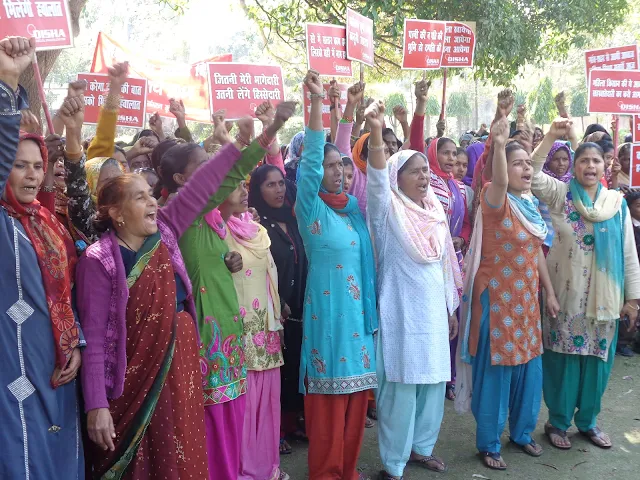
Recent proposals, including constitutional amendments to provide 33% reservation for women in state and central legislatures, have sparked wide discussion. In this context, it is important to examine the experiences of women leaders in rural decentralization, where reservations have existed for decades. Many women elected to village councils (panchayats) have set inspiring examples of leadership, particularly those who rose from poor families and marginalized communities. Their achievements remain significant even today.
People were astonished when Radhika from Chandan Panchayat (then part of Raipur district) was elected sarpanch. Coming from a family of former bonded laborers recently freed by Supreme Court orders, she disrupted entrenched social hierarchies. With support from an organization of released bonded workers, Radhikabai implemented development works such as deepening tanks and constructing a school building. Villagers, especially from weaker sections, testified to her contributions. She also advanced claims for land distribution recommended by the Supreme Court. Yet, she considered her greatest achievement the closure of a liquor shop, which reduced alcohol consumption and village quarrels.
In Meethiberi Panchayat (Dehradun district), Radhadevi overcame resistance from influential villagers who attempted to buy votes with liquor and money. She won her first election when the seat was reserved for women, and later secured victory even without reservation. During her two terms as pradhan, she accelerated development works, fought successfully to restore a diverted road, and ensured benefits reached needy families. Villagers praised her compassion, with child widow Ramrati Yadav noting, “She is the only person in the village who visits me regularly.” The village demonstrated confidence in women’s leadership by electing women to six of seven panchayat posts, resulting in improved development and social harmony.
In the Patha region of Chitrakut district, Uttar Pradesh, Sonia Kol’s tenure as pradhan of Nihi village was transformative. Belonging to the marginalized Kol tribal community, she ensured benefits of housing schemes, pensions, food security cards, and scholarships reached the poorest families. She enforced land rights for landless households despite opposition from powerful villagers. Her leadership inspired women in neighboring villages to field strong candidates in subsequent elections.
In Sultanpur Chilkana (Saharanpur district), Suraiya Begum and Rajjo formed a remarkable team. Suraiya, from a traditional Muslim family, and Rajjo, a Dalit from a cobbler’s household, worked together with social activists to revitalize their indebted nagar panchayat. Their efforts won recognition as a model nagar panchayat.
These examples highlight the transformative potential of women’s reservation in panchayati raj institutions since 1993, which enabled the election of nearly one million women at village, block, and district levels. While leaders like Radhikabai, Radhadevi, Sonia Kol, Suraiya Begum, and Rajjo demonstrated exceptional capability, many women pradhans remain sidelined by “pati pradhan” practices, where husbands or male relatives dominate decision-making. Sonia Kol observed, “At block meetings, I often see men attending in place of elected women. With some support, these women could play an effective role, but family pressures hold them back.”
To strengthen women’s participation, stricter enforcement of rules ensuring their active involvement is essential. Training programs can equip newly elected women with knowledge of rights and responsibilities. Voluntary organizations and grassroots movements have also played a crucial role, as seen in Radhikabai’s collaboration with bonded laborers’ groups and Sonia’s association with the newspaper Khabar Lahariya.
Women leaders often prioritize issues overlooked by men, such as closing liquor shops, resolving conflicts amicably, supporting distressed families, and addressing sanitation needs. Their focus on nutrition, health, drinking water, and environmental protection underscores the broader social impact of women’s leadership in panchayats. Moreover, their visibility encourages ordinary village women to mobilize before elections, ensuring strong candidates emerge from within their communities.
These stories illustrate how women’s participation in rural governance not only advances development but also reshapes priorities, strengthens social harmony, and empowers marginalized voices.
The writer is Honorary Convener, Campaign to Save Earth Now. His recent books include Protecting Earth for Children, Planet in Peril, Man over Machine, and When the Two Streams Met
Courtesy: CounterView