
Lenin in his seminal work State and Revolution (1917) unequivocally stated:
“What is now happening to Marx’s theory has, in the course of history, happened repeatedly to the theories of revolutionary thinkers and leaders of oppressed classes fighting for emancipation. During the lifetime of great revolutionaries, the oppressing classes constantly hounded them, received their theories with the most savage malice, the most furious hatred and the most unscrupulous campaigns of lies and slander. After their death, attempts are made to convert them into harmless icons, to canonize them, so to say, and to hallow their names to a certain extent for the ‘consolation’ of the oppressed classes and with the object of duping the latter, while at the same time robbing the revolutionary theory of its substance, blunting its revolutionary edge and vulgarizing it.”
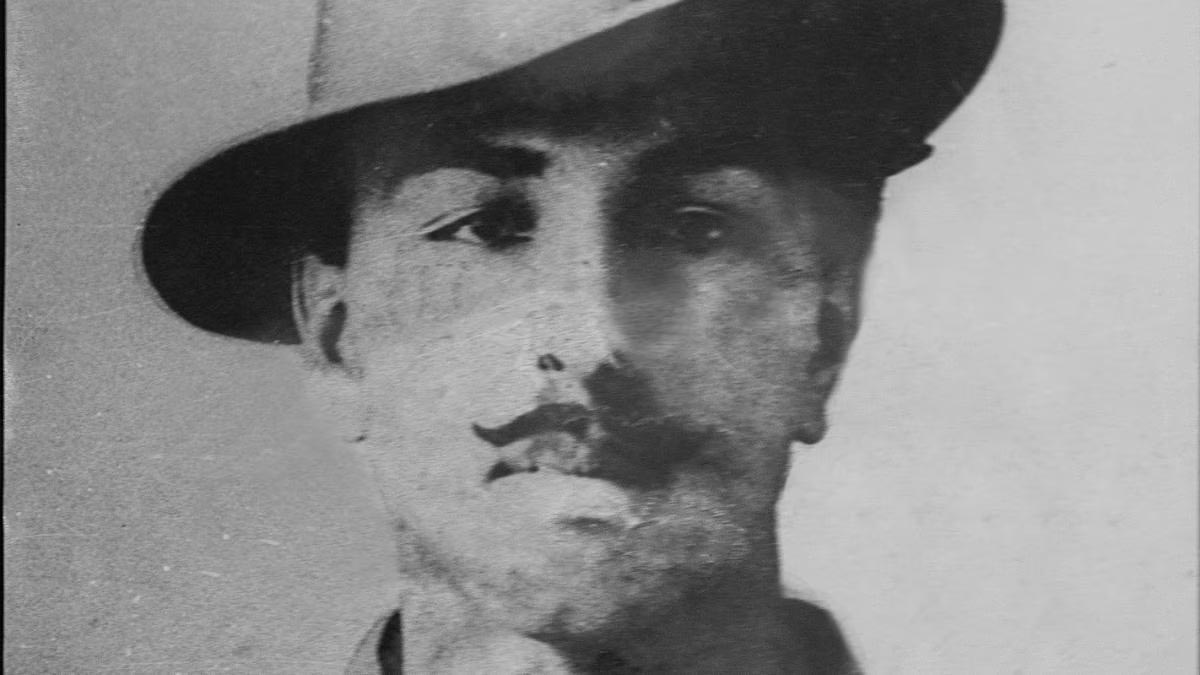
Lenin stated this fact in context of Marxism but this has a universal connotation. Such whittling down has been common to the ideas, contribution and sacrifices of Indian revolutionary Bhagat Singh. The latest contributor to this venture is a self-acclaimed liberal, Bhagwan Josh. He contributed an article, ‘Why Bhagat Singh was not a Marxist thinker’ (The Tribune, March 23, 2026).[1] He ended his derogatory piece with the words: “The fact remains that Bhagat Singh was hanged not for his revolutionary ideas but for committing a murder of a British officer.” It is notable that The Tribune chose to publish it on the 95th anniversary of the martyrdom of Bhagat Singh and his comrades, Rajguru and Sukhdev. This act also reveals what has happened to even a publication, which had previously remained supportive of the revolutionaries when they were alive.
Bhagwan Josh, not confident of his current take on Bhagat Singh, goes hunting for names like Antonio Gramsci, Bipin Chandra and Harish Puri to add weight to his diatribe. Gramsci and Bipin Chandra are not alive to clarify but Professor Harish Puri needs to share with his fans like me whether he too believes that Bhagat Singh was not a revolutionary. Thanks to Harish Jain who responded by penning ‘Why Bhagat Singh defies easy labels’ (The Tribune, March 26, 2026) in which Bhagwan Josh in one of his earlier Punjabi works, (Bhagat Singh da Markasvad) located “Bhagat Singh within the distinct Leninist current that was emerging in Punjab between 1928 and 1931 an intellectual formation grounded in study, debate and ideological seriousness and set apart from what he saw as the more pragmatic and often anti-intellectual strands within Indian communism”.[2]
A serious problem with armchair Professors is that they live in ivory towers but believe that they and only they are authorised to explain ground realities. Bhagat Singh was not a thinker because he was unable to produce in his writings, “the perfunctory references to the sources or books from which these notes and quotes were taken have left a rather perplexing question mark with regard to the authentic source. That is, from which editions of which books, by which particular authors, were these taken?” They do not know that Bhagat Singh was not a doctoral candidate in some university but chose to work to liberate his motherland from the colonial subjugation. According to British official documents, he was in jail for 716 days, consulted/read approximately 302 books and was well versed in English, Urdu, Hindi, and Punjabi. When he was not in jail, he was both a researcher and a journalist. He followed the Gramscian dictum (without reading him) that “It is necessary to think and study even under the most difficult conditions…to keep the risk of intellectual degradation at bay”.
Bhagat Singh was not reading books for the purposes of writing a doctoral proposal for enrolling at Oxford or Cambridge but for understanding the world and India so that he could challenge the mightiest imperial power and replace it with a system in India where ‘men do not exploit men’. This is what a thinker does. I am sure if Bhagat Singh had met Professors like Bhagwan Josh there would have been no need commemorating his Martyrdom Day, he would have retired as a teacher-receiving pension from the British masters!
Bhagwan Josh makes another problematic claim: “But what sort of Marxism did Bhagat Singh imbibe from his readings? Did this Marxism help him in any way to get some insight into the contemporary politics of Indian nationalism, working class movements and the immediate historical social reality around him? A mastery of Marxism that is merely an exercise in the appropriation of textual discourse must remain a ‘Brahmanical Marxism’…”
This from a Professor who — we are told, has taught at Jawaharlal Nehru University (JNU)! Can such an armed academic be so ignorant of the written word, so oblivious of facts available in the public domain? This does not bode well for future of JNU. Bhagat Singh who died at the age of 23 years, authored the following major documents, Universal Love (Hindi 1924), Youth (Hindi 1925), Religious Riots and their Solution (Punjabi 1927), Religion and our Freedom Struggle (Punjabi 1928), The Issue of Untouchability (Punjabi 1928), Satyagrah and Strikes (Punjabi 1928), Students and Politics (Punjabi 1928), New leaders and their Duties (Punjabi 1928), Lala Lajpat Rai and the Youth (Punjabi 1928), What is Anarchism part 1, 2, 3 (Punjabi 1928), The Revolutionary Nihilist of Russia (Punjabi 1928), Ideal of Indian Revolution (English 1930), Why I am an Atheist (English 1930), The First Rise of Punjab in the Freedom Struggle (Urdu 1931), Introduction to Dreamland (English 1931), and Young Political Workers (English 1931).
The Manifesto of the Naujawan Bharat Sabha and the Manifesto of Hindustan Socialist Republican Army were written by Bhagwati Charan Vohra and finalised after consultation with Bhagat Singh.
Shame on those who call this ‘Brahmanical Marxism’. Bhagat Singh developed Marxism in the context of Indian realities. Marx said that future generations would come and prove us wrong; this is how Marxism as a science survives.
Bhagwan Josh also declares the Ghadar movement as a failed movement and declares that Bhagat singh “instead of learning a lesson from its tragic failure, he blindly followed the example of the Ghadarites”. This sweeping conclusion reveals on whose side Professor the worthy stands while evaluating two among the greatest milestones in the glorious anti-colonial history of Indian freedom struggle in the 20th century. Failure does not mean that any resistance was faulty or not required. To hail the victor is, in fact, a typical Brahmanical characteristic. Bhagwan must be glad to know that he is not alone in holding such a debased idea. The most prominent ideologue of RSS, MS Golwalkar while denigrating the tradition of martyrdom had similarly, brazenly stated:
“There is no doubt that such man who embrace martyrdom are great heroes and their philosophy too is pre-eminently manly. They are far above the average men who meekly submit to fate and remain in fear and inaction. All the same, such persons are not held up as ideals in our society. We have not looked upon their martyrdom as the highest point of greatness to which men should aspire. For, after all, they failed in achieving their ideal, and failure implies some fatal flaw in them.” [‘Martyr, great but not ideal’, Bunch of Thoughts, the collection of writings of MS Golwalkar.]
Last but not the least, Bhagwan Josh indulges in peddling another falsehood when states that 1857 Mutiny (which in fact was a nation-wide liberation war which continued for more than 3 years), was defeated by British forces and Sikh troops. There are abundant contemporary documents which conclusively prove that Punjab and Sikhs played significant role in 1857 liberation war. These were not only Sikh ruling families in Punjab who supported the British but also well-known rich families amongst Hindus and Muslims who joined the British campaign against the 1857 rebellion. This reality was no different from the rest of India, where rulers of Gwalior, Hyderabad, Jaipur, Jodhpur, Kota, Bhopal, Dhar and many more native states joined hands with the British in crushing the great War of Independence.
If Bhagat Singh is simply a murderer, Professor Bhagwan Josh why do you bother with him? The fact is that he with his comrades continue to be synonymous with Indian revolution, and this troubles those intellectually subservient to imperialism who then come forth to denigrate them.
Marxism survives as so will Bhagat Singh’s heritage.
March 27, 2026
Disclaimer: The views expressed here are the author’s personal views, and do not necessarily represent the views of Sabrangindia.
[1] https://www.tribuneindia.com/news/comment/why-bhagat-singh-was-not-a-marxist-thinker/
[2] https://www.tribuneindia.com/news/comment/why-bhagat-singh-defies-easy-labels/
Related:
Denigration of martyrs like Bhagat Singh, Rajguru, Sukhdev – a peep into RSS archives
78th Martyrdom Anniversary of Gandhi & Identity of his Assassins: Sardar Patel
November 26: How RSS mourned the passage of India’s Constitution by the Constituent Assembly