
March 17, 2026
Press Statement by Indian Muslims for Secular Democracy (IMSD)
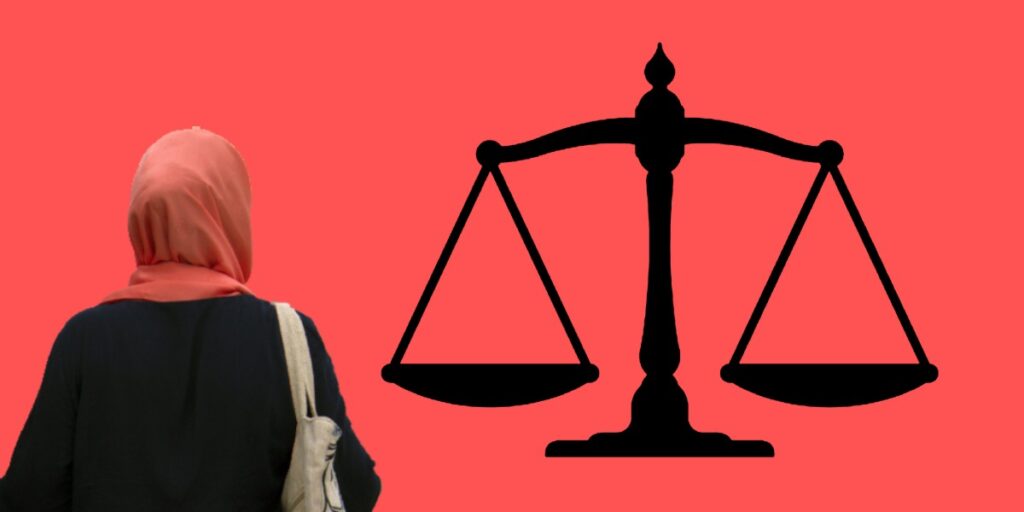
Indian Muslims for Secular Democracy (IMSD) wholeheartedly welcomes the recent observations made by the Supreme Court of India during the hearing of a petition filed by Poulomi P. Shukla. Argued by senior advocate Prashant Bhushan, the case seeks to rectify the long-standing disparity in inheritance rights for Muslim women—a move IMSD views as a vital step toward fulfilling the democratic promise of the Indian Constitution.
The Supreme Court Raises the Question of Gender Justice
A three-judge bench, led by Chief Justice Surya Kant and including Justices Joymalya Bagchi and R. Mahadevan, observed that a Uniform Civil Code (UCC) may be the “most effective answer” to removing gender bias in laws governing marriage, succession, and property rights. This observation came while examining a plea challenging the Muslim Personal Law (Shariat) Application Act, 1937, which the petitioners argue forces unequal inheritance outcomes for women compared to their male counterparts.
A Constitutional Challenge to Discriminatory Laws
Appearing for the petitioner, Adv. Prashant Bhushan argued that the inferior inheritance rights granted to women under the 1937 Act are a direct violation of constitutional guarantees. He emphasized that inheritance is fundamentally a civil and property right; therefore, it cannot be insulated from constitutional scrutiny by invoking religious freedom.
Addressing the Court’s concern that striking down discriminatory portions of the Shariat Act might create a “legal vacuum,” Bhushan proposed a pragmatic and immediate remedy: including Muslim women under the ambit of the Indian Succession Act, 1925. This would provide a robust, existing legal framework to ensure parity without leaving women in a state of legal uncertainty.
Gender Bias: A Problem Beyond One Community
Crucially, the Hon’ble Bench noted that gender discrimination in inheritance is not confined to Muslim personal law alone. The Court observed that inequalities persist within the structure of Hindu Undivided Families (HUFs) and various customary or tribal practices. As highlighted in various reports, inheritance rights remain skewed in Hindu law as well, indicating that the struggle for property rights is a cross-community challenge.
The Constitutional Framework: Equality and Dignity
IMSD believes the core of this petition is rooted in Constitutional Morality. The Constitution of India clearly guarantees:
* Article 14: Equality before the law and equal protection of the laws.
* Article 15: Prohibition of discrimination on grounds including religion and sex.
* Article 21: Protection of life, dignity, and personal liberty.
These guarantees must apply fully to Muslim women as equal citizens. While Islamic jurisprudence recognized women’s property rights over fourteen centuries ago, contemporary patriarchal interpretations and social pressures often compel women to relinquish their rightful shares.
Moving Toward Reform
IMSD reiterates that the debate on the UCC has often been politicized by forces seeking to target minority communities. However, gender justice cannot be postponed indefinitely due to identity politics or communal polarization. True reform must be a collaborative effort involving women’s organizations, legal scholars, and minority voices to ensure it is rooted in justice rather than stigmatization.
The Muslim community leadership must also reflect on its historical resistance to reform. This reluctance has often denied justice to women and strengthened communal narratives.
Conclusion: A Call for Constitutional Justice
IMSD supports the ongoing Supreme Court proceedings and calls for a resolution that guarantees equal inheritance rights for Muslim women across India. We advocate for a solution that addresses gender discrimination in all personal laws, ensuring that women from all communities are treated as equal citizens entitled to dignity and justice under the law.
List of Signatories
* Adv. A. J. Jawad – IMSD, Chennai
* Amir Rizvi – Designer, IMSD, Mumbai
* Arshad Alam – Veteran Journalist, IMSD, Delhi
* Askari Zaidi – IMSD, Mumbai
* Bilal Khan – IMSD, Mumbai
* Feroze Mithiborwala, IMSD Co-Convener, Mumbai
* Guddi S. L. – Hum Bharat Ke Log, Mumbai
* Hasina Khan – Bebaak Collective, Navi Mumbai
* Irfan Engineer – CSSS, Mumbai
* Javed Anand, Convener, IMSD, Mumbai
* Jeibunnisa Reyaz – Bharatiya Muslim Mahila Andolan, BMMA, Madurai
* Khatoon Sheikh – BMMA, Mumbai
* Adv. Lara Jesani – IMSD, Mumbai
* Mariya Salim – BMMA, New Delhi
* Nasreen M – BMMA, Karnataka
* Nasreen Rangoonwala – IMSD, Mumbai
* Nishat Hussain – BMMA, Jaipur
* Niyazmin Daiya – BMMA, Delhi
* Noorjehan Safiya Niyaz – BMMA, Mumbai
* Prof. Nasreen Fazalbhoy – IMSD, Mumbai
* Rahima Khatun – BMMA, Kolkata
* Salim Sabuwala – IMSD, Mumbai
* Prof. Sandeep Pandey – Magsaysay Awardee, Lucknow
* Sandhya Gokhale – Forum Against Oppression of Women, Mumbai
* Shabana Dean – IMSD, Pune
* Shafaq Khan – Theater Personality, IMSD, Mumbai
* Shalini Dhawan – Designer, IMSD, Mumbai
* Shama Zaidi – Scriptwriter, IMSD, Mumbai
* Shamsuddin Tamboli – Muslim Satyashodak Mandal
* Prof. Sujata Gothoskar – Forum Against Oppression of Women, Mumbai
* Sultan Shahin – Editor, New Age Islam, Delhi
* Dr. Sunilam – Farmer Leader, Gwalior
* Dr. Suresh Khairnar – Former President, Rashtriya Sewa Dal, Nagpur
* Yashodhan Paranjpe – IMSD, Social Activist, Mumbai
* Zakia Soman – BMMA, New Delhi
* Zeenat Shaukat Ali – Wisdom Foundation