
The National Food Security Act, 2013 (NFSA) was a landmark commitment by the government to food security as a Constitutional right. With the Covid-19 pandemic, gaps have been laid bare within the entitlements under the NFSA as also their implementation, specifically in the state of Karnataka. This commentary draws on field observations to critique the narrow focus on the law on a bare minimum cereal security rather than nutrition security that is diverse and sensitive to local cultures.
There were already several issues in implementation which were aggravated by the lockdown. This paper hopes to influence policy decision on the scope as well as the implementation of the Act to facilitate improvement of crucial nutritional indicators.
Constitutional and Jurisprudential Foundations
The National Food Security Act (NFSA -2013) [4] was the outcome of the landmark case of People’s Union for Civil Liberties (PUCL) vs Union of India [5] and others, when the Supreme court recognised that Right to food is not a charity, but deeply linked with the Right to life. In an interim order (2003), States were advised to regard the raising of level of nutrition, standard of living and improvement of public health as a primary duty, with commitments to the Public Distribution System (PDS), the Mid-day meal Scheme (MDMS) and the Integrated Child Development Scheme (ICDS) [6]. Food security largely meant food grains, a hot meal, or take-home rations (THR) as prescribed by the Central government.
The PUCL litigation represents one of the most significant examples of judicial activism in socio-economic rights jurisprudence. In the case the Court has expanded the interpretation of the right to life to include the right to live with human dignity created constitutional obligations enforceable against the state. The food security law was intended to codify these judicial directives and create statutory remedies beyond constitutional litigation.[7]
Food security is a necessary but not sufficient condition for nutrition security especially if adequate individual household nutrition needs are to be ensured. In making this distinction, the Food and Agriculture Organisation has referred to India’s focus on grains, compared to Northern Laos where education, social status of women and efforts to mitigate negative effects of food insecurity, poverty, remoteness of household, access to markets/social services, water and sanitation are all addressed as part of a multi-factorial approach to addressing malnutrition [8,9].
The Enforcement Gap: Law in Text vs Law in Practice
A central concern emerging from field observations is the persistent “enforcement gap.” While the NFSA provides for grievance redressal mechanisms, including District Grievance Redressal Officers and State Food Commissions, these institutions remain largely ineffective and literally shut down during the pandemic. The inaction of State Food Commissions, particularly their failure to exercise suo motu powers in the face of systemic violations, reflects deeper institutional weaknesses. The result is a legal framework that appears robust on paper but lacks meaningful accountability.
Beneficiaries rarely access formal complaint mechanisms, and compensatory provisions such as the food security allowance under Section 8 are virtually non-existent in practice. This failure undermines the justiciability of rights under the Act and renders statutory guarantees illusory.
Scheme-Level Failures and Legal Implications
Public Distribution System (PDS)
As prescribed by the Act, PDS shops are to remain open on all days of the week except one, which would be decided based on the area or district. In most of the areas visited in Vijayapura, the shops were open only for 2-3 days a month and even this was not a fixed day. Once the supplies arrive, the PDS owner opens the shop and people inform each other -“The day we are unable to get rations, we just survive with water and whatever rations are left.” said a woman, who had faced shortage of dry rations in her house. Another woman in Vijayapura said – “We prefer wheat because the rice is of poor quality and we also don’t want to change what we traditionally eat.”
The community in general believes that corruption amongst ration shop owners existed earlier but this has drastically reduced. In Rambapur village, women complained about spending a huge amount of their income in buying rations other than rice, wheat or maize and on fuel. They should be provided with spices, oil, mustard seeds, ghee, milk, vegetables, jaggery, salt, sugar and salt in the PDS or at subsidised costs – “if ghee, butter, eggs and milk or milk powder and dairy products like curd cost less, we will definitely buy them and this would help us improve the quality of food we eat’.
The irregular functioning of PDS outlets, limited availability of food grains, and exclusion of essential non-cereal items highlight a fundamental limitation of the NFSA framework. The Act’s focus on cereals neglects dietary diversity, thereby failing to meet nutritional needs. From a legal standpoint, this raises questions about whether the State is meeting its constitutional obligation to ensure not merely survival, but a dignified standard of living.
Integrated Child Development Services (ICDS)
As per the Act, pregnant women and lactating mothers are entitled to meals, free of charge, which should meet the nutritional standards specified under Schedule II as well as maternity benefits of not less than Rs. 6000 in instalments as prescribed by the Central Government to compensate for wage loss. Children between 6 months and 6 years must be provided with an appropriate meal, free of charge, through the local anganwadis as per nutritional standards under Schedule II. Malnourished children are entitled to additional supplement and if this is not possible, food security allowance has to be paid. Safe drinking water, cooking facilities and sanitation in anganwadis should also be ensured.
It was observed that the food received by pregnant and lactating women was not nutritious or sufficient –
“Food should be provided for at least one year after delivery instead of six months so that we get back our strength, then we will be able to take better care of our children. This food does not fill our stomachs. The same amount given to children in anganwadis is given to us also. There is no variety in the food and the same food is given every day.” Pregnant woman, Bengaluru. Another pregnant woman said that no vegetables are added to the sambar and that even cows won’t eat the food given. During the lockdown, dry rations were supplied in many places to children as well as the enrolled women instead of cooked food. Pregnant and lactating women are supposed to receive eggs every day from the anganwadi. A few women have complained that they receive eggs only 2-3 times a week.
Anganwadi workers have complained that they neither receive funds nor salaries on time and that this is the reason they cannot have variety in the food – “We spend out of our own pockets and we don’t even know if we will get reimbursed. Why can’t this be done properly?”
The key points arising after speaking with mothers about the four anganwadis in the village Sanjay Gandhinagar were the lack of facilities – “We don’t have any extra expectations from the government. We just want them to give us what they are supposed to. If they have to give food, let them give proper food.”
The ICDS scheme illustrates a breakdown in statutory compliance. Nutritional standards prescribed under Schedule II are frequently unmet, and beneficiaries—particularly pregnant and lactating women—receive inadequate and monotonous food. Delays in honoraria for anganwadi workers further impair service delivery, suggesting a systemic failure to operationalise statutory entitlements. The absence of accountability mechanisms exacerbates these deficiencies.
Mid-Day Meal Scheme (MDMS)
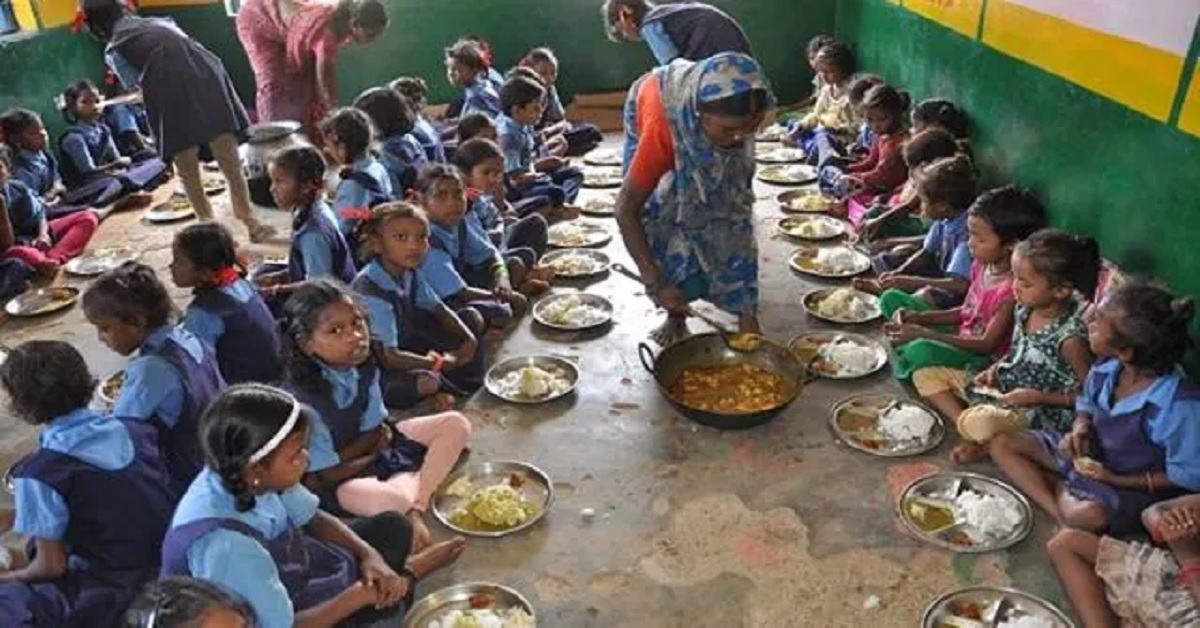
As per the Act, all schools should have facilities for cooking meals with some exceptions for urban schools. 40% of the schools visited received food from a centralised kitchen, while the rest cooked at the school premises. In all the schools visited, only the bare minimum was being provided and there was hardly any attention on giving the children diverse or nutrient dense foods. What was surprising was that there was no expectation other than the bare minimum by the parents and children alike. –“My son is provided with rice and sambar every day, this is more than enough. He will adjust with whatever is given. I do not have anything more to demand as long as my child is fed” At the time of visits, eggs were to be provided on two days of the week, but this was not being implemented in schools at Bangalore and Anekal which received MDM from Akshaya Patra foundation. The foundation does not provide eggs nor does it include onions and garlic in its meal [11,12,13,14]
When prompted, there were suggestions to add foods, more for variety than nutrition – fruits, vegetables, idli, chapathis, dosa, poori, chicken, ragi mudde, meat etc. A majority felt that inclusion of eggs was a good idea, but did not feel that meat should be included, more out of concern for the sentiments of the vegetarians rather than their own preferences.
Students complained that the food was not prepared in a hygienic manner and this was also observed during the school visits, with stones, hair, dirt etc. being visible.
Two of the school principals felt that the food was not of good quality and that more effort should be put into improving the nutrition, while three others felt that food was nutritious because vegetables were being used. Some felt that the addition of eggs in the MDM would improve the nutrition content.
One of the schools visited in Bangalore was an Urdu school where most of the students were all from the Muslim community. The MDM was provided by a centralised kitchen, Akshaya patra about which several concerns had already been raised by activists, the Joint director, MDMS and the State Food Commission [15].
The principal of a government Urdu school in Bengaluru urban was unhappy with the food provided by Akshaya patra as she felt it was neither nutritious nor what children were culturally used to eating at home. She was constantly interrupted by a non-Muslim teacher – “The food is good. Eggs should not be provided in Mid-day meals. Children should eat whatever is provided and it is difficult for schools to prepare meals. We don’t want any change and we are happy with the food that is being provided by Akshaya patra”
In the absence of established standards of what a good MDM is, it was difficult to elicit responses from the school, parents and children about what they would want, and this is partly because the expectation itself is so low. Further, teachers see the MDM as an added burden – “Having school kitchens is difficult because we find it difficult to find cooks. If they take leave, we struggle to find replacements. Also, the budget is not released on time sometimes, then we have to pay from our own pocket, but overall children eat better when food is prepared in the school and not by a centralised kitchen. Even teachers eat the food if it is cooked in the school.”
Under the State sponsored Ksheera Bhagya scheme, powdered milk is supposed to be reconstituted at the school at 10 am and given to children immediately. This was being done in school-based kitchens, but not by centralised kitchens in spite of being instructed to do so [16]. Already reconstituted milk was delivered by Akshaya patra at 7 am, and children could consume this only at 10 am.
The NFSA also prescribes safe drinking water and sanitation. In the schools visited, most often the drinking water did not meet the standards. In rural schools, the primary water sources were mini tanks and these were not maintained properly. A few mini tanks had worms, leaves and mud.
In one school, the water was cloudy and had particles in it but was being used to wash plates and for cooking. In 20% of the schools visited, there was no provision at all for drinking water. Some children went home to drink water, some carried water and some didn’t drink water while they were in school.
Most often, the school management said that there were no issues with the toilets, but about 30 % had no toilets and those schools which had toilets did not have running water. Several schools had poorly maintained toilets – “We go back home whenever we want to use the toilets,” said Ramya, a student of class 5. Very often the toilets are not fully closed making privacy difficult. This is of concern for the girl students who struggle during periods.
The positive features of the MDM in Karnataka are the provision of milk as part of the Ksheera bhagya scheme, which increases food diversity although reconstitution of the powder should be done just before serving children. Karnataka has included children of Class IX and X in the MDM through state budget. MDM has also been provided since 2016 in drought prone areas even during the summer holidays. The government is also providing region specific grains to suit the palatability of the local area.
Issues faced by Intra-State migrant community Kacherganahalli
Around 300 families that migrated from Bellary to Bengaluru urban live in Kacharakanahalli which is an urban deprived area. Six mothers and two pregnant women were interviewed in depth. All the families had Below Poverty Line (BPL) cards, but could not avail benefits under the NFSA because their elderly families and children depended on the rations from the PDS. When they visited their villages, they sometimes brought back rations. Most of them were daily wage workers and had been really hit during the Covid pandemic.
One of the pregnant women said that she had not received any financial or health support, had not heard of the mathrupoorna scheme[1] and had not been asked to go and eat a meal at the anganwadi during her pregnancy. Another woman who had delivered 6 months said the same. During her pregnancy, she was unsure of where she was registered and what facilities she was eligible for. She had another three-year-old child and neither children had been enrolled in the anganwadi. She had received Take Home Rations (THR) on a few occasions and this was usually rice and some dal. Her children had not been weighed and eggs had not been given even to those eligible to receive – “I am not sure where my name is registered. One lady came and took down my details but when I asked for the money that was due for us, she said that I have to go to my village. In my village, they said that I am living in the city so I cannot expect all those things. I go to a small clinic nearby for my checkup. I pay for my medicines. I am not sure where to go for my delivery. They make us run around for each and everything and I don’t get proper information of where I should go.”
Nutrition Security as a Constitutional Imperative
The NFSA represents a significant legal milestone in recognising food as a right. However, its current implementation reflects a regression from a rights-based framework to a minimal survival model. A shift towards a legally enforceable right to nutrition is not merely desirable—it is constitutionally imperative.
Empirical indicators from Karnataka, including high levels of anaemia, child malnutrition, and dietary deficiencies, demonstrate that the NFSA has not achieved its intended outcomes. This failure necessitates a reorientation of the legal framework from calorie-based entitlements to nutrition-sensitive interventions.
To fulfil its constitutional promise, the Act must evolve to address nutritional adequacy, institutional accountability, and social inclusion. Without such reforms, the right to food risks being reduced to a hollow entitlement, disconnected from the lived realities of those it seeks to protect.
The distinction between food security and nutrition security is not merely semantic—it has constitutional significance. The right to life under Article 21 encompasses the right to health and dignity, which necessarily includes access to adequate nutrition.
Interventions required in Karnataka
The architects of the NFSA included a layered grievance redressal mechanism District Grievance Redressal Officers [17], State Food Commissions empowered as civil courts [18], and a compensatory food security allowance [19] to ensure accountability. Formal complaint systems are mostly unavailable. This chasm between the letter of the law and its realization on the ground constitutes a classic “enforcement gap.” The State Food Commission’s failure to exercise its suo moto jurisdiction to address the widespread irregularities suggests that the institutional safeguards enshrined in the Act are not merely underperforming but are structurally ineffective in their current form.
The NFSA in spite of being implemented over the last several years, has not been able to adequately improve nutritional indicators. Going by data from the National Family Health Survey (NFHS-5) [12] and Comprehensive National Nutrition Survey (CNNS 2018-19) [20], the population of Karnataka below age 15 years is 23%.
The infant mortality rate (IMR) [2] is 26% and Under-five mortality rate (U5MR) [3] is 30% in Karnataka. 40% each of boys and girls age 2-4 years attend preschool and this would have dropped even further, thus missing educational and nutritional support. [20, 21] The reason for poor attendance has to be explored and addressed as children start off life with a disadvantage.
Poorly nourished mothers are also likely to have poorly nourished babies. The prevalence of anaemia is 66% in children age 6- 59 months, 48% in non-pregnant women and 46% in pregnant women, particularly high among rural women and scheduled caste women.
Only 4% of children in the age group 6-23 months in Karnataka have received a minimum acceptable diet, 18% children have minimum dietary diversity, 32% have minimum meal frequency and only 9% children consume iron rich foods. Among children aged 2-4 years in Karnataka, only 22% children aged 2-4 years had consumed flesh foods in the previous 24 hours compared to 69% in Kerala. 57% children had consumed dairy and 19% had consumed eggs. Among children in the age group 5-9 years, 96% had consumed cereal and 84% had consumed milk or curd in Karnataka and that is probably because of the ksheera Bhagya scheme. Among children aged 10 – 19 years, 46% have Vitamin B12 deficiency and 70% have folate deficiency, more in Schedule caste, Scheduled tribe and Other Backward Class (OBC). Children < 5 who are stunted is 35% underweight is 33%…and all this even prior to the pandemic!!
The NFSA has served an important purpose of ensuring food security and was expected to mark a paradigm shift in the approach to food security from welfare to a rights-based approach. Given the current situation, the scope of the Act has to move beyond a sustenance mode to improving nutritional indicators. Unfortunately, the law has been reduced to right to survival (with the cheapest minimum) rather than to a life free of nutritional deficiencies and ill-health. The Right to good quality and quantity of nutrition should be the premise of interventions and policy decisions and not just the right to food. Providing primarily cereals and millets under the Act is inadequate and diversity is crucial.
There is a need for inclusion of nutrient dense foods of animal origin like dairy, meat, poultry and eggs in the regular diet through social security schemes and subsidised costs. The introduction of the ksheera bhagya scheme in the government anganwadis and mid-day meals is a huge step forward in the right direction. Many of the women also suggested that subsidised fresh or powdered milk and eggs should be part of the PDS.
It is important to track beneficiaries who have not been given monetary compensation under various schemes under the Act. Women who deliver, need financial, nutritional and health support. The amount given may require revision and the system should be strengthened to ensure that all women receive the financial support needed during the period of pregnancy and post-delivery. The targeted approach by the NFSA can potentially leave the most vulnerable out of the social safety net. The introduction of the Aadhar and biometric systems further excluded vulnerable communities. The Act should be universally applicable rather than targeted.
The exceptional provision for centralized kitchens in urban areas has become a norm and is even being pushed in the rural areas. The law has to be implemented in spirit and mechanisms introduced to ensure that the law is not manipulated to suit corporate or commercial interests. Children, parents and teachers have said that the food provided under the NFSA particularly the MDM by NGOs was often limited in variety and that this reduced the consumption of food. It is important that children enjoy their foods and get to taste different varieties rather than one homogenous menu. There is a need to actively engage parents and older students in planning the menu. This also needs to have a cultural context. – There should be diversity with food from different food groups – pulses/legumes, cereals/millets, fats and oils, vegetables, dairy and milk, meat/fish/eggs.
The School Development and Management Committee (SDMC) should be actively involved in managing the food supplies, monitoring the hygiene, provision of safe water, taste and quality of the food. They should also actively involve older children in ensuring quality of the MDM. Hygiene has to be maintained in preparation of food in the MDM and ICDS by allocating resources for someone to clean the rice, dal and vegetables; storage facilities have to be improved so that the ingredients are protected from moisture, rodents, flies, cockroaches etc.; preparation and serving the food should be done in hygienic manner; staff need regular training in how to hygienically handle food. This includes thorough washing of hands in soap and water before handling or serving food and after using the toilets; food testing should be done to check for biological and chemical contamination; toxic substances should not be stored near the food items; adequate supply of clean and safe drinking water is important to ensure that there is no compromise of hygiene while preparing the MDM.
UNICEF’s recommendations of diverse foods have to be implemented urgently and made available as part of the right to nutrition which is closely linked to the Right to Life as enshrined in the Constitution. Many of the nutritional indicators in Karnataka are of concern and most of these can be improved by strengthening the NFSA to move beyond cereals to subsidized foods from a variety of food groups.
From a legislative standpoint, targeted amendments to the National Food Security Act26, are imperative to address the structural deficiencies identified in this study. First, Section 4(2) of the Act should be amended to expand the scope of statutory entitlements beyond cereals to explicitly include diverse food groups such as pulses, edible oils, vegetables, and protein-rich sources like eggs and milk. Such an amendment would affect a crucial paradigm shift from a narrow “food security” model, focused primarily on caloric adequacy, to a more comprehensive “nutrition security” framework aligned with both contemporary nutritional science and the constitutional mandate of a dignified existence under Article 21. Second, the enforcement architecture of the Act requires substantial fortification. Section 16 should be strengthened to empower State Food Commissions with the explicit authority to impose administrative penalties for non-compliance. Additionally, to render the grievance redressal mechanism efficacious, the Act should mandate that complaints be resolved within a stipulated period of thirty days, with the failure to do so resulting in the automatic accrual of the right to a food security allowance under Section 830, thereby eliminating procedural delays that currently render the remedy illusory.
Further legal reforms must address the evolving landscape of service delivery and the rights of marginalized populations. Given the increasing delegation of statutory functions to private entities, particularly in the operation of centralized kitchens under the Mid-Day Meal Scheme, the Act should be amended to introduce specific accountability mechanisms. These include mandatory public disclosure of nutritional audits, independent third-party evaluations, and codified standards ensuring that meals are culturally appropriate for the communities they serve. Equally critical is the need to amend the Act to provide for the legal portability of entitlements for inter-state migrant workers, a vulnerable demographic systematically excluded from the social safety net. Drawing upon the principles affirmed by the Supreme Court in National Campaign for Dignity and Rights of Sewerage and Allied Workers case held that such an amendment would mandate a centralized, interoperable system to ensure that migrant families can access their entitled rations at their place of work.
(The author, a lawyer is also Director, St Joseph’s College of Law (SJCL), Bengaluru;the article is based on a study conducted by students of St Joseph’s Law College)
Note:
Acknowledgements to Dr. Sylvia Karpagam for supporting the design and analysis of the study, the Principal of SJCL Pauline Priya, students of law college Vimala Mary, Reethu Anthony and Kritika Jain, staff of Centre for Non-Formal Education (CNFE), Vijayapura, Ananya Children’s Trust, Lingarajpuram, Bengaluru and Centre for Integral Rural Welfare (CIRF), Anekal.
References
[1] The National Food Security Act, 2013 No. 20 of 2013
[2] Thankachan P, Selvam S, Narendra AR, Mishra HN, Sachdev HS, Thomas T, et al. There should always be a free lunch: the impact of COVID-19 lockdown suspension of the mid-day meal on nutriture of primary school children in Karnataka, India. BMJ Nutrition, Prevention & Health. 2022;:e000358. https://doi.org/10.1136/bmjnph-2021-000358
[3] Pinglay-Plumber P. Preschools, daycares disappear into COVID gap; Govt indifferent. Citizen matters. 2021 September 31. https://citizenmatters.in/bengalurus-preschools-daycares-disappear-covid-gap-government-uncaring/
[3] People’s Union for Civil Liberties v. Union of India & Ors, In the Supreme Court of India, Civil Original Jurisdiction, Writ Petition (Civil) No.196 of 2001 https://www.escr-net.org/caselaw/2006/peoples-union-civil-liberties-v-union-india-ors-supreme-court-india-civil-original/
[4] Supra note 1
[4] Food security and nutrition security – what is the problem and what is the difference, Summary of the FSN Forum discussion, No. 34, Food and Agriculture Organisation http://km.fao.org/fileadmin/user_upload/fsn/docs/PROCEEDINGS_FoodSecurity_NutritionSecurity.doc
[5] The nutrition situation in Northern Laos – determinants of malnutrition and changes after four years of intensive interventions (S. Kaufmann). http://geb.uni-giessen.de/geb/volltexte/2009/6904/pdf/KaufmannSilvia-2009-03-03.pdf).
[6] Midday meal: External agencies to supply eggs at schools in Karnataka. The Hindu. 2022 July 20. https://www.thehindu.com/news/cities/bangalore/akshaya-patra-mid-day-meals-external-agencies-to-supply-eggs-at-schools-in-karnataka/article65658754.ece
[7] Supra note 5
[8] Food security and nutrition security – what is the problem and what is the difference, Summary of the FSN Forum discussion, No. 34, Food and Agriculture Organisation http://km.fao.org/fileadmin/user_upload/fsn/docs/PROCEEDINGS_FoodSecurity_NutritionSecurity.doc
[9] The nutrition situation in Northern Laos – determinants of malnutrition and changes after four years of intensive interventions (S. Kaufmann). http://geb.uni-giessen.de/geb/volltexte/2009/6904/pdf/KaufmannSilvia-2009-03-03.pdf).
[10] Supra note 1
[11] Midday meal: External agencies to supply eggs at schools in Karnataka. The Hindu. 2022 July 20. https://www.thehindu.com/news/cities/bangalore/akshaya-patra-mid-day-meals-external-agencies-to-supply-eggs-at-schools-in-karnataka/article65658754.ece
[12] Barman, S.R. (2022) Karnataka study shows eggs in mid-day meals help children’s growth, The Indian Express. Available at: https://indianexpress.com/article/education/karnataka-study-shows-eggs-in- mid-day-meals-help-childrens-growth-8078892/ (Accessed: November 28, 2022).
[13] Impact Assessment study on providing supplementary nutrition under mid-day meal scheme in Yadgir (Intervention) and Gadag (Control) district. Department of Public Instruction, Government of Karnataka, 2021-22, Karnataka State Rural development and Panchayat Raj University, Gadag.
[14] Azim Premji Foundation signs MoU with Karnataka government to provide eggs to students on all days of the week in mid-day meal. The Hindu. 2024 July 20. https://www.thehindu.com/news/national/karnataka/azim-premji-foundation-signs-mou-with-karnataka-government-to-provide-eggs-to-students-on-all-days-of-the-week-in-mid-day-meal/article68425633.ece
[15] Vikhar Ahmed Sayeed. Akshaya Patra Foundation under the scanner. Frontline. 2020 December 11. https://frontline.thehindu.com/the-nation/independent-trustees-of-akshaya-patra-foundation-submit-resignations-amid-allegations/article33229907.ece
[16] Jayachandran N and Ram T. Akshaya Patra mid-day meal controversy: Will Food Commission meeting iron out issues? The Newsminute. 2019 December 18. https://www.thenewsminute.com/karnataka/akshaya-patra-mid-day-meal-controversy-will-food-commission-meeting-iron-out-issues-93616
[17] Section 14, The National Food Security Act, 2013 No. 20 of 2013
[18] Section 16, The National Food Security Act, 2013 No. 20 of 2013
[19] Section 8 , The National Food Security Act, 2013 No. 20 of 2013
[20] Ministry of Health and Family Welfare (MoHFW), Government of India, UNICEF and the Population Council. 2019. Comprehensive National Nutrition Survey (CNNS) Karnataka Report. New Delhi.
[21] Chamois S, Singh A, Anand S, Shivika. Advocacy for Healthy Diets: Nutrition Brief Series Nutrition Brief 5 of 6 – Nutrition Matters: Diet Diversity. UNICEF India. 2025 September. https://www.unicef.org/india/media/17476/file/UNICEF%20(nutrition)-%20reports-2025%2009%20Brief%20Nutrition%20Diversity.pdf.pdf
[1] The mathrupoorna Scheme is a Karnataka government initiative launched on October 2, 2017, to improve the nutritional status of pregnant and lactating mothers by providing one full hot cooked meal daily for 25 days a month at Anganwadi centers
[2] Infant mortality rate (IMR) is the probability of a child born in a specific year dying before reaching the age of one and expressed as a rate per 1000 live births
[3] Under-five mortality rate is the probability of a child dying between birth and five years of age, expressed per 1000 live births.