
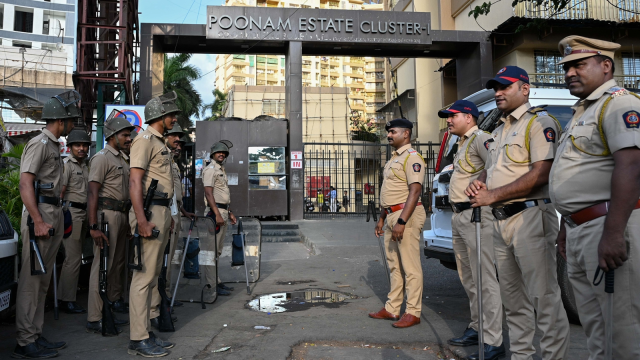
Mira Road’s communal tensions cannot be reduced to a single procession, a dispute over goats, or a confrontation between two groups of residents. A two-part fact-finding report by the Centre for Study of Society and Secularism (CSSS) places the recent tensions in the context of demographic change, post-riot displacement, residential segregation, competitive communal politics, hate speech, administrative ambiguity and the increasing intervention of political and vigilante actors in everyday disputes.
The report’s first part, titled “Communal Polarisation in Mira Road,” was authored by Irfan Engineer and Neha Dabhade. Its second part, titled “Communal Tensions Surrounding Bakri Eid at Poonam Estate Cluster 1, Mira Road, Maharashtra, May 2026,” is based on fact-finding undertaken between May 30 and July 12, 2026. The second exercise was conducted by a team comprising Irfan Engineer, Director of CSSS; Sameer Wagle, member of the civil society initiative Mumbai for Peace; Rukmini Iyer, peacebuilder; and Sudhakar Suradkar, a retired IPS officer.
Taken together, the two parts offer a picture of a city suburb where disputes that may initially concern housing, public space, animals, religious practices or municipal regulation can rapidly acquire a communal character when political mobilisation, misinformation and outside intervention enter the picture.
From a growing suburb to a communally marked locality
The report begins by challenging simplistic understandings of Mira Road’s demographic composition. Mira Road emerged as a major residential destination as property prices in Mumbai increased and middle-class families, workers and young couples sought more affordable housing. Improved railway connectivity and the expansion of the real-estate sector accelerated this transformation.
But the report argues that the locality’s demographic evolution cannot be separated from the history of communal violence in Mumbai. Following the 1992–93 Bombay riots, substantial numbers of Muslim families from South Central and Central Mumbai moved towards Naya Nagar in Mira Road. At the same time, Hindu residents who acquired economic opportunities elsewhere gradually moved out. This produced the concentrated Muslim population that is now frequently described as a “ghetto”.
The 2011 Census figures cited in the report put Hindus at 68.96% of the population of Mira-Bhayander city and Muslims at approximately 16.28%. Christians constituted 6.01%, Jains 5.67%, Buddhists 1.86% and Sikhs 0.53%. Yet the report warns against treating Naya Nagar’s present demographic character as evidence of an inherently segregated or sectarian community.
Its founding story, in fact, was explicitly pluralist. Naya Nagar was established by Syed Nazar Hussain in 1979, who invited Shiv Sena founder Bal Thackeray and Indian Union Muslim League leader G.M. Banatwala to jointly inaugurate the colony. This occurred before the undivided Shiv Sena formally adopted Hindutva as its party ideology in 1985. Long-time residents interviewed for the report described decades of ordinary Hindu-Muslim coexistence.
The report does, however, document patterns of informal residential exclusion. Muslim residents reportedly face difficulties obtaining rental housing in the neighbouring Hindu-majority Shanti Nagar. It argues that the language of “ghettoisation” is itself unevenly applied: Muslim-majority neighbourhoods are frequently described as ghettos and subjected to heightened scrutiny, while exclusionary practices in Hindu-majority localities do not receive comparable treatment.
Communal politics and the electoral competition in Mira Road
The first part of the report places considerable emphasis on the role of political competition. It examines the trajectory of local legislator Geeta Jain, who contested the 2019 Assembly election as an independent candidate on a platform centred on development, women’s rights and employment. The report notes that she had earlier attempted to organise an Iftaar event using municipal funds.
Her political positioning subsequently changed significantly. By March 2023, Jain was participating in the flagging-off of a Hindu Jan Akrosh Morcha organised by Hindutva-affiliated groups. In January 2024, following the violence, she publicly stated that Hindus required only “five minutes” to demonstrate their numerical and physical superiority over Muslims.
The report places this transformation within the context of competition for the BJP ticket ahead of the 2024 elections. It points to other political actors employing increasingly prominent religious symbolism, including BJP district president Ravi Vyas, who inaugurated a replica of the Ayodhya temple in the constituency, and former legislator Narendra Mehta, who proposed a competing religious procession along a route substantially overlapping with an earlier Hindu Akrosh rally. The Shinde faction of the Shiv Sena also organised a motorcycle rally invoking the idea of Ram Rajya.
The report’s broader argument is that communal mobilisation increasingly became an electoral resource in an area where political competition was intense. The political consequences were followed by legal proceedings. A writ petition was filed before the Bombay High Court in March 2024 seeking action against Jain, BJP legislator Nitesh Rane and Telangana legislator T. Raja over alleged inflammatory speeches connected with the January violence.
The report records that the Bombay High Court subsequently directed police to examine recordings and transcripts of relevant speeches. Criminal cases were registered against Rane and Jain under provisions including Sections 153A, 153B, 143, 504 and 506 of the IPC, along with provisions of the Maharashtra Police Act.
Hate speech before the January 2024 violence
The report is particularly significant in its insistence that the January 2024 violence did not emerge from nowhere. It traces an escalating pattern of communal rhetoric to at least March 2023. At a March 12, 2023 rally organised by the Sakal Hindu Samaj, social media commentator Kajal Shingala, also known as “Kajal Hindustani,” called for an economic boycott of Muslims and made derogatory communal assertions. The report says she also made unsupported claims portraying Naya Nagar as a narcotics hub and made unsubstantiated claims concerning fertility-related harms allegedly caused by Muslim vendors. The speech was delivered in the presence of police officials and was followed by a citizen complaint. A case under Sections 153A and 505(2) was eventually registered.
Around a week later, a mass gathering addressed by spiritual figure Dhirendra Shastri saw assertions that Maharashtra would play a central role in the establishment of a “Hindu rashtra”. The report also records accounts from students and minors of recurring religiously motivated harassment during 2023, including pressure to recite religious slogans, intimidation in educational spaces and communal messages circulating in peer groups.
The significance of these episodes lies in the report’s larger thesis: communal violence is rarely an isolated eruption. It can follow a period in which language that marks one community as threatening, alien or economically undesirable becomes normalised.
CJP’s involvement: 2024
Citizens for Justice and Peace (CJP) has previously intervened in matters concerning communal tensions and the potential for provocative mobilisation in Mira-Bhayandar. In February 2024, CJP wrote to the Commissioner of Police, Mira-Bhayandar, expressing concern over the proposed visit and rally of BJP MLA T. Raja Singh in Mira Road. The intervention came against the backdrop of communal violence reported in the area in January 2024. Singh had announced a rally organised under the banner of the ‘Hindu Jan Aakrosh Morcha’ to mark the birth anniversary of Chhatrapati Shivaji Maharaj. After an earlier rally planned for February 19 was cancelled for want of police permission, a fresh announcement was made for February 25. CJP urged the police to carefully assess the proposed mobilisation and take steps to prevent any further deterioration of the law-and-order situation.
CJP’s detailed complaint may be read here
CJP again became involved in June 2026, when it assisted Sadique Basha, a senior CPI (M) leader from the Mira-Bhayandar region who has worked extensively on issues of communal harmony, in drafting a complaint to the police concerning events at Poonam Estate Cluster-1 in Mira Road in the period preceding Eid-ul-Adha. The complaint sought the registration of an FIR and a comprehensive investigation into allegations of communal provocation, intimidation, hate speech and other unlawful acts associated with the incident. In fact Sadique Basha is an activist who has campaigned at the time of the Covid-2019 crisis for access to public health and vaccines and also consistently for right to access to public education.
The complaint called upon the police to preserve and examine all available evidence, including CCTV recordings, mobile-phone videos, media footage and social-media material. It also sought the recording of statements of residents, eyewitnesses and others who had publicly spoken about the incident. Further, it urged the police to investigate the role of individuals and organisations allegedly involved in mobilising crowds, making inflammatory statements or otherwise contributing to communal provocation.
Importantly, the complaint emphasised that any investigation and subsequent legal action must be impartial and must not be influenced by political affiliation, organisational position or public standing. CJP called for appropriate action against anyone found to have violated the law.
The intervention reflected CJP’s broader position that maintaining communal peace cannot be limited to managing tensions after they have erupted. It also requires timely scrutiny of alleged acts of provocation, preservation of evidence and accountability for those responsible. A prompt, fair and impartial investigation, the complaint argued, is essential to reinforce the principle that attempts to generate communal hostility will be treated as matters of law and not merely as issues of public order.
Reconstructing the January 2024 violence
The report reconstructs the events of January 21–23, 2024 in considerable detail. On the night of January 21, at approximately 10.30 pm, a procession consisting of around four cars and ten two-wheelers, carrying saffron flags and equipped with a microphone, travelled through Naya Nagar.
According to police accounts cited in the report, the procession passed two mosques on Lodha Road while religious slogans were allegedly shouted. The vehicles then entered a dead-end lane containing another mosque. Residents, fearing an attempt to enter the mosque, confronted the procession. A confrontation followed, involving stones and physical altercation. Police intervention brought the immediate situation under control and five arrests were made. The following day coincided with the consecration of the Ram temple in Ayodhya, dramatically increasing the political significance of the incident.
BJP legislator Nitesh Rane posted a warning that there would be “strong reactions” to what had happened in Mira Road. At the same time, a media outlet described the previous night’s mob action as “jihadi” in a social-media post that reportedly received more than 800,000 views. Violence then spread beyond Naya Nagar.
In Shanti Nagar, shops identified as Muslim-owned were vandalised. According to residents interviewed for the report, some shops were targeted because of Muslim proprietor names or because they lacked saffron symbols. In Bhayander West, Jabir Siraj Ansari, an Ola-affiliated cab driver, was reportedly stopped, removed from his vehicle after his Muslim identity was established and beaten, sustaining multiple facial fractures. Another motorcyclist was identified as Muslim through a religious decal and was allegedly forced, under threat of violence, to recite a Hindu religious slogan. A Muslim-owned commercial tempo was also stopped by an armed group. The driver and another employee were injured, with the latter requiring stitches for a head wound. A mosque in Bhayander West was also reportedly subjected to stone throwing.
Detailed report on the incident may be read here, here and here.
Detailed reports on BJP MLA Raja Singh and his speech may be read here, here, here and here.
Detailed reports on BJP MLAs Geeta Jain and Nitesh Rane may be read here and here.
The bulldozer action: when demolition followed communal violence
Perhaps the most contentious finding in the first part concerns the municipal demolition drive. On January 23, 2024, the Mira-Bhayander Municipal Corporation’s anti-encroachment division demolished structures in Naya Nagar. One proprietor who had operated an automobile repair business there for 22 years said he was physically removed from his premises immediately before demolition. He estimated his loss at between ₹5 lakh and ₹6 lakh and said authorities disregarded tenancy-related documentary evidence. A municipal official confirmed that the demolished structures were Muslim-owned but described the action as part of an enforcement drive against unauthorised construction.
Contemporary estimates cited in the report placed the number of demolished structures between 12 and 17. What generated particular concern was the timing. The demolition took place shortly after Deputy Chief Minister Devendra Fadnavis demanded strict action against those responsible for the violence. Yet, according to the report, the structures demolished were exclusively identified as Muslim-owned, while no comparable immediate enforcement action was documented against Hindu participants in the violence.
Residents also questioned why structures that had allegedly existed for more than two decades were suddenly targeted immediately after the communal clashes. The report cites Amnesty International India, which criticised the demolitions as reflecting a discriminatory de facto policy of punitive demolition and called for due process and prosecution rather than collective punishment.
A troubling asymmetry in policing
The report’s analysis of police and criminal proceedings is among its strongest findings. It examined eight FIRs connected with the violence and found that in four cases where the complainant was Muslim, no arrests had been made at the time of review. More significantly, despite at least 22 Muslim-owned commercial establishments reportedly being vandalised during the three-day period, the report found that police had not registered a single FIR concerning those incidents at the time of its review.
The alleged assault on Jabir Ansari and the attack on the Muslim-owned transport vehicle also had not resulted in arrests in the weeks following the violence, despite victims reportedly assisting in the identification of assailants from circulating video footage. The disparity was also visible in the charges.
Muslim residents accused in connection with the January 21 confrontation were charged under Section 307 IPC — attempt to murder, carrying a maximum punishment of life imprisonment. The FIR reportedly attributed collective responsibility to a crowd of approximately 50–60 people without individualised allegations. By contrast, Hindu individuals implicated in attacks on the tempo driver and others were charged under provisions including Sections 141, 143, 147, 149, 324, 341 and 427, with a maximum punishment of three years.
The report does not claim that every accused person was innocent or guilty. Rather, it highlights the apparent difference in the treatment of comparable violence and asks whether the criminal justice response itself became communalised.
Two years later, another communal flashpoint
The second part of the report moves from the 2024 violence to Poonam Estate Cluster 1, where communal tensions erupted in May 2026 in the run-up to Bakri Eid. The immediate issue was the temporary keeping of goats within the residential complex. CSSS began its fact-finding on May 30 and continued the exercise through July 12. The team visited Poonam Cluster and interviewed residents, managing committee representatives, political and community representatives and a person who reported being assaulted.
The team also spoke to Nagnath Kamble, associated with the Vishwa Hindu Parishad and Bajrang Dal, met senior municipal and police officials and observed police-convened meetings with Muslim residents on July 5 and Hindu residents on July 12.
Importantly, CSSS expressly acknowledges the limitations of its investigation. The team did not have access to several relevant documents, including FIRs, CCTV footage, some permissions and correspondence, and municipal orders or circulars. The report therefore distinguishes between corroborated information, official statements, allegations and contested interpretations, and expressly states that determining individual criminal responsibility falls outside its scope.
A detailed may be viewed here.
The goat enclosure dispute
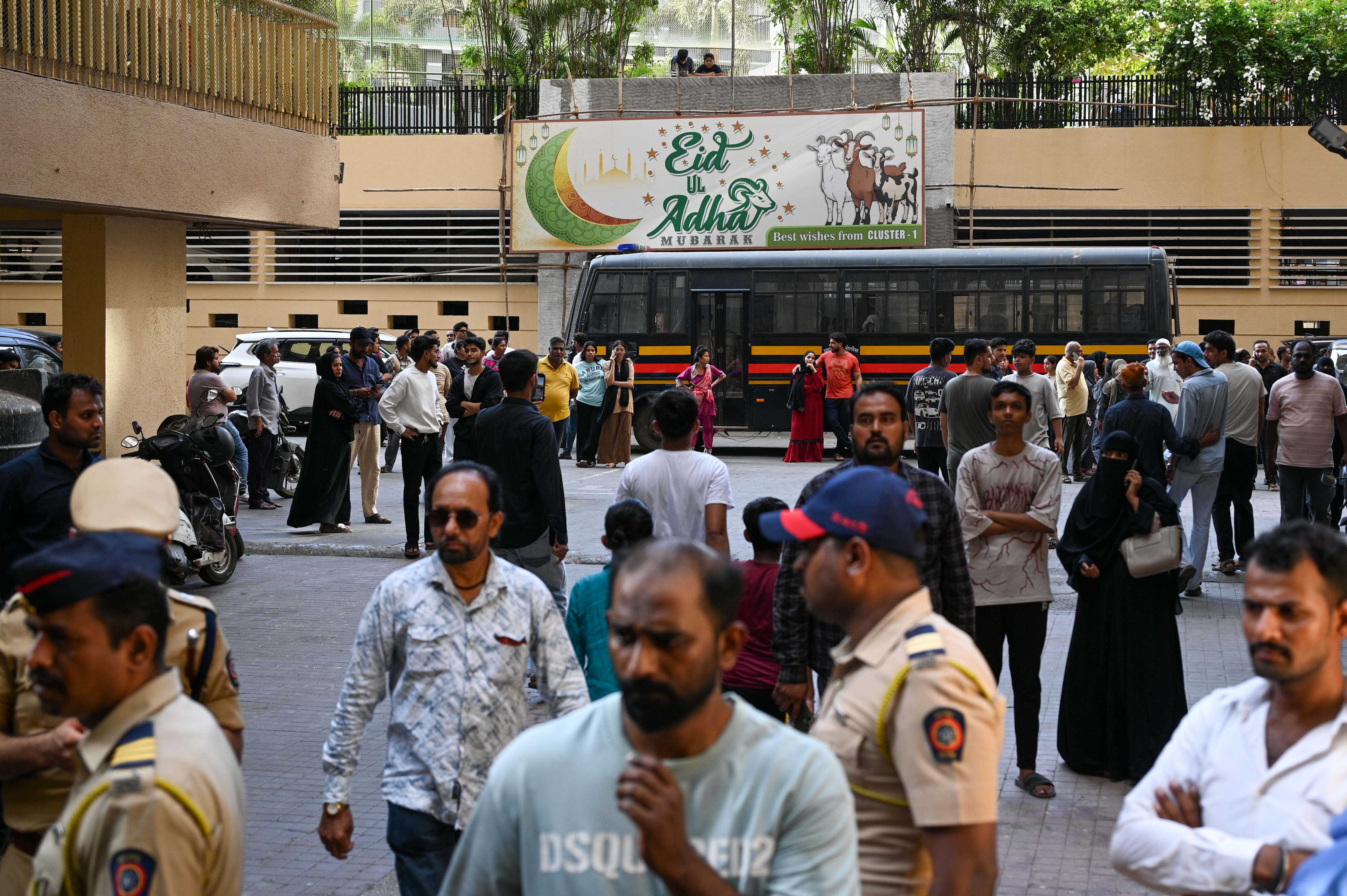
According to Muslim residents interviewed by CSSS, goats had been temporarily kept in the society ahead of Bakri Eid for approximately eight to ten years. They consistently stated that ritual slaughter, or qurbani, had never taken place within the residential complex and was not intended there in 2026. At the same time, the report does not dismiss the concerns of Hindu residents.
Hemendra Joshi, who identified himself as a complainant, said he had objected to the practice since 2019, citing smell and use of common space. The report therefore characterises the dispute as one involving both a longstanding practice and longstanding objections. A police application or intimation was reportedly made around May 13–15. Senior Police Inspector Rajendra Kamble subsequently confirmed that police permission had been granted in time. Preparation of the temporary enclosure reportedly began around May 16. However, the administrative process remained unclear. Residents said they had approached MBMC and received acknowledgement of their application but neither a clear approval nor rejection.
Around May 24, municipal officials removed the asbestos roof of the temporary enclosure, reportedly citing fire-safety concerns. Bamboo supports were subsequently removed, and authorities ultimately ordered the goats to be taken away. Approximately 48 goats were moved on May 26 to a ground near NH School in Naya Nagar. The police later raised questions about documentation, including medical certificates, ear tags and photographs, as well as animal transportation requirements. But residents maintained that they had followed substantially the same practice for years and were willing to comply with applicable rules. The report notes that Senior PI Kamble himself recommended, after the incident, that MBMC formulate clearer regulations governing the transportation and management of animals.
When an administrative dispute became a communal confrontation
The report’s central finding on the Poonam Cluster episode is that there were real practical grievances, but these were subsequently transformed into a communal confrontation. Residents had longstanding disagreements concerning smell, hygiene, visitors and common space. The tensions also reflected earlier disputes over Taraweeh prayers, namaz, loudspeakers, religious lighting and banners, festival committees and the use of common areas.
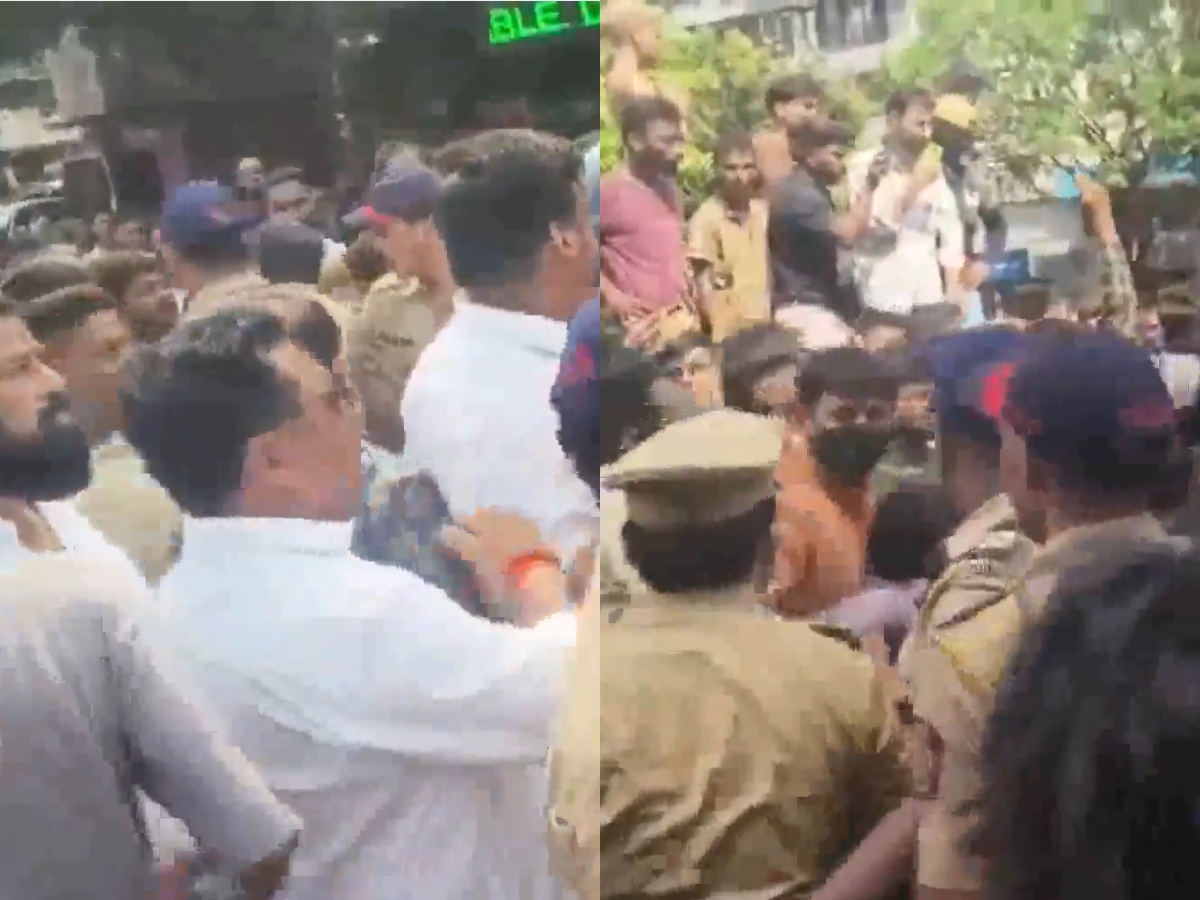
The decisive change came when people and organisations from outside the society became involved. Residents reported the arrival of persons associated with the VHP and Bajrang Dal. Nagnath Kamble told the fact-finding team that Poonam Cluster residents had approached the VHP for assistance and estimated that the crowd eventually reached 400–500 people. Violence followed. A person interviewed by CSSS, identified as Rahim, said he was assaulted by a group after stopping near the society to enquire about the gathering. Police personnel reportedly extracted him from the crowd.
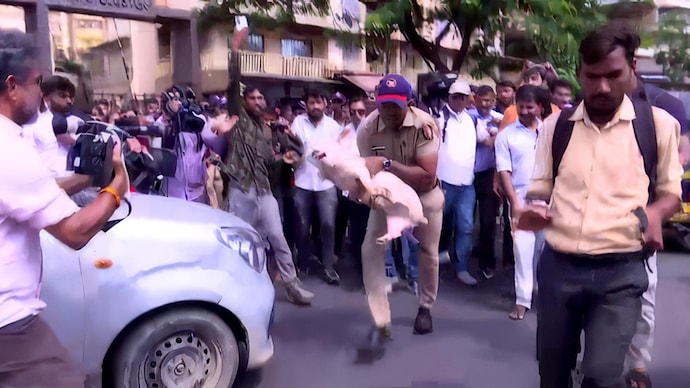
Three FIRs had been registered, according to Senior PI Kamble, although the fact-finding team did not have sufficient documentary material to establish individual criminal responsibility. A particularly provocative moment involved the appearance of a pig during the confrontation. Videos circulated widely, but CSSS could not conclusively establish who was responsible or what the person’s intention was. That uncertainty is important.
The report does not convert an unverified viral narrative into a factual conclusion. Instead, it observes that social-media circulation and political intervention increasingly reframed the dispute as one about animal sacrifice. This was materially different from the consistent account given to CSSS by Muslim residents: that the goats were being temporarily housed and that qurbani was neither being conducted nor proposed within Poonam Cluster.
What does the law actually regulate?
One of the report’s most important contributions is its attempt to separate legal questions that were repeatedly collapsed into one another. There are different legal issues concerning transportation of goats; temporary keeping of goats, animal welfare, slaughter, municipal regulation, fire safety, sanitation, and use of common residential spaces.
The Prevention of Cruelty to Animals Act, 1960, particularly Sections 3 and 11, establishes duties concerning animal welfare and prevention of unnecessary suffering. The Transport of Animals Rules, 1978, as amended, regulate transportation of sheep and goats, including veterinary certification, fitness for transport, overcrowding and transport conditions. But, crucially, the report says these provisions do not by themselves establish a blanket prohibition on temporarily keeping goats inside residential society premises.
The report also examines the Maharashtra Municipal Corporations Act, 1949, and the Maharashtra Animal Preservation Act, 1976. It notes that goats are not among the cattle categories whose slaughter is prohibited under the Maharashtra Animal Preservation Act, although slaughter remains subject to other applicable requirements. The report also considers the Bombay High Court’s 2019 interim order in Jiv Maitri Trust v. Union of India, but points out that the case concerned temporary permissions for slaughter during Bakri Eid and did not, on its face, establish a general prohibition on temporarily keeping goats in residential societies. The critical administrative problem, therefore, was not that no regulation could apply It was that the applicable regulation was never made sufficiently clear.
CSSS says it was unable to establish which specific MBMC provision, bye-law or administrative order was being used to prohibit or regulate the temporary keeping of goats at Poonam Cluster. If requirements had changed, or if existing requirements were being enforced differently in 2026, residents should have been informed beforehand and the rules applied transparently and consistently.
The report is particularly critical of the involvement of outside organisations. Its finding is not that religious organisations cannot raise concerns. Rather, it argues that whatever the merits of residents’ grievances, outside organisations cannot be permitted to exercise an extra-legal veto over the religious practices of residents or substitute themselves for lawful authorities and internal dispute-resolution mechanisms. This is a larger constitutional and civic question.
The report’s recommendations
CSSS calls for a considerably more transparent administrative system. It recommends that MBMC and police publish clear, multilingual guidelines well before major festivals, distinguishing between animal transportation, temporary housing, slaughter, sound, common spaces, sanitation, fire safety and crowd management. It proposes a single-window permission mechanism or nodal officer coordinating municipal, police, fire, veterinary and transport authorities. It calls for impartial and proportionate enforcement, written reasons for approvals and refusals, and an end to selective enforcement.
The report also recommends representative internal mechanisms within Poonam Cluster involving different faith communities, owners and tenants, women and senior citizens. It also calls for trained mediators and Mohalla or Shanti Committees to intervene before ordinary disputes become communal flashpoints.
Most significantly, the report calls on police to act preventively against unauthorised gatherings, intimidation, threats, blockades and attempts by outside groups to impose decisions upon residential communities.
On hate speech, it refers to Sections 196 and 299 of the Bharatiya Nyaya Sanhita, 2023, and the Supreme Court’s directions in Shaheen Abdullah v. Union of India concerning suo motu action by police where hate speech meets the legal threshold. The report also calls for more responsible communication by political actors, community organisations and the media, specifically warning against conflating temporary goat-keeping with slaughter.
The report ultimately does not call for the State to ignore genuine grievances. Its position is more demanding: the State must address genuine grievances without allowing communal identity to determine whose grievance is heard, whose violence is prosecuted and whose rights are protected. CSSS concludes that the Poonam Cluster episode was neither simply a dispute about goats nor an inexplicable outbreak of communal hostility. It resulted from the interaction of religious practice, local grievances, unclear regulation, weak internal dispute-resolution mechanisms, municipal intervention, outside mobilisation, political intervention, violence and social-media amplification.
The complete report may be read here:
Related:
Attempts to communalise Mira Road Eid preparations defused by residents and police
Police disrupt anti hate-speech campaign in Mira-Bhayandar