
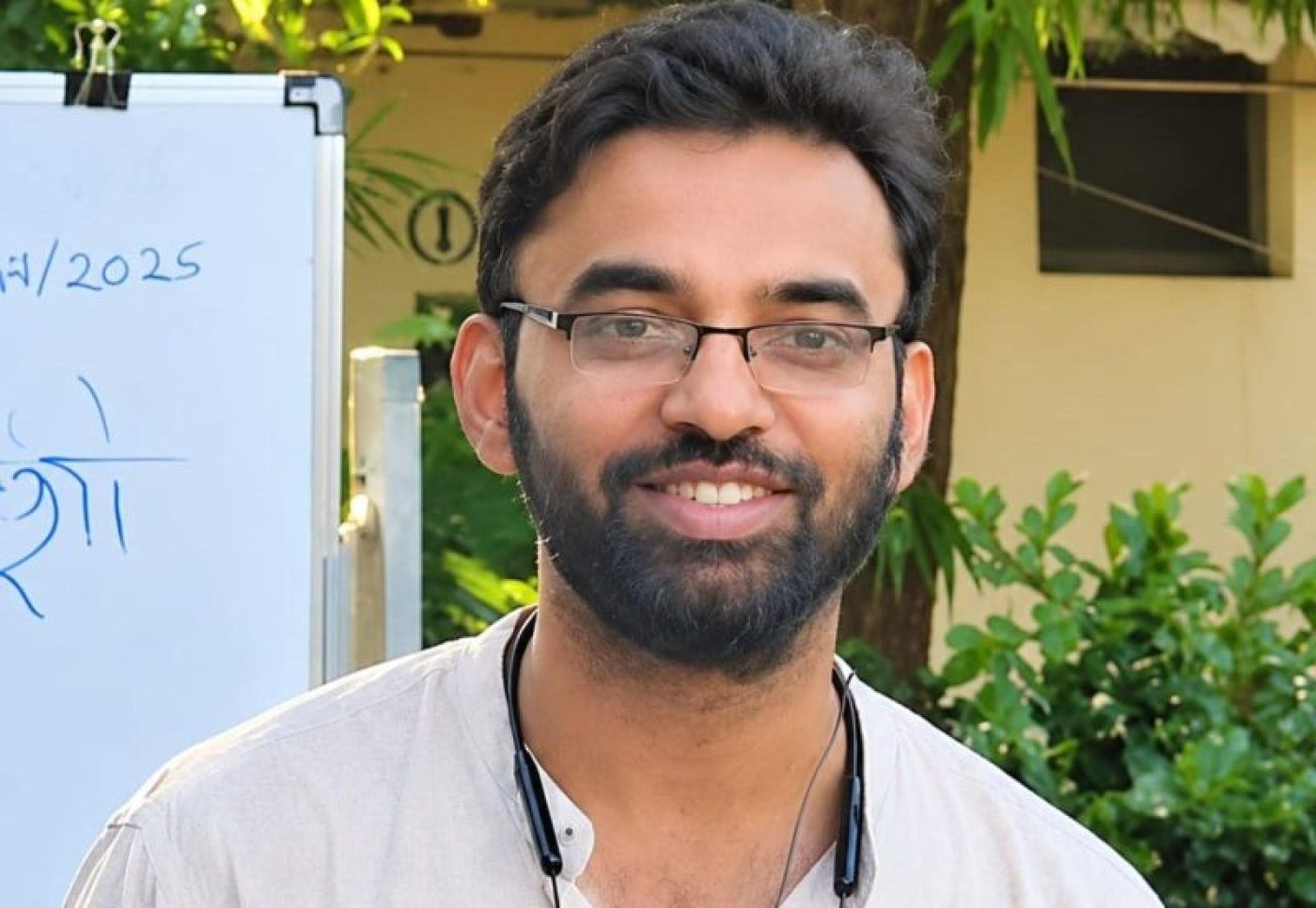
For nearly ten years, Dr Randall Sequeira’s workplace was not a well-equipped hospital or a private clinic. It was the forested hills, remote settlements and scattered Adivasi villages of Odisha’s Kalahandi and Rayagada districts. Riding his motorcycle through difficult terrain, the 39-year-old physician travelled from one village to another, treating people suffering from malaria, diarrhoea, skin ailments and other illnesses, often providing consultations and medicines free of cost. In places where the nearest primary healthcare centre could be more than 60 kilometres away, he became, as residents described him, a mobile hospital.
Today, that same doctor is lodged in Rayagada sub-jail. On the night of October 16, 2026, Odisha Police arrested Sequeira from his rented residence in Bhawanipatna, Kalahandi, along with Dalit activist Laxman Naik. The arrests came nearly six months after a violent confrontation between villagers and police in Kantamal village on April 7, during protests against a proposed road project connected to the Sijimali bauxite mining project. Neither Sequeira nor Naik figured among the 26 people initially named in the first information report (FIR). Their names were subsequently added from a category of approximately 100 unnamed persons described as ‘others’.
Massive Protest rally today,against the unlawful arrest of people’s doctor Randall Sequeira, Youth tribal Singer cum Activist Laxman Naik, Adivasi leader Lada Sikaka and Eminent environmental Activist Lingaraj Azad in front of Muniguda Tehsil Office, Rayagada district of Odisha.
@tmkrishna @samar11 @TeestaSetalvad @HansrajMeena
@DhanadaKanta @Ayaskant_Das— Amiya_Pandav ଅମିୟ ପାଣ୍ଡଵ Write n Fight (@AmiyaPandav) October 26, 2026
According to The Hindu, Sequeira was arrested in connection with the April violence despite having already secured anticipatory bail from the Orissa High Court in another FIR relating to the same incident. He was subsequently booked under serious provisions of the Bharatiya Nyaya Sanhita, including those relating to attempt to murder and rioting.
The circumstances of his arrest are particularly disturbing. Speaking to The Hindu from Rayagada jail, Sequeira said that he and Naik were made to sleep on the floor of a police station through the night, were subsequently transferred to another police station and were not initially informed of the grounds for their arrest. He also alleged that he was not allowed to speak to his family.
This is not the first time Sequeira has found himself at the receiving end of administrative action for his association with the anti-mining movement. In June 2025, the Rayagada district administration issued an ex parte order prohibiting him and 24 others from entering the district for two months. The administration accused him of attempting to mobilise tribal communities against the proposed Sijimali mining project and raised apprehensions about public order.
The Orissa High Court subsequently quashed the prohibitory order. In its ruling, the court found no material demonstrating that the proposed peaceful gathering posed an immediate and grave threat of violence or public disorder. Justice S.K. Panigrahi observed that constitutional jurisprudence demanded a high threshold of actual risk before fundamental rights could be curtailed. The High Court’s intervention, however, did not end the administration’s pursuit of Sequeira.
ODISHA RISES: RELEASE DR RANDALL SEQUEIRA, LAXMAN NAIK, LADA SIKAKA AND LINGARAJ AZAD!
✊ WHEN PEOPLE DEFEND THEIR LAND, THEIR RIGHTS AND THEIR FORESTS, THEIR VOICES MUST NOT BE SILENCED.
A powerful protest rally was held on 26 October 2026 outside the Muniguda Tehsil Office in Rayagada district, Odisha, against the arrests and continued detention of activists associated with the Adivasi people’s struggle.
🔴 WHO ARE THEY?
• Dr Randall Sequeira — a doctor who has dedicated years to providing healthcare to Adivasi communities in remote parts of Odisha.
• Laxman Naik — a grassroots activist associated with the Maa Mati Mali Surakhya Manch.
• Lada Sikaka — an Adivasi leader associated with the Niyamgiri Suraksha Samiti.
• Lingaraj Azad — an environmental and people’s rights activist.
Their supporters allege that criminal cases and arrests are being used to weaken resistance to bauxite mining in the Sijimali region, where Adivasi communities are defending their land, livelihoods, forests and natural resources.
⚖️ THE QUESTIONS THAT DEMAND ANSWERS
Why are people who stand with vulnerable communities facing serious criminal allegations?
Were the arrests, detention procedures and access to legal counsel consistent with constitutional safeguards?
Are the concerns of affected Adivasi communities being heard freely and fairly before decisions affecting their ancestral lands are implemented?
Police have alleged that Dr Sequeira and Laxman Naik were involved in violence connected with an earlier protest. Civil-liberties organisations dispute the circumstances and have raised serious concerns about the arrests. These allegations must be examined by an independent and impartial authority, with due process and a fair opportunity for all sides to present evidence.
An accusation is not a conviction. A demand for justice is not a crime.
🌿 DEVELOPMENT CANNOT MEAN DISPOSSESSION.
India’s natural resources must not become more important than the people whose lives, cultures and livelihoods depend on them.
The rights of Adivasi communities, the protection of forests, meaningful Gram Sabha participation and constitutional freedoms must be respected. Any allegation of wrongdoing must be investigated fairly, without intimidation or political interference.
📢 OUR DEMANDS
1. Immediate and lawful review of the detention of Dr Randall Sequeira, Laxman Naik, Lada Sikaka, Lingaraj Azad and other detained activists, with release wherever continued detention is not legally justified.
2. An independent investigation into allegations of police excesses and procedural violations.
3. Protection of Adivasi communities and their constitutional rights to organise, protest and defend their livelihoods.
4. No coercive implementation of mining-related land acquisition or projects without compliance with applicable laws and the rights of affected Gram Sabhas.
5. Transparent accountability for every proven violation, regardless of who is responsible.Let the rally in Muniguda be heard across India.
Let journalists, lawyers, doctors, students, human-rights defenders and democratic citizens stand with communities demanding dignity and justice.
SILENCE IN THE FACE OF INJUSTICE PROTECTS POWER. SOLIDARITY GIVES PEOPLE A VOICE.
✊ Stand with Adivasi rights.
✊ Stand for constitutional freedoms.
✊ Stand for independent justice.
✊ Stand for people before profits.Creator/source: @AmiyaPandav
READ AND SHARE:
PUCL’s statement on the arrests and demands for accountability:
https://t.co/6NRbu7aSABThe Wire — Jan Swasthya Abhiyan condemns the arrests:
https://t.co/GjnoSm3DMKTimes of India — Report on the Muniguda rally and the family’s appeal:
https://t.co/zg50EYEOqA#DimaagiNaxal #Resistance #UnitedResistance
— Ashok Dadhwal (@ashokdadhwal196) October 27, 2026
A doctor who chose the hills over urban medicine
Originally from Mangaluru, Karnataka, and raised in Mumbai, Sequeira completed his MBBS at St John’s Medical College in Bengaluru before pursuing postgraduate studies in internal medicine at Sawai Man Singh Medical College and Hospital in Jaipur. He arrived in Kalahandi in July 2017 and began working with Swasthya Swaraj, a non-profit organisation providing community healthcare in the tribal-dominated Thuamul Rampur block.
He could have pursued a conventional medical career in an urban hospital. Instead, he remained in the region, continuing his work with organisations including Living Farms and the Development Agency for Poor and Tribal Awakening (DAPTA), which work on healthcare, nutrition, education and the rights of marginalised communities.
Dr Randall Sequeira, a medical practitioner, who moved to Odisha to practise medicine in service of the Adivasi communities in the state, was arrested along with Dalit activist Laxman Naik on 16 October. Please amplify and raise your voice to ask for them to be released.
— Arpita Das (she/her) (@arpitayodapress) October 24, 2026
As reported by Article 14, Sequeira travelled to settlements where residents had little access to medical facilities, visiting households and providing treatment. His work extended beyond treating individual patients. He focused on preventive healthcare, community health training and understanding the relationship between environmental degradation and public health.
His experiences in mining-affected areas also led him to examine the health consequences of industrial extraction. He observed that communities living near operational bauxite mines reported more skin ailments than those in non-mining areas. Since March 2022, he has also travelled to Sukinda in Odisha’s Jajpur district to treat patients suffering from tuberculosis in an area affected by extensive chromite mining.
A close friend of his told Article 14 that Sequeira understood the limitations of treating individual patients when the structural conditions producing ill health remained unaddressed. Healthcare, in his understanding, could not be separated from access to clean water, forests, nutrition and a healthy environment.
This understanding increasingly brought him into solidarity with Adivasi communities opposing mining projects that threaten their land and natural resources. Since 2023, he has worked alongside grassroots organisations, including Maa Mati Mali Surakhya Manch and Niyamgiri Surakhya Samiti, which have opposed the proposed mining projects in the region. It is this association that has now become central to the allegations against him.
When solidarity becomes an alleged criminal offence
The Odisha Police has rejected allegations that Sequeira’s arrest is intended to suppress anti-mining resistance. Speaking to the Press Trust of India (PTI), Deputy Inspector General of Police Akhileshwar Singh alleged that Sequeira was not merely providing medical services but was instigating Adivasi communities against the state government.
The police have also cited multiple criminal cases against him. However, the central question remains: what evidence supports the serious allegations, and why was he implicated in an FIR in which his name did not originally appear, particularly when he had already secured anticipatory bail in another case arising from the same incident?
In its report, The Quint highlighted the concerns raised by activists over the police’s use of the ‘others’ category in FIRs. Narendra Mohanty, convenor of the Campaign Against Fabricated Cases, alleged that the open-ended category allows the police to subsequently implicate activists who were not named when the complaint was first registered. According to him, this practice has become particularly useful in keeping movement leaders in custody by filing successive cases whenever they secure bail in an earlier one.
The figures are alarming. According to data compiled by the People’s Union for Democratic Rights (PUDR), 43 cases connected to resistance against bauxite mining were registered in Kalahandi and Rayagada over the past three years, resulting in more than 100 Adivasis and Dalits being jailed. Between March 8 and April 8, 2026, as many as 24 people were arrested, 217 were named as accused and another 1,140 were listed under the category of ‘others’. Sequeira’s arrest is therefore unfolding against a much larger pattern of criminal cases against those resisting mining projects.
The battle over land, forests and the right to resist
The region’s resistance is not new. For decades, Adivasi communities have opposed attempts to convert their forests and hills into mining sites. The Dongria Kondh, a Particularly Vulnerable Tribal Group, regard the Niyamgiri hills as sacred and worship Niyam Raja, whom they believe resides in the hills. In its landmark 2013 judgment, the Supreme Court placed the decision on the proposed diversion of forest land for bauxite mining in Niyamgiri before the Gram Sabhas. Subsequently, all 12 Gram Sabhas rejected the proposal, and the Odisha government scrapped the project in 2014.
The renewed push for bauxite extraction in Sijimali has brought the region back into confrontation with mining interests. Vedanta has secured environmental clearance for the Sijimali deposit, while the nearby Kutrumali deposit has been allotted to the Adani Group.
For communities whose livelihoods, water sources, forests and cultural identities are inseparable from these hills, mining is not simply an industrial development project. It is a question of survival, autonomy and their constitutional and statutory rights over their land and resources.
The arrest of Sequeira has also attracted condemnation from sections of the medical and civil society communities. Dr Cyriac Abby Philips, popularly known as LiverDoc, appealed to the medical fraternity to stand up for his former St John’s Medical College junior. Recalling Sequeira’s work in Kutrumali, Philips described a physician who had travelled to remote settlements to treat malnourished children and women with limited access to healthcare. He argued that Sequeira understood that prescriptions could not compensate for the destruction of forests, the loss of water resources and the denial of dignity to indigenous communities.
My dear friends, please, I hope to demand your absolute attention to this matter:
In 2018, my junior from St. John’s Medical College, Bengaluru, Dr. Randall Sequeira (middle in the pic), trekked up a steep, bauxite-rich plateau in Odisha to hold a monsoon health camp in the indigenous Kutiya Kondh village of Kutrumali.
In a piece he wrote then titled “Kutrumali’s Demons,” Randall described sleeping under a dripping school roof in freezing fog, borrowing utensils from a local health worker to cook khichdi, and waking up at 6 AM to a line of tribal mothers. He wrote with heartbreak about treating malnourished toddlers with protruding bellies and visible ribs, listening to stories of stillbirths and chronic fevers, while noticing the shiny new solar lights installed by a mining conglomerate eyeing the aluminium ore beneath the villagers’ feet.
Comparing his small medical team to hobbits sheltering in the night, Randall worried about the outside forces coming for that fragile village.
Randall stayed with the tribal/ adivasi community to serve them. After St. John’s and an MD in Internal Medicine from SMS Jaipur, he gave up every comfort of urban medicine to live in Kalahandi, recognizing that clinical prescriptions are meaningless when indigenous communities are stripped of their forests, water, and dignity.
On the night of October 16, Odisha police picked up Dr. Randall Sequeira and Dalit activist Laxman Naik at 11 PM from his home in Bhawanipatna. A gentle physician who has spent years trekking up hills to save tribal children is now locked in Rayagada sub-jail under frivolous but draconian charges (attempt to murder, dacoity), simply for standing with Adivasis peaceful protesting the mining of their sacred hills in Sijimali and Kutrumali.
https://t.co/PsxZZCngyVOdisha Govt. said it will cut down forests to connect tribal villages. But it was a way to bypass green laws and fast track London based Vedanta’s, and Adani’s mining plans. Local organisations estimate that around 45 villages depend on these hills and would be affected.
https://t.co/0pATUIYADmThe state has answered with repression rather than dialogue. In the last three years, at least 43 police cases have been filed and over a hundred Adivasis and Dalits, both women and men, have been incarcerated in Odisha jails. For example, from In March and april 2026, 8, 2026, to April 8, 2026, within one month, 24 people were sent to jail, 217 were made accused, and the number of “others” total 1,140. An activist who was not named in the original FIRs, but has since been implicated in about 12 cases, so that bail in one case is followed by arrest in another. This pattern of capture and releases have been used to crush rational dissent.
Dr. Randall understood that being a good doctor means understanding that prescriptions cannot compensate for the denial of land rights, that surgery cannot undo displacement and that no medical can substitute for the basic infrastructure a government has failed to provide.
https://t.co/fOC9AU3jaRTo my fellow medical fraternity, and every citizen with a conscience: a kind physician who embodies the highest ethics of our profession is being criminalized to clear the way for bauxite mining. Please do not let his voice be buried in a sub-jail.
Amplify this, demand due process, and demand the immediate release. Please sign in this form to show solidarity: https://t.co/cgLIoEXExG
If anyone can help out in this situation please reach out to Medico Friend Circle – https://t.co/OT2D2E3DuW
— TheLiverDoc™ (@theliverdoc) October 20, 2026
The Jan Swasthya Abhiyan has also condemned the arrests, describing them as an attack on people working to address the social and health consequences of mining. The organisation has demanded the immediate release of Sequeira and Naik, withdrawal of the cases and an independent inquiry into allegations of intimidation.
Meanwhile, the Mumbai-based Watchdog Foundation has approached the National Commission for Minorities, seeking scrutiny of the circumstances surrounding Sequeira’s arrest and whether the necessary legal safeguards were followed. Its representation, as reported by the Free Press Journal, specifically flagged the fact that Sequeira was arrested months after the April incident despite not being named in the original FIR.
The Foundation has clarified that the absence of a person’s name in an original FIR does not automatically establish innocence or render a subsequent arrest unlawful. However, it has called for scrutiny of whether the investigation is supported by credible evidence and whether constitutional and procedural safeguards have been respected.
Sequeira’s parents, Alex and Nancy Sequeira, have expressed distress over their son’s incarceration, while maintaining faith in the judicial process. In a statement to Article 14, they said that, to their knowledge, he had dedicated his professional life to serving poor and marginalised communities and hoped that he would receive a fair hearing and be reunited with his family.
Criminalising those who refuse to look away
The question raised by Sequeira’s arrest extends beyond the fate of one doctor. What does it mean when a physician working in areas with little access to healthcare is accused of instigating the very communities he has spent years treating? What does it say about the priorities of a government when those who draw attention to the health and environmental consequences of mining are treated as threats to public order?
For the Adivasi communities of Kalahandi and Rayagada, Sequeira was a doctor who came when hospitals were too far away, who treated their children and who understood that their health was inseparable from the land they inhabited. His arrest has now placed that relationship under the shadow of criminal prosecution. A physician who spent years travelling through forests to reach patients is now confined to a jail cell. And while the state questions whether he was really practising medicine or instigating dissent, the communities he served are left confronting the same questions of healthcare, land and survival, alongside the fear that those who stand with them could be next.
Related:
Police detain Adivasi students for second day, force them out of Mumbai
From Nashik to Mumbai: Adivasi students’ protest meets police detentions
Why Adivasis seek to re-assert their traditional identity
I raise my voice for Adivasis, am I a Traitor?
Telangana: Stop forcible ‘re-location of Chenchu Adivasis from Amrabad Tiger Reserve