
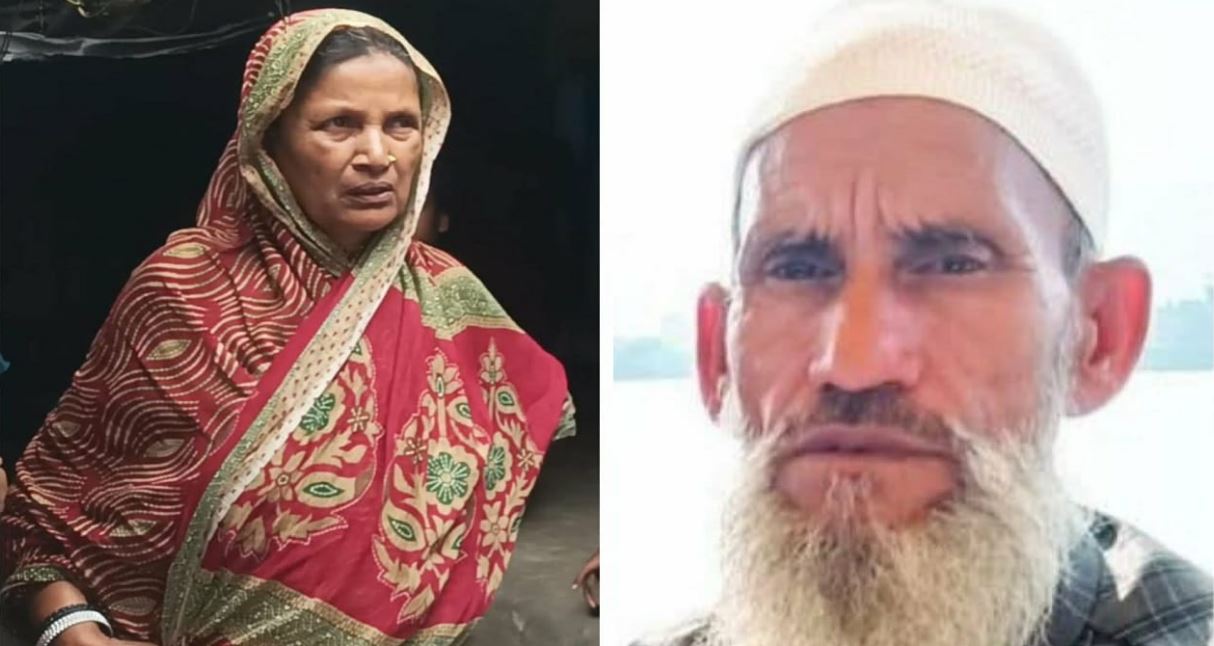
Raiganj: For most people, seeing their name on the final electoral roll after the Special Intensive Revision (SIR) is a moment of relief. For 66-year-old Jalil Akhtar, however, the story has taken a far more disturbing turn.
His name is on the voter list. His family says he has voted in India. He has a voter ID, Aadhaar card, ration card and a land deed in his name.
Yet, according to his family, Akhtar was taken away from his home in Karan Dighi, Uttar Dinajpur, late on the night of June 29, allegedly on suspicion of being a Bangladeshi national.
Nearly two-and-a-half months later, he is still not home.
When Akhtar did not return that night, his family initially thought he might have gone to the mosque to offer prayers. It was only later that they learnt that police personnel from a local camp had allegedly visited his house and taken him away.
For his wife, Tofa Bibi, the question has remained painfully simple.
“If he is an Indian citizen, why was he taken away like this? It has been two months, yet he has still not returned home,” Bibi told eNewsroom (Watch the video).
His Name Is on the Voter List. So Why Is Jalil Akhtar in Custody?
Akhtar’s family says he has lived in India for generations.
They point to the documents they have — his voter ID, Aadhaar card, ration card and a land deed in his name. They also say the names of his ancestors appear in old electoral rolls.
The family further claims that Akhtar exercised his right to vote this year.
For them, that makes his detention difficult to understand.
They say they have never known Akhtar to have travelled to Bangladesh. They are also unsure why his nationality came under suspicion in the first place.
The events of June 29 remain particularly difficult for them to forget.
According to relatives and residents, police arrived at Akhtar’s home late at night and took him away.
At first, nobody knew where he was.
Some villagers thought he had gone to the mosque. When he did not return, residents began looking for him. It was then, according to the family, that they learnt that police personnel from the local camp had visited his home.
The family later came to know that Akhtar had allegedly been kept at different holding centres.
They also claim that during court proceedings, he was described as a resident of Thakurgaon district in Bangladesh.
That is something the family disputes.
They say Akhtar has spent his life in India and has never travelled to Bangladesh.
‘If He Is an Indian Citizen, Why Was He Taken Away?’
For Bibi, the long separation has brought a different kind of worry.
Her husband is 66. The family says he is diabetic.
“He has been away from home for so long. We don’t know what will happen to him,” Bibi said.
Akhtar has two sons. Both work as migrant labourers in other states. He also has two daughters, both of whom are married.
With the sons away for work and the daughters living with their own families, Bibi has been left to deal with the uncertainty at home.
She does not know when her husband will return.
She also does not know what will happen to him if the authorities ultimately decide that he is not an Indian citizen.
The family fears that Akhtar could be sent to Bangladesh. They insist that he has never been there.
Residents have also reportedly raised their voices demanding his release.
But the question of Akhtar’s nationality is now before the court.
Rakesh Singh, Superintendent of Police, Islampur district, told The Telegraph that Akhtar is in judicial custody and that the court will take a decision. The matter, he said, is entirely sub judice.
Akhtar’s lawyer, Mukhtar Ahmed, says the family has already submitted the necessary documents before the court to establish his citizenship.
According to Ahmed, successive hearing dates have been fixed, while Akhtar has remained in jail for the past two-and-a-half months.
The lawyer said Akhtar has been languishing in custody despite the documents submitted in his case.
Dulal Rajbanshi, convenor of the Vote Rights Protection Coordination Committee, whose statement was published in The Telegraph, alleged that there were preparations to send the 66-year-old back to Bangladesh.
Rajbanshi described such a move as a violation of human and constitutional rights.
He also said police have so far failed to establish before the court that Akhtar is an illegal Bangladeshi national.
Those claims are disputed matters before the court and have not been finally established.
What Evidence Does the Administration Have?
The case leaves a number of questions unanswered.
What evidence does the administration have to establish that Akhtar is a Bangladeshi national?
How were the Indian documents held by him examined and verified?
If his name appears on the electoral roll and his family says he voted this year, what led the authorities to question his nationality?
And under what legal process has a 66-year-old man remained in custody for more than two months?
These are questions for the administration and the court to answer.
For Akhtar’s family, however, the matter is not about a legal argument alone.
It is about a man who was at home one night and did not come back.
His sons continue to work in other states. His daughters have their own families. His wife is still waiting.
The SIR process may have left Jalil Akhtar’s name on the electoral roll.
But for his family, that has not brought the relief they expected.
Instead, they are waiting for the return of a husband, father and grandfather whose nationality is now being contested.
And every day that passes leaves Bibi with the same question:
When will Jalil Akhtar come home?
Courtesy: https://enewsroom.in