

For years, debates around online hate speech in India have focused on political speeches, social media posts, WhatsApp forwards, and viral videos. Yet a new report argues that one of the most influential—and least scrutinised—vehicles for spreading anti-minority hatred has been hiding in plain sight: music.
Released by the Washington D.C.-based Centre for the Study of Organized Hate (CSOH), the report, Profiting from Hate Music, examines what researchers describe as the rapidly expanding ecosystem of Hindutva pop music, or “H-Pop”—a genre that combines devotional, nationalist and popular musical styles with rhetoric targeting Muslims and Christians. According to the report, this music is no longer confined to fringe corners of the internet. Instead, it is thriving across some of the world’s largest technology platforms, generating millions of views, streams and shares while simultaneously producing revenue for creators and, indirectly, the platforms themselves.
Authored by journalist Kunal Purohit, whose book H-Pop: The Secretive World of Hindutva Pop Stars further documented the rise of the genre, along with CSOH researchers Tavishi and Hamaad Meer, the report presents itself as the first comprehensive effort to map the scale, reach and monetisation of hate music in India. Supported through a grant from the Human Rights Foundation, the study argues that major technology companies are not merely hosting such content but are enabling its amplification and profitability despite maintaining public policies against hate speech and incitement.

At the heart of the report lies a stark claim: online platforms have become critical infrastructure for the production, dissemination and monetisation of music that allegedly promotes hatred, dehumanisation and violence against religious minorities.
Over a year before Kunal Purohit’s H-Pop… was released on November 22, 2023, on October 10, 2022 Citizens for Justice and Peace was among the first to conduct its own investigation into YouTube and other platform’s promotion of hate lyrics. Hate through music, lyrics and visuals: Hindutva pop. CJP’s The online eco-system hosts a plethora of videos peddling hate may be read here. Four months before that, in June 2022, Caravan had also done its own investigation into Hindutva’s hate music: Hindu Rashtra OST authored by Samriddhi Sakuniya that can be read here. The CSOH’s recent report is then a logical, research driven extension to earlier work done that exposed this further capture of ‘culture’ by the majoritarian far right.
From white supremacist rock to Hindutva pop
The report situates Hindutva hate music within a broader global history of extremist music cultures. Researchers trace parallels with white power music in Europe and the United States, particularly the rise of white supremacist bands in the 1980s that used music as a vehicle for recruitment, radicalisation and political mobilisation. Similar patterns, the report notes, have emerged in other contexts, including Rwanda and Myanmar, where music was used to reinforce ethnic and religious hostility before or during periods of violence.
According to the authors, Hindutva pop has evolved into a distinctly Indian manifestation of this phenomenon. Unlike conventional devotional music, these songs frequently depict Muslims and Christians as enemies, invaders, traitors or existential threats. The report argues that many songs go beyond ideological messaging and explicitly advocate discrimination, exclusion, boycotts or violence.
The researchers further link the growth of the genre to broader political and social developments in India, including increasing incidents of anti-minority hate speech and communal polarisation. Citing data from India Hate Lab, the report notes that hate speech incidents documented in India increased dramatically in recent years, providing a social and political backdrop against which Hindutva music has flourished.
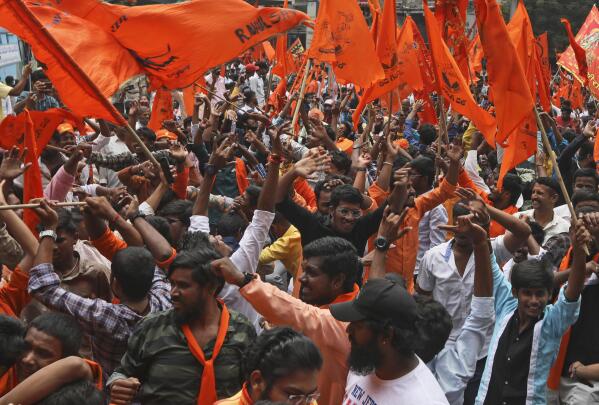
Importantly, the report does not portray these songs as isolated cultural products. Rather, it argues that they form part of a larger ecosystem in which music is used during religious processions, political gatherings, social media campaigns and community mobilisation efforts. Several incidents of communal tension and violence, the report notes, have involved processions playing songs containing anti-Muslim themes or violent rhetoric.
Building a database of hate music
One of the report’s most significant contributions is methodological. Rather than relying on anecdotal examples, the researchers spent a year building what they describe as a comprehensive database of Hindutva hate music across multiple platforms.
The study examined four major platforms: YouTube, Spotify, Apple Music and Meta’s Music Library, which powers audio used in Instagram Reels. Before identifying songs, researchers first analysed each platform’s published policies governing hate speech, incitement to violence and discriminatory content. These policies then became the framework through which songs were assessed.
Data collection occurred between January 2025 and January 2026 and involved multiple research techniques. Researchers conducted keyword searches in English and Hindi, monitored social media accounts of prominent Hindutva influencers, reviewed footage of religious processions and tracked channels and creators repeatedly associated with such music. Songs identified through one platform were subsequently traced across others to determine their broader distribution.
The resulting database contains 523 songs that researchers concluded violated the content policies of at least one platform. These songs were then categorised according to the type of violation involved, including direct incitement to violence, dehumanisation, promotion of supremacist beliefs and other forms of hateful content.
The researchers also tested platform accountability by reporting a sample of songs and tracking platform responses over several months. In addition, they investigated how creators and platforms monetised such content through advertising, subscriptions, and fan funding and other revenue streams.
A vast digital ecosystem
The report’s findings suggest that hate music is not confined to a few isolated uploads but forms a substantial and highly visible digital ecosystem. Across the four platforms studied, researchers identified 523 songs that they argue violate platform policies. Of these, 210 were found on YouTube, 109 on Spotify, 103 within Meta’s Music Library, and 101 on Apple Music.
The scale of engagement documented in the report is striking. The YouTube songs alone accumulated more than 198 million views, while songs available through Meta’s Music Library were used in over 5.9 million Instagram Reels. Researchers argue that the actual audience exposure is likely far greater because each Reel can be viewed, shared and recommended repeatedly through Instagram’s algorithmic systems.
Perhaps most significantly, the report concludes that roughly half of all identified songs contain explicit calls for violence. Researchers found that 263 of the 523 songs directly threatened, encouraged or glorified violence against religious minorities, while the remaining songs primarily relied on dehumanisation, conspiracy theories, derogatory stereotypes and other forms of hateful rhetoric.
According to the report, Muslims were overwhelmingly the primary targets. Many songs promoted familiar Hindu nationalist narratives, including allegations of “love jihad,” demographic replacement theories, claims that Muslims pose an existential threat to Hindu society, and demands that India be transformed into an explicitly Hindu nation.
The researchers argue that these narratives do not merely express political opinions but function as tools of radicalisation. By repeatedly portraying minorities as enemies, traitors or invaders, the music allegedly normalises hostility and creates conditions in which discrimination and violence become easier to justify.
YouTube: The largest hub
Among all platforms studied, YouTube emerged as the most significant repository of Hindutva hate music. The report identified 210 allegedly violative songs uploaded across 100 channels with a combined subscriber base exceeding 76 million. Researchers found that nearly half of these songs contained direct threats or calls for violence against Muslims.
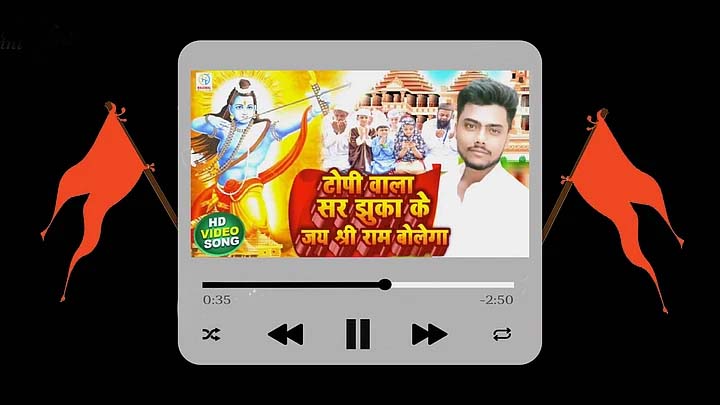
Particularly notable was the concentration of content among a relatively small number of channels. According to the report, three channels alone accounted for more than 40 percent of the identified songs. Despite repeatedly hosting content that researchers argue violates YouTube’s own hate speech policies, these channels allegedly remained active, verified and monetised.
The report further argues that YouTube’s own systems may be helping such content spread. Researchers note that the platform automatically generates videos for music tracks even when creators do not upload visual content, thereby ensuring additional visibility for songs distributed through music services.
Spotify, Meta and Apple: A pattern across platforms
While YouTube accounted for the largest number of allegedly violative songs, the report argues that the problem extends well beyond video-sharing platforms. Researchers found what they describe as a consistent pattern across Spotify, Meta’s Music Library and Apple Music, with songs containing anti-Muslim hate speech, conspiracy theories and incitement to violence remaining available despite each platform maintaining policies that prohibit such content.
The report argues that this demonstrates a systemic moderation failure rather than isolated lapses in enforcement. Although each platform adopts different approaches to content moderation and community standards, the researchers contend that all four companies continue to host content that appears to violate their own published rules.
Spotify: Hate music available beside mainstream artists
Spotify, the world’s largest music streaming platform, hosts 109 songs that the report argues violate its Platform Rules. Researchers found that 51 of these songs explicitly praise or encourage violence against Muslims, while 44 others promote hatred, dehumanisation or harmful stereotypes directed at the community.
According to the report, Spotify’s own rules prohibit content that promotes hatred or violence against protected groups based on characteristics including religion. Yet researchers argue that songs encouraging violence against Muslims, promoting the “love jihad” conspiracy theory, or portraying religious minorities as enemies of the nation remained easily accessible through ordinary searches.
The report also highlights Spotify’s recommendation architecture. Unlike traditional music stores where users actively purchase specific tracks, streaming services recommend songs, playlists and artists based on listening behaviour. Researchers argue that this recommendation system can inadvertently increase the reach of extremist content once a listener engages with similar material.
Another concern identified is the coexistence of such songs alongside mainstream music. The report argues that users do not encounter these tracks in isolated corners of the platform; instead, they exist within the same searchable ecosystem as Bollywood music, devotional songs and popular commercial artists, making discovery significantly easier.
Instagram Reels and Meta’s Music Library: Turning hate into viral content
Perhaps the report’s most striking findings concern Meta’s Music Library, the catalogue of licensed music available to users creating Instagram Reels. Researchers identified 103 songs within Meta’s music catalogue that they argue violate the company’s Hate Speech Community Standard. Of these, 46 songs actively encourage or incite violence against Muslims, while another 57 use abusive language, slurs or dehumanising rhetoric targeting the community.
What makes Meta’s ecosystem particularly significant, the report argues, is the extraordinary scale of amplification. Rather than simply existing as songs available for listening, these tracks have been incorporated into more than 5.9 million Instagram Reels, transforming music into a reusable soundtrack for millions of user-generated videos.
Researchers contend that every Reel using a hate song effectively creates another distribution channel for the underlying message. Since Instagram’s recommendation algorithm actively promotes short-form videos beyond a creator’s followers, songs embedded in viral Reels can rapidly reach audiences far larger than those who might deliberately search for the original track.
The report provides numerous examples illustrating this phenomenon. One of the most widely circulated songs documented is “Bharat Ka Bacha Bacha Jai Shri Ram Bolega.” According to the report, the song had already been used in over 730,000 Instagram Reels. Researchers note that some individual Reels featuring the song accumulated millions of views, vastly exceeding the reach of the original audio itself. One Reel showing a DJ performing the song before a large public audience reportedly received over 5.7 million views and hundreds of thousands of likes.
Similarly, the song “Gau Mata“, which the report says contains anti-Muslim slurs and threats of violence, had been used in more than 40,000 Instagram Reels. Researchers observed that many of these videos were posted by self-described cow vigilante groups or supporters, often depicting vehicle chases, confrontations or assaults involving alleged cattle transporters while the song played in the background.
Another frequently used track, “Bhagwa Se Dar Lagta Hai Toh Bharat Chod Do,” had reportedly been used in over 104,000 Reels by May 2026. The report documents examples where the song accompanied videos of Ram Navami processions, saffron flag displays and other communal imagery, with individual Reels reaching hundreds of thousands of viewers.
The report argues that Meta’s music catalogue effectively allows hateful audio to be endlessly repurposed, giving songs an afterlife far beyond their original release.
Apple Music: Minimal hate speech standards
Among the four platforms examined, researchers identify Apple Music as having the least detailed public standards specifically addressing hate speech. Unlike YouTube, Meta and Spotify, Apple does not publish an extensive standalone hate speech policy governing music content. Instead, the company requires artists to comply with local laws, cultural sensitivities and general standards of appropriateness.
Applying Indian legal standards as well as the report’s analytical framework, researchers identified 101 songs on Apple Music that they argue should not remain available. Several songs promote the discredited conspiracy theory of “love jihad,” alleging that Muslim men systematically target Hindu women for religious conversion. The report notes that the Government of India itself informed Parliament in 2020 that the term has no legal basis, yet multiple songs continue to invoke it as an established fact while encouraging hostility against Muslims.
Researchers also criticise Apple’s moderation of album artwork. According to the report, several songs employ imagery that reinforces anti-Muslim narratives, including depictions of veiled Muslim women intended to portray interfaith relationships or Islamic identity as inherently threatening.
The report argues that visual imagery, combined with inflammatory lyrics, contributes to a broader ecosystem of communal propaganda rather than functioning merely as artistic expression.
Violence is not an exception—it is a central theme
One of the report’s most significant conclusion concerns the nature of the content itself. Researchers argue that violent rhetoric is not confined to a handful of fringe songs but constitutes one of the defining characteristics of the Hindutva pop ecosystem.
Across platforms, they found:
- 104 YouTube songs containing explicit violent themes targeting minorities;
- 51 Spotify songs praising or encouraging violence;
- 46 Meta Music Library tracks directly calling for violence;
- 67 Apple Music songs encouraging or glorifying violence against minorities.
Beyond explicit threats, the report identifies recurring themes that appear repeatedly across hundreds of songs. These include portraying Muslims as traitors or foreign invaders; invoking historical grievances involving Mughal rulers; calling for the demolition of mosques and construction of temples in their place; depicting demographic change as an existential threat; promoting conspiracy theories such as “love jihad” and “Ghazwa-e-Hind”; glorifying cow vigilantism; and encouraging Hindus to prepare for what songs describe as an inevitable religious conflict.
According to the researchers, these recurring narratives collectively create a worldview in which violence against minorities is portrayed not as criminal conduct but as a legitimate form of self-defence or historical justice.
The report therefore argues that the danger lies not only in individual songs but in the cumulative effect of hundreds of tracks repeating similar messages across multiple platforms, reinforcing one another through algorithms, recommendations and user-generated content.
Profiting From Hate: How platforms monetise extremist music
One of the report’s most serious allegations is that technology companies are not merely failing to remove hateful content—they are also profiting from it. The report argues that while companies publicly maintain zero-tolerance policies towards hate speech, many of the creators producing anti-Muslim songs continue to benefit from platform monetisation tools, while the platforms themselves earn advertising and subscription revenue generated by user engagement with this content.
Researchers contend that this creates what they describe as a perverse incentive structure. The more popular a hate song becomes, the more advertisements it attracts, the more revenue it generates for both the creator and the platform, and the more likely platform algorithms are to recommend it to additional users. According to the report, this commercial ecosystem transforms communal hatred into profitable digital content.
YouTube’s monetisation ecosystem
The report identifies YouTube as the platform where monetisation is most visible. Researchers found that many channels repeatedly uploading songs that allegedly violate YouTube’s hate speech policies remain eligible for monetisation through the YouTube Partner Program. This allows creators to earn money from advertisements shown before or during videos, while also accessing features such as Super Thanks, Super Chats, Channel Memberships and paid subscriptions.
The report notes that the 210 songs identified on YouTube had collectively amassed approximately 198 million views, generating substantial audience engagement through more than 3.1 million likes across roughly 100 channels with a combined subscriber base exceeding 76 million subscribers. Researchers argue that these figures indicate that Hindutva hate music is not a niche phenomenon but a commercially successful content category operating within YouTube’s broader creator economy.
The report also raises concerns about YouTube’s own automated systems. Even where artists did not upload music videos themselves, YouTube automatically generated videos—known as “Art Tracks”—using album artwork and audio files. According to the researchers, this meant that hateful songs could continue circulating on YouTube even without dedicated video production, further expanding their visibility through YouTube Music integration and algorithmic recommendations. Researchers argue that these automated uploads demonstrate how platform infrastructure itself can contribute to the dissemination of harmful content.
Brand advertising beside hate content
One of the most troubling commercial finding concerns advertising. The report states that advertisements from internationally recognised companies appeared before or alongside videos containing anti-Muslim hate music.
Researchers documented advertisements from major multinational brands—including technology companies, consumer goods manufacturers and financial services firms—being served on videos that they argue contain hate speech and incitement. The report stresses that there is no suggestion that these companies intentionally chose to advertise on such videos. Rather, advertisements were placed through automated advertising systems that purchase inventory across YouTube. Nevertheless, the report argues that automated advertising effectively channels corporate advertising budgets towards creators producing hateful material. This, researchers contend, raises broader questions about advertiser oversight, brand safety mechanisms and the adequacy of platform controls designed to prevent commercial support for extremist content.
A small network, massive reach
Another important finding is the concentration of influence. Rather than thousands of independent creators, the report identifies a relatively small network of artists and YouTube channels responsible for producing a disproportionately large share of Hindutva hate music.
The researchers profiled dozens of prominent singers and creators who repeatedly produced songs centred on similar themes: portraying Muslims as enemies of the nation, glorifying violence, advocating the demolition of mosques, promoting conspiracy theories such as “love jihad” and “Ghazwa-e-Hind,” and encouraging Hindus to prepare for religious conflict. According to the report, this demonstrates that Hindutva hate music is not a spontaneous or decentralised phenomenon but an identifiable ecosystem with recurring artists, production houses, distribution channels and audiences.
The report argues that because the same creators repeatedly upload allegedly violative content across multiple platforms, enforcement against a relatively limited number of accounts could significantly reduce the overall reach of the ecosystem.
Music and offline communal mobilisation
A recurring theme throughout the report is the relationship between online music and offline communal mobilisation. Researchers emphasise that the songs they identified are not simply consumed privately through headphones. Instead, they frequently accompany religious processions, political rallies, vigilante activities, election campaigns and public demonstrations, giving digital content a tangible presence in physical spaces.
Several songs documented in the report call for the demolition of mosques, the construction of Hindu temples at disputed sites, retaliation for historical grievances associated with Mughal rule, or violent action against individuals portrayed as threatening Hindu society. Others celebrate cow vigilantism or invoke slogans commonly associated with Hindu nationalist mobilisation.
The report argues that when such music becomes embedded within public processions and viral social media videos, it helps normalise hostile narratives against minorities and reinforces communal identities through repetitive cultural messaging.
The Pahalgam attack and the rapid weaponisation of tragedy
The report devotes particular attention to the aftermath of the April 22, 2025 terrorist attack in Pahalgam, in which 26 civilians were killed. According to the researchers, Hindutva pop artists responded with remarkable speed. Within hours and days of the attack, multiple songs were released portraying Indian Muslims collectively as responsible or urging Hindus to unite against an alleged internal enemy.
Five songs released immediately after the attack reportedly accumulated more than 1.1 million YouTube views within a short period. Several rapidly spread to Spotify, Apple Music and Instagram Reels, where users created thousands of videos using the songs as background audio.
The report does not claim a direct causal relationship between these songs and subsequent incidents of communal violence. However, it argues that they contributed to an environment in which anti-Muslim hostility intensified.
Researchers cite monitoring by India Hate Lab, which documented 64 anti-Muslim hate rallies within ten days of the attack and 113 hate speech incidents and hate crimes within approximately three weeks. The report presents this as evidence that online hate music formed part of a broader ecosystem of communal mobilisation during a period of heightened national tension. Detailed report may be read here.
Less than two months after the Pahalgam attack, Citizens for Justice and Peace had mapped the rising hate attacks against Muslims, across five key states. The data based investigation had, on June 19, 2025, published 180 plus attacks with 37 % tied to ‘revenge’ for Pahalgam. CJP’s Mapping Hate: The Pahalgam Attack and its ripple effects may be read here.
Testing the platforms
Beyond documenting content, the researchers also sought to assess whether technology companies acted when alerted. The report explains that researchers formally reported numerous songs through the platforms’ own complaint mechanisms and monitored the outcomes over several months.
According to the report, most of the reported content remained available despite allegedly violating the platforms’ published hate speech policies. Researchers argue that this demonstrates substantial inconsistencies between the companies’ stated rules and their enforcement practices.
The report contends that the persistence of such content, despite repeated reporting, raises broader questions about transparency, accountability and the effectiveness of automated moderation systems, particularly in languages other than English.
Recommendations and a warning for Big Tech
The report concludes with an extensive set of recommendations directed at YouTube, Meta, Spotify and Apple. Among other measures, researchers call on platforms to:
- proactively identify and remove music that promotes hatred or violence against protected groups;
- improve moderation of music and audio content rather than focusing primarily on text and video;
- strengthen moderation capacity in Indian languages;
- ensure that creators repeatedly producing hate content are ineligible for monetisation;
- increase transparency regarding enforcement decisions;
- improve advertiser safeguards so that brands are not inadvertently funding extremist content; and
- invest in specialised moderation teams capable of recognising coded forms of communal hate speech.
Ultimately, Profiting from Hate Music argues that music has become one of the most powerful yet understudied vehicles for spreading communal hatred online. Rather than treating songs as merely another form of entertainment, the authors urge policymakers, researchers and technology companies to recognise them as influential political and cultural artefacts capable of shaping public attitudes at enormous scale. The study significantly expands the conversation around online hate speech in India. It shifts attention beyond viral speeches and inflammatory posts to an ecosystem where melody, repetition and algorithmic amplification intersect—raising difficult questions about the responsibilities of digital platforms when content that allegedly promotes hatred is not only hosted, but also recommended, monetised and transformed into a profitable business model.
The complete report may be read below:
Related:
CJP flags casteist, anti-Dalit videos on YouTube targeting CJI Gavai; seeks urgent takedown
YouTube allows content containing false and incendiary information about India’s elections: report
From Outrage to Acquittal: The Raja Singh hate speech case comes to a close