
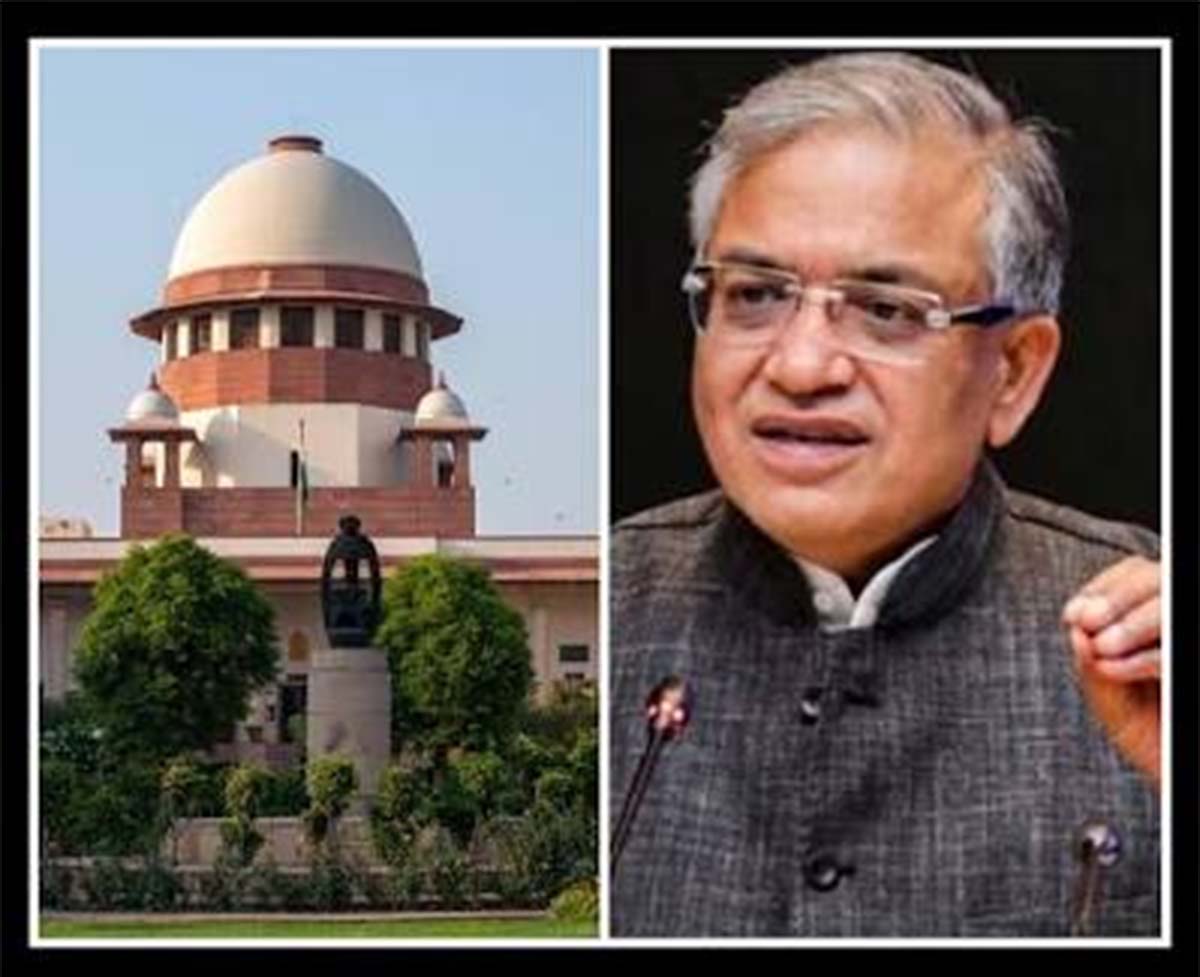
The Election Commission of India (ECI) has told the Supreme Court that all major decisions concerning the Special Intensive Revision (SIR) of electoral rolls were taken unanimously. It has denied allegations that Chief Election Commissioner Gyanesh Kumar acted without the agreement of the other two Election Commissioners, Sukhbir Singh Sandhu and Vivek Joshi.
The statement forms part of the ECI’s counter-affidavit in a petition filed by Rakesh Kumar Singh, which challenges the functioning of the CEC and the legality of certain Commission decisions. The affidavit, filed by Deputy Election Commissioner Bhanu Prakash Yeturu, says the SIR orders dated June 24, 2025, October 27, 2025, and May 14, 2026, were unanimous. It was approved by all three members.
The Commission has questioned the petition’s reliance on a newspaper report, arguing that the petitioner did not independently verify the allegations. It has also said that it neither released nor authorised the release of internal notes or files to the media.
However, the concerns raised in The Indian Express investigation, published on October 27, go beyond whether the Commission formally approved its decisions. The report documented 14 notes recorded by Sandhu and Joshi over 10 months. Many concerned actions that had already been taken, systems that had been developed or proceedings that had been initiated before the two Commissioners recorded that they had not been informed.
Also, you can read our investigation here:
1. https://t.co/Ous0b5lD98
2. https://t.co/SrJbWUC9OM
3. https://t.co/PGpsT3x7ci
4. https://t.co/pFfaB1Wc5Y
5. https://t.co/ZBf8dSCt6F
(9/10)— Ritika Chopra (@RitikaChopra__) October 27, 2026
The affidavit explains how the ECI says decisions should be taken. It does not fully explain why the two Commissioners repeatedly recorded that they learnt about important developments after they had occurred.
ECI’s explanation does not resolve concerns over consultation
The Commission has argued that notes, queries, suggestions and observations recorded by individual Commissioners during file processing are not, by themselves, decisions of the ECI.
It says files ordinarily pass from one Election Commissioner to the other before reaching the CEC. The affidavit relies on Section 18 of the Chief Election Commissioner and Other Election Commissioners (Appointment, Conditions of Service and Term of Office) Act, 2023, which provides for decisions to be taken unanimously as far as practicable and by majority where unanimity is not possible.
But the timing of the notes remains central to the dispute. As reported by The Indian Express, the two Commissioners were often recording their concerns after a decision had been implemented or an official action had already taken place.
The question, therefore, is not simply whether the final orders carried the Commission’s approval. It is whether all three members were adequately informed and involved before the decisions were put into effect. The affidavit does not provide a detailed explanation for the instances in which Sandhu and Joshi said they had been left out of the process.
Form 6 was not amended, says ECI, but who introduced the online declaration?
The dispute over Form 6 illustrates the gap between the Commission’s legal explanation and the questions about how the changes were implemented.
Form 6 is used by citizens to apply for inclusion in electoral rolls. In May, Joshi recorded that the form could not be changed without an amendment to the Registration of Electors Rules, 1960. Sandhu agreed. Despite these objections, the online version of Form 6 was changed in July to include a declaration requiring applicants to provide details linking themselves, their parents or grandparents to earlier intensive electoral rolls.
According to The Indian Express, Sandhu learnt about the change through a newspaper report. In August, he described the declaration inserted into the online form as “unauthorised/ illegal”.
The ECI has now said that the declaration was a separate document introduced for the SIR and did not amount to an amendment of the statutory form. It has also maintained that only the Central Government can amend the form prescribed under the 1960 Rules.
At the same time, the affidavit acknowledges that the way the declaration appeared on the online application platform could give the impression that Form 6 had been amended. It further says that certain steps taken by officials needed to be corrected.
On October 21, the Commission’s Electoral Rolls Division decided to separate the online application into two components: Form 6 and the SIR declaration. This brings the online process in line with the procedure followed for physical applications.
The correction addresses how the two documents are presented. But the affidavit does not identify who authorised the declaration’s insertion into Form 6 in July or explain why it was implemented after two Commissioners had recorded objections. It says the declaration was entered on the online page of Form 6 but does not name the official responsible.
ECINet: Formal authority rests with EROs, but earlier software concerns remain
The ECI has defended ECINet, the platform used for electoral roll-related work, by stressing that the Electoral Registration Officer (ERO) remains the statutory authority. According to the affidavit, no name can be added to, deleted from or modified in the electoral roll without an order from the competent ERO.
The Commission has also said that an expert committee comprising members from IIT Madras and IISc Bengaluru has been constituted to examine the platform’s compliance with applicable requirements. It has referred to arrangements for scrutinising new information technology modules before they are approved.
However, the measures now described in the affidavit resemble a proposal Joshi made on May 29. He had raised concerns about the gradual centralisation of the electoral roll database and sought an outside expert’s involvement to verify that only the relevant statutory authorities could make changes to it. Sandhu endorsed the proposal in July.
On August 14, Sandhu recorded that he did not know what had happened to the two notes. The affidavit identifies September 26 and 30 as the dates of the Commission’s decisions on the committee but does not mention the earlier proposal.
Other concerns recorded by the Commissioners also remain unanswered. In April, Sandhu noted that the IT division had developed several modules and portals without bringing them before the Commission. He said he had learnt about them through the media. In August, he recorded complaints from field officers who said the system did not allow them to perform functions required by law.
The affidavit’s assurance that the ERO remains legally responsible does not establish whether the software enabled officers to carry out their statutory duties when these concerns were raised.
Goa deletions: Subsequent applications do not explain why officers could not reverse them
The affidavit refers to 97 voters who were left off Goa’s final electoral roll and says that 88 have since applied for inclusion through Form 6.
But this does not explain the earlier failure of the software to allow Electoral Registration Officers in Goa to implement decisions reversing the deletions.
The state’s election office made eight requests over seven days in February for the system to permit the deletions to be reversed. A Deputy Election Commissioner had also recorded that the “IT system cannot block necessary action.”
The affidavit does not explain why the software prevented the required action or how the requests were handled at the time. The fact that 88 voters subsequently applied again does not answer why the earlier decisions could not be implemented through the system.
West Bengal appeals: Who authorised the filings, and how were so many cases handled?
The affidavit states that appeals against orders restoring voters to the electoral roll in West Bengal were filed by officers in the office of the state’s Chief Electoral Officer (CEO). It says the matters were not brought to the Commission and argues that the officers had authority to file the appeals under the Supreme Court’s orders.
How the appeals were handled and who knew about them
On August 7, after a newspaper report about the appeals, Joshi’s office sought the factual position from the officer in charge of the state. Five days later, Sandhu put five questions to the same officer. His note recorded that Joshi had told him he did not have the details.
The affidavit identifies the officers who filed the appeals and says they had the authority to do so under the Supreme Court’s orders. But it does not reconcile this explanation with Sandhu’s note recording that the West Bengal CEO had also said she did not have information about the details of the matter.
The affidavit now cites a letter from the CEO’s office dated October 22 to establish that officers from that office filed the appeals. It does not explain the apparent gap between the earlier account and this later clarification.
There are further unanswered questions. The affidavit does not explain how lakhs of appeals came to be filed on nearly identical grounds, whether the cases were examined individually or how proceedings on this scale moved forward without the Commission being informed. The circumstances also remain unclear given the CEO’s earlier statement, recorded by Sandhu, that she lacked the details.
July administrative order: ECI says it was not implemented
Another issue concerns an order issued in July by a senior officer who had been given temporary charge of the Commission’s administration. The order redistributed work among ECI officers.
Joshi wrote to the Cabinet Secretary that the Administration Division did not provide him with the file when he sought it. The ECI says the order was never implemented after Sandhu and Joshi issued a joint direction. It adds that the two Commissioners’ letters related to this order.
However, the affidavit does not explain why the order was issued without the Commission’s involvement, why the file was not provided to a member of the Commission or what happened to the officer who issued it. The Commission’s explanation addresses the order’s eventual non-implementation but leaves the circumstances surrounding its issuance and the withholding of the file unresolved.
ECI disputes the release of internal files
The Commission has stated that it did not release or authorise the release of any internal note or file to a news agency. This contests how the documents reached the media, rather than answering the concerns recorded in them.
The affidavit also opposes the plea seeking to restrain Gyanesh Kumar from functioning as CEC. Relying on Article 324(5) of the Constitution, the ECI says the CEC can be removed only in the same manner and on the same grounds as a Supreme Court judge. It has also referred to the Supreme Court’s earlier consideration of challenges to the credibility of Electronic Voting Machines.
The Commission described its affidavit as a short response filed because of the intervening Dussehra holidays and reserved the right to submit a detailed, paragraph-wise counter.
Supreme Court to examine the Commission’s explanation
The ECI’s affidavit sets out its position on three central issues: the unanimity of SIR decisions, the legal status of the declaration accompanying Form 6, and the ERO’s authority over electoral roll changes. It also identifies corrective measures, including separating Form 6 from the SIR declaration online and establishing an expert committee to examine ECINet.
But several specific questions raised by Sandhu and Joshi remain unanswered. These concern the implementation of the online declaration, the software’s failure to permit action in Goa, the handling of appeals in West Bengal, the administrative order issued in July and the repeated instances in which the Commissioners said they were not informed of developments.
The affidavit’s claim that the final decisions were unanimous does not, by itself, settle whether the decision-making process worked as it should have. Nor do the corrective measures fully explain how the earlier problems arose.
On October 5, the Supreme Court declined to suspend Gyanesh Kumar through an ex-parte interim order while issuing notice on the petition. The bench said it would examine the decisions and take appropriate action if they were found incompatible with the law.
The Court’s examination will now determine whether the Commission’s explanations adequately address the concerns about consultation, access to information and the implementation of decisions during the SIR exercise.
The controversial ECI affidavit may be read here.
Related:
Who controls access to voter records? ECINet audit raises fresh questions
Vote for Democracy seeks answers from ECI and TCS on ECI’s electoral database access and security
Barricades and detentions fail to stop Delhi protesters marching against CEC