
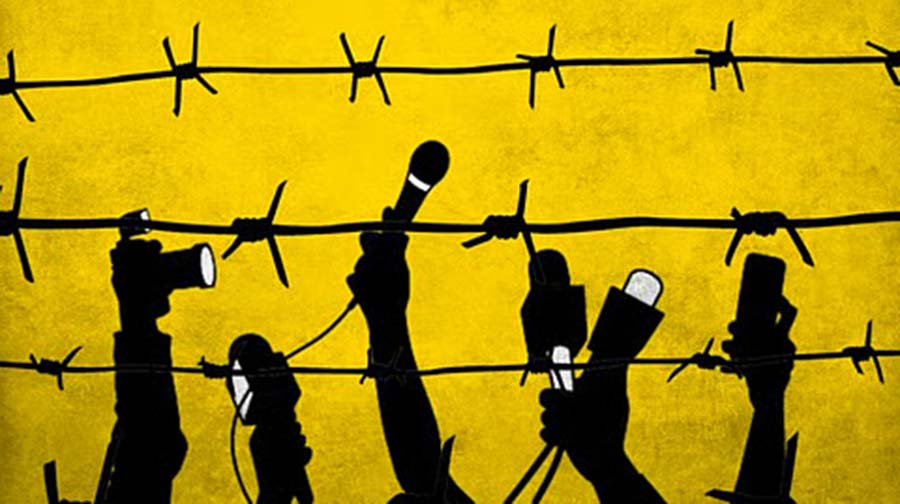
At least four reporters working for major national publications have been summoned by police in Jammu and Kashmir, Scroll has learned. The Wire also put out an extensive report that may be read here. One of the four journalists so summoned is a senior journalist with The Indian Express, Bashaarat Masood, a person familiar with the development told Scroll.
Masood had recently reported on a controversial police drive to collect information on mosques and mosque officials in Kashmir. He was asked to sign a bond, stating that he would not do anything to disturb peace in the union territory, the person said. Interestingly, the police action is not based on a formal first information report, but is being carried out under Section 126 of the Bharatiya Nagarik Suraksha Sanhita, the person said.
The provision allows an executive magistrate to pre-emptively seek bonds from people “likely to commit a breach of peace”. Government officials can invoke this section merely on the basis of information they have received about individuals.
Senior journalist Nirupama Subramaniam, on January 19, Monday commented sharply on the developments on social media
Reporters of Delhi national newspapers are being summoned by J&K police, harassed about routine “he said”, “she said” reports and asked to sign bonds they won’t do such reports again. First, the correspondent of one newspaper was summoned repeatedly over three days, and perhaps…
— Nirupama Subramanian (@tallstories) January 19, 2026
For Kashmir’s journalists, the cycle is vicious: repeated summonses, institutional pressure and the lack of a community safety net have become a part of an entrenched system that limits critical reporting, encourages self-censorship and sidelines independent media voices in the…
— Siddharth (@svaradarajan) January 20, 2026
Reportedly, an Indian Express spokesperson confirmed to the media that Masood had been called to the police station. “Bashaarat Masood, Assistant Editor, and a member of the Srinagar bureau of The Indian Express since 2006, was called on four days to the Cyber Police Station, Srinagar, and asked to sign a bond which he has not signed,” the spokesperson said. “The Indian Express is committed to doing what is necessary to uphold and protect the rights and dignity of its journalists.”
Scroll also contacted the senior superintendent of Srinagar police, asking about the reasons for summoning journalists and asking them to sign the bonds. The official did not respond to our calls and messages. This story will be updated if he responds.
The police summons
It was on the evening of January 14, Masood first received a phone call from the cyber police in Srinagar, asking him to come to the police station the next afternoon, according to the person familiar with the events that followed. As he got there, he was made to wait for nearly three hours after which a police officer asked him to come back the following day. The officer assured Masood that he would only have to spend half an hour at the police station the next time he came. However, the senior journalist ended up spending the whole of Friday and Saturday running from one government office to another.
Masood was reportedly first sent to the deputy commissioner’s office from the police station, where he was asked to sign a Section 126 bond. The police officials were unwilling to provide reasons for their demand, said the person. When Masood refused to comply, a police official told him that he would then have to go to Srinagar central jail.
From the deputy commissioner’s office, the journalist was sent back to the police station. There, one of the officers told him that he was being asked to sign the bond because of a story he had written on the political reaction to the police drive in mosques in Kashmir.
On Monday afternoon, he was called in again, the fourth day he had been forced to turn up at the police station. This time, though, the police did not keep him at the station for very long. The three other journalists got similar summons. One of them was out of Srinagar when he got a call from a police official, asking him to come in. None of the other journalists have, as of yet, reported to the police station.
‘Serious attack on press freedom,’
The four journalists summoned had reported on the political reaction to the Jammu and Kashmir police’s drive to collect information on mosques, which has been the subject of much controversy over the past week in Kashmir.
Police officials are reportedly distributing copies of a four-page form to mosques in the Muslim-majority region. The form seeks extensive information pertaining to the family background and financial details of those involved in the upkeep of the places of worship.
The exercise has drawn fire from Kashmiri politicians cutting across party lines as well as prominent religious organisations, who argue that this goes beyond looking into the legal status of mosques.
Indian Express also reported that J&K Director General of Police Nalin Prabhat was not available for comment. Another officer, who did not wish to be named, told the newspaper that the police called him following his news report about the police distributing a four-page document to all mosques in the Kashmir valley and seeking detailed information about their budget, funding sources, and management committees.
Masood has been a member of the Srinagar Bureau of The Indian Express since 2006. “His work over the last two decades speaks for itself. He has not signed the bond as asked by the police. The Indian Express is committed to doing what is necessary to uphold and protect the rights and dignity of its journalists,” said Raj Kamal Jha, Chief Editor, The Indian Express as quoted in the newspaper.
Related: