
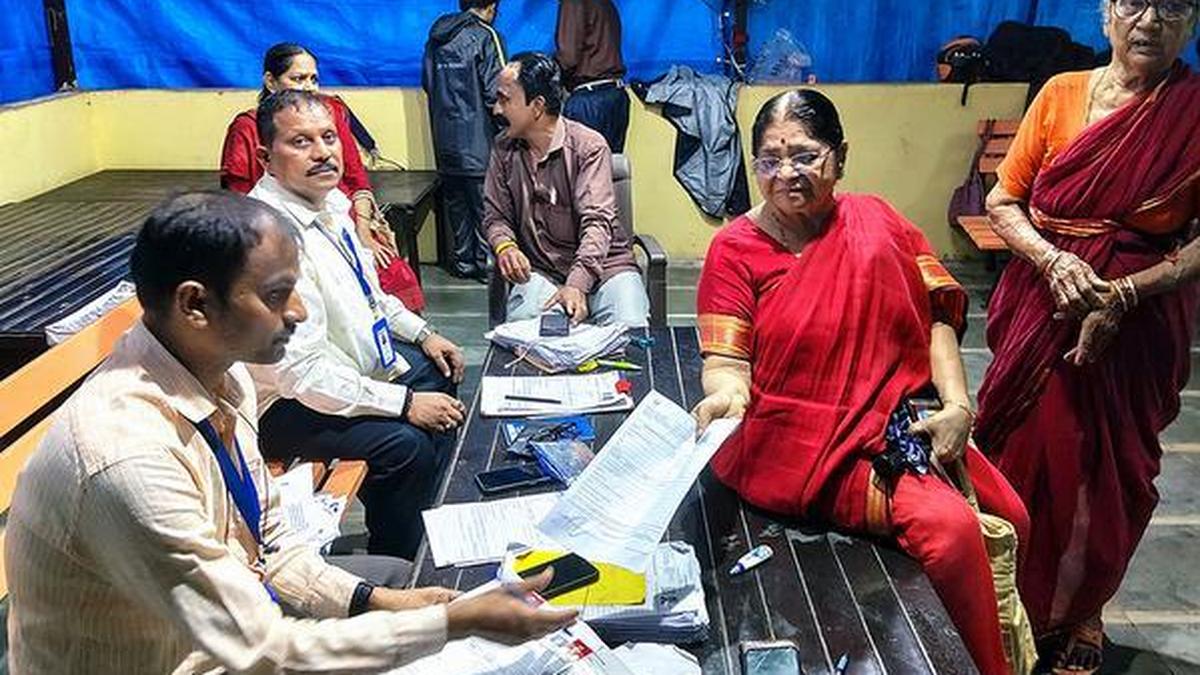
As the SIR enumeration phase in the Maharashtra wound to a close earlier this week (August 18, 2026), official records reveal that over 2.08 crore voters (a staggering 20.8 million) in Maharashtra may not find their names in the draft electoral roll scheduled to be published on August 24! Reason? Through bureaucratic slips or pressure, the enumeration forms for these voters “remained uncollected” during the Special Intensive Revision (SIR) exercise. The result? The onus will now be on these voters to approach and complete all formalities in the inadequate one month period granted for correction of this exclusion. Voters have to submit adequate details by September 23, 2026.
According to the 10 am bulletin issued on the final day of the house-to-house enumeration exercise, 2, 07, 93,916 forms, or about 21.25 per cent of the state’s electorate, were in the uncollected category. The exercise ended at 5 pm on Monday, August 17, and the final figure could change after the remaining data is updated.
महाराष्ट्रातील मतदारनिहाय गणना अर्ज (EFs) यांच्या डिजिटायजेशन आणि ‘गणना अर्ज जमा न होणे’ची स्थिती – १७ ऑगस्ट २०२६
Maharashtra’s Status of Digitization and Uncollected of elector specific Enumeration Forms (EFs) – 17.8.2026#SIR2026 #SIRMAHARASHTRA pic.twitter.com/2g1rZO3UQP
— ChiefElectoralOffice (@CEO_Maharashtra) August 17, 2026
The uncollected forms relate to voters whose details could not be verified through the enumeration process. Their absence from this category does not by itself establish that they are dead, have shifted permanently, are duplicate voters or are otherwise ineligible.
The Election Commission’s process requires voters whose forms were not collected to be dealt with separately in the draft roll. As a result, their names are unlikely to appear in the August 24 draft unless their enumeration status is updated before publication.
However, this would not amount to permanent deletion from the electoral roll. Voters whose names are missing from the draft will have from August 24 to September 23 to file claims or objections and seek inclusion or correction. The authorities will consider these applications before the final electoral roll is published on October 27.
An official reportedly told the media that the said voters should check the draft roll once it is published and submit a claim for inclusion if their names are missing. Eligible persons can also apply for inclusion during the claims and objections period. Indian Express quoted an official from the State Election Commission, saying that, “This is not permanent deletion from the electoral roll. The August 24 list is a draft, and being left out of it does not mean that an eligible voter has permanently lost the right to vote. Voters should check the draft roll on August 24. Those whose names are missing will have one month, from August 24 to September 23, to seek inclusion or correction. Eligible persons can apply for inclusion as voters during this period,” said an official.” However as stated earlier in the report, the onus now shifts from the SEC to the individually excluded voter.
The enumeration form is used to verify the details of an existing elector. During the SIR exercise, Booth Level Officers (BLOs) visited households with pre-filled forms, which were then collected for verification and digitisation.
A form could remain uncollected for several reasons. A voter may have moved to another address, may have been away when the BLO visited, or may not have been traceable at the address recorded in the electoral roll. Urban migration and frequent changes of residence have been cited by officials as some of the reasons for the higher numbers in cities.
The SIR exercise in Maharashtra began on June 30. The deadline for the house-to-house enumeration process was extended twice before the exercise concluded on Monday i.e. August 18, 2026.
राज्यात SIR अंतर्गत गृहभेटींनंतर गणना प्रपत्र दाखल करून घेण्याची प्रक्रिया पूर्ण झाली आहे. त्याबाबतचे प्रसिद्धीपत्रक @ECISVEEP pic.twitter.com/M6DrnFp7KK
— ChiefElectoralOffice (@CEO_Maharashtra) August 18, 2026
Urban districts account for a large share
The distribution of uncollected forms is uneven across Maharashtra. Four major urban districts — Thane, Mumbai City, Mumbai Suburban and Pune — together account for about 94.47 lakh uncollected forms.
That is around 45.4 per cent of all uncollected forms in the state, even though these four districts account for only about 27.5 per cent of Maharashtra’s electorate.
Thane has the largest number, with forms for 28.88 lakh of its 74.51 lakh voters remaining uncollected. This represents about 38.77 per cent of the district’s electorate.
Mumbai City recorded 9.60 lakh uncollected forms, or 37.57 per cent of its voters. Mumbai Suburban had 26.99 lakh, accounting for 34.48 per cent, while Pune had 28.99 lakh uncollected forms, or 31.92 per cent of its electorate.
The figures are also high in several other districts with significant urban and migrant populations. Nagpur had 14.06 lakh uncollected forms, representing 30.32 per cent of its electorate. In Palghar, 6.87 lakh forms, or 28.88 per cent, remained uncollected. Raigad recorded 5.91 lakh, or 23.33 per cent.
Together, Thane, Mumbai City, Mumbai Suburban, Pune, Nagpur, Palghar and Raigad account for around 1.21 crore uncollected forms, or nearly 58.3 per cent of the state-wide total. These districts, however, account for roughly 37 per cent of Maharashtra’s electorate.
Lower numbers in several rural districts
The pattern is markedly different in several rural districts. Hingoli had the lowest proportion among the districts cited, with forms for 8.82 per cent of voters remaining uncollected.
Buldhana recorded 9.10 per cent, while Ratnagiri had 9.93 per cent and Latur 10.62 per cent. The difference means that while nearly four out of every 10 voters in Thane had an uncollected form, the proportion in Hingoli was below one in 10.
The gap between urban and rural districts has raised attention to the challenges of conducting house-to-house verification in areas with high population mobility. In larger cities such as Mumbai, Thane and Pune, voters may frequently change residences without immediately updating their electoral details.
Number rose by 27 lakh in five days
The number of uncollected forms also increased sharply in the final days of the exercise. The figure stood at around 1.80 crore on August 12 and had risen to nearly 2.08 crore by Monday, an increase of about 27.3 lakh in five days.
At the time of the 10 am bulletin on Monday, around 1.08 lakh electors were still outside both the digitised and uncollected categories, with their status yet to be reflected in the data.
This essentially means that the 2.08 crore figure should be treated as the ‘bare minimum’ number of voters who could be left out of the August 24 draft based on the available bulletin. The final number may change after the remaining records are processed.
The publication of the draft roll on August 24 will therefore be the next major stage of the process. Voters will have one month after its publication to check their names and submit claims or objections where required.
The final electoral roll is scheduled to be published on October 27, after the claims and objections received during the intervening period are examined by the election authorities.
Related:
SIR 2025-26: Dismantling the very Idea of India?
21 Opposition parties to CJI: SIR process is irregular and illegal, must be suspended
SIR and the Making of a Stateless Citizen? | R. Rajagopal Speaks Out | Teesta Setalvad
Karnataka launches SIR with 5.5 crore voters, State Govt voices transparency concerns