
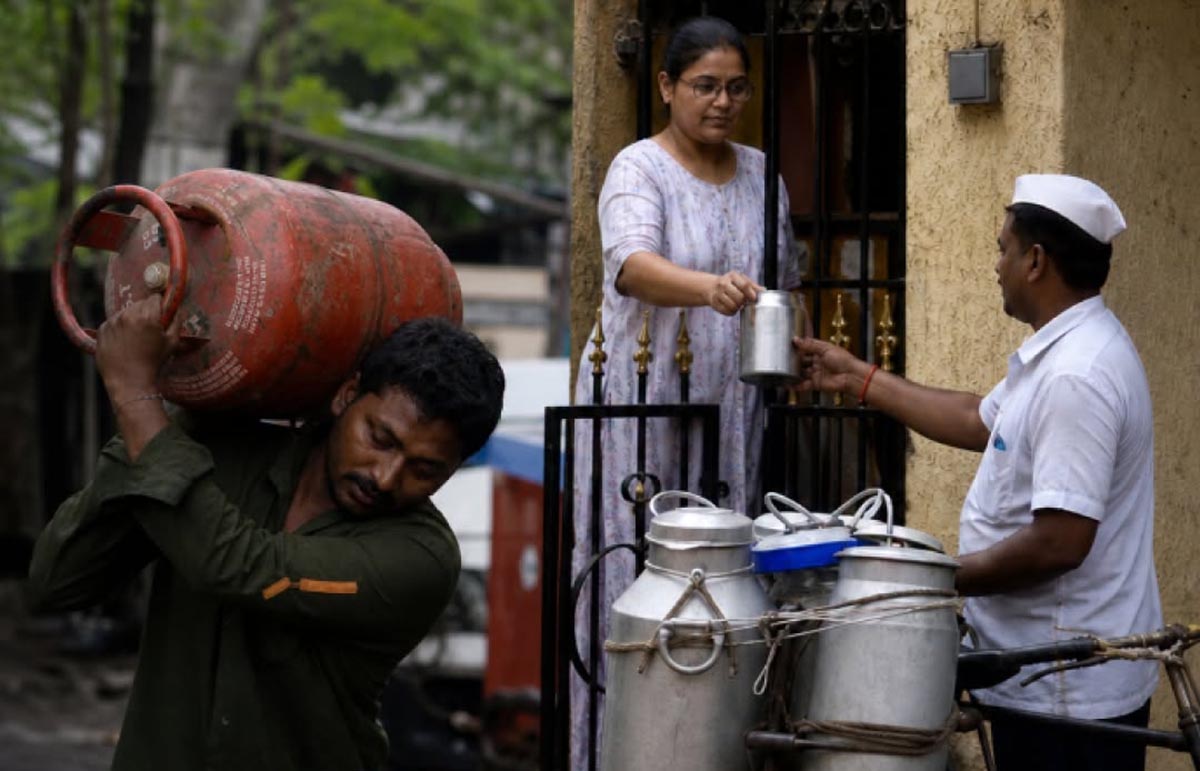
For Mumbai’s households, September has begun with another round of price increases — and the burden is not confined to one commodity or one section of the population. Milk, cooking gas, CNG and local transport have all become more expensive, adding to a wider rise in the cost of food and essential services across Maharashtra.
The latest round of increases came into effect on September 1. As India Today reported, Mahanagar Gas Limited (MGL) raised CNG prices by ₹2 per kg to ₹88 in Mumbai and surrounding areas, while domestic PNG became ₹1 per standard cubic metre more expensive. The CNG increase is the fourth hike in the current financial year, following two ₹2 increases in May and a ₹1 increase in April. Around 13 lakh CNG vehicle owners and nearly 30 lakh domestic PNG consumers are expected to be affected.
MGL attributed the increase to higher international gas prices amid the continuing crisis in West Asia and the consequent rise in the cost of spot RLNG. However, for households, the reason matters less than the cumulative effect: higher fuel costs feed into transport, deliveries and other everyday expenses.
Public and private transport have both become more expensive. The minimum auto-rickshaw fare in Mumbai has risen from ₹26 to ₹27, while the minimum black-and-yellow taxi fare has increased from ₹31 to ₹33. The per-kilometre auto fare has gone up from ₹17.14 to ₹18.22, and the taxi rate from ₹20.66 to ₹21.90. India Today noted that Mumbai has more than 4.5 lakh autos and over 50,000 taxis, meaning the increase touches a substantial part of the city’s daily commuting population.
Milk has taken another significant hit. The Bombay Milk Producers’ Association raised the wholesale price of tabela milk from ₹93 to ₹102 per litre. NDTV reported that retail prices could reach around ₹110 per litre, depending on the supplier and locality. The association has cited rising production and operating costs, with key cattle-feed ingredients such as green fodder, chuni and oil cakes reportedly becoming up to 25% more expensive over the past year.
This comes soon after another milk price increase across Maharashtra. Hindustan Times reported that cow and buffalo milk prices were raised by ₹2 per litre from August 11. The Milk Producers and Processors Welfare Association attributed the increase to higher diesel, procurement and packaging costs, with packaging expenses alone reported to have risen by around 30%.
The pressure is not restricted to households that buy milk or use autos. Commercial establishments are also facing higher input costs. NDTV Profit reported a ₹9.50 increase in the price of 19-kg commercial LPG cylinders from September 1. The report linked the increase to supply pressures following disruptions to imported cooking gas amid the West Asia conflict.
The escalation in everyday costs has been building for months. In July, the Maharashtra State Road Transport Corporation (MSRTC) raised bus fares by an average 13.5%, with the minimum fare for a six-kilometre journey increasing from ₹13 to ₹15. The Times of India noted that this was the second major fare increase for the state transport undertaking within a year, compared with the 4–5% annual revisions that had been more typical in the past. MSRTC carries around 55–60 lakh passengers every day, making even modest fare increases significant for workers, students and rural commuters.
Food prices have also been moving upwards. Clarion India, reporting from Mumbai on September 2, said residents were already dealing with higher prices of sugar, packaged milk, pulses, rice, eggs and other essentials. One resident cited in the report said sugar prices had risen by ₹20–25 per kilogram within a few weeks, while other routine household purchases had also become more expensive. Families, the report noted, were struggling to balance rent, education and food expenses amid stagnant incomes and employment pressures.
The squeeze is therefore not simply about a ₹1 increase in an auto fare or ₹2 more for CNG. The problem is cumulative. A household pays more to travel to work, more to buy milk, more to cook, and increasingly more for basic groceries. Businesses facing higher fuel, transport and input costs then pass at least some of those expenses on to consumers.
Even the state’s farmers are confronting the same inflationary pressure. A report carried by ThePrint noted that the cost of producing a quintal of cotton in Maharashtra has risen from around ₹3,500 in 2018 to approximately ₹5,000 today. Fertiliser, pesticide, tractor and labour costs have all increased, while the area under cotton cultivation has declined by 2.5 lakh hectares between 2024–25 and the following year.
Taken together, these developments point to a broader problem than isolated price revisions. The cost of maintaining an ordinary household is rising across multiple fronts, while the ability of families to absorb those increases depends on whether their incomes are keeping pace. For many, they are not. That is what makes the latest round of hikes significant. Each increase may appear manageable in isolation. However, when milk, fuel, transport, food and other essentials rise together, the question is no longer what one additional rupee or five additional rupees means. It is how much more a family must spend simply to maintain the same standard of living it had before.
In a city where rent and education already consume a large share of household incomes, the steady rise in the price of necessities is turning the ordinary act of getting through the day into an increasingly expensive proposition.
Related:
3,404 SIR Forms Found at Kharghar Xerox Shop: CJP, VFD and BCS demands answers from Maharashtra SEC
We Cannot Be Afraid’: Rhiya Ahir in Conversation with Teesta Setalvad