
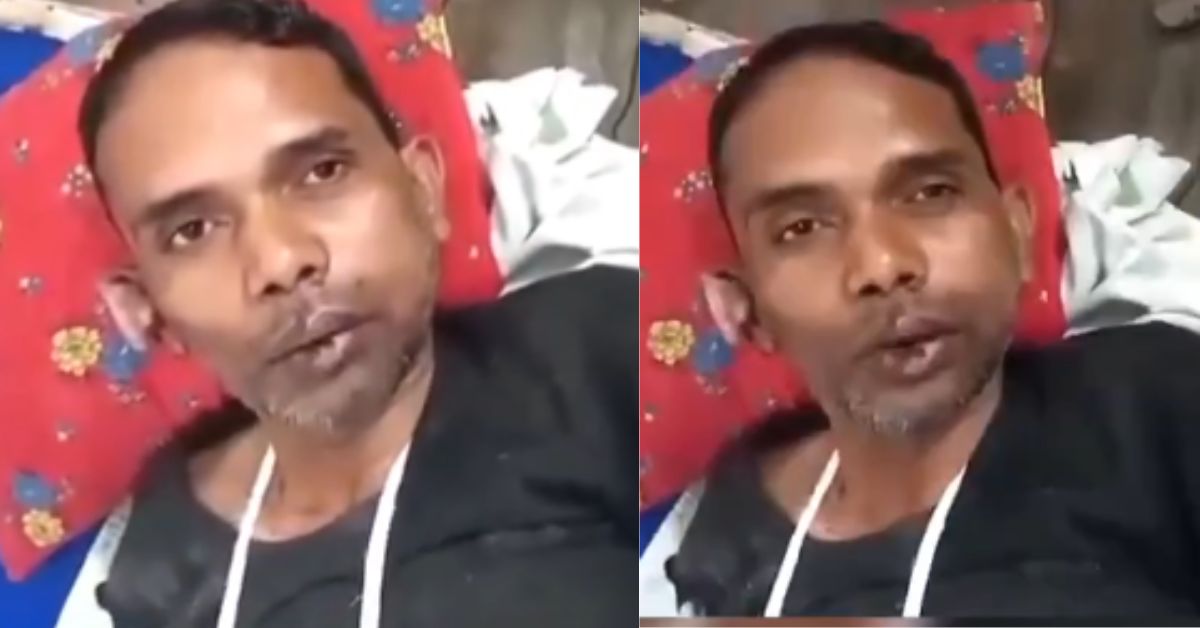
The death of Mohammad Athar Hussain, a 35-year-old Muslim clothes hawker, nearly a week after he was brutally assaulted by a mob in Bihar’s Nawada district, has exposed disturbing patterns of mob vigilantism, custodial failure, and the routine invocation of theft allegations to legitimise collective violence. Hussain died on the night of December 12–13, while being shifted for further medical care, following days of treatment across multiple government hospitals, as reported by The Indian Express.
A decade-long livelihood cut short
Hussain, originally from Gagandiwan village under Laheri police station in Biharsharif, had earned his livelihood for nearly 20 years by selling clothes door-to-door in rural Nawada on a bicycle, according to Indian Express. Over the past few years, he had been living with his in-laws in Barui village, Nawada district, from where he would travel daily to surrounding villages to sell garments.
Family members described him as a quiet worker who had never faced complaints or conflict in the course of his business, as per The New Indian Express.
Night of December 5: From seeking help to being hunted
On the night of December 5, Hussain was returning from Dumri village after a day of hawking when his bicycle reportedly developed a puncture. Near Bhattapar (also referred to as Bhatta) village, which falls under Roh police station, he stopped to ask locals about a puncture repair shop, as reported by Indian Express.
According to his brother Mohammad Shakib Alam, instead of helping him, a group of villagers questioned him about his name and profession, reported Scroll. Soon after identifying him, they allegedly dragged him off his bicycle and began assaulting him.
Robbery and illegal confinement
Hussain told investigators and media, in a video recorded from his hospital bed, that the attackers robbed him of cash—variously reported as Rs 8,000 and Rs 18,000—along with his bicycle and clothes (ThePrint).
He was then tied by his hands and feet and locked inside a room, where the violence intensified over several hours. What began with a smaller group of assailants reportedly expanded as more villagers joined, eventually forming a mob of 15–20 people.
Extreme and prolonged torture
The assault, as described by Hussain and later corroborated in parts by medical findings, involved sustained and sadistic violence. He stated that he was beaten repeatedly with bricks and iron rods, resulting in fractured fingers and hands, provided Indian Express.
In one of the most chilling aspects of the case, Hussain alleged that the mob stripped him to check his private parts to confirm his religion, after which the assault escalated further, as per ThePrint. He said petrol was poured on him, and his body was branded with a heated iron rod, causing severe burns that peeled his skin.
Hussain also alleged that his ears and fingertips were cut with pliers, his nails were pulled out, and a steel rod was used to strike his head, causing serious head injuries.
At one point, according to his statement, one attacker climbed onto his chest and attempted to strangle him, leading to blood gushing from his mouth. The assault reportedly continued intermittently through the night as more assailants arrived.
Police intervention after hours of violence
An emergency Dial 112 call was eventually made, following which Roh police reached the village at around 2:30 a.m. on December 6, several hours after the assault began, as reported by Indian Express.
Furthermore, police sources told The Indian Express that Hussain was found in a grievously injured condition. He was taken first to the Roh Primary Health Centre, then referred to Nawada Sadar Hospital, and later shifted to Vardhman Institute of Medical Sciences (VIMS), Pawapuri, as his condition worsened.
Despite medical intervention, Hussain remained critical. He ultimately died nearly a week later while being transported from Pawapuri to Patna for advanced care.
Victim’s statement before death
Crucially, Hussain managed to give a video statement from his hospital bed, accessed by ThePrint. In the recording, he named the acts of torture inflicted upon him and explicitly stated that he was targeted after the assailants identified him as Muslim.
While some senior police officials later claimed that the religious aspect did not appear in the wife’s initial written complaint, the existence of Hussain’s recorded statement has become a key piece of evidence in the ongoing investigation.
FIR by wife: Allegations of false theft and mob violence
On December 6, Hussain’s wife Shabnam Parveen filed a detailed complaint naming 10 residents of Bhattapar village and 15 unidentified persons, reported Indian Express. She alleged that her husband was falsely accused of theft, tied up, robbed, and brutally tortured.
She also stated that when she and her relatives reached Bhattapar to look for Hussain, they were abused and threatened by villagers, prompting the police to add further sections relating to intimidation and criminal force.
Based on her complaint, police registered an FIR invoking multiple provisions of the Bharatiya Nyaya Sanhita, including sections dealing with unlawful assembly, rioting, grievous hurt using dangerous weapons, abetment, common intention, and group violence motivated by discrimination. After Hussain’s death, Section 103 (murder) was added, as per The New Indian Express.
Counter-FIR against the injured victim
Within hours of the assault coming to light, a cross-complaint was filed by Sikandar Yadav, one of the men later named as an accused by Parveen. Yadav alleged that Hussain had committed theft at his house that night, claiming the loss of jewellery and utensils (ThePrint).
Based on this complaint, police initially booked the severely injured Hussain under sections of the BNS relating to theft and trespass, even as he lay hospitalised. Senior police officials later stated that both FIRs are being investigated simultaneously, a pattern that has drawn criticism from rights groups for effectively placing the victim and perpetrators on the same legal footing.
Arrests, official stance, and denial of lynching
Nawada Superintendent of Police Abhinav Dhiman confirmed that a Special Investigation Team was constituted, which arrested four suspects within 24 hours, followed by further arrests over the next few days.
As of the latest reports of Indian Express, eight to nine persons have been arrested or detained, including several named in the FIR, while police continue raids to trace the remaining accused,
Despite the nature of the allegations, some senior officials initially denied that the case amounted to a religion-based lynching, describing it instead as an assault arising out of “mistaken identity” linked to theft suspicions, according to The Print. This position stands in contrast to the victim’s recorded account and the brutality documented in medical examinations.
Family left devastated
Hussain, described by his family as the sole breadwinner, is survived by his wife and three children. His brother told The Print that the family has suffered an irreversible loss and now faces an uncertain future.
As the investigation continues, the case has become emblematic of mob violence enabled by rumours, identity checks, and delayed state intervention, raising urgent questions about accountability, police conduct, and the protection of vulnerable livelihoods in India.
Related:
Silent Scars: How Muslim widows of hate crimes endure layered, unseen oppression
CJP Files complaint with NCM over escalating Hate Speeches during Hindu Sanatan Ekta Padyatra
Hindu Nationalism’s sectarian nationalism and its concept of ‘duties and rights’