
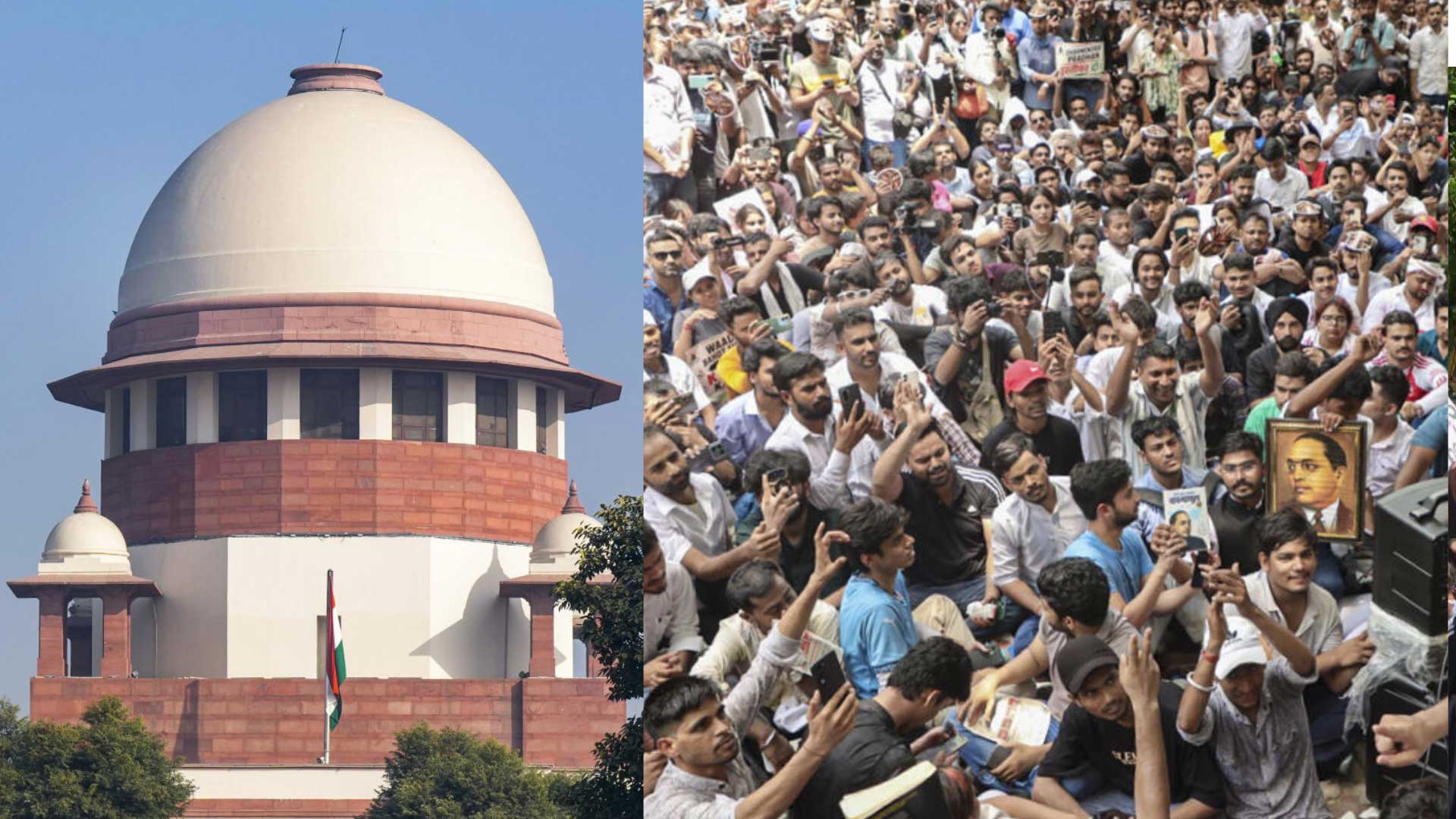
The Supreme Court has invoked its extraordinary powers under Article 142 of the Constitution to bring a nationwide end to criminal proceedings arising from student protests held in connection with the NEET-UG 2026 examination irregularities. In an order dated September 1, a Bench comprising Chief Justice of India Surya Kant, Justice Joymalya Bagchi and Justice V. Mohana directed that FIRs relating to the protests between July 20 and July 25 shall not be pursued or investigated and shall be treated as closed for all intents and purposes.
The order goes beyond the FIRs specifically placed before the Court by the Delhi Police and the States of Bihar, West Bengal, Assam and Maharashtra. The Court extended the protection to similar FIRs registered anywhere else in the country, including in States and Union Territories that were not parties to the applications. The Court simultaneously barred the registration of any fresh FIR in relation to the protest incidents of July 20-25, subject to one specific exception concerning 2,873 individuals whom the Delhi Police claimed had serious criminal antecedents.
The decision came after the Union government and the four States moved applications seeking the quashing of the FIRs. As reported by LiveLaw, the applications were filed against the backdrop of an assurance allegedly given by the Central government to the Cockroach Janata Party (CJP) leadership on July 25 that cases against protesters would be withdrawn and no fresh FIRs would be registered in connection with the agitation.
The Supreme Court has now converted that assurance into judicial directions, while expressly making its exercise of Article 142 dependent upon both sides honouring the understanding placed before it.
FIRs quashed and proceedings terminated

The order records that thousands of young students participated in protests held between July 20 and July 25 in Delhi, in the applicant-States and in other parts of the country. Following those protests, criminal cases were registered at several police stations. The five applications before the Court were moved by Delhi Police, Bihar, West Bengal, Assam and Maharashtra. They sought the exercise of the Supreme Court’s powers under Article 142 to quash the FIRs arising from the protests.
The Delhi Police application concerned 13 FIRs. Bihar placed 69 FIRs before the Court, while West Bengal sought relief in respect of eight FIRs and Assam in respect of five. Maharashtra placed 34 FIRs before the Court. The Court reproduced the details of these FIRs in its order.
Importantly, the Court did not restrict relief to these identified cases. After the Solicitor General submitted that additional FIRs could have been registered in other States and Union Territories concerning the same incidents, the Court directed that those cases too would not be pursued or investigated. The operative portion of the order states that any other FIR relating to the same incidents of protests between July 20 and July 25, including FIRs in States and Union Territories that were not applicants before the Court, “shall not be pursued or investigated” and shall be treated as closed for all intents and purposes.
The Court further directed that no State or Union Territory shall register any fresh FIR relating to those protest incidents. This makes the order significantly wider than the applications originally placed before the Court. The States that approached the Court sought relief concerning specified FIRs; the Court extended the protection to similarly situated cases across the country.
Court invokes Article 142 to protect students’ future
The central justification recorded by the Bench is the future of the young protesters. The Court noted the submission that the Central government and the applicant-States had consciously decided not to pursue the FIRs “as a gesture of goodwill” and to ensure that the cases did not cause prejudice to young students who had participated in the protests. The order also records an important qualification: “mere participation in the protests is not taken as an offence under the penal laws.”
It was against this background that the Court considered the matter fit for the exercise of its powers under Article 142. The Bench stated that, considering the commitments made before it and “most importantly” the future prospects of young protesters who had bona fide participated in peaceful protests to raise their demands, it was appropriate to invoke Article 142 to “do complete justice”.
The Court consequently quashed the FIRs specifically listed before it, along with all proceedings arising from them. The language of the order is significant because the Court did not merely record the government’s decision not to pursue the cases. It itself terminated the identified FIRs and extended the operative protection to other cases arising from the same protest incidents.
The 2,873-person exception
The order, however, does not provide an unconditional blanket protection to every person who may have been present at the protests. The Delhi Police had specifically sought permission to register a fresh FIR against 2,873 individuals whom it claimed had serious criminal antecedents, based on the National Crime Records Bureau database.
According to the application, these individuals were prima facie reported to have been present at the protest site. The police sought to investigate allegations relating specifically to bodily harm and destruction of public property. The Court permitted the Central government/Delhi Police to register a fresh FIR concerning these 2,873 individuals.
The permission is nevertheless confined to the allegations identified in the application. The order records that the proposed FIR is to concern offences relating to bodily harm or destruction of public property. It also expressly preserves the right of affected persons to pursue lawful remedies.
This distinction is important. The Court has not authorised a reopening of the entire protest-related criminal process against these individuals. It has permitted a fresh FIR within the limited framework sought by Delhi Police and without prejudice to the rights of those affected. The Court also linked this exception to its earlier observations of August 3, 2026, when it had clarified that protection could not be extended to persons with criminal antecedents involving “grave and heinous offences”.
Nationwide protection, despite only five jurisdictions approaching the Court
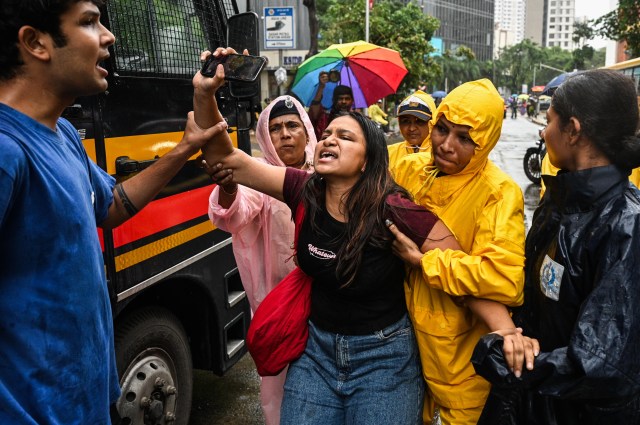
One of the most consequential features of the order is its pan-India operation. The applications before the Court came from Delhi Police, Bihar, West Bengal, Assam and Maharashtra. Yet the Solicitor General told the Court that there could be FIRs concerning the same protest incidents in other States and Union Territories.
Rather than requiring each affected protester or State to separately approach the Court, the Bench directed that such FIRs would not be pursued or investigated. The Court also barred States and Union Territories from registering fresh FIRs concerning the incidents between July 20 and July 25.
The direction therefore closes the possibility of the same protest incidents continuing to generate criminal proceedings elsewhere. The order also records a commitment by the Delhi Police and the applicant-States that, if another FIR concerning the same incidents comes to their notice, they would not oppose the affected party seeking similar relief from the Supreme Court.
NEET-UG suicide compensation: Union given 90 days
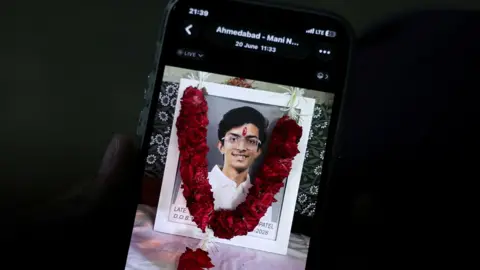
The criminal proceedings were not the only issue addressed by the Court. The Solicitor General informed the Bench that the Central government would formulate a pan-India policy or arrangement for compensation to the families of students who died by suicide in connection with the NEET-UG 2026 examination.
The Court recorded that the students concerned were situated in different parts of the country and consequently directed the Centre, in consultation with the State governments and Union Territories, to formulate the policy within 90 days. Once formulated, compensation is to be paid to the affected families without delay. The order further states that the policy or arrangement may subsequently be adopted by State governments and Union Territories as a regular mechanism for compensatory measures.
This direction gives judicial force to the assurance placed before the Court by the Solicitor General. As reported by LiveLaw, the Centre had sought three months to work out the modalities for compensation. The Court has consequently fixed a 90-day period for the formulation of the nationwide policy.
September 5 CJP march withdrawn in Court
The proceedings also resulted in the withdrawal of the protest march that the CJP had announced for September 5. The proposed march had been announced after the organisation alleged that the government’s assurances concerning the withdrawal of criminal cases had not been implemented.
According to the report of LiveLaw, the proposed demonstration in Delhi was to be held in connection with the demands arising from the NEET examination controversy, including the withdrawal of cases against protesters and compensation for families of students who died by suicide.
During the hearing, CJP co-convener Saurav Das made a statement before the Bench that the organisation was withdrawing the September 5 call in view of the assurances given by the government and the order being passed by the Court. The Supreme Court recorded that statement.
The order then made it clear that the commitments made by all sides would have to be honoured. The Court directed both sides to abide by the statements and commitments made before it and expressly linked the exercise of Article 142 to compliance with the understanding reached between the parties. CJI Surya Kant, according to the proceedings reported by LiveLaw, observed that if both sides acted in good faith, the issues could be resolved one by one.
Article 142 and the Court’s carefully confined intervention
The Court’s use of Article 142 is central to the order. The applications specifically sought the exercise of the Supreme Court’s extraordinary constitutional power to secure the quashing of FIRs that the executive itself had decided it no longer wished to pursue. The order makes clear, however, that the Court is not laying down a general rule for the quashing of protest-related FIRs.
In paragraph 15, the Bench expressly states that its directions are being issued because of the “peculiar facts and circumstances of the case” and “shall not be taken as a binding precedent.”
The Court has therefore crafted relief that is extensive in its immediate reach but expressly limited in its precedential value. The order brings closure to the particular set of protests and the criminal proceedings arising from them, while avoiding a declaration that similar FIRs in future protest cases must necessarily be quashed. The order also makes the settlement between the parties an important component of the Article 142 exercise. The Court records that its extraordinary powers are subject to the condition that both sides abide by the terms of the mutual understanding placed before it.
A judicial closure of the criminal fallout of the July protests
The order ultimately produces a comprehensive closure of the criminal proceedings arising from the specified July protests. The FIRs specifically placed before the Court have been quashed. Other FIRs concerning the same incidents, even where they were not formally brought before the Bench, are not to be pursued or investigated. States and Union Territories have been prohibited from registering fresh FIRs concerning those incidents. The only express exception is the liberty granted to Delhi Police concerning the 2,873 individuals identified in its application. The Court has simultaneously directed the Centre to formulate a nationwide compensation mechanism within 90 days for families of students who died by suicide in connection with NEET-UG 2026.
The order is thus structured around two forms of closure: criminal proceedings arising from the protests are brought to an end, while the government’s commitment concerning compensation to affected families is placed on a defined judicial timeline.
At the same time, the Bench has carefully confined the constitutional significance of its intervention. It has not declared the quashing of protest FIRs to be a general rule. Instead, it has treated the matter as an exceptional exercise of Article 142 arising from the particular circumstances before it, the commitments made by the parties, and the Court’s concern that the criminal cases should not prejudice the future prospects of young protesters who had participated in the agitation.
The order closes with the Court placing on record its appreciation of the Union government, the applicant-States, counsel and the CJP leadership for their “constructive and cooperative approach”, noting that this had kept the interests and future of the young students at the forefront. The Supreme Court has made clear, however, that this resolution rests on the peculiar circumstances of this case and the commitments made before it. It is precisely for that reason that the Bench has directed that the order not be treated as a binding precedent.
The complete order may be read below:
Detailed reports on the withdrawal of FIRs may be read here, here and here.
Detailed reports on brute force used by police on the protestors may be read here, here, here and here.
Related:
Water Cannons Instead of Answers: Bihar’s recruitment crisis and the state’s crackdown on protest
Amnesty Investigation finds unlawful and deadly force against CJP-led protesters in Delhi and Siwan
The Supreme Court’s Uneasy Middle Path on Protest Policing
July 2026: A dissent that was brutally put down, a crackdown after the protest ended