
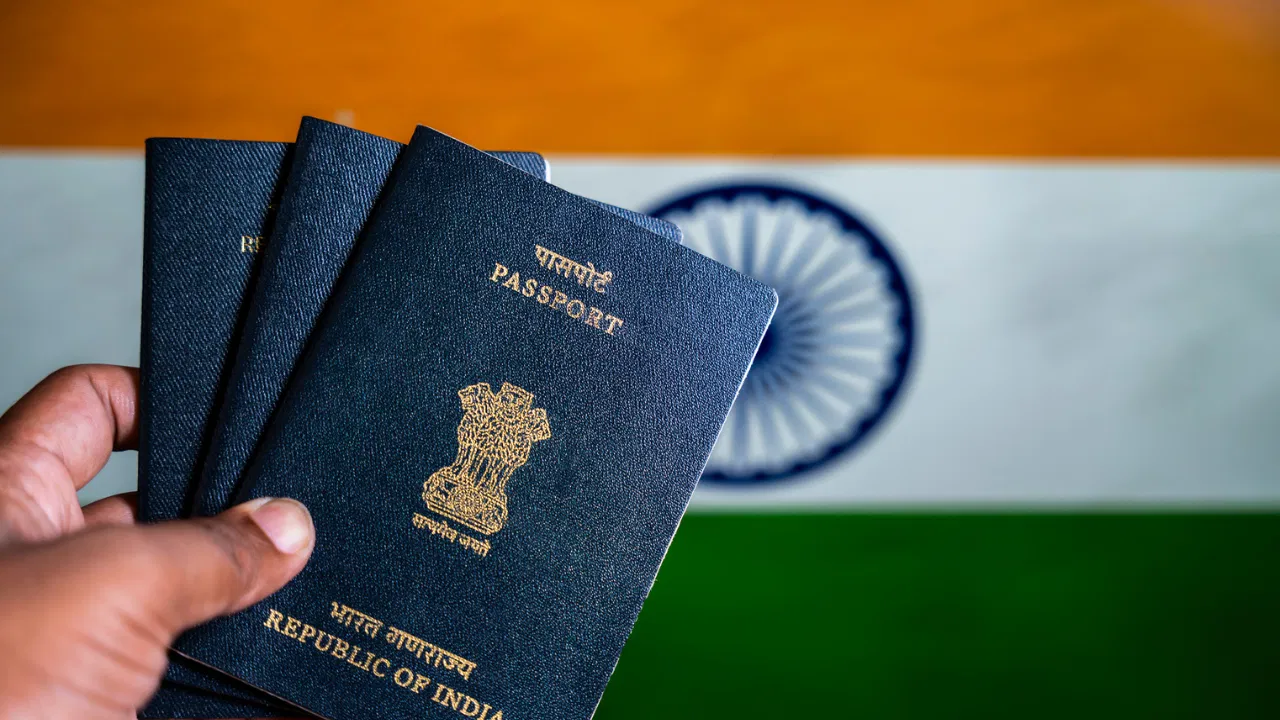
The Ministry of External Affairs’ (MEA) recent defence read clarification on its initial claims made on Passport Seva Divas (that an Indian passport is not proof of Indian citizenship) has reignited an important constitutional and legal debate on citizenship documentation in India. The controversy emerged during the launch of chip-enabled e-passports, when officials explained that a passport is fundamentally a travel document issued under the Passports Act, 1967, while citizenship is determined under the Citizenship Act, 1955. The statement immediately generated widespread confusion because, for generations of Indians, a passport has represented the highest form of government-issued documentation, obtained only after extensive police verification and scrutiny by the Union Government.
As public criticism mounted, the Government maintained that the clarification represented no change in legal position. Rather, officials asserted that passports had never been proof of citizenship. Quoting the statutory scheme of the Passports Act, officials argued that the Act itself contemplates the issuance of passports and travel documents to certain categories of non-citizens and therefore possession of a passport cannot constitute conclusive proof of citizenship. Government officials further justified their position by relying upon a 2013 judgment of the Bombay High Court, asserting that the Court had already held that a passport is not proof of citizenship. As reported by The Times of India, an official stated:
“It was not decided yesterday that the passport is not proof of citizenship. It was not even decided in the last 12 years. The passport has never been a proof of citizenship. Passports Act 1967 says that passports can be given to non-citizens. Judgments of Bombay HC from 2013 have also made it clear a passport is not proof of citizenship.”
The same report explained that the Government’s position rested upon two propositions: first, that the Passports Act allows passports or travel documents to be issued in limited situations to non-citizens; and secondly, that the Bombay High Court had recognised that possession of a passport cannot be treated as conclusive evidence of citizenship. Similar explanations appeared in media coverage by The Hindu, The Indian Express and other national newspapers, many of which reproduced the Government’s reliance on the Bombay High Court decision.
Even at first glance, the official explanation is not persuasive. The Times of India report itself mentions that the passport issued was subsequently terminated, suggesting that this case needs to be looked at in its specificity and is not illustrative. Sabrangindia has accessed the hitherto unavailable, unreported 2013 judgement (see below). A closer examination of both the statutory framework and the Bombay High Court judgment reveals that the legal position is considerably more nuanced. More importantly, it raises the question whether the Government has relied upon the Bombay High Court decision for a proposition that the Court itself never decided.
The statutory scheme of the Passports Act, 1967
The Passports Act, 1967 was enacted “to provide for the issue of passports and travel documents, to regulate the departure from India of citizens of India and other persons and for matters incidental or ancillary thereto.” The title of the Act itself demonstrates that Parliament recognised that travel documentation may occasionally be issued not only to Indian citizens but also to “other persons.”
This distinction is significant. The Act governs travel documentation, whereas citizenship is regulated independently by the Citizenship Act, 1955. The two enactments undoubtedly operate in different legal spheres. A passport is issued under one statute; citizenship is acquired, determined and regulated under another.
However, it does not necessarily follow that because a statute permits the issuance of travel documents to certain categories of non-citizens, every passport issued under the Act loses all evidentiary value regarding citizenship. The Government’s argument conflates two distinct legal propositions.
The first proposition, that citizenship is determined under the Citizenship Act, is unquestionably correct.
The second proposition, that a passport therefore has no evidentiary significance regarding citizenship, does not automatically follow from the first.
The Passports Act envisages exceptional circumstances in which travel documentation may be issued to non-citizens, such as certificates of identity, emergency certificates and other recognised travel documents issued in accordance with domestic law and international obligations. These exceptional statutory situations cannot be used to erase the ordinary legal presumption that accompanies the issuance of a passport to an Indian citizen after verification by the Passport Authority. The existence of exceptions does not determine the legal character of the general rule.
Indeed, the very process prescribed under the Passports Act and the Passport Rules demonstrates that issuance of a passport ordinarily follows verification of the applicant’s identity, nationality and supporting documents. While this verification may not amount to a judicial determination of citizenship, it would be equally incorrect to suggest that the exercise is legally meaningless or that a valid passport carries no evidentiary weight whatsoever.
The Bombay High Court Judgment: What did the court actually decide?
The Government’s principal judicial authority for its present position is the Bombay High Court’s decision in Anwar Hussain Abdul Kadar Shaikh & Ors. v. State of Maharashtra (2013). The judgment, delivered by Justice K.U. Chandiwal in July 2013, has been cited in official explanations as establishing that “a passport is not proof of citizenship.”
A careful reading of the judgment, however, reveals something quite different. The applicants had been convicted under the Foreigners Act and the Passport (Entry into India) Rules. Before the High Court, they sought to rely upon several documents—including passports, Aadhaar cards and a birth certificate—to establish that they were Indian citizens. Their principal submission was that these documents had not been produced before the trial court and therefore the matter ought to be remanded for reconsideration.
The High Court declined to interfere. Crucially, however, the Court did not reject the passport because passports are incapable of evidencing citizenship. Instead, it rejected reliance on the particular passport produced before it because the passport had already been terminated.
The Court expressly observed:
“However, the passport to which the learned Counsel gave reference is already terminated passport. Therefore, no legal basis can be achieved for its reliance.” (Para 3)
This sentence constitutes the heart of the judgment. The Court’s reasoning was document-specific. It was not analysing the evidentiary value of a valid passport. Rather, it held that a passport whose legal validity had already been terminated could no longer furnish a legal basis for establishing citizenship.
The Court thereafter turned to the remaining documentary evidence. It observed that although one applicant had produced a birth certificate, the statutory requirements governing citizenship by birth had not been satisfied because no evidence had been adduced establishing that the applicant’s parents were Indian citizens. Consequently, the applicants had failed to discharge the evidentiary burden necessary to establish citizenship under the Citizenship Act.
The judgment therefore rests upon two independent factual conclusions. First, the passport relied upon had already been terminated. Secondly, the applicants had otherwise failed to establish citizenship through admissible documentary evidence.
Neither finding amounts to a declaration that all valid passports are legally incapable of evidencing citizenship.
Why the termination of the passport matters
The fact that the passport had already been terminated is not an incidental factual detail; it is the central reason why the Court declined to rely upon it.
Section 10 of the Passports Act empowers the Passport Authority to vary, impound or revoke a passport in specified circumstances. A passport may be revoked where it has been obtained by fraud, suppression of material information or misrepresentation; where the holder has ceased to be an Indian citizen; where criminal proceedings are pending; where the holder has contravened the provisions of the Act or the conditions subject to which the passport was issued; or where revocation is considered necessary in the interests of the sovereignty and integrity of India, the security of the State, friendly relations with foreign States or the interests of the general public. Once a passport is revoked or terminated under the statutory framework, it ceases to enjoy the legal validity that attaches to a subsisting passport.
This distinction fundamentally alters the significance of the Bombay High Court’s reasoning. The Court was not confronted with a valid passport issued and continuing under the statutory scheme. It was confronted with a passport whose legal efficacy had already been extinguished. Unsurprisingly, the Court held that “no legal basis” existed for relying upon such a document.
To extend this reasoning to conclude that every valid passport issued by the Government of India is incapable of evidencing citizenship is to read the judgment far beyond its factual and legal context.
Reading the judgment beyond its ratio
It is a settled principle of judicial precedent that a decision is authority only for what it actually decides. Courts have repeatedly cautioned against extracting broad legal propositions from judgments without regard to the factual matrix in which they were rendered.
Measured against this principle, the Government’s reliance on Anwar Hussain appears to stretch the judgment beyond its actual ratio. The High Court never analysed whether a valid passport constitutes prima facie evidence of citizenship. It never considered the evidentiary status of passports issued after statutory verification. Nor did it hold that a valid passport can never be relied upon in citizenship proceedings. Those questions simply did not arise because the passport before the Court had already been terminated.
The judgment therefore establishes a much narrower proposition than the one presently attributed to it. It holds only that a terminated passport, coupled with an independent failure to establish citizenship through other admissible evidence, cannot justify interference with a conviction under the Foreigners Act.
The distinction is not merely semantic. It goes to the very heart of the ongoing debate. The Government’s recent clarification has transformed a fact-specific judicial determination into a sweeping proposition of general application. Such an interpretation risks attributing to the Bombay High Court a legal conclusion that it neither articulated nor was required to decide. If the Government seeks to argue that a valid passport should not be treated as proof of citizenship, that proposition must stand on its own statutory and constitutional foundations. It cannot fairly derive unquestioned authority from a judgment that dealt with an already terminated passport and a complete absence of supporting evidence establishing citizenship.
The complete judgment may be read below:
Related:
HRDA condemns U’khand police’s plan to deny passport for “anti-national” social media posts
Backdoor NPR-NRC? Parents DOB for KYC; great grandfather’s address for passport re-issue
Sleeping under an Open Sky on No-Man’s Land: Two Children, Ten Lives, and the Machinery of Exclusion