
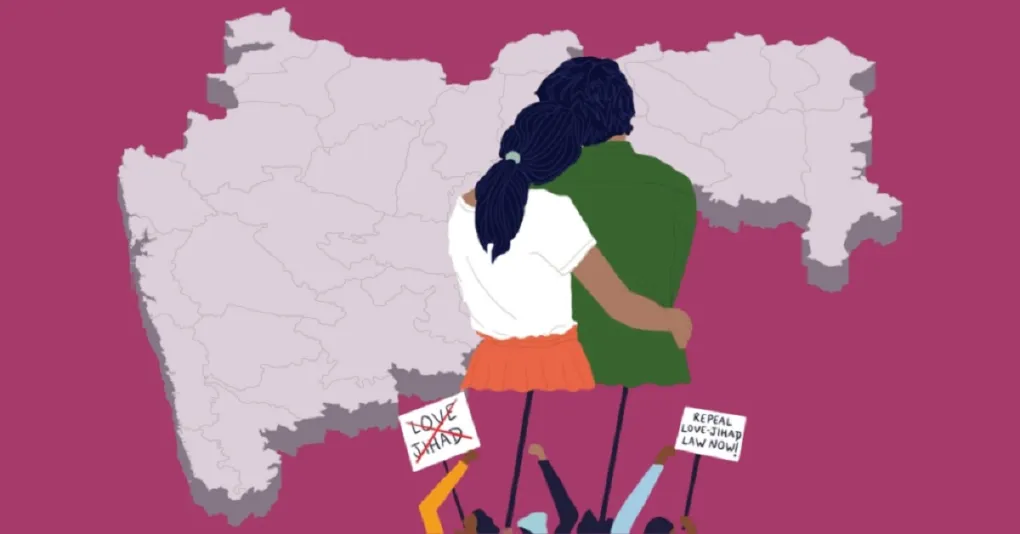
The Maharashtra Freedom of Religion Act, 2026, has received the assent of President Droupadi Murmu, clearing the final formal hurdle before it becomes operational. The law will come into force once the Maharashtra government issues a notification bringing its provisions into effect. The law’s provisions on prior declaration, third-party complaints and reversal of burden of proof mirror challenges already before the Supreme Court.
The Maharashtra Freedom of Religion Bill, 2026, was introduced during the Budget Session of the Maharashtra Legislature in March 2026. The Bill was tabled in the Legislative Assembly on March 13, 2026, and was passed by the Assembly on March 16, followed by approval from the Legislative Council on March 17. After being cleared by both Houses, the legislation was sent to Maharashtra Governor C.P. Radhakrishnan, who subsequently reserved it for the consideration of the President of India. The Bill received presidential assent from President Droupadi Murmu on July 31, 2026, after which the Governor forwarded it to the state government for notification. The Act will come into force only after the Maharashtra government issues a notification specifying the date of commencement. Maharashtra becomes the 13th state in the country to pass such/similar laws. All these states are governed by the Bharatiya Janata Party (BJP) that has its ideological base in the far right, Rashtriya Swayamsevak Sangh (RSS).
The speed with which the legislation moved through the state legislature had itself become a point of criticism. Citizens for Justice and Peace (CJP), in its dissent note, highlighted that the Bill was introduced and passed within days, with limited scope for public consultation or legislative scrutiny, despite the fact that similar anti-conversion laws enacted by other states are already under examination before the Supreme Court. CJP is the lead petitioner in the constitutional challenge to the first batch of such laws passed by five states between the years, 2020-2023. This challenge has been pending in the Supreme Court, despite pleas for interim stays on the most egregious provisions for over five years now. [1]
Details on the interim applications urging stay on the most egregious provisions, filed by CJP on April 16, 2025 may be read here.
In early 2026, while the batch of petitions challenging the constitutional validity of these state laws were listed before the court of the Chief Justice of India (CJI), they were once again deferred. Reports may be read here. Thereafter, first on May 13, 2026 the matters were listed to be heard after which the next date that appears on the Supreme Court calendar is August 12, 2026!!
The presidential assent does little to resolve the fundamental constitutional questions surrounding the legislation. Instead, Maharashtra has now joined a growing list of states that have enacted “freedom of religion” laws whose provisions are being challenged for creating a framework where the exercise of an individual’s conscience and religious choice is placed under state surveillance.
CJP, which is also the lead petitioner challenging multiple anti-conversion laws before the Supreme Court, has consistently argued that these statutes do not merely target coercive conversions. Rather, their architecture treats voluntary conversion, particularly in the context of interfaith relationships, as inherently suspect and places private decisions under criminal scrutiny.
A “Freedom of Religion” law that restricts the freedom to choose
The Maharashtra Act claims to prevent conversions caused by force, fraud, coercion, misrepresentation, allurement or undue influence. On paper, preventing coercion may appear consistent with constitutional guarantees. However, the difficulty lies in the breadth of the law and the mechanisms it creates.
The Act treats offering money, gifts, employment, education, promises of marriage, assurances of better living conditions or claims of divine healing as unlawful inducements if linked with conversion. The problem is that the law does not adequately distinguish between genuine coercion and ordinary circumstances in which individuals make religious choices influenced by personal relationships, social support, material circumstances or lived experiences. By creating a wide category of prohibited influence, the law risks converting legitimate exercises of conscience into potential criminal offences. A person’s decision to embrace another faith is protected not because the State approves of the choice, but because the Constitution protects the individual’s autonomy to make that choice.
Mandatory state oversight over matters of faith
One of the most intrusive features of the legislation is the requirement of prior notice before conversion. The Act mandates a 60-day prior notice to the district magistrate before conversion. This effectively transforms a deeply personal decision into an administrative process.
Instead of recognising conversion as an exercise of individual conscience, the law creates a system where government authorities are informed in advance and can scrutinise the circumstances surrounding a person’s decision.
CJP has argued that such provisions undermine the constitutional guarantee of freedom of conscience by making religious choice dependent on executive oversight. The Constitution does not make the right to believe, reject, adopt or change religion conditional upon government approval.
The law creates a climate of suspicion around interfaith relationships
While the Act is presented as a measure against forced conversion, its most contentious impact is likely to be felt in cases involving interfaith relationships. The legislation permits complaints by relatives of the person who has converted, including parents and siblings. This creates a mechanism where consenting adults may find their personal relationships subjected to police investigation merely because family members object to their choices.
CJP’s dissent note has warned that such provisions disproportionately affect interfaith couples by allowing private disagreements and social opposition to be converted into criminal proceedings.
The concern is not hypothetical. Similar anti-conversion laws across states have repeatedly been invoked in cases involving marriages between persons of different faiths. A law meant to protect individual choice cannot operate by empowering third parties to challenge that choice.
Reversal of burden of proof
Perhaps the most constitutionally troubling feature of the Maharashtra Act is the reversal of the burden of proof. Under ordinary criminal jurisprudence, the prosecution must establish guilt beyond reasonable doubt. However, under this legislation, the accused person must prove that the conversion was lawful and voluntary. The State is therefore not required to first establish wrongdoing in the traditional sense; instead, the person accused of facilitating conversion must defend the legitimacy of the act.
CJP has identified this reversal as one of the central constitutional defects in anti-conversion laws, arguing that it undermines basic criminal law protections and creates a chilling effect on legitimate religious choices.
Regulating women’s choices under the guise of preventing coercion
Although the Maharashtra Freedom of Religion Act is presented as a law against forced or fraudulent religious conversions, its operation is likely to fall most heavily on women exercising autonomy in matters of faith and marriage. Across states with similar anti-conversion laws, a significant number of prosecutions have arisen not from allegations of organised or coerced conversions, but from consensual interfaith relationships where families have opposed a woman’s decision to marry or convert. By permitting complaints from parents, siblings and other blood relatives, mandating prior notice before conversion, and empowering the police to investigate private decisions, the Act effectively shifts control over an adult woman’s choices from the individual to her family and the State. Instead of presuming that adult women possess the capacity to make informed decisions about their faith and relationships—a principle repeatedly affirmed by constitutional courts—the law creates a legal framework that invites suspicion of their agency. As CJP has argued in its dissent note, the legislation risks reinforcing patriarchal assumptions that women are vulnerable to manipulation and therefore require State and familial supervision, undermining the constitutional guarantees of dignity, privacy, equality and decisional autonomy under Articles 14, 19, 21 and 25 of the Constitution.
Passed without meaningful debate
CJP has also criticised the legislative process through which the Maharashtra law was enacted. In its dissent note, the organisation argued that the Bill was introduced and passed with extraordinary haste, leaving little opportunity for meaningful public consultation or democratic scrutiny.
The Bill was introduced in the Maharashtra Assembly on March 13, 2026, passed by the Legislative Assembly on March 16, and cleared by the Legislative Council on March 17. CJP argued that the hurried passage of the law was particularly concerning because the Supreme Court is already examining the constitutional validity of similar legislation enacted by multiple states. Introducing another law of the same nature while constitutional challenges remain pending raises questions about legislative accountability and respect for judicial review.
The Maharashtra law comes amid a broader challenge before the Supreme Court against anti-conversion statutes across India. The proceedings, led by CJP, initially challenged laws enacted in Uttar Pradesh, Uttarakhand, Madhya Pradesh and Himachal Pradesh. The challenge was subsequently expanded to include laws enacted in Gujarat, Chhattisgarh, Haryana, Jharkhand and Karnataka.
The petitions argue that these laws violate:
- Article 25’s protection of freedom of conscience;
- Article 21’s guarantee of personal liberty and privacy;
- Article 14’s guarantee of equality.
The petitioners contend that the State may prohibit forced conversion, but cannot regulate voluntary conversion or require individuals to justify their faith choices before public authorities.
Courts have already warned against excessive state intervention
The constitutional concerns surrounding such laws are not new. In Evangelical Fellowship of India v. State of Himachal Pradesh, the Himachal Pradesh High Court struck down provisions of the Himachal Pradesh Freedom of Religion Act, 2006 requiring prior declaration before conversion. The Court held that the right to change one’s belief could not be restricted merely on the assumption that public order might be affected. Despite this clear course correction by a constitutional court, the same state re-enacted a similar law with the same provisions in august 2022. This is one of the key substantive points argued by the CJP in its constitutional challenge to the Himachal Pradesh law. Report may be read here. While the Indian National Congress (INC), the lead opposition party has come back to power in the state (December 2022), this law has not yet been repealed, close to four years later. Similar is the situation in the state of Karnataka, a state ruled by the INC since May 2023.
Despite this judicial warning, similar provisions have repeatedly resurfaced in newer anti-conversion laws. The Gujarat High Court and Madhya Pradesh High Court have also intervened against certain provisions of their respective state laws, particularly those involving interfaith marriages and mandatory declarations.
The Maharashtra government has defended the law as necessary to prevent exploitation and fraudulent conversions. However, the constitutional challenge is not about whether coercive conversion should be prohibited. It is about whether the State can create a system where every conversion is treated as requiring explanation, scrutiny and approval. A democratic Constitution protects the freedom to choose one’s faith precisely because such choices are deeply personal and cannot be determined by the State.
The complete dissent note may be read below:
[1] CJP had first, in December 2020-February 2021, filed petitions in the Supreme Court challenging the Uttar Pradesh, Uttarakhand, Madhya Pradesh and Himachal Pradesh laws passed earlier and thereafter, in 2023, amended their plea to include similar laws passed in Chhattisgarh, Gujarat, Haryana, Jharkhand, and Karnataka. CJP is the lead petitioner in this matter.
Related:
‘Faith Is Not a Crime’: Mumbai’s Christians rise against Maharashtra’s proposed anti-conversion bill
Maharashtra’s Proposed Anti-Conversion Law: Manufacturing moral panic to criminalise personal choice