
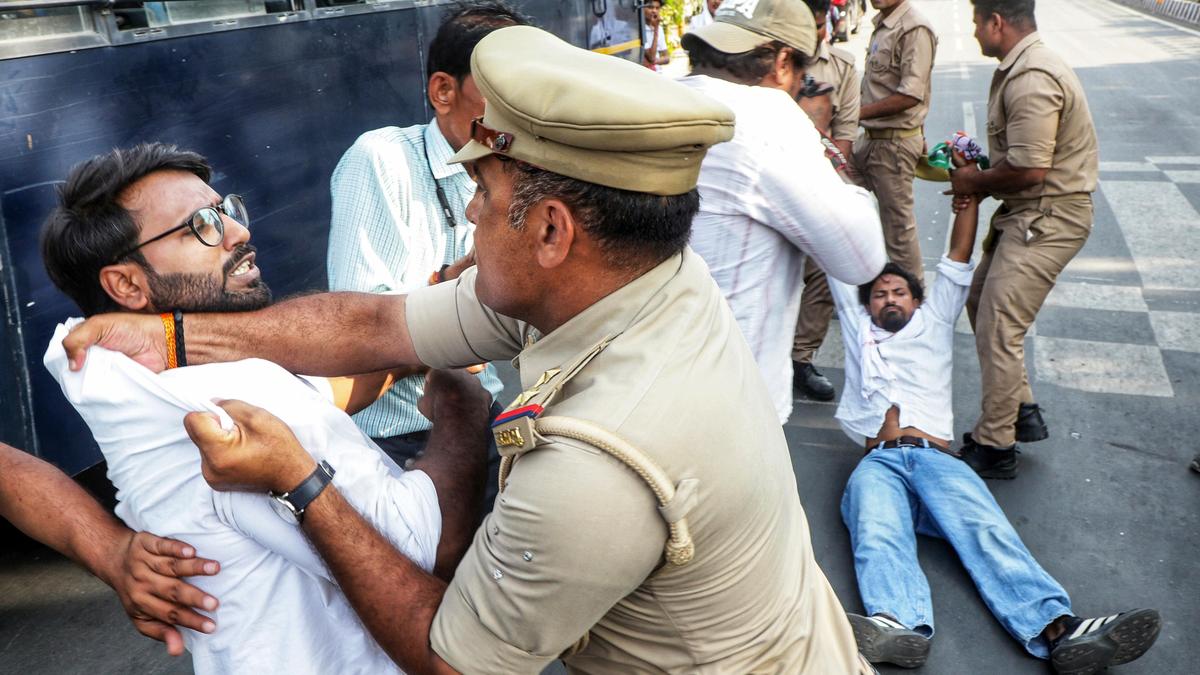
The most alarming feature of the crackdown ahead of the October 10 protest at Delhi’s Jantar Mantar is not any single detention, police visit, travel restriction or security deployment. It is the cumulative picture emerging from across India: students allegedly intercepted on trains, activists confined to their homes, civil society organisers summoned and detained, police personnel reportedly questioning citizens about their travel plans, and sweeping restrictions proposed across Delhi’s transport network. Even a reported visit by a police official to a mosque in Old Delhi, asking residents not to participate in the protest, raises a troubling question: is the state preparing to manage a public gathering, or attempting to prevent the public from assembling in the first place?
The Cockroach Janta Party (CJP), left organisations, student organisations, opposition parties and their youth groups, and civil society groups have called for a protest over alleged irregularities in the Special Intensive Revision (SIR) of electoral rolls and are demanding the resignation of Chief Election Commissioner Gyanesh Kumar. The Election Commission of India (ECI) maintains that the revision is intended to remove duplicate, deceased and otherwise ineligible entries. Critics, however, have raised concerns about the scale of deletions, the risk of eligible voters being excluded, and the transparency and independence of the electoral process.
This comes on the background of more than 130 million names being removed from electoral rolls during the revision exercise, although the ECI and the government dispute the allegation that the exercise is politically motivated. The scale of the deletions makes questions of verification, notice, appeal and effective remedy matters of democratic urgency, not issues that can be brushed aside as partisan agitation.
Yet, instead of treating dissent over electoral integrity as a legitimate part of democratic life, authorities across several states are accused of taking steps that could prevent people from travelling to Delhi, meeting fellow protesters or exercising their right to peaceful assembly. The distinction matters. A government may regulate a demonstration to protect public safety. It cannot treat the very possibility of mass dissent as a threat to be neutralised through preventive detention, surveillance, intimidation and restrictions that extend far beyond the protest site.
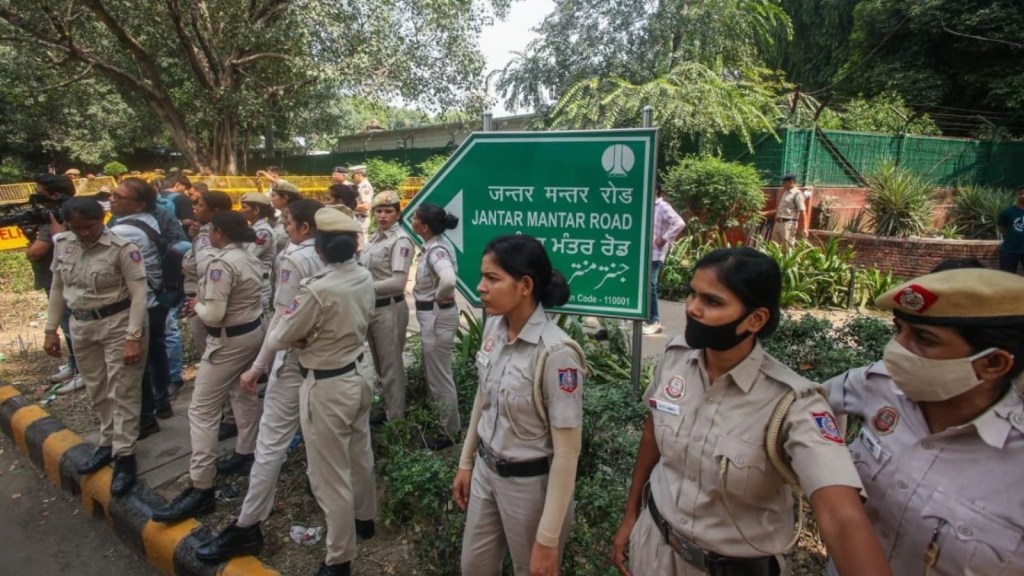
One must also not forget that with Delhi Police reportedly planning to shut entry and exit gates at 57 Metro stations and all train services to and from New Delhi and Hazrat Nizamuddin railway stations set to be cancelled between 4 am and 2 pm on October 10, the national capital is bracing for extraordinary restrictions ahead of a protest demanding Chief Election Commissioner Gyanesh Kumar’s resignation. As reports emerge of activists allegedly detained, placed under house arrest or stopped from travelling to Delhi, the scale of the measures raises a disturbing question: is the state preparing to maintain law and order, or making it increasingly difficult for citizens to exercise their democratic right to protest? Is this an undeclared emergency?
The following incidents, reported by news organisations and raised by activists and student organisations, point to an increasingly disturbing pattern.
The incidents: A nationwide pattern of intimidation
Delhi: Delhi Police official enters an Old Delhi Mosque to discourage participation: A video circulated on social media, reported by ThePrint, purportedly shows a Delhi Police official inside a mosque in Old Delhi reading out an advisory asking people to keep their family members away from “unnecessary” protests. The official is heard saying: “Parivaar ko samjhayein ki unnecessary bheed ya protest mein hissa na lein, kyunki prashasan apna kaam kar raha hai.”
According to ThePrint, police officials confirmed that personnel had also approached other gathering places and marketplaces to discourage participation in what they described as unlawful assemblies.
This is troubling for reasons beyond the choice of venue. The police are entitled to communicate lawful restrictions and explain genuine safety risks. But when official messaging moves into community spaces to discourage people from joining a protest against the government and the electoral authorities, the line between public information and political demobilisation becomes dangerously thin.
Calling a protest “unnecessary” does not settle whether it is lawful, nor does it answer the concerns that brought people to the streets. The police cannot substitute their assessment of whether citizens ought to protest for citizens’ own constitutional judgment.
Delhi Police official goes to a mosque in Old Delhi, reads out text from his phone, asks people to not participate in CJP’s October 10 protest. “Parivaar ko samjhayein ki unnecessary bheed ya protest mein hissa na lein, kyunki prashasan apna kaam kar raha hai.”
Delhi Police official goes to a mosque in Old Delhi, reads out text from his phone, asks people to not participate in CJP’s October 10 protest. “Parivaar ko samjhayein ki unnecessary bheed ya protest mein hissa na lein, kyunki prashasan apna kaam kar raha hai.”
— Vijaita Singh (@vijaita) October 8, 2026
Rajasthan: CJP spokesperson Deepak Baliyan allegedly detained, assaulted and confined
The CJP alleged that Rajasthan Police detained its national spokesperson and organisational co-in-charge, Deepak Baliyan, from his home in Mankheda village, Kathumar tehsil, Alwar district, on the night of October 8.
According to statements by CJP founder Abhijeet Dipke and co-convener Ashutosh Ranka, Baliyan was taken away despite recovering from a fractured leg, allegedly dragged and injured further, and later released during the night. The organisation subsequently alleged that his phone was retained without a seizure memo or other documentation being provided.
On October 9, CJP and activists reported that around 20 policemen were stationed outside Baliyan’s home, preventing him from moving freely. The People’s Union for Civil Liberties (PUCL), through its president Kavita Srivastava, condemned the reported restrictions and demanded that the police withdraw from his residence.
CJP Org In-Charge Deepak Baliyan (26) Former Bhartiya Kisan Union Leader & close aide of Ashutosh Ranka was detained from his village Kathumar, Alwar. Latest info is that police now wants his family to come. If arrested a team will appear for him!
CJP Org In-Charge Deepak Baliyan (26) Former Bhartiya Kisan Union Leader & close aide of @AshutoshRanka was detained from his village Kathumar, Alwar. Latest info is that police now wants his family to come. If arrested a team will appear for him! https://t.co/ry5HStoLbM
— Rishav Ranjan (@rishav_ranjan18) October 8, 2026
Rajasthan: Sanju Verma allegedly taken away by Reengus Police
CJP activist Sanju Verma, from Reengus in Rajasthan’s Sikar district, was reportedly picked up by Reengus Police at around 9.30 am on October 9. The account supplied by activists alleges that police personnel pushed, pulled and dragged him away. The PUCL also reported that Verma had been taken to an undisclosed location and demanded his immediate release.
Rajasthan: Geegraj Jodli allegedly prevented from leaving home
Geegraj Jodli, a CJP activist from Neem ka Thana in Sikar district, was reportedly prevented from leaving his residence for work, with Sadar Police personnel stationed outside his home from approximately 8.30 am. PUCL described the action as an unlawful restriction on movement and demanded that police withdraw from the residences of Jodli and Baliyan.
Uttar Pradesh: Eighteen-year-old Arjun Sharma reportedly placed under house arrest
Arjun Sharma, an 18-year-old recent school graduate who had raised concerns about irregularities in the CBSE On-Screen Marking System, was reportedly detained by Uttar Pradesh Police in Ghaziabad at around 8.30 pm. An account circulated on X claimed that Sharma had not issued a call for the October 10 protest but was nevertheless placed under house arrest until Sunday.
Fresh school graduate Arjun Sharma (18) who raised CBSE On-Screen Marking System irregularities was detained by UP Police in Ghaziabad around 8:30 PM He didn’t give any 10th October call still under House Arrest till Sunday!
🧵THREAD OF DETENTIONS & HOUSE ARREST🚨
Fresh school graduate Arjun Sharma (18) who raised CBSE On-Screen Marking System irregularities was detained by UP Police in Ghaziabad around 8:30 PM
He didn’t give any 10th October call still under House Arrest till Sunday! https://t.co/Jyv1WqMr50
— Rishav Ranjan (@rishav_ranjan18) October 8, 2026
Maharashtra: Police allegedly demand written assurances that people will not attend
In a report published on October 9, The Indian Express documented allegations from activists in Mumbai, Thane, Nagpur and Pune that police had contacted them, visited their homes, questioned their travel plans and, in some cases, asked them to sign documents promising not to attend the Delhi protest.
Sadaf Raza Zaidi, a 31-year-old creative strategist from Santacruz, told the newspaper that officers visited her home, asked where she planned to go on October 10, sought information about other potential participants and asked her to sign a document stating that she would not attend the protest. She also said police asked for her live location, which she refused to share. Zaidi believed she had been approached because she had been detained during an earlier protest in July.
The Maharashtra Director General of Police’s office acknowledged that notices had been issued in a handful of cases but denied that detentions had taken place in the state.
Mumbai: Feroze Mithiborwala and Salim Saboowala reportedly detained and warned against protesting
Civil society activists Feroze Mithiborwala and Salim Saboowala, associated with Hum Bharat Ke Log, said police personnel from Mumbai’s MIDC police station took them to the police station on October 8 after visiting their homes. According to Hindustan Times, the activists said they were held for several hours and released after being warned against participating in the October 10 protest. The newspaper reported that a senior police official denied that the duo had been detained, describing the interaction as routine questioning.
Mumbai Police have started detaining Constitutional Activists. Saleem Saboowala and Feroze Mithiborewala have been detained at police stations in Mumbai.
@AshutoshRanka @AISFofficial @divy_bhraman @akshaylakra17 @aishe_ghosh From Tushar Gandhi : @TusharG
Mumbai Police have started detaining Constitutional Activists. Saleem Saboowala and Feroze Mithiborewala have been detained at police stations in Mumbai. https://t.co/PH3fQoP9Il
— Rishav Ranjan (@rishav_ranjan18) October 9, 2026
Maharashtra: Police reportedly track travel plans and seek information about other protesters
The allegations extend beyond the two Mumbai activists. The Indian Express reported that Mayur Sharma, a Thane-based AISF member, received calls from police personnel in Mumbai and Delhi seeking details of his journey to the capital. Sharma said he feared being stopped at Bandra Terminus and boarded a train from Borivali instead. He later received a call from Delhi Railway Police asking about his journey and the number of people travelling with him. He eventually got off near Faridabad rather than arriving at Hazrat Nizamuddin, where he feared police might be waiting.
In Nagpur, CJP volunteers alleged that Railway Protection Force personnel contacted them for the names and numbers of people travelling to Delhi and even offered to check the status of their waitlisted tickets. At least two volunteers were reportedly served notices under Section 168 of the Bharatiya Nagarik Suraksha Sanhita (BNSS).
Maharashtra and Madhya Pradesh: AISF students allegedly targeted on the Goa Express
The All-India Students’ Federation (AISF) alleged that a group of its student delegates travelling from Pune to Delhi aboard the Goa Express faced an attempt by police to forcibly remove them from the train at Bhusawal railway station in Maharashtra.
According to a statement attributed to AISF Pune district convener Shravani, around eight to ten personnel, including Police Inspector Govind Pathak and woman police officer Minal Tayade, entered the compartment and attempted to detain and deboard the students. The students alleged that police failed to produce warrants, written orders or other legal documents authorising their detention. AISF said its members refused to leave the train and remained aboard after a confrontation lasting more than 30 minutes.
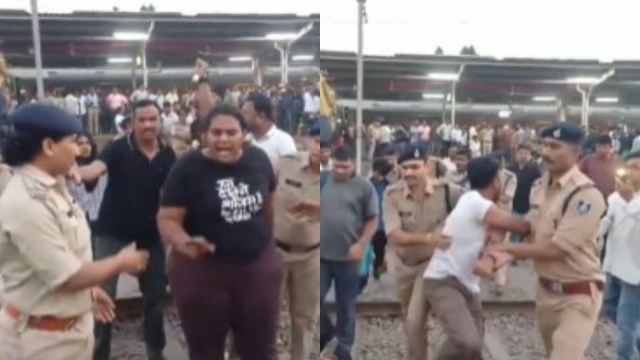
Separately, the organisation alleged that 22 women AISF activists were detained at Itarsi station in Madhya Pradesh after being assaulted by police and Government Railway Police personnel. Those named included Pune coordinator Shravani Buva and Pune committee member Preeti Londhe. The organisation demanded that authorities disclose the whereabouts of the detained students and explain the grounds for their detention.
Sixteen people from Maharashtra were on their way to Jantar Mantar to join the protest. In Itarsi, Madhya Pradesh, the police have detained all of them after disembarking them from the train.
महाराष्ट्र से 16 लोग प्रोटेस्ट में शामिल होने जंतर मंतर आ रहे थे। मध्य प्रदेश के इटारसी में पुलिस ने ट्रेन से सभी को उतारकर हिरासत में ले लिया है। https://t.co/eMqv3yzyWI
— Sachin Gupta (@Sachingupta) October 9, 2026
Over dozens of students onboard Goa Express and on their way to participate in protests in Delhi were detained by the local police in Itarsi, Madhya Pradesh.
Over dozens of students onboard Goa Express and on their way to participate in protests in Delhi were detained by the local police in Itarsi, Madhya Pradesh. https://t.co/cdw8ooVUGr
— Piyush Rai (@Benarasiyaa) October 9, 2026
Madhya Pradesh: CJP volunteers from Telangana reportedly detained in transit
As reported by The Reuters, CJP founder Abhijeet Dipke alleged that volunteers travelling from Telangana were detained by Madhya Pradesh Police aboard a train at Bhopal. The organisation also circulated footage purportedly showing young people inside a moving bus in Madhya Pradesh, with one person heard saying that police had detained them.
Delhi: Police reportedly enter the SFI national office carrying lathis
The Students’ Federation of India (SFI) alleged that Delhi Police personnel carrying lathis entered its central executive committee office at HKS Surjeet Bhawan in New Delhi and sought details of activists ahead of the October 10 protest. SFI also alleged that police personnel had visited activists’ homes and approached their families to discourage them from travelling to the capital.
A group of policemen carrying lathis arrived at HKS Surjeet Bhawan, New Delhi, where the SFI Central Executive Committee office is located, searching for SFI activists. The police also tried to collect details of SFI activists coming to Delhi to participate in the protest.
SFI will not back down in the face of such intimidation tactics by the BJP-RSS using the police.
SFI will participate in large numbers in the 10th October protest against Vote Chori.
Delhi Police, are you trying to scare us or silence us? Do you want to see how many of us will come?
Amit Shah ji, we will be in thousands.
Let’s wait and watch. Don’t panic.
A group of policemen carrying lathis arrived at HKS Surjeet Bhawan, New Delhi, where the SFI Central Executive Committee office is located, searching for SFI activists. The police also tried to collect details of SFI activists coming to Delhi to participate in the protest.
SFI will not back down in the face of such intimidation tactics by the BJP-RSS using the police.
SFI will participate in large numbers in the 10th October protest against Vote Chori.
Delhi Police, are you trying to scare us or silence us? Do you want to see how many of us will come?
Amit Shah ji, we will be in thousands. 😎
Let’s wait and watch.
Don’t panic.#gyaneshitsdonebro #gyaneshkumarmustresign
— SFI (@SFI_CEC) October 8, 2026
Gujarat: Student activist Satyesha reportedly placed under house arrest
Former Jawaharlal Nehru University Students’ Union president Aishe Ghosh shared an account alleging that the SFI national vice-president, Satyesha, had been placed under house arrest in Gujarat.
1st video is from Delhi, where the police entered our National Office with sticks and enquired about the details of our activists. 2nd video is from Gujarat, where our National Vice President Satyesha has been kept on house arrest.
Coming From Former JNUSU President @aishe_ghosh :
1st video is from Delhi, where the police entered our National Office with sticks and enquired about the details of our activists.
2nd video is from Gujarat, where our National Vice President Satyesha has been kept on house arrest.
— Rishav Ranjan (@rishav_ranjan18) October 9, 2026
Chandigarh: Former IES officer Prempal Singh reportedly placed under house arrest
Prempal Singh, a former Indian Engineering Services officer who had joined the CJP’s July protest at Jantar Mantar, was reportedly placed under house arrest in Chandigarh ahead of the October 10 demonstration.
Prempal Singh, UPSC 2018 Ex IES who had joined the CJP’s call at Jantar Mantar in July has been put under House Arrest in Chandigarh.
@AshutoshRanka @AISFofficial @divy_bhraman @akshaylakra17 Prempal Singh, UPSC 2018 Ex IES who had joined the CJP’s call at Jantar Mantar in July has been put under House Arrest in Chandigarh. https://t.co/ECICfFmASQ
— Rishav Ranjan (@rishav_ranjan18) October 9, 2026
Delhi: Political Youth Congress president Divy Gaur reportedly confined to his home
Divy Gaur, president of the Political Youth Congress in Delhi’s Hari Nagar area, was reportedly placed under house arrest for several days because of his involvement in the “Vote Chori” campaign. The allegation was that the restriction was intended to prevent him from participating in the October 9–10 mobilisation.
Hari Nagar Delhi PYC President Divy Gaur has been placed under House Arrest for being vocal in the VoteChori campaign since 3 days now. Maybe they don’t want any movement from 9 to 10th October.
@AshutoshRanka @AISFofficial Hari Nagar Delhi PYC President Divy Gaur has been placed under House Arrest for being vocal in the VoteChori campaign since 3 days now. Maybe they don’t want any movement from 9 to 10th October. https://t.co/Bp1LbtTh1B
— Rishav Ranjan (@rishav_ranjan18) October 8, 2026
Uttar Pradesh: Student and youth activists reportedly placed under house arrest
The Communist Party of India (Marxist) alleged that Uttar Pradesh Police had placed Democratic Youth Federation of India state secretary Raj Kumar, DYFI activist Kunal and SFI Sultanpur district president Salil under house arrest.
The party further alleged that SFI Saharanpur district convenor Arif had been detained at home and taken to a private location, while All India Kisan Sabha leader Daud Rao had also been detained at his residence. The organisation said the actions were intended to prevent them from reaching Delhi on October 10.
UP Police’s Repressive Measures Continue! Student and Youth Activists Targeted! DYFI Uttar Pradesh State Secretary Raj Kumar, DYFI activist Kunal and SFI Sultanpur District President Salil have all been illegally placed under house arrest by the UP Police. Earlier, the UP Police had detained SFI Saharanpur District Convenor Arif from his home and are keeping him at a private location. AIKS leader Daud Rao was also detained at his home yesterday. All this to prevent them from reaching Delhi on 10 October!
UP Police’s Repressive Measures Continue! Student and Youth Activists Targeted!
DYFI Uttar Pradesh State Secretary Raj Kumar, DYFI activist Kunal and SFI Sultanpur District President Salil have all been illegally placed under house arrest by the UP Police. Earlier, the UP Police had detained SFI Saharanpur District Convenor Arif from his home and are keeping him at a private location. AIKS leader Daud Rao was also detained at his home yesterday. All this to prevent them from reaching Delhi on 10 October!
— CPI (M) (@cpimspeak) October 9, 2026
Onground blanket restrictions
Police deny permission for the October 10 protest: The Delhi Police has refused permission for the CJP–All India Students’ Association (AISA) protest at Jantar Mantar, citing prohibitory orders under Section 163 of the BNSS. As reported by The Times of India, police have argued that the organisers did not comply with the required notice period and had not followed directions during a previous demonstration. Authorities have also cited public safety, law and order, and traffic management concerns.
Authorities can impose proportionate conditions on a demonstration, designate routes and times, and take action against specific unlawful conduct. But refusing permission, while simultaneously restricting travel, monitoring prospective participants and preparing detention facilities, risks making the right to protest meaningless in practice.
Around 23,000 central armed police personnel and 10 detention centres reportedly prepared: According to The Indian Express, the Union Home Ministry made 221 companies of Central Armed Police Forces, comprising approximately 23,000 personnel, available to the Delhi Police for October 8–12. The report also said that around 10 detention centres were being prepared across the capital, including facilities at Rajiv Gandhi Stadium in Bawana and Chhatrasal Stadium.
The scale of the proposed deployment is striking. Security arrangements must be based on credible assessments of specific risks, not on the political significance of a demonstration or the number of people expected to criticise the government.
The preparation of detention facilities before a protest also raises a question of institutional intent. Authorities may reasonably plan for arrests if unlawful conduct occurs. But when detention capacity is presented as a central component of a pre-emptive security strategy, the public is entitled to ask whether the objective is to facilitate a safe assembly or to prepare for its mass dispersal.
Entry and exit gates at 57 Metro stations reportedly targeted for restrictions: The Times of India reported on October 9 that Delhi Police had proposed closing entry and exit gates at 57 Metro stations and reducing train frequency ahead of the protest. The proposed restrictions were to begin at 9 pm on October 9 and continue on October 10 until the situation normalised.
The report made clear that the police communication sought arrangements from the Delhi Metro Rail Corporation; it did not establish that every proposed restriction had been approved or implemented. Notably, the stations listed extend well beyond the immediate vicinity of Jantar Mantar and include major transport interchanges and stations serving residential, educational and commercial areas. Public transport is not merely a convenience for demonstrators. It is an essential service for workers, students, patients and commuters. Restricting it across a wide geographical area imposes costs on people who may have no connection to the protest at all. If individual stations require temporary restrictions because of a specific and immediate danger, authorities should explain the grounds and keep the restrictions as narrow and brief as possible.
Service Update
Due to security reasons, the entry and exit at the following metro stations will remain closed from 09:00 PM on 9th October, 2026 and continuing on 10th October, 2026 till further notice. However, interchange facility will remain available at all the concerned metro stations except New Delhi metro station.
— Delhi Metro Rail Corporation (@OfficialDMRC) October 9, 2026
Notably, in a significant intervention on October 9, the Supreme Court expressed serious concern over the Delhi Police’s move to close entry and exit gates at 57 Delhi Metro stations ahead of the October 10 protest. A bench comprising Chief Justice of India Surya Kant and Justices Joymalya Bagchi and V. Mohana asked the government to take corrective steps and ensure that restrictions did not bring public life to a standstill. “You cannot bring everything to a halt,” the bench observed, stressing that its concern extended to thousands of ordinary commuters, including workers, students and senior citizens travelling to Delhi from Gurugram, Greater Noida and other parts of the National Capital Region. Solicitor General Tushar Mehta assured the court that he would discuss the matter with the government and work towards proportionate measures.
The court’s intervention raises a fundamental question about the proportionality of the restrictions imposed in the name of maintaining public order. While authorities may regulate demonstrations and take lawful preventive measures, the potential disruption of essential public transport across large parts of the capital places an extraordinary burden on people who have no connection to the proposed protest. The court emphasised that maintaining law and order is not merely about protecting state property, but also about protecting people and ensuring that ordinary citizens can go about their lives. The intervention comes amid wider allegations of police detentions, house arrests and attempts to prevent activists from travelling to Delhi. However, the court also made clear that the right to protest must operate within the applicable legal framework, including questions of permission.
Train services to New Delhi and Hazrat Nizamuddin reportedly cancelled: In a report published on October 9, The Indian Express said that train services to and from New Delhi Railway Station and Hazrat Nizamuddin railway station would be cancelled between 4 am and 2 pm on October 10. The report also identified the Howrah–New Delhi and Sealdah–New Delhi Rajdhani Express services among trains cancelled because of anticipated congestion around the stations.

The Ministry of Railways described the measure as precautionary, citing traffic congestion and the need to prevent passengers from facing difficulties reaching stations. The report also noted that approximately 5,000 passengers had missed trains on the preceding Thursday.
Those operational concerns cannot simply be ignored. But the cancellation of essential transport services on the day of a protest, with consequences extending to passengers travelling for entirely unrelated reasons, calls for a transparent assessment of necessity and proportionality. The state cannot treat the inconvenience caused by a protest as a reason to impose restrictions whose consequences are borne by the public at large. If the concern is congestion, targeted traffic management, alternative access routes and clearly communicated passenger arrangements should be considered before sweeping disruption.
Restrictions reportedly considered for taxis, hotels and guest houses: The Indian Express reported that police were coordinating with app-based cab operators such as Ola and Uber to regulate movement towards Lutyens’ Delhi. Police officials also said hotels, guest houses and other accommodation facilities in and around Central Delhi had been asked to restrict or stop fresh bookings for a specified period.
Such restrictions have consequences beyond the immediate protest. People may need transport to reach hospitals, workplaces, homes, railway stations or other essential destinations. Hotels and guest houses serve visitors with no connection to political mobilisation. If the police have evidence that particular vehicles or premises are being used to facilitate a specific offence, action should be directed at that conduct. Broad restrictions based on the possibility that protesters might use ordinary transport or accommodation risk turning routine urban infrastructure into a tool for controlling political participation.
Internet restrictions and action against citizen journalists reportedly under consideration: The same Indian Express report said internet restrictions might be imposed in areas where detainees were housed and potentially extended to parts of New Delhi and Central Delhi, depending on the security situation. It also reported that people recording or livestreaming the protest could face action if they obstructed police operations, violated restrictions or contributed to unlawful mobilisation. Journalists were asked to carry and prominently display valid press identification at barricades and sensitive locations.
Liquor outlets ordered to close on October 9 and 10: The Delhi government’s Excise Department ordered liquor stores to remain closed on October 9 and 10, citing public-order concerns and police inputs, according to report in Hindustan Times.
The constitutional question: Can the state prevent a protest before it begins?
The crackdown allegations have unfolded alongside police action against opposition politicians. Reuters reported that Leader of Opposition in the Lok Sabha Rahul Gandhi and Congress leader Priyanka Gandhi Vadra were among those briefly detained during protests in Delhi over the electoral roll revision. Their detentions are part of a wider confrontation over the ECI’s conduct and the opposition’s demand for Chief Election Commissioner Gyanesh Kumar’s resignation.
The Constitution does not grant an unconditional right to assemble anywhere, at any time, regardless of the consequences. The state may impose reasonable restrictions, regulate public spaces and intervene against credible threats to public safety. But these powers are not a licence to suppress peaceful dissent.
Article 19(1)(a) protects freedom of speech and expression, while Article 19(1)(b) protects the right to assemble peaceably and without arms. Article 19(1)(d) protects the right to move freely throughout India, subject to constitutionally permissible restrictions. These rights are essential to democratic participation, particularly when citizens seek accountability from public institutions.
In Himat Lal K. Shah v. Commissioner of Police, Ahmedabad (1973), the Supreme Court recognised that the state may regulate public meetings on streets but cannot exercise its regulatory power in a manner that effectively destroys the right to hold them. In Mazdoor Kisan Shakti Sangathan v. Union of India (2018), the Court considered the competing interests involved in demonstrations at Jantar Mantar and the need to balance the right to protest with the rights of residents and the maintenance of public order. These principles matter in the present context. The existence of regulatory powers does not answer whether their use is lawful in a particular case. A blanket refusal of permission, restrictions on travel across several states, alleged confinement of activists, questioning of prospective participants and sweeping disruptions to public transport must each be justified on their own facts.
Section 163 of the BNSS, which empowers executive magistrates to issue urgent orders in cases of apprehended danger or nuisance, is not a free-standing authority to extinguish constitutional freedoms. Its application must satisfy the statutory conditions and remain open to legal scrutiny.
The question is especially acute when restrictions appear designed not merely to control the location or manner of an assembly but to prevent people from reaching it at all.
The central contradiction: Public order or the prevention of dissent?
The state has defended the SIR exercise as a lawful effort to clean electoral rolls. The Election Commission maintains that duplicate, deceased and ineligible entries must be removed. Those objectives can be legitimate. An accurate electoral roll is indispensable to free and fair elections.
But the legitimacy of cleaning electoral rolls does not place the process beyond scrutiny. Nor does it make questions about wrongful deletions, procedural safeguards, access to appeals or the independence of the Election Commission illegitimate.
The dispute has acquired greater urgency amid reports that more than 130 million names have been removed from electoral rolls. As Reuters has reported, the opposition and critics argue that the scale of the revision raises concerns about the possible exclusion of eligible voters, while the ECI and the government reject allegations of political manipulation.
The correct response to such concerns is transparency, accessible remedies and an evidence-based explanation of the revision process. It is not to treat those demanding answers as a public-order problem.
There is an obvious contradiction in claiming that electoral-roll revision is necessary to protect the integrity of elections while allegedly using the police to stop citizens from questioning how that revision is being carried out. The ECI’s decisions must withstand scrutiny, and citizens must be free to demand that scrutiny without being treated as enemies of public order.
The concern is not confined to the conduct of Delhi Police. The allegations span Rajasthan, Uttar Pradesh, Maharashtra, Madhya Pradesh, Gujarat and Chandigarh. If the reported interventions are established, their geographical spread would demand answers about coordination between police forces, the basis on which individuals were identified and whether lawful preventive powers were being used to obstruct political participation.
The police cannot become an instrument for deciding who may dissent
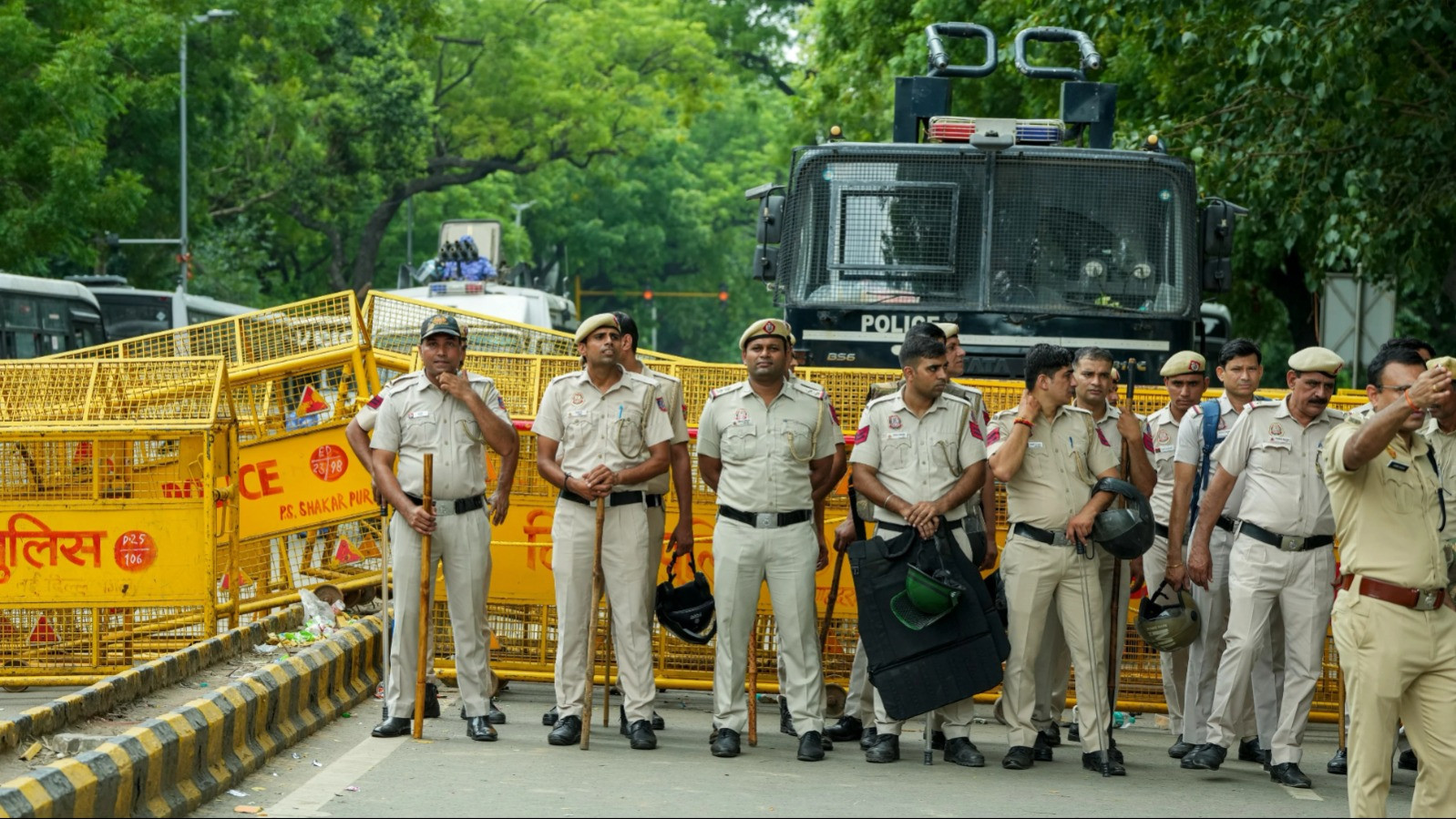
The police are not responsible for determining whether a political demand is correct, whether an opposition movement deserves public support or whether citizens should be persuaded to stay home. Their responsibility is to enforce the law impartially, protect life and property, facilitate lawful assemblies and intervene against specific unlawful conduct. Those responsibilities require professionalism and restraint, especially when a protest is directed against the government or a constitutional authority.
The reported use of police personnel to discourage participation through community spaces, visits to homes and inquiries about travel plans raises questions about institutional neutrality. So does the alleged use of preventive powers to restrict individuals who have participated in previous demonstrations.
If police action is justified by a credible threat, the authorities should disclose the relevant legal grounds and explain why the restrictions imposed were necessary. If a person has been detained, their whereabouts and legal status should be made clear. If a restriction is imposed on movement, its legal basis, duration and scope should be identifiable.
The burden cannot be shifted entirely onto citizens to prove that every intervention against them was unlawful. Public authorities exercising coercive power must be able to account for that exercise.
The refusal of permission for the October 10 gathering may be challenged or defended on its own legal merits. But it cannot automatically justify every other measure taken against prospective participants across the country.
A protest against electoral uncertainty cannot be answered with restrictions on democratic participation

The October 10 mobilisation centres on a fundamental question: whether India’s electoral institutions are functioning with sufficient transparency and public confidence. The demand for the Chief Election Commissioner’s resignation is a political demand, not a judicial finding of wrongdoing. Allegations of electoral manipulation must be investigated and assessed on evidence, and the ECI’s position must be fairly represented.
But peaceful protest is one of the means through which citizens raise questions that they believe existing institutions have failed to answer adequately.
The state’s response must therefore be judged not only by whether it prevents traffic disruption or maintains order at Jantar Mantar, but also by whether it preserves the conditions under which citizens can criticise those in power.
There is a difference between regulating an assembly and suppressing the possibility of assembly. There is a difference between investigating a credible threat and treating prospective protesters as suspects. And there is a difference between communicating lawful restrictions and using the authority of the police to persuade citizens that they should not exercise their rights. A democracy is not tested by how efficiently it prevents dissent from assembling. It is tested by whether it can accommodate dissent, protect those who express it and answer criticism without resorting to coercion.
Related:
Police detain Adivasi students for second day, force them out of Mumbai
From Nashik to Mumbai: Adivasi students’ protest meets police detentions
‘Solidarity Is Not a Crime’: Mumbai activists protest alleged police harassment over Palestine event