
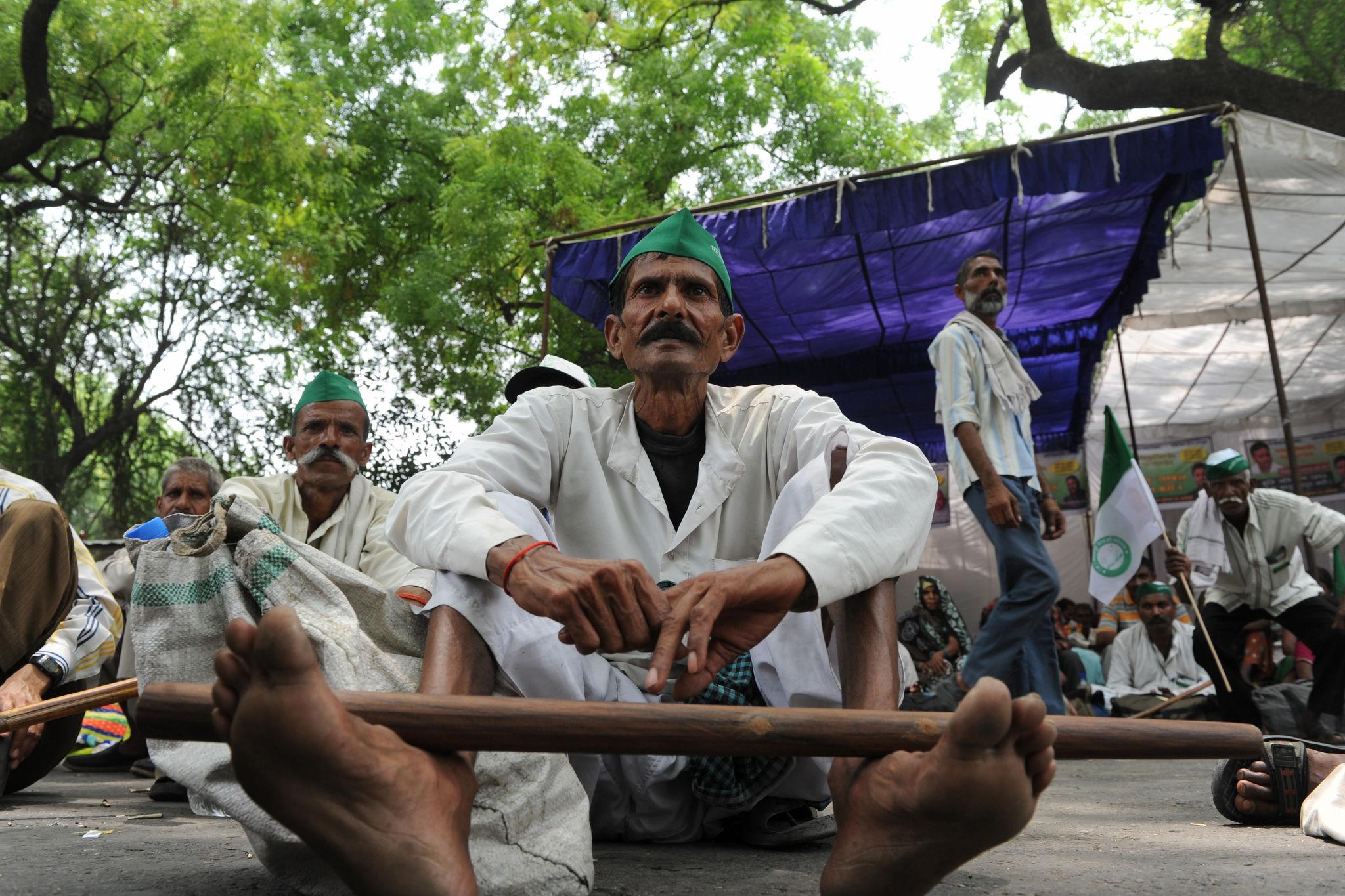
Tiladi Sera is a serene, green village in the Barkot tehsil of Uttarkashi district in Uttarakhand. Neemuchana, by contrast, is a village in the Bansur tehsil of Alwar district in Rajasthan. Separated by nearly 550 kilometres, the two villages differ sharply in terms of topography, climate, and patterns of modern development. Tiladi Sera lies in the lush green Rawain valley at approximately 1220 metres above sea level, while Neemuchana is a semi-arid village near the industrial city of Alwar. Yet they also share striking historical parallels.
In May 1925, state troops opened fire on protesting farmers in Neemuchana village of Alwar State in present-day Rajasthan. Five years later, in May 1930, another massacre unfolded at Tiladi Sera in the Rawain region of Tehri Garhwal. Though separated by geography, ecology, and language, the two movements reflected strikingly similar tensions over taxation, forests, customary rights, and the changing nature of native states in late colonial India.
The rulers were a retreating British colonial state.
Both movements emerged within princely states that colonial administrators categorised and later historiography continued to categorise as ‘Rajput States’. Yet in both cases, the protesters themselves were overwhelmingly drawn from Rajput agrarian communities resisting policies imposed by those very states.
The Neemuchana Movement of Alwar State
In Rajasthan, the Rajput socio-political setup traversed through all three stages: a quasi-republican clan, the feudal state and the imperial power, sometimes all three existing simultaneously.
However, Professor Shail Mayaram notes that the most basic unit of the Rajput sociopolitical setup was a coparcenary bhaichara (brotherhood) which was always represented by the khamp (sub-lineage) headed by a chief. (Against History, Against State, p. 202)
The Alwar State was formed by the Naruka khamp of Kachhwahas in 1775. However, at Neemuchana Kisan Andolan in 1925, the Alwar King and the protesting farmers of Alwar belonged to the same Kachhwaha clan.
The protest itself was not unique in Rajasthan. Historian R. W. Stern documents the mobilisation of Jaipur State forces in the early 20th century, to subdue the Shekhawat clansmen of Sikar and arrest their chief Rao Raja Hardayal Singh of Sikar, a move that was met with fierce armed resistance from the Shekhawats, another Kachhwah subclan.
In the Essays on Rajputana, Lloyd Rudolph and Susanne Rudolph observe that the States were confronted with a dual task. First, to weaken the political power of the Rajput chiefs and agrarian clansmen who, despite having played a central role in the formation of these states, were increasingly perceived as threats to centralised authority. Second, to strengthen the State’s centralised governments headed by the King and led by the educated Brahmin elite and the wealthy Mahajan class i.e. Bania and Khatri elites. Efforts to regulate and control farmers and clan-based agrarian structures frequently generated clashes between State police and agrarian clansmen, even compelling minor States to seek colonial intervention for suppression.
In the context of Alwar, Rajesh Kumar writes “The third land revenue settlement in Alwar was revised in 1923-24 by Pandit N.L. Tikko, raising the annual total demand to Rs. 29,39,112. Under this new settlement the land revenue was increased by 50 per cent and no concession was given to the Rajput cultivators, instead their Biswedari rights were forfeited.”(Proceedings of the Indian History Congress,Vol. 73 (2012); pp. 794-798)
In October 1924, the farmers began the first agitation to cancel the rates of land taxation. By early 1925, the Biswedars across Bansur, Thanagazi, Neemuchana, Bamanwas began collecting in huge numbers. Led by Govind Singh and Madho Singh of Neemuchana, they approached the Akhil Bhartiya Kshatriya Mahasabha and published their grievances in a pamphlet titled “Pukar”. Apart from reversion to previous rates, they demanded cessation of auction of banjad (infertile) land, cessation of blockage at roads connecting Alwar and Bansur, abolition of begar, permission to kill wild animals destroying crops.
In response, the Alwar government began confiscating grain stocks from the Biswedars, a move that deeply angered Rajput cultivators across the region. Many of these farmers were veterans of the First World War and began collecting weapons in anticipation of armed confrontation. They began organizing in Neemuchana. On May 14, 1925, Neemuchana was surrounded by State forces. As per official figures, 156 farmers were killed, while non-official figures claim much higher numbers. The public outrage that followed enabled the British to force Raja into exile, although the extent of accountability faced by the minister N L Tickoo remains far less clear.
Tiladi Movement of Tehri Garhwal State
The region of Uttarakhand — Garhwal and Kumaon— was ruled by three Rajput dynasties for thirteen centuries: the Katyuris of Khas origins who united the entire region in the 8th century, the migrant Panwar dynasty who replaced them in Garhwal and the Chand dynasty who replaced them in Kumaon. Unlike Rajasthan, both the Garhwal and Kumaon states were established through the gradual consolidation of numerous hill chieftaincies, forts, and clan-based polities.
After the Gurkha invasion and Anglo-Gurkha war, the Kumaon state was permanently annexed by the British and the Garhwal state was divided into British Garhwal and the smaller Tehri-Garhwal, which was retained by the Panwar dynasty.
When the Tehri ruler Kirti Shah died, his minor son Narendra Shah ascended the throne. By the late 1920s, Narendra Shah had largely withdrawn from day-to-day governance and was living comfortably in Europe, leaving the administration in the hands of his Diwan, Chakradhar Juyal. Acting in the name of an absentee and politically inexperienced ruler, the Juyal administration embarked upon an ambitious project to construct a new capital, while simultaneously facing growing pressure from the British owing to the rapid expansion of railway infrastructure in the Himalayan region.
To finance these projects and strengthen state control over resources, the administration introduced a series of deeply unpopular measures in the Rawain region. These included a grazing tax of ₹1 per head on sheep and goats, restrictions on grazing rights, fodder collection, and fuelwood harvesting, as well as bans on local forest-based festivals and customary rituals. Such policies directly undermined the subsistence economy and customary rights of local communities, fuelling widespread resentment against the Tehri State.
Author and Human rights activist Vidyabhushan Rawat notes, “Access to forests, fishing, and even keeping cattle became restricted or criminalized. Local people were prohibited from collecting minor forest produce, while British settlers such as Frederick Wilson enjoyed vast forest leases, exporting pine and chir timber to Britain”
Bhoon Singh and Heera Singh of Nagaon; Ludhar Singh, Jaman Singh, and Dalpati of Barkot; Dayaram of Kanseru , Dhoom Singh of Chakargaon started organizing the farmers of Rawain valley. On May 20, 1930, four farmer leaders were arrested and presented before the SDM (sub-divisional magistrate) Surendra Dutt. To protest the arrests, the farmers gathered in huge numbers prompting the Divisional Forest Officer Padamdutt Raturi to open fire, killing three farmers. However, the protesters managed to forcefully, free their leaders.
On May 30, 1930, the protesters gathered in huge numbers in Tiladi Sera on Yamuna bank. Diwan Juyal ordered Colonel Sundar Singh to fire. Sundar Singh refused and was suspended. Natthu Sajjwan was appointed the next army chief and ordered to fire, killing at least eighteen protesters (as per official), although local accounts put the fatality at 60-80. Around 194 farmers were arrested and sixteen more died in custody.
Conclusion
The histories of Neemuchana and Tiladi complicate, rather nuance, over-simplistic understandings of princely India by revealing deep internal tensions between the elite classes emerging within princely capitals — royalty, bureaucratic elites, and wealthy mercantile interests — and rural farming communities, both landed and landless, amid mounting colonial economic pressures. The histories of Neemuchana and Tiladi ultimately undermine the very premise of colonial labels such as the “Rajput State”.
They highlight the growing alienation of largely uneducated Rajput farmers and the increasing dominance of Brahmin and Khatri bureaucratic elites and Bania capitalist classes within the centres of princely power. Questions of taxation, forests, customary rights, and administrative centralisation frequently produced conflict between ruling establishments and the very communities in whose name political legitimacy was claimed..
Recovering, rather re-discovering, these movements is therefore essential not merely for regional history but for understanding the changing nature of power in late colonial India. They remind us that the politics of princely India cannot be understood through simplified dynastic or communal frameworks alone. Beneath the formal authority of princely cabinets existed complex struggles over land, resources, administration, and political representation — struggles that continue to remain insufficiently remembered in mainstream accounts of Indian history.
(The author is a mechanical engineer and an independent commentator on history and politics, with a particular focus on Rajasthan. His work explores the syncretic exchanges of India’s borderlands as well as contemporary debates on memory, identity and historiography; he can be contacted on adityakrishnadeora@gmail.com)
Disclaimer: The views expressed here are the author’s personal views, and do not necessarily represent the views of Sabrangindia.
Related:
Hindutva’s Rajasthan Project: Brahmin-Bania Power, not just Muslim baiting
PUCL slams recently passed Rajasthan anti-conversion bill as “draconian and unconstitutional”