
The tortoise in the old fable taught us that slow and steady wins the race. It is one of the earliest moral lessons many of us imbibed as children. Yet life occasionally reminds us that there are moments when hesitation comes at a price.
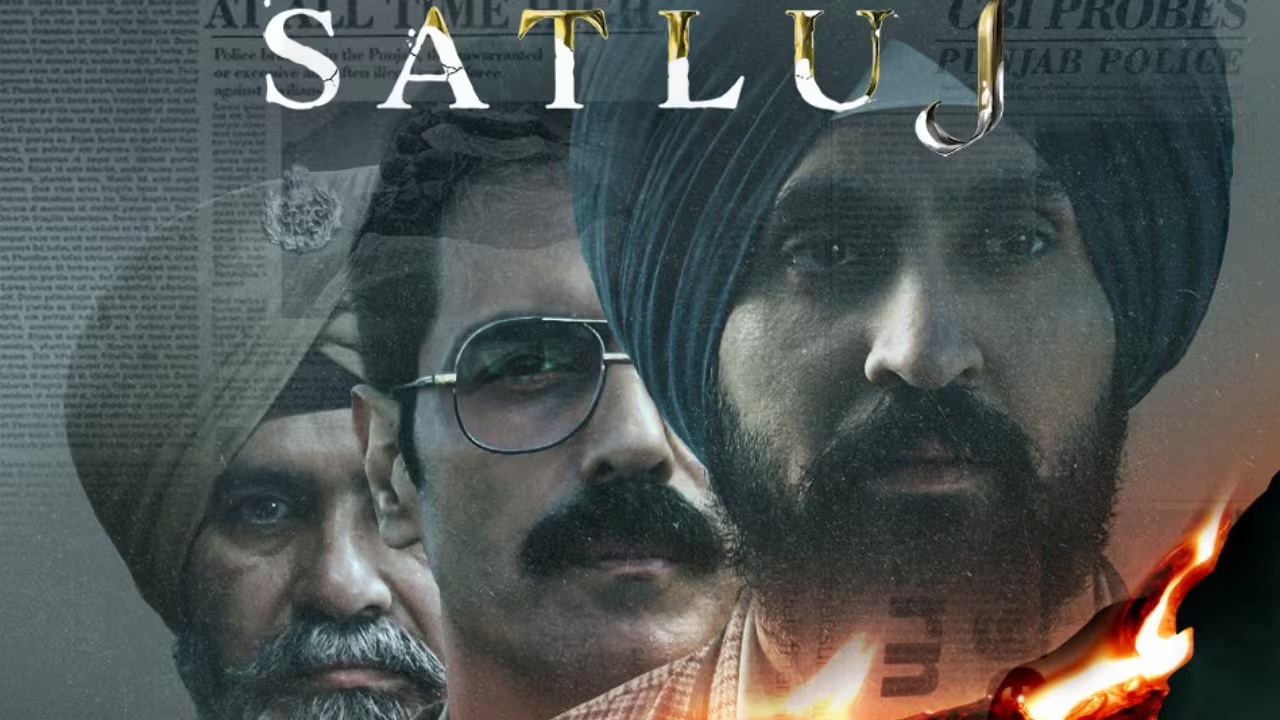
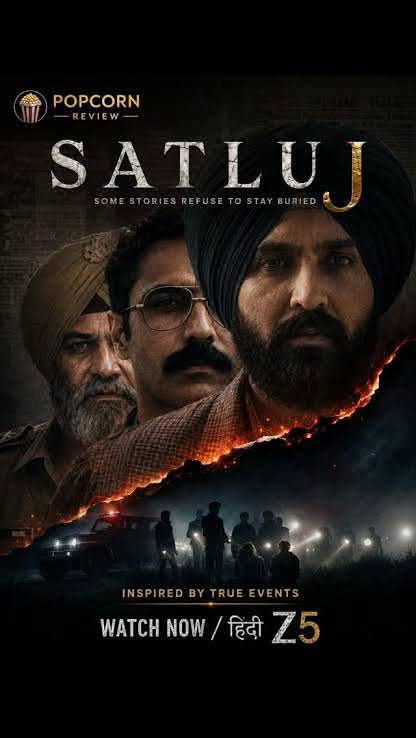
I learnt that lesson a few days ago when the film Satluj quietly appeared on an OTT platform. I told myself there was no hurry. I would watch it at leisure over the weekend. By the time I was ready, it had vanished.
The Zee network had removed the film barely two days after its release. It is no longer available for viewers in India. If I wish to watch it now, I may have to do so from another country. That raises a disturbing question: why should an Indian have to leave India to watch a film about an Indian citizen?
The answer is uncomfortable. The State is still afraid of confronting the truth. In Punjab’s case, that truth has a name: Jaswant Singh Khalra.
It is remarkable that decades after he was abducted and murdered, Khalra continues to unsettle powerful institutions. The fear is not of the man himself. It is of what he uncovered and what his story continues to reveal about one of the darkest chapters in independent India’s history.
Khalra’s name returned to public attention early last year when Punjab 95, a film based on his life, was submitted to the Central Board of Film Certification (CBFC). In a decision that was as revealing as it was astonishing, the Board reportedly suggested 127 cuts.
The effect was virtually to deny certification. The public was once again prevented from seeing the complete story of a man who sacrificed his life to expose the disappearance and secret cremation of hundreds of innocent people.
Eventually, the authorities relented enough to permit an OTT release, but only after the producer agreed to abandon the original title. Punjab 95 became the more generic Satluj, named after the great river that silently witnessed some of Punjab’s most tragic years.
My connection with Khalra is indirect, but deeply personal.
In 1994, a Catholic church in Patiala district was burgled and vandalised. The attack was initially blamed on Sikh militants. Concerned by the implications, Archbishop Alan de Lastic of Delhi constituted a fact-finding team, of which I was a member.
That visit was my first to Punjab, though I had already written extensively on terrorism in the state as an editorial writer with The Hindustan Times. What I encountered challenged many of my assumptions. Our investigation concluded that the attack on the church had not been carried out by militants at all, but by local anti-social elements.
It was an important lesson. National narratives often simplify complicated realities. Truth rarely conforms to convenient assumptions.
A few years later, after joining The Tribune, I encountered Khalra’s story in earnest. On May 18, 2003, the late Ram Narayan Kumar, whom I admired greatly, visited me carrying a newly published book, Reduced to Ashes: The Insurgency and Human Rights in Punjab. Written by Ram Narayan Kumar, Amrik Singh, Ashok Agrwaal and Jaskaran Kaur, it remains one of the most disturbing books I have ever read. I later reviewed it in The Tribune.
Its opening chapter was devoted to Jaswant Singh Khalra.
The story it told was extraordinary, precisely because its hero was an ordinary man. Khalra was not an armed revolutionary. He was not a political firebrand. As the Akali Dal’s human rights secretary, he simply decided to verify disturbing rumours surrounding unidentified bodies being cremated by the police.
His investigation began with crematoria in Amritsar. He examined their records with meticulous care. Each body officially required around 300 kilograms of firewood for cremation. Yet Khalra discovered that, in practice, several bodies were frequently burned together to save money. Nobody came back to collect the ashes.
Behind these accounting entries lay a horrifying reality.
Young men were being picked up from villages without warrants, blindfolded, tortured in illegal detention centres, killed in staged encounters and then cremated as unidentified terrorists. Their names disappeared from official records. Their families were denied even the consolation of performing their last rites.
In Amritsar district alone, Khalra documented records of more than one thousand such cremations.
He approached the Punjab and Haryana High Court through a habeas corpus petition. Astonishingly, the petition was dismissed on the ground that he lacked locus standi. Yet the rejection only strengthened his resolve. He understood that he had uncovered evidence of something systematic and terrifying.
Predictably, threats followed.
Among those who openly threatened him was Ajit Singh Sandhu, then Senior Superintendent (SP) of Police of Tarn Taran district.
The threat soon became reality.
One morning, while Khalra was washing his car outside his Amritsar residence, a police vehicle arrived. He was forcibly taken away in broad daylight. Fortunately, a journalist witnessed the abduction and immediately informed Khalra’s wife, Paramjit Kaur, who worked as a librarian at Guru Nanak Dev University.
She desperately searched police stations, only to be told that perhaps terrorists had kidnapped him. It was only after she approached SGPC president G.S. Tohra, who sent a telegram to Supreme Court Justice Kuldip Singh, that the judicial process began.
Treating the telegram as a petition, Justice Kuldip Singh ordered hearings. The Central Bureau of Investigation (CBI) was entrusted not merely with tracing Khalra’s disappearance but with investigating the larger issue of illegal cremations and extra-judicial killings.
The investigation confirmed the worst fears.
Khalra had indeed been illegally detained, tortured and murdered. His body was allegedly cut into pieces to prevent identification before being secretly disposed of. Ajit Singh Sandhu and several of his subordinates were arrested. Later, Sandhu reportedly threw himself before a moving train.
The CBI investigation did not deliver complete justice. But it established beyond reasonable doubt that the allegations Khalra had painstakingly documented were not imaginary. They pointed to an organised system in which constitutional safeguards had collapsed under the weight of counter-insurgency operations.
Reading Reduced to Ashes left a lasting impression on me. It was difficult to believe that such brutality could occur in the world’s largest democracy. Yet the evidence was overwhelming.
The book also convinced me that preserving Khalra’s memory was not simply about honouring one individual. It was about defending the principle that democratic societies cannot survive if truth itself becomes inconvenient.
Last year, I encountered Khalra’s name once again, this time in an unexpected place—a modest elementary school in the United States named after him.
There was something profoundly moving about that gesture. Thousands of miles away from Punjab, a community had chosen to ensure that children would grow up asking who Jaswant Singh Khalra was. Even more heartening was the presence of his wife and daughter at the inauguration. What he had been denied in life, they were gradually reclaiming through memory: dignity, recognition and truth.
Meanwhile, in India, a film inspired by his life remained in cans. Perhaps that contrast tells its own story.
Governments may suppress uncomfortable films. Certification boards may insist on scores of cuts to shield institutions from scrutiny. Platforms may quietly remove films after release. But truth survives in books, judicial records, eyewitness accounts, classrooms, conversations and even in the name of a school building in a distant land.
Jaswant Singh Khalra never carried a gun. His weapons were documents, persistence and moral courage. He asked a simple question: Where have all the sons of Punjab gone?
He paid for asking it with his life.
Yet because he asked it, generations to come will continue searching for the answer—and no amount of censorship can permanently erase either the question or the man who dared to raise it.
Truth buried is never truth erased. Jaswant Singh Khalra’s courage endures beyond censorship, reminding every democracy that memory, justice and conscience ultimately outlive fear.
(The writer is a senior journalist and editorial writer; ajphilip@gmail.com)