
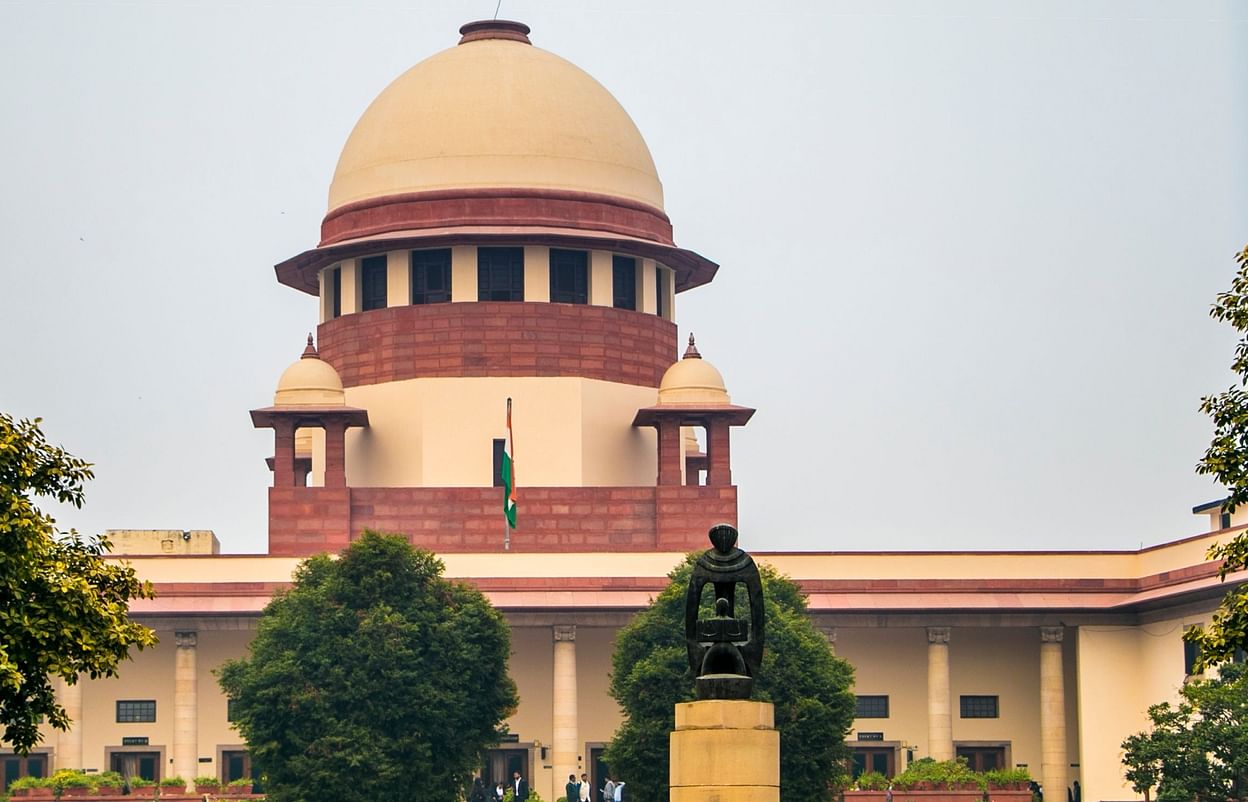
In Mahabir & Ors. v. State of Haryana (2025), the Supreme Court set aside a Punjab and Haryana High Court judgment that converted the acquittal of three accused persons into their conviction while acting in revision under the Code of Criminal Procedure (CrPC). The Court reaffirmed the strict statutory limits placed on revisional powers, emphasised the accused’s right to be heard before any prejudicial order is passed, and clarified that the victim’s statutory right to appeal under the proviso to Section 372 CrPC operates only prospectively.
While adjudicating these procedural issues, the Court also expressed concern over the declining standards of prosecution and warned against politically motivated appointments of law officers, linking prosecutorial lapses to failures in ensuring fair trials.
Background
The case arose from a homicide incident that occurred in Haryana in 1998. After the trial, the Additional Sessions Judge, Rewari, by judgment dated 5 October 2005, acquitted the present appellants and convicted only one co-accused. The State of Haryana did not file any appeal against these acquittals.
In 2006, the deceased’s father filed a criminal revision petition before the Punjab and Haryana High Court challenging the trial court’s decision. Almost eighteen years later, in 2024, the High Court reversed the acquittals and convicted the appellants by exercising its revisional jurisdiction.
The appellants approached the Supreme Court contending that the High Court’s judgment had been passed without proper service of notice or a meaningful opportunity of hearing. Following the High Court’s conviction order, they were taken into custody. During the pendency of the appeal before the Supreme Court, the complainant (father of the deceased) also passed away. The Supreme Court granted interim relief by releasing the appellants on bail and suspending the High Court’s sentencing order pending the final hearing.
Supreme Court’s findings
Examining the scope of revisional powers under Sections 397 and 401 of the CrPC, the Court reiterated that Section 401(3) places an absolute bar on a revisional court converting an acquittal into a conviction. In cases of grave miscarriage of justice, the High Court may order retrial, but it cannot itself record a finding of guilt while exercising revisional jurisdiction. The High Court’s decision to reverse the acquittals and impose convictions was, therefore, held to be legally impermissible.
The proviso to Section 372 CrPC, which came into force in 2009, confers a statutory right on victims to appeal against acquittals, convictions for lesser offences, or orders awarding inadequate compensation. The Supreme Court held that this amendment creates a substantive legal right and therefore operates prospectively. As the revision petition in the present case was filed in 2006, prior to the amendment, the victim had no right of appeal at the relevant time. Accordingly, the High Court was not justified in treating the revision as an appeal under Section 401(5) CrPC.
On the question of procedural fairness, the Court found that the High Court had violated Section 401 (2) CrPC, which mandates that no prejudicial order be passed against an accused without affording an opportunity of hearing. The absence of effective notice and lack of meaningful representation amounted to denial of fair trial guarantees protected under Articles 21 and 22(1) of the Constitution.
The Supreme Court further held that the High Court had placed impermissible reliance on police statements recorded under Section 161 CrPC as substantive evidence. Such statements, the Court noted, can only be used for the limited purpose of contradicting witnesses as per Section 145 of the Evidence Act, and not as primary proof of guilt. This evidentiary misuse constituted a significant defect in the High Court’s reasoning.
Given these statutory and procedural violations, the Court set aside the High Court judgment and quashed the convictions imposed on the appellants.
Observations on public prosecutors
Beyond the immediate findings on criminal procedure, the Supreme Court expressed deeper concern regarding the state of prosecution in criminal trials. Referring to past precedent, the Court observed that Public Prosecutors often fail to effectively cross-examine hostile witnesses, merely marking contradictions without rigorous testing of credibility.
The Court connected these failures to the politicisation of prosecutorial appointments, cautioning that favouritism and nepotism compromise both competence and integrity. Emphasising that Public Prosecutors occupy a public office central to the administration of justice, the Court held that State governments must appoint law officers strictly on the basis of merit, professional capability, experience and integrity, as deficient prosecutions undermine the fairness of criminal trials.
Significance of the judgment
This ruling reaffirms crucial safeguards within criminal procedure by clearly demarcating the limits of revisional jurisdiction and preventing wrongful conversions of acquittal into conviction. It clarifies that victims’ appeal rights under Section 372 CrPC cannot be applied retrospectively to reopen settled cases. The judgment also strengthens the right to notice and hearing as an essential element of fair trial protections.
Importantly, by linking trial failures to prosecutorial inadequacies and politicised appointments, the Court highlighted the systemic reforms urgently required to uphold the quality and independence of criminal justice administration.
The full text of the Supreme Court’s judgment in Mahabir & Ors. v. State of Haryana (2025 SCC OnLine SC 184, decided on 29 January 2025) may be accessed here.
(The legal research team of CJP consists of lawyers and interns; this resource has been worked on by Risha Fathima)
Related:
Delhi riots: Prosecutors Association move Delhi HC against 11 Special Public Prosecutors appointment