
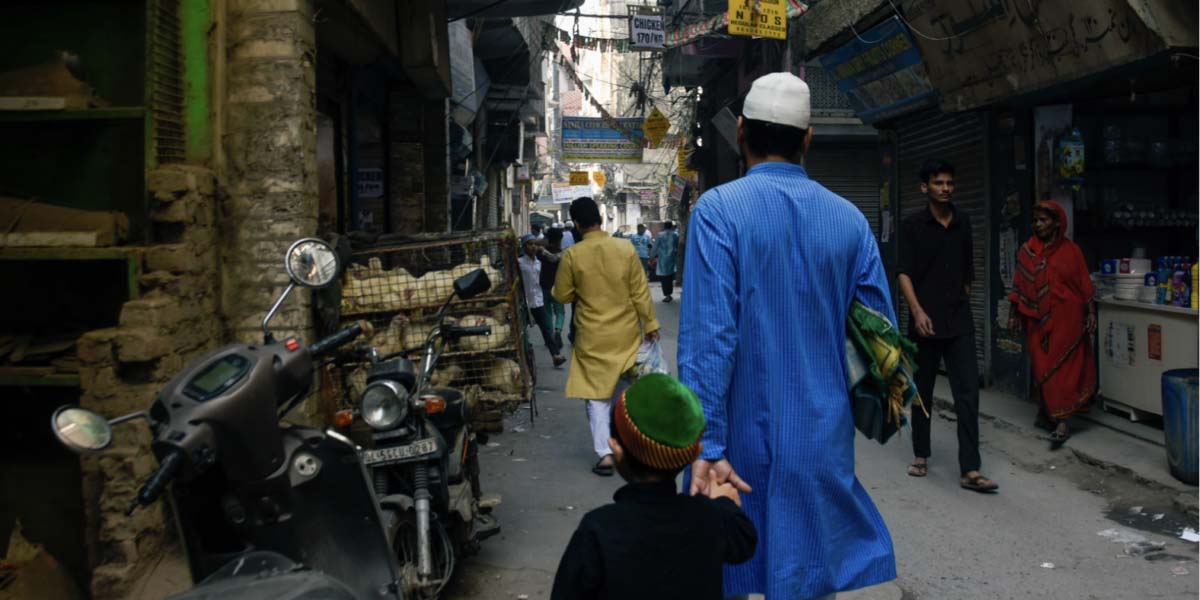
New Delhi: Urban and rural neighbourhoods in India display a high level of segregation along caste and religious lines, with such marginalised neighbourhoods having significantly less access to public services, a working paper on residential segregation of Scheduled Caste (SC) and Muslim communities shows. The researchers have studied residential segregation and access to public services across 1.5 million urban and rural neighbourhoods in India. The study finds that Muslim and Scheduled Caste segregation in India is high by global standards, and only slightly lower than Black-White segregation in the U.S. Within cities, public facilities and infrastructure are systematically less available in Muslim and Scheduled Caste neighbourhoods. Nearly all-regressive allocation is across neighbourhoods within cities—at the most informal and least studied form of government. These inequalities are not visible in the aggregate data typically used for research and policy.
The paper has been published by the by the non-profit National Bureau of Economic Research based in Massachusetts. The authors of the paper – Sam Asher, Kritarth Jha, Anjali Adukia, Paul Novosad and Brandon Tan – have observed that while the data analysed in the study dates back to 2011-13, the “neighbourhood patterns described in the paper are likely to be persistent and have emerged over decades of migration and policy.”
According to the observations and findings in this paper, 26% of India’s Muslims live in neighbourhoods that are more than 80% Muslim, while 17% of SCs live in neighbourhoods that are more than 80% SC. Scheduled Caste segregation in cities is just as high as it is in rural areas, and it is even higher for Muslims, the data shows.
The paper also found that government services – like secondary schools, clinics and hospitals, electricity, water, and sewerage – were all “systematically worse” in marginalised neighbourhoods as compared to other localities in the same cities. The paper said that such differences in service access were “statistically significant and substantial”.
Besides, the study has found that children from such segregated neighbourhoods are likely to fare worse than those from non-marginalised localities. “A child growing up in a 100% Muslim neighbourhood can expect to obtain two fewer years of education than a child growing up in a 0% Muslim neighbourhood. Kids living in SC neighbourhoods face a penalty only slightly smaller. The neighbourhood effect explains about half of the urban educational disadvantage of SC and Muslim children,” the paper said.
Related:
Gujarat’s Disturbed Areas Act: Largest Muslim Ghetto Glaring Contrast to Hindu Settlement
The ‘Harijans’ of Bangladesh: Victims of constitutional neglect and social isolation
Gujarat Polls: Juhapura, The Largest Muslim Ghetto In Gujarat, Is A Picture Of Deliberate Neglect