
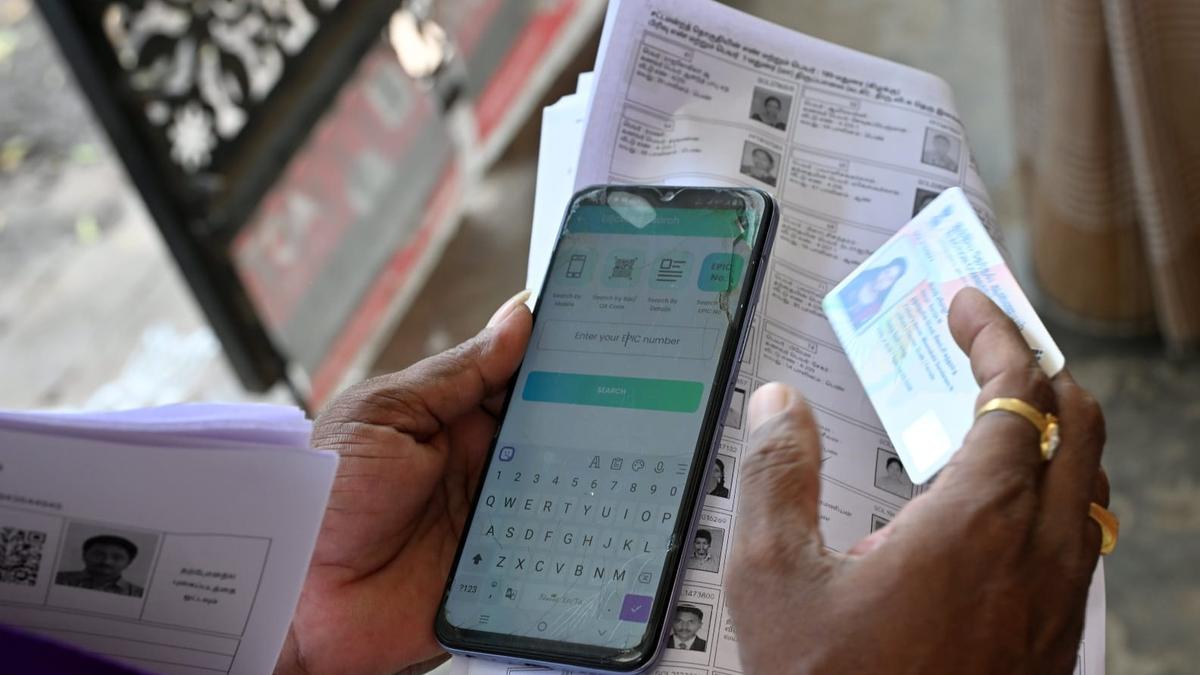
The Special Intensive Revision (SIR) of electoral rolls underway across India has emerged as one of the most consequential and contested exercises in the country’s electoral history, unfolding amidst judicial scrutiny, political contestation and widespread public anxiety over mass exclusions. On December 23, 2025, draft electoral rolls were published in Madhya Pradesh, Chhattisgarh, Kerala and the Andaman & Nicobar Islands, where close to 95 lakh names were removed from the draft lists.
This release expanded the number of states and Union Territories with published draft rolls to 12, and taken together, the SIR has already resulted in the provisional deletion of more than 3.5 crore names from voter lists nationwide.
The scale and pace of these deletions have to be read alongside a significant policy recalibration by the Election Commission of India. Following controversies that first surfaced during the Bihar revision, the Commission issued a nationwide instruction on October 27, 2025, retaining the administrative framework of the SIR but relaxing provisions that had triggered legal and political backlash, particularly those relating to document collection and automatic deletions. Acknowledging that the “qualifying date of last intensive revision” varies widely across states—dating back to 2002 in Gujarat and Kerala and to 2003 in Uttar Pradesh and Madhya Pradesh—the ECI conceded that a uniform, document-heavy verification model was untenable.
This unfolding process continues even as Uttar Pradesh—the most populous state in the country and home to its largest electorate—prepares to publish its draft rolls on December 31, 2025. Far from being viewed as a routine administrative exercise, the SIR has raised profound questions around transparency, procedural fairness, shifting burdens of proof, and the heightened risk of mass disenfranchisement, concerns that have been repeatedly documented and critically examined by Sabrang India through sustained, state-wise reporting on the ground realities of the revision process.
What distinguishes the 2025 SIR from previous revisions is not merely the scale of deletions but the manner in which verification has been conducted. The process has relied heavily on door-to-door enumeration, retrospective linkage to older electoral rolls, and documentary proof requirements that many voters—particularly migrants, informal workers, women, the elderly, and marginalised communities—struggle to fulfil.
While deletions have been officially categorised as relating to deaths, migration, duplication, or non-traceability, civil society groups and independent observers have warned that these categories often mask deeper procedural failures, including non-visits by Booth Level Officers (BLOs), incorrect tagging, and the presumption of ineligibility in the absence of documentation. Against this backdrop, the cumulative picture emerging from state-wise draft rolls is deeply unsettling.
|
13 States/UTs | State | Total Electors | Deletions |
| Bihar | 7,89,69,844 | 47 Lakh | |
| Uttar Pradesh | 15,44,30,092 | Will be published on 31.12.2025 | |
| Rajasthan | 5,48,84,479 | 41.85 Lakh | |
| Madhya Pradesh | 5,74,06,143 | 42,74,160 | |
| Tamil Nadu | 6,41,14,587 | 97 Lakh | |
| West Bengal | 7,66,37,529 | 58 Lakh | |
| Puducherry | 10,21,578 | 1 Lakh | |
| Chhattisgarh | 2,12,30,737 | 27.34 Lakh | |
| Andaman & Nicobar Islands | 3,10,404 | 64,000 | |
| Kerala | 2,78,50,855 | 24.08 Lakh | |
| Gujarat | 5,08,43,436 | 73.7 Lakh | |
| Goa | 11,85,034 | 1,00,042 | |
| Lakshadweep | 57,813 | 1,429 |
Bihar: Early completion, large-scale deletions
Bihar was among the first states where the SIR process was completed and final rolls published, making it a crucial reference point for understanding the scale and implications of the exercise.
According to figures reported by Sabrang India, nearly 47 lakh names were deleted from Bihar’s electoral rolls, bringing down the total electorate from approximately 7.89 crore to about 7.42 crore. The deletions were attributed to voters recorded as deceased, permanently migrated, untraceable, or duplicated across constituencies.
However, reports and petitioners before the Supreme Court pointed to widespread complaints that enumeration forms were either not delivered or collected, and that entire households of migrant workers were marked absent without follow-up verification.
Uttar Pradesh: The largest test yet, draft rolls on December 31
Uttar Pradesh represents the single largest and most politically significant phase of the SIR. With an electorate running into several crores, the state accounts for a substantial share of India’s voters, making any large-scale deletion potentially transformative. Enumeration in UP was extended on December 11, and the draft electoral roll is now scheduled for publication on December 31, 2025. While deletion figures are not yet officially available, reports suggest that UP may account for a significant portion of the remaining corrections once its draft roll is released.
Rajasthan: Over 41 lakh names provisionally removed in draft rolls
In Rajasthan, the SIR resulted in the provisional deletion of approximately 41.85 lakh names from the draft electoral rolls out of 5, 48, 84, 479 total electorate of the state. The state completed enumeration in early December, with the draft roll published in mid-month i.e., December 16. Official explanations cite deaths, permanent migration, and duplicate entries as the primary reasons for deletion.
👉मतदाता सूची विशेष गहन पुनरीक्षण–2026
👉 राज्य में प्रारूप मतदाता सूचियों का आज 16 दिसम्बर 2025 को हुआ प्रकाशन – @CeoRajasthan
👉पढ़ें गणना चरण के प्रमुख निष्कर्ष #शुद्धमतदातासूचीमजबूतलोकतंत्र @ECISVEEP@spokespersonECI @PIB_INDIA @DIPRRajasthan@DDNational@airnews_jaipur… pic.twitter.com/wMbyvF3ypT— CEO RAJASTHAN (@CeoRajasthan) December 16, 2025
Madhya Pradesh: Detailed categories, massive numbers with 42, 74, 160 deletions
Madhya Pradesh offers one of the most detailed official breakdowns of provisional deletions, with 42, 74, 160 names flagged for removal from the draft rolls on December 23. According to official data reported, these deletions include approximately 8.46 lakh deceased voters, over 31.5 lakh voters recorded as having shifted permanently, around 2.77 lakh duplicate entries, and a substantial number categorised as “unmapped” or unverified.
The enumeration period in MP was extended, and the draft roll was published on December 23, 2025 following a revised schedule. Despite the availability of granular data, activists have questioned whether the categorisation process itself relied too heavily on assumptions rather than verifiable evidence, especially in rural and forested areas.
27 अक्टूबर 2025 की स्थिति में प्रदेश में 5,74,06,143 मतदाता थे। वर्तमान में 5,31,31,983 मतदाता हैं। विशेष गहन पुनरीक्षण (SIR) के दौरान 42,74,160 मतदाताओं की कमी हुई हैं. श्री राम प्रताप सिंह जादौन, संयुक्त मुख्य निर्वाचन पदाधिकारी, मप्र @ECISVEEP @SpokespersonECI pic.twitter.com/dffrxvgNnE
— Chief Electoral Officer, Madhya Pradesh (@CEOMPElections) December 23, 2025
Tamil Nadu: Nearly 97 lakh deletions
Tamil Nadu witnessed one of the highest absolute numbers of deletions, with close to 97 lakh names provisionally removed from the draft electoral rolls out of 6, 41, 14 ,587 of the total electorate of the state. The impact was particularly pronounced in urban centres such as Chennai, where frequent relocation, rental housing, and informal settlements complicate voter registration.
Press release. pic.twitter.com/h02SIQkX4P
— TN Elections CEO (@TNelectionsCEO) December 19, 2025
Enumeration deadlines in the state were extended, and draft rolls were published in the third week of December i.e., December 19, 2025.
The Hindu, on December 22, carried analysis, on the unusual patterns (anomalies) behind the deletions in the state with detailed findings on eight different categories of anomalies: dead voters, voters who were under the shifted/moved categories etc.
This analysis, among other things, reveals that 14 stations show unusually high proportions of young deaths; 35 stations show high gender bias in deletions; 8,613 stations have abnormally high deletion rates; 727 stations report excessive deaths; 3,904 polling stations show high death proportions; 495 polling stations show 100% death-based deletions; 6,139 parts have high numbers of “absent” voters; and 172 parts show suspicious patterns of “permanently shifted” women. The entire analysis may be read here.
West Bengal: Around 58 lakh names flagged for removal
In West Bengal, the SIR process has assumed an acute social and political dimension, with close to 58 lakh names either deleted or provisionally flagged for deletion in the draft electoral rolls published on December 16. Of these, around 50 lakh names were identified during digitised enumeration as potentially removable, a figure that rose sharply within days as categorisation progressed. With a certified electorate of over 7.66 crore, this provisional flagging represented a significant share of voters and triggered widespread anxiety.
Press Note – West Bengal SIR: Publication of Draft Electoral Roll – Key Findings of Enumeration Phase.#SIR #PressNote@ECISVEEP @SpokespersonECI @PIBKolkata @AIRKolkata @DDBanglaNews pic.twitter.com/G6Ix4wyPIz
— CEO West Bengal (@CEOWestBengal) December 16, 2025
Official breakdowns indicated that the majority of cases were marked under standard administrative categories—deceased voters, those recorded as having shifted, untraceable names and duplicates—but the speed and scale of the exercise, rather than the categories themselves, became the source of public distress.
The situation escalated after the state government linked at least 39 deaths to what it described as “SIR-induced panic,” prompting Chief Minister Mamata Banerjee to announce Rs. 2 lakh ex gratia compensation for bereaved families and to launch block-level “May I Help You” camps from December 12 to assist affected voters with claims, objections and documentation.
While the Election Commission has maintained that the figures are provisional and subject to hearings and due process, reports from across districts documented confusion among long-registered voters whose names were flagged or missing, reinforcing concerns raised by opposition parties that verification and outreach were uneven in a state marked by high migration, dense urban settlements and socio-economic vulnerability.
Puducherry: Small electorate, significant impact
Though Puducherry’s electorate is relatively small, the deletion of around 1 lakh names constitutes a substantial share of the Union Territory’s total electorate of 10,21,578 as on October 27, 2025.
Press Note 16.12.2025 – Publication of Draft Electoral Roll@ECISVEEP #ECI #SIR #ceolakshadweep pic.twitter.com/s2UPtgrTFF
— CEO LAKSHADWEEP (@LakshadweepCeo) December 16, 2025
Enumeration and draft publication followed the national SIR schedule, but local reports highlighted that many of those flagged or deleted were migrant workers and residents of industrial and peri-urban zones who were unavailable during verification visits, raising concerns about how absence was interpreted during the revision process.
Pess Note-Lakshadweep Special Intensive Revision – Key Findings Of Enumeration Phase@ECISVEEP #ECI #SIR pic.twitter.com/hpsyiETXzA
— CEO LAKSHADWEEP (@LakshadweepCeo) December 16, 2025
Chhattisgarh: Over 27 lakhs provisionally deleted amid security and migration challenges
Chhattisgarh saw the provisional deletion of approximately 27.34 lakh names from its draft rolls. The state’s unique challenges—ranging from internal displacement due to conflict to seasonal labour migration—complicated the enumeration process. Official data categorised deletions into deceased voters, permanently shifted individuals, and duplicate registrations.
23 दिसंबर 2025 को ड्राफ्ट रोल प्रकाशित हो गया है। जिसे आप https://t.co/D5DfuRyplH अथवा https://t.co/S06LG1wQuS पर लॉगिन करके अपना नाम ढूंढ सकते हैं। pic.twitter.com/nAiB3zrY38
— Chief Electoral Officer, Chhattisgarh (@CEOChhattisgarh) December 23, 2025
The enumeration deadline was extended, and draft rolls were published on December 23 following the revised ECI schedule.
SIR 2026 की ड्राफ्ट मतदाता सूची का प्रकाशन 23/12/25 को हो गया है।
ड्राफ्ट मतदाता सूची https://t.co/o4izjd1j8X aur https://t.co/MO0ZmklYlF पर उपलब्ध है।
मुख्य निर्वाचन पदाधिकारी श्री यशवंत कुमार द्वारा अपील की गई कि सभी मतदाता ड्राफ्ट मतदाता सूची में अपना नाम जांच ले, (1/2) pic.twitter.com/FNrvLBlJT9
— Chief Electoral Officer, Chhattisgarh (@CEOChhattisgarh) December 23, 2025
Andaman and Nicobar Islands: High proportionate deletions
In the Andaman and Nicobar Islands, around 64,000 names were provisionally deleted from the draft rolls out of 3,10,404 total electors of the UTs. Given the small population base, this represented a substantial proportion of registered voters. Migration to the mainland and employment-related movement were cited as primary reasons, though verification in remote islands posed logistical challenges.
The Draft Electoral Roll has been formally handed over to representatives of recognized Political Parties.
The successful completion of Enumeration Phase reflects strong public participation and coordinated efforts by election officials and stakeholders, strengthening democracy. pic.twitter.com/Yd1D1frub3— Chief Electoral Officer, Andaman & Nicobar Islands (@AndamanCEO) December 24, 2025
Kerala: Over 24.08 lakh names removed
Kerala recorded provisional deletions of approximately 24.08 lakh voters, with official breakdowns including deceased individuals, voters permanently shifted out of the state, untraceable persons, and duplicate registrations. Overseas migration played a significant role, with many voters absent during enumeration. The state’s enumeration period was extended, and draft rolls were published on December 23, 2025.
The SIR draft electoral roll has now been published. Voters can file claims and objections from 23 December 2025 to 22 January 2026.#ceokerala #ecisveep #eci #ChiefElectoralOfficer #SIRKerala pic.twitter.com/RghZWqvc5s
— Chief Electoral Officer Kerala (@Ceokerala) December 23, 2025
Gujarat: 73.7 lakh deletions
Gujarat’s draft rolls reflected the deletion of about 73.7 lakh names, largely concentrated in urban and industrial areas. Rapid urbanisation, labour migration, and multiple registrations were cited as key factors. Enumeration deadlines were extended, and draft rolls were released on December 19.
Goa: Over one lakh names flagged for deletion
In Goa, 1,00,042 names were deleted from the draft electoral rolls. Migration, ageing population profiles, and duplication were cited as reasons. The deletions, while smaller in absolute terms, raised concerns in a state with a relatively compact electorate.
The DEO North Goa Ankit Yadav,IAS handing over the the copy the Draft Electoral Roll of SIR 2026 to the representatives of political parties #goa #india #SIR #ECI @ECISVEEP pic.twitter.com/UgAE7fOYqV
— Chief Electoral Office, Goa (@CEO_Goa) December 16, 2025
Lakshadweep: Provisional deletion of 1,429 electors out of 57,813 total electors
Lakshadweep saw the provisional deletion of 1,429 electors out of 57,813 total electors of the UT.
Press Note 16.12.2025 – Publication of Draft Electoral Roll@ECISVEEP #ECI #SIR #ceolakshadweep pic.twitter.com/s2UPtgrTFF
— CEO LAKSHADWEEP (@LakshadweepCeo) December 16, 2025
Revised SIR timelines and the Uttar Pradesh factor
On December 11, the Election Commission revised enumeration and draft publication timelines across 6 states. In Tamil Nadu and Gujarat, enumeration was extended up to December 14, 2025, with draft electoral rolls subsequently published on December 19. Madhya Pradesh, Chhattisgarh and the Andaman & Nicobar Islands were granted a longer window, allowing enumeration to continue until December 18, followed by the release of draft rolls on December 23, 2025. Kerala’s revision followed the same trajectory, culminating in draft roll publication on December 23 after extended field verification.
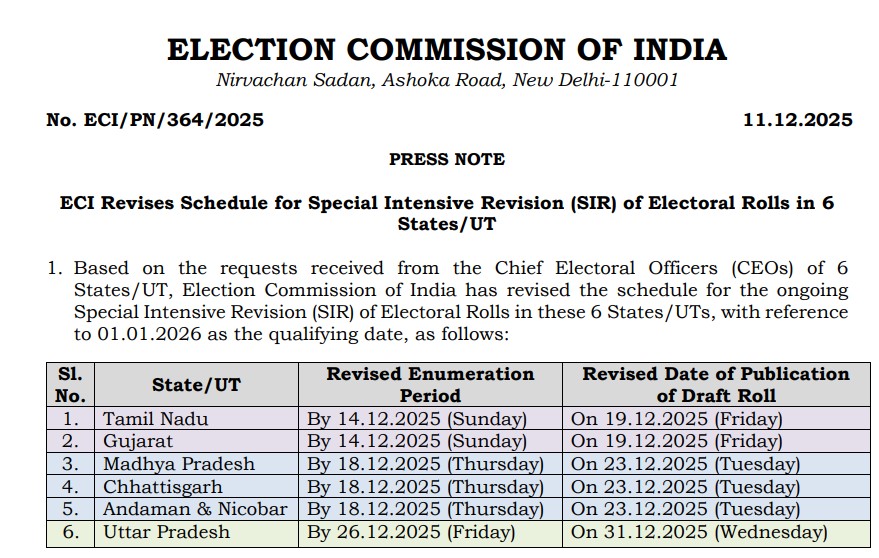
This synchronised release on December 23 marked a critical juncture in the SIR, with draft electoral rolls simultaneously entering the public domain in Madhya Pradesh, Chhattisgarh, Kerala and the Andaman & Nicobar Islands, expanding the total to 12 states and Union Territories where draft rolls have now been published.
Across these jurisdictions, cumulative proposed deletions have already crossed the 3.5 crore mark, showing the unprecedented scale of the exercise. Uttar Pradesh, however, occupies a distinct and consequential position within this revised timeline. As India’s most populous state, it received the most substantial extension, with enumeration permitted until December 26, 2025 and the draft electoral roll scheduled for publication on December 31, 2025.
A process under challenge
Across states, Sabrang India has documented how the SIR, while presented as a technical correction, has unfolded as a high-stakes exercise with far-reaching consequences. With more than 3.5 names already facing deletion across 12 States/UTs and Uttar Pradesh yet to publish its draft roll, the cumulative impact of the revision is unprecedented. The challenge ahead lies not only in correcting errors through claims and objections but in addressing deeper questions about burden of proof, administrative accountability, and the right to vote in a context of widespread mobility and precarity.
Related:
ECI’s announced nationwide SIR, will cover 12 States and UTs with a reduced documentary burden