
On Thursday, January 22, the Supreme Court of India issued a carefully calibrated set of directions aimed at ensuring the peaceful and simultaneous observance of Hindu and Muslim religious practices at the Bhoj Shala–Kamal Maula complex in Dhar, Madhya Pradesh, a site long mired in a dispute over its religious character.
A Bench comprising Chief Justice of India Surya Kant, Justice Joymalya Bagchi, and Justice Vipul Pancholi was hearing an application filed by Hindu Front for Justice, which sought permission for day-long Basant Panchami rituals at the site on January 23, coinciding with Friday Juma Namaz. The proceedings and directions were reported by LiveLaw.
Background: A contested sacred space
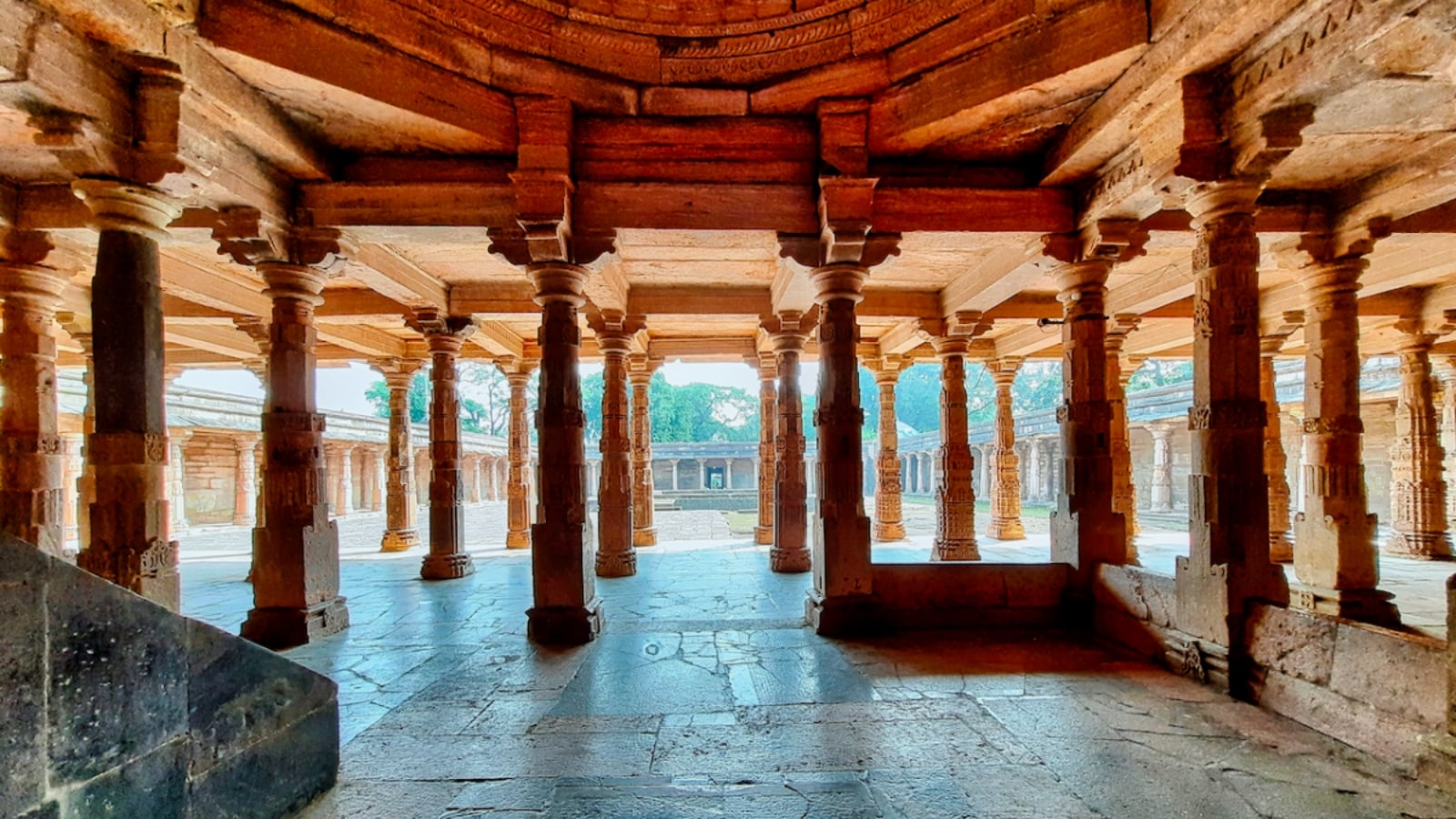
The Bhoj Shala, an 11th-century monument protected by the Archaeological Survey of India (ASI), occupies a deeply contested place in India’s religious and legal landscape. Hindus regard the structure as a temple dedicated to Goddess Vagdevi (Saraswati), while Muslims consider it the Kamal Maula Masjid.
Since 2003, a court-monitored arrangement has been in place permitting Hindu puja on Tuesdays and Muslim namaz on Fridays, a fragile equilibrium that has periodically come under strain, as per The Hindu.
Arguments before the Court
Appearing for the Hindu applicants, Advocate Vishnu Shankar Jain submitted that Basant Panchami holds exceptional religious significance, with the auspicious muhurat extending from sunrise to sunset, during which uninterrupted pujas and havans are traditionally performed.
Jain urged the Court to consider whether Juma Namaz could be shifted to after 5 PM, allowing Hindu rituals to continue throughout the day without interruption.
Representing the Muslim side, Senior Advocate Salman Khurshid, appearing for the Kamal Maula Mosque Committee, firmly opposed the suggestion, pointing out that Juma Namaz is time-specific and must be performed between 1 PM and 3 PM, in accordance with Islamic religious practice. He clarified that once the namaz concluded, worshippers would vacate the premises, as has been the practice.
Justice Bagchi intervened during the exchange, remarking that the Court was conscious of the religious significance of both practices and cautioning against arguments that ignored doctrinal constraints—an observation noted by LiveLaw.
Administration’s role and court-endorsed arrangement
Seeking to de-escalate tensions and ensure public order, Additional Solicitor General K.M. Nataraj, appearing for the Union of India and the ASI, proposed a pragmatic administrative solution. He suggested that if the mosque committee provided an estimate of the number of persons expected to attend the namaz, the district administration could cordon off a separate enclosure within the compound, complete with distinct ingress and egress, and issue passes to prevent overcrowding or provocation.
Khurshid agreed to furnish the numbers on the same day, a position welcomed by the Court. The Advocate General of Madhya Pradesh also assured the Bench that law and order would be strictly maintained, a commitment the Court formally recorded, as reported by Bar & Bench.
Supreme Court’s recorded directions
In its order, the Bench recorded the consensus arrangement as follows:
“A fair suggestion was given that for the duration of Juma Namaz between 1 PM and 3 PM, an exclusive and separate area within the same compound, including separate ingress and egress, shall be made available so that namaz can be performed peacefully. Similarly, a separate space shall be made available to the Hindu community to conduct traditional ceremonies on the occasion of Basant Panchami.”
The Court further noted that the district administration may issue passes or adopt any other fair mechanism to ensure that no untoward incident occurs.
In a rare and deliberate appeal, the Bench urged both communities to exercise mutual respect and restraint, stressing that cooperation with civil authorities was essential to maintaining communal harmony.
Clarification on pujas and non-interference with merits
When Jain pressed the Bench to explicitly record that Basant Panchami pujas could continue uninterrupted from sunrise to sunset, the Court clarified that this was already permitted under an existing ASI order, and nothing in its directions curtailed that right.
Importantly, the Bench emphasised that its directions were purely interim and facilitative, and did not reflect any opinion on the merits of the larger dispute, which remains sub judice.
Larger Case: ASI survey and High Court proceedings
The application was heard in the backdrop of a Special Leave Petition filed in 2024 by the Maulana Kamaluddin Welfare Society, Dhar, challenging a Madhya Pradesh High Court order directing the ASI to conduct a scientific survey of the disputed complex.
In April 2024, the Supreme Court had allowed the survey to continue but imposed strict safeguards:
- No physical excavation that could alter the structure’s character
- No action on the survey findings without the Supreme Court’s prior approval
- Maintenance of status quo at the site
During Thursday’s hearing, LiveLaw reported, the Court was informed that the ASI has completed the survey and submitted its report in a sealed cover to the High Court.
Accepting a suggestion by Salman Khurshid, the Supreme Court directed that:
- The High Court may unseal the ASI report in open court
- Copies be supplied to both parties
- Where copying is not feasible, inspection may be allowed in the presence of counsel
- Parties be permitted to file objections
- The matter thereafter be taken up for final hearing
The Court further directed that the writ petition pending before the Indore Bench of the Madhya Pradesh High Court be heard by a Division Bench headed by the Chief Justice or one of the senior-most judges, and disposed of the SLP accordingly.
Continuing status quo
Until final adjudication, the Supreme Court ordered that:
- Status quo at the site shall be maintained
- Parties must continue to abide by the ASI’s April 2023 operational order
- No step shall be taken that alters the religious character of the structure
A judicial tightrope
The Court’s orders reflect a careful judicial balancing act—protecting religious freedoms under Articles 25 and 26, while preventing escalation at a site emblematic of India’s broader debates on faith, history, and constitutional secularism.
By foregrounding administrative coordination, mutual respect, and non-interference with pending adjudication, the Supreme Court has, for now, sought to ensure peace at Bhoj Shala—while leaving the ultimate question of its religious character to be resolved through due process of law.
Related:
In UP’s Mosque Coverings, a New Chapter From The Hindutva Playbook Unfolds
CJP escalates complaint against Times Now Navbharat show on Gyanvapi Mosque to NBDSA