
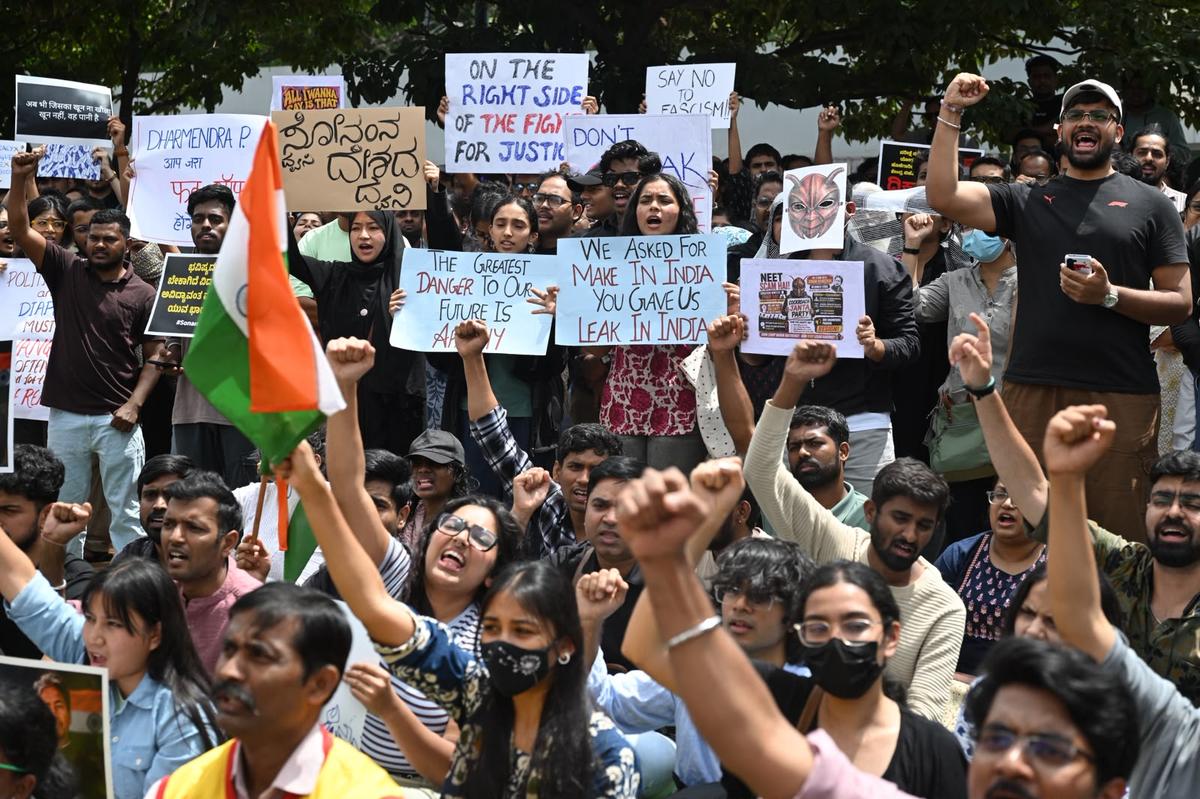
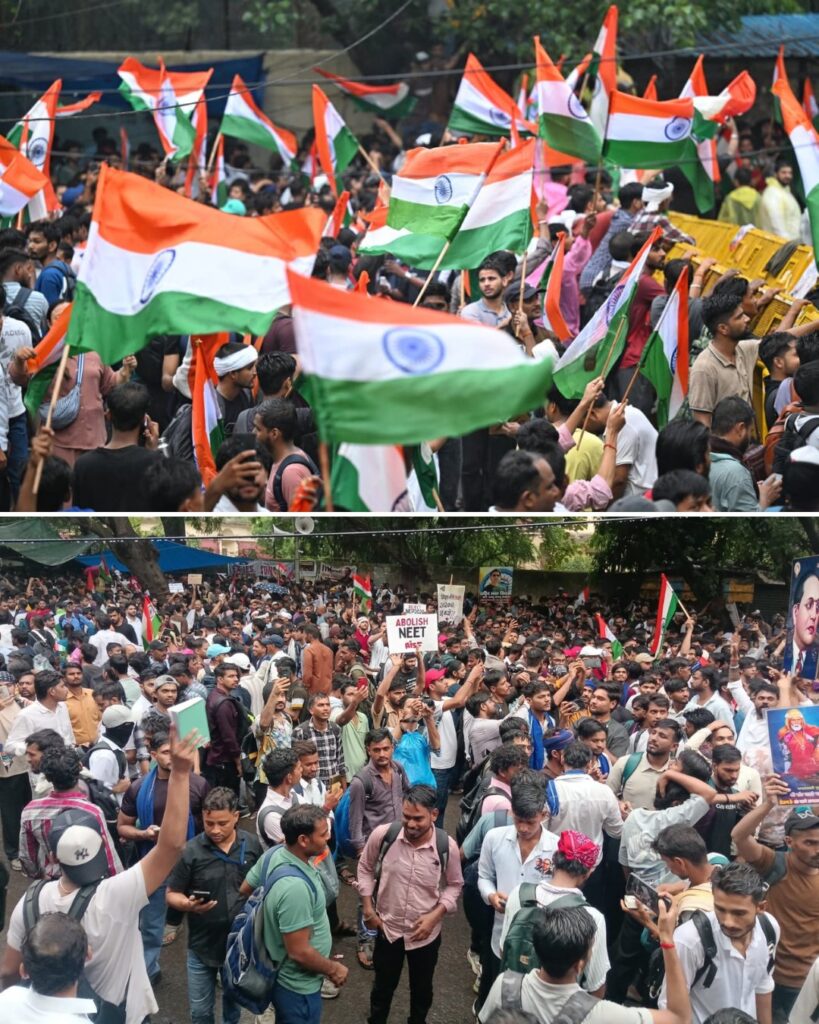
On July 20, 2026, the streets around Delhi’s Jantar Mantar became the centre of a rapidly escalating confrontation between a student-led movement demanding accountability over alleged failures in the education system and a State determined to prevent the protest from moving towards Parliament. Despite heavy security deployment, prohibitory orders under Section 163 of the Bharatiya Nagarik Suraksha Sanhita (BNSS), barricades across central Delhi and restrictions around Parliament, thousands of protesters gathered for the proposed “Chalo Sansad” march.
JUST IN | Massive crowds several thousands strong gathered at Jantar Mantar as mobile internet was shut down in parts of central Delhi. Protesters have had sporadic clashes with authorities according to emerging visuals. Even as security forces tried to hold the crowds at bay,… pic.twitter.com/PBgnPpefiZ
— The Hindu (@the_hindu) July 20, 2026
Visuals from the CJP protest at Jantar Mantar.
Tensions escalated as police moved in on protesters. These are moments captured from the ground, documenting the events as they unfolded.
Video: @nvm_nissss #JantarMantar #CJP #Delhi #GroundReport pic.twitter.com/CdukMeUcoa— Velox India (@VeloxIndia) July 20, 2026
Protestors gather at the Jantar Mantar, in Delhi, as Cockroach Janta Party aims march to Parliament on July 20, 2026, to press for education reforms.
Meanwhile, no permission has been granted for the march planned by the CJP to Parliament on July 20, when both houses will… pic.twitter.com/Gxmg0A763T
— The Hindu (@the_hindu) July 20, 2026
The day unfolded against the backdrop of an intensifying political and legal battle. Sonam Wangchuk, who had become one of the most prominent face of the agitation, remained on hunger strike under medical supervision at Safdarjung Hospital after being removed from Jantar Mantar on July 18. Even after his hospitalisation, Wangchuk stated that he would continue his fast until the government took accountability for recent failures in the education system, particularly alleged examination irregularities and question paper leaks, or until elected representatives assured him that the issues would be raised in Parliament.
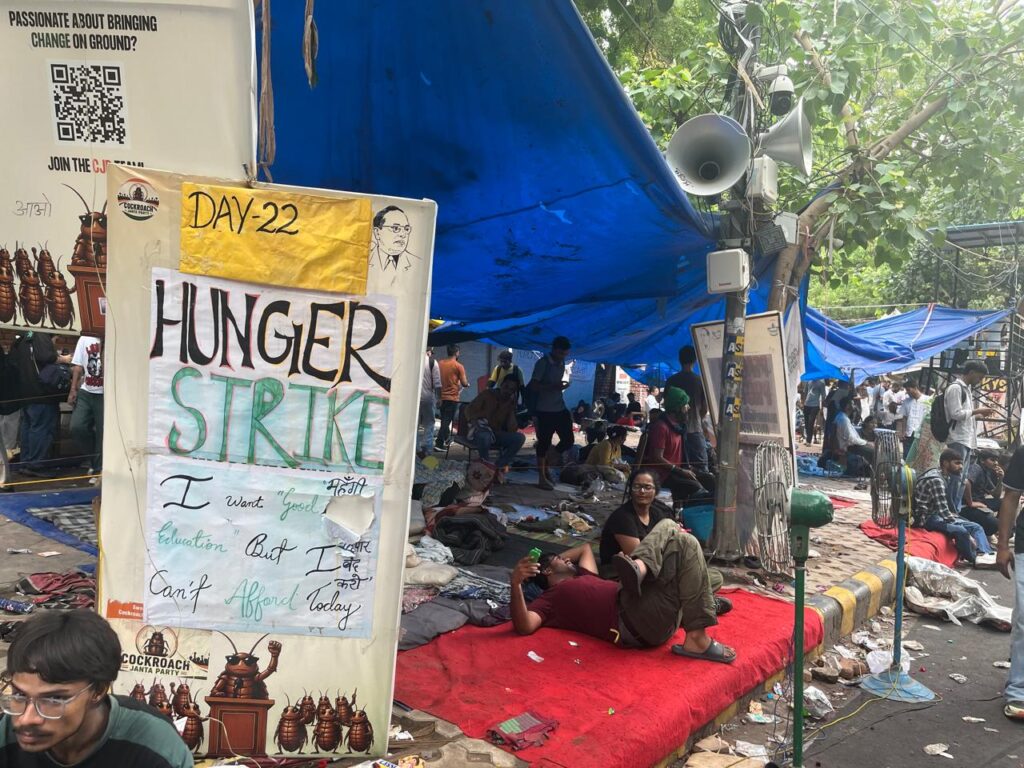
Alongside Sonam Wangchuk’s fast, the protest also witnessed a sustained hunger strike by student activists associated with the All India Students’ Association (AISA). Three students, Neha, Manish and Aameen, continued their indefinite fast in solidarity with the wider movement, highlighting the direct impact that examination failures have had on young aspirants. Their protest lasted 23 days before they decided to conclude the fast on July 20 following an appeal from a delegation comprising parliamentarians, civil society representatives and public figures, who urged them to continue the struggle through parliamentary intervention and public campaigns.
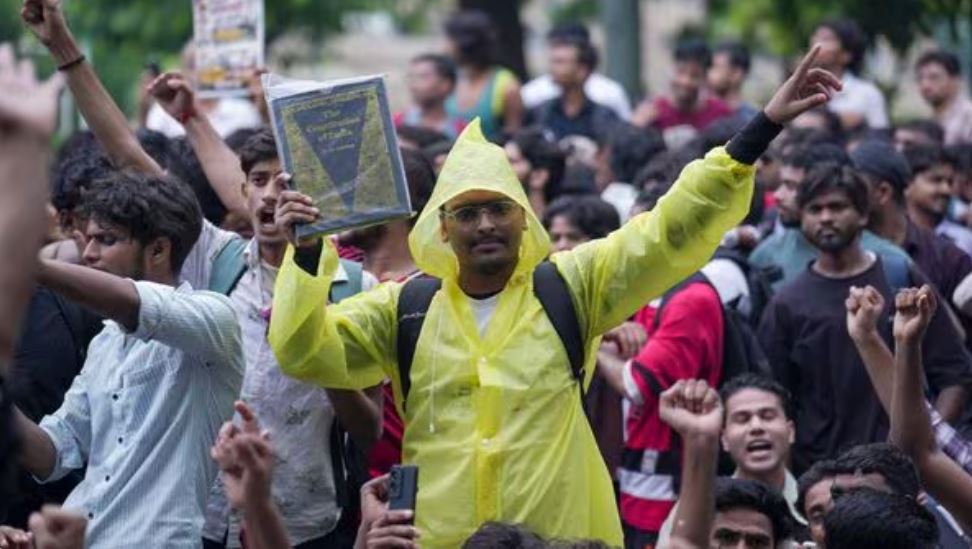
Meanwhile, as protesters attempted to march towards Parliament, Delhi witnessed a major security mobilisation, with barricades, police deployment, paramilitary forces and restrictions on movement around central areas. Reports of state violence, allegations of force against protesters and the police denial of such allegations intensified the debate over the State’s handling of peaceful dissent. The administration justified its actions on grounds of public order and Parliament security, while protesters argued that preventive restrictions were being used to silence a movement demanding accountability.
And it has finally begun.
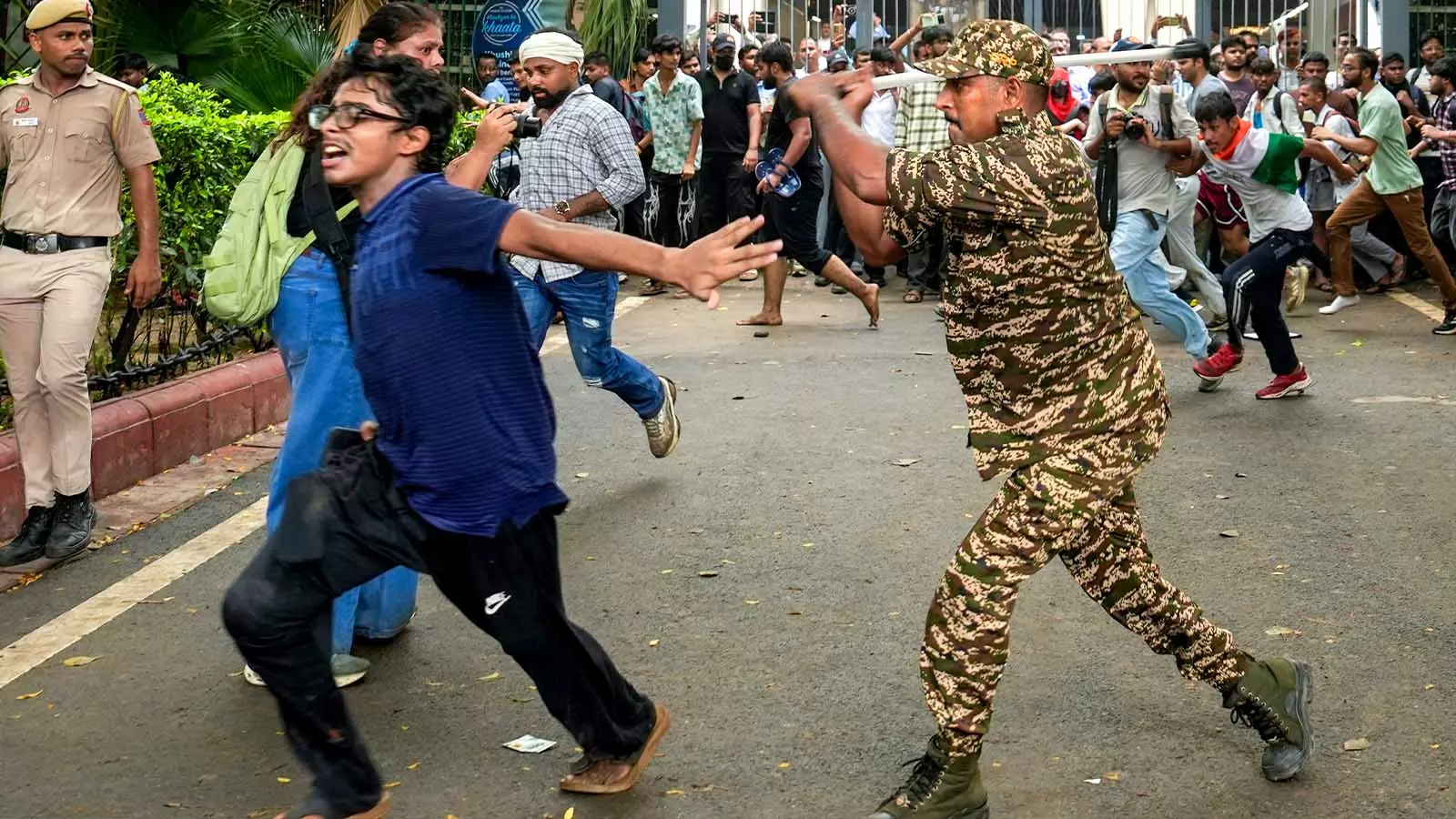
Security personnel using lathicharge to disperse crowd at CJP protest in Delhi. pic.twitter.com/JYTNKLq0Tj
— Piyush Rai (@Benarasiyaa) July 20, 2026
#WATCH | Delhi | Protesters gathered for CJP’s protest march clash with RPF personnel at Jantar Mantar; RPF personnel & police use lathis for crowd control pic.twitter.com/gijaCjJksW
— ANI (@ANI) July 20, 2026
VIDEO | CJP March: Protesters run amok, riot control units fire teargas near Patel Chowk.
(Full video available on PTI Videos – https://t.co/n147TvrpG7) pic.twitter.com/P5E5ATteiT
— Press Trust of India (@PTI_News) July 20, 2026
Delhi : Security intensified outside Parliament amid CJP protest and threats from the protesters. pic.twitter.com/QUSNG2DDY4
— News Arena India (@NewsArenaIndia) July 20, 2026
The developments of July 20 therefore marked a decisive moment in the agitation. What began as a demand from students for answers over the credibility of India’s examination system had evolved into a larger constitutional contest — involving the right to peaceful protest, the State’s power to regulate public assemblies, the autonomy of an individual undertaking a hunger strike, and the responsibility of democratic institutions to respond to public grievances.
The Origins: A movement born out of the NEET crisis
The immediate trigger for the mobilisation was the controversy surrounding the NEET-UG 2026 examination held on May 3, 2026. Allegations of a paper leak and compromise of examination integrity led the National Testing Agency to cancel the examination on May 12, 2026 and announce a fresh examination, which was subsequently conducted on June 21, 2026.
The National Eligibility-cum-Entrance Test (NEET-UG) determines admission to medical colleges across the country and is viewed by lakhs of aspirants as a decisive examination shaping their academic and professional future. Allegations of malpractice and procedural failures therefore generated widespread anger among students, parents and civil society groups who questioned whether the examination system had failed to protect fairness and merit.
The controversy acquired a deeper human dimension as reports emerged of severe distress among students, including suicides allegedly linked to examination-related pressures and uncertainty surrounding the results. For many protesters, the issue was not limited to a single examination irregularity but reflected a larger crisis of accountability in India’s competitive examination system.
Against this backdrop, students and civil society groups began mobilising, demanding transparency, an impartial investigation into the alleged irregularities, accountability of those responsible, and measures to restore confidence in the examination process.
The movement found a visible presence at Jantar Mantar, a historic site of democratic protest in New Delhi. Located within close proximity to Parliament, Jantar Mantar has for decades served as a space where citizens, students, workers and civil society organisations have brought grievances directly into the public sphere.
For the protesters, gathering at Jantar Mantar was not merely an act of demonstration. It represented a constitutional appeal to the State — a demand that institutions responsible for administering examinations affecting millions of young people must answer questions of fairness, transparency and accountability.
Sonam Wangchuk enters the movement
Sonam Wangchuk’s decision to join the protest brought further national attention to a mobilisation that had already grown into a significant movement involving students, parents, civil society groups and supporters across the country. His decision to begin an indefinite hunger strike at Jantar Mantar on June 28, 2026 became one of the defining moment in the agitation. Wangchuk stated that his fast was aimed at securing accountability for recent failures affecting students, including alleged examination irregularities and question paper leaks. However, the articulation of his demands evolved during the course of the protest. While the wider CJP-led mobilisation had prominently raised the demand for the resignation of Union Education Minister Dharmendra Pradhan, Wangchuk’s later conditions for ending the fast focused primarily on government acknowledgement of failures in the education system, parliamentary discussion on education accountability, and assurances from elected representatives that reforms would be taken up.
His entry into the agitation was significant because hunger strikes in India carry a long political and constitutional history. From Mahatma Gandhi’s satyagrahas to later public movements, fasting has frequently been used as a method of moral persuasion rather than physical confrontation.
Wangchuk began his indefinite hunger strike on June 28, 2026, at Jantar Mantar. According to Indian Express reports, he continued the fast for more than 21 days, maintaining that his objective was to compel political accountability rather than engage in confrontation with the State. His decision immediately elevated the visibility of the protest. Supporters viewed the hunger strike as an expression of Gandhian resistance — a voluntary sacrifice intended to draw attention to institutional failure.
The government’s response, however, increasingly centred around a different concern: the deterioration of Wangchuk’s health and the State’s responsibility to prevent serious medical harm. That conflict would eventually become the central legal issue before the Delhi High Court.
Three Weeks of Escalation: From local protest to national attention
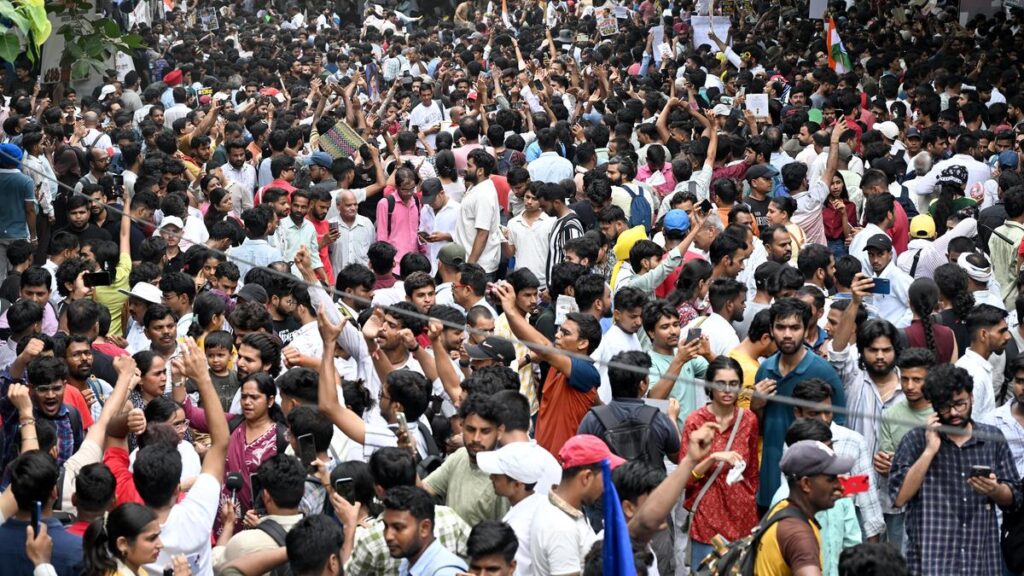
For nearly three weeks, the protest site at Jantar Mantar gradually became a focal point of public mobilisation. The early phase was marked by daily gatherings, student participation, speeches and solidarity visits. Over time, the presence of Wangchuk’s hunger strike attracted wider attention from civil society groups, public personalities and political figures.
The movement’s messaging expanded beyond the immediate examination controversy. It increasingly raised questions about:
- accountability of public institutions;
- transparency in governance;
- the treatment of students affected by systemic failures;
- the responsiveness of elected representatives.
The symbolism of an elderly activist undertaking a prolonged fast outside Parliament added further political weight. By mid-July, the protest had become a significant public mobilisation rather than an isolated demonstration. Media reports noted that supporters had planned a march towards Parliament during the Monsoon Session, increasing administrative concern over crowd management and law-and-order issues.
The State’s Intervention: From silence to medical enforcement
As Sonam Wangchuk’s indefinite hunger strike entered its third week, the nature of the State’s response came under increasing scrutiny. The protest was not merely about the continuation of a fast; it was rooted in demands for accountability over the NEET examination crisis, alleged failures in ensuring the integrity of the examination process, and the distress faced by thousands of students whose academic futures had been affected.
During the initial phase of the protest, the authorities did not undertake any visible intervention to address these larger concerns or engage meaningfully with the demands being raised by students and civil society groups. Despite Wangchuk’s prolonged fast at Jantar Mantar and growing public attention, the administration did not immediately attempt to remove him from the protest site or directly intervene in the course of the agitation.
The State’s intervention came later, primarily through the lens of Wangchuk’s health condition. This shift — from limited engagement with the substantive demands of the movement to active intervention on medical grounds — became one of the central issues of contestation before the Delhi High Court.
Instead of directly interacting with the protester, the matter reached the Delhi High Court through proceedings concerning medical monitoring of Wangchuk’s condition. The Court’s intervention at that stage was limited: it sought to ensure that his health was being regularly monitored and that necessary medical assistance remained available. Crucially, the Court did not direct the termination of the hunger strike. It did not authorise the forcible removal of Wangchuk from Jantar Mantar or permit the State to override his expressed choice regarding the continuation of his protest.
The petitioners later argued that the administration transformed a limited judicial direction regarding medical supervision into a justification for a far more intrusive action — physically removing Wangchuk from the protest site and shifting him to a hospital against the wishes of those supporting the protest. The controversy therefore was not merely about medical care; it was about the scope of executive power.
The July 18: Removal from Jantar Mantar
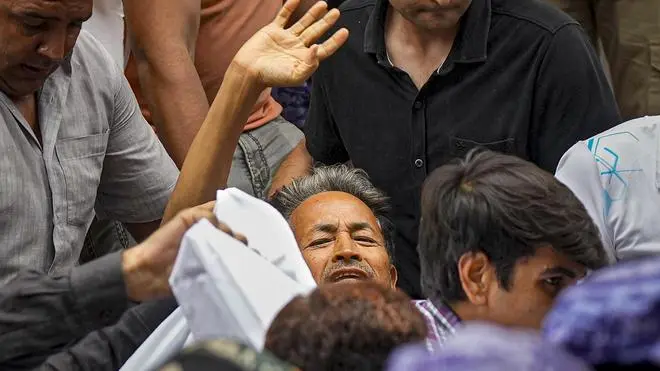
On July 18, after Wangchuk had completed more than three weeks of fasting, Delhi Police removed him from the Jantar Mantar protest site and shifted him to Safdarjung Hospital. The police justified the action on medical grounds, stating that Wangchuk’s condition had deteriorated and that the intervention was undertaken to protect his health. Reports by The Indian Express stated that police relied on medical advice and referred to the earlier proceedings before the Delhi High Court while explaining the decision. However, the manner of the removal became the immediate subject of controversy.
Protesters alleged that the police action amounted to the forced removal of a peaceful demonstrator and argued that the State had used health concerns as a justification to break up the protest. Visuals from the site showed heavy police presence and officers surrounding Wangchuk during the transfer, leading supporters to allege the use of unnecessary force. The police disputed these allegations, maintaining that the action was carried out with restraint and that intervention became necessary after resistance from protesters.
The State defended its actions on the ground that it was not attempting to suppress dissent but fulfilling its constitutional obligation to protect life. According to the authorities, once medical concerns became serious, allowing the fast to continue without intervention would have amounted to neglect of a citizen’s welfare. The protesters, however, viewed the intervention differently.
They argued that Wangchuk was a consenting adult exercising a political choice and that the State had converted a concern for health into an instrument to interrupt a lawful protest. In their view, the right to peaceful dissent includes the freedom to choose the form and intensity of protest, including voluntary fasting.
The dispute therefore brought three constitutional guarantees into direct tension:
- Article 19(1)(a): the freedom of speech and expression, which includes political communication and dissent;
- Article 19(1)(b): the right to assemble peacefully;
- Article 21: the right to life and personal liberty, which includes bodily autonomy and decisional freedom.
The question before the Court was not whether the State valued life. The question was whether the State could protect life by overriding the very autonomy that constitutional liberty seeks to preserve.
July 19: Gitanjali Angmo’s moves Delhi HC to challenge state overreach
After Wangchuk was shifted to hospital, Dr Gitanjali Angmo approached the Delhi High Court challenging the manner in which he was removed from Jantar Mantar. As per LiveLaw, the petition raised several concerns:
- alleged use of force by police;
- denial of access to family members, lawyers and preferred doctors;
- shifting Wangchuk to a medical facility without his consent;
- interference with his choice of medical treatment;
- violation of bodily autonomy.
The petition did not argue that the State had no interest in Wangchuk’s health.
Rather, it questioned whether that interest could override an adult citizen’s voluntary decision regarding his own body. The constitutional argument was anchored in the Supreme Court’s evolving jurisprudence on privacy and autonomy. In Justice K.S. Puttaswamy (Retd.) v Union of India, the Supreme Court recognised privacy as intrinsic to liberty under Article 21, including decisional autonomy and the ability of individuals to make personal choices.
The petitioners argued that this principle extended to the choice of undertaking a hunger strike — a method of political expression historically associated with non-violent resistance. Appearing for Dr Angmo, senior advocate Kapil Sibal argued that the State could not convert concern for health into a justification for overriding individual autonomy. As per Livelaw, his submission was that Wangchuk was a conscious adult who had voluntarily chosen the method of protest. The issue, he argued, was not whether fasting was medically advisable. The issue was whether the State could impose its own assessment of an individual’s welfare over that individual’s own decision.
Sibal questioned the circumstances surrounding Wangchuk’s removal from Jantar Mantar and argued that a peaceful protester could not be treated as someone incapable of making decisions merely because the State disagreed with those decisions.
The argument placed the case within the broader constitutional debate surrounding:
- informed consent;
- medical autonomy;
- dignity under Article 21;
- the right to dissent.
The petitioners emphasised that democratic rights become meaningful precisely when citizens are allowed to adopt unpopular or inconvenient forms of protest.
The state’s position: Representing the government, the Additional Solicitor General (ASG) defended the police action. The State’s position was that the removal was not an attempt to suppress the protest but a necessary intervention to protect Wangchuk’s life. The ASG argued that the authorities were acting on medical advice and that the State could not remain passive when a person’s health was deteriorating after an extended fast. The government’s argument rested on a different understanding of Article 21.
While the petitioners relied on Article 21 as a guarantee of autonomy and choice, the State relied on Article 21 as imposing a positive obligation to protect life.
The government’s submission effectively was: A citizen’s autonomy is important, but the State cannot ignore a situation where there is a serious risk to life.
The court’s balancing act: The proceedings before Justice Mini Pushkarna exposed a difficult constitutional contradiction: a State that claims to protect life may, in doing so, risk undermining the very liberty that gives democratic protest its meaning.
The central issue before the Court was not simply whether Sonam Wangchuk required medical attention. It was whether the State could use concern for his health as a basis to override the choice of an adult citizen who had voluntarily adopted hunger strike as a form of political expression.
The petitioners’ argument went to the heart of the controversy — that the State had not acted with the same urgency when the protesters were demanding accountability over the NEET examination crisis, but became interventionist when it sought to regulate the manner in which that protest was being conducted. The grievance was not that the State cared about Wangchuk’s health; it was that the State appeared willing to engage with the physical consequences of the protest while remaining unresponsive to the institutional failures that had triggered it.
A crucial aspect of the challenge was the alleged expansion of the Delhi High Court’s earlier order. The Court’s initial intervention was limited to ensuring medical monitoring of Wangchuk’s condition. It did not direct that the hunger strike be discontinued, nor did it authorise the forcible removal of the protester from Jantar Mantar. The petitioners argued that the administration effectively converted a judicial direction intended as a safeguard into a justification for coercive State action.
The Court, however, accepted the State’s explanation that shifting Wangchuk to hospital was not arbitrary in the circumstances. It recognised that a prolonged hunger strike carries genuine medical risks and that the State cannot be expected to remain a passive observer when a person’s health is seriously compromised. Yet, this reasoning raises a larger constitutional concern.
If the State can intervene whenever it believes that an individual is making a self-harming political choice, the boundary between protection and paternalism becomes dangerously blurred. Democratic dissent is rarely comfortable. Protest movements often involve inconvenience, sacrifice and personal hardship. The constitutional protection of protest cannot depend upon whether the State considers the method of protest reasonable, appropriate or medically advisable.
A hunger strike is fundamentally different from violent or disruptive forms of protest. Its political force lies in voluntary self-denial. The protester does not impose physical harm upon others; instead, the protester places their own body at the centre of political communication. Historically, hunger strikes have been used precisely because conventional channels of accountability have failed or have been perceived to have failed.
The constitutional difficulty, therefore, was not whether the State had an interest in preserving life. It undoubtedly does. The more difficult question was whether the State could preserve life by overriding a conscious political choice made by an informed adult citizen. The controversy surrounding the administration of potassium during Wangchuk’s hospitalisation further exposed this tension. Medical intervention in such circumstances cannot be treated as a purely clinical matter. When a person’s medical condition is directly connected to an act of political protest, questions of consent, autonomy and transparency become inseparable from questions of healthcare.
The petitioners’ concern was not merely about the treatment administered. It was about who retained control over decisions affecting Wangchuk’s body after the State intervened. The State maintained that medical decisions were taken on professional advice and in response to his condition. However, the episode demonstrated the constitutional risks that arise when State power enters the doctor-patient relationship. A person does not surrender bodily autonomy merely because they become a patient.
The concerns regarding access to family members, lawyers and independent medical opinion raised an equally important issue. Wangchuk was not a person detained under criminal law. He had not been deprived of liberty through any judicial process. He was a citizen who had been participating in a public protest and was subsequently removed by State action.
In such circumstances, a hospital cannot become a space where constitutional protections are diluted. Medical care cannot operate as a zone of reduced liberty where communication, consultation and independent oversight become matters of administrative discretion.
The Court’s final approach reflected an attempt at compromise. It refused to hold the State action arbitrary and accepted the government’s justification for hospitalisation. At the same time, it did not recognise an unlimited State power to interfere with protest or personal choice. However, the larger constitutional question remains unresolved.
The danger in cases such as these is not always overt suppression of dissent. It is the possibility of a softer form of restriction — where the language of welfare, safety and protection gradually becomes a justification for limiting inconvenient political expression. Article 19 protects not only popular speech but also uncomfortable dissent. Article 21 protects not only life but also autonomy, dignity and the freedom to make personal choices. A constitutional democracy must therefore ask not merely whether State intervention is well-intentioned, but whether it is proportionate and necessary.
The Wangchuk litigation ultimately leaves behind a fundamental question: When a citizen uses their own body as the instrument of protest, does the State’s duty to protect life permit intervention — or does such intervention risk transforming protection into control?
The complete order may be viewed here:
July 20: The protest moves towards parliament
While the legal challenge over Sonam Wangchuk’s removal from Jantar Mantar was being argued before the Delhi High Court, the movement on the ground entered a new phase. The protest, which had begun around demands for accountability over the NEET examination crisis, had by then grown into a larger mobilisation involving students, civil society groups and supporters from across the country. The proposed “Chalo Sansad” march on July 20, 2026 was intended to take these demands directly to Parliament, with protesters seeking accountability over alleged examination irregularities and demanding the resignation of Union Education Minister Dharmendra Pradhan.
The choice of destination was deeply symbolic. For the protesters, Parliament represented the institution answerable to citizens. The march was projected not as an attempt to obstruct legislative functioning, but as an assertion of the democratic right to place grievances before elected representatives. However, for the administration, the timing of the march — coinciding with the opening day of Parliament’s Monsoon Session — raised concerns regarding security, crowd management and the protection of high-security government installations.

By the evening of July 19, the hours preceding the march saw central Delhi transformed into a heavily controlled zone. Reporting from The Indian Express described Jantar Mantar as witnessing an unprecedented security build-up, with riot-control vehicles, barricades and large deployments of Delhi Police personnel across key areas of the capital. IE reported that more than 1,200 Delhi Police personnel were deployed around VIP areas and Delhi borders, while additional forces were positioned around Parliament and routes leading to it.
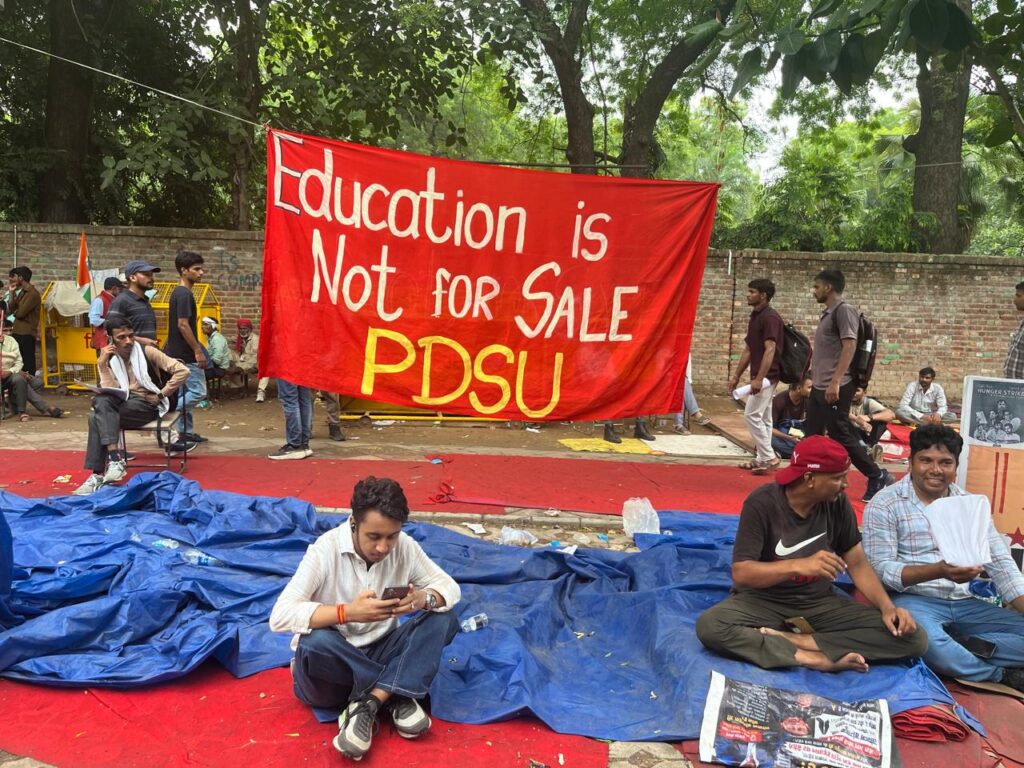
According to The Indian Express, the protest site was overflowing with students and supporters, with footpaths lined with tents housing those who had joined the hunger strike for days and weeks. Protesters gathered under banners and slogans, while volunteers prepared for the next day’s march. CJP founder Abhijeet Dipke appealed for discipline and repeatedly emphasised that the success of the protest depended on maintaining peace, conveying a message reportedly also given by Sonam Wangchuk from hospital.
The administration, however, treated the proposed march as a potential security challenge. Delhi Police stated that no permission had been sought or granted for a procession towards Parliament. A prohibitory order under Section 163 of the Bharatiya Nagarik Suraksha Sanhita (BNSS), 2023 was imposed in the New Delhi district, restricting gatherings and processions. In a public advisory, police warned that unauthorised marches and assemblies would invite legal action, including proceedings under the Bharatiya Nyaya Sanhita.
Security personnel continue to target CJP protestors using tear gas. https://t.co/iWiueWBfcm pic.twitter.com/ydqOtoSvp7
— Piyush Rai (@Benarasiyaa) July 20, 2026
CJP Protest | Police fired tear gas shells as protesters attempted to move towards Parliament during the CJP march. Heavy security remains deployed across central Delhi amid heightened tensions.
Live Updates: https://t.co/9MiFsaawxj pic.twitter.com/CPaxfO7puC
— The Wire (@thewire_in) July 20, 2026
#Watch | Delhi Police used sticks and batons to disperse hundreds of students and youth activists marching from Mandi House Metro Station towards Jantar Mantar in an attempt to reach the Cockroach Janta Party (CJP) protest site on Monday, eyewitnesses said. The protesters,… pic.twitter.com/3wiokZ3vyC
— The Hindu (@the_hindu) July 20, 2026
JUST IN | Visuals from the march led by Cockroach Janta Party enroute to the Parliament
Video: Special Arrangementhttps://t.co/o7I5R010Wv pic.twitter.com/3gqPtAHxs7
— The Hindu (@the_hindu) July 20, 2026
The invocation of Section 163 became one of the central points of contestation. While authorities justified the restrictions on the basis of Parliament security and public order, protesters questioned whether preventive powers were being used to regulate a peaceful political demonstration rather than respond to any actual threat of violence.
The constitutional difficulty with such restrictions is not whether the State can regulate public assemblies. It undoubtedly can. The right to peaceful assembly under Article 19(1)(b) is subject to reasonable restrictions. However, the repeated use of preventive orders raises a larger question: whether administrative convenience and security concerns are being expanded into a general power to prevent citizens from carrying their grievances into public spaces.
On July 20, as protesters prepared to begin the march, the security presence around Jantar Mantar intensified further. The Indian Express reported that multiple layers of barricades were installed, roads around Parliament were blocked and large contingents of police and paramilitary personnel were deployed. The report stated that additional officers were called from different districts, with more than 2,000 paramilitary personnel deployed across New Delhi district.
PUBLIC ADVISORY
In view of reports of a proposed march to Parliament by CJP on 20.07.2026 (Monday), Delhi Police hereby categorically clarifies that no permission has been sought or granted for any such protest march/procession.
Prohibitory order under Section 163 BNSS…
— DCP New Delhi (@DCPNewDelhi) July 19, 2026
A senior police officer, as reported by The Indian Express, told organisers that the possibility of a stampede was a concern and urged them to reconsider the movement of such a large crowd. The protesters responded that they had consistently maintained discipline and that the administration was using security concerns to prevent the march itself.
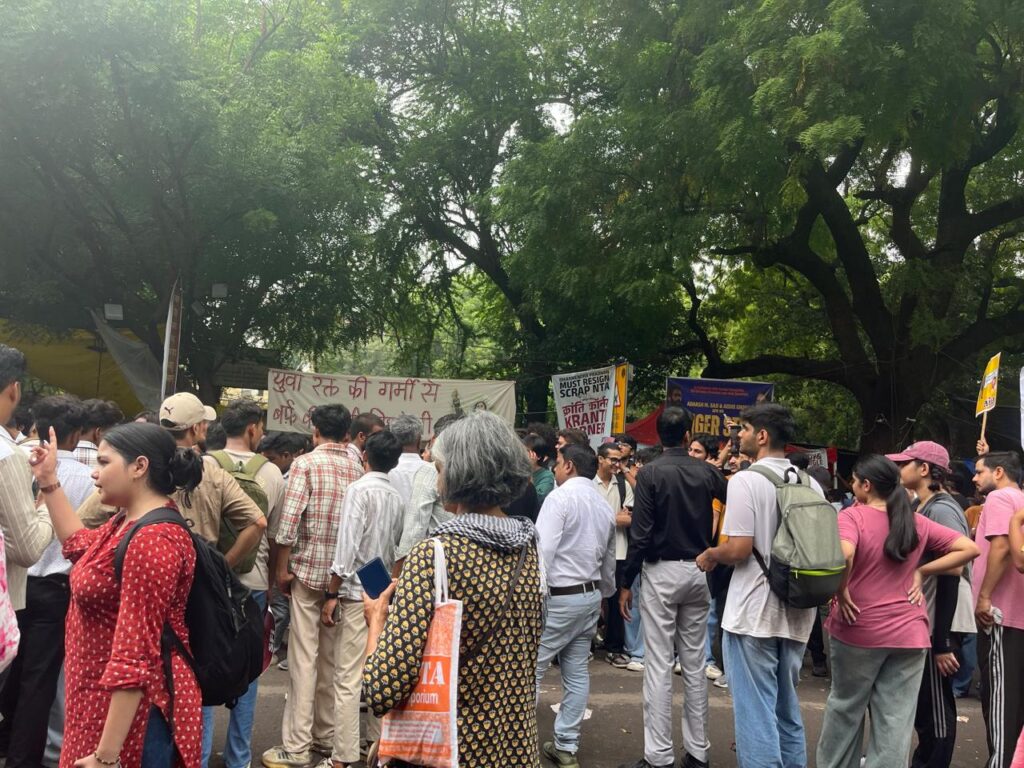
As the march began, thousands of protesters continued gathering despite rain and restrictions. According to Deccan Herald, citing PTI, some protesters attempting to reach the Jantar Mantar site from Mandi House alleged that police used force, including claims of lathi-charge. Delhi Police denied the allegations, stating on social media that “no such incident has taken place” and that the protest was being handled professionally. The conflicting accounts reflected the broader dispute over the proportionality of police action.
The authorities also temporarily restricted access to certain metro stations, including Janpath, Patel Chowk, Rajiv Chowk, Central Secretariat and Seva Teerth, citing security concerns. Roads leading towards Parliament were barricaded, and movement around central Delhi was tightly controlled.
For protesters, these measures represented the State’s attempt to contain a movement demanding accountability from those in power. They argued that a democracy cannot celebrate the right to protest in principle while restricting citizens whenever they attempt to approach the institutions they seek to question.
For the administration, the restrictions represented a legitimate exercise of responsibility to protect Parliament, maintain public order and prevent possible disorder. The Chalo Sansad march therefore became more than a dispute over one procession route. It brought into focus a recurring constitutional tension: whether the State’s responsibility to maintain order is being exercised to protect democracy, or whether it is being used to limit the very democratic expression that creates accountability.
July 20: Negotiations and government outreach
Even as incidents of chaos were being reported, on July 20, CJP spokesperson Saurav Das announced on X that he, along with Ashutosh Ranka, was travelling to meet BJP president and senior Union Minister J.P. Nadda after receiving a communication from the government seeking talks. Das wrote: “It’s 11:52 AM. Ashutosh Ranka and I, on behalf of the Cockroach Janta Party, are on our way to meet JP Nadda. The government had reached out for talks in the morning. Our demands are clear. The youth have gathered in huge numbers.”
CJP representatives maintained that any engagement would have to address the core issues that had brought students to the streets — accountability for alleged examination irregularities, responsibility for failures in the examination system, and assurances that similar crises would not recur.
As per the report of The Hindu, the CJP rejected offers to meet the District Magistrate, a Union Government Secretary, and a Minister of State, insisting on talks with the Prime Minister or a Cabinet Minister.
Solidarity across India
As the Delhi protest continued, solidarity demonstrations emerged in several parts of the country. As reported by FinancialExpress.com, activists and students in cities including Hyderabad, Mumbai, Pune, Nagpur, and Ahilya Nagar have organized rallies to demand the resignation of Union Education Minister Dharmendra Pradhan and to protest the forced hospitalization of climate activist Sonam Wangchuk.
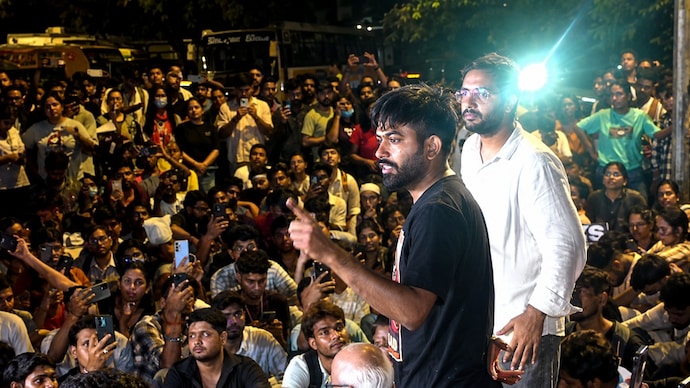
Mumbai: In Mumbai, the state’s restrictive approach to public assembly has turned the city into a theater of confrontation. Supporters gathered at Shivaji Park on July 19, 2026, after being denied permission to demonstrate at Azad Maidan or other locations in South Mumbai. According to The Indian Express, a senior police officer justified this denial by citing the Public Meetings, Agitations and Processions Rules, 2025, which prohibit protests on weekends and public holidays.

The atmosphere at Shivaji Park was charged, with Shiv Sena (UBT) chief Uddhav Thackeray calling for a nationwide agitation. The Indian Express noted that Thackeray escalated the rhetoric, arguing that the demand for the Education Minister’s resignation was a “small issue” and that the broader struggle must be to “change the government”. During the protest, participants raised concerns that structural failures in the examination system are consistently harming the future of the nation’s youth.
The Mumbai Police’s response has been marked by a series of legal actions. The Indian Express reported that on July 18, the police registered two FIRs against protesters for violating the Public Meetings, Agitations and Processions Rules, 2025. Specifically:
- A case was filed at the Marine Drive Police Station against NCP (SP) student leaders for protesting outside the state secretariat.
- A second FIR was registered at the Azad Maidan Police Station against activist-writer Sudhir Dhawale and others for protesting near the Press Club, with charges including unlawful assembly and disobedience of public servant orders.
Pune: In Pune, the movement saw hundreds gather at Balgandharva Chowk to express solidarity with Wangchuk and demand systemic educational reforms. The Indian Express reported that the demonstration became tense when police moved to disperse the crowd, leading to the detention of several protesters who refused to comply with official instructions. Participants, including educators and students, emphasized that the NEET issue is a symptom of a larger lack of accountability within the government, stressing that the youth’s faith in the education system is at risk.
Bengaluru: Meanwhile, The Hindu reported that over 1,000 people gathered at Freedom Park in Bengaluru on July 19 to protest the NEET paper leak and the “deteriorating democratic system”. The gathering evolved into a forum for broader societal critique; actor Kishor Kumar urged attendees to ensure the momentum is not limited to NEET but extends to support for farmers, labourers, and other marginalized groups. Young participants, such as 13-year-old Sohan and student Kavya, highlighted a growing sense of disillusionment, questioning what the future holds if the state continues to evade accountability for its failures.

Support gatherings were also reported from:
- Hyderabad;
- Nagpur;
- Indore;
- Jammu;
- Guwahati;
July 20: Updates on the hunger strikes
Even after being shifted from Jantar Mantar to Safdarjung Hospital, Sonam Wangchuk continued his hunger strike, making it clear that his decision to end the fast would depend not on his medical condition alone but on whether the larger concerns that triggered the movement received a political response.
On July 20, ahead of the proposed “Chalo Sansad” march, Wangchuk issued a handwritten note titled “WHEN WILL I END THE FAST….!”, laying down the circumstances under which he would withdraw his indefinite fast. As reported by The Times of India and other media outlets, the conditions focused on accountability for failures in the education system, particularly alleged examination irregularities and question paper leaks.
Significantly, while the broader CJP movement had consistently raised the demand for the resignation of Union Education Minister Dharmendra Pradhan, Wangchuk’s stated conditions for ending his fast did not specifically include the Education Minister’s resignation. Instead, he framed the issue in terms of institutional accountability and corrective action.
Wangchuk stated that he would end the fast if the government accepted responsibility for the “recent failures in the education system”, including alleged paper leaks. Alternatively, he said the fast would end if he and CJP leadership were able to reach Parliament and receive assurances from Members of Parliament and leaders of various political parties that the issues raised by the protesters would be taken up during the Monsoon Session.
He also stated that if his health or circumstances prevented him from participating in the march, MPs and political leaders should visit him at the hospital and provide similar assurances.
The conditions reflected a shift in focus from the immediate symbolism of the hunger strike to the larger political objective of securing parliamentary attention on the education crisis. Wangchuk’s message emphasised that the protest was not centred around one individual but around the concerns of students affected by alleged failures in the examination system.
In a message shared through his wife, Dr Gitanjali Angmo, Wangchuk reiterated that he was not the “cause” of the movement but merely a voice for young people who were seeking accountability. Angmo, speaking outside Safdarjung Hospital after the Delhi High Court hearing, said that the proposed march to Parliament would continue and that Wangchuk had consistently maintained that the movement belonged to the youth.
Meanwhile, Wangchuk’s health remained under medical supervision. A health bulletin issued by Vardhman Mahavir Medical College (VMMC) and Safdarjung Hospital on July 20 stated that he continued to receive medical care and that his vital parameters were stable, but his blood parameters required close observation. The hospital stated that continued clinical monitoring and medical intervention remained necessary, with a multidisciplinary team supervising his condition.
Alongside the broader mobilisation, students associated with the All India Students’ Association (AISA) also undertook hunger strikes in solidarity with the movement. The three student activists, Neha, Manish and Aameen, concluded their hunger strike after 23 days. Their decision came following an appeal by a delegation comprising parliamentarians, civil society representatives and public figures, who urged them to continue the struggle through parliamentary engagement and public campaigns rather than through continued fasting.
AISA stated that the students had suffered significant physical consequences during the fast, including substantial weight loss and dangerously low blood sugar levels. Their withdrawal marked a transition in one phase of the student-led protest, even as the broader mobilisation continued through the march towards Parliament.
Conclusion: From examination failure to a crisis of accountability
The July 20 developments marked a decisive shift in the nature of the education protest. What began as a demand from students affected by alleged examination irregularities became a wider confrontation over how the State responds when institutional failures generate public anger.
The central demand of the movement remained unchanged: accountability for the failures that undermined confidence in India’s competitive examination system. The protests were not merely about the cancellation of an examination or the consequences of a paper leak. For thousands of students, the issue represented a deeper fear that years of preparation, personal sacrifice and aspirations could be undermined by failures within institutions responsible for ensuring fairness.
The escalation of the movement, however, shifted attention from the original grievance to the State’s handling of dissent. Sonam Wangchuk’s hunger strike became the symbol of this transition. The events surrounding the Chalo Sansad march further exposed this tension. The government’s decision to prevent protesters from moving towards Parliament was defended on grounds of security and public order. Yet, for protesters, the restrictions raised a fundamental concern: if citizens cannot approach elected representatives with grievances affecting millions of young people, where does democratic accountability occur?
Related:
India–US trade deal faces mounting resistance as farmers intensify protests
From Protest to Petition: Maharashtra’s Public Safety Act in the dock
Noida Protest 2026: A labour uprising the state refused to understand