
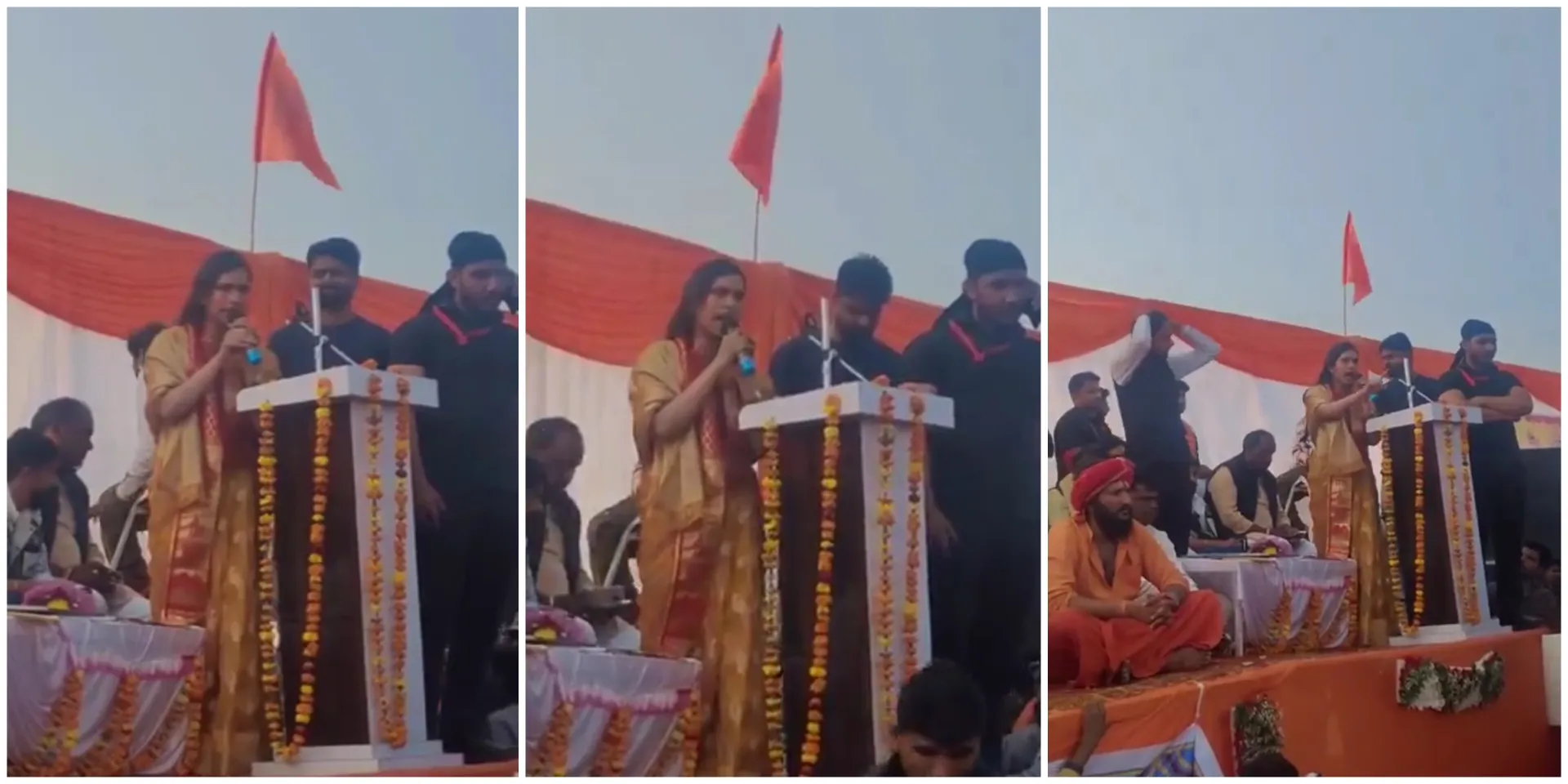
The Virat Hindu Conference, held on January 21, 2026, featured Hindutva influencers and local leaders who glorified the 1989 Bhagalpur riots, spoke approvingly of a 15-minute suspension of law and order, and urged the killing, abduction, and demographic reduction of minority communities. Video recordings of these speeches circulated widely on social media almost immediately, leaving little room for ambiguity about what was said or what was meant.
Still, no case was registered.
An FIR was finally registered on Tuesday, January 27, but by the time the police acted, the damage had already been done—not just in words spoken, but in what the delay itself revealed.
Incidentally, “Direct and public incitement to commit genocide” is expressly prohibited by Article III(c) of the 1948 UN Genocide Convention and is punishable even if the genocide does not actually occur. Besides, incidentally, it is concerning that Indian authorities are so lax on such utterances when Genocide Watch has already adjudged India as an ‘enabler’ and in a report published in 2024 outlined how, in India all the early warning signs of a potential genocide of/against Muslims is present and that this threat must be addressed quickly and proactively. This report of Genocide Watch may be read here.
Five days earlier, according to the report of Siasat, at a public religious-political gathering in Shivgarh, Raebareli, speakers stood on a stage, before a cheering crowd, and openly called for mass violence against Muslims, invoking the logic, language, and memory of one of India’s most brutal communal massacres. They did not whisper. They did not speak in riddles. They asked for bloodshed, mocked past killings, and framed genocide as retaliation and “peace.”
Yet for days, the state remained silent.
It was only after a sustained social media campaign and repeated formal complaints by former student leader and journalist Prashant Kanojia—who meticulously documented the speeches, flagged their legal implications, and publicly questioned police inaction—that the Uttar Pradesh Police moved to register an FIR. The registration came three days after his initial complaint, and five days after the event itself.
A week after hate speeches targeting the Muslim community, UP police have finally registered an FIR against Daksh Chaudhary, Riddhima Sharma, Prakash Singh, Akku Pandit, Abhishek Thakur, Khushboo Pandey and others for inflammatory hate speech at Virat Hindu Sammelan in… pic.twitter.com/CrYCWPeU3j
— Mohammed Zubair (@zoo_bear) January 27, 2026
The FIR, therefore, marks not swift law enforcement, but reluctant compliance—an action taken only after public scrutiny made continued inaction untenable.
This episode is not merely about one conference or a handful of speakers. It is about how calls for genocide are increasingly delivered from public stages, how historical massacres are resurrected as rallying cries, and how the constitutional promise of equal protection under law fractures when hate speech enjoys informal impunity.
What follows is a detailed account of what was said at the Raebareli conference, who said it, how the state responded, and why the delay itself demands as much scrutiny as the speeches that triggered it.
The Trigger: A call for a “15-minute bloodbath”
Videos from the event that later went viral show a woman speaker urging the crowd to allow “15 minutes” of unchecked violence, explicitly referencing the 1989 Bhagalpur riots, one of the deadliest communal massacres in post-Independence India. The implication was chillingly clear: that brief withdrawal of state restraint could once again result in mass killings without consequences.
These clips circulated widely online, drawing sharp condemnation—but initially, no police action followed.
What was said at the Virat Hindu Conference
Open calls for mass killing: As per the report of Siasat, at the centre of the controversy are speeches by Riddhima Sharma, a Hindutva social media influencer known as SanataniRiddhi, and Khushbu Pandey, also known as Hindu Sherni.
Riddhima Sharma referred to the December 2025 lynching of Bangladeshi Hindu Dipu Chandra Das and told the audience: “If they kill two of yours, you kill 100 people in retaliation for peace.”
She went further, invoking the conspiracy theory of “love jihad”, and urged: If they make one Hindu girl run away, then you should make 100 of their girls run away.”
She added that the Muslim population was already large, implying that reducing their numbers would not matter—a remark cited in complaints as an explicit endorsement of mass violence.
Glorification of Bhagalpur 1989: Khushbu Pandey revived the phrase “gobi farming,” a widely recognised dog whistle for the Bhagalpur riots of 1989, particularly the Logain massacre, where at least 116 Muslim men were killed and buried in fields where cauliflower saplings were planted to conceal the bodies.
Addressing the crowd, Pandey reportedly said that during Bhagalpur:
“The police stepped away for 15 minutes—and not a single body floating in the Ganga was of a Hindu.”
She laughed as the crowd cheered, later joking about planting “organic gobi” on Muslim graves—remarks widely seen as celebrating mass murder.
Location: Shivgarh, Raebareli, Uttar Pradesh
(We kill them, bury them, and then grow cauliflower on top)
During a Virat Hindu Conference meeting, Khushboo Pandey, referencing the 1989 Bhagalpur massacre, requested 15 minutes to speak and called for the massacre of Muslims. pic.twitter.com/yOWXl9Vm1j
— The Muslim (@TheMuslim786) January 22, 2026
Targeting Christians and vigilante warnings: The hate speech was not limited to Muslims. Another speaker, Thakur Ram Singh, accused Christians of engaging in illegal forced conversions, portraying them as a community systematically taking over Hindu groups across India.
An unidentified speaker urged residents to remain vigilant in their neighbourhoods, warning them not to allow Hindu women or girls to be taken away by people labelled as “jihadis.”
Multiple speakers repeatedly emphasised the need to “protect” Hindu women, issuing thinly veiled threats of violence against Muslim men.
No immediate action—until the pressure built
Despite the gravity of the speeches and the circulation of video evidence, no immediate FIR was filed.
On January 23, former journalist Prashant Kanojia submitted a formal written complaint to the Raebareli Superintendent of Police, explicitly stating that Riddhima Sharma had openly called for the massacre of Muslims.
The complaint argued that:
- The speeches amounted to incitement to violence
- They disturbed communal harmony
- They posed a direct threat to public order
- Such rhetoric violated constitutional principles
Kanojia followed up multiple times over the next three days, while simultaneously running a public-facing social media campaign, documenting the delay, tagging authorities, and sharing video excerpts from the event.
FIR registered against Terrorist for calling open genocide of the Muslims. pic.twitter.com/A7gSLANzPp
— Prashant Kanojia (@KanojiaPJ) January 27, 2026
FIR registered—five days after the event
Only after three days of sustained follow-ups and five days after the conference itself, did the UP Police finally register an FIR at Shivgarh police station, on January 27.
As of now:
- No arrests have been made
- The FIR comes only after extensive public scrutiny
- The delay itself has raised serious questions about institutional reluctance to act against communal incitement
A pattern, not an isolated incident
Both Sharma and Pandey have a documented history of inflammatory conduct.
- Sharma recently uploaded a video harassing a Muslim temple employee, questioning why a Muslim had been hired.
Riddhima Sharma tries to threaten people accusing them of allowing Muslim near temple
A Hindu guy intervened & taught her a lesson saying “you people want Riot and Communal tension only,get out from here”
These sanghis are the real threat to Hinduismpic.twitter.com/WccjtbXlCC
— Nehr_who? (@Nher_who) January 27, 2026
- Pandey has previously led rallies calling for violence against Muslims, publicly asserting the “right to bear arms,” often under police escort, without any case being registered.
Hello @DelhiPolice why this lady Khusboo Pandey is roaming around free after such a hateful statements, which is directly incitement of violence.
Even Police is around her but she is perfectly fine spewing venom against Muslims?
— Prashant Kanojia (@KanojiaPJ) January 23, 2026
Hate monger Khushbu Pandey has been arrested by Bihar police for reciting Hanuman Chalisa in front of a mosque, disturbing communal harmony.
The search for other accused is ongoing; several people have been arrested so far.#ArrestKhusbuPandey pic.twitter.com/5zOV5EkRGO
— هارون خان (@iamharunkhan) February 18, 2025
- Both figures frequently appear alongside prominent political personalities and boast large online followings, amplifying the reach of their rhetoric.
Why this FIR matters
The FIR is not merely procedural—it is the result of pressure, not proactive policing.
The Raebareli incident underscores:
- How genocidal language is increasingly normalised in public forums
- How dog whistles referencing historical massacres are openly used
- How state response often follows outrage, not law
- How social media scrutiny has become a last resort for accountability
Whether this FIR leads to meaningful legal consequences remains to be seen. For now, it stands as a stark reminder that without public pressure, even the most explicit calls for mass violence can go unanswered.
Related:
From Purola to Nainital: APCR report details pattern of communal violence in Uttarakhand
Publicly Tortured, Forced to Eat Cow Dung: No arrests in Odisha Pastor assault case
Days After Muslim Properties Torched in Tripura, Opposition Parties Say Atmosphere of Fear Persists
Bihar under BJP: Hate attacks against Muslims spiral, one dies