
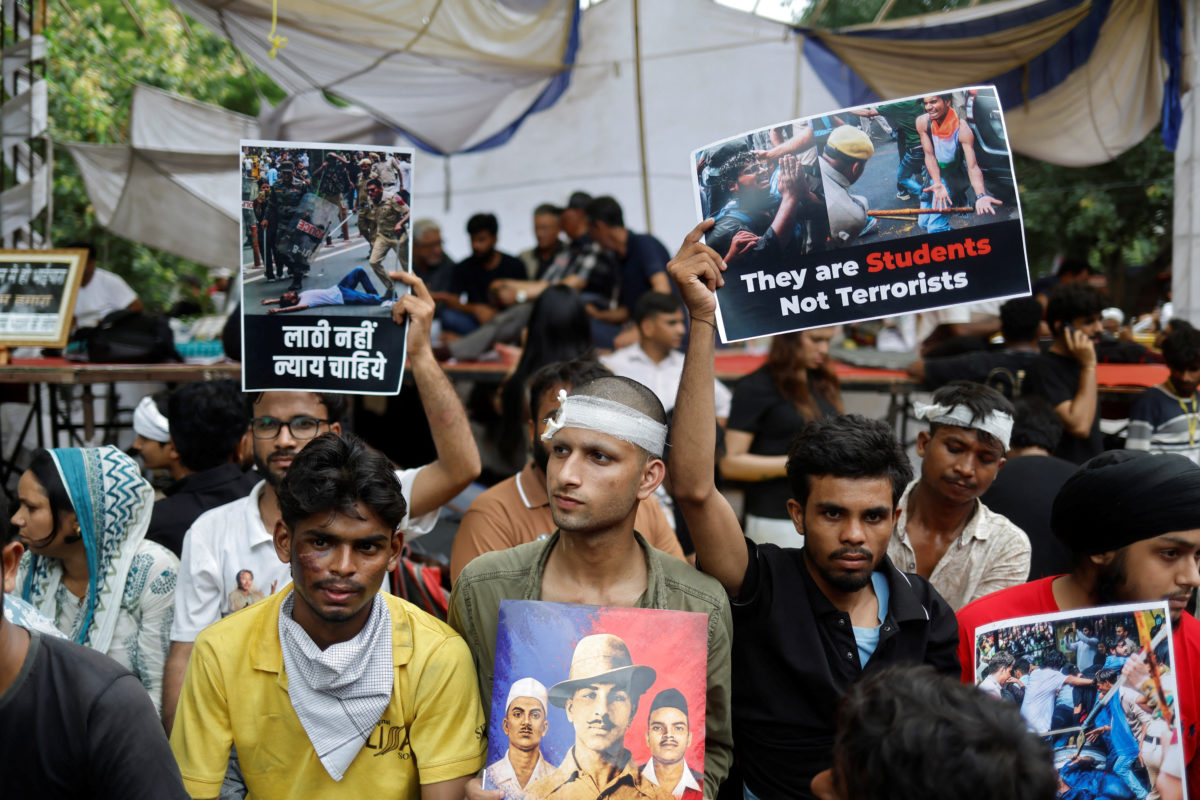
The student-led protests against examination irregularities, alleged paper leaks and failures in India’s competitive examination system have moved beyond the streets of Delhi, transforming into a nationwide mobilisation marked by solidarity marches, sit-ins and demonstrations across several states.
The turning point came on July 20, when thousands of protesters attempting to march towards Parliament from the Jantar Mantar area were met with heavy police deployment, barricading, tear gas and allegations of baton charges. The crackdown, which left several protesters injured and resulted in multiple FIRs, intensified anger among students and civil society groups, triggering demonstrations in states including Bihar, Goa, Himachal Pradesh, Punjab, Haryana, Maharashtra and Kerala.
What began as a demand for accountability over examination failures has now expanded into a wider confrontation over the State’s response to peaceful protest, the right to dissent and the question of whether young citizens raising concerns about their future are being met with dialogue or coercion?
July 20 Delhi crackdown becomes catalyst for nationwide mobilisation
The march towards Parliament on July 20 was organised after weeks of protests demanding accountability over alleged irregularities in competitive examinations. Thousands of students, young aspirants and supporters gathered in Delhi, seeking answers over examination failures and demanding accountability from the Union Education Ministry.
However, the march was stopped by security forces deployed across central Delhi. According to reports by The Indian Express, protesters faced multiple layers of barricading, tear gas deployment and police action as they attempted to move towards Parliament.
Detailed report may be read here.
The aftermath of the crackdown was visible across the protest site — injured protesters returned with bandaged heads and limbs, volunteers rebuilt damaged arrangements at Jantar Mantar, and several participants alleged excessive use of force. Speaking to The Indian Express, several protesters who returned to Jantar Mantar after hospitalisation described injuries sustained during the police action. Some alleged being beaten despite being unable to move, while others claimed that women protesters were also subjected to force.
The police, however, maintained that action was taken after “clashes broke out” and “protesters allegedly breached security arrangements”. Delhi Police subsequently registered multiple FIRs relating to allegations of violence, damage to public property and attacks on security personnel.
Injured protesters return, movement expands at Jantar Mantar
Despite the crackdown, protesters returned to Jantar Mantar the following day. The Indian Express reported that several protesters who had spent the night in hospitals returned to the protest site, some walking with injuries and fresh bandages. Participants described their return as an act of resistance against what they viewed as an attempt to suppress their demands.
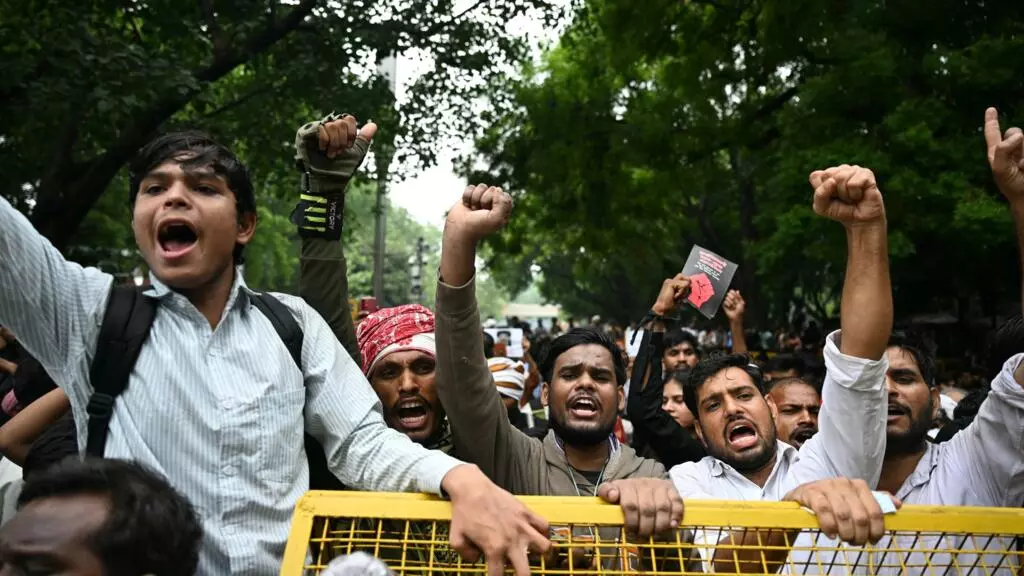
The protest site also became a space of collective support. Volunteers arranged food, water, medical assistance and other necessities. Poetry sessions, solidarity gatherings and community support activities continued through the night. The return of protesters after police action demonstrated that the crackdown had not ended the mobilisation. Instead, it became a rallying point for solidarity actions across India.
Solidarity protests spread across states
- Kerala: Candlelight vigils and student solidarity gatherings
Kerala witnessed solidarity demonstrations as the student movement in Delhi drew support from youth groups, civil society organisations and citizens across the state. In Kochi, people from different sections of society gathered for a midnight candlelight protest expressing solidarity with students protesting alleged examination irregularities and demanding accountability from the Union Education Ministry. Participants carried placards and candles, raising concerns over the impact of examination failures on students’ futures.
The gathering at Kochi reflected the broader character of the movement outside Delhi — unlike the large-scale marches in the national capital, several protests in Kerala took the form of peaceful vigils and symbolic demonstrations. Participants said they were joining the mobilisation because they could not travel to Delhi but wanted to register their opposition to alleged failures in the examination system.
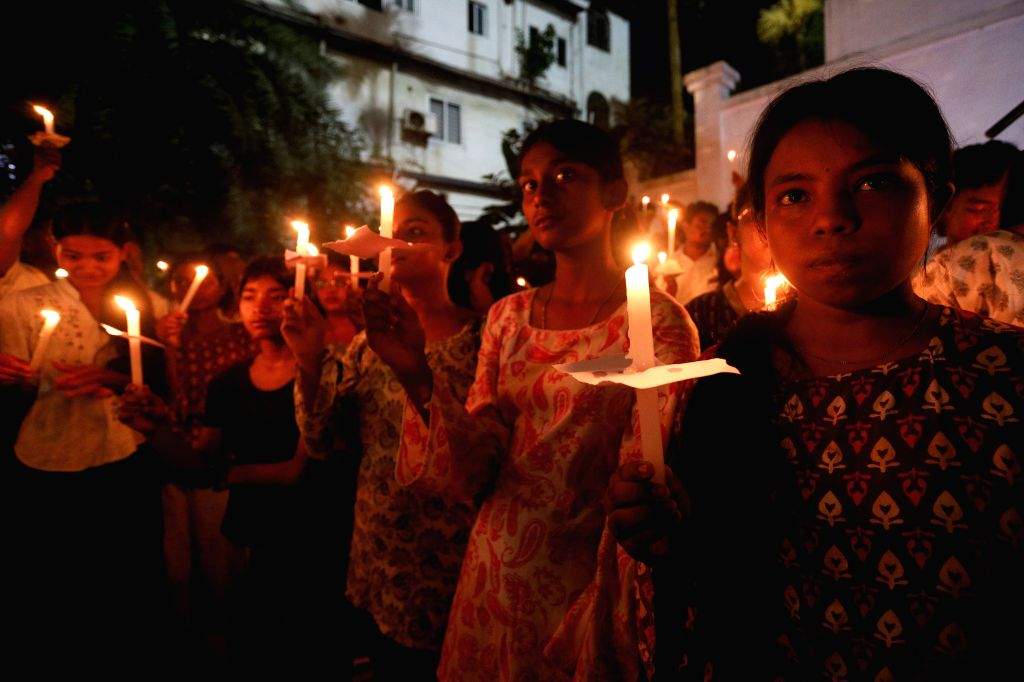
Similar expressions of solidarity were reported from other parts of Kerala, including Thrissur, where activists issued statements criticising examination irregularities and the pressure faced by students. The groups argued that repeated disruptions in competitive examinations had created uncertainty among lakhs of aspirants and demanded accountability from those responsible.
Unlike Bihar and Delhi, where protesters faced direct police action, no major confrontation between police and protesters was reported in Kerala. The state’s experience therefore represented another dimension of the nationwide mobilisation — a movement sustained not only through street confrontations but also through public gatherings, vigils and expressions of civic solidarity.
- Ladakh: Leh Apex Body and Kargil Democratic Alliance extend solidarity with student protests
The student-led protests over examination irregularities and the police crackdown in Delhi also received support from Ladakh, with the Leh Apex Body (LAB) and the Kargil Democratic Alliance (KDA) expressing solidarity with the ongoing agitation. Leaders from the two major civil society groups of Ladakh visited the Cockroach Janta Party (CJP) protest site at Jantar Mantar on July 21 and extended support to the students’ demand for accountability in the examination system.
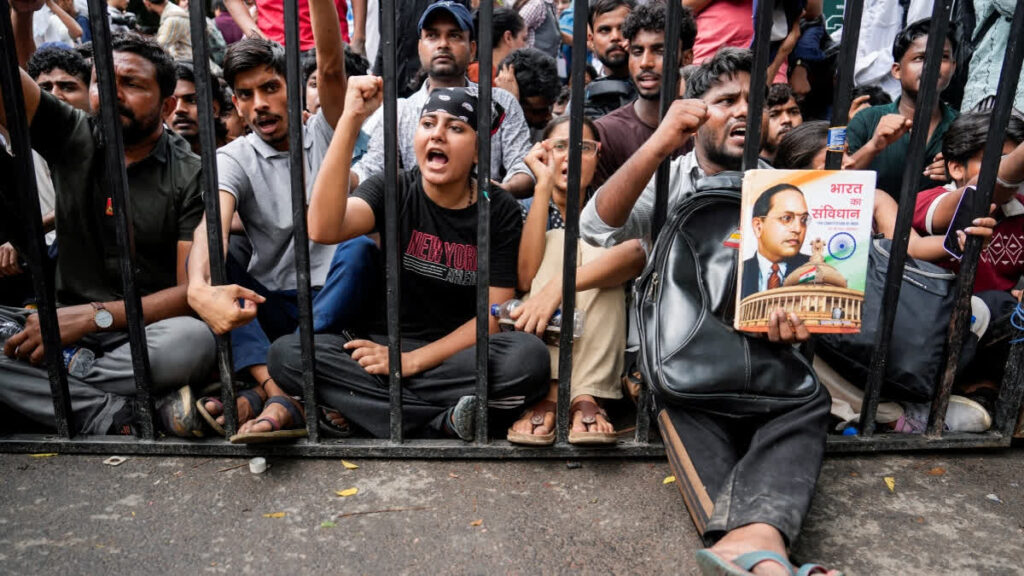
According to a report by PTI carried by ThePrint, the delegation included KDA leaders Asgar Karbalai and Sajjad Kargili, along with Leh Apex Body representatives Chhering Dorjey Lakruk, Mohammadi Shafi, Ashraf Barcha and Dechan Chamba. They met CJP founder Abhijeet Dipke and other protesters at the protest site, conveying solidarity over allegations of competitive examination irregularities and concerns regarding the future of students.
The KDA and LAB linked the students’ concerns with a wider question of institutional accountability. Speaking to PTI, KDA representative Sajjad Kargili said the alleged paper leak issue was a serious concern and that people in Ladakh shared the demand for a transparent and accountable education system.
- Bihar: Tear gas, water cannons and lathi-charge against student march
Bihar saw one of the strongest reactions from authorities after student groups organised demonstrations in solidarity with the Delhi protests. Students under the banner of the All India Students’ Association (AISA) organised a march towards the Raj Bhavan in Patna, demanding accountability over examination irregularities and the resignation of Union Education Minister Dharmendra Pradhan.
According to reports by Times of India, the march was stopped near Gandhi Maidan and JP Golambar, where police deployed water cannons, tear gas shells and baton charges to disperse protesters.
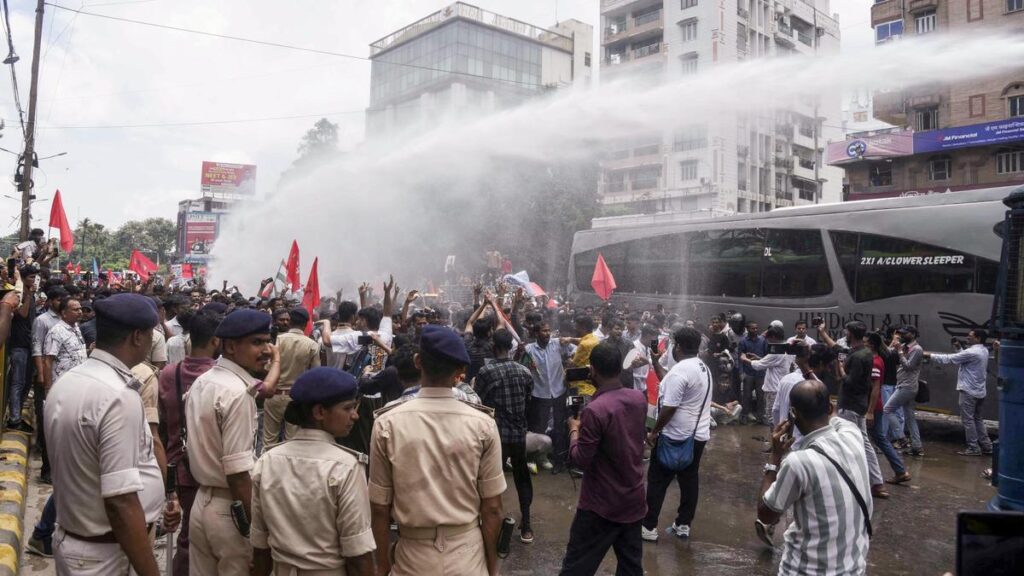
The police action in Patna came shortly after the Delhi crackdown, with protesters also raising objections to the force used against demonstrators in the national capital. CPI (ML) Liberation MLA Sandeep Sourav, who participated in the protest, criticised the handling of the demonstrations and accused authorities of attempting to suppress student voices.
The events in Bihar reinforced concerns among student groups that peaceful demonstrations over public issues were increasingly being addressed through law-and-order measures rather than dialogue.
- Goa: Solidarity march followed by FIR over alleged procedural violations
Goa witnessed a solidarity march in Panaji supporting the student-led mobilisation. Hundreds of protesters gathered for a candlelight march from the Miramar area to Azad Maidan, organised by Goa-based NGO Uzwaad. Participants raised concerns over examination failures and demanded accountability for students affected by alleged paper leaks and cancellations.
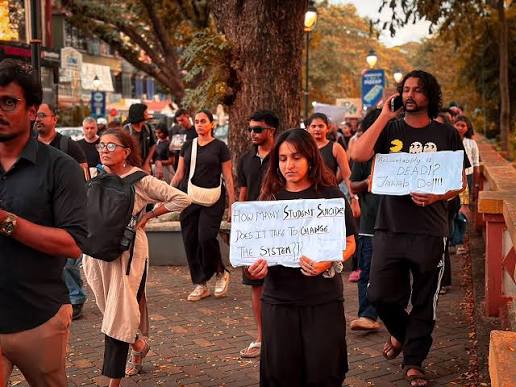
However, police later registered an FIR against unknown protesters, alleging unlawful assembly and stating that the gathering had taken place without prior permission from authorities. The case reflected a recurring issue seen across several states — the use of procedural requirements governing public assemblies as the basis for legal action against demonstrations. While authorities have argued that permissions are necessary for maintaining public order, activists have questioned whether such provisions are being applied disproportionately against peaceful protests.
- Himachal Pradesh: Government joins protest demanding accountability
In Himachal Pradesh, the protest took the form of a political demonstration, with Chief Minister Sukhvinder Singh Sukhu joining Congress leaders in a sit-in outside the Governor’s residence. According to The Hindu, Congress leaders described the protest as an expression of solidarity with students and accused the Union government of failing to protect the interests of young aspirants facing examination-related uncertainty.
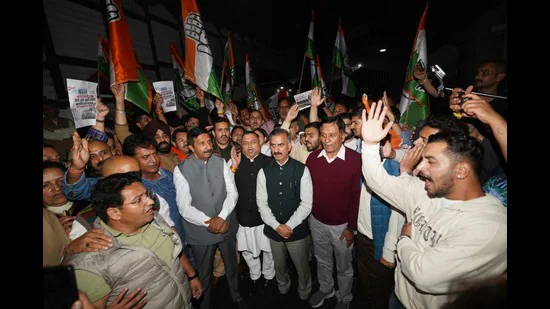
Sukhu demanded accountability from the central government and called for the resignation of Union Education Minister Dharmendra Pradhan. He also criticised the detention of opposition leaders during protests in Delhi, arguing that action against elected representatives and students raised concerns about democratic freedoms.
- Punjab and Haryana: Opposition protests and preventive detentions
In Punjab, Congress leaders held a demonstration outside Lok Bhawan in Chandigarh, expressing solidarity with protesting students. The protest was led by former minister Balbir Singh Sidhu and former Punjab Assembly Speaker Rana K.P. Singh, who criticised the handling of examination-related grievances and demanded accountability.
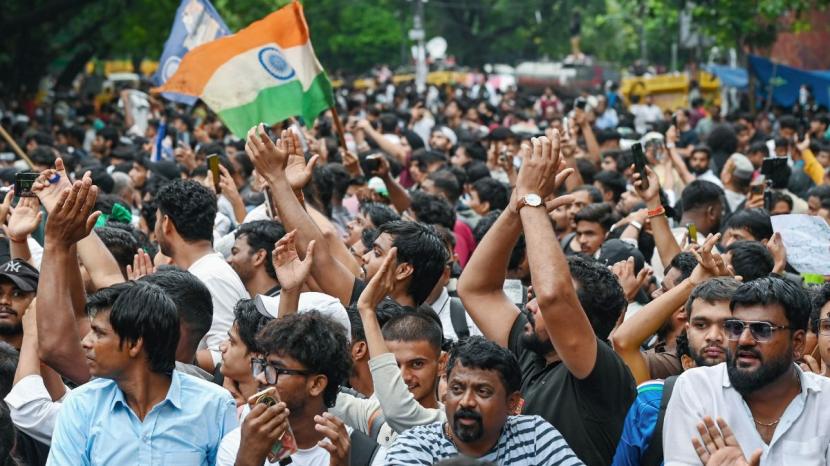
In Haryana, Congress leaders attempting to reach Haryana Lok Bhawan were detained by police. According to The Hindu, Haryana Congress leaders said they were protesting alongside students and demanding a transparent examination system and protection of democratic rights.
- Karnataka and other southern states: Political mobilisation expands
The protests also spread to Karnataka, Tamil Nadu and Telangana, where opposition parties and student groups organised demonstrations over examination irregularities.
Reports by Deccan Herald provided that Congress workers held protests in Bengaluru and other cities, with some leaders facing police detention during demonstrations.
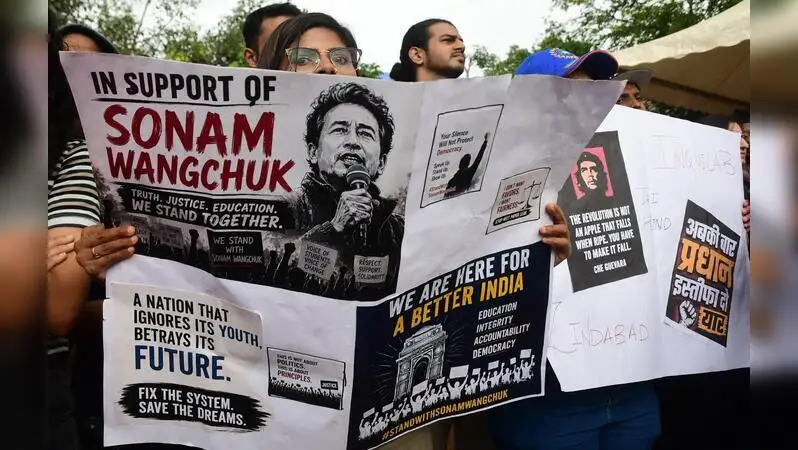
In Tamil Nadu and Telangana, political parties also expressed support for student demands, arguing that repeated examination controversies required structural reforms rather than temporary responses.
- Maharashtra: Solidarity protests in Mumbai and Pune followed by FIRs against demonstrators
Maharashtra emerged as one of the key centres of solidarity mobilisation after the student protests in Delhi intensified following the July 20 police crackdown. Demonstrations were reported in Mumbai and Pune, with protesters demanding accountability over alleged examination irregularities and expressing support for the nationwide student movement.
In Mumbai, supporters of the Cockroach Janta Party (CJP) held demonstrations at multiple locations, including Azad Maidan and Shivaji Park. The protests focused on demands for a transparent examination system and accountability over alleged failures in the conduct of competitive examinations. The Indian Express reported that Azad Maidan became a gathering point for citizens and activists supporting the CJP-led agitation, with protesters raising demands including the resignation of Union Education Minister Dharmendra Pradhan over the NEET-UG paper leak controversy.
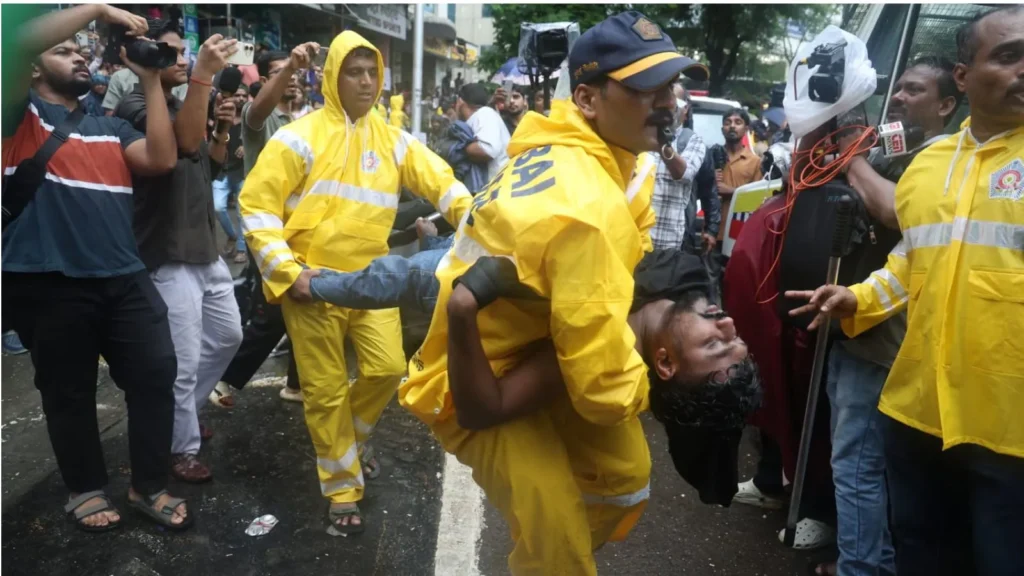
The mobilisation also saw participation from political leaders. Shiv Sena (UBT) chief Uddhav Thackeray had earlier extended support to the agitation and demanded that the Union Education Minister step down, arguing that accountability was necessary following repeated concerns over examination management.
In Pune, thousands gathered near the Dr Babasaheb Ambedkar Garden outside the District Collectorate on July 20 in support of the movement. According to The Indian Express, the demonstration remained peaceful and concluded without any reported confrontation with police. Protesters raised concerns over the NEET-UG paper leak and other examination-related issues affecting students.
However, the State response in Mumbai quickly shifted towards legal action. The Mumbai Police registered an FIR against organisers of a Shivaji Park protest, citing that the demonstration had taken place without prior permission. The case was registered under provisions relating to unlawful assembly.
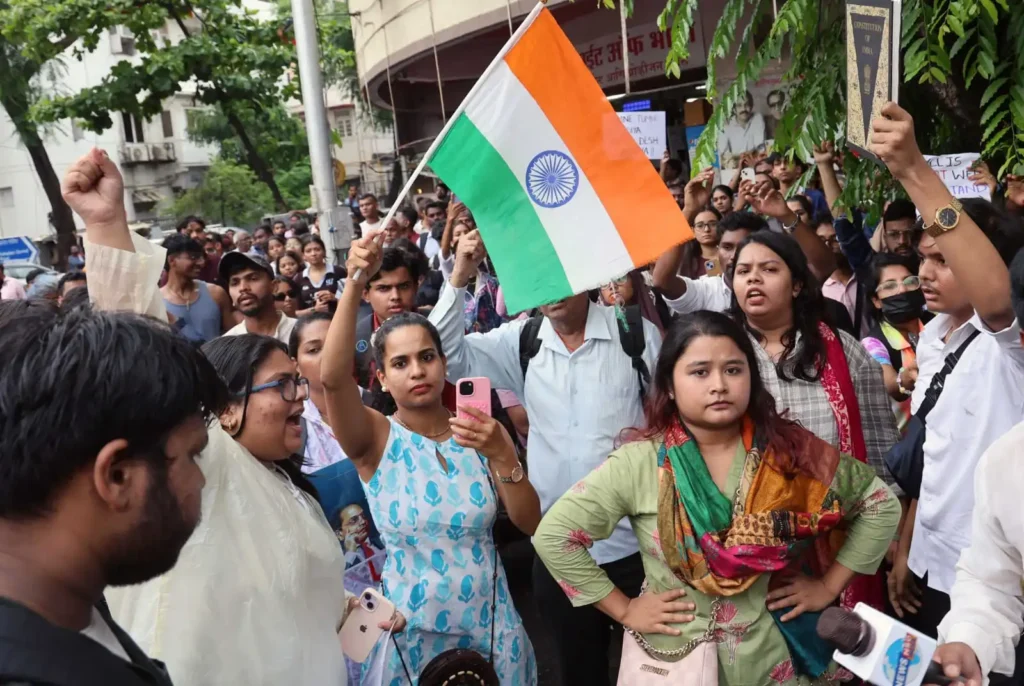
Subsequently, Mumbai Police registered multiple FIRs connected with CJP-related demonstrations across the city. Reports stated that cases were filed across several police stations, including against hundreds of protesters, on allegations of unauthorised gatherings and violations of law-and-order provisions.
The police action in Maharashtra reflected a wider pattern visible across states after the July 20 Delhi crackdown — while protesters sought to expand a public conversation on examination failures and institutional accountability, authorities relied heavily on restrictions, permission requirements and criminal proceedings to regulate demonstrations.
Detailed report may be read here.
Maharashtra chief minister, Devendra Fadnavis was reported ‘warning’ protesters who indulged in violence and ‘unlawful demonstrations. Independent media and social media reports from Mumbai, Pune and elsewhere in the state however showed clear “orders” to police authorities to criminalise democratic and peaceful actions, with FIRs and notices being issued across Maharashtra. Report may be read here.
Madhya Pradesh: Indore students join nationwide mobilisation against exam failures and Delhi crackdown
The student-led mobilisation that began at Delhi’s Jantar Mantar found a strong echo in Madhya Pradesh, particularly in Indore, where hundreds of students took to the streets demanding accountability over examination irregularities and condemning the police action against protesters in the national capital. Indore, one of central India’s major education hubs with a large population of competitive exam aspirants, emerged as an important centre of solidarity after the July 20 crackdown in Delhi.
On July 22, more than 1,000 students, coaching faculty members and local residents gathered at Bhanwarkuan in Indore, a well-known student area, to protest against the alleged NEET paper leak and demand the resignation of Union Education Minister Dharmendra Pradhan. According to reports by The Times of India and Navbharat Times, the demonstration was organised in solidarity with the Jantar Mantar protesters after Delhi Police used force during the “Chalo Sansad” march on July 20.
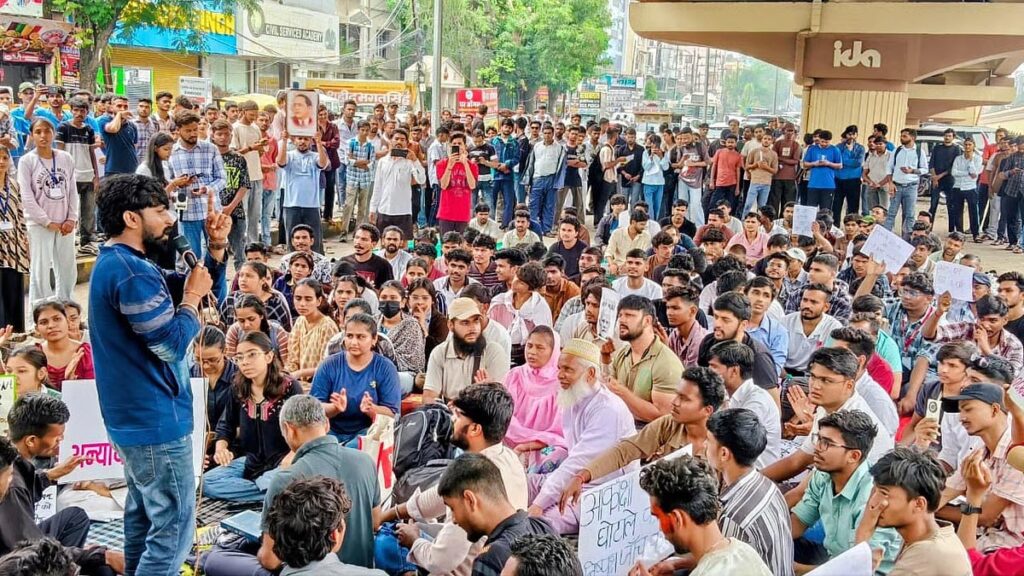
The protest in Indore was not an isolated reaction to the Delhi events. Students had already been mobilising locally over examination-related concerns. Earlier in July, hundreds of students had marched to the Indore Collectorate after a prolonged protest, raising demands linked to alleged NEET irregularities and wider failures in the examination system. Reports by Free Press Journal noted that some students shaved their heads as a mark of protest and staged a sit-in outside the Collectorate, accusing authorities of failing to respond to their concerns.
- Rajasthan: From Sikar’s torch march to wider student solidarity
Rajasthan, a state with one of India’s largest competitive examination ecosystems, also witnessed significant mobilisation in support of the student protests. Student groups and activists in the state linked their demonstrations to concerns over examination integrity, alleged paper leaks and the demand for accountability from education authorities.
In Sikar, a major coaching hub for medical and competitive examinations, students, activists and members of the Cockroach Janta Party (CJP) organised a torch march protesting alleged NEET irregularities and demanding the resignation of Union Education Minister Dharmendra Pradhan. The march began from Piprali Circle and culminated at CLC Chowk, with participants carrying placards and raising slogans demanding a transparent investigation into alleged examination failures. The Times of India reported that the protest included student representatives, activists and local political figures, who called for reforms in the examination system and accountability for those responsible.
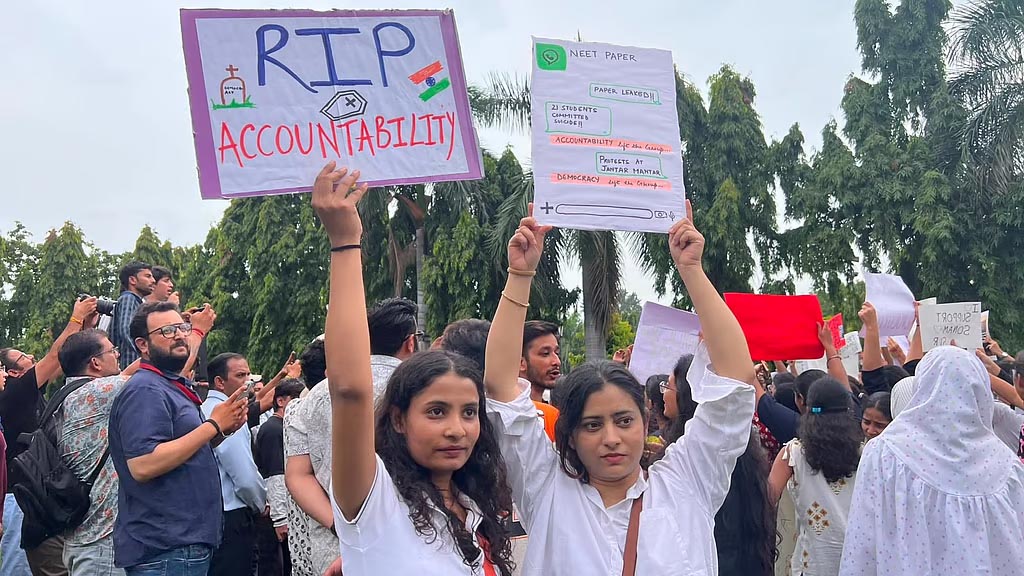
The protests in Sikar carried particular significance because the city has long been recognised as a centre for NEET and other competitive examination preparation. Students there argued that repeated controversies around entrance examinations had created uncertainty among aspirants who spend years preparing for highly competitive tests.
Earlier, Jaipur had also witnessed mobilisation linked to the broader campaign. Reports by The Times of India noted that CJP had announced demonstrations in Jaipur highlighting issues including alleged paper leaks, examination irregularities, unemployment concerns and failures in the education system.
Opposition joins protests as Parliament witnesses disruption
The protests also entered Parliament, where opposition parties raised the issue of police action against students. According to reports by The Times of India, parliamentary proceedings were disrupted for the second consecutive day as opposition MPs protested over the treatment of demonstrators.
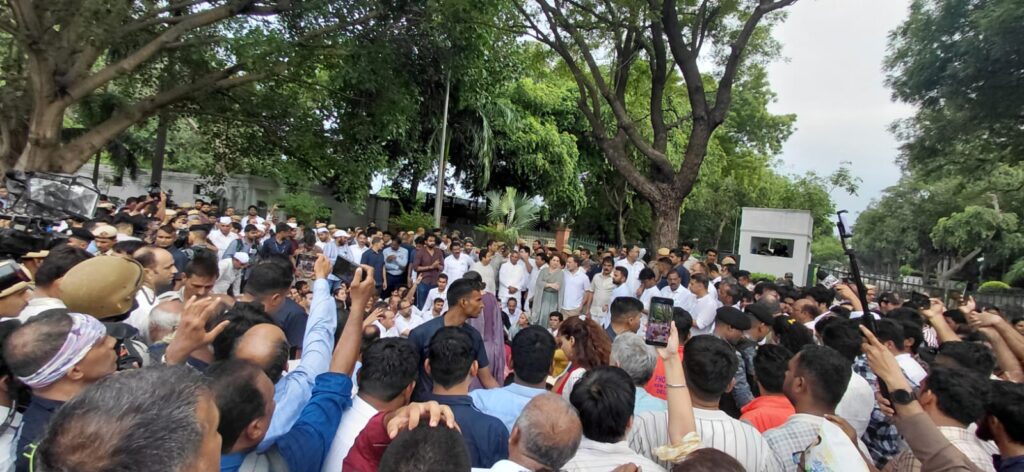
Congress leaders accused the government of avoiding accountability, while opposition parties demanded discussion on examination failures and alleged police excesses. Outside Parliament, Congress leader Rahul Gandhi led a protest near the Prime Minister’s residence along with party leaders and MPs. The protest resulted in police intervention, with Gandhi and other leaders being removed from the site.
International solidarity emerges as protests draw attention beyond India
The student-led protests also received expressions of solidarity outside India, with demonstrations and public gatherings organised in several countries after the police crackdown on protesters in Delhi.
In the United States, activists from the advocacy group Hindus for Human Rights held demonstrations in New York and San Jose, expressing support for the protesting students and raising concerns over the treatment of demonstrators in India. According to TOI reports, protesters gathered near the statue of Mahatma Gandhi at Union Square in New York and in San Jose, carrying placards supporting the student movement and demanding accountability over examination irregularities.
Similar solidarity actions were reported outside Indian diplomatic missions in London and Dublin, where participants called for engagement with protesters and urged authorities to address concerns raised by students rather than respond through coercive measures.
The overseas demonstrations reflected how the controversy around examination failures and the subsequent police action had travelled beyond India’s borders. The international response also highlighted the wider attention generated by the July 20 crackdown, with images and accounts of injured students, tear gas deployment and clashes near Parliament circulating globally.
A nationwide pattern: Solidarity grows, but so does state desperation
Across states, the nature of protests differed — from candlelight vigils in Kerala to confrontations with police in Bihar and legal action in Goa and Maharashtra. However, a common thread emerged: the movement expanded because protesters viewed the examination crisis as part of a larger question of institutional accountability.
The State response also varied. In some places, authorities allowed peaceful gatherings (mostly in opposition governed states); in others, protests were met with barricades, force, detentions and criminal cases. The spread of protests across India demonstrated that the July 20 crackdown did not end the mobilisation. Instead, it transformed a Delhi-based demonstration into a national conversation about education, governance and the democratic space available for dissent.
The Constitution protects the right to freedom of speech and peaceful assembly under Articles 19(1)(a) and 19(1)(b), subject to reasonable restrictions. The challenge for the State is to maintain public order without treating dissent itself as a disruption. The events following July 20 demonstrate a recurring tension in India’s democracy: whether public anger, particularly from young citizens, will be addressed through engagement and accountability or managed primarily through policing.
The return of injured protesters to the streets and the spread of solidarity demonstrations across states suggest that the crackdown did not silence the movement. Instead, it transformed a Delhi protest into a nationwide debate over education, accountability and the democratic right to demand answers.
Related:
The exam crisis that became a battle for accountability
India–US trade deal faces mounting resistance as farmers intensify protests
From Protest to Petition: Maharashtra’s Public Safety Act in the dock
Noida Protest 2026: A labour uprising the state refused to understand